
RAIN-RELATED STAINS · MOISTURE · SURFACES
LILYDALE · MELBOURNE
Mould Removal Lilydale
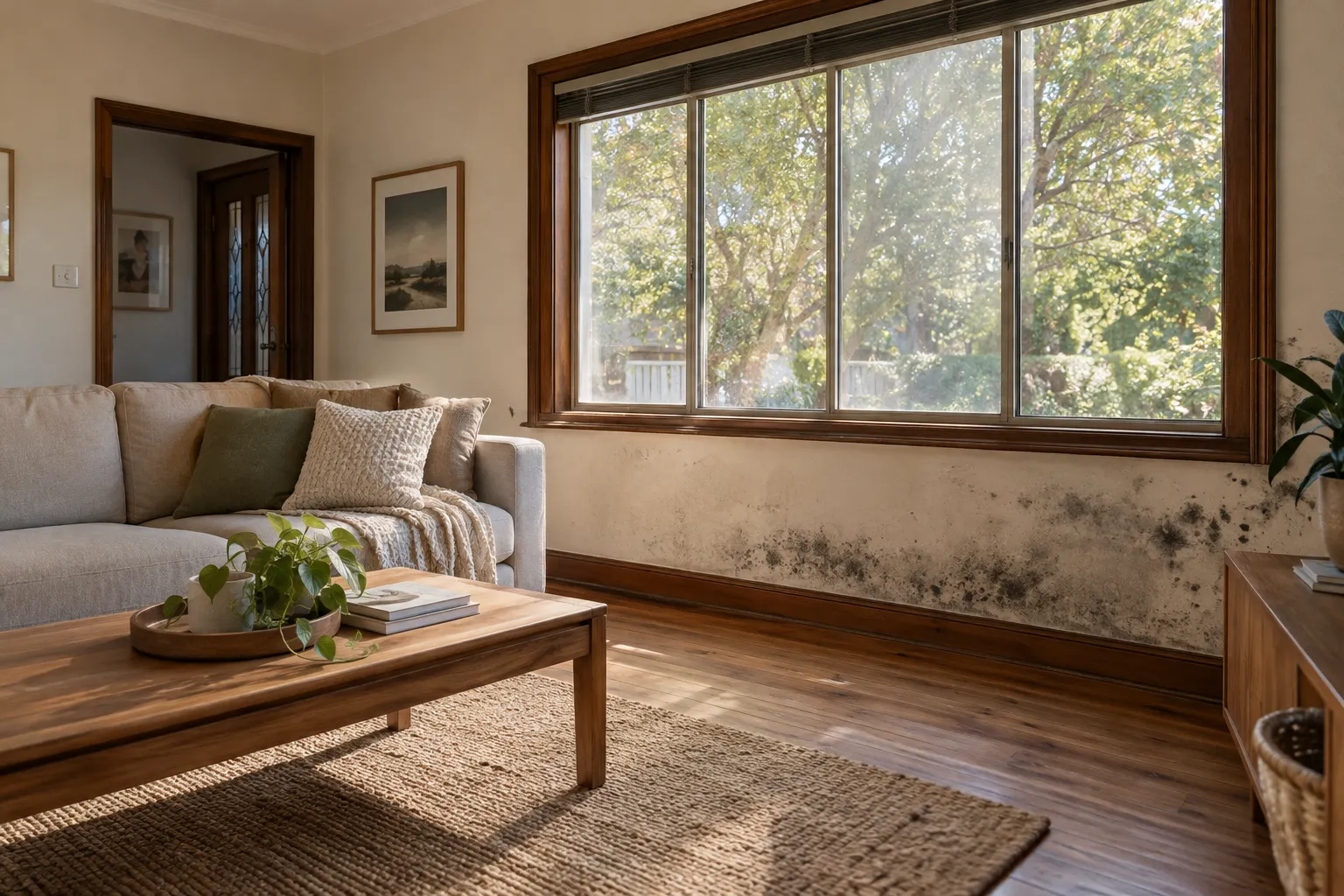
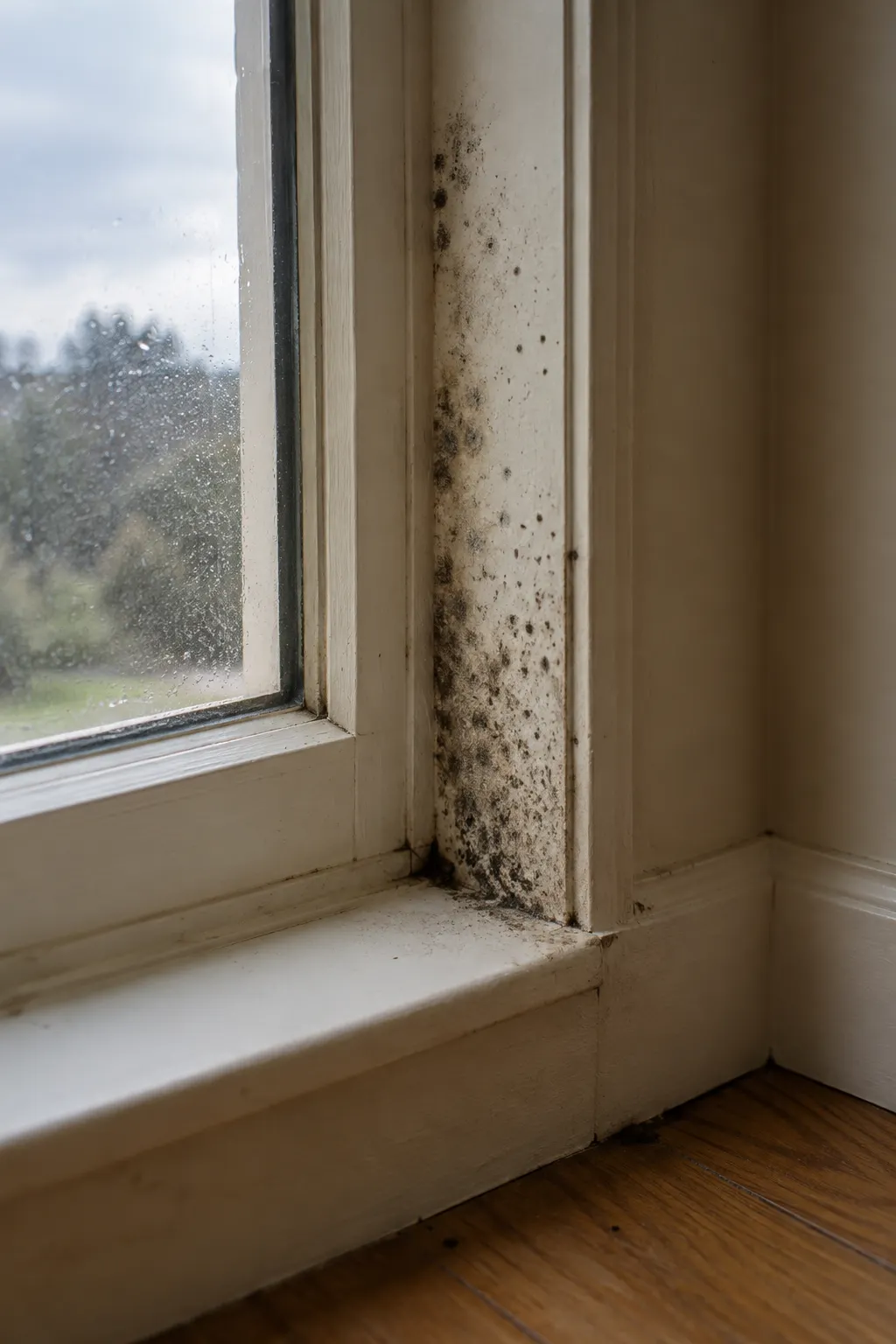
A ceiling mark that changes after rainfall deserves more than another coat of paint. Discuss when it appeared in your Lilydale room, whether the plaster is sound, and what has already been repaired.
Visible material considered
Moisture history discussed
Access and scope agreed
THE ROOM TELLS A STORY
Read the stain after rain
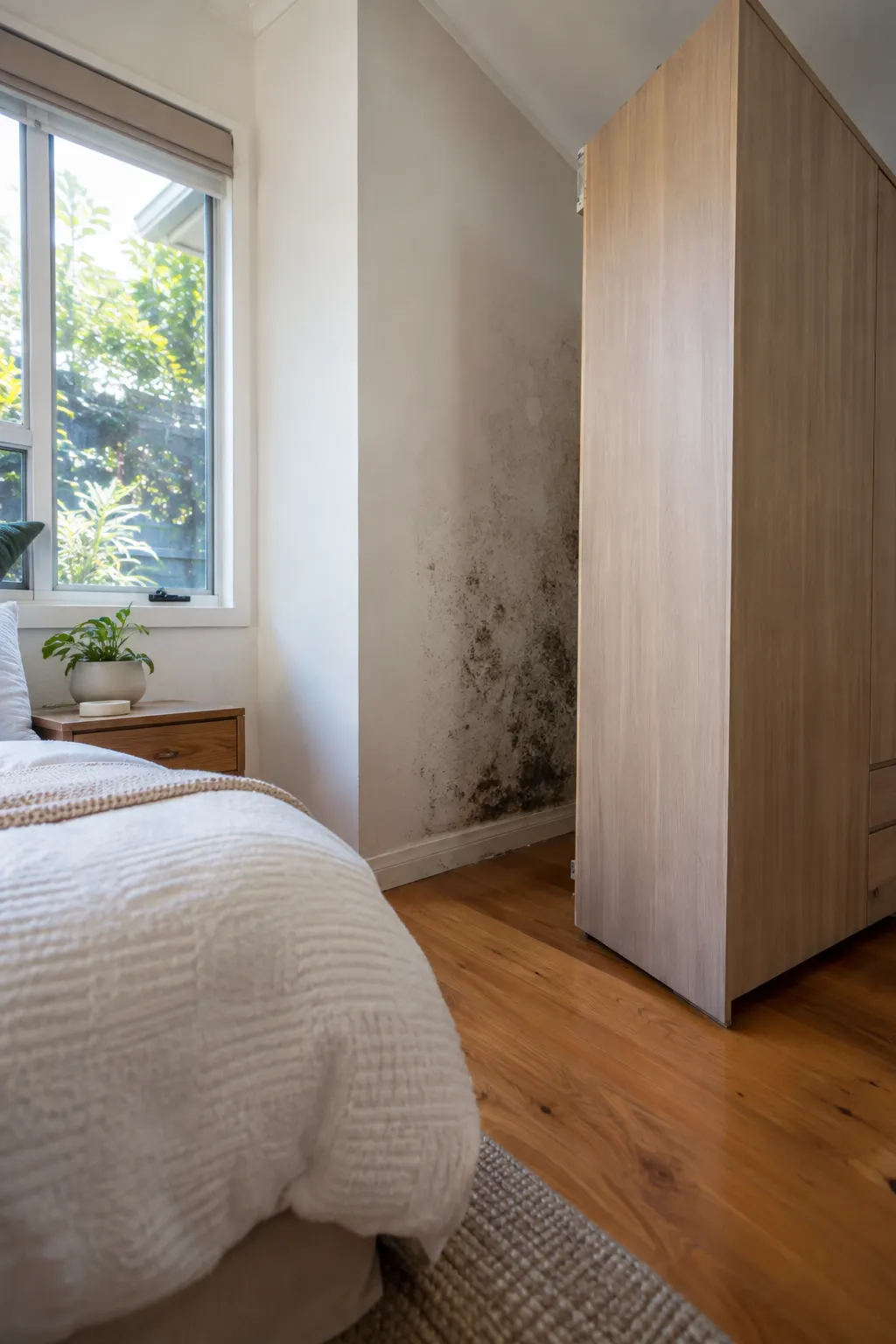
Yarra Ranges identifies Lilydale within its municipality. For the individual room, compare the stain before and after rain rather than making assumptions from the suburb. Photograph the edges from a safe position and note any roof or plumbing work, even if the surface now feels dry.
A ceiling stain needs its sequence explained, not just photographed. For an inspection enquiry, include changes after rain, repair dates and whether the material looks damaged. Do not disturb uncertain plaster to obtain more evidence.
UNDERSTANDING MOISTURE
Make sense of
changes after rainfall.
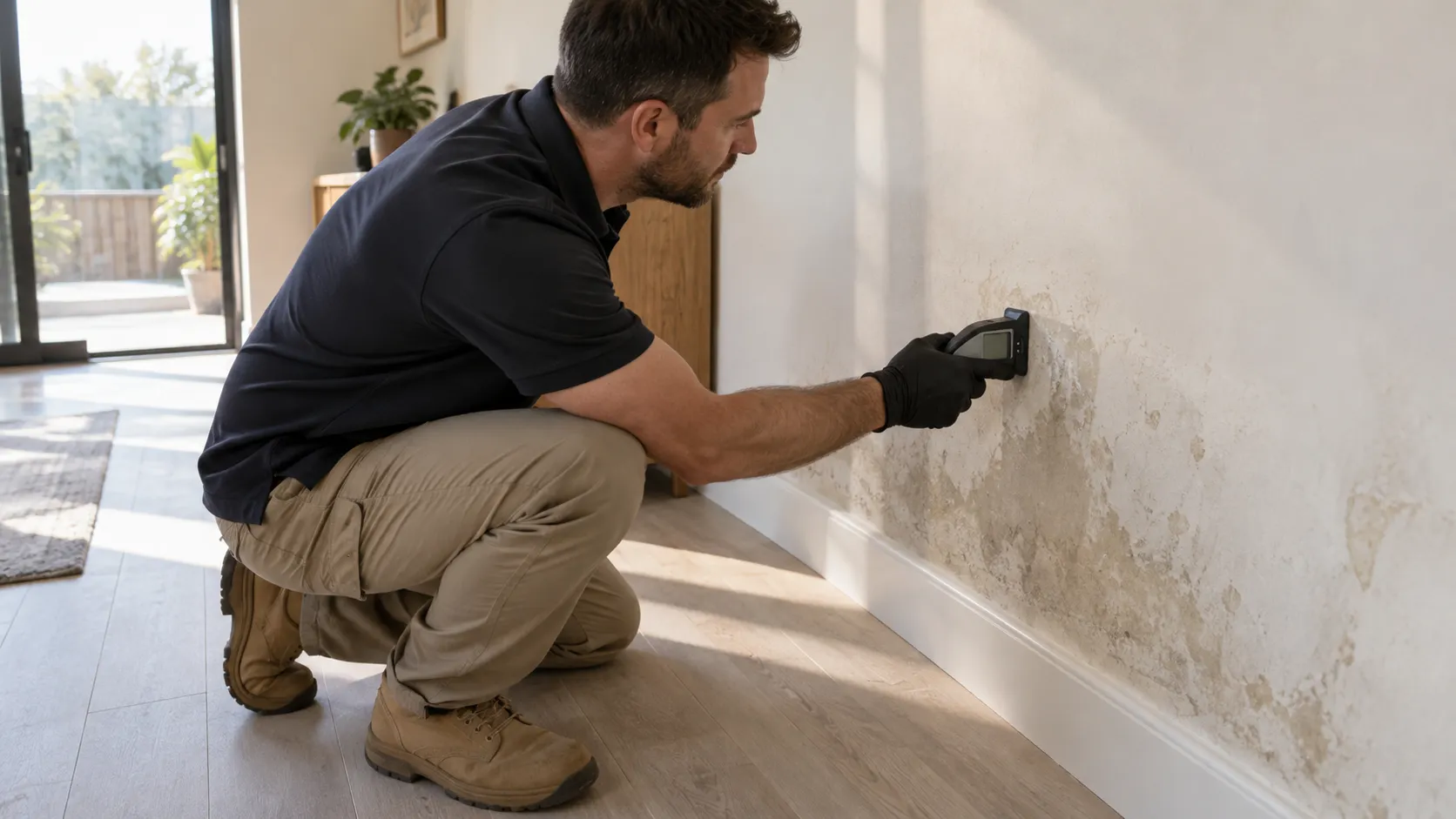
What stays damp
A rain-related mark needs comparison with room-generated moisture. Note whether droplets also collect on windows or cool corners; more than one source of dampness can affect the same room.
Leaks and repairs
The useful sequence is rain, visible change and any repair. A suitable trade may need to investigate the roof or pipework before drying and accessible surface treatment can be planned.
Accessible evidence
Check the ceiling from a safe position for lifting paint or altered shape. Firm plaster and deteriorating board need different decisions; an old stain’s colour alone does not establish its condition.
OUR REMOVAL PROCESS
Plan the work
around the room.
Keep the room history
Write down the rain event, the first stain and any repair date. Include whether the ceiling became soft or whether only the colour changed.
Make access practical
Explain anything beneath the stain that needs protecting or relocating. Safe access to a ceiling and handling of damaged board require different preparations from cleaning a wall.
Agree the next decisions
Confirm which roofing or plumbing checks remain outstanding. A completed removal visit does not replace those investigations or establish that previously wet material is ready for paint.
01
Assess the ceiling stain
Show where the stain begins and how far it reaches across the ceiling. For visible mould removal, discuss the accessible material after leak investigation and drying decisions.
02
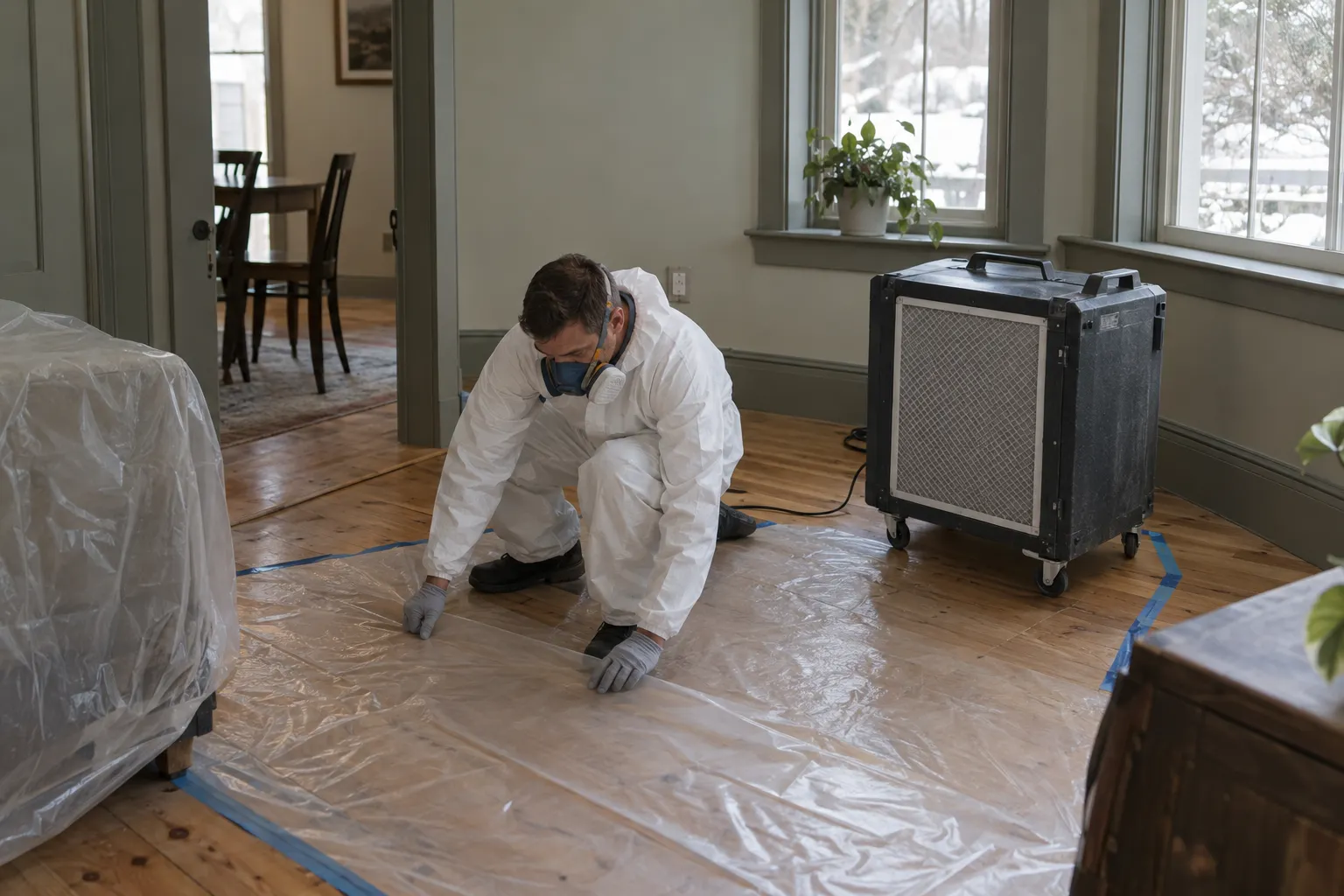
Prepare the working area
Keep the room route clear and describe the ceiling height before the visit. Do not climb on household furniture to reach the stain or loosen damaged plaster.
03
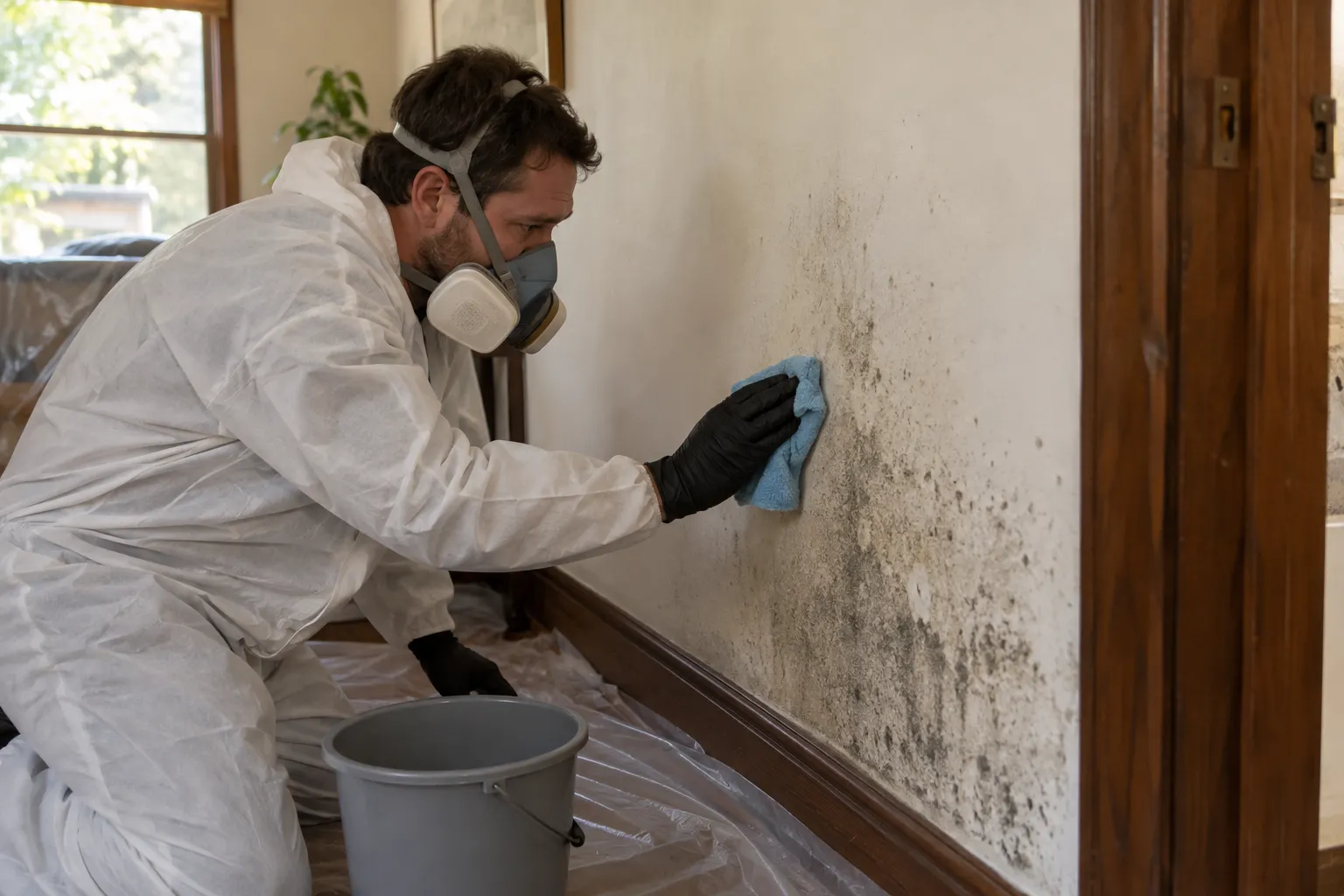
Remove and review
Once suitable surface work is completed, retain the rainfall record. A stain spreading again after rain calls for source investigation, not an assumption that another clean will resolve it.
COMMON AREAS AFFECTED
Different surfaces.
Different decisions.
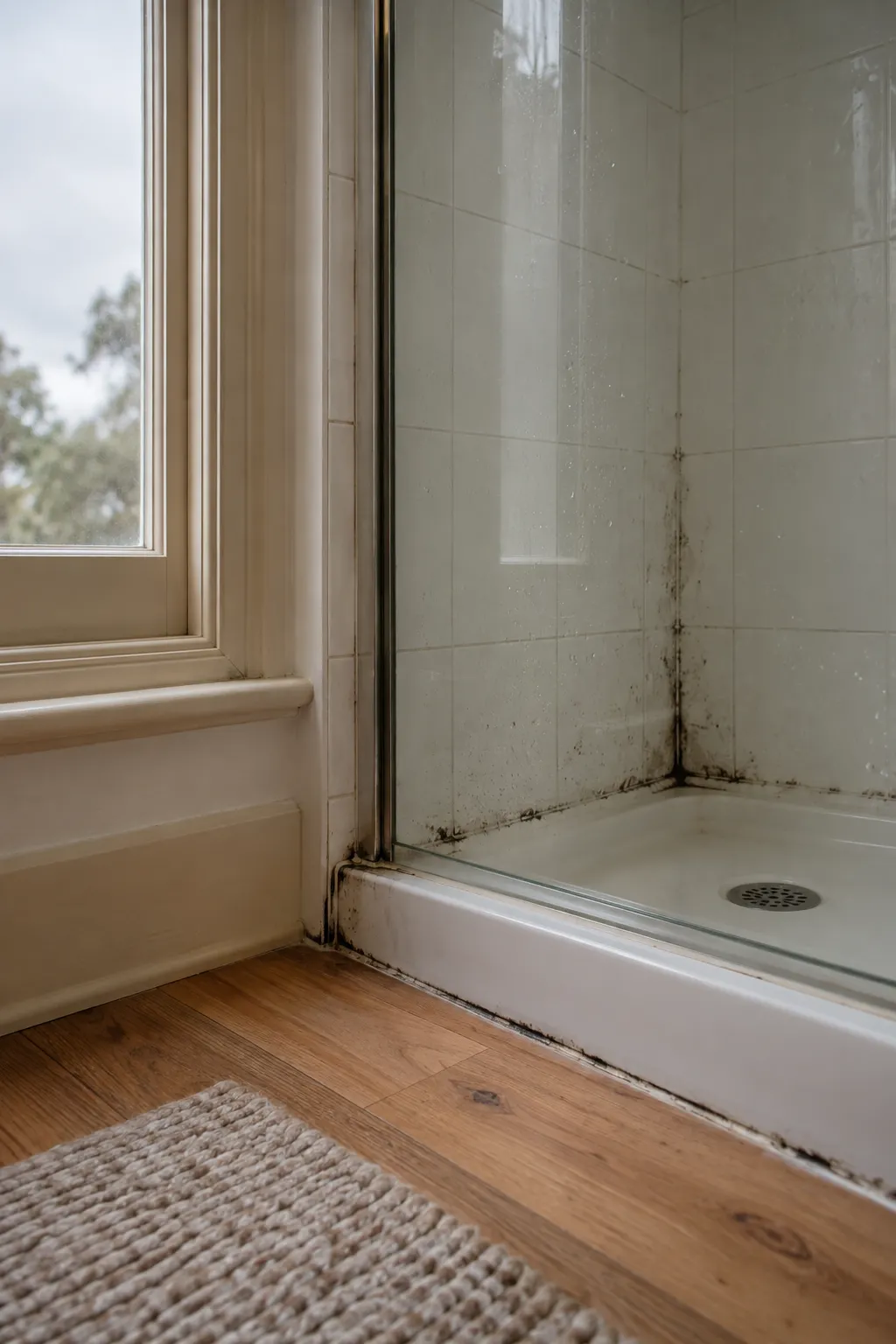
Bathroom junctions
If a bathroom lies near the stain, say so without assuming it is the source. Include the shower routine and any known plumbing work in the ceiling’s history.
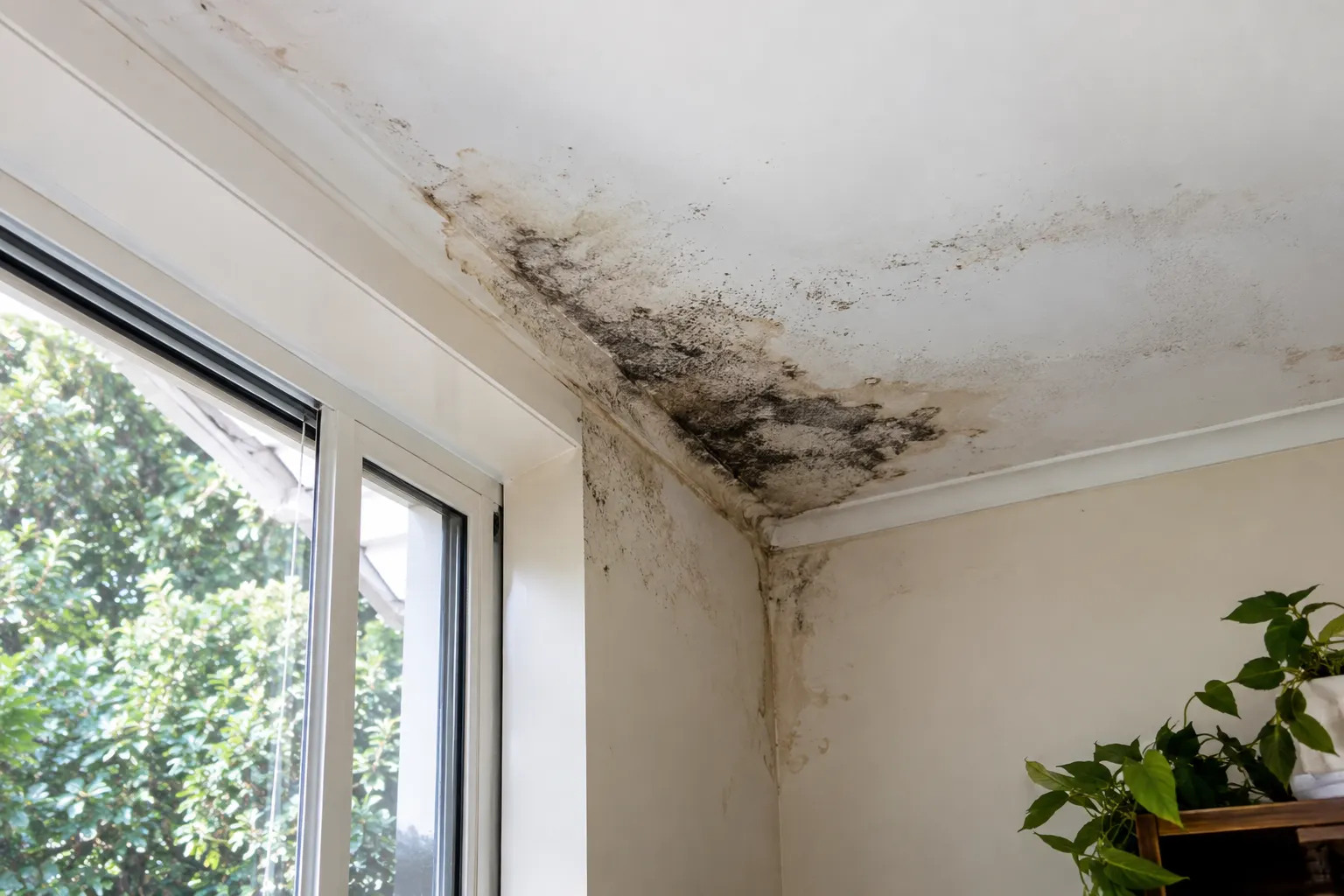
Ceiling surfaces
Photograph the complete stain rather than only its darkest centre. Its changing boundary can help explain what happened during rain, although the pattern does not identify the entry point.
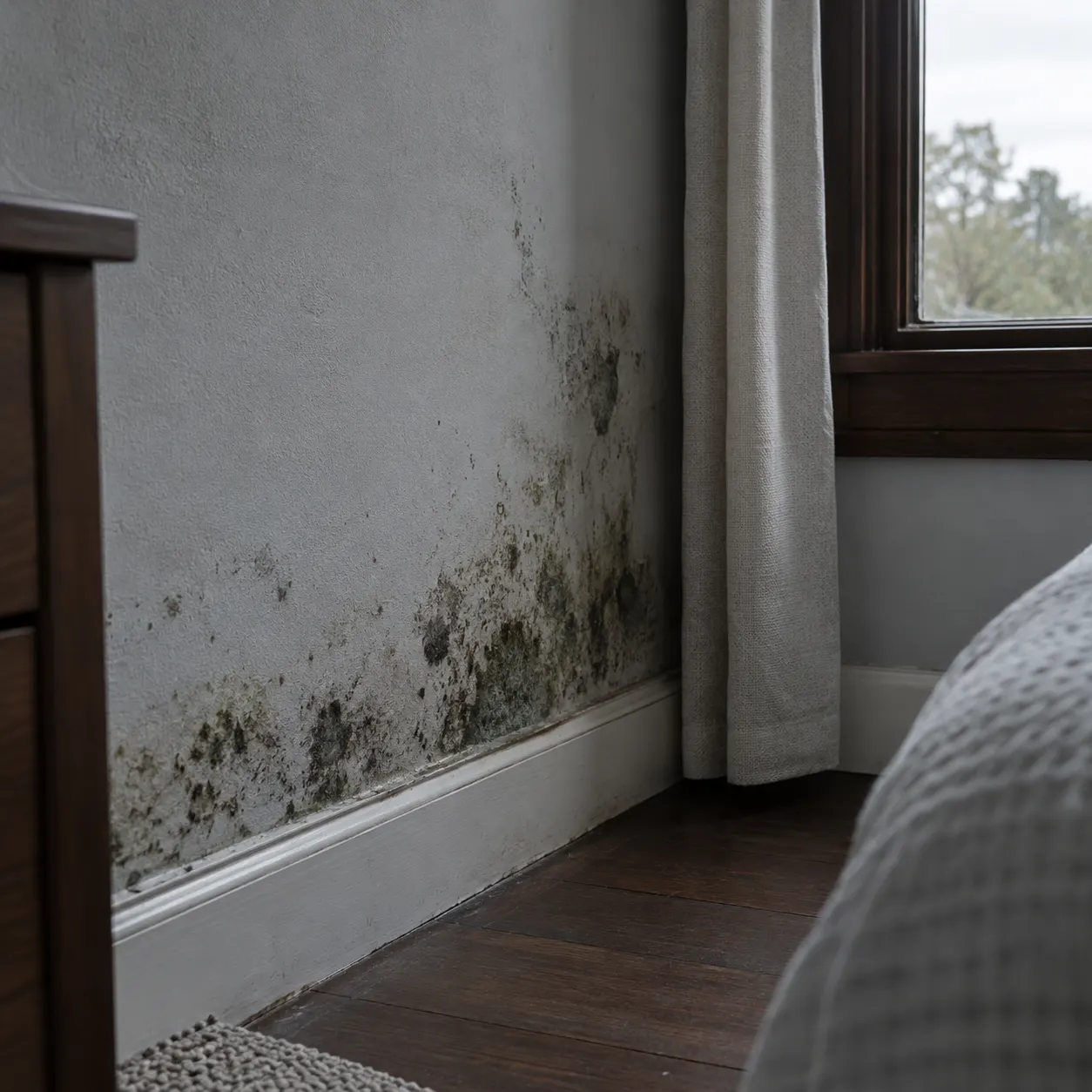
Painted walls
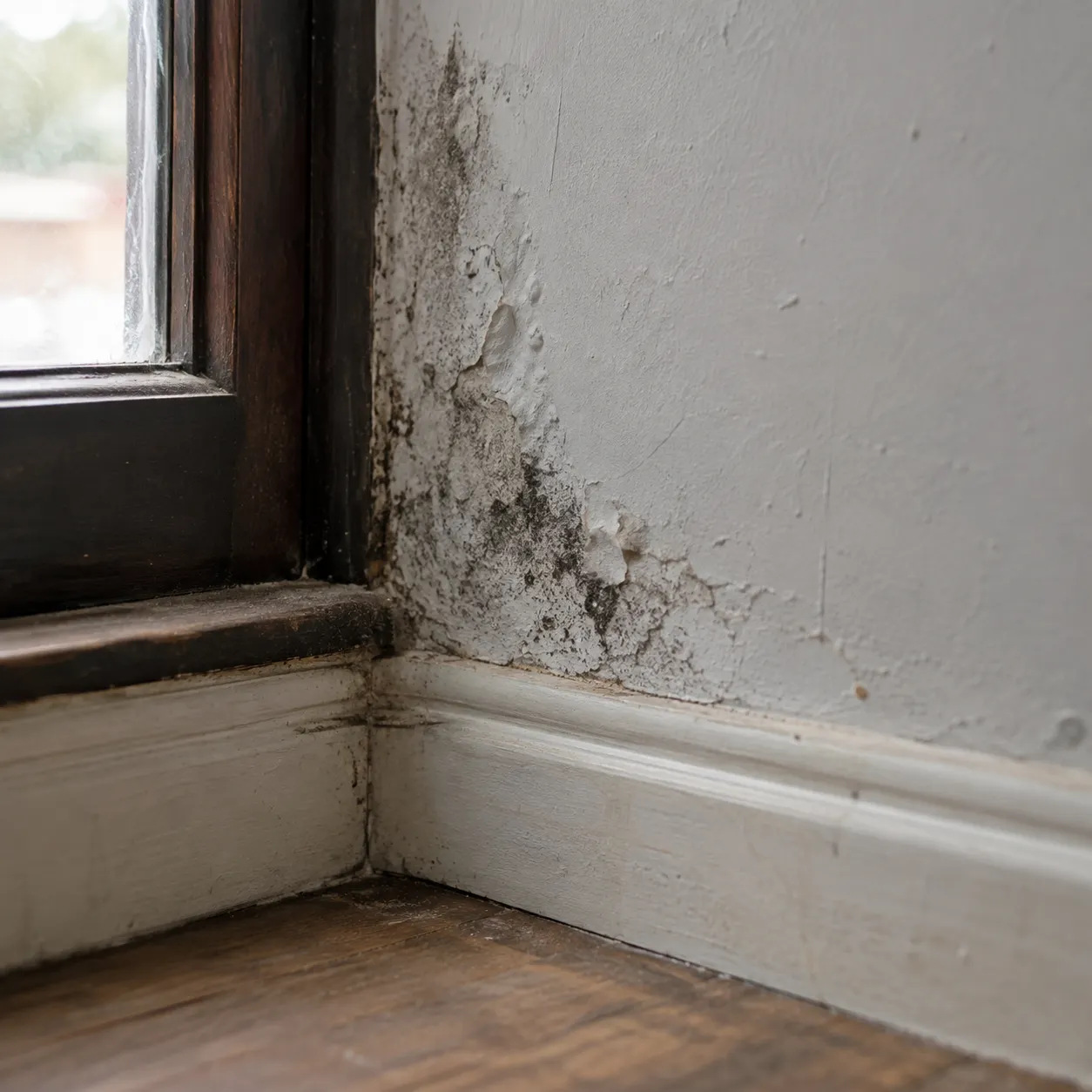
A mark continuing down the wall may involve another finish or a concealed junction. Describe the reachable paint separately from anything covered by furniture or fittings.
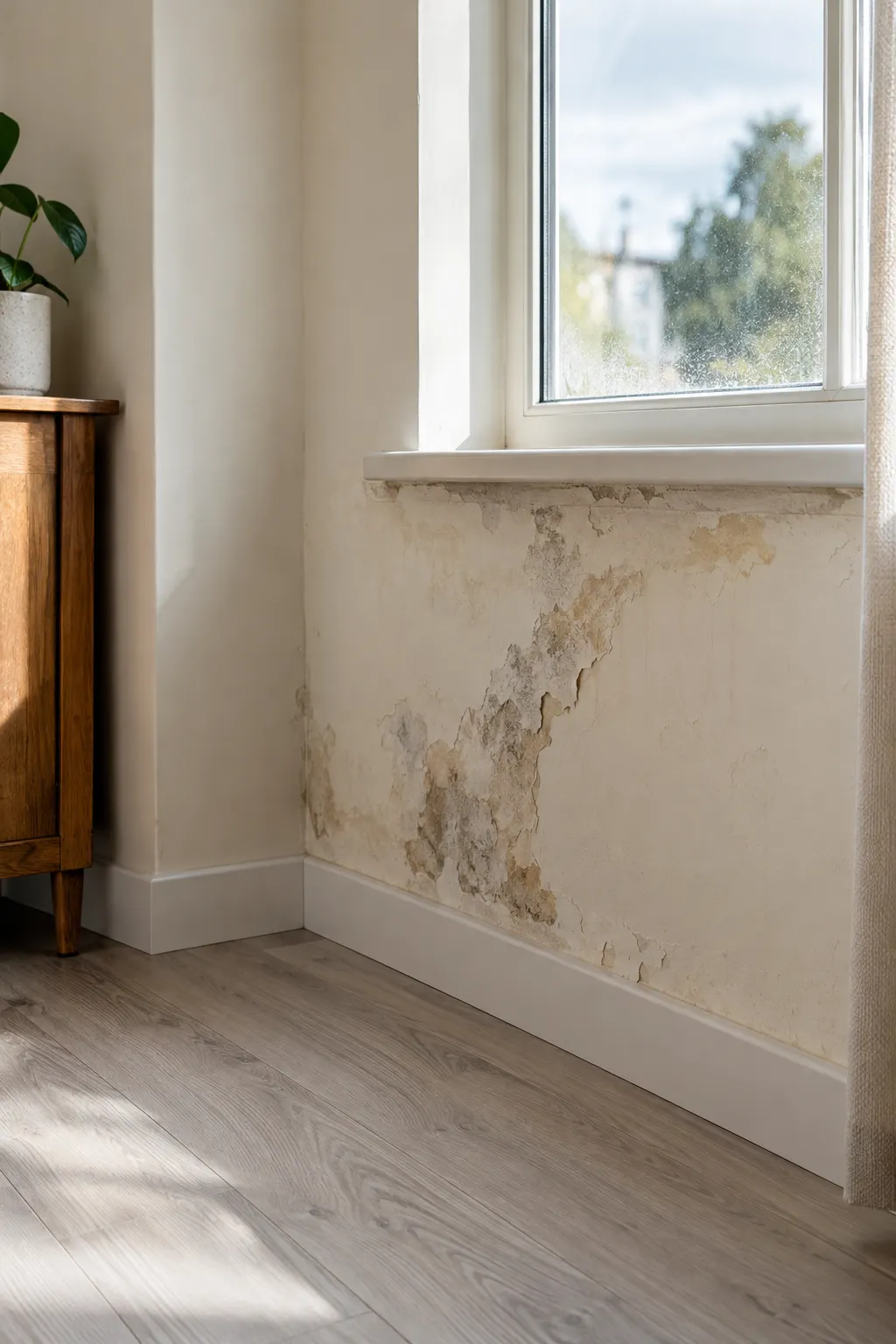
Water-affected rooms
Water entry may affect insulation, flooring or furnishings beyond the visible ceiling. Record known damage, while keeping concealed materials outside promises based only on a surface photograph.
PREVENTION STARTS WITH
Follow the source.
Protect the finish.
Observe the drying pattern
Follow up on repeated growth of the stain after rain. Retain dates and repair notes so investigation has an account of change, rather than relying on how the room looks on one dry day.
Follow up before decorating
Do not let a decorative repair obscure a ceiling that is still changing. Ask how remediation work will be separated from leak repairs, drying and replacement of unsuitable material.
LILYDALE & NEARBY
Lilydale and nearby rooms.
Nearby enquiries can also use the Chirnside Park and Mooroolbark guides. At a Lilydale address, describe the affected ceiling and its rainfall history when calling; confirm property-specific arrangements and access rather than assuming another room’s scope applies.
BEFORE YOU CALL
The useful
questions.
Should I wait for rain before calling?
You can describe earlier changes now. Photos and dates help explain the pattern; do not deliberately expose the room to further water to demonstrate it.
Can an old brown stain prove the ceiling is wet?
Not by colour alone. Explain whether it is changing and what repairs occurred, so current moisture and remaining finish damage can be assessed separately.
Is roofing work part of ceiling cleaning?
The removal scope must be discussed. Investigation or repair of a roof is a separate task that may need the appropriate building trade.
What if the plaster looks soft?
Describe that condition before arranging treatment. Damaged board may require repair or replacement decisions, and close-up access should not involve disturbing uncertain ceiling material.
Why keep photos after a repair?
A comparison helps show whether the mark stayed the same or expanded again. Dates connect those changes with rain and earlier work on the property.
What should a Lilydale enquiry include?
Provide the address, room, stain history and any roof or plumbing repair dates. Mention the ceiling height and anything blocking practical access.
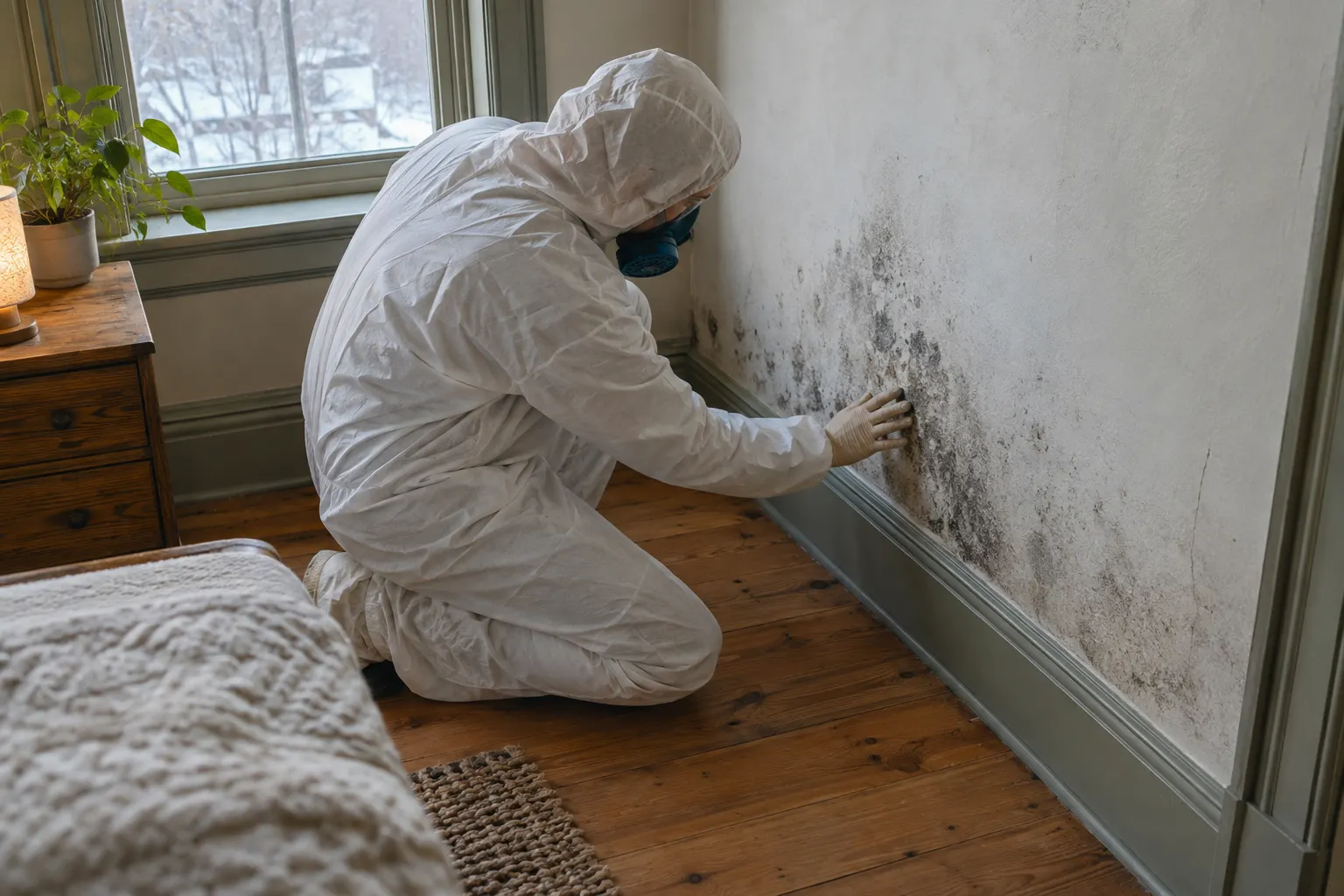
TELL US WHAT YOU CAN SEE
Describe the mark.
Plan the next step.
Bring the stain photos and repair timeline to the conversation. Call 03 8652 1296 about your Lilydale ceiling so the moisture, material and access questions can be discussed together.
Local context: Victorian Government Yarra Ranges localities