
MELBOURNE · THE CONNECTED PROCESS
Mould Remediation
Mould remediation is a coordinated process, not simply the application of a cleaning product. It brings together assessment, moisture checks, air filtration, appropriate treatment and physical removal of visible growth. Our service focuses on accessible walls, ceilings and floors. The plan also needs to recognise leaks, condensation and other damp conditions that can support recurrence. Repairs and investigation of concealed areas are separate matters to agree before work begins.
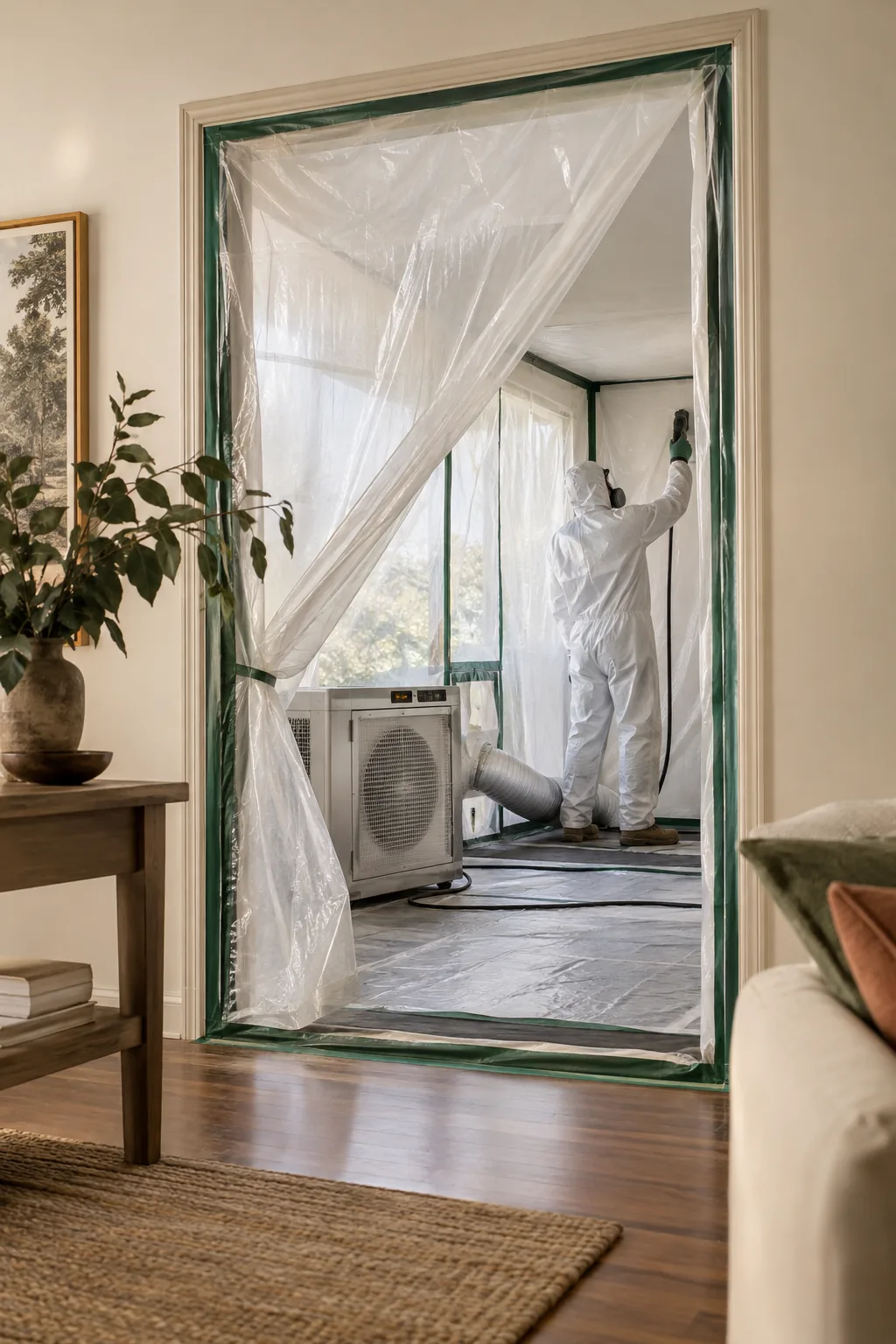
A connected process
Assessment, filtration, treatment and removal have distinct roles.
Defined working areas
The scope identifies visible and accessible affected surfaces.
Moisture matters
Prevention advice accompanies treatment; repairs remain separate.
Start with the extent and the conditions
The first stage is to understand the affected areas. The technician assesses visible growth, its extent and the accessible surfaces involved. Humidity and moisture checks help investigate the conditions around the contamination. Your observations about previous leaks, repeated cleaning and regrowth add context to those findings.
A plan should distinguish work that can be carried out on the surface from concerns that need additional investigation. A musty smell or damp mark may justify further discussion, but does not establish the condition of an entire wall cavity. Access and the material itself can limit the standard scope.
If you are still deciding what kind of visit is appropriate, start with a mould inspection and moisture assessment. The purpose is to gather enough relevant information to agree on the next step.

Use filtration as part of the work process
The service process includes a HEPA air scrubber before treatment, with filtration continuing during and after the work. Filtration contributes to managing particles in the working environment while contamination is being disturbed and removed. It is one part of the process, alongside surface treatment and physical removal.
Air filtration should not be presented as a substitute for cleaning an affected wall or stopping a leak. It also should not be turned into a promise that every airborne particle has been eliminated. The useful question is how the equipment and working arrangements fit the agreed job.
Ask about the work area, access and preparation before the appointment. Explain whether neighbouring rooms, furniture or other constraints affect how the space can be used during treatment.
Agree on suitable treatment and removal
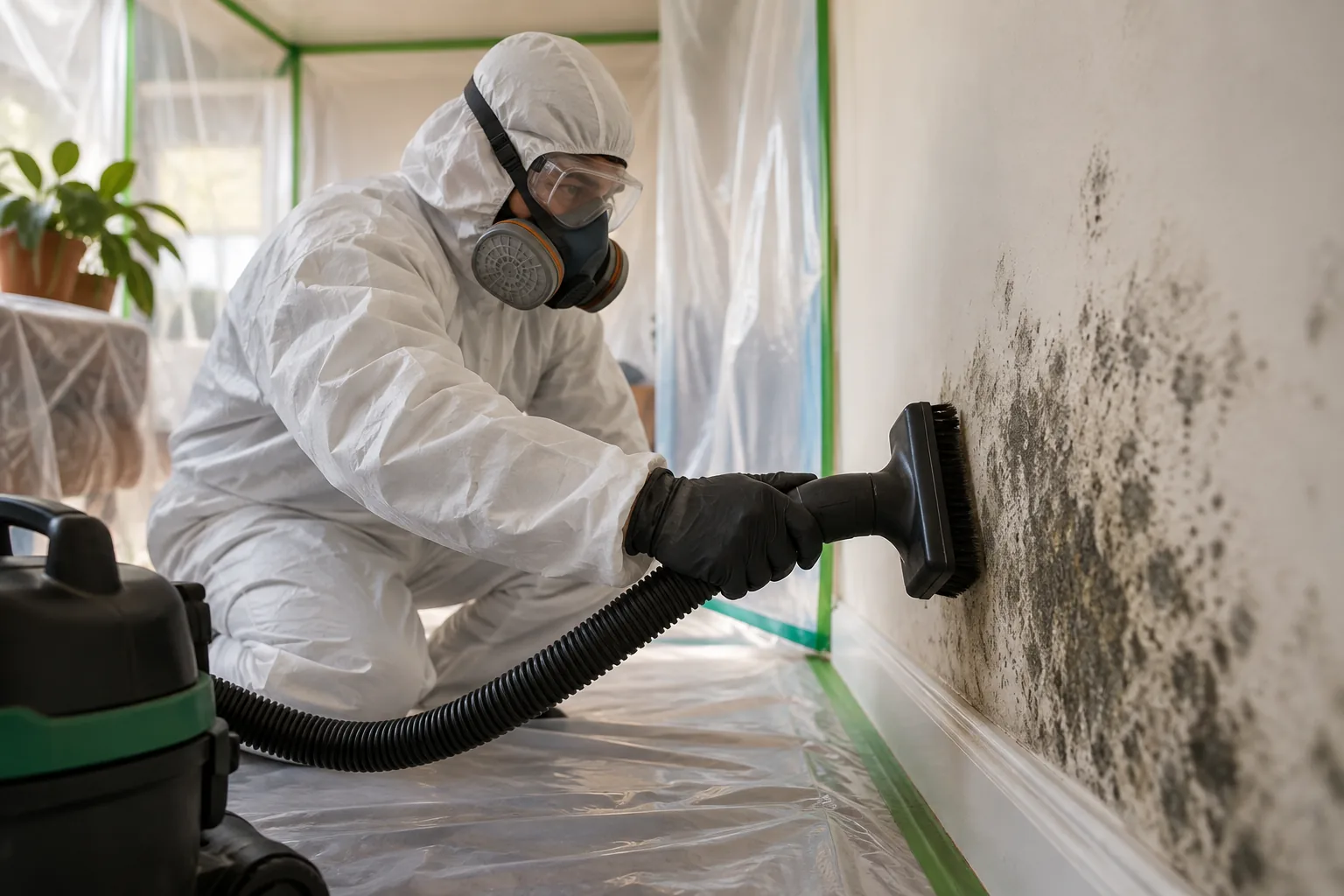
The proposed treatment needs to match the affected area, material and access conditions. The service information describes suitable surface treatment and professional removal equipment. The method forms part of the agreed scope; it does not establish a cosmetic restoration result or a guarantee about concealed contamination.
Treatment and removal have different functions. Treatment is applied to the affected area using the chosen method. Physical removal deals with visible growth and residues on the agreed accessible surfaces. See how mould treatment fits within the process for a closer explanation.
Materials that are damaged, fragile or inaccessible may need separate consideration. Tell the technician about peeling finishes, previous decorating work and any areas that cannot be reached. Removing building materials is not automatically included in a surface-remediation appointment.
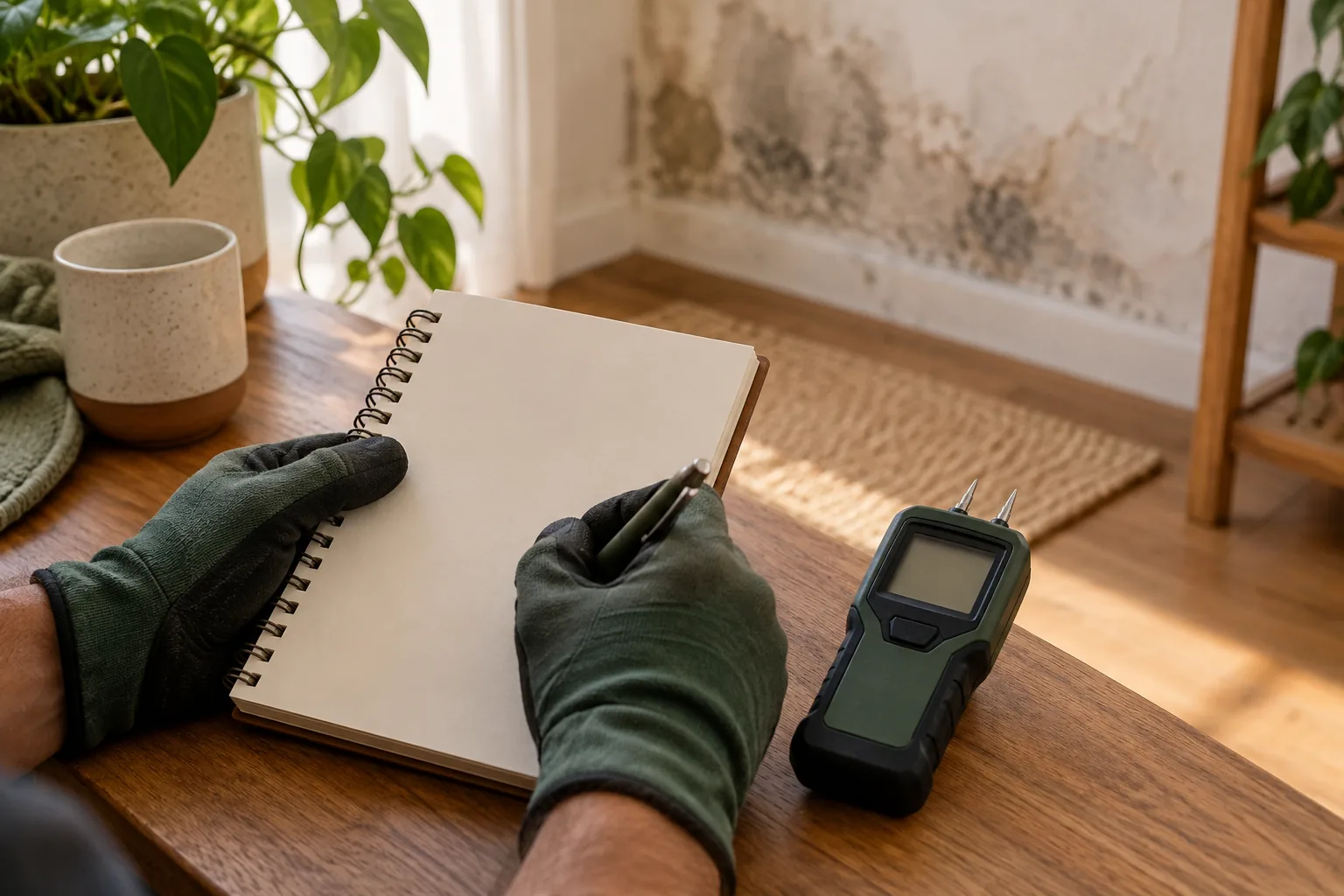
Know where the standard scope ends
The service covers visible, accessible mould on walls, ceilings and floors. Furniture, sofas, mattresses, carpets, curtains, clothing and other textiles are excluded. Concealed spaces, including wall cavities and insulation, may require special inspection or additional work outside that standard scope.
Remediation does not include plumbing, roof or structural repairs. If those faults are contributing to dampness, arrange the appropriate repair separately. Treating contamination without resolving continuing water intrusion leaves the conditions for further growth in place.
Cosmetic staining may also remain. A surface can need repainting or decorative restoration after mould work, with a separate quote where suitable. Keep that distinction clear when discussing what you expect the room to look like after treatment.
Plan for time, price and room preparation
The mould service is not charged by the hour. The service guidance gives approximately three hours per room on average, with actual time depending on the room, contamination and access. The room-based price schedule also includes different planning durations by affected-area category. Confirm the estimate for your property rather than relying on one universal duration.
Listed non-member mould removal prices are AUD $650, $850 and $950 per room for small, medium and large affected areas. Inspection is priced separately. The price guide explains the categories; additional work needs its own agreement.
Before the visit, ask what must be moved, how access should be arranged and whether the room can be used during treatment. Mention affected textiles and fragile items. A clear scope makes it easier to prepare without assuming excluded work is included.
Moisture management after the appointment
Existing growth is the immediate treatment target. Long-term prevention depends on the conditions that allowed it to develop. Follow up on leaking plumbing, water entering through the building and persistent condensation. The relevant repair or maintenance work is separate from removal but important to reducing recurrence.
Room use and ventilation can affect damp conditions. Use bathroom and kitchen extraction, check window condensation and allow circulation around furniture. If a previously affected surface becomes damp again, investigate the cause rather than treating the return as a purely cosmetic problem.
Remediation cannot promise that mould will never return. It gives you an agreed process for the contamination present and advice about the moisture issues that need attention. Discuss your property by phone and confirm appointment availability before booking.
A plan with clear boundaries.
Agree on the assessment, filtration, treatment and removal stages. Identify repairs and additional investigations that sit outside the accessible-surface work.
QUESTIONS BEFORE YOU BOOK
Useful answers.
Clear scope.
How is remediation different from mould removal?
Removal is the physical cleaning of existing growth from accessible surfaces. Remediation is the broader plan: assessment, moisture checks, filtration, suitable treatment, removal and prevention advice. It does not automatically include building repairs.
Why is HEPA filtration used?
It forms part of managing airborne particles while mould work takes place. The air scrubber runs during the process alongside treatment and physical removal. Filtration alone does not clean affected surfaces or address the source of dampness.
Does remediation cover every room in the house?
Only the areas included in the agreed scope are covered. Explain where growth is visible and any concerns about other rooms. Additional surfaces or concealed areas need assessment and agreement rather than being assumed to be included.
Are damaged plasterboard and insulation replaced?
Replacement of building materials is not established as part of the standard visible-surface service. Concealed contamination and material damage require separate investigation or work. Discuss that concern before agreeing to the job.
Can remediation guarantee no recurrence?
No. Existing contamination can be treated and removed, but persistent dampness can allow new growth. Repairing leaks and managing condensation or ventilation are essential follow-up steps, without a promise that recurrence is impossible.
How do I prepare for the visit?
Confirm the affected areas, access and room-preparation requirements when arranging the appointment. Ask what to move and explain delicate finishes or excluded textiles. Also mention any active leak that has not yet been repaired.
Where can I check the costs?
The Prices page lists the non-member removal categories and inspection amounts. Explain the rooms and affected surfaces so the appropriate category and any separate work can be confirmed. No hourly treatment rate is advertised.
Discuss mould remediation.
Talk through the affected rooms, known dampness and the work you need. Agree on assessment, the treatment scope and any separate repairs.