
MELBOURNE · DARK GROWTH, CLEAR QUESTIONS
Black Mould Removal
Dark mould patches can be unsettling, especially when they return or spread across a wall or ceiling. Colour alone does not identify the species or explain the cause. Our black mould removal service starts with assessment of the visible growth and moisture conditions, then suitable treatment and removal from accessible surfaces. Tell us where the patch is, how long it has been there and whether the room has experienced leaks or persistent dampness.
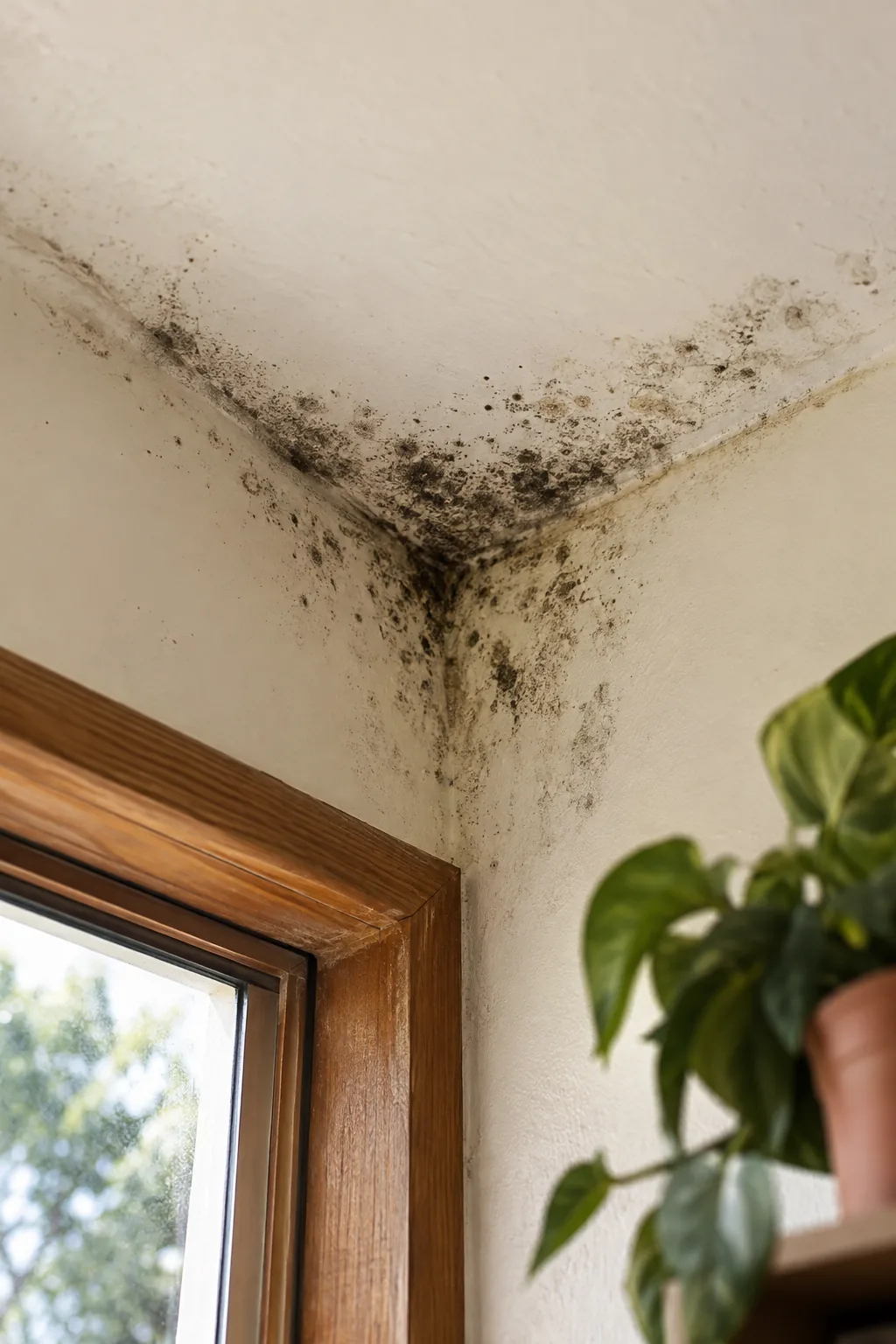
Assess the visible growth
Location and extent matter more than a colour label.
Check damp conditions
Moisture findings help investigate why the patch appeared.
Define the surface work
Accessible walls, ceilings and floors are the standard scope.
Black is a description, not an identification
People often use the term black mould for dark growth on a wall, window reveal or ceiling. That is a visual description. It does not establish a species, prove a particular cause or determine how far the contamination extends. An assessment should consider the affected material, location, visible extent and moisture conditions.
Avoid assuming that a small dark patch is harmless or that every dark patch requires the same method. The useful starting point is what has happened in that room: a recent leak, repeated condensation, a surface that stays damp or growth returning after cleaning.
If you are unsure about the extent or source, a mould inspection can help establish the accessible areas and the next suitable step. Routine species identification or laboratory sampling is not established as part of the listed inspection.
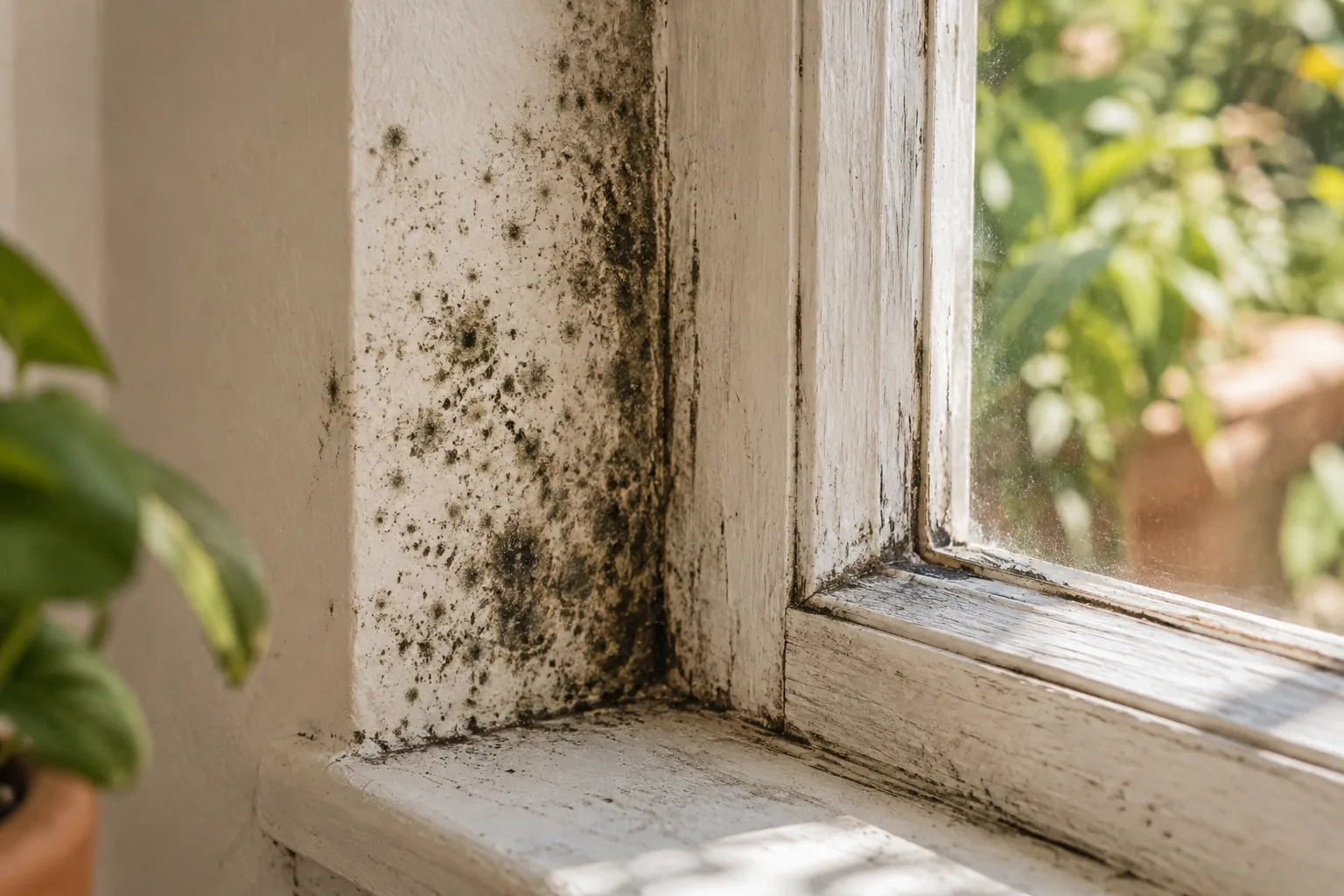
Where dark growth can develop
A window reveal may stay damp because of condensation or water entering around the frame. A ceiling patch may follow a leak from above or damp conditions in the room. Growth along a cool wall or behind furniture can accompany limited air movement and persistent surface moisture. These patterns provide context; none is a complete diagnosis on its own.
Note whether the patch changes after rain, showering or repeated use of the room. Explain any previous cleaning and whether the moisture issue was addressed at the time. If the affected area is larger than it first appeared, mention adjoining surfaces as well.
Peeling paint, a musty smell and continuing damp marks deserve discussion. Concealed contamination may need additional investigation, but those signs do not by themselves confirm mould inside an entire wall or ceiling cavity.
What cleaning cannot fix
A surface can look improved while the underlying damp condition remains. Removing growth does not mend a leaking roof, repair plumbing or change the ventilation in a room. When water continues to reach the material, new growth can develop after treatment. The moisture source needs its own attention.
Cosmetic staining is another separate issue. Dark marks can remain on a painted wall or ceiling after mould work, and there is no guarantee that every stain will disappear. Repainting or decorative restoration can be discussed separately. Do not use appearance alone to decide whether all necessary moisture work is complete.
Mould-affected textiles, including carpets, curtains, mattresses and clothing, are excluded. Concealed spaces and damaged building materials also require separate assessment or agreement rather than being assumed to be included.
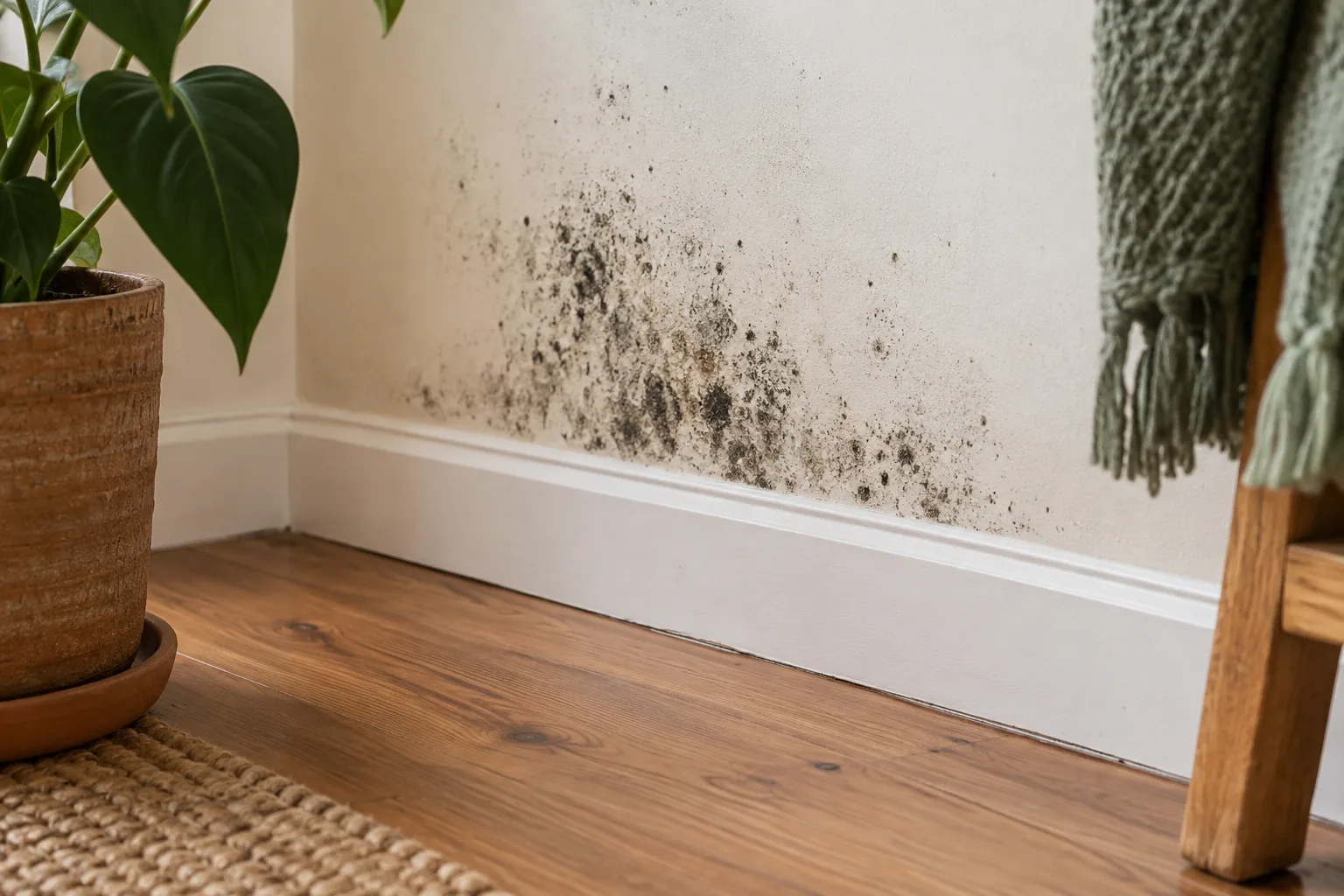
A removal plan for the actual surface
The technician assesses visible growth and checks moisture conditions before agreeing on treatment. The standard service focuses on accessible walls, ceilings and floors. The surface condition, extent and access influence the work; a painted wall with fragile finishes may need a different approach from another accessible hard surface.
The process includes HEPA air filtration, suitable treatment and physical removal with professional equipment. Filtration is part of managing particles during the work. It is not a promise that the whole building is free of contamination, and the dark colour does not change that limitation.
Read about the visible-surface removal service for the standard scope. If several stages of assessment, filtration and treatment need to be considered together, the remediation process explains that broader plan.
Prepare useful information before calling
You do not need to identify the species. Describe the rooms and surfaces, the approximate extent and how the patch has changed. Explain known leaks, recurring condensation and any attempts to clean or paint over the area. Tell us whether access is restricted by furniture, height or another condition.
Ask how the area should be prepared and what must be moved before a visit. The technician needs to understand the agreed accessible surfaces and any fragile finishes. Mention affected soft furnishings so they are not mistakenly included in expectations for a hard-surface service.
If you have a particular reporting requirement, such as a document requested by an insurer or property manager, describe it before booking. Confirm what can be provided rather than assuming the removal service includes a specialist report or certificate.
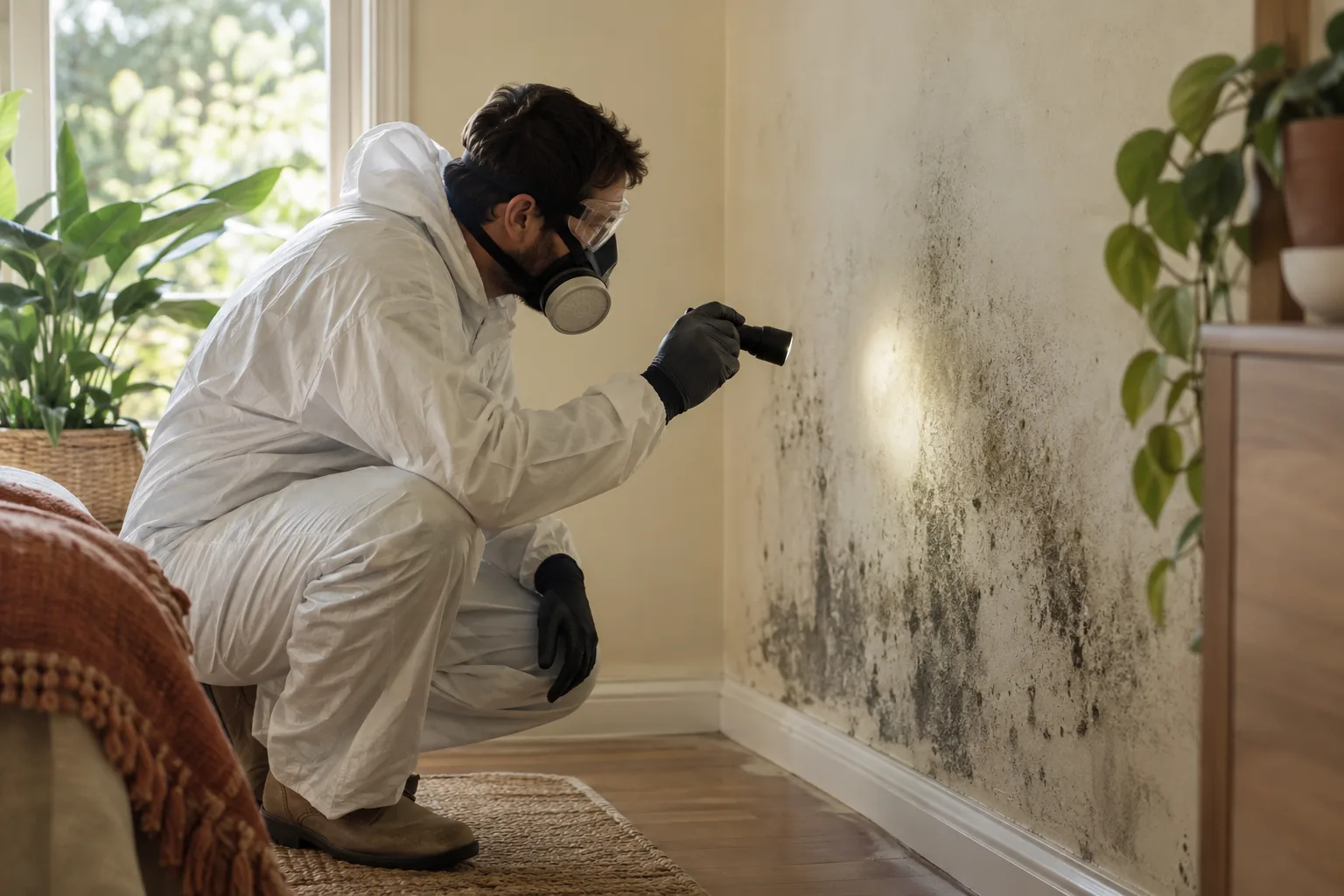
Costs, duration and the next step
There is no separate black-mould surcharge established in the supplied pricing. The listed non-member removal categories are AUD $650, $850 and $950 per room for small, medium and large affected areas. The appropriate category depends on the affected area, not simply its colour. The Prices page explains the listed categories and inspection amounts.
Treatment is not charged hourly. The service guidance allows approximately three hours per room on average, with actual time affected by access, contamination and the work involved. Confirm an estimate for the room rather than assuming every patch takes the same time.
After removal, keep attention on moisture and ventilation. If growth returns, discuss what has changed and whether a leak or damp condition persists. Call 03 8652 1296 to discuss your property and confirm availability for your address.
Assess the conditions behind the colour.
A dark patch needs a surface and moisture assessment, rather than assumptions about species. Explain how it developed and what has happened after previous cleaning.
QUESTIONS BEFORE YOU BOOK
Useful answers.
Clear scope.
Can you identify the species from a black patch?
No. Colour alone does not reliably identify a mould species. The service assesses the affected surfaces and moisture conditions. Laboratory sampling or a specific identification report should not be assumed to be included.
Is black mould treated differently from other visible mould?
The plan is based on the surface, extent, access and moisture conditions. A dark colour is not enough to select a method on its own. Assessment helps decide the suitable treatment and removal scope.
Can dark marks remain after treatment?
Yes. Cosmetic stains may remain on painted walls or ceilings. Mould work does not guarantee a complete cosmetic restoration; repainting or decorating may require a separate quote and agreement.
Does a musty smell prove there is hidden black mould?
No. It is a useful observation to discuss, but does not establish the location, species or extent of concealed growth. Investigation of wall cavities or other hidden spaces needs separate consideration.
Is there an extra fee because the growth is black?
The supplied pricing does not list a separate colour-based charge. Non-member room prices are based on small, medium or large affected areas. Describe the surfaces and extent so the applicable category can be confirmed.
What if the patch keeps returning?
Discuss the history of the room and any continuing dampness. Repeated growth can accompany an unresolved leak, condensation or ventilation concern. Removing the current patch without changing those conditions may not prevent recurrence.
Can you remove it from curtains or a mattress?
No. The standard scope is accessible walls, ceilings and floors. Curtains, mattresses, carpets, clothing and other textiles are excluded. Mention those items before arranging an appointment.
Discuss black mould removal.
Describe the dark patches, location and any previous regrowth. Confirm a suitable assessment and the accessible surfaces involved.