
LAUNDRY FIXTURES · MOISTURE · SURFACES
HUNTINGDALE · MELBOURNE
Mould Removal Huntingdale
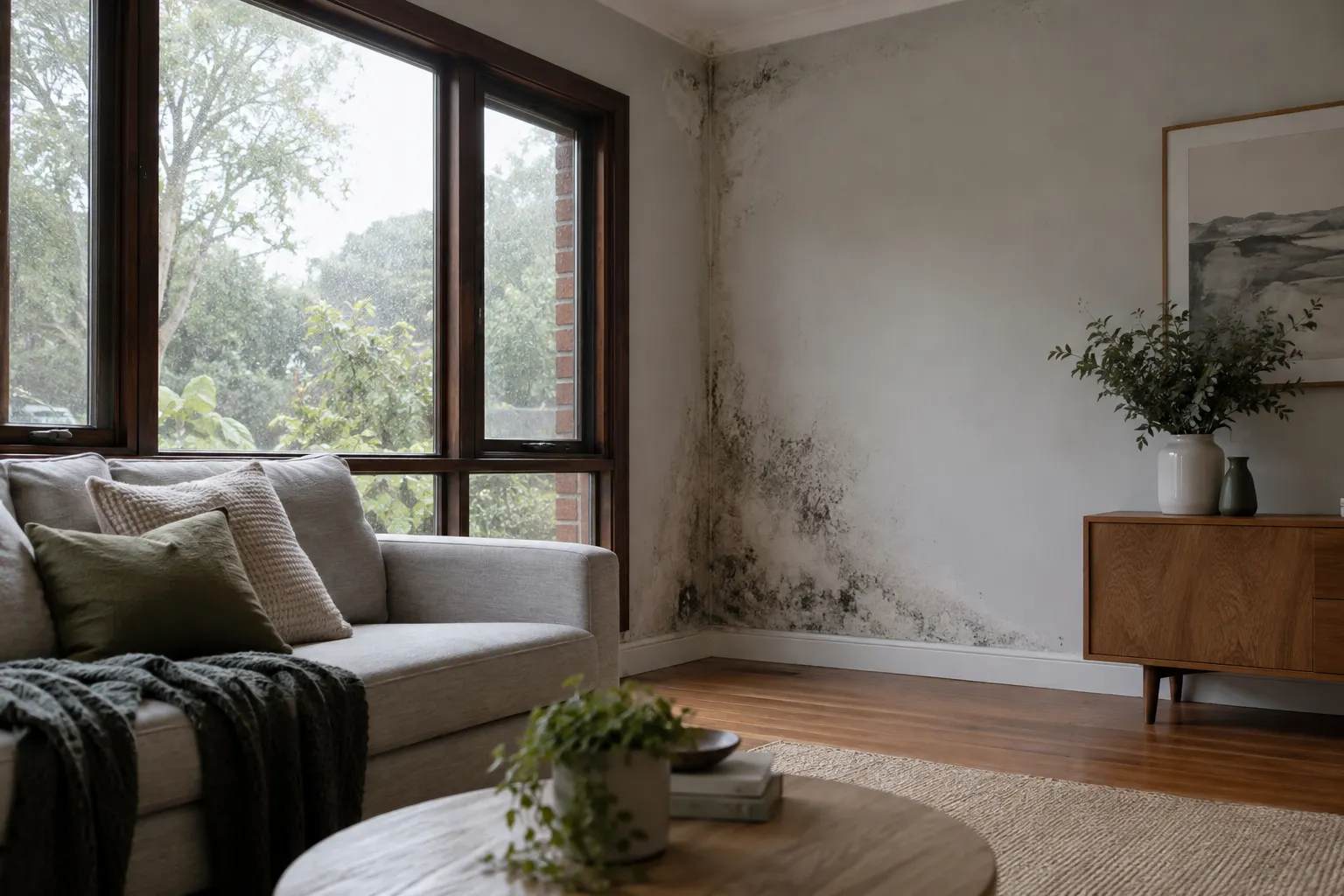
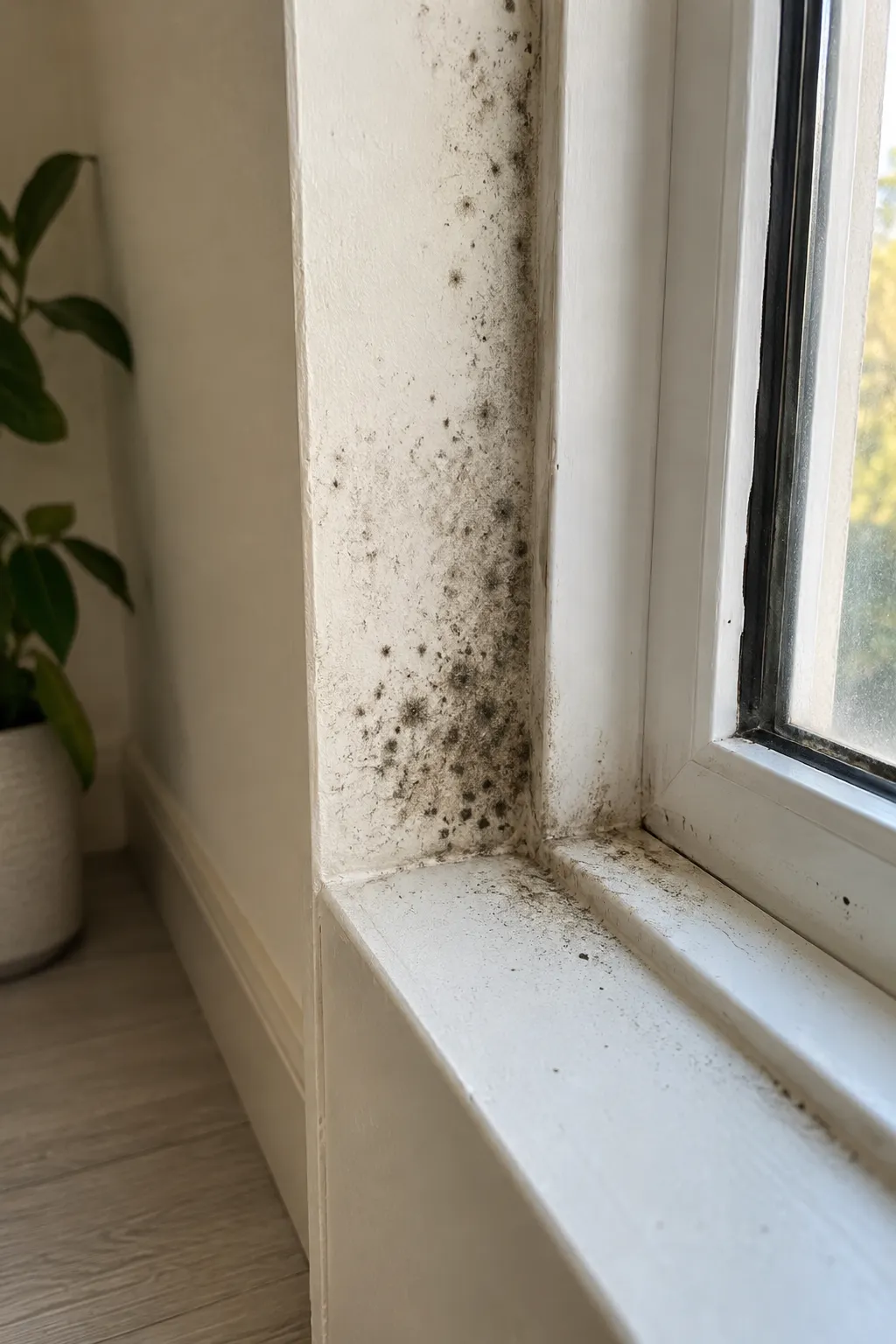
Mould beside laundry fixtures can come with water marks that change during use. In Huntingdale, describe the taps, waste connection and affected wall without dismantling anything for a closer look.
Visible material considered
Moisture history discussed
Access and scope agreed
THE ROOM TELLS A STORY
Check the connection, not just the wall
Monash identifies Huntingdale in its suburb list. If the wall becomes wet when the washing machine operates, record that timing and arrange appropriate fixture investigation. A moisture observation helps direct attention; it does not confirm a plumbing defect. Discuss drying and reachable surface work after the source has been assessed.
Explain fixture-related timing when asking about an accessible laundry inspection. Describe the water you observed without dismantling equipment, and identify any repair already completed so the wall condition is considered separately from unconfirmed plumbing assumptions.
UNDERSTANDING MOISTURE
Make sense of
water during washing-machine use.
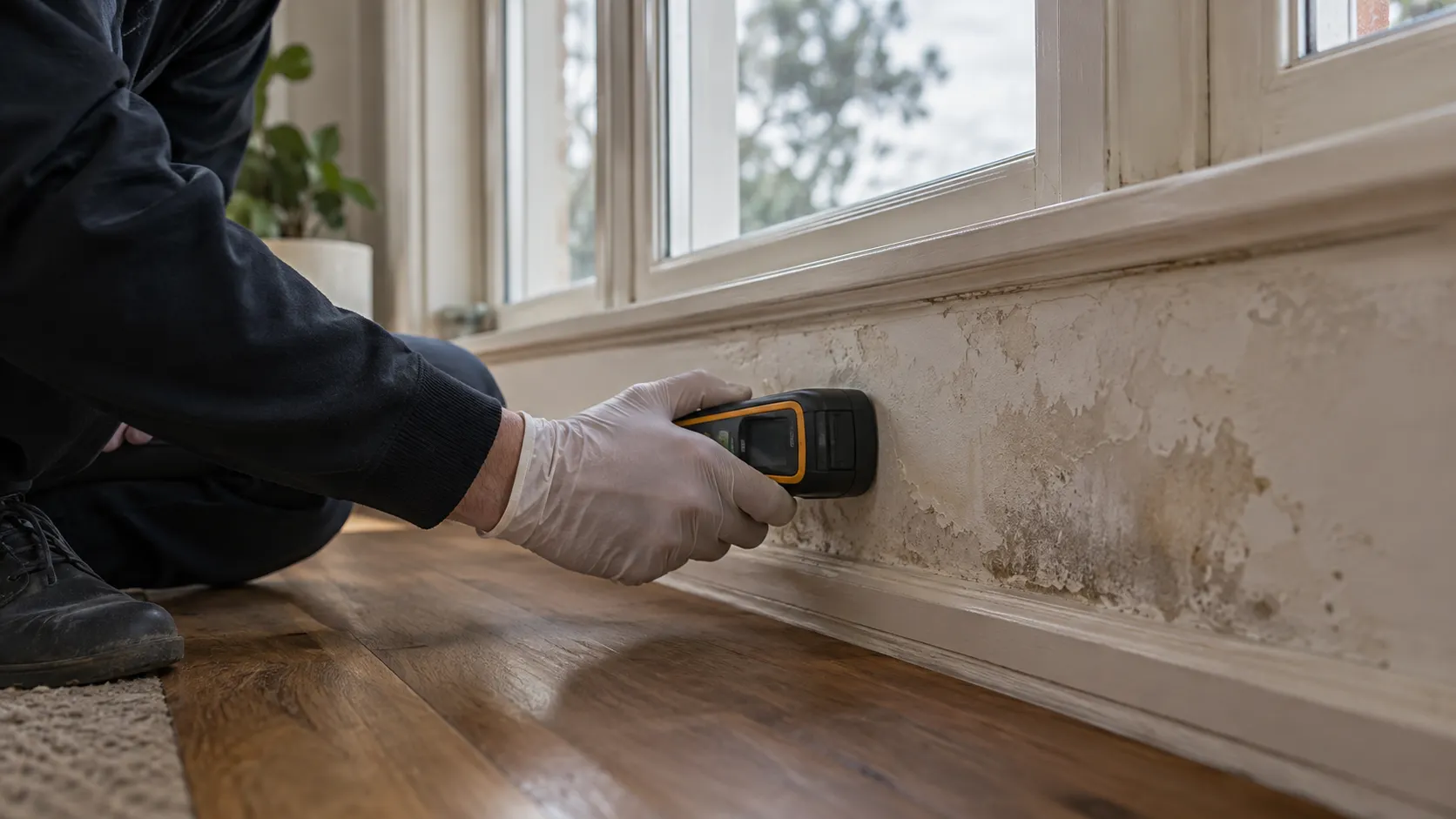
What stays damp
Observe whether dampness appears during a washing cycle or persists independently. Water at a connection and moisture collecting on cooler room surfaces can raise different investigation questions.
Leaks and repairs
A suspected tap or waste issue needs appropriate fixture attention. Report the timing and visible water without taking hoses or fittings apart just to establish a source for the enquiry.
Accessible evidence
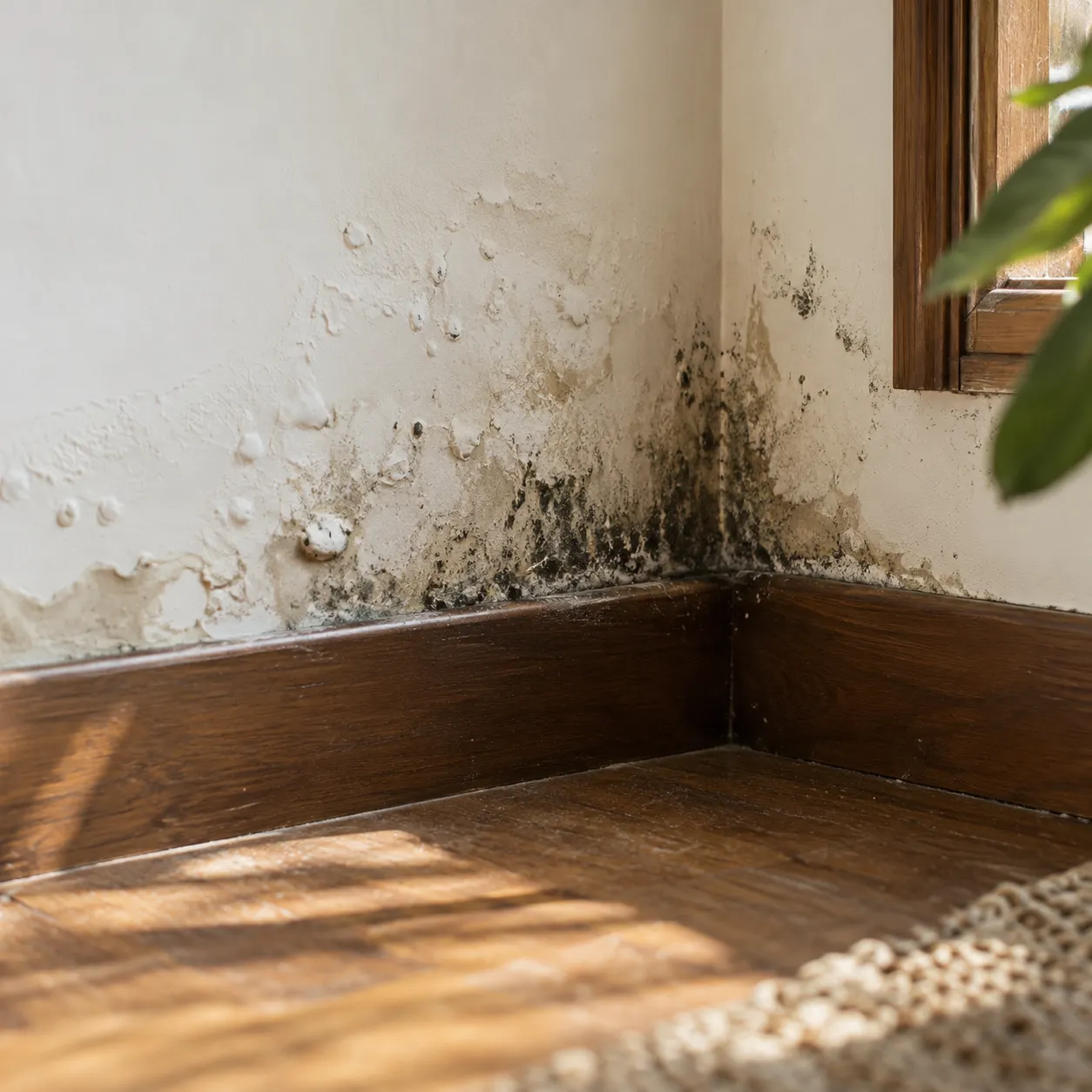
Laundry paintwork, cabinetry and trim may have been affected differently. Describe looseness, swelling or softness so suitable accessible treatment is distinguished from material repair or replacement.
OUR REMOVAL PROCESS
Plan the work
around the room.
Keep the room history
Write down which cycle or activity preceded the dampness. Include any earlier connection repair without running equipment just to reproduce a suspected fault.
Make access practical
Tell us who can move or isolate an appliance if that later becomes necessary. Exposing the wall should not become an unplanned electrical or plumbing job.
Agree the next decisions
Clarify what source investigation remains after removal. A treated wall cannot verify the soundness of fittings, and replacing damaged paint should wait until their condition is understood.
01
Assess the wall beside laundry fixtures
Describe the marked wall’s relationship to taps and waste connections. Ask about accessible removal while leaving fixture investigation to the appropriate task and person.
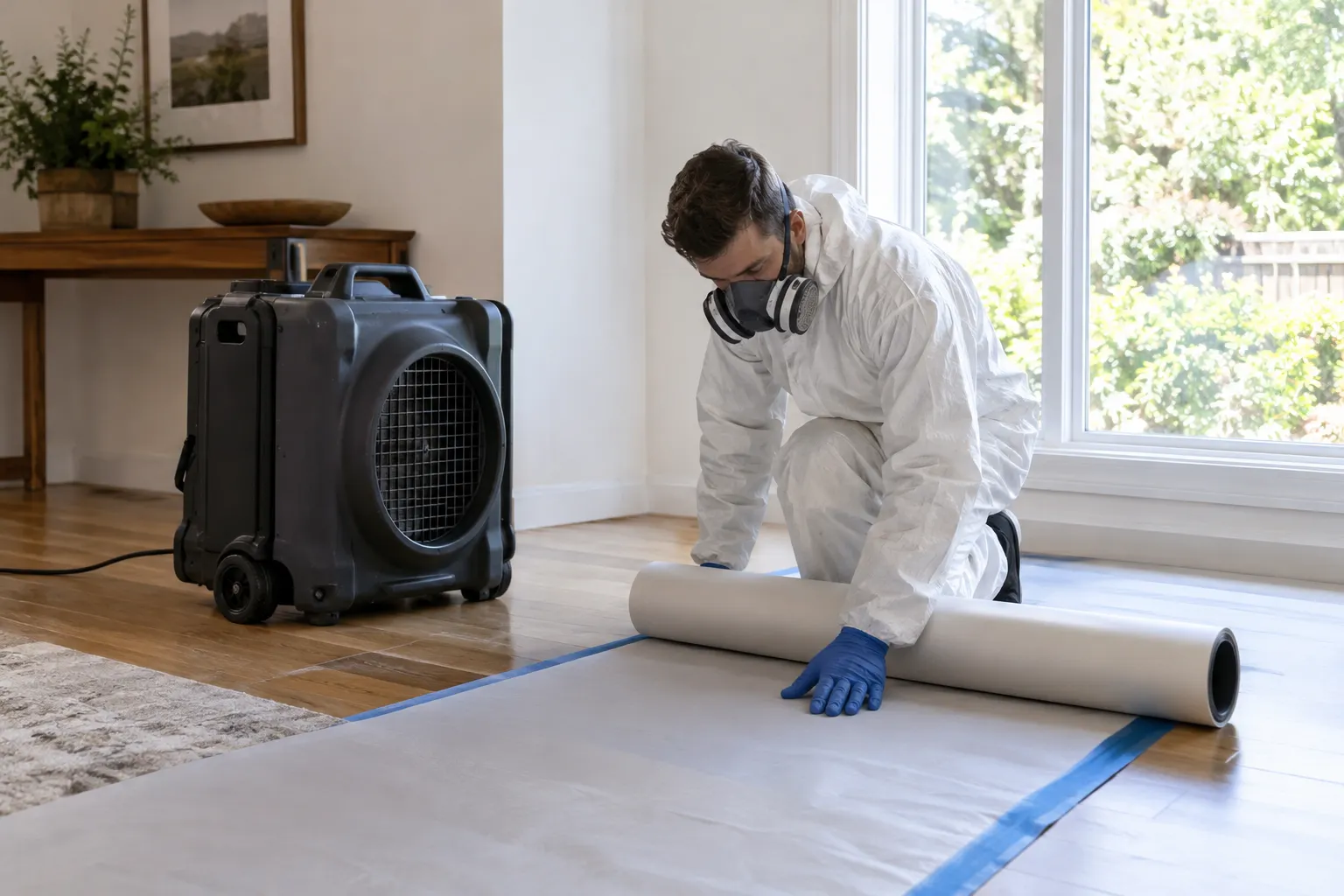
02
Prepare the working area
Arrange access without disconnecting equipment unexpectedly. Mention hoses, cabinetry and any fitting that prevents a safe working position beside the laundry wall.
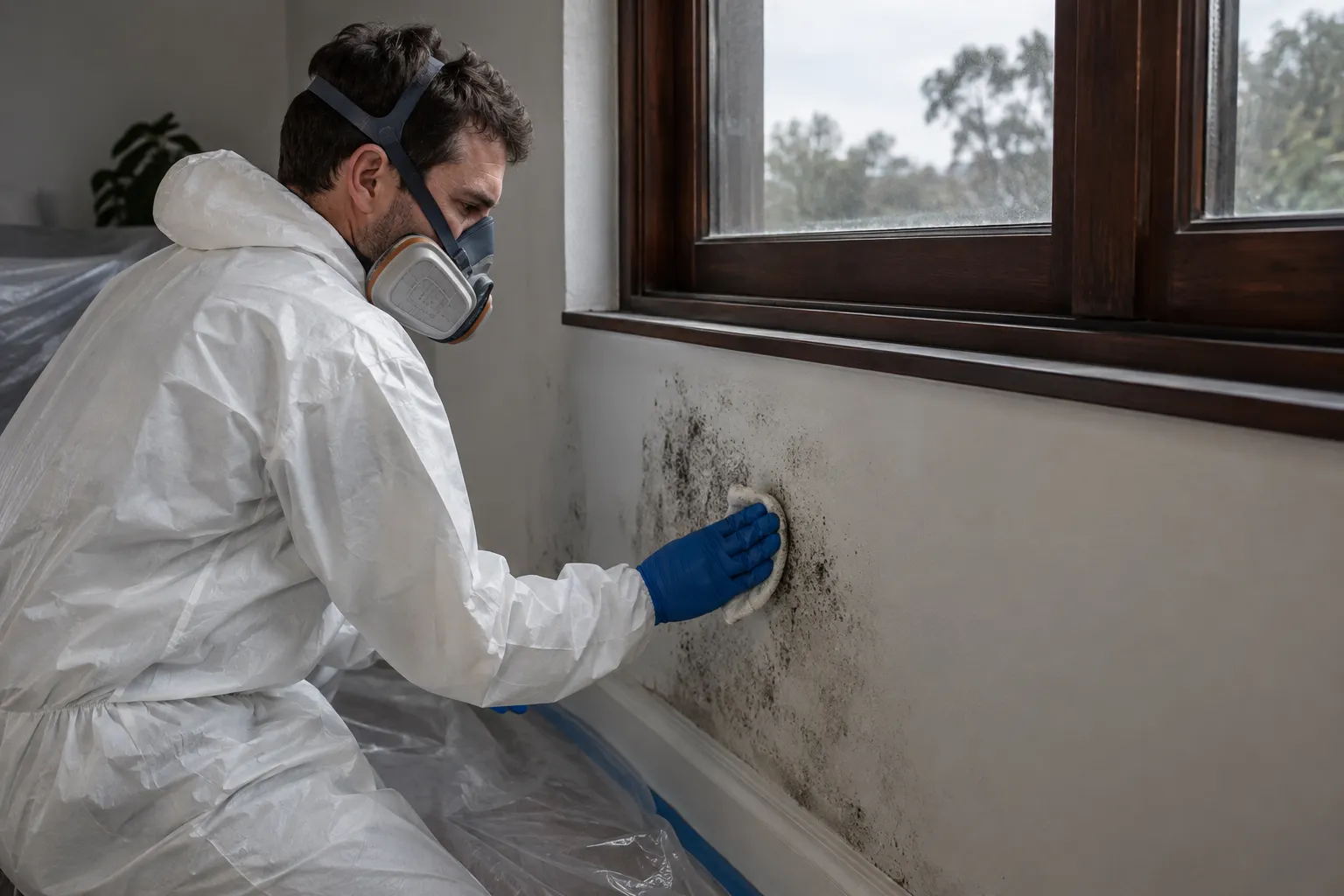
03
Remove and review
Observe the room during ordinary later use after surface treatment. Continued water near a connection needs a plumbing enquiry rather than another assumption about general room humidity.
COMMON AREAS AFFECTED
Different surfaces.
Different decisions.
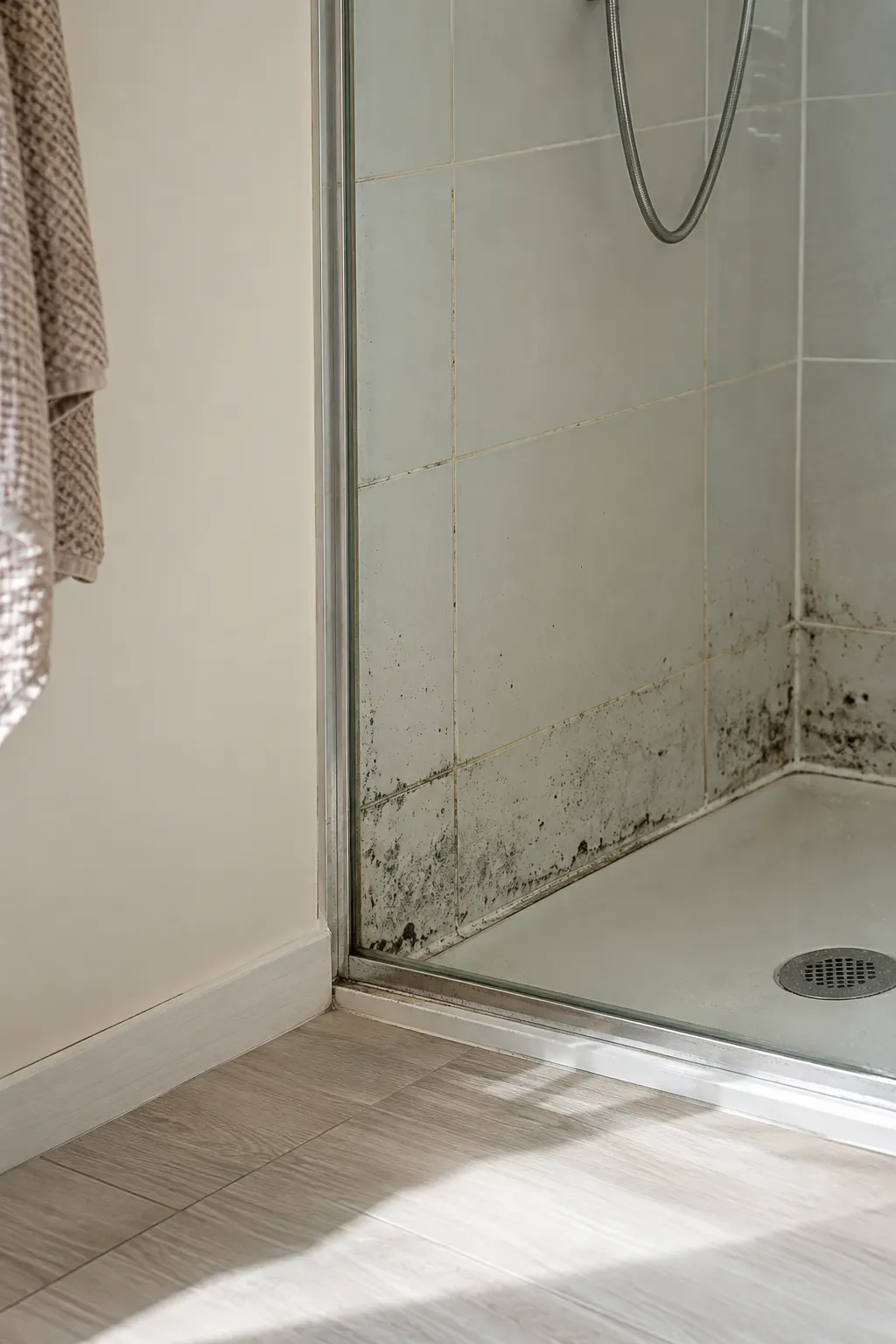
Bathroom junctions
If another wet room is also marked, give it a separate use history. A laundry connection and shower joint should not be treated as one source merely because both areas show growth.
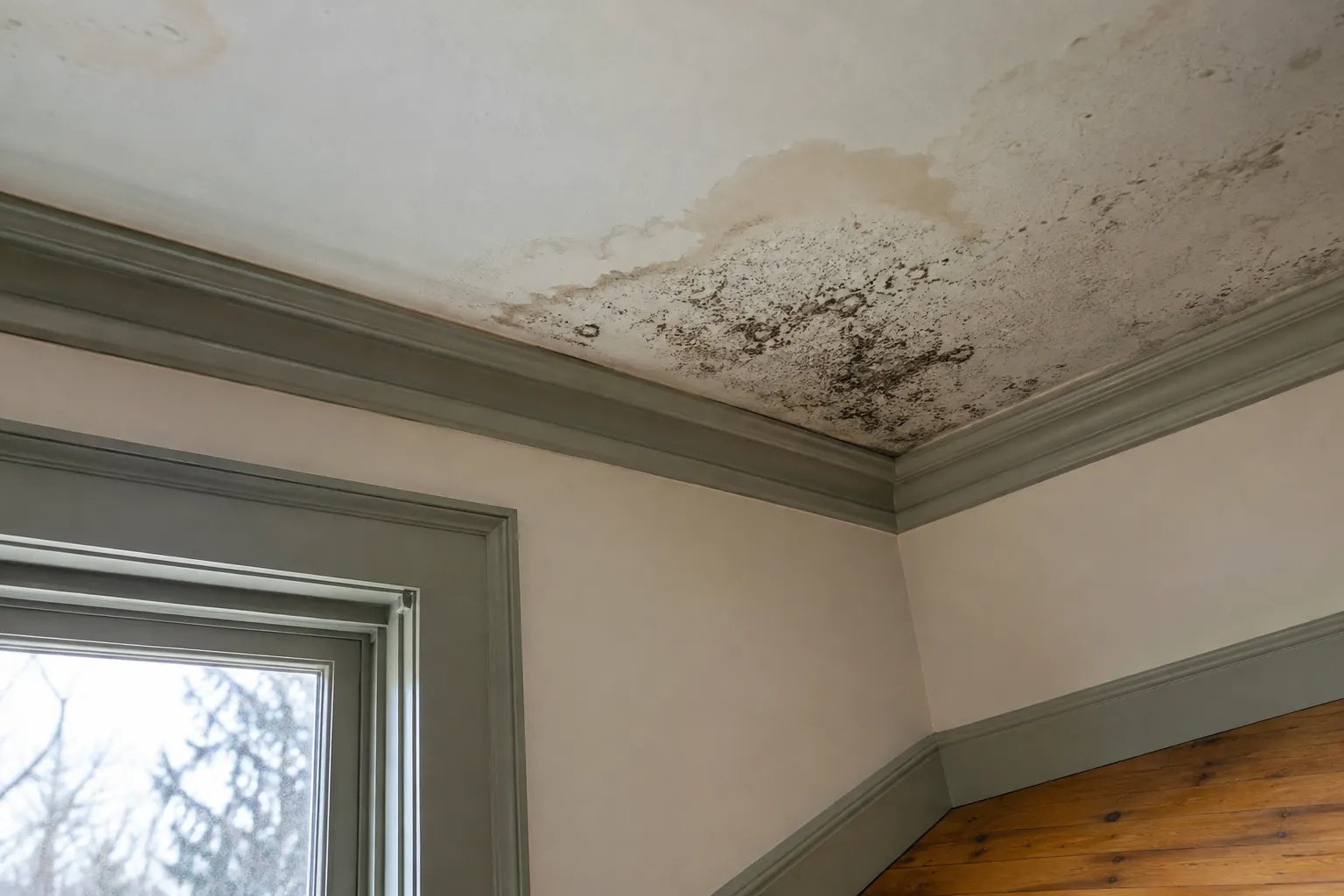
Ceiling surfaces
Ceiling marks can reflect room moisture or an unrelated water event. Note finish condition and timing alongside appliance use so the upper surface is not omitted from the account.
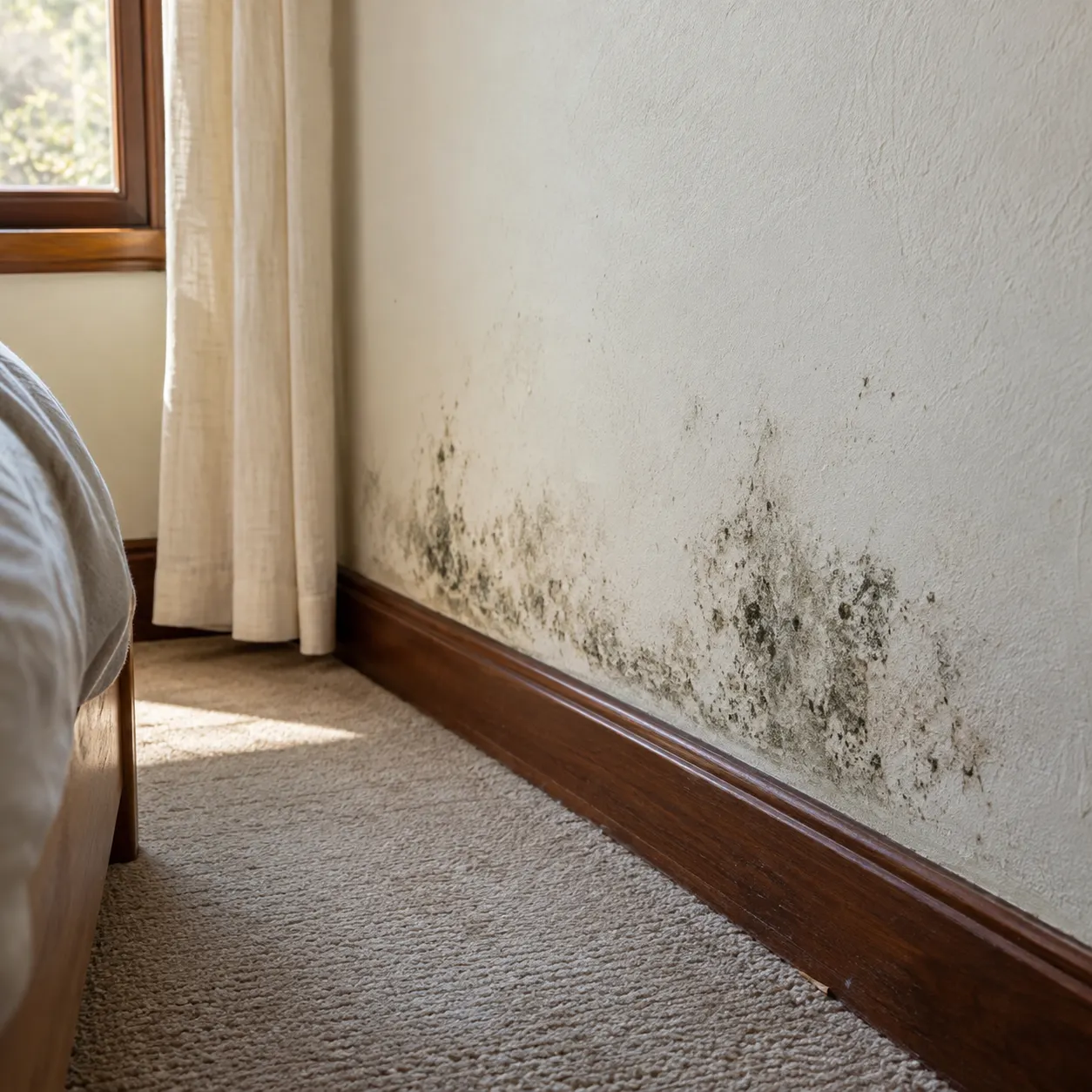
Painted walls
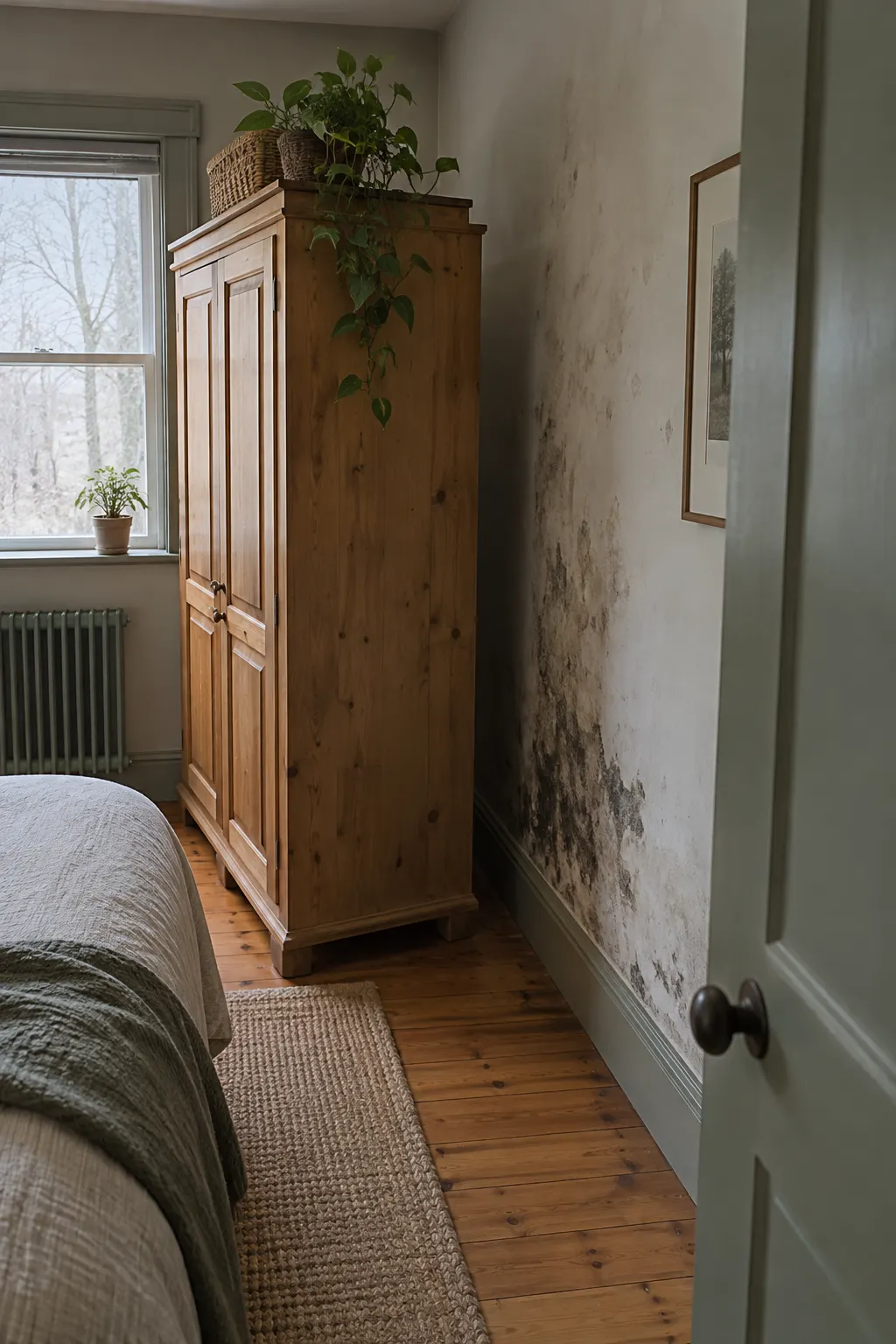
Show the wall’s relation to taps and nearby equipment in a wider photograph. A close patch view alone may not explain working access or the position of visible water.
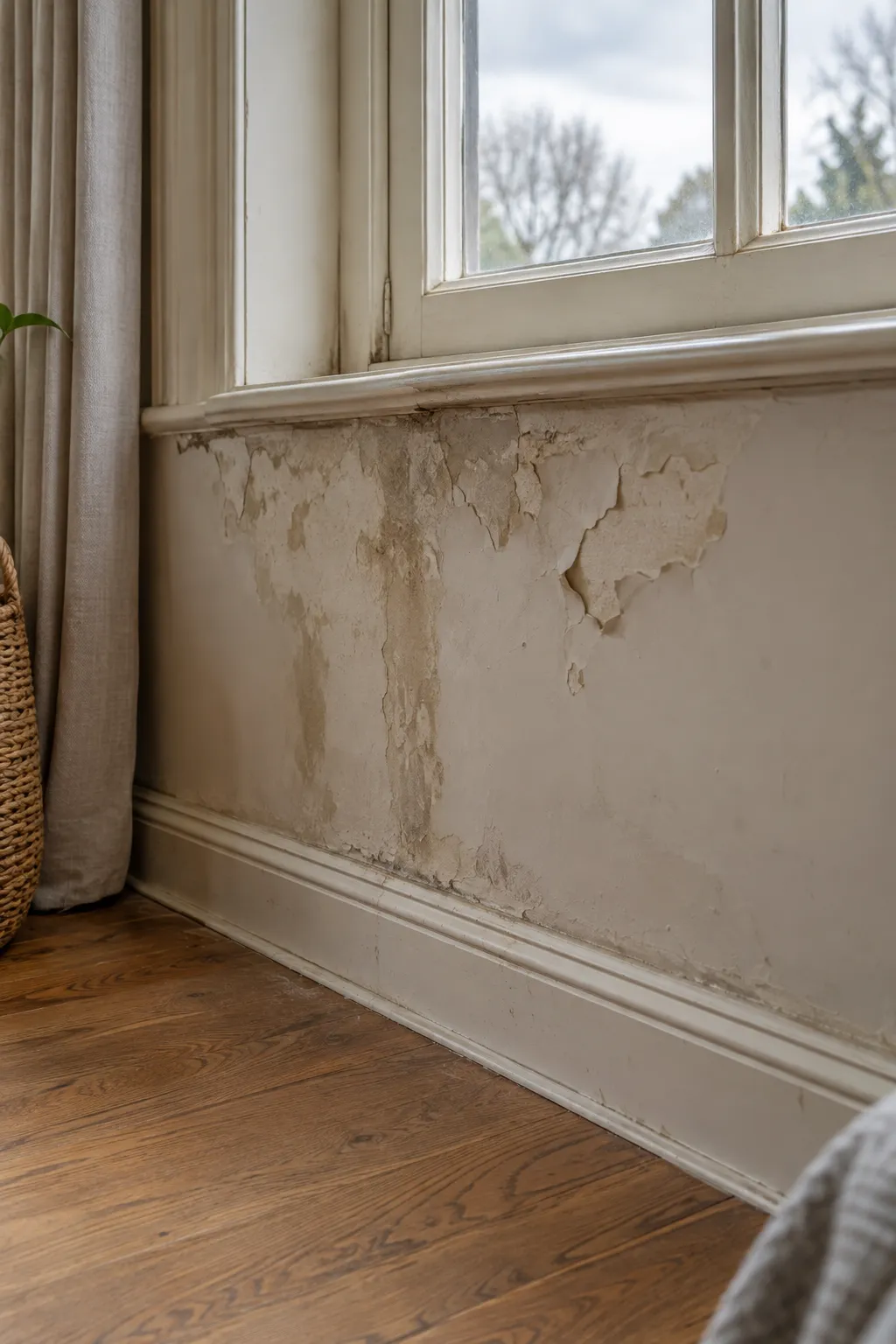
Water-affected rooms
An earlier overflow can affect board, flooring and belongings after the floor appears dry. Include known wet materials and what was repaired or handled following the event.
PREVENTION STARTS WITH
Follow the source.
Protect the finish.
Observe the drying pattern
Follow changes during ordinary laundry use and keep fixture concerns distinct from room ventilation. Continued water at a connection needs attention rather than another assumed treatment of the wall alone.
Follow up before decorating
Coordinate repair and drying before reinstating finishes beside fittings. Ask how remediation of laundry surfaces relates to any plumbing enquiry and damaged materials outside the agreed removal scope.
HUNTINGDALE & NEARBY
Huntingdale and nearby rooms.
Nearby guides for Oakleigh and Clayton can help another locality enquiry. At a Huntingdale address, specify the laundry fittings and working access so arrangements concern the particular room rather than a general expectation about appliance-related marks.
BEFORE YOU CALL
The useful
questions.
Does the timing of a washing cycle prove the fault?
It is useful evidence to describe, not a complete diagnosis. The appropriate investigation needs to consider the fitting and the room’s actual condition.
Should I disconnect a hose to inspect the wall?
Agree on safe access first. Unplanned disconnection or movement should not be required just to provide photos and a room history.
Can wall removal fix a leaking tap?
Surface work and plumbing repair are different tasks. Clarify who will investigate the connection and how drying or material decisions will follow.
Why mention earlier overflow damage?
It may explain changes to several materials and what happened before the current growth. Include repair dates and known drying information where available.
What if only the wall behind the machine is marked?
Describe the visible limit and equipment position. Further access may require arrangements beyond treatment of the portion that can currently be reached.
How should I prepare a Huntingdale laundry enquiry?
Give the address, connection-related observations and affected finishes. Mention appliance access, earlier repairs and any materials that remain damp or visibly damaged.
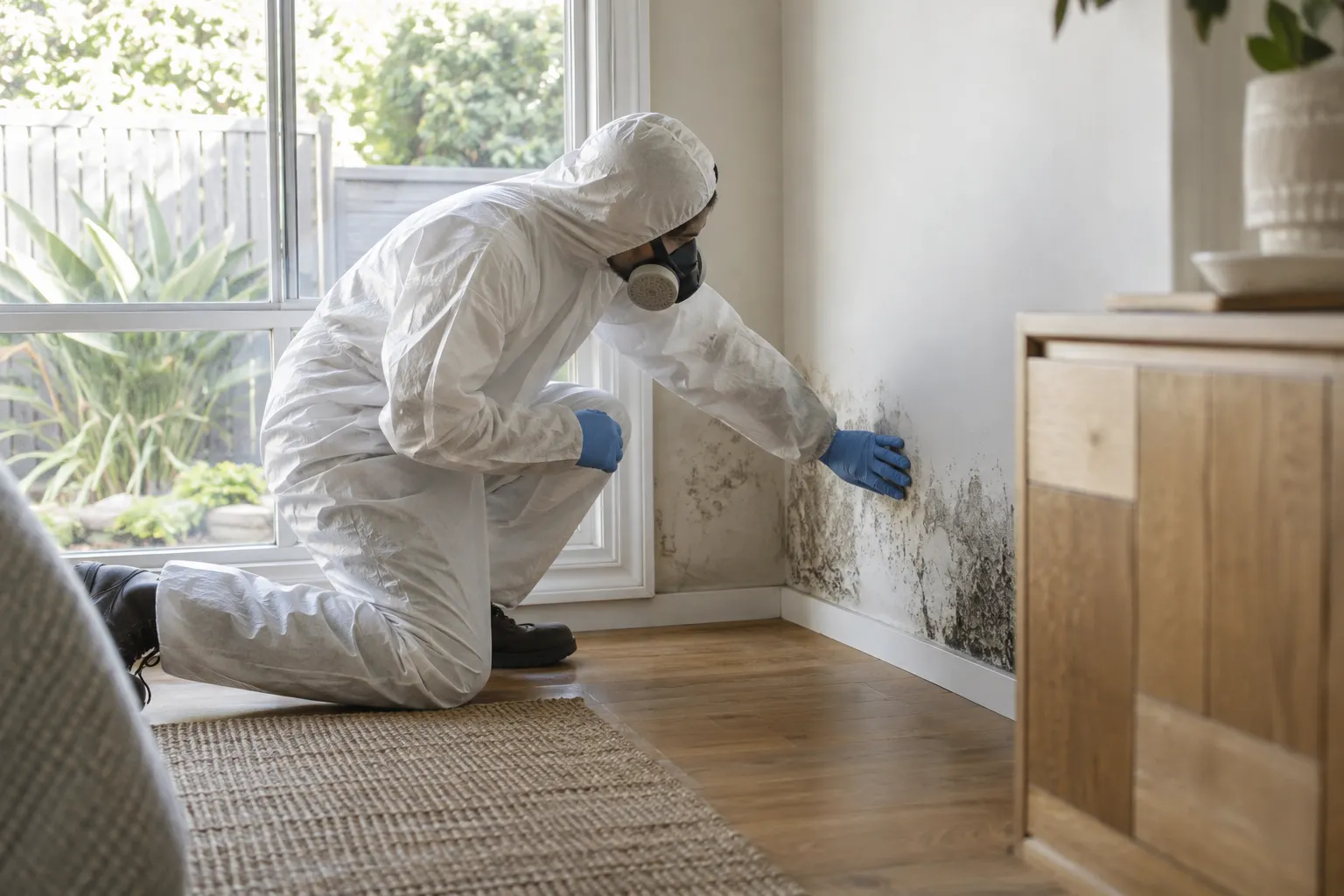
TELL US WHAT YOU CAN SEE
Describe the mark.
Plan the next step.
Call 03 8652 1296 with the Huntingdale address and the sequence around washing-machine use. Photos, fixture-repair information and equipment access can help clarify which inspection and removal questions come next.
Local context: Monash suburb profile