
CORNICES AND OLDER COATINGS · MOISTURE · SURFACES
MURRUMBEENA · MELBOURNE
Mould Removal Murrumbeena
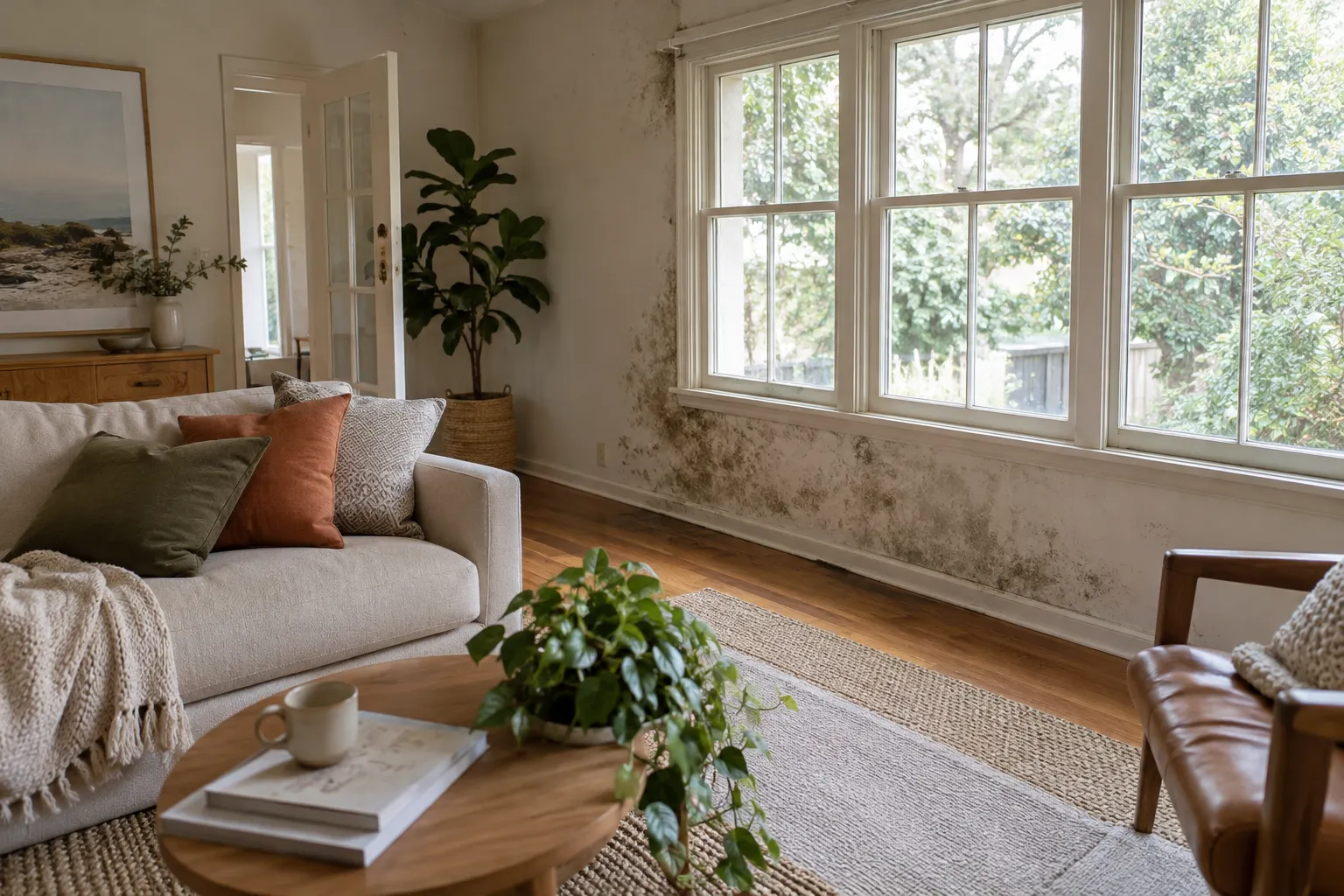
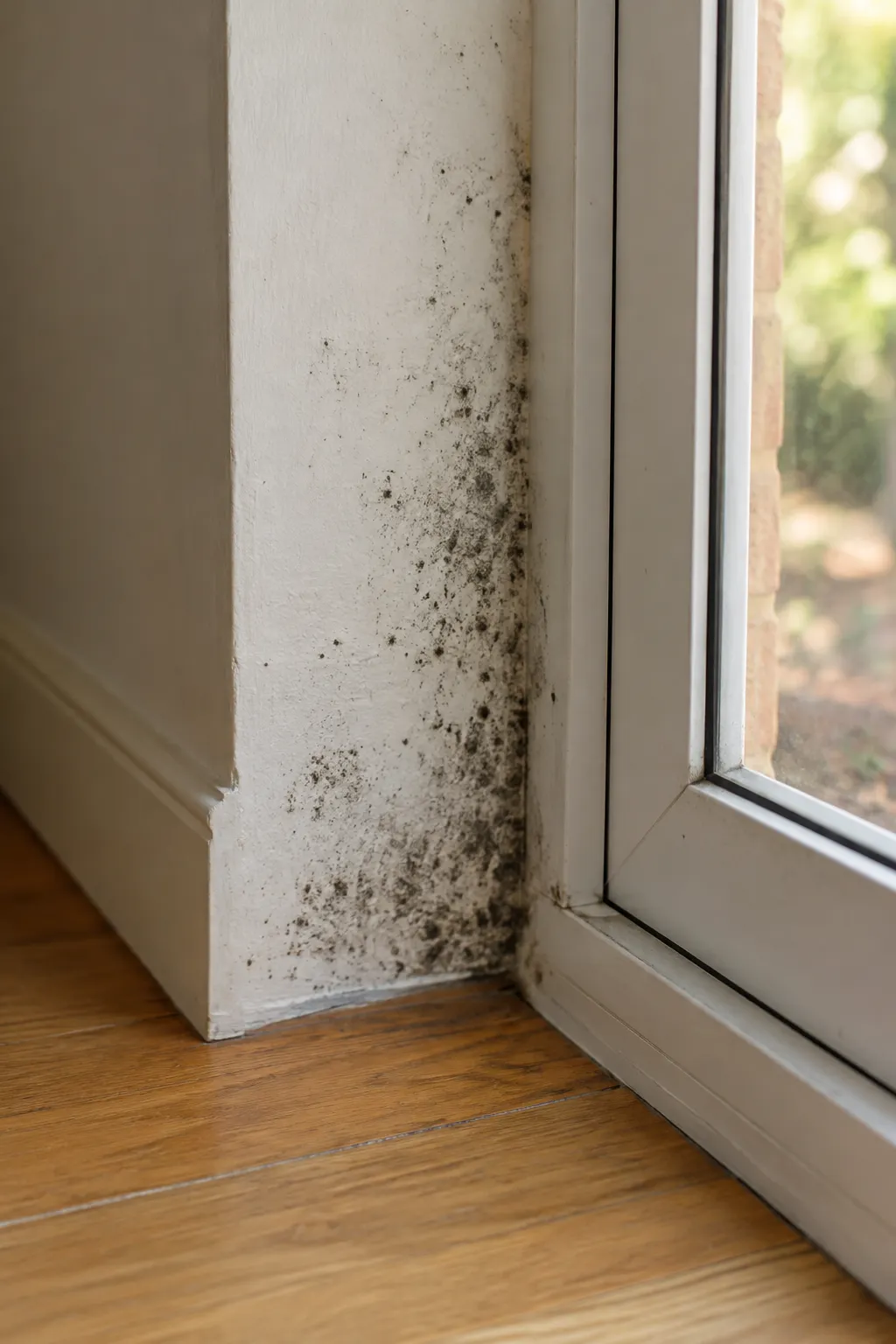
A cornice edge can gather marks while the central ceiling looks clear. In Murrumbeena, describe the affected junction, paint condition and any moisture appearing near the wall below.
Visible material considered
Moisture history discussed
Access and scope agreed
THE ROOM TELLS A STORY
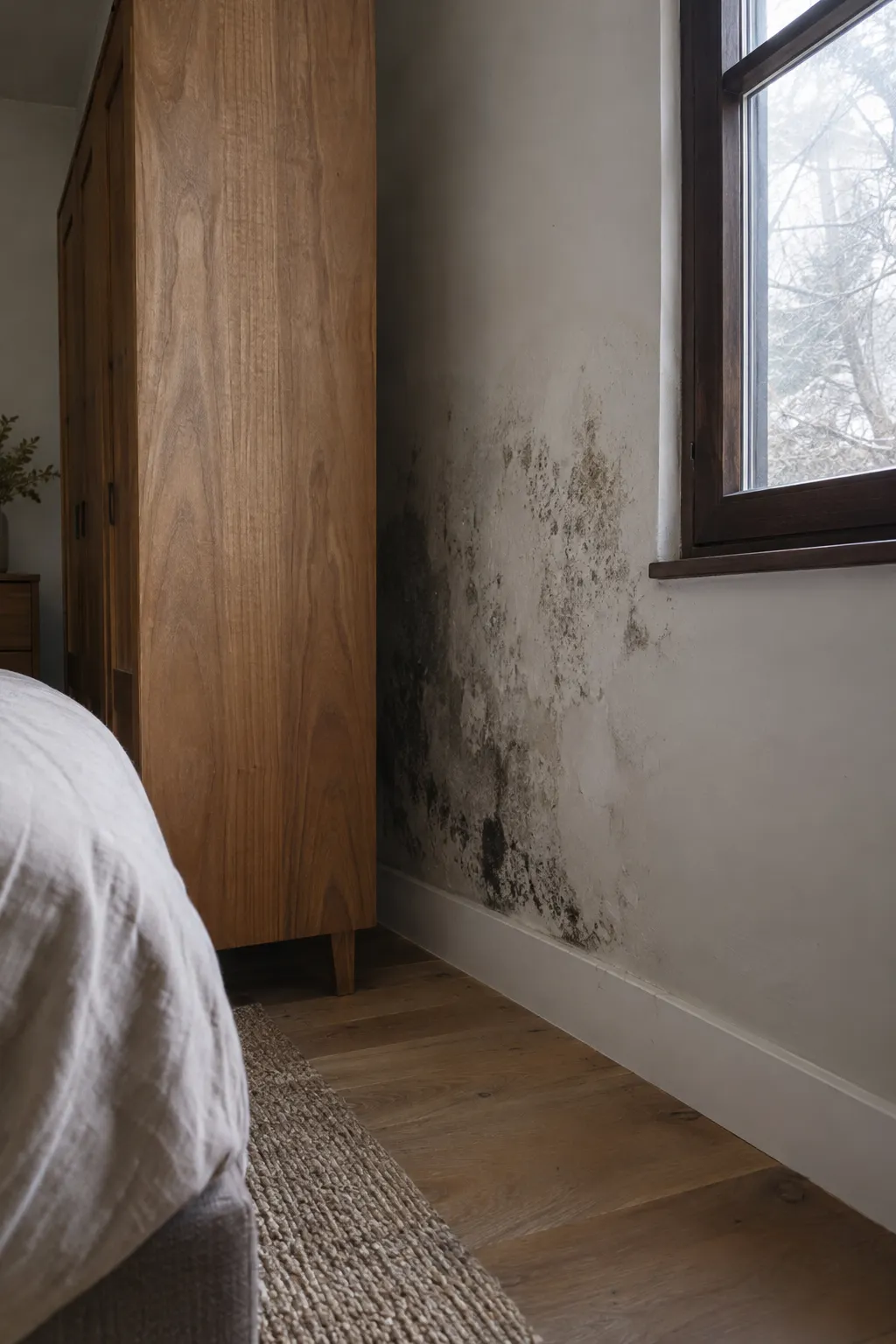
Pay attention to the edges
Glen Eira’s history identifies an inter-war layer of development in Murrumbeena. Where your own room has older decorative plaster, discuss its condition before treatment. A fine surface crack, loose paint and softened plaster call for different follow-up. The neighbourhood’s history does not establish the age or condition of your building.
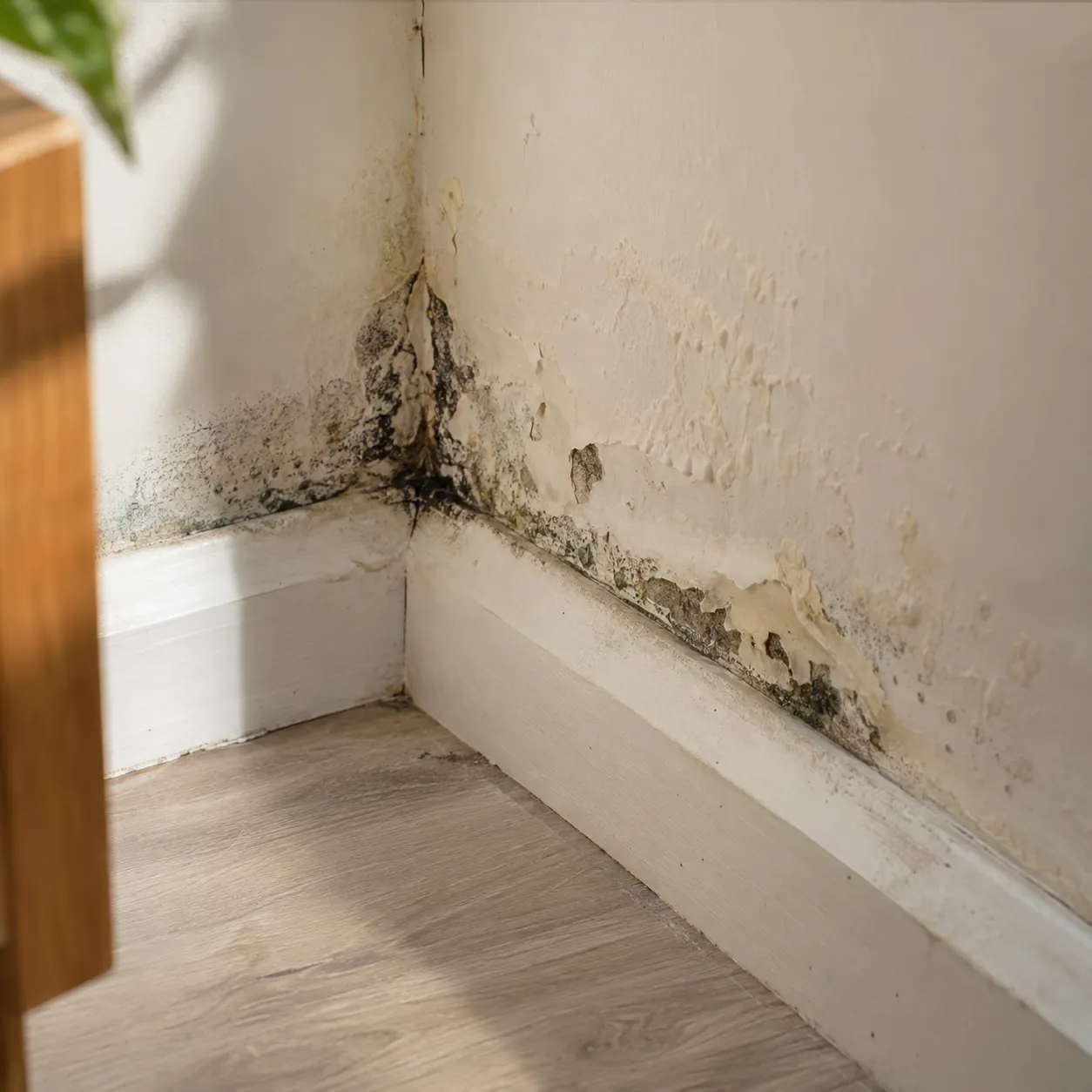
An inspection of the marked plaster edge should consider the actual detail and any earlier repair. The area’s built history is context, not proof of a room’s age; explain loose finishes and access before deciding what treatment is suitable.
UNDERSTANDING MOISTURE
Make sense of
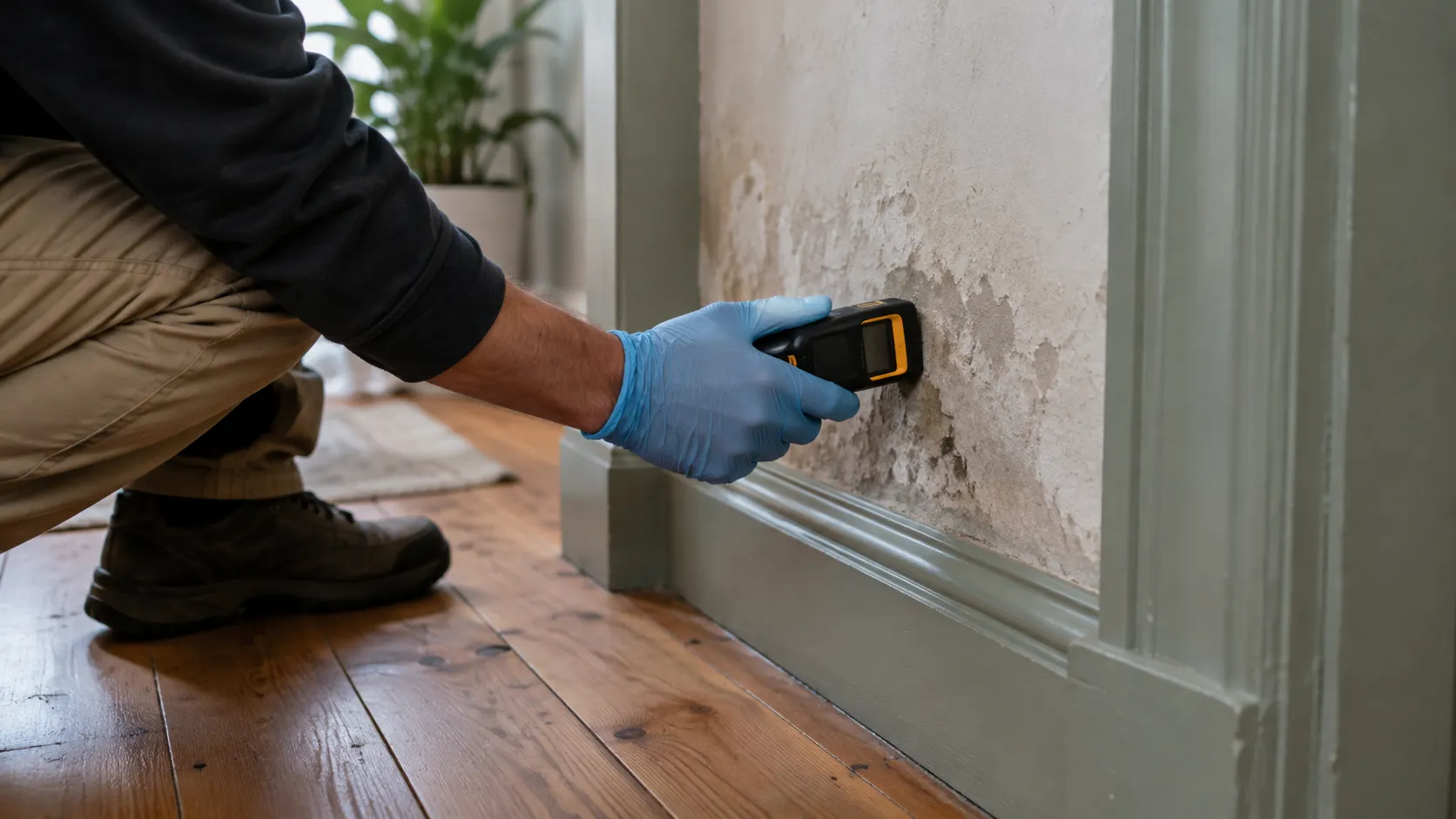
moisture where the wall meets the ceiling.
Air and drying
The wall-ceiling junction can have a different drying pattern from flat room surfaces. Note accessible droplets or persistent dampness without treating an edge mark as a complete diagnosis.
Water entering
A known water event or rainfall change belongs in the cornice history. Source investigation may still be needed; suitable surface work cannot establish what happens behind decorative plaster.
The material itself
Older decorative details need assessment of their actual condition, not assumptions from neighbourhood history. Loose coating, cracks and softened plaster can affect suitability and the need for repair.
OUR REMOVAL PROCESS
A clear scope.
A careful sequence.
Keep the room history
Photograph the junction from a safe position and include the wall below. Note whether discolouration appeared alongside cracks, loose paint or a separate moisture event.
Make access practical
Tell us about decorative features or fittings close to the affected edge. The method and working position should respect their condition rather than depend on improvised access.
Agree the next decisions
Ask what finish repair remains after growth has been addressed. The local housing history gives context, but the actual plaster’s age and condition must be assessed at the property.
01
Assess the cornice junction
Assess the cornice edge, adjacent ceiling and any loose finish together. Discuss suitable reachable treatment while identifying decorative plaster that may require repair instead.
02
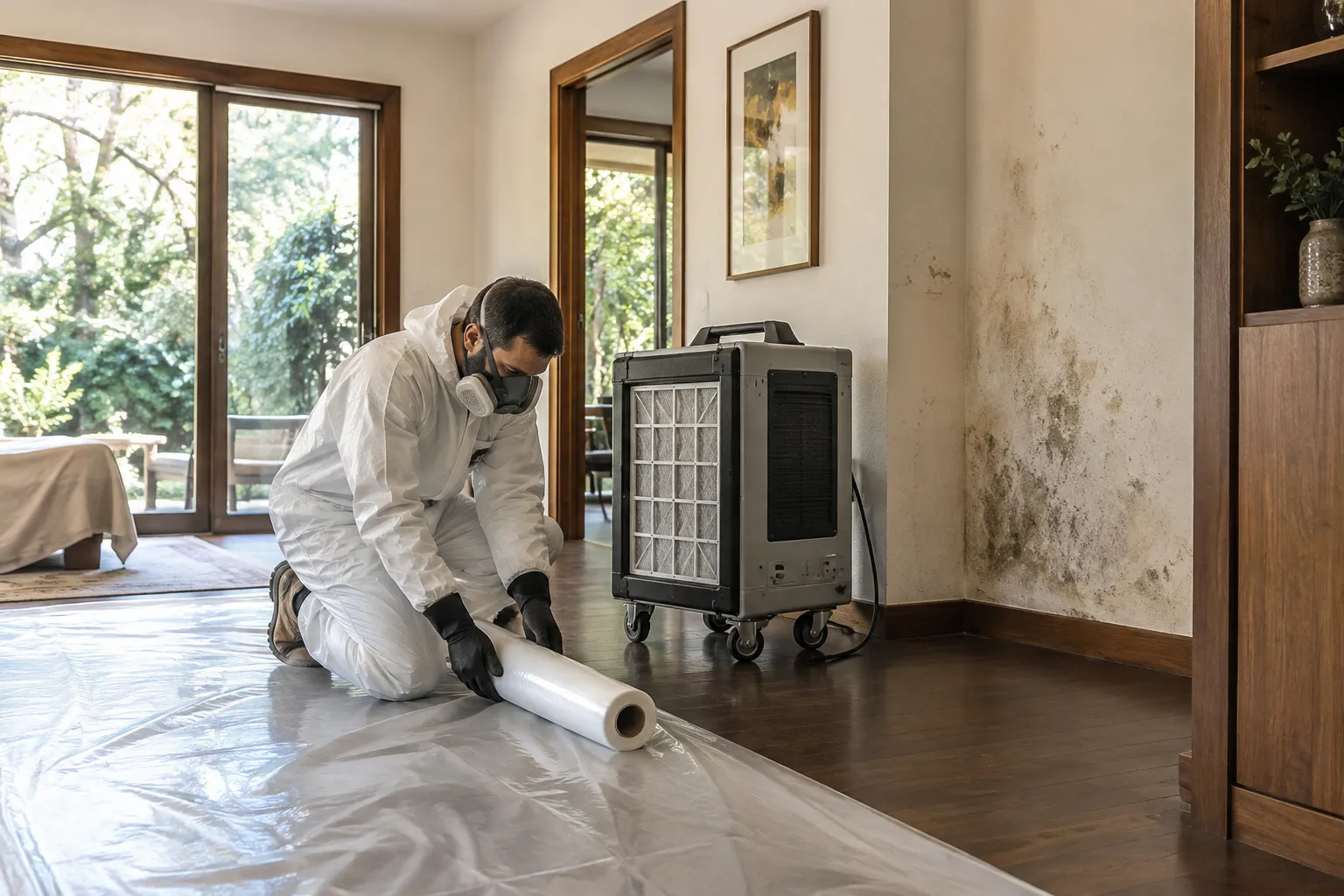
Prepare the working area
Explain ceiling height and fragile details before access is arranged. Leave uncertain plaster or flaking decoration undisturbed rather than making the patch larger for a closer photograph.
03
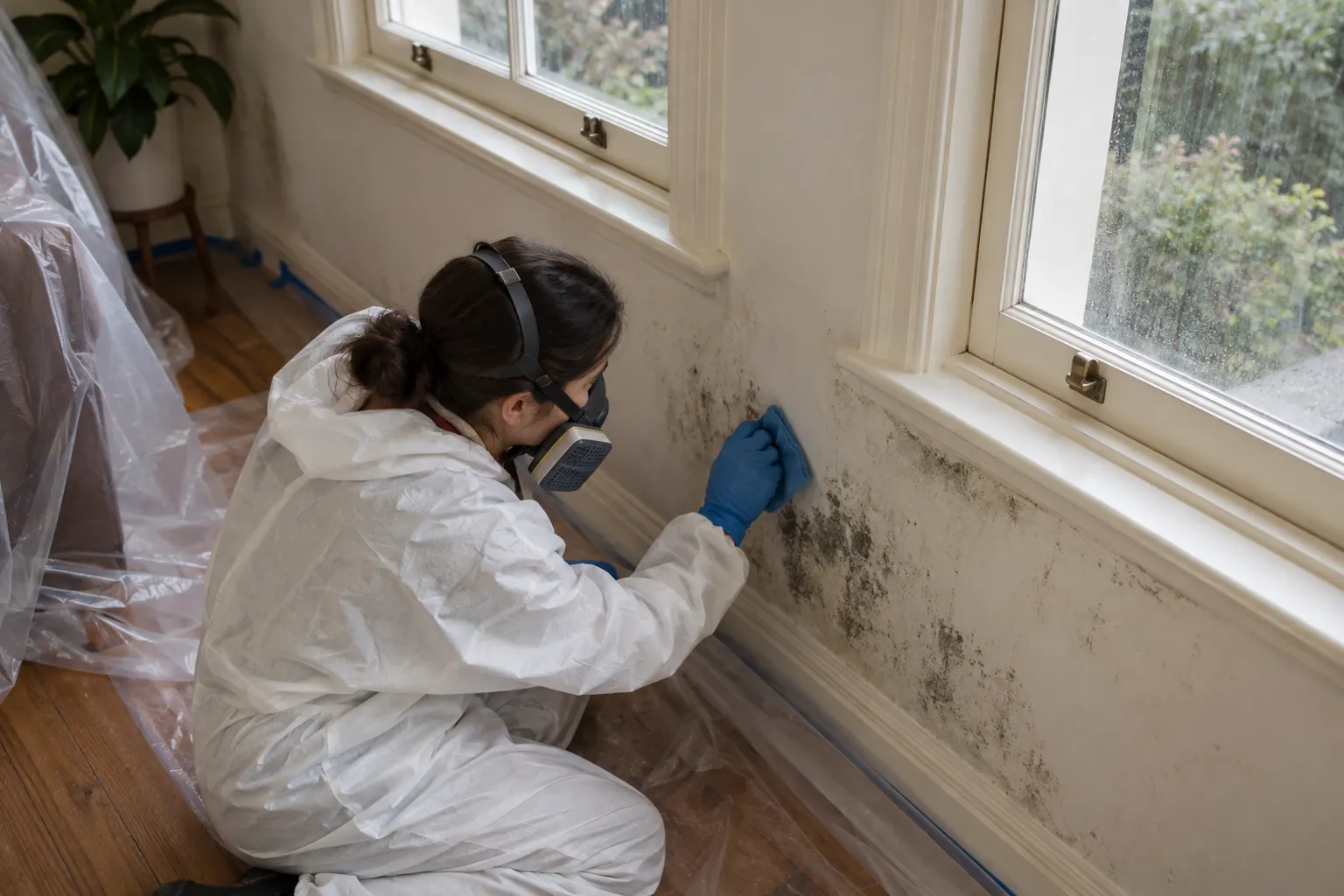
Remove and review
Review the treated edge and any condition requiring a decorator or plaster repair. Surface work should not be presented as restoration of deteriorated decorative material.
COMMON AREAS AFFECTED
Different surfaces.
Different decisions.
Bathroom junctions
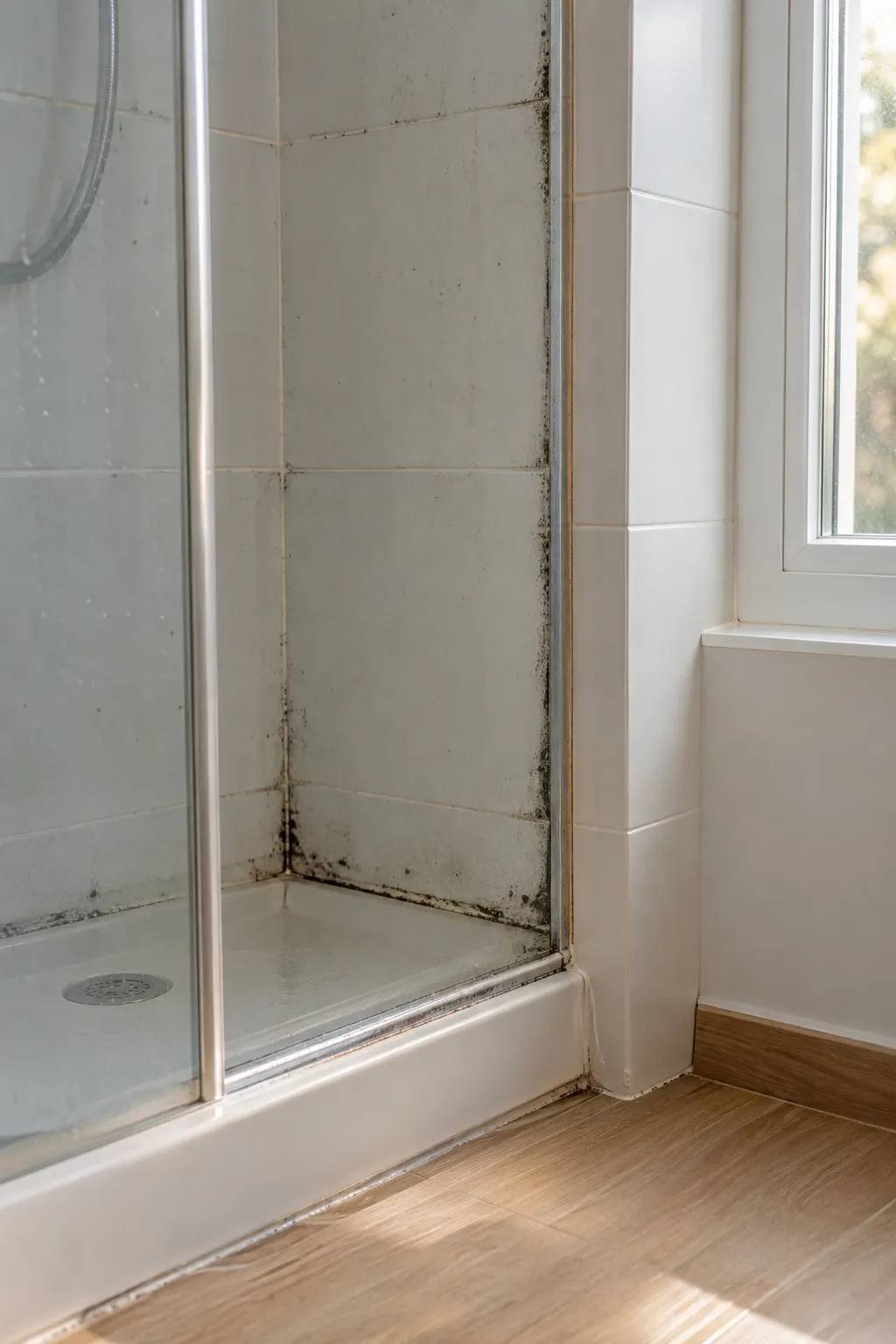
A bathroom cornice should be described alongside shower-joint growth if present. Decorative plaster and silicone have different treatment or restoration questions despite being exposed to the same room moisture.
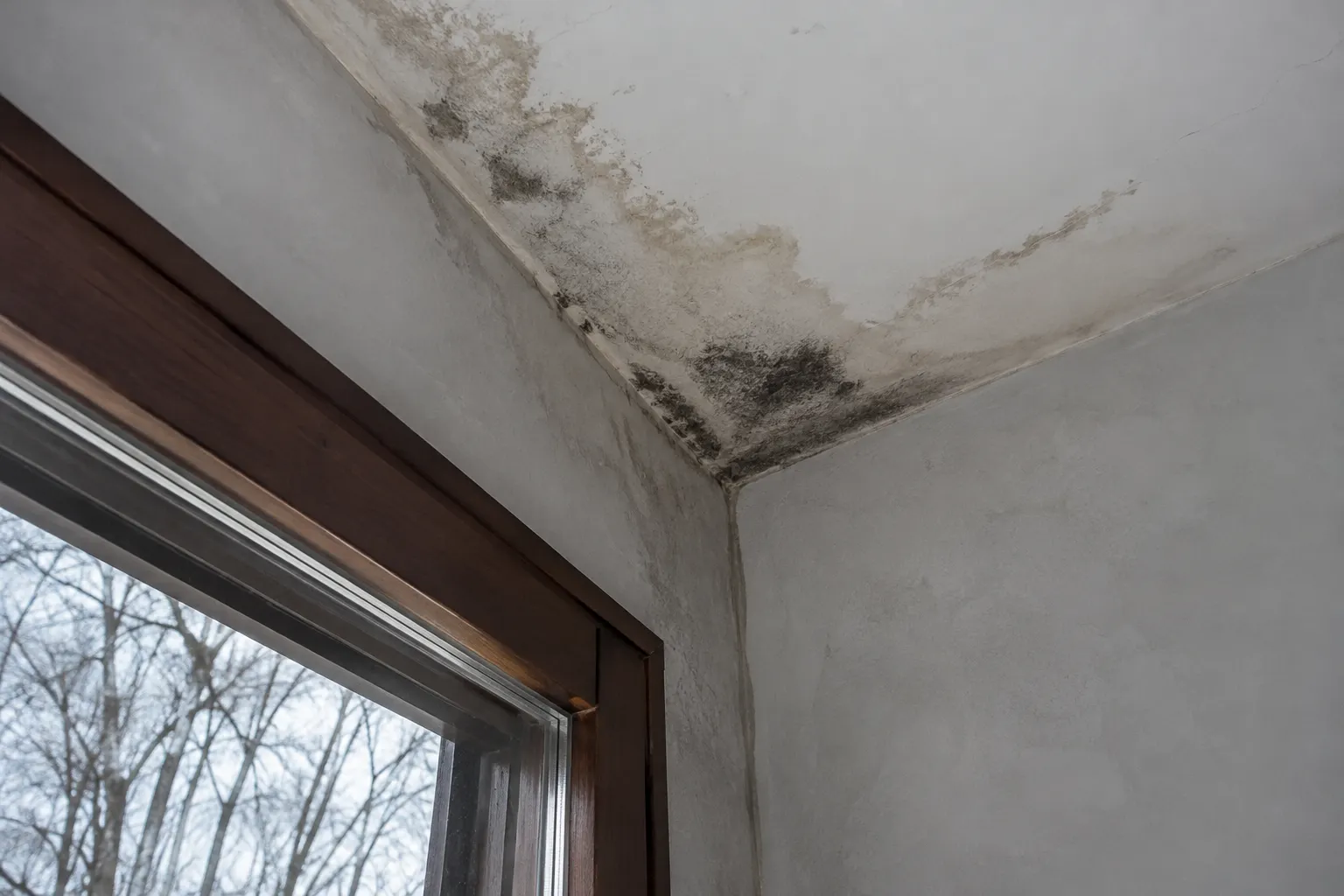
Ceiling surfaces
Photograph the marked ceiling edge safely and mention any looseness or shape change. Do not disturb uncertain detail merely to obtain a clearer view of what lies behind it.
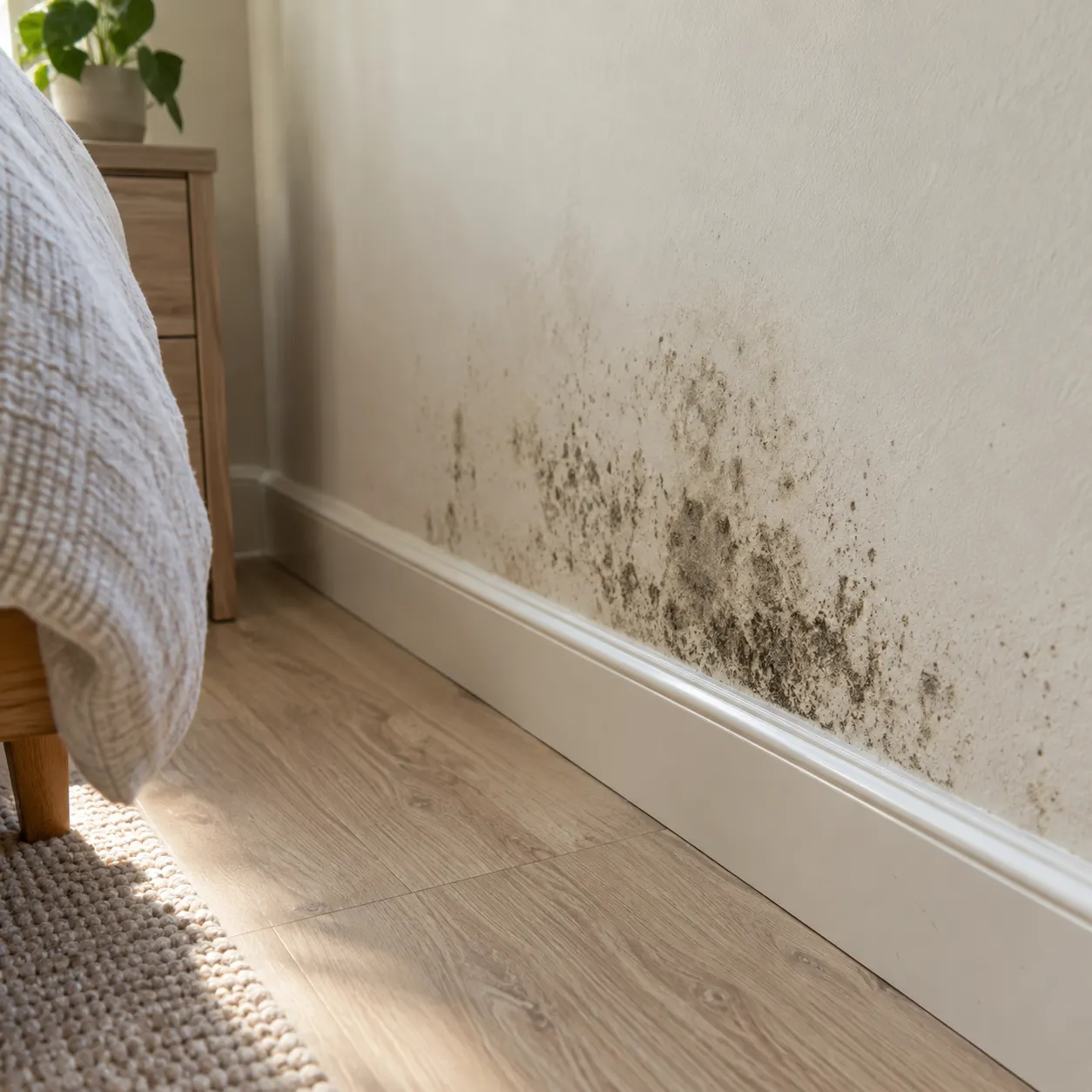
Painted walls
Include the wall immediately below the cornice and its finish condition. This shows the visible extent while preserving the distinction between reachable paint and a concealed junction.
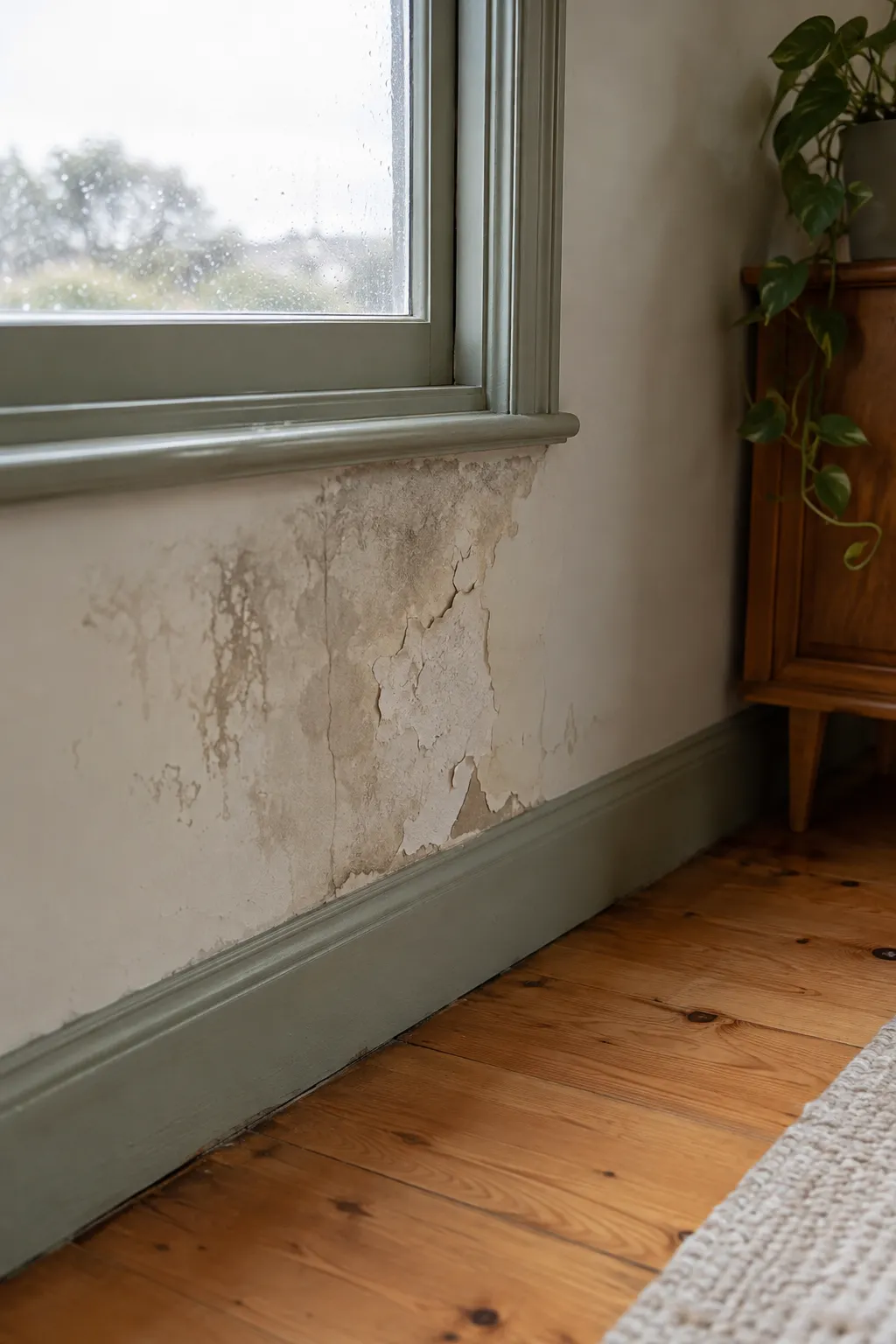
Water-affected rooms
After a ceiling leak, known damage to plaster details may remain beyond the growth itself. Explain repairs and drying rather than expecting accessible removal to restore every decorative component.
PREVENTION STARTS WITH
Keep moisture
in view.
Observe the drying pattern
Keep the junction observable after any repairs and note fresh moisture at the same edge. Practical room drying and prompt source follow-up matter more than hiding recurrence beneath a decorative coating.
Follow up before decorating
Discuss plaster and coating repair before later finishing work. Where surrounding areas are affected, remediation scope should identify suitable removal without promising restoration of fragile details or concealed material.
MURRUMBEENA & NEARBY
Murrumbeena and nearby rooms.
The guides for Carnegie and Hughesdale cover nearby locality enquiries. For Murrumbeena, state the property address and decorative edge concerned, confirming ceiling access and material expectations rather than assuming every local home has the same plaster details.
BEFORE YOU CALL
The useful
questions.
Does local housing history establish my plaster’s age?
No. The actual room and known repair history determine that context. Describe the detail’s condition rather than assuming it from the suburb’s built heritage.
Can a cracked cornice be treated normally?
Its condition and access need discussion first. Decorative repair may be necessary separately from removing visible growth on suitable sound surfaces.
Should I test whether the plaster is loose?
Do not disturb uncertain detail to collect initial information. A safe photograph and description can support the discussion of appropriate assessment and access.
Why include the wall below the edge?
It helps show whether marks extend beyond the cornice and involve another finish. Different reachable surfaces may need different treatment or repair decisions.
Does removal restore decorative plaster?
That should not be assumed. Define the surface scope and any remaining restoration tasks before work, especially where details are fragile or water-damaged.
What should a Murrumbeena cornice enquiry contain?
Give the address, affected junction and safe photos. Mention known building or decorating history, loose finishes and practical ceiling access requirements.
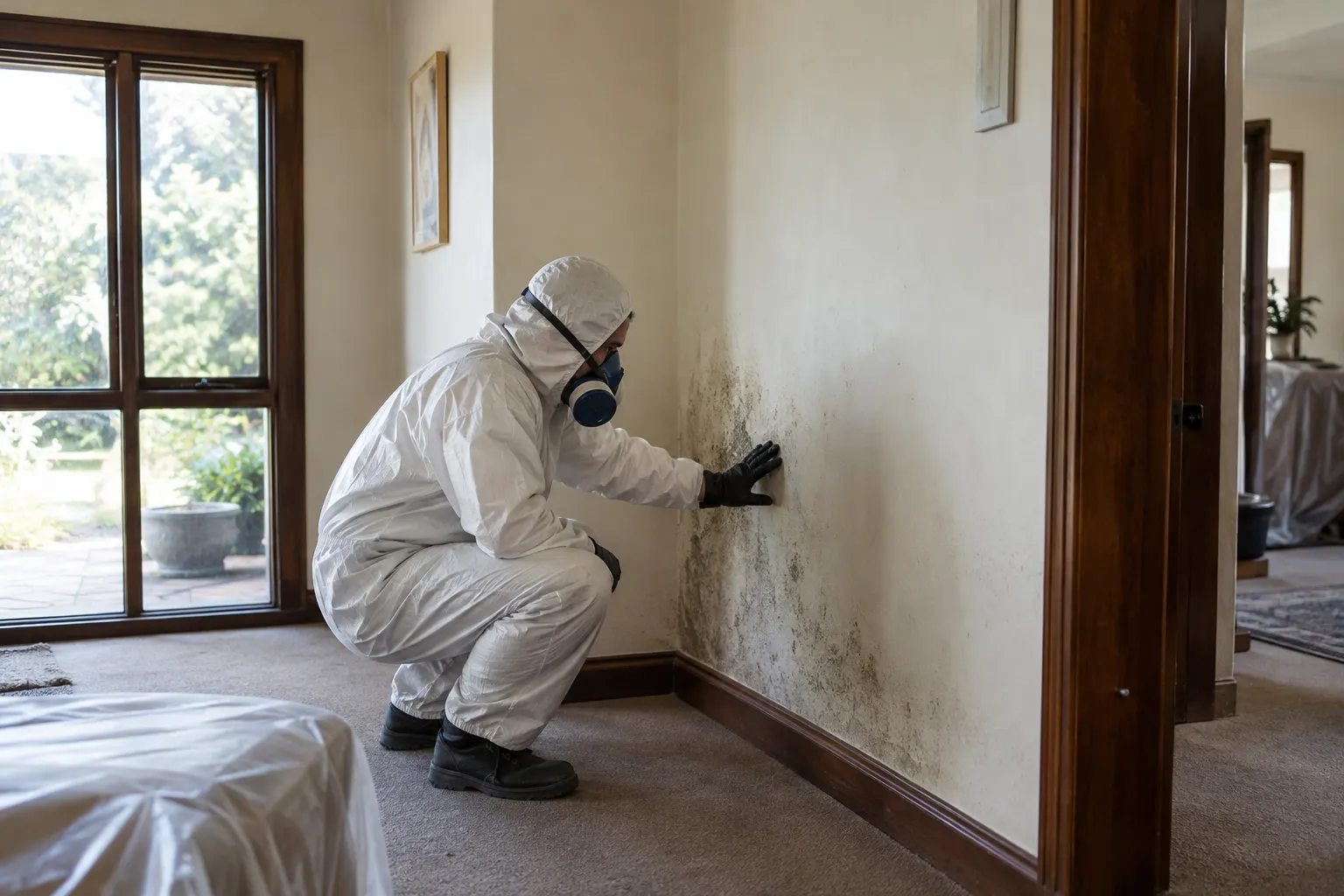
TELL US WHAT YOU CAN SEE
Talk through
the room history.
Describe the cornice condition, safe access and any known moisture event. Contact 03 8652 1296 with your Murrumbeena address so the suitable surface scope and remaining restoration questions can be considered.
Local context: Glen Eira housing history