
COCKATOO · MELBOURNE
Mould Removal Cockatoo
For a Cockatoo home with a marked room on one level and a wet area on another, explain their relationship before requesting removal. A downstairs ceiling patch and upstairs shower concern need their own material and moisture questions. We can discuss accessible assessment, practical entry and suitable treatment, then confirm availability without assuming surface cleaning repairs a hidden water path.
Room relationships considered
Height and stairs planned
Separate repair boundaries
Ceilings · Floors
THE HOME, IN CONTEXT
Map the rooms above and below
Cardinia’s Eastern Dandenong Ranges Trail connects Cockatoo with Emerald and Gembrook. For a property enquiry, use the actual street address and room layout rather than a trail landmark or an assumption about the home’s number of levels.
Describe what lies above
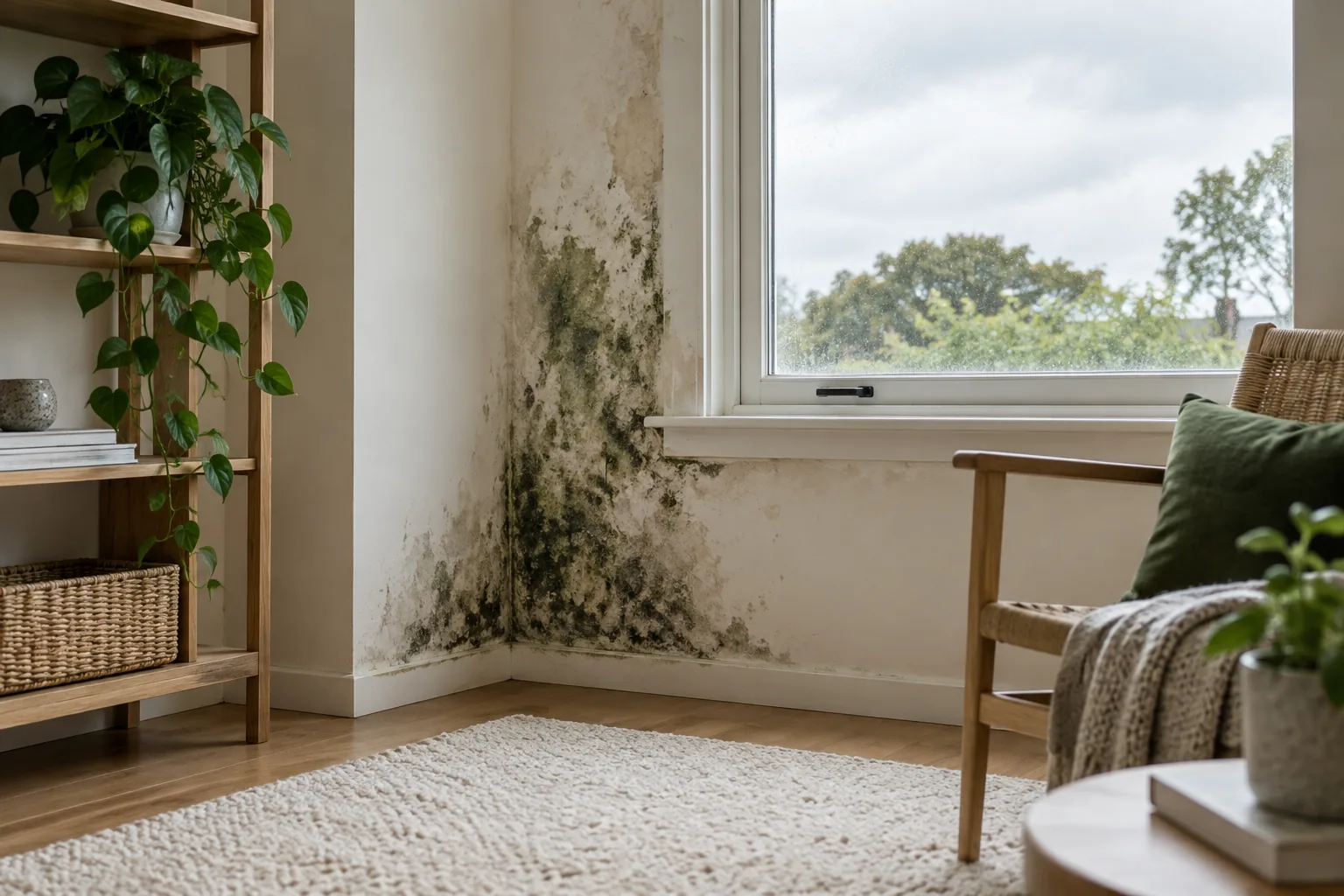
Provide a simple plan or room description showing the ceiling patch and any relevant room above it. Say if the relationship is uncertain. Water can travel along building elements, so the visible mark should not be treated as an exact map of a hidden defect.
Give each level its own scope
State which surfaces are marked and what can be reached. A removal enquiry should distinguish the upper wet area from the lower finish instead of treating both as one identical surface task.
INSPECTION & MOISTURE
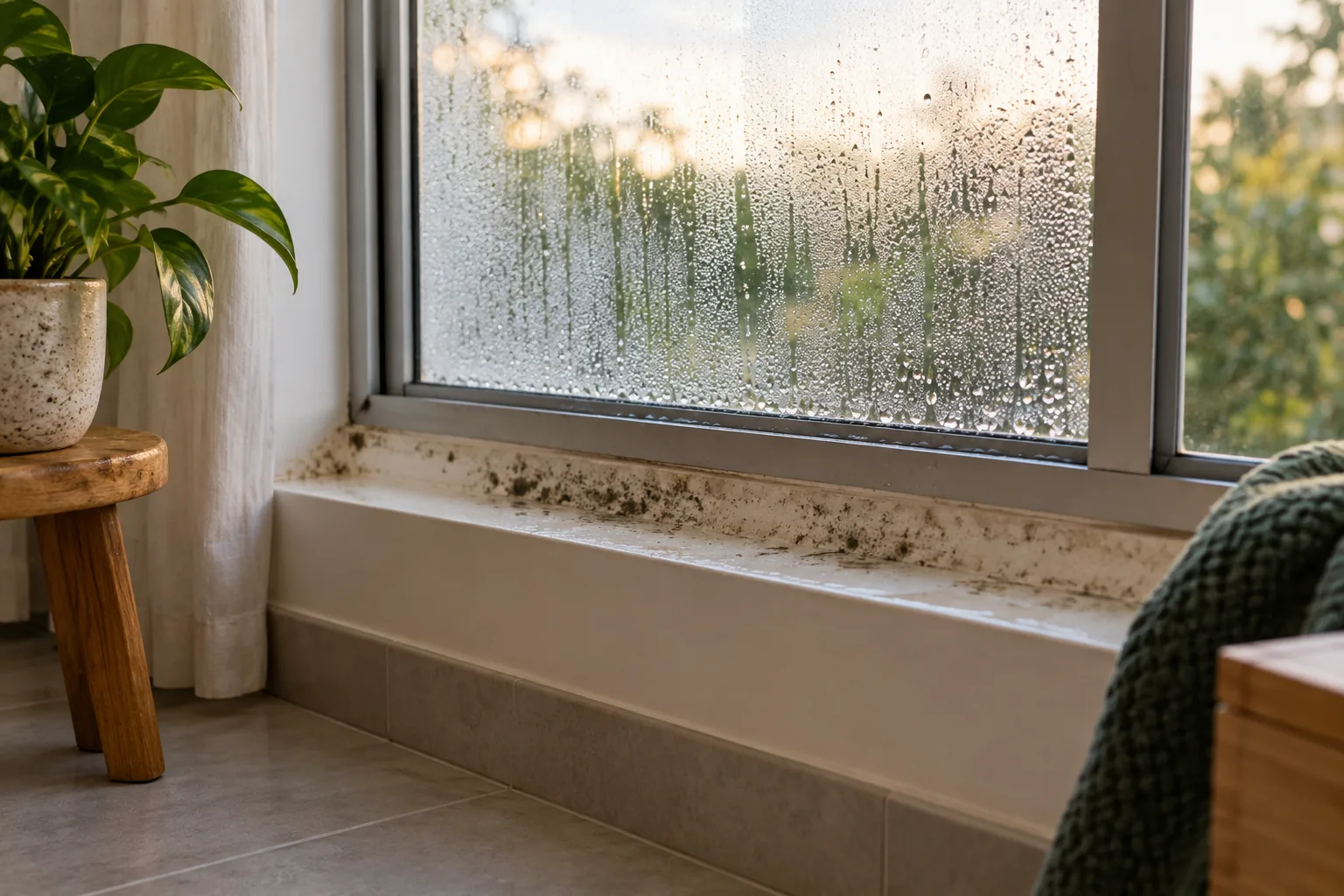
Compare the water history across levels
The assessment should connect observations between rooms while preserving uncertainty about concealed cavities, plumbing and waterproofing.
Compare the timing
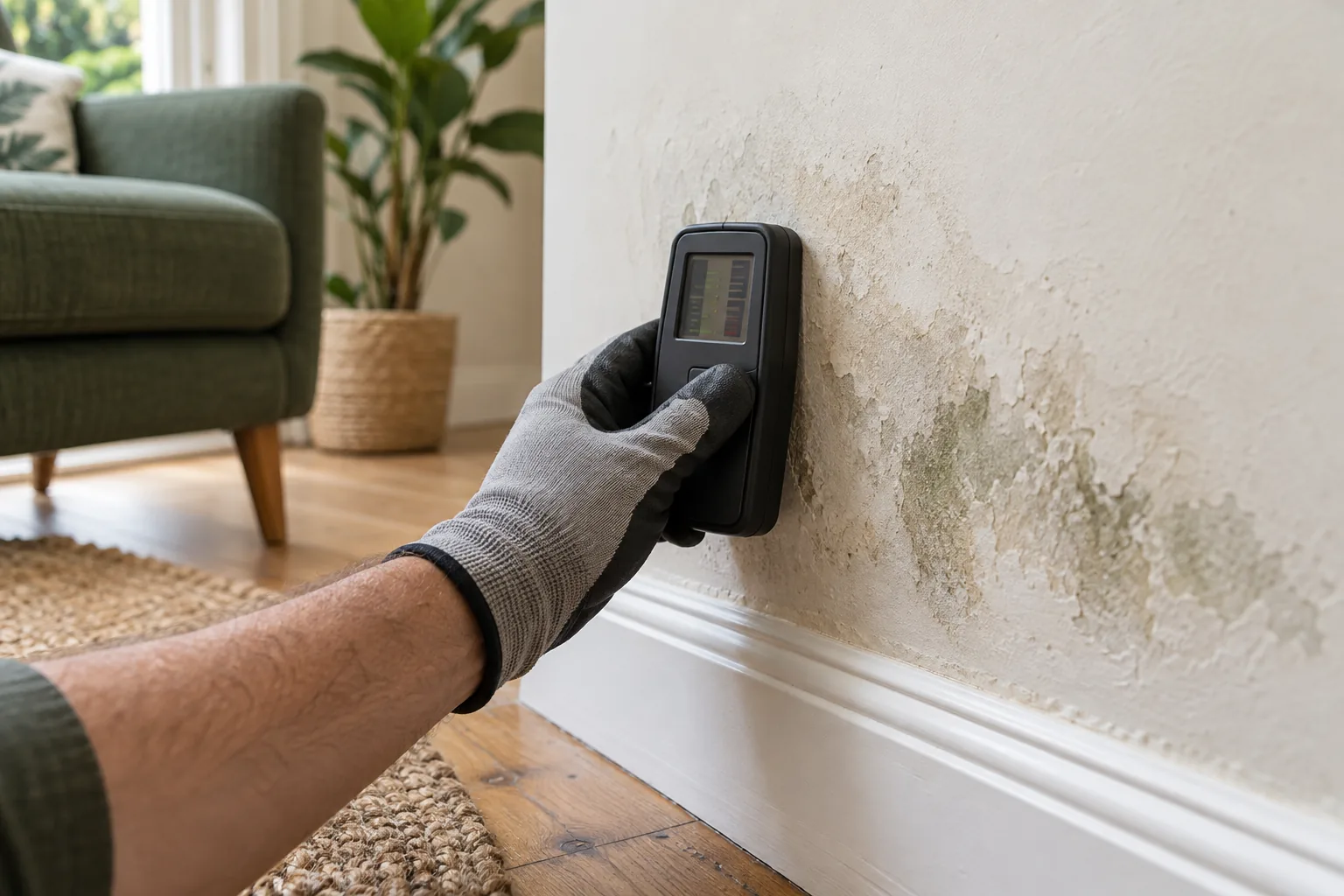
Record whether the lower patch changes after upstairs showering, rain or another event. Include repair dates and material changes. Similar timing can guide the next investigation without proving which fitting or building element is responsible.
Ask about accessible assessment
Discuss inspection if the source or relationship is unclear. Explain stairs, ceiling height and private-room access. Ask what visible findings can support treatment now and which questions require a builder or plumber before any opening of the lining is considered.
A CONNECTED PROCESS
A work plan for the affected surfaces
Identify the included levels
Agree visible walls, ceilings and suitable hard floors separately in each requested room. Textiles are excluded. Deteriorated lower-ceiling material may require repair assessment rather than the same method used on an upper tile face.
Plan stairs and height access
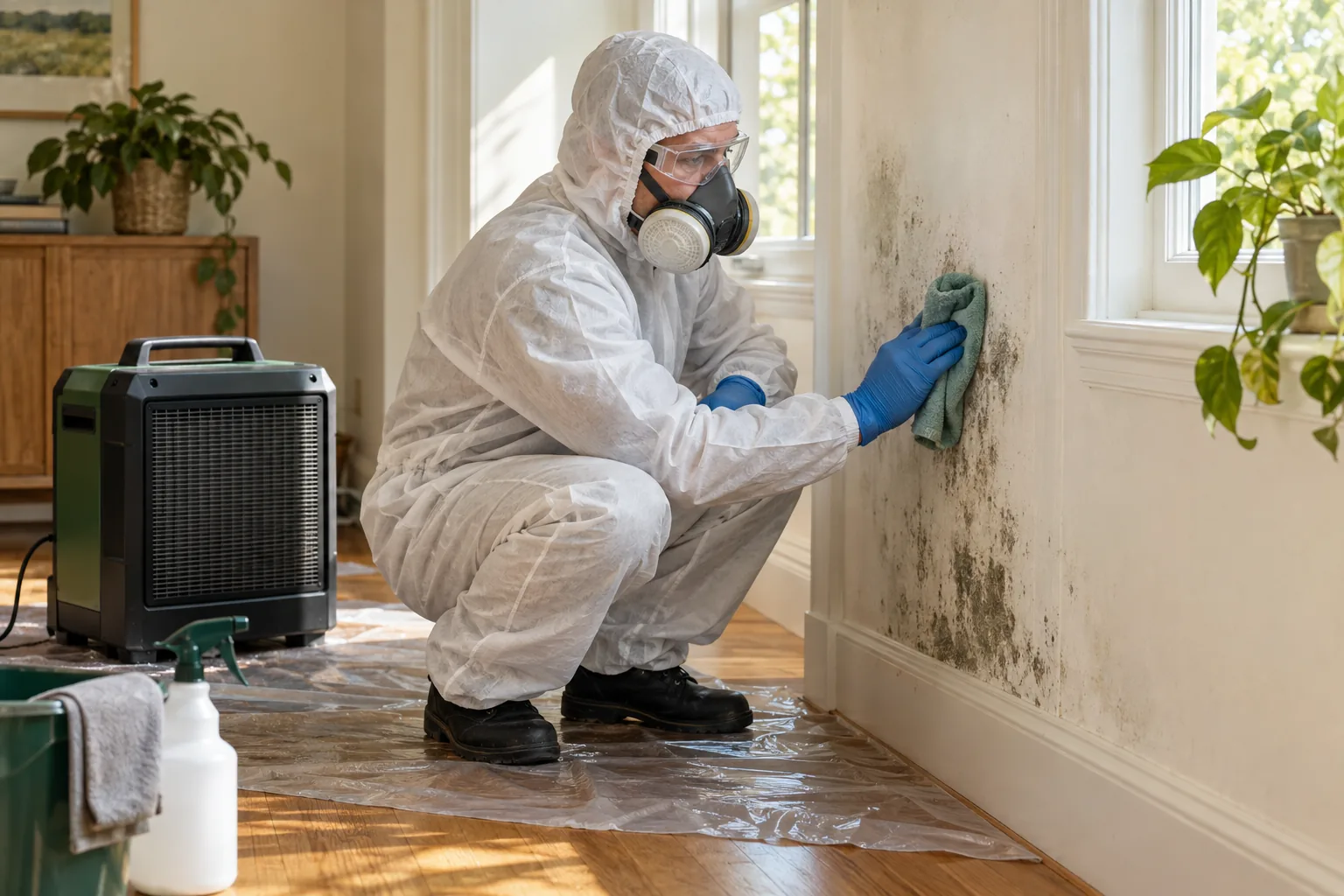
Describe the equipment route and fixtures below high surfaces. Appropriate PPE, protection and suitable access need planning before the appointment. The work should not rely on improvised climbing or furniture movement to reach a ceiling that was not described.
Prepare the work areas
Organise HEPA filtration and clear access to the agreed surfaces. Fixed fittings or concealed areas remain limits unless separate arrangements are made. Invasive investigation is not automatically authorised by a request to clean rooms on two levels.
Treat suitable exposed growth
Physical removal and material-appropriate treatment address the supported scope. The remediation plan should identify damage and source repairs separately. Cleaning above and below cannot restore waterproofing or establish every hidden layer between the rooms is dry.
Review the cross-level record
Explain stains and outstanding tasks for each level, then monitor the original locations after relevant use or repairs. A better-looking lower room does not prove the upstream source is resolved. Returning moisture warrants further investigation rather than a guaranteed prevention assumption.
WHERE MOULD APPEARS
Give each surface its own description
Upstairs bathroom
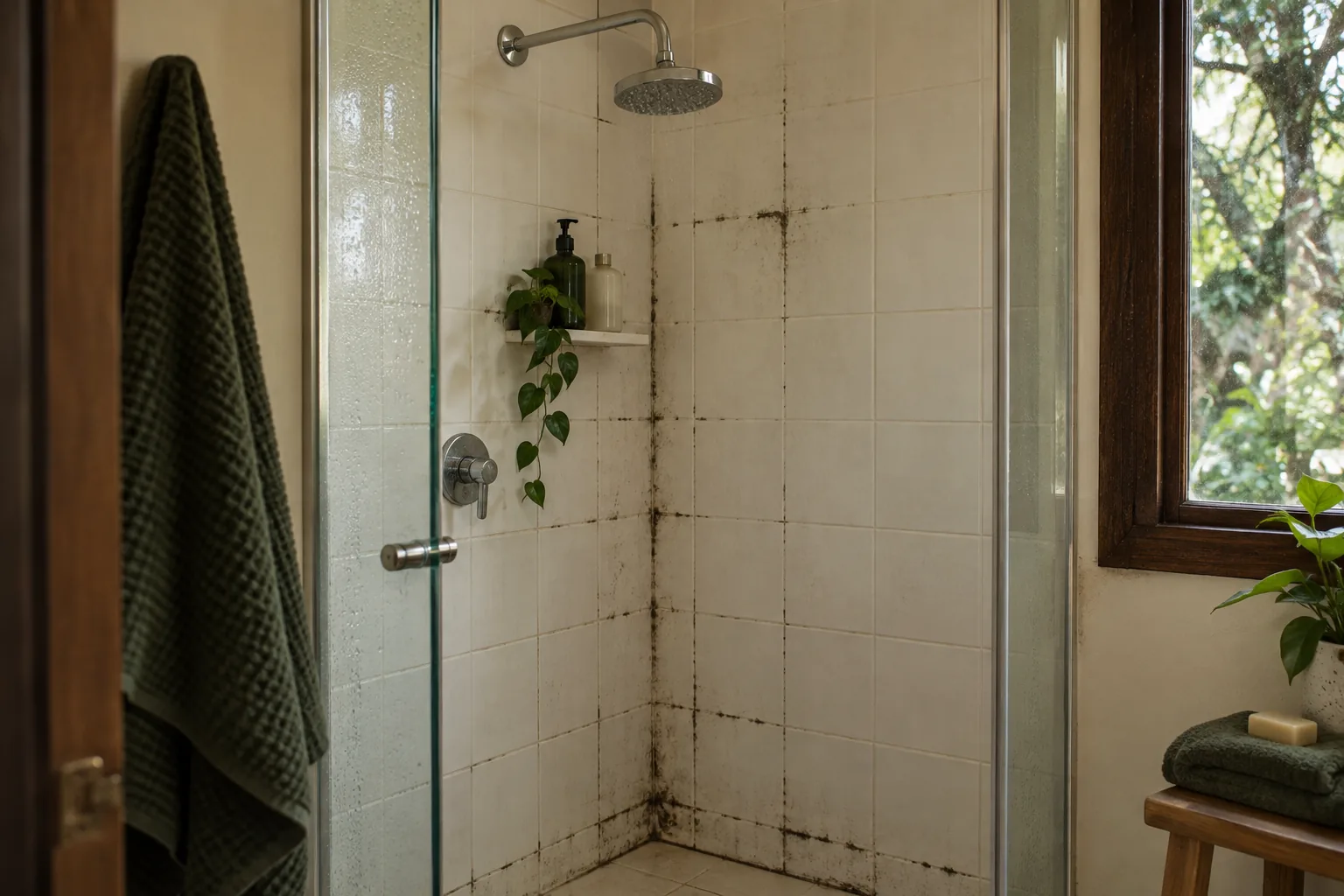
Describe extraction and shower-joint condition independently of the lower ceiling. They may involve different maintenance tasks.
Lower ceiling
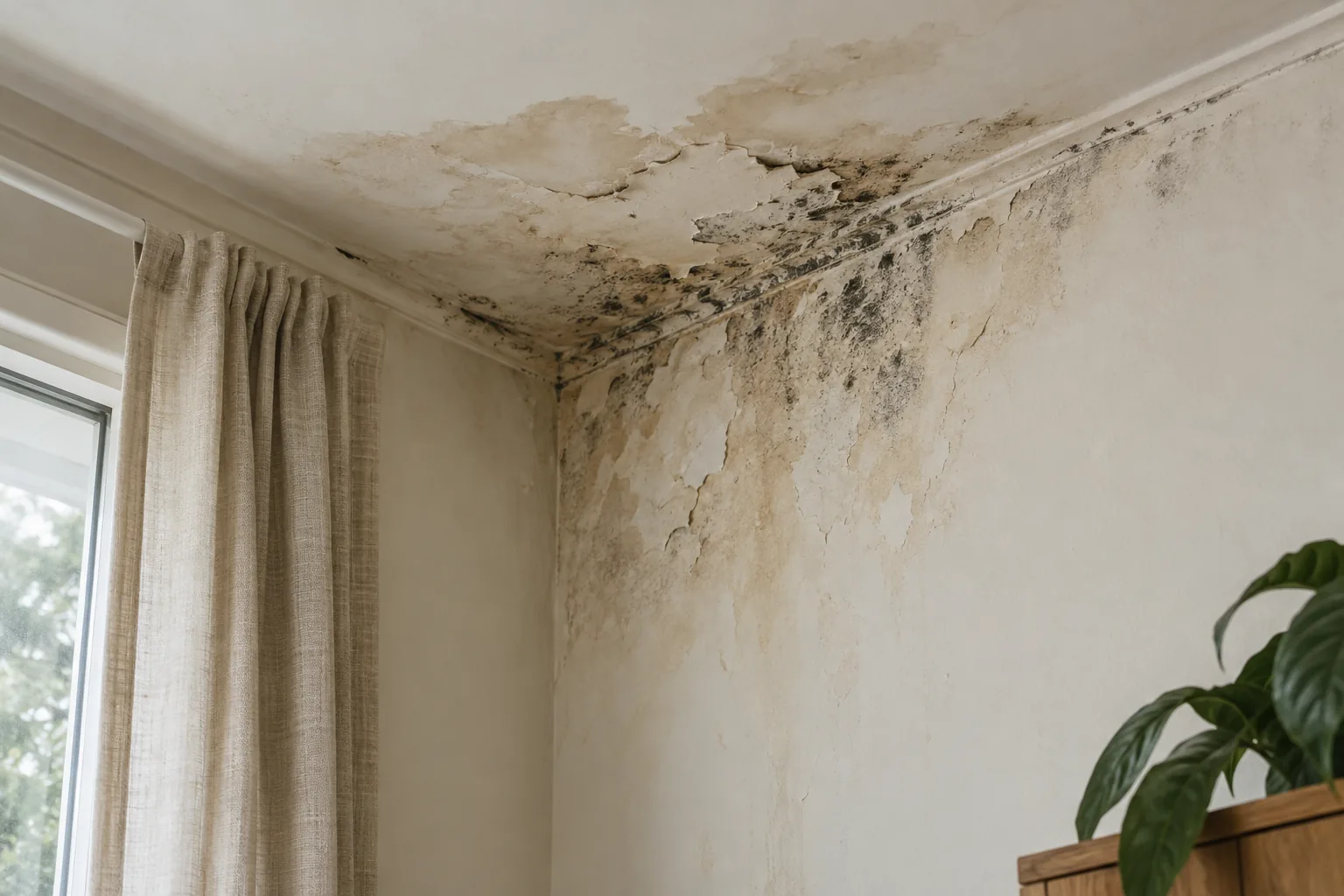
Record finish integrity and height. A patch below a wet room still needs assessment rather than diagnosis by position.
Shared wall
Show whether growth extends between rooms and what is blocked by fittings. Different finishes can require different limits.
Hard floor
Identify the material and exposure on each level. Textile coverings and hidden substrate questions need separate consideration.
MAKE SPACE FOR DRYING
Keep the source and the surface in view
Coordinate identified repairs across the relevant rooms before cosmetic finishing hides a changing mark. Keep dates and photographs for both levels. This supports a useful comparison if the source’s former trigger occurs again.
Maintain wet-room ventilation and address plumbing, waterproofing or roof defects through the appropriate trade. Those tasks serve different purposes from surface removal. Cleaning cannot guarantee against recurrence where a concealed source or damaged material remains unresolved. Label photographs by level and room name, including the location of plumbing fittings above any lower ceiling mark. This makes the building relationship understandable without suggesting that the nearest wet room is necessarily the source or that opening the ceiling is included.
COCKATOO & NEARBY
Nearby location guides
For another property along the surrounding district, these location guides support its own address-specific room enquiry: Avonsleigh, Emerald, Mount Burnett.
QUESTIONS WORTH ASKING
Before the visit.
Does a lower ceiling mark identify the leak directly above?
No. Water can travel within the building, so room layout and timing inform investigation without proving the exact defect.
Can both levels be considered in one enquiry?
Yes, describe each room and its access so a suitable assessment or removal scope can be agreed.
Should I open the ceiling to show the source?
Do not open lining for the enquiry. Any invasive investigation requires a separate appropriate decision.
Are stairs and height relevant to pricing or preparation?
Explain them before booking so practical access and the agreed work can be discussed clearly.
Is waterproofing repair included in removal?
No such repair should be assumed; it requires its own relevant trade and scope.
What confirms Cockatoo availability?
Call with the exact address, room-level relationship and access restrictions to discuss an appropriate appointment.
START WITH YOUR ROOM
Talk through the room in Cockatoo
Call 03 8652 1296 with the address and a simple description of the affected levels. We can discuss assessment, suitable surface treatment and practical access before confirming availability.
Useful references: Cardinia — Eastern Dandenong Ranges Trail townships