
WATERFRONT CITY · MELBOURNE
Mould Removal Waterfront City
WATERFRONT CITY / READY TO ASSESS
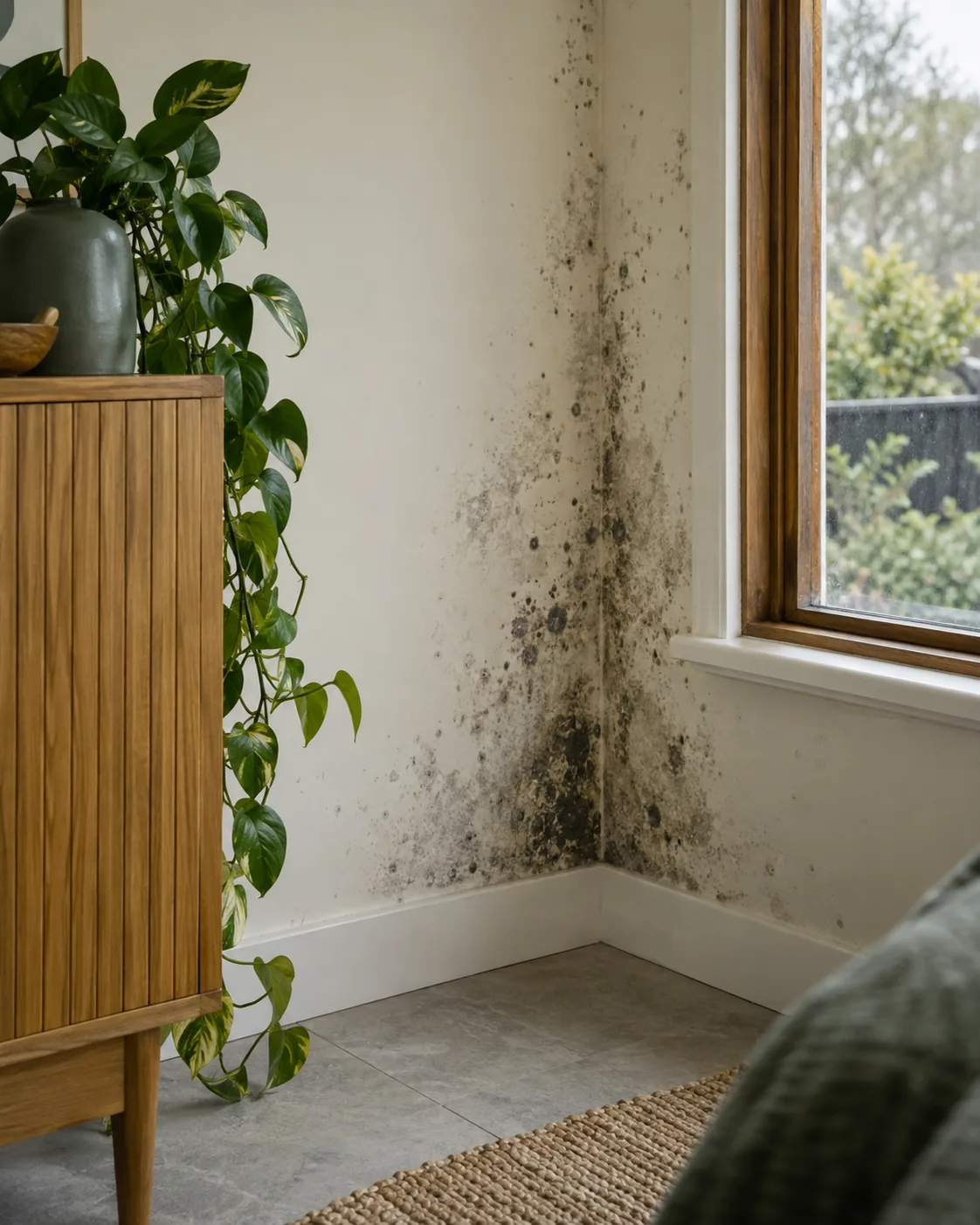
A Waterfront City interior that has been shut for a while may need a careful look before it is used again. Tell us about visible growth, stored belongings and any unresolved dampness.
Room use and access discussed
Stored belongings excluded from treatment
Practical follow-up advice
SURFACES & THEIR SETTING
Start with a usable room description
Waterfront City is identified in the official Docklands Plan. For an enquiry, the precise address and tenancy matter more than the precinct label when arranging entry and equipment access.
After a period of closure
Explain how long the interior has been closed, whether ventilation remained operating and when growth was noticed. Do not assume closure alone caused it. A dated record and photographs can help the inspection discussion distinguish visible condition from guesses.
Stored items change access
Boxes or shelving may hide a wall and restrict equipment placement. Describe those obstacles before agreeing to clear them. Furniture and textiles are not treated by this service. Moving an item is an access decision, not a promise that its own contamination will be removed.
Check moisture before cosmetic expectations
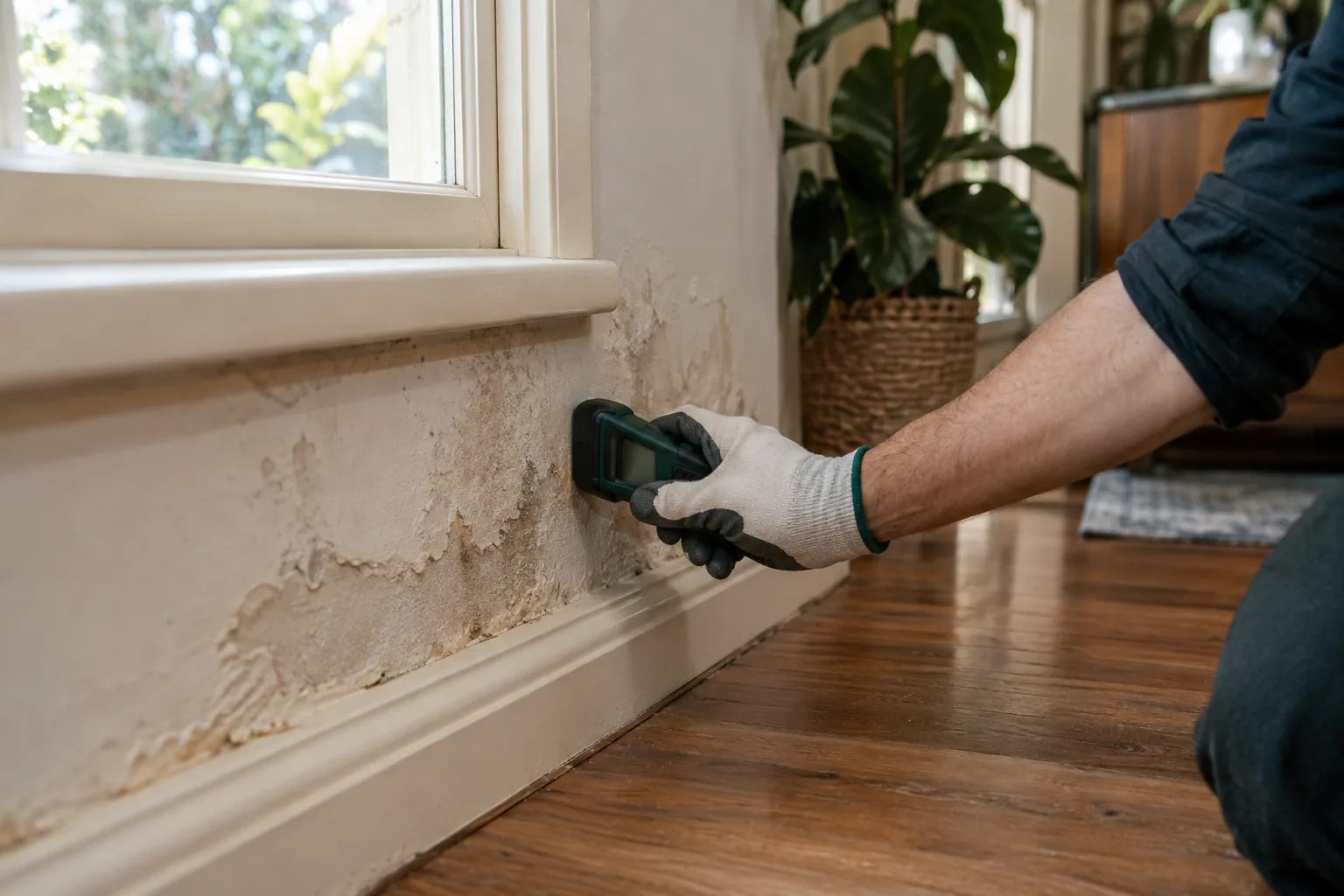
A musty room and a visibly affected wall are useful observations, but neither establishes the moisture source.
Map the accessible areas
Identify which wall, ceiling or hard-floor section is visible. Mention flaking finishes and inaccessible corners. The removal scope should describe those surfaces explicitly rather than include every object in a photograph.
Find the right repair contact
A continuing pipe, roof or building-envelope issue needs separate repair. Supply any available maintenance notes and explain whether the room remains wet. Hidden spaces are not automatically covered, and fog application does not replace opening or rebuilding damaged construction.
THE SURFACE REMOVAL PROCESS
From preparation to a clear handover
01
Review the room
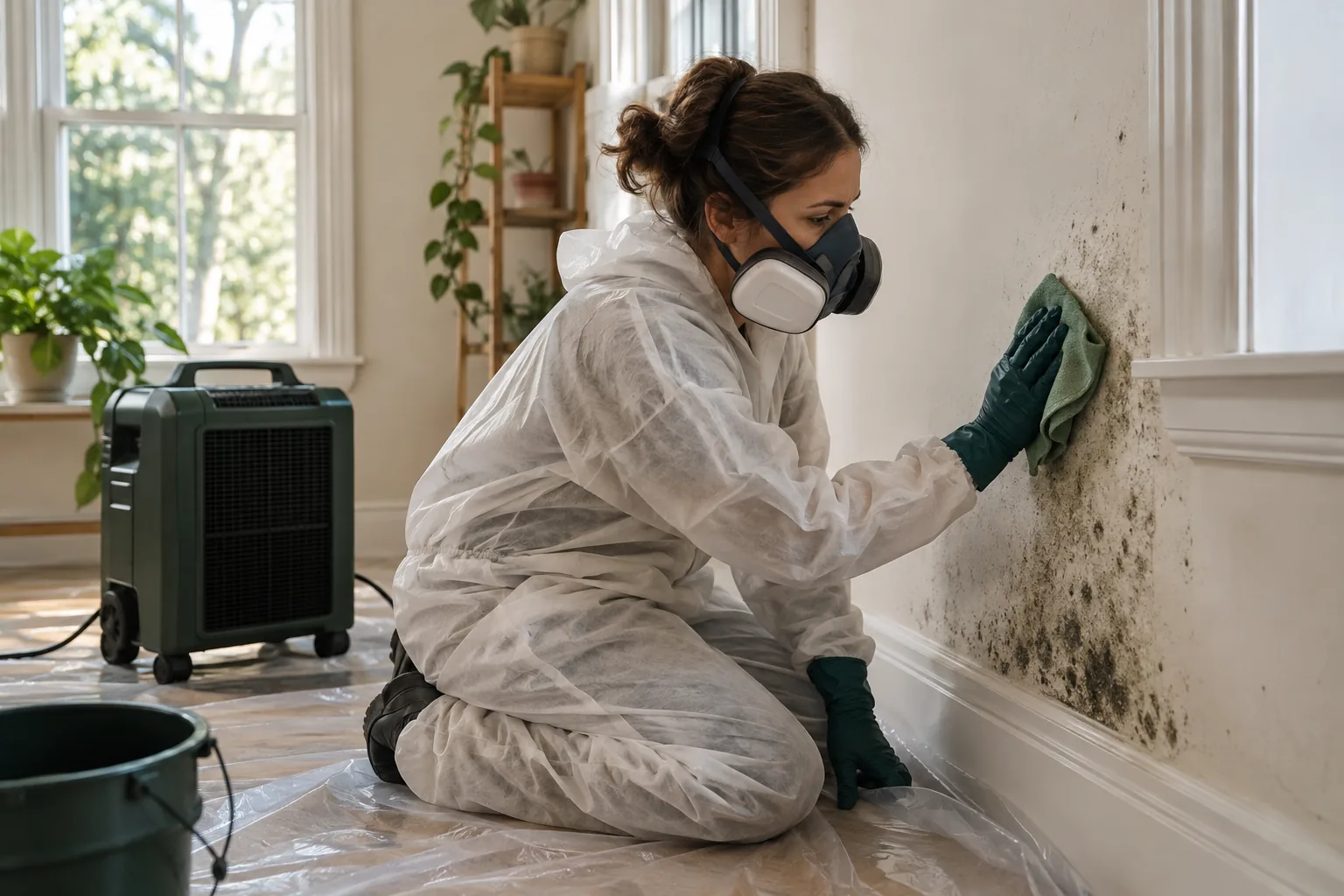
The technician checks accessible growth and the condition of walls, ceilings and hard floors. Humidity or moisture information, including hygrometer readings where appropriate, is considered alongside the history rather than treated as a complete diagnosis.
02
Prepare with air filtration
Agree the handling of belongings, occupant absence and equipment route. A HEPA scrubber filters airborne particles during the planned work. Confirm building entry rules so preparation does not obstruct shared access or emergency paths.
03
Treat the agreed surfaces
Appropriate HOCl treatment is considered for the material and finish. Previously damaged paint and delicate surfaces need discussion. The method addresses growth within the scope and does not guarantee a uniform new-looking finish.
04
Include fog application where suitable
ULV application may form part of the agreed process. The technician explains the room arrangements and return timing. Any fire-alarm procedure must be approved with the responsible manager rather than improvised by the occupant.
05
Physically remove visible residues
H-class filtered equipment is used as appropriate for accessible removal. Upholstery, mattresses, carpet, clothing and curtains remain excluded. Contamination beyond the visible structural surfaces may require a separate specialist enquiry.
06
Finish and review outstanding work
Final filtration is followed by a discussion of remaining marks and unresolved moisture. Ask what the handover means for room use and decorating. Damp conditions can support recurrence, so treatment is not a permanent cure for a leak.
VISIBLE & ACCESSIBLE
What to photograph before calling
Walls behind boxes
Show the wall and the obstacle separately.
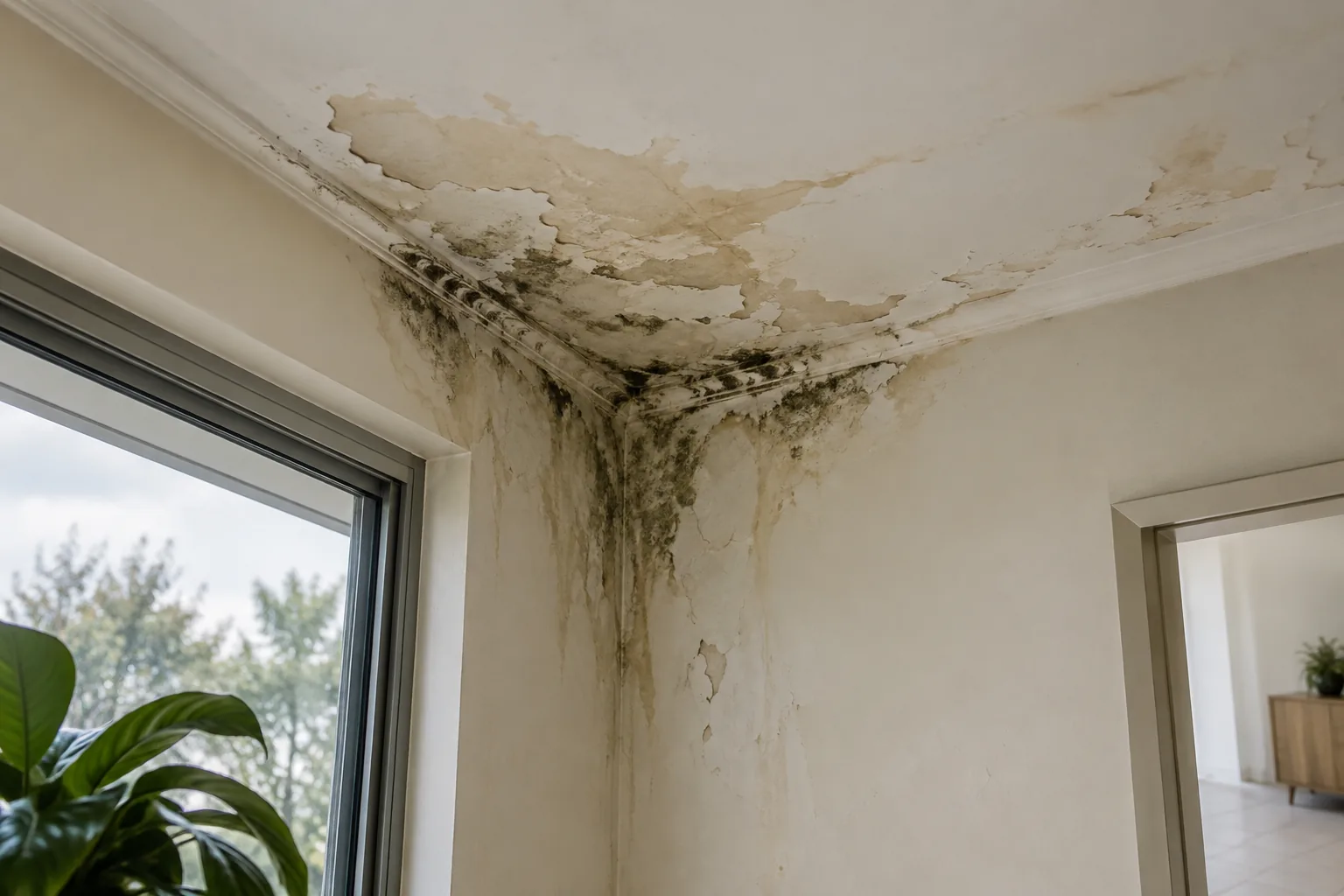
Ceiling corners
Capture the surrounding ceiling and fittings.
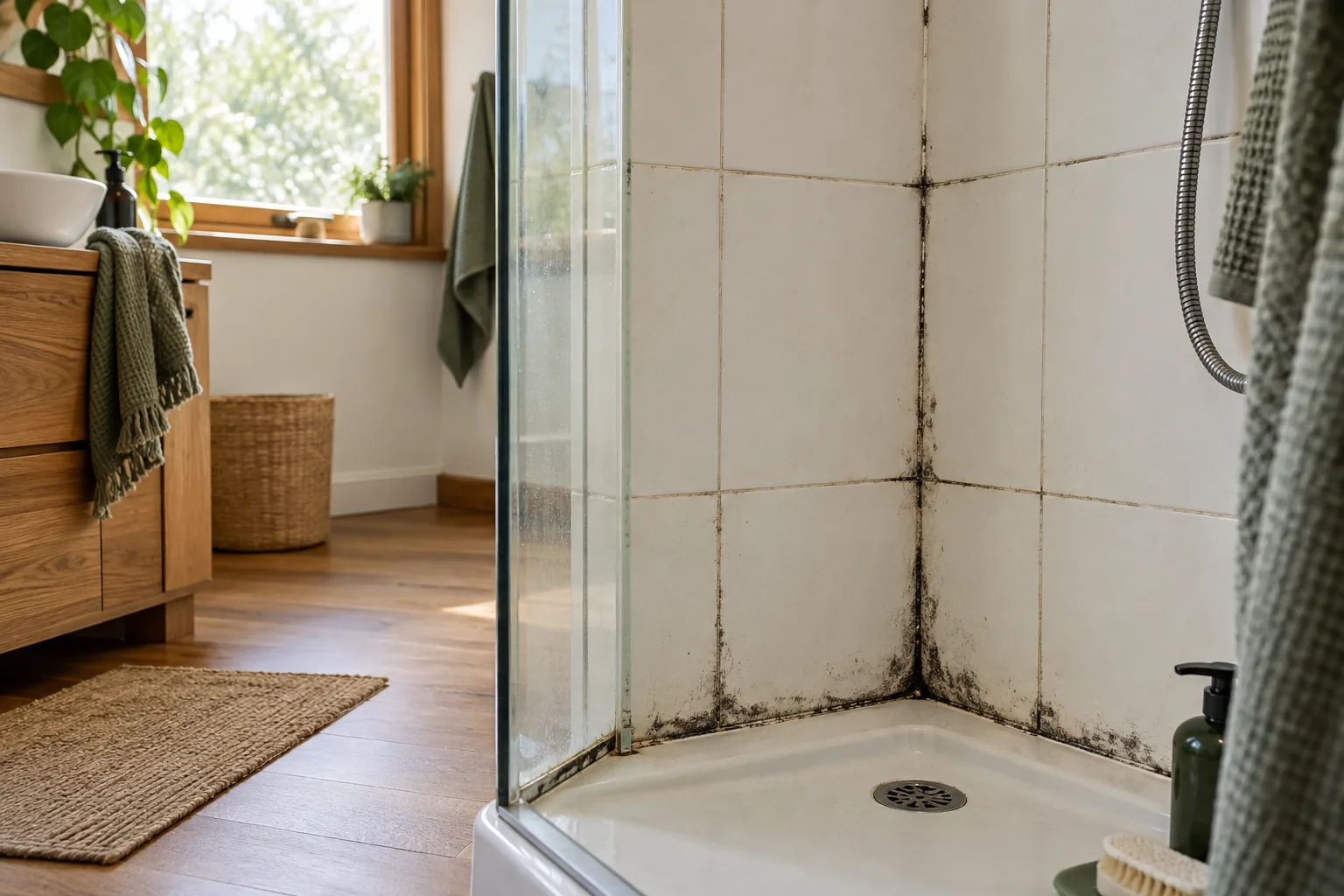
Bathroom surfaces
Identify painted walls, ceilings and accessible hard areas.
Hard-floor edges
Provide the finish type and location of water marks.
PREPARATION & LIMITS
Agree the duration and finish honestly
Around three hours per room is an average working estimate. The number of surfaces, size and access can change timing; it is not an hourly service or a fixed appointment promise. Describe the actual interior before planning its reopening.
Remediation and decorating have separate purposes. Stains may remain, and repainting requires a separate quote. Repair of the moisture source and appropriate drying also remain distinct from removal of visible growth.
AFTER THE SURFACE WORK
A room needs a workable moisture routine
When the room returns to use at the agreed time, keep ventilation openings clear and check extraction where moisture is produced. If it will be closed again, discuss a realistic monitoring arrangement with the person responsible for the property.
A humidity log and dated photographs can explain changes over time. They do not confirm hidden dryness or replace repair work. Report repeated dampness before covering it with stored items or fresh paint, so the same area remains accessible for advice.
WATERFRONT CITY · SURROUNDING ADDRESS ENQUIRIES
Nearby Docklands enquiries
NewQuay, Digital Harbour and Victoria Harbour are nearby precinct guides. Confirm the actual Waterfront City street entry and contact when calling; a nearby map location does not establish permission to access your building.
BEFORE YOU ARRANGE WORK
Questions for your enquiry.
Can an unused room be treated before reopening?
Discuss the room condition, proposed reopening and outstanding repairs first. Availability and the agreed preparation determine the visit.
Should I move all stored boxes first?
Explain what blocks access before moving items. Handling arrangements should be agreed, particularly if contents may be affected.
Does a musty smell identify the cause?
A smell is useful to report but cannot identify a moisture defect by itself. Tell us where it is strongest and what visible evidence exists.
Can the room be used immediately afterwards?
Follow the return arrangements agreed with the technician. The method, preparation and building layout affect that discussion.
Are shelves and carpets included?
Furniture, shelving contents and textiles are outside the structural-surface treatment. Hard-floor access can be discussed, but carpet treatment is not part of this service.
What should I do if another patch appears?
Record the location, date and recent moisture conditions and contact the appropriate property representative. Fresh growth can reflect continuing dampness.
Plan the next use of the interior
Call 03 8652 1296 with the Waterfront City address, room condition and access arrangements. Discuss an assessment and practical preparations before committing to a treatment date.
Useful references: Docklands official precinct map