
OAKLANDS PARK · MELBOURNE
Mould Removal Oaklands Park
OAKLANDS PARK / ADDRESS FIRST
For an Oaklands Park estate enquiry, give the Victorian address before describing the affected interior. A wall mark after a plumbing incident needs its own history and assessment. We can discuss availability and accessible surfaces without treating the estate name as a separate bounded suburb.
Victorian address confirmed
Plumbing history considered
Surface and repair scopes distinguished
SURFACES & THEIR SETTING
Be precise about Oaklands Park
A Victorian Government transport document refers to Oaklands Park on the Konagaderra Road route. Use the actual estate address near Oaklands Junction; this page is not about the South Australian suburb with the same name.
After a plumbing incident
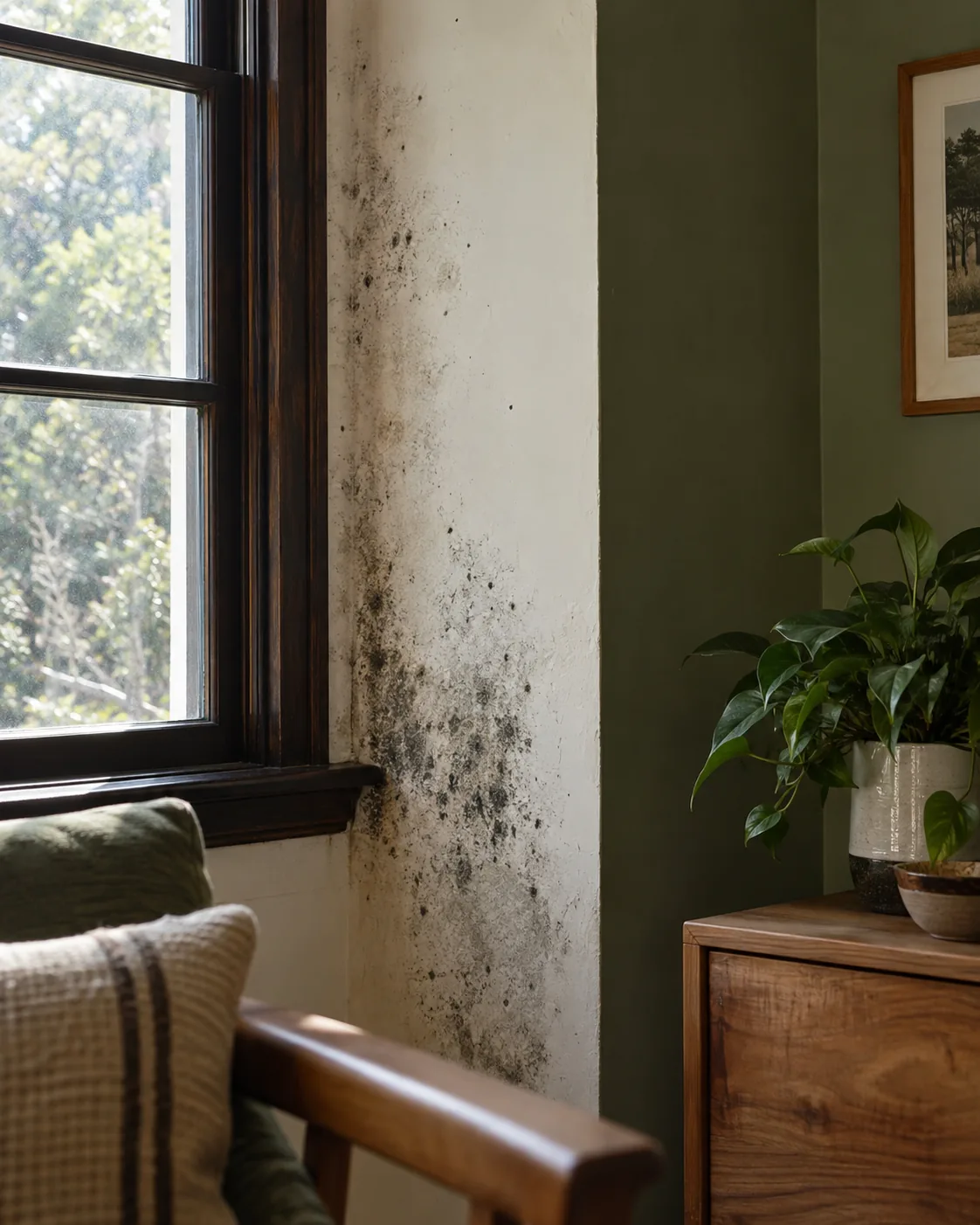
Tell us which room was affected, when water entered and what was repaired. The inspection discussion should consider the visible material and any wetness that continues. A completed plumbing visit does not by itself establish that all surrounding construction has dried.
Plan the property entry
Confirm the street, access contact and equipment route. Availability is discussed for the actual address, not guaranteed by the estate label. A local guide does not imply a separate crew, office or identical property conditions throughout Oaklands Park.
The surface tells only part of the story
Describe the wall finish, visible growth and any change in texture. Avoid opening construction simply to obtain a better photograph before the investigation scope is agreed.
Visible structural surfaces
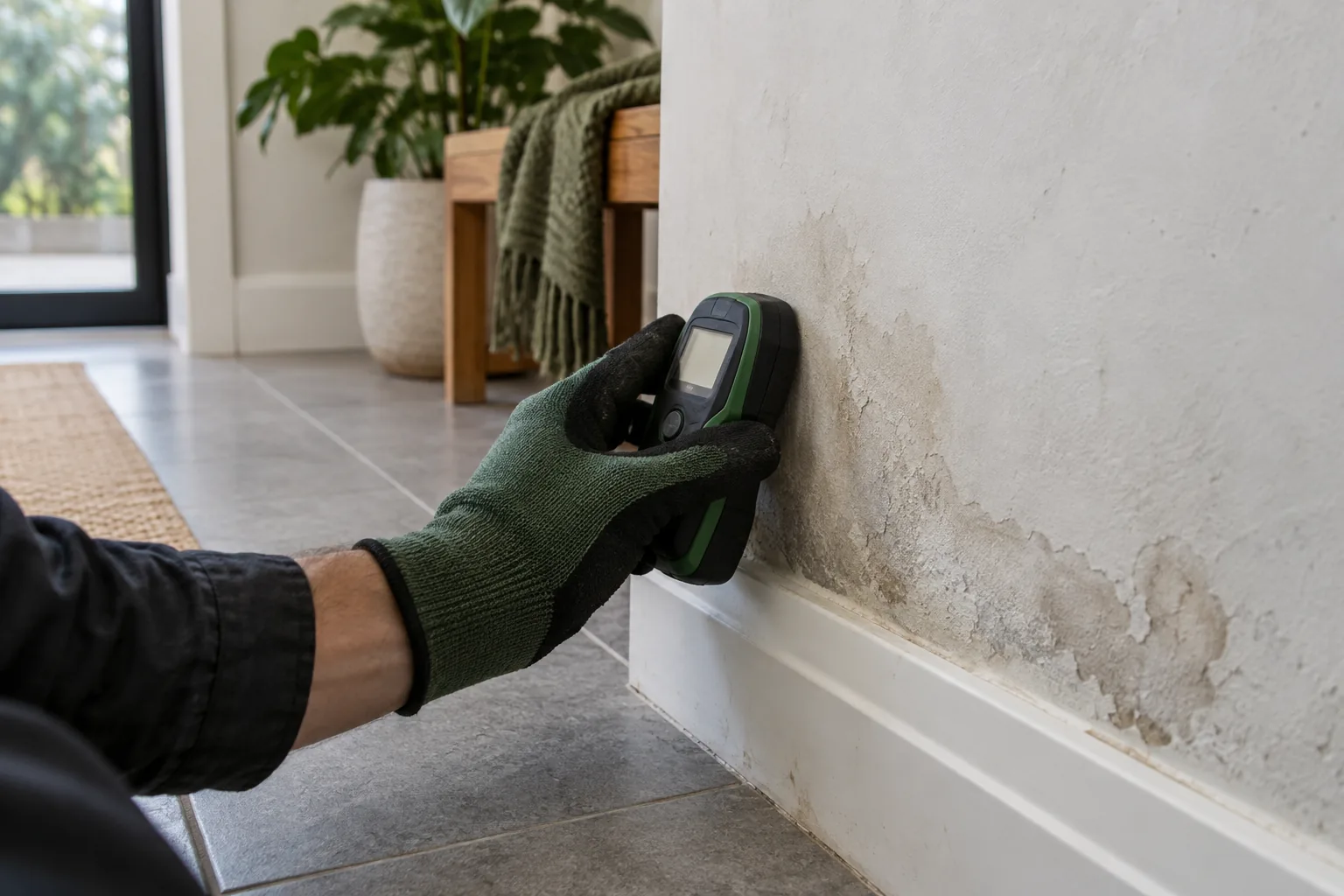
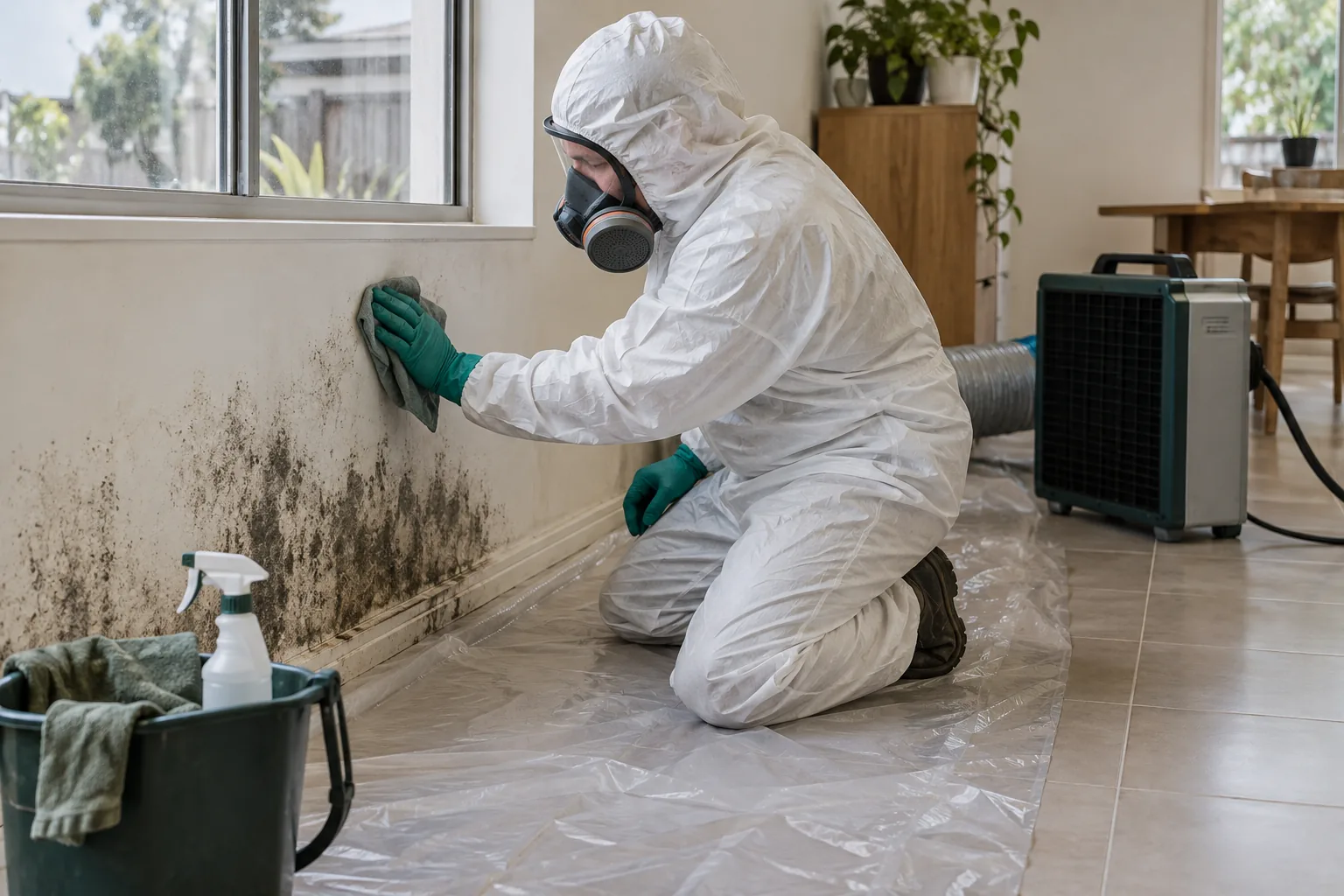
The mould removal scope covers accessible walls, ceilings and hard floors. Soft plaster, fragile paint and blocked areas need discussion. Furniture, carpet, mattresses, curtains and clothing are excluded from this treatment.
Repair and drying remain separate
A leak requires the appropriate repair trade, and damaged construction may need other work. Humidity readings provide room context rather than certainty about hidden dryness. Supply any repair notes and explain whether the affected area still becomes wet.
THE SURFACE REMOVAL PROCESS
Agree a practical room sequence
01
Inspect accessible condition
The technician reviews growth extent, materials and the water history. A hygrometer may support the room assessment. Concealed cavities and unstable or obstructed material are identified as limitations unless additional investigation is agreed.
02
Prepare and introduce filtration
Agree clearance of belongings and arrangements for people and pets. HEPA filtration supports the planned work. Do not scatter potentially affected contents into other rooms while trying to reveal every wall section.
03
Select appropriate treatment
HOCl application is considered for the finish and condition. Mention previous cleaners or fragile coatings. Treating growth does not rebuild water-damaged plaster or guarantee that cosmetic staining disappears from the surface.
04
Apply ULV where suitable
Fog application may be included in the method. Follow the technician’s preparation and return arrangements. Any alarm procedure needs approval with the responsible person; independent switching off is not an assumed preparation task.
05
Remove visible residue
Professional physical removal uses H-class filtered equipment as appropriate. The service stays within accessible structural surfaces. Furniture, textiles and hidden construction need separate handling, assessment or repair arrangements.
06
Complete filtration and clarify next steps
Final filtration continues as required. Discuss treated areas, remaining stains and outstanding moisture or decorating work. Keeping those distinctions clear prevents a surface visit being mistaken for correction of the entire water incident.
VISIBLE & ACCESSIBLE
Surfaces following water entry
Adjacent painted walls
State the visible extent and whether the finish is softened or peeling.
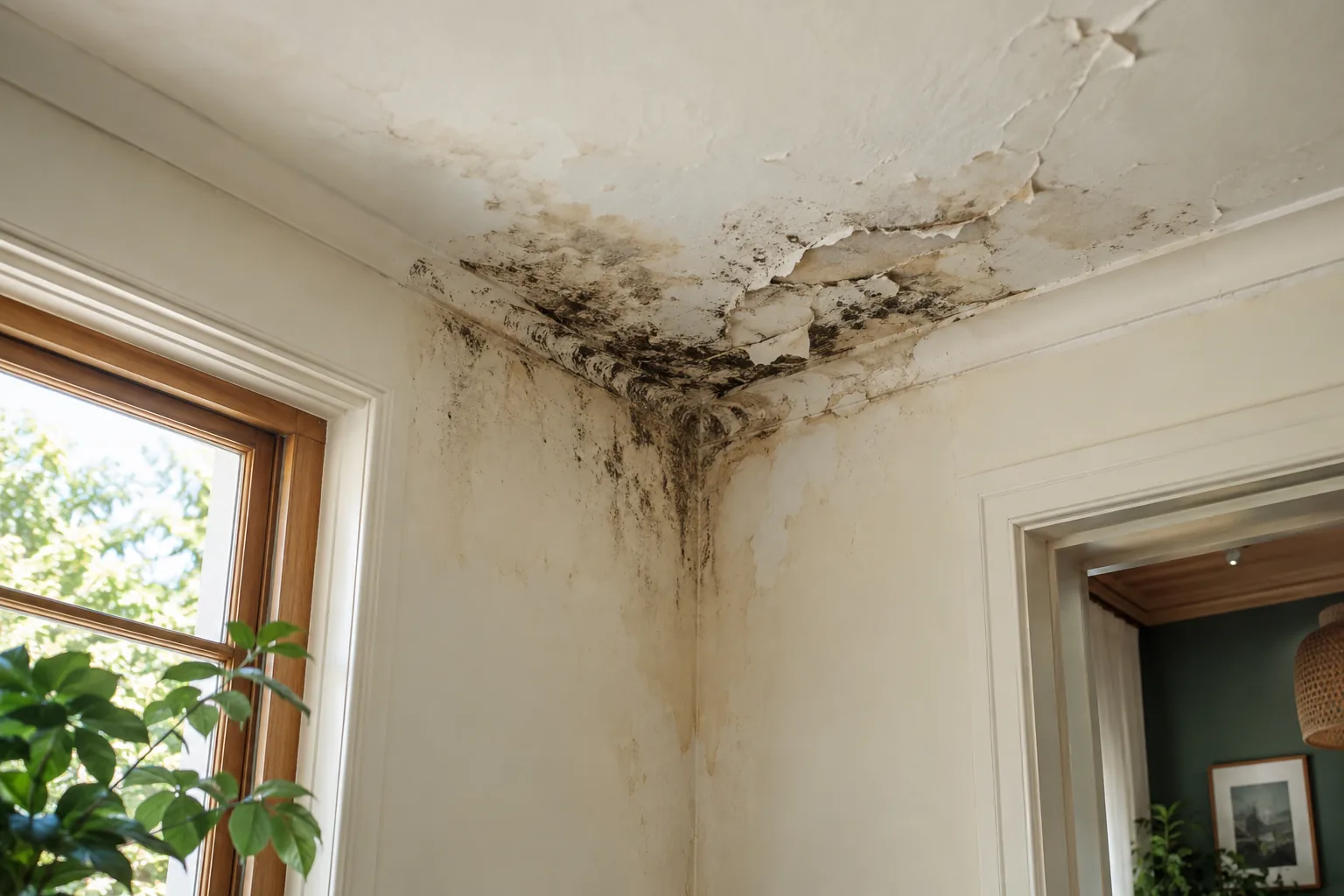
Ceiling water marks
Explain any roof or plumbing history.
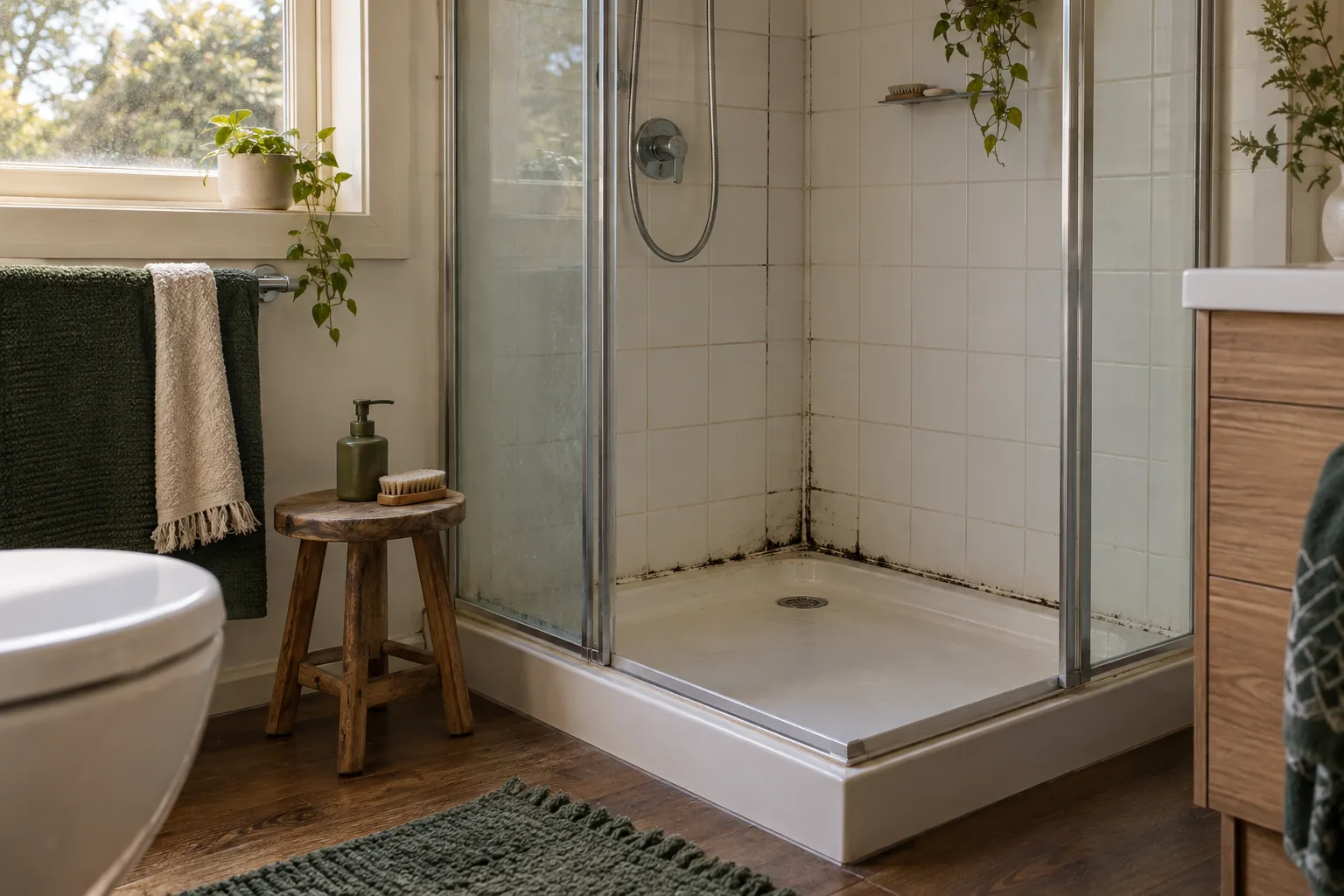
Bathroom walls
Describe accessible growth and extraction.
Hard-floor edges
Identify the finish and water tracking.
PREPARATION & LIMITS
Time and appearance are not guarantees
Allow around three hours per room as an average. Size, contamination and accessibility can change duration, and the service is not hourly-based. Confirm the actual room list and visit availability before setting fixed plans.
Remediation may leave staining, with decorating separately quoted. Source repairs remain separate. Existing growth can be addressed while ongoing dampness still requires attention; unchanged moisture conditions can allow recurrence.
AFTER THE SURFACE WORK
Keep the repair history useful
Retain notes about the repaired fitting, dates and any continuing wetness. Check effective extraction in moisture-producing rooms and leave ventilation openings clear. Those routines do not establish that previously soaked concealed materials have dried.
After the agreed return time, monitor the area before covering it with belongings or fresh paint. Record new marks and relevant room conditions. If water entry continues, contact the appropriate repair trade rather than relying on repeated wiping.
OAKLANDS PARK · SURROUNDING ADDRESS ENQUIRIES
Oaklands Park and the surrounding addresses
Nearby guides include the wider Oaklands Junction area. Give the specific estate address so one property is not booked under multiple local descriptions. Proximity does not establish availability or permission to enter.
BEFORE YOU ARRANGE WORK
Questions for your enquiry.
Is this page for Oaklands Park in South Australia?
No. It concerns enquiries for the Victorian estate referenced near Konagaderra Road and Oaklands Junction.
Is Oaklands Park a separate suburb?
This page uses the estate name as local orientation. The actual address remains essential.
Can a wall be treated after plumbing repairs?
Explain the repaired fitting and whether dampness continues. The surface condition and readiness need discussion. A repair record is useful but does not automatically establish that every affected building material has dried.
Are water-damaged furnishings included?
Furniture, mattresses, carpet and textiles are excluded. Discuss their clearance and separate handling rather than assuming structural-surface treatment restores all belongings affected by the incident.
Will softened plaster be repaired?
Material repair or replacement is separate work. Mention deterioration before booking so treatment limitations can be considered. Removing visible growth does not rebuild plaster or guarantee restoration of its original finish.
What if the patch returns?
Record the date and any continued wetness, then raise the moisture issue with the appropriate contact. Growth can recur when conditions remain damp. Treatment is not a permanent cure for a leaking fitting or building defect.
Confirm the estate address and room condition
Call 03 8652 1296 with the Victorian Oaklands Park address, visible surfaces and repair history. Discuss availability, preparation and the proposed assessment.
Useful references: Victorian Government Oaklands Park route reference