
WOODSTOCK · MELBOURNE
Mould Removal Woodstock
EXTENT · SURFACES · LOCATION
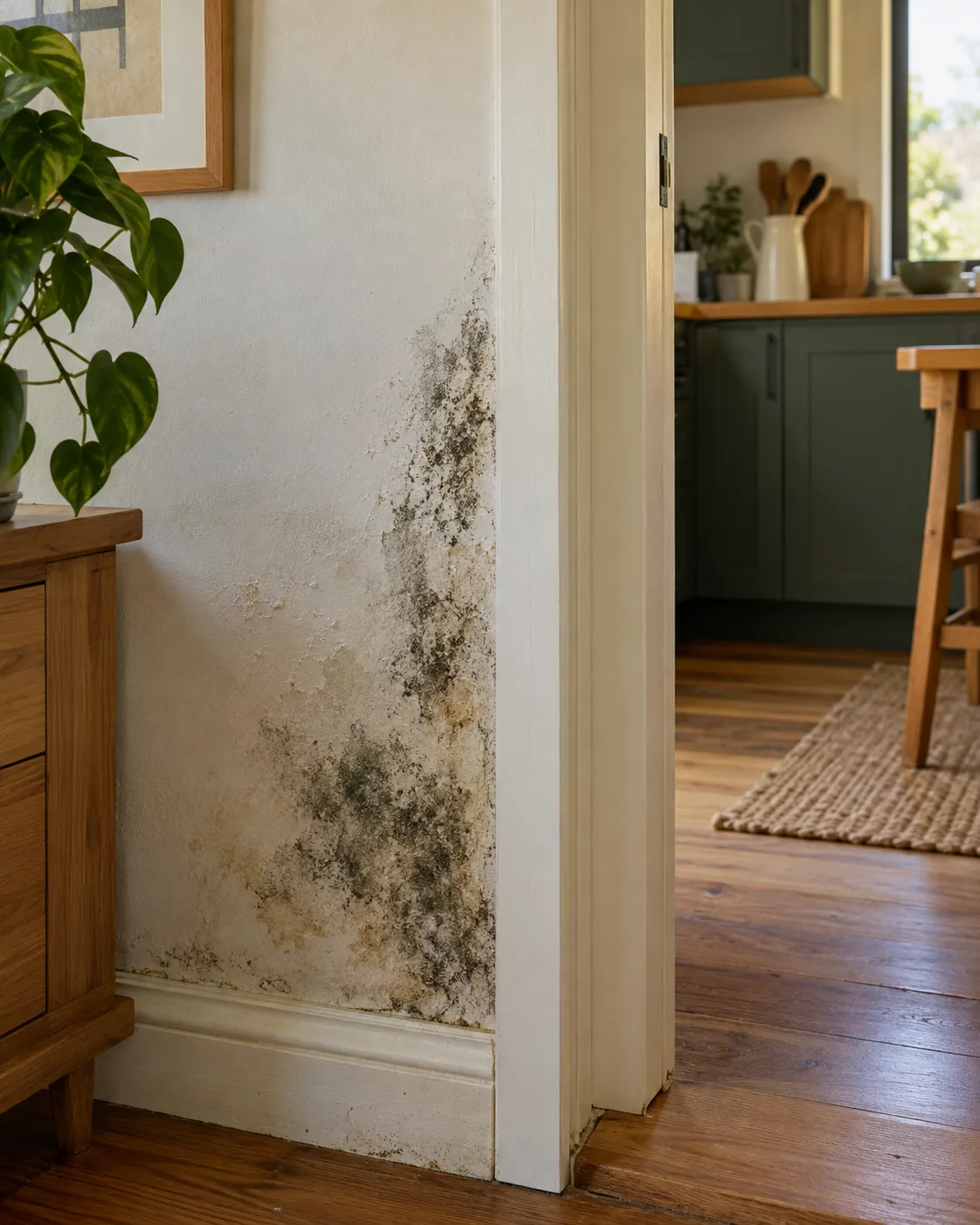
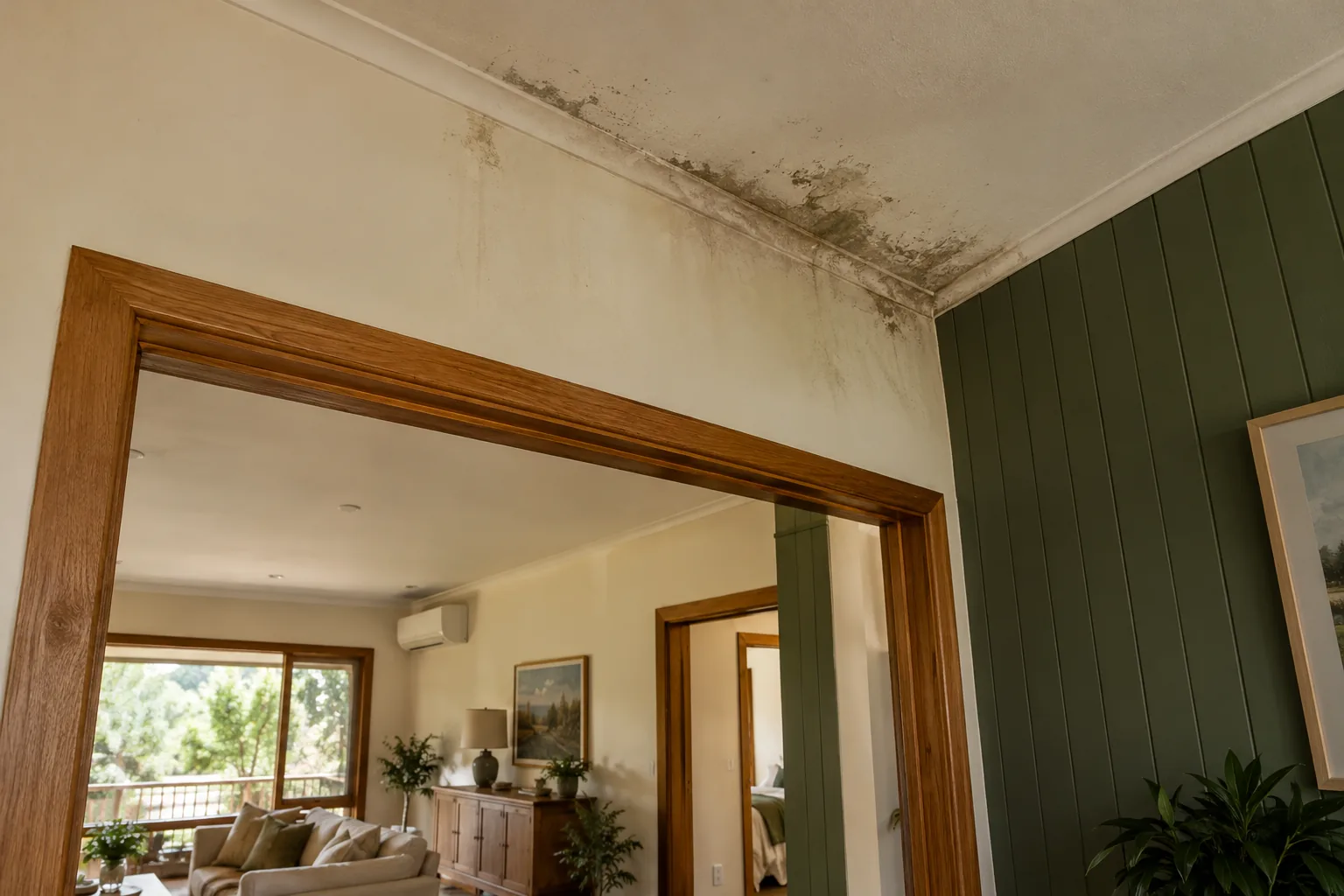
A visible patch in a Woodstock interior needs a clear description of the room and property access. Tell us whether growth is confined to one corner or extends across several structural surfaces. We discuss address-based availability and the material condition before treatment is arranged.
Extent described clearly
Availability checked individually
Separate repairs identified
SURFACES & THEIR SETTING
Identify the property precisely
Woodstock is listed among the City of Whittlesea’s localities. Give the full street address, postcode and entry contact. The locality name does not establish travel availability, a building type or a particular moisture problem.
One corner or several surfaces
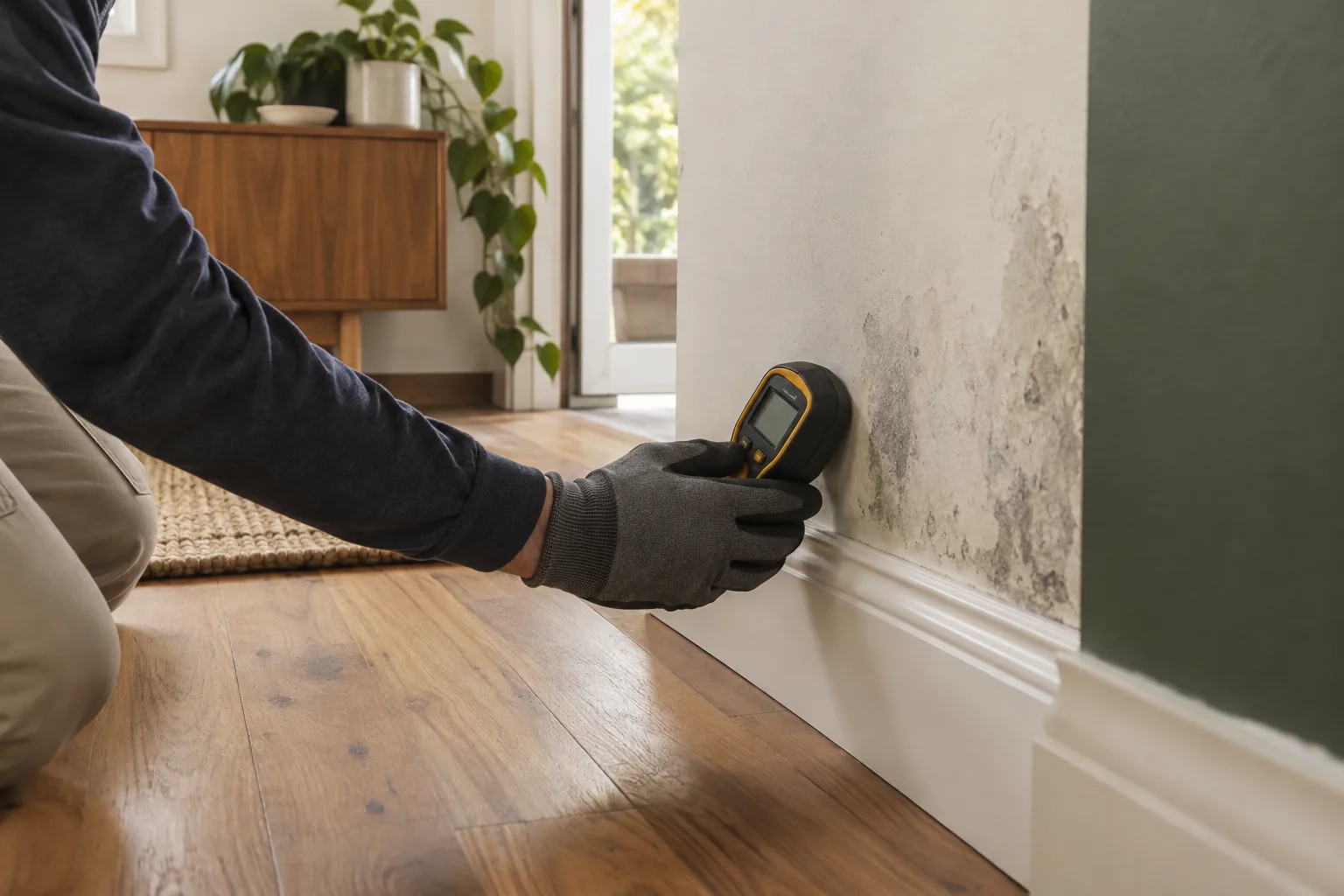
Describe the approximate extent without disturbing the growth. Our inspection information explains visible assessment and moisture checks. A close-up can understate a wider wall concern, so an overall room photograph is useful.
Access across the room
Tell us whether storage, furniture or fixed fittings prevent reaching parts of the wall. A large visible area still needs safe access. Heavy clearance or dismantling is not automatically included in a structural-surface visit.
Avoid guessing from the patch size
Extent affects planning but does not by itself identify the cause or condition of hidden materials. Explain known leaks, recent room changes and recurring dampness. Repairs remain separate from removal of visible growth.
Describe damaged finishes
Peeling paint, loose plaster and distorted flooring should be included in the enquiry. A weakened surface may need another decision before cleaning. Treatment cannot restore structural material merely because its surface looks improved.
Moisture assessment limits
Hygrometer readings support the room assessment. They do not prove every cavity is dry or identify all concealed sources. Further investigation can be necessary where dampness persists beyond accessible surfaces.
THE SURFACE REMOVAL PROCESS
An agreed sequence for the visible area
01
Inspect the room scope
Check reachable walls, ceiling and hard floor. Define the included area and surfaces needing separate access or repair. A wide patch does not automatically turn the appointment into a whole-property inspection.
02
Prepare air filtration
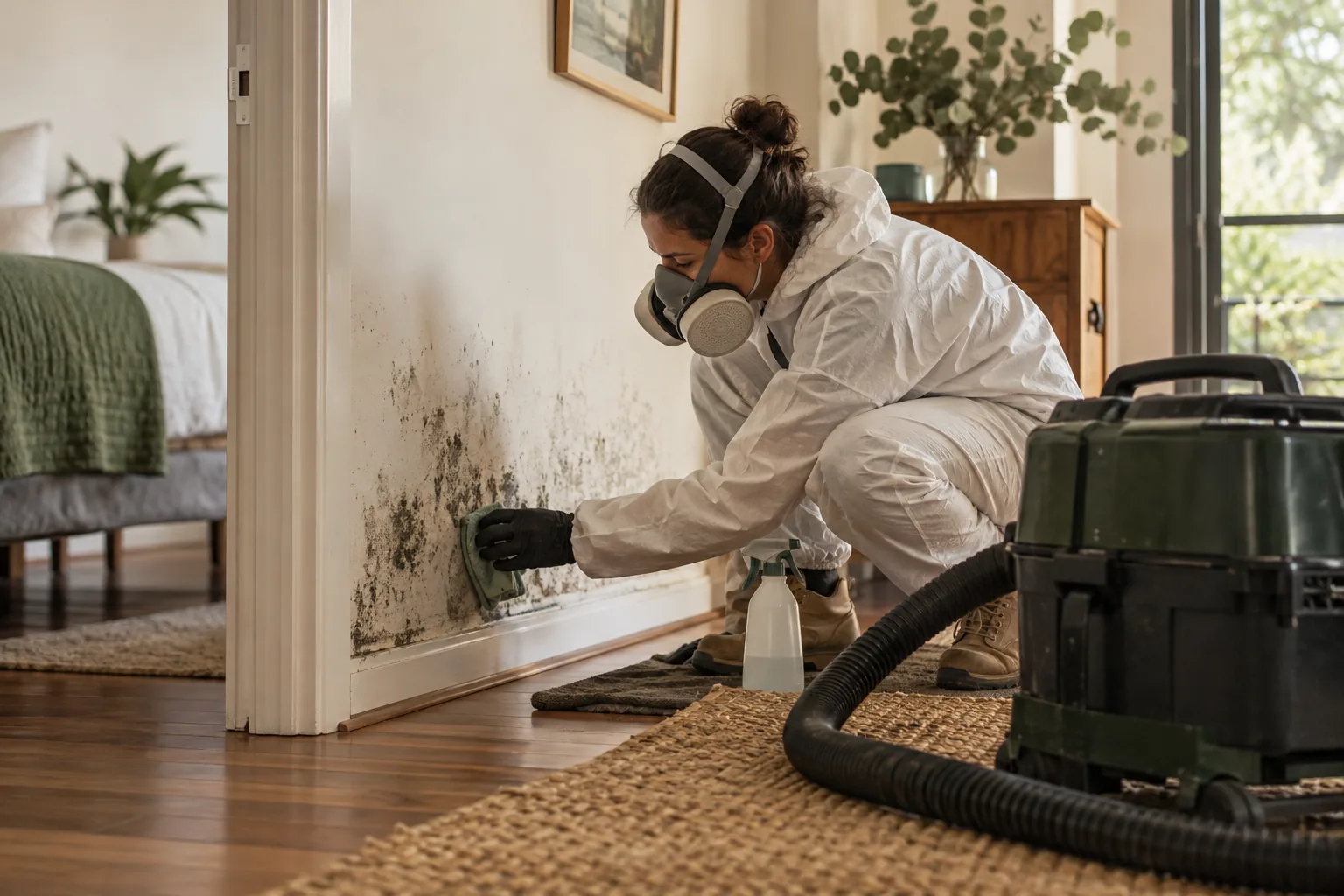
Set up a HEPA air scrubber and the working area. Agree clearance and provisions for people and pets. Equipment placement and entry should reflect the actual property route and room layout.
03
Choose compatible treatment
HOCl may be suitable within the selected method. Material condition and compatibility guide treatment. There is no promise of permanent prevention or complete cosmetic stain removal from an aged finish.
04
Discuss ULV application
Where ULV application supports the room work, explain preparation and restrictions. It complements the agreed scope without establishing that hidden wall layers or other buildings have been assessed.
05
Remove accessible growth
Use suitable physical removal equipment with H-class filtration. The remediation approach combines treatment and removal. Furniture, carpets and textiles remain excluded regardless of their proximity to the patch.
06
Finish filtration and advice
Continue filtration through completion and review the treated surfaces. Explain residual staining and moisture follow-up. Any building repair or decorating should be separately arranged rather than presumed included.
VISIBLE & ACCESSIBLE
Describe surfaces individually
Wall sections
Give approximate extent and finish. Include corners obstructed by storage in the access description.
Ceiling areas
Mention height and loose paint. A ceiling patch may need a different access plan.
Wet-room finishes
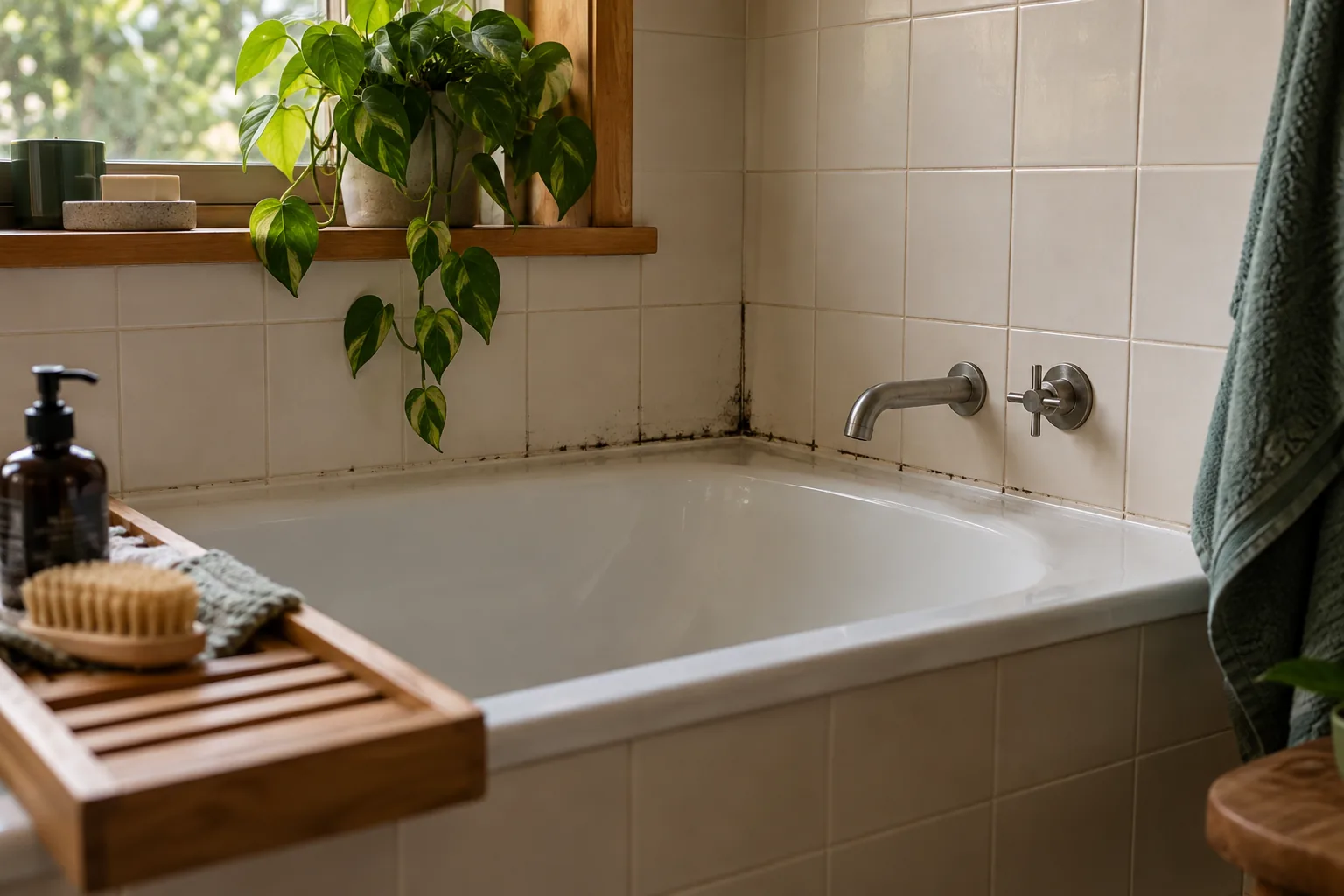
Describe repeated wetness and plumbing history. Source repairs are outside the removal service.
Hard floor edges
Name the material and any lifting. Carpeted floor areas are excluded.
PREPARATION & LIMITS
Keep time and scope realistic
Visible accessible walls, ceilings and hard floors are covered as agreed. Furniture, sofas, mattresses, curtains, carpets, clothing and other textiles are excluded. Separate affected belongings from structural surfaces so the job boundaries remain understandable.
Average working time is approximately three hours per room, with size, extent and access affecting duration; pricing is not hourly. Staining may remain after removal. Repainting or decorating requires a separate quote after dampness and damaged finishes are addressed.
AFTER THE SURFACE WORK
Monitor the whole affected area
Keep dated photographs that show the room, not just one patch. Note recurring wetness and changes after rain or ordinary use. Review suitable ventilation and moisture control without assuming those steps repair water entry.
The general removal scope defines structural-surface work. Arrange the appropriate trade for a continuing leak or damaged material. If growth returns elsewhere in the same room, reassess the moisture conditions instead of treating each patch as unrelated cosmetic dirt.
WOODSTOCK · NEARBY LOCATION PAGES
Nearby locality enquiries
Eden Park, Wollert and Kalkallo provide surrounding-area navigation. They do not guarantee availability at a Woodstock address. Confirm the property location and entry arrangements before preparing for a visit.
BEFORE YOU ARRANGE WORK
Questions for your enquiry.
Can one photograph show the full scope?
A close-up usually cannot. Include an overall room view and describe surfaces outside the frame. Photographs support the enquiry but do not establish hidden damage or replace assessment of material condition.
Is a larger patch automatically more serious?
Patch size affects planning, but it does not by itself diagnose the source or hidden condition. Describe extent, dampness and damage so the appropriate assessment and any separate investigation can be considered.
Will you move stored furniture?
Do not assume that is included. Discuss clearance responsibilities before the visit. Heavy movement or dismantling may need a separate arrangement to expose an otherwise inaccessible surface safely.
Does the page guarantee service to my property?
Availability is checked by the exact address and proposed scope. A locality page is not an appointment confirmation. Supply entry details and discuss travel before making preparation commitments.
Are hidden wall layers included?
No. Standard work covers visible accessible surfaces. A concealed-material investigation needs its own defined scope and access; room application is not evidence that cavities have been checked.
Can treatment restore a damaged hard floor?
Removal does not repair distorted or deteriorated floor material. Mention its condition before booking so cleaning can be separated from any replacement or building work required.
Discuss the Woodstock room
Call 03 8652 1296 with the address, overall extent and access details. We can discuss availability and assessment of the structural surfaces.
Useful references: Official local context