
LYNDHURST · MELBOURNE
Mould Removal Lyndhurst
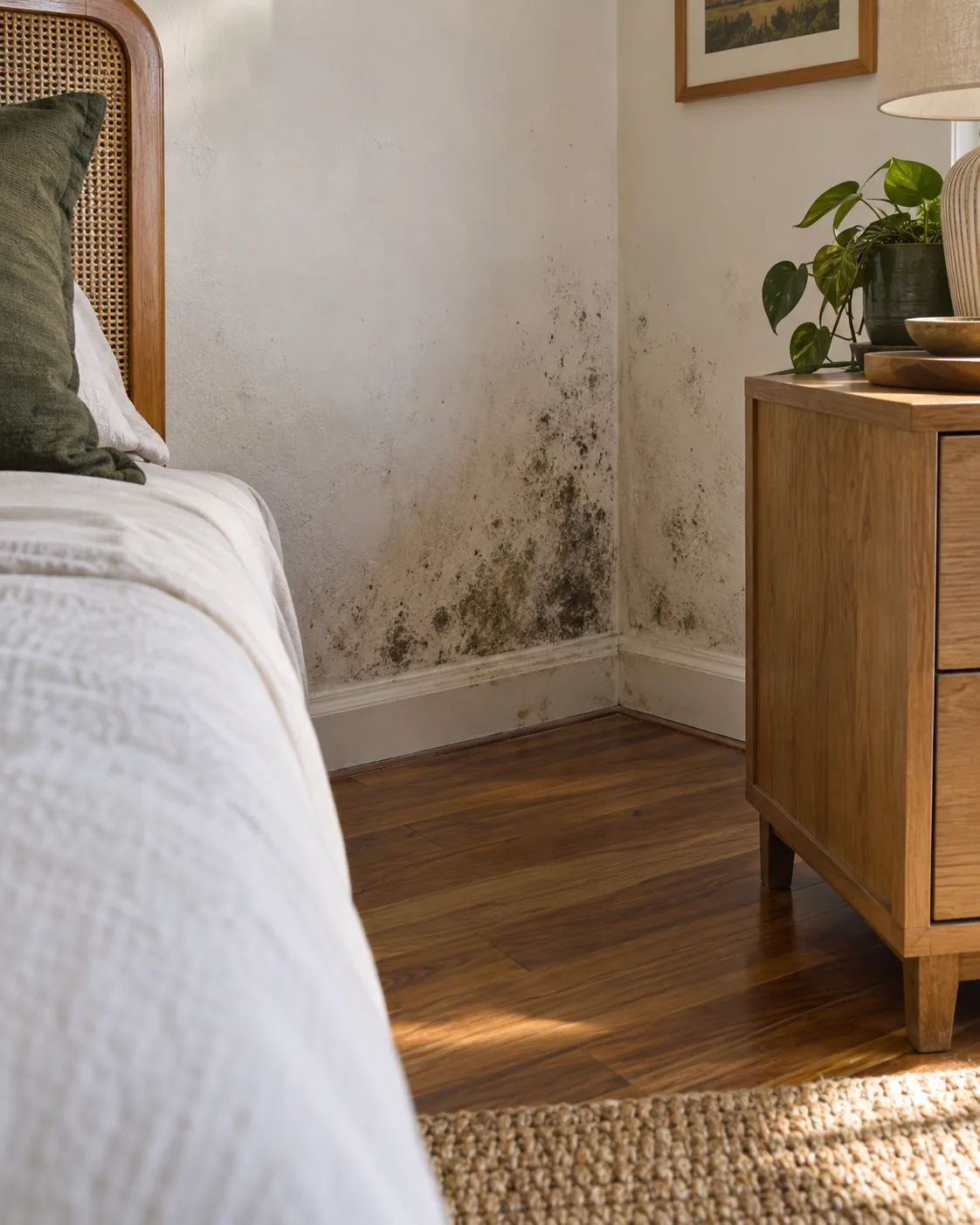
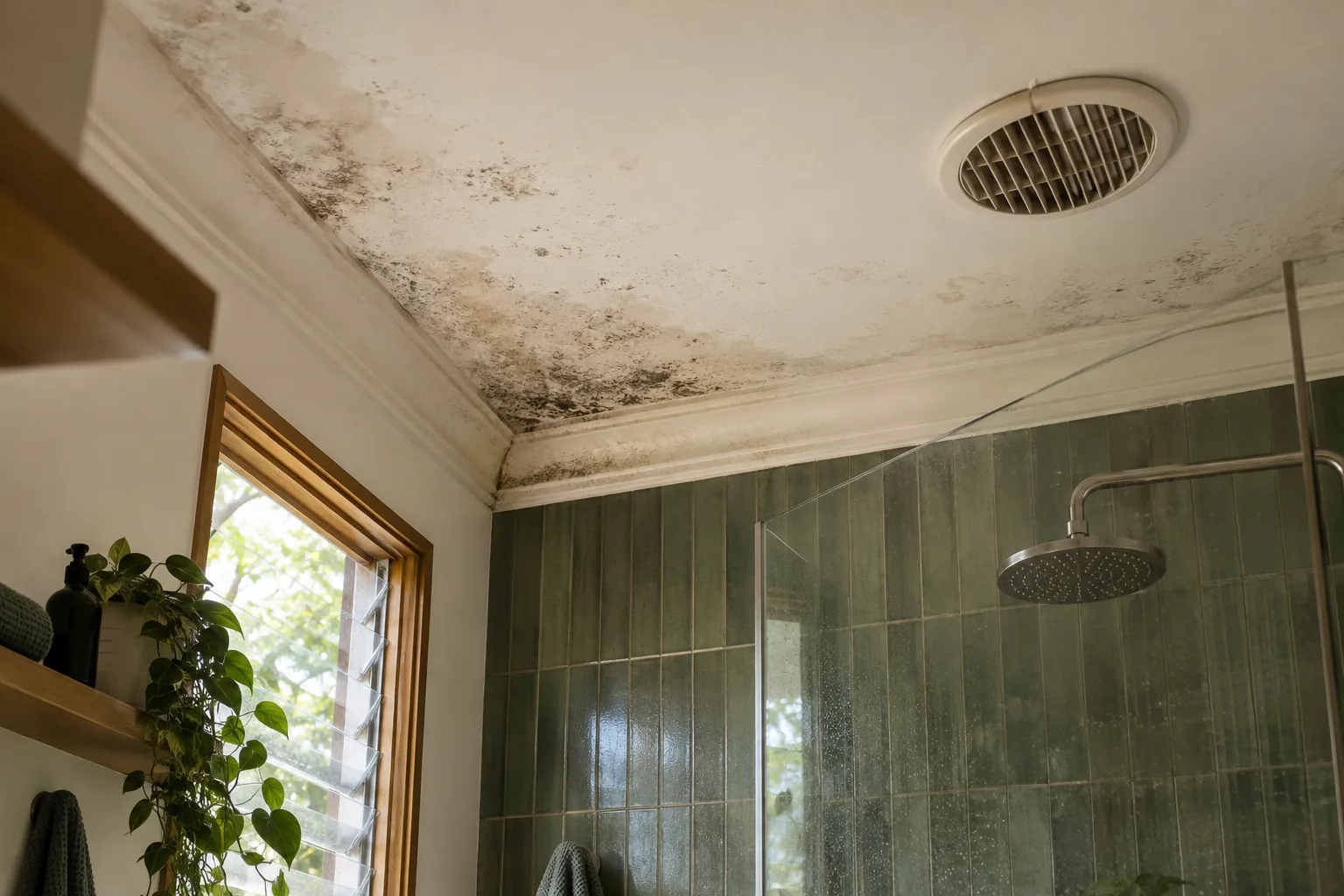
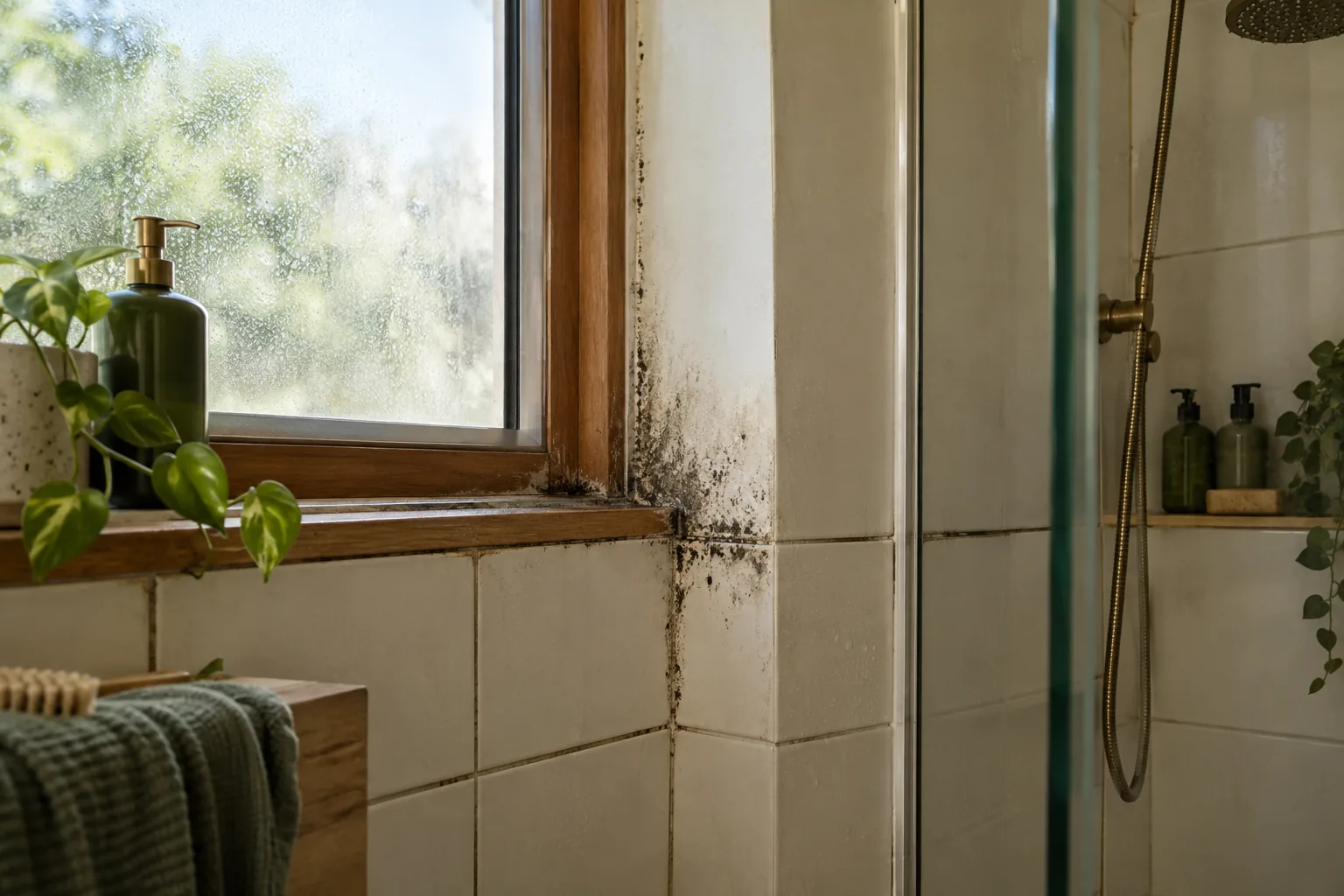
ENSUITE · BEDROOM · BOUNDARIES
An ensuite and adjoining bedroom can share an enquiry without sharing exactly the same problem. For Lyndhurst, describe each affected surface and the room’s use. We confirm the address, availability and work boundary before assuming that a bathroom appointment includes the bedroom.
Room boundaries clear
Surface history reviewed
Preparation agreed beforehand
SURFACES & THEIR SETTING
Identify both sides of the doorway
Lyndhurst is included in the Victorian Government’s Casey locality information. Give your exact street address rather than relying on a council label to explain the property. A removal enquiry should describe the actual room layout and accessible finishes.
Steam and the nearby bedroom
Tell us about repeated condensation and whether extraction operates. A bedroom patch near an ensuite door is relevant to describe, but proximity does not prove a cause. Include known leaks or damaged surfaces in either room.
A room still in daily use
Explain who uses the spaces and when access can be arranged. People and pets need agreed preparation, and belongings can obstruct walls.
Check the finish and moisture observations
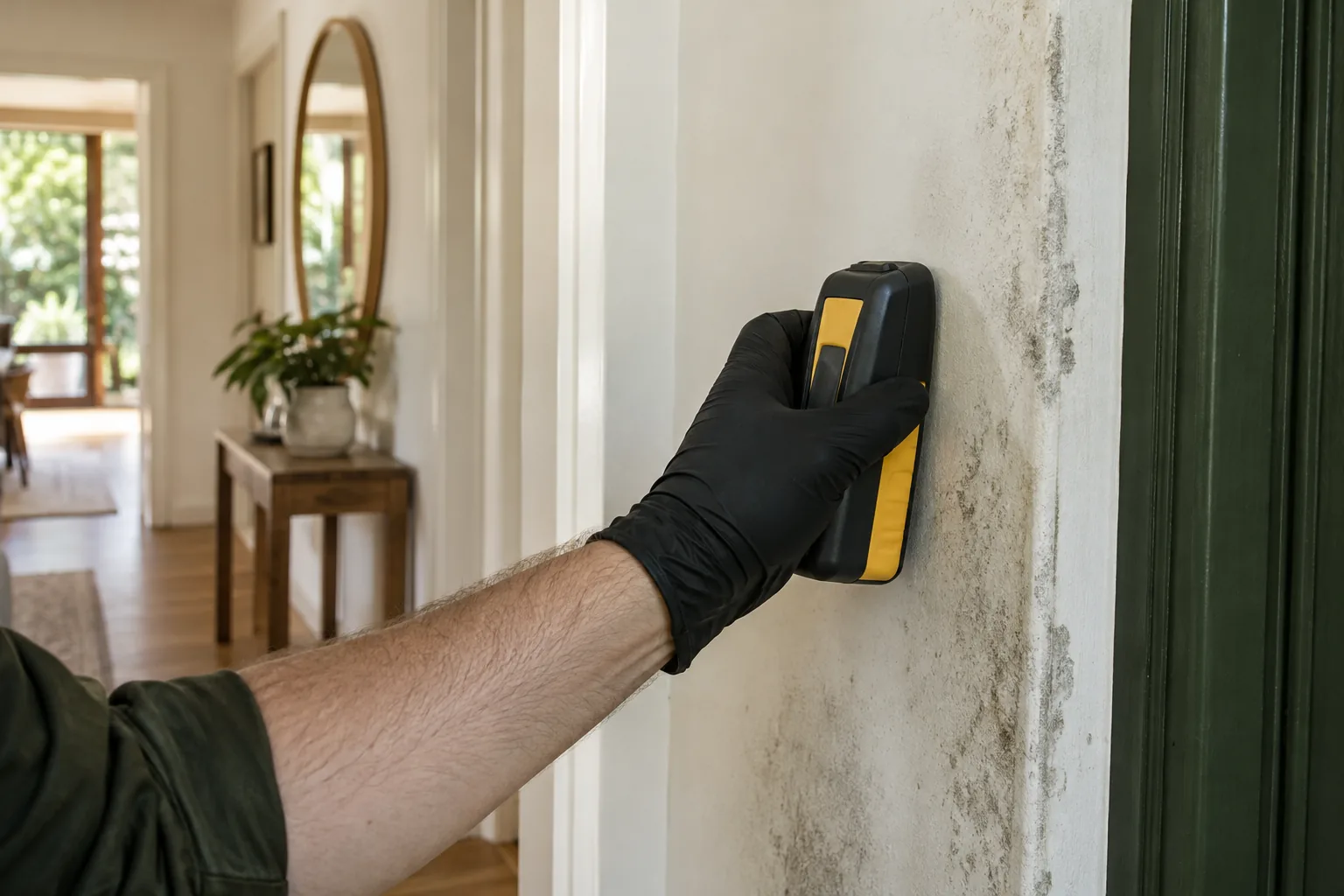
For mould inspection, send a room overview and closer surface images. Moisture and humidity readings can support observations, while concealed wall spaces remain outside ordinary accessible assessment. Clarify any repair work already undertaken and the condition since then.
Peeling ensuite ceiling paint
Describe coating damage rather than focusing only on dark marks. The material may need separate repair or decorating. Avoid scraping it to expose a larger area before the technician has considered the visible condition.
Marks behind the bed
Show available access and mention fixed fittings. A nearby wall can be assessed if reachable, but moving bulky items requires agreement. The treatment scope concerns structural surfaces, not the bed, textiles or stored possessions.
THE SURFACE REMOVAL PROCESS
Agree a practical room sequence
01
Inspect the included areas
Review visible growth, accessible materials and relevant readings. Confirm whether one or two rooms are included and record surface limits. Unresolved leaks or weak lining require separate attention rather than an automatic extension of cleaning.
02
Prepare filtered air
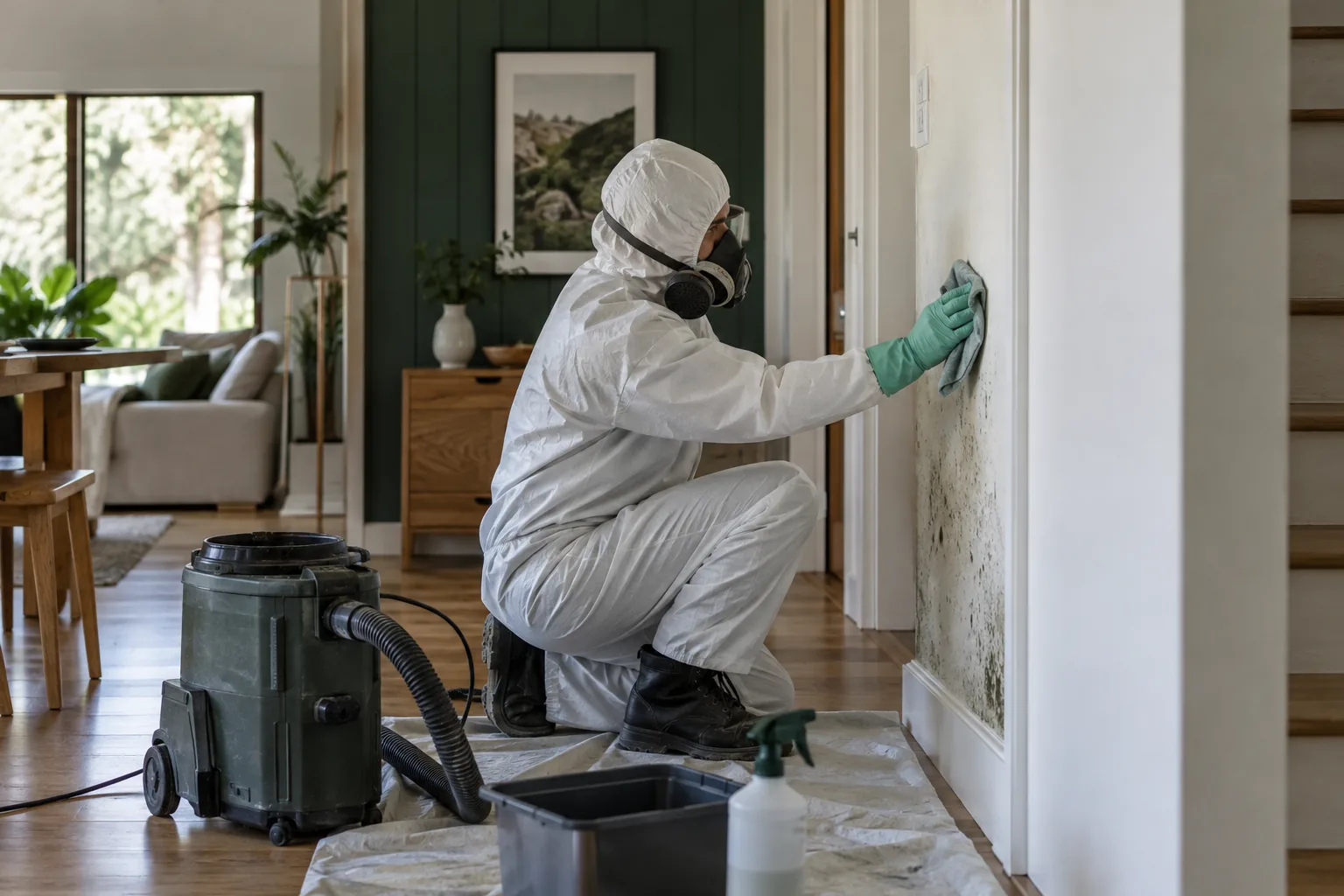
Set up the HEPA air scrubber with suitable power and room access. Discuss how occupants avoid the planned working area.
03
Select suitable treatment
Appropriate HOCl use follows the assessed finishes and work conditions. Tell the technician about earlier products in either room.
04
Apply within the plan
ULV application may be appropriate as part of the procedure. Confirm people, pets and any approved building arrangements first.
05
Remove accessible contamination
Professional physical removal uses H-class filtration as required. Keep the agreed wall, ceiling and hard-floor boundary clear. Fragile paint and damaged lining may limit cosmetic results and can need separate repair decisions.
06
Complete filtration and review
Final air cleaning is followed by discussion of treated surfaces and remaining marks. Confirm return arrangements and separate moisture actions.
VISIBLE & ACCESSIBLE
Four useful views for the enquiry
Ensuite ceiling
Photograph the whole ceiling and note extraction concerns. Towels and other textiles are excluded from structural-surface treatment.
Bedroom wall
Show its position relative to the door and bed. The furniture itself remains outside scope, even if clearance is needed.
Doorway junction
Identify visible growth crossing a structural join. Explain which surfaces belong to each room before agreeing work.
Hard-floor edge
State the finish and recurring wetness. Carpet, rugs and underlay are excluded; do not describe them as structural hard flooring.
PREPARATION & LIMITS
Timing and appearance need separate agreement
The guide averages about three hours per room, with variation for size, access and severity. It is not hourly-based pricing. Adjacent spaces should be discussed as an actual scope rather than assumed to form a single compact appointment.
Contamination removal does not promise a freshly painted finish. Residual staining may remain, and decorating is separately quoted where appropriate. Continuing moisture can permit recurrence; treatment in the ensuite cannot guarantee that the bedroom will never develop new growth.
AFTER THE SURFACE WORK
Keep moisture management tied to use
Check that extraction supports showering and that surfaces dry after the room is used. Arrange faults with the appropriate trade. A fan being switched on is an observation, not proof that it removes enough moisture or that a leak is absent.
Keep practical air space beside belongings and record repeated dampness in the bedroom. Remediation addresses assessed growth, while ventilation and source repair need their own follow-up. Dated room photographs can help explain changes without repeatedly covering them with paint.
LYNDHURST · NEARBY LOCATION PAGES
Lyndhurst and surrounding enquiries
The nearby pages offer local navigation. Confirm the actual Lyndhurst street address, room arrangement and authorised contact when calling. Locality names and adjoining areas do not establish identical availability, property layout or the source of a particular moisture problem.
BEFORE YOU ARRANGE WORK
Questions for your enquiry.
Does an ensuite booking include the bedroom?
Only if the bedroom surfaces are separately agreed in scope. Describe both rooms and their access rather than assuming the shared doorway makes every surface part of one appointment.
Can the mattress remain for treatment?
Mattresses are excluded. Discuss preparation and clearance with us, including where belongings should be kept; room application is not mattress cleaning.
Does bedroom mould prove steam came from the ensuite?
No. Describe the timing and observations, including leaks or condensation. Determining a source can require separate investigation rather than a conclusion based solely on proximity.
Will you repair a faulty bathroom fan?
Extraction repairs are separate. Tell us about the fault early so the visible surface work can be discussed alongside an appropriate maintenance plan.
Can you remove peeling ceiling paint?
Material condition must be assessed. Mould treatment is not automatically coating removal or repair, and cosmetic restoration may need separately quoted work.
Can occupants use the bedroom during the ensuite work?
Agree occupancy and access before attendance. Do not assume that adjoining rooms can remain in ordinary use throughout the planned procedure or final filtration.
Discuss your Lyndhurst address
Describe the Lyndhurst ensuite and bedroom separately on 03 8652 1296. Include the exact address, doorway access and visible finishes, then agree whether one or both areas form the proposed surface scope.
Useful references: Official local geographic reference