
VISIBLE & ACCESSIBLE ASSESSMENT
Mould Inspection Clematis
Newly installed lining changes what can be observed on a room surface. If marks appear near a plaster joint, explain when the work was done and what changed afterwards. The visible joint is a starting point for questions, not proof that every underlying material has the same condition.
Accessible growth and extent considered
Air-humidity information explained
Limits and next decisions made clear
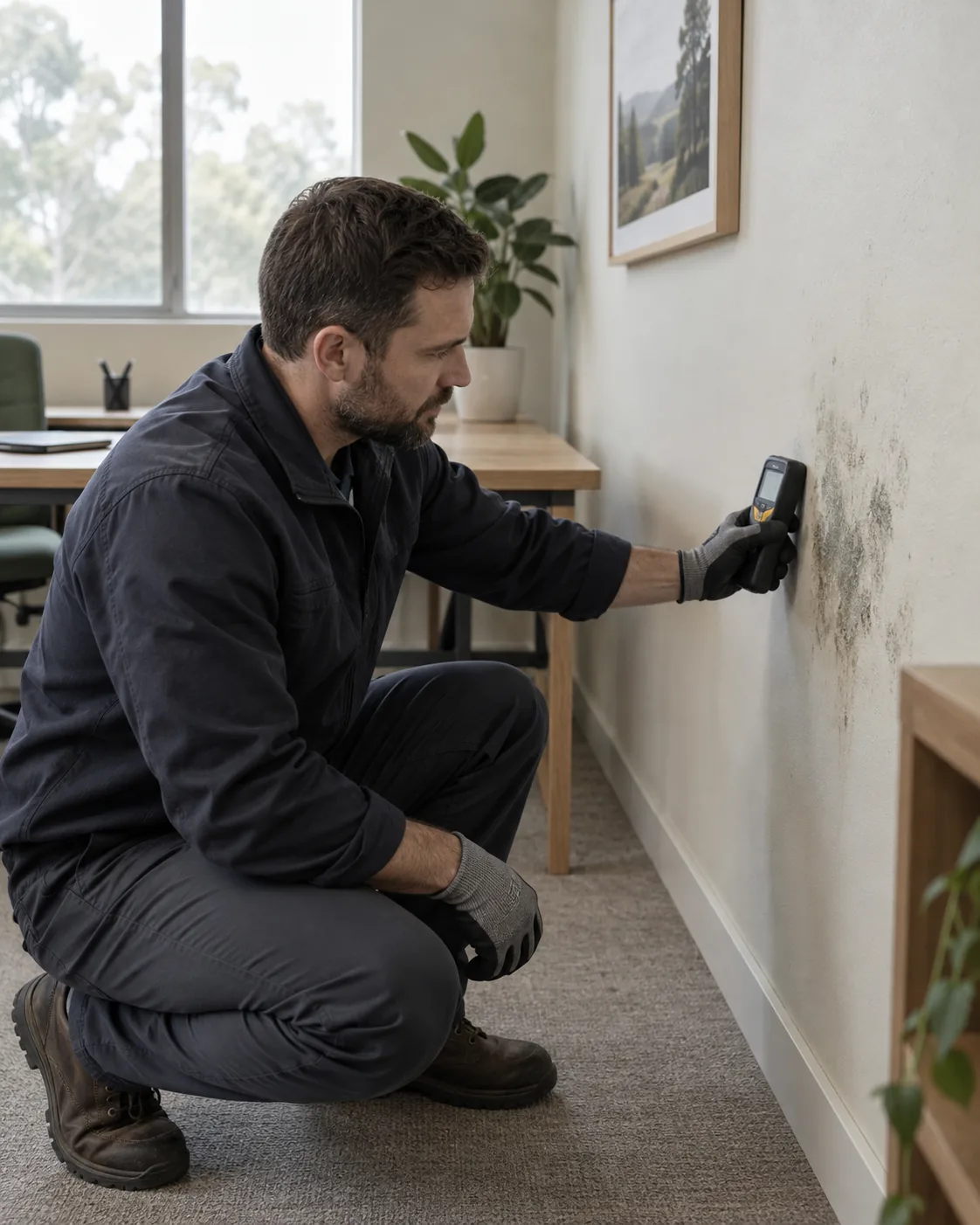
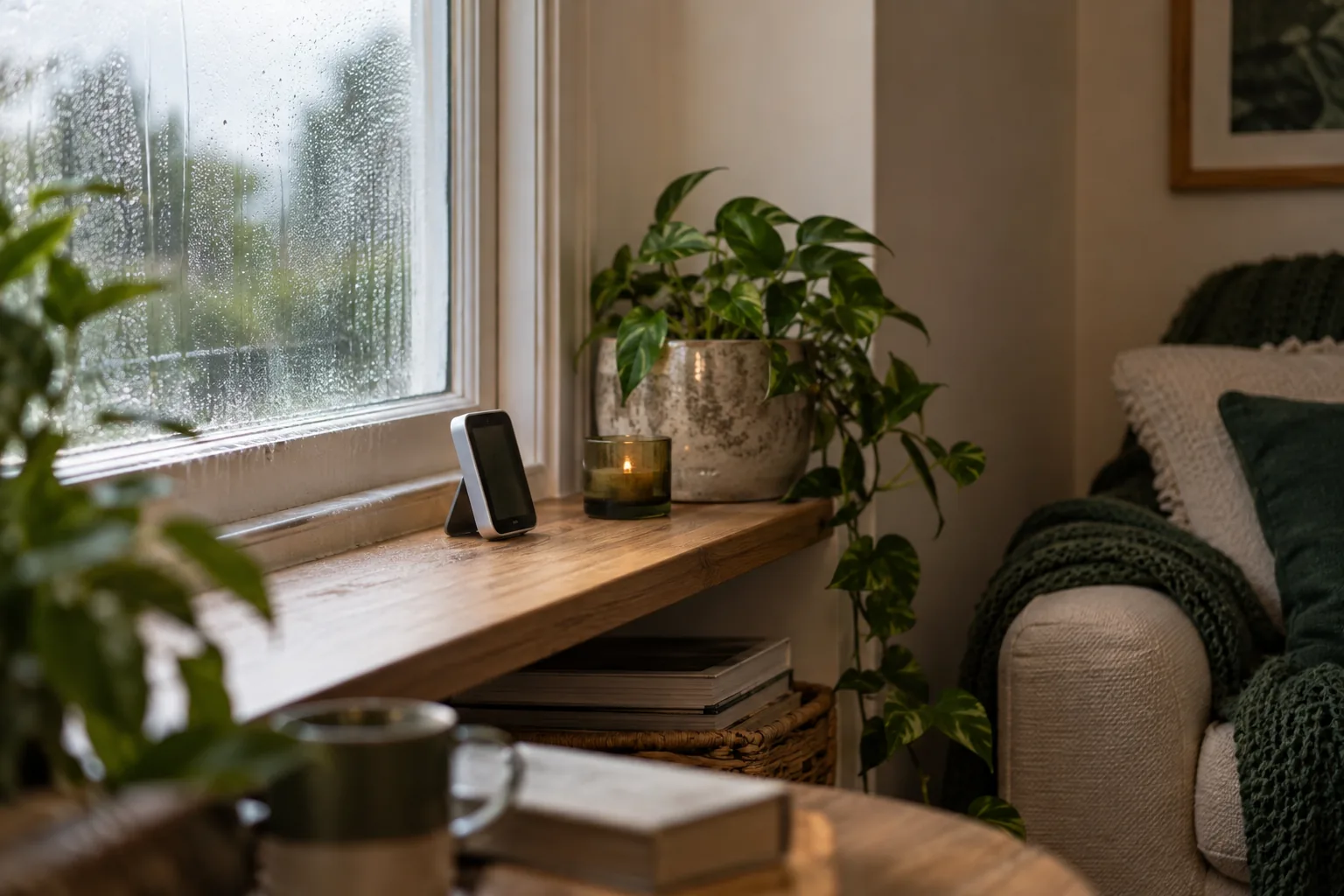
VISIBLE CONDITIONS · PROFESSIONAL HYGROMETER
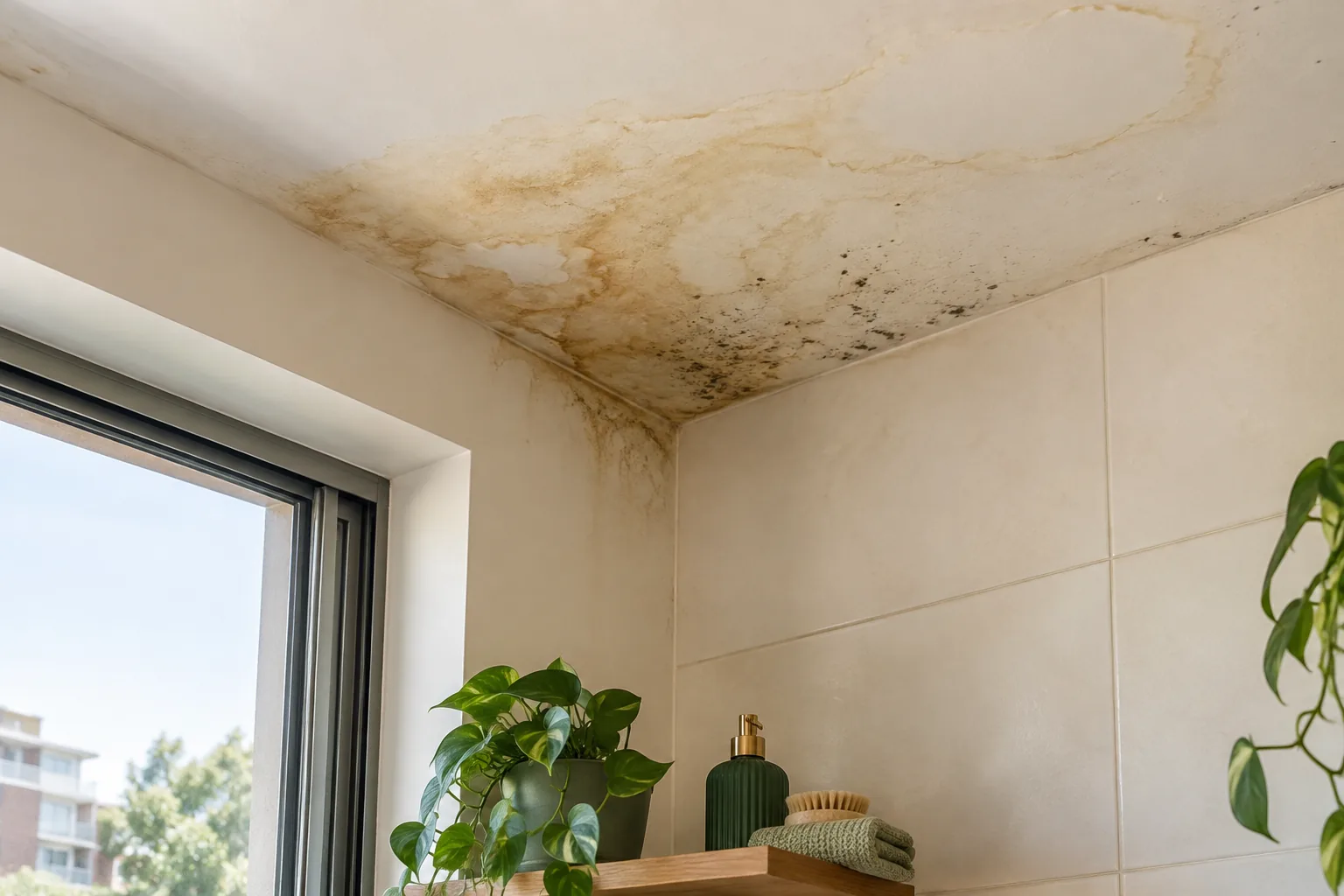
WHEN CONDITIONS CHANGE
What to include in the initial enquiry
For an address in Clematis, describe each visible change and any access restriction.
Marked boundaries
Locate separate patches and show their edges rather than treating the whole room as one affected surface.
Smell and location
Say where an odour occurs and when it is noticed; smell alone does not identify a species.
Visible droplets
Explain the finish carrying droplets and the timing, keeping that observation separate from an old stain.
Water-event history
Describe known drips, spills or repair dates honestly, leaving uncertain causes and dates unconfirmed.
Repeated wetness
Record what visibly changes between wet and dry periods, without inventing a material-moisture percentage.
Previous surface work
Mention cleaning, covering removal or repainting that changed the area available for viewing.
A READING NEEDS CONTEXT
Separate the observations before choosing a cause
For marks noticed after interior lining work, identify the recently lined room and visible plaster joints and the known sequence of changes. Air relative humidity is different from moisture inside a building material. A room reading cannot be converted into a wall or ceiling moisture percentage.
The accessible coating and concealed backing are separate. Ask which checks fit the current finish; opening the new lining or inspecting a cavity is not assumed.
OBSERVE · MEASURE · DISCUSS
From a defined room to a practical decision
01
Describe the available evidence
Give the room, patch location and observation dates. Keep reported history separate from what you actually saw.
02
Agree entry and preparation
Confirm entry permission and safe preparation. Fixed obstructions or inaccessible sections remain acknowledged limits.
03
Discuss what the visit shows
Discuss visible extent and air information together; ask which uncertainty the accessible observations leave.
04
Separate later work
Agree any later treatment or repair separately and confirm what information will be supplied afterwards.
Identify the room and the particular finish
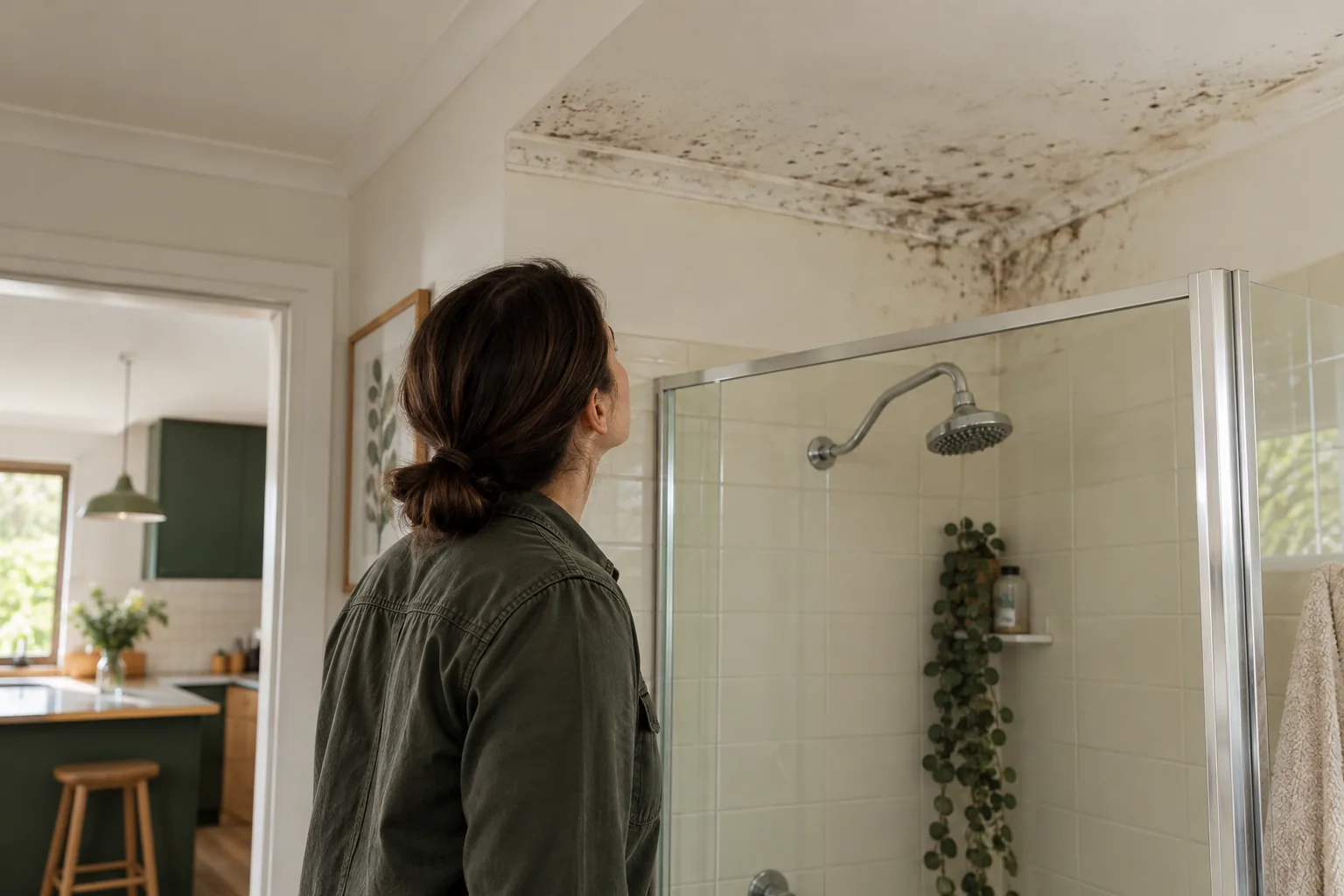
Bathroom
Distinguish shower use, joint wetness, painted surfaces and any fixed screen obstructing the view.
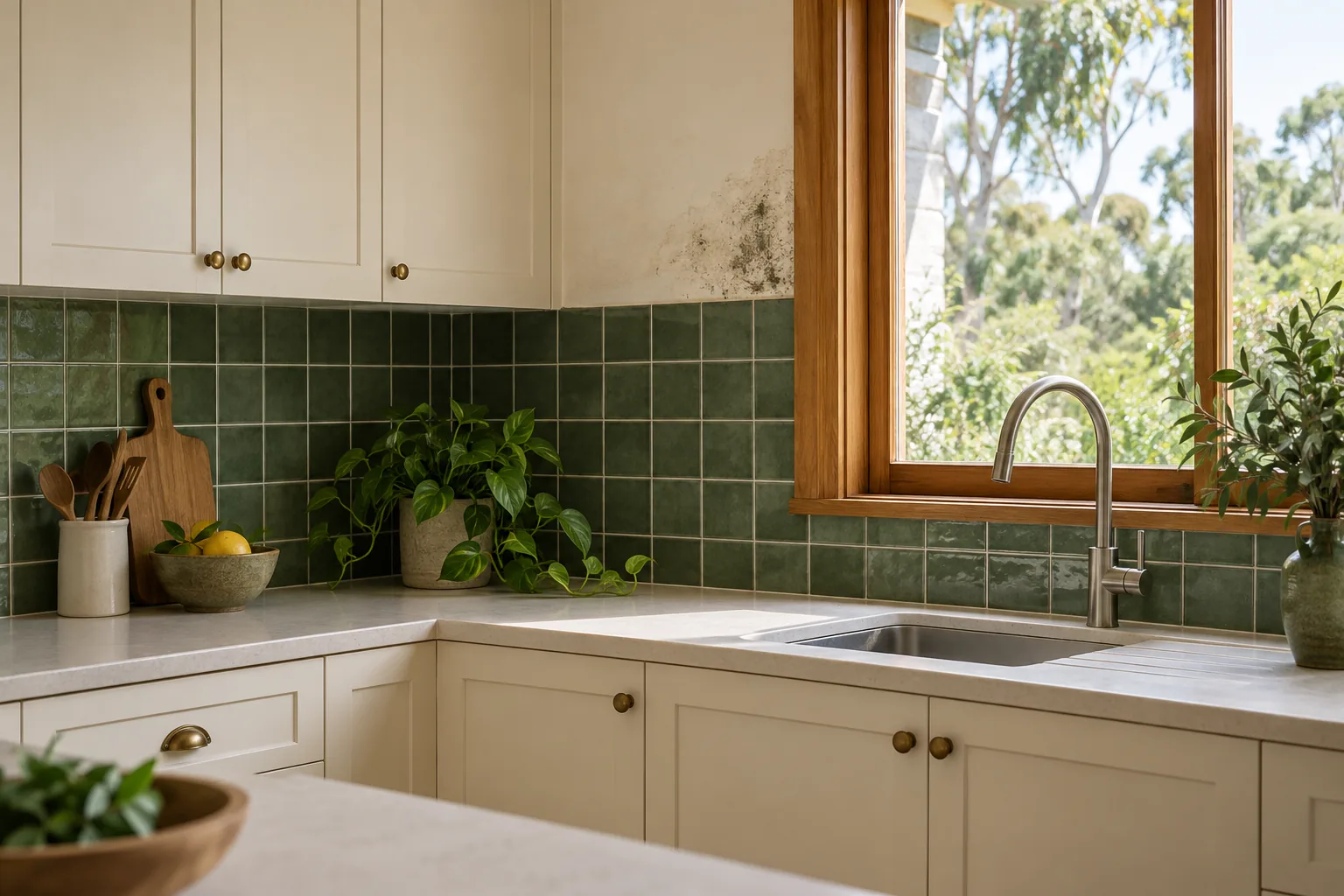
Kitchen
Explain visible pipe-side changes and appliance obstructions without assuming a plumbing diagnosis.
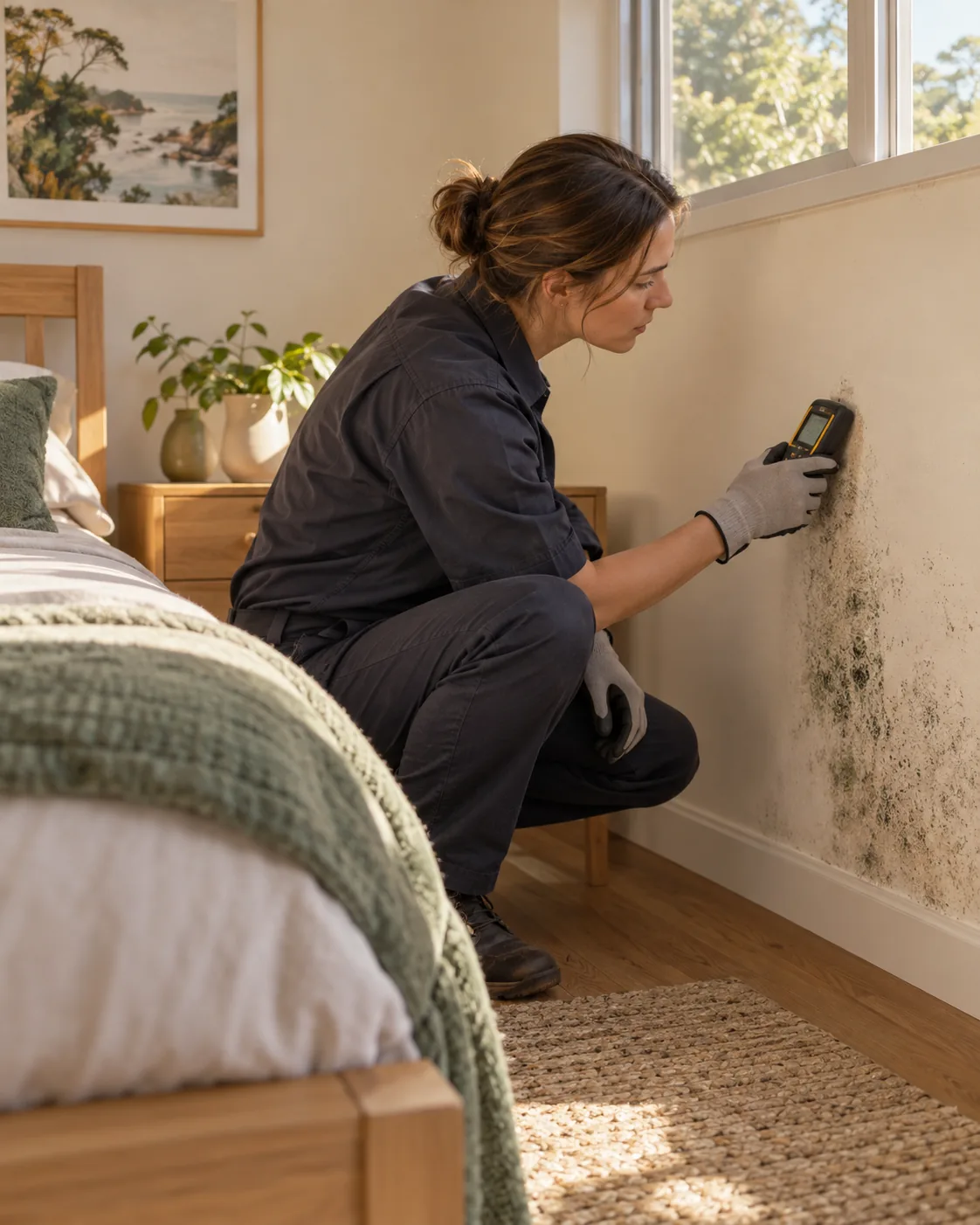
Bedroom
Mention furniture, curtains and any known changes during periods without regular use.
Ceiling
Show stains and accessible junctions, acknowledging height limits without disturbing fittings.
Wall
Identify the coating and visible patch boundary; fixed coverings can conceal further material.
KNOW WHAT WAS OBSERVED
Choose further work within its own scope
Surface treatment, coating reinstatement and questions about earlier building work need separate decisions. Discuss uncertainties before treating the inspection as confirmation of the installation quality. Discuss physical removal separately.
Read the remediation guidance when discussing the recently lined room and visible plaster joints. Agree material limits and preparation. Further investigation or repairs are separate; no inspection guarantees that growth cannot return.
An appointment with an agreed boundary
The inspection service helps define a visible enquiry about marks noticed after interior lining work.
Growth and surroundings
Show the affected joint and adjoining coating in context. Mention any areas already filled, sanded or painted, keeping those alterations distinct from growth observations.
Professional hygrometer information
A current room-air value cannot establish how wet lining material was during installation. Describe the work history without inferring material moisture from relative humidity.
Further-check questions
Ask what can be checked on the agreed finish; opening fixtures and laboratory analysis are not assumed.
CONFIRM BEFORE BOOKING
Confirm the reference and the actual scope
AUD $100
Paid Inspection · approximately 30 minutes · non-member reference price
The non-member paid reference is AUD $100, approximately 30 minutes. Describe marks noticed after interior lining work before agreeing scope. Check service pricing; further investigations, repairs and physical removal are not automatically included.
For Clematis, confirm eligibility before assuming the AUD $0 Corporate survey applies. It is not universally free.
CLEMATIS · ACTUAL ADDRESS & ACCESS
Confirm the actual interior and entry
Identify the rooms and finishes actually proposed. Use the areas directory for other location enquiries.
Emerald · Avonsleigh · The Patch · Selby
Questions about your inspection
Does a mark at a new plaster joint prove poor installation?
No such finding follows from appearance alone. Give the work date and observed changes, keeping material condition separate from assumptions about installation quality.
Should I remove the new lining to show the backing?
No opening work is assumed. Identify the exposed finish and any existing access; a cavity investigation needs its own appropriate scope.
Can present humidity show how wet plaster was during installation?
No. Current air information cannot reconstruct earlier material moisture. Ask about suitable checks for the actual accessible finish instead of converting the room value.
What coating work should I mention?
Explain filling, sanding and painting already completed, including approximate dates. Those alterations can change the evidence available at the inspection.
Does the appointment include reinstating plaster?
No repair work is automatically included. Agree any removal, repair or coating specification separately after the visible condition and limits have been discussed.
What if building work is still underway?
Explain that before booking and clarify safe, authorised access. The inspection should not imply unrestricted entry to unfinished or unavailable portions of the room.
Discuss inspection in Clematis
Call 03 8652 1296 with the address and visible concern. Confirm access, scope and price before booking.