
VISIBLE SURFACES · AGREED TREATMENT
Mould Remediation Victoria Harbour
After a water incident at a Victoria Harbour premises, separate the current visible growth from the work needed to repair the source. Tell us what became wet, what has been repaired and which surfaces are now accessible. Attendance and treatment suitability need confirmation for the address.
Build a clear incident chronology
Agree exposed surfaces before treatment
Keep concealed damage outside assumptions
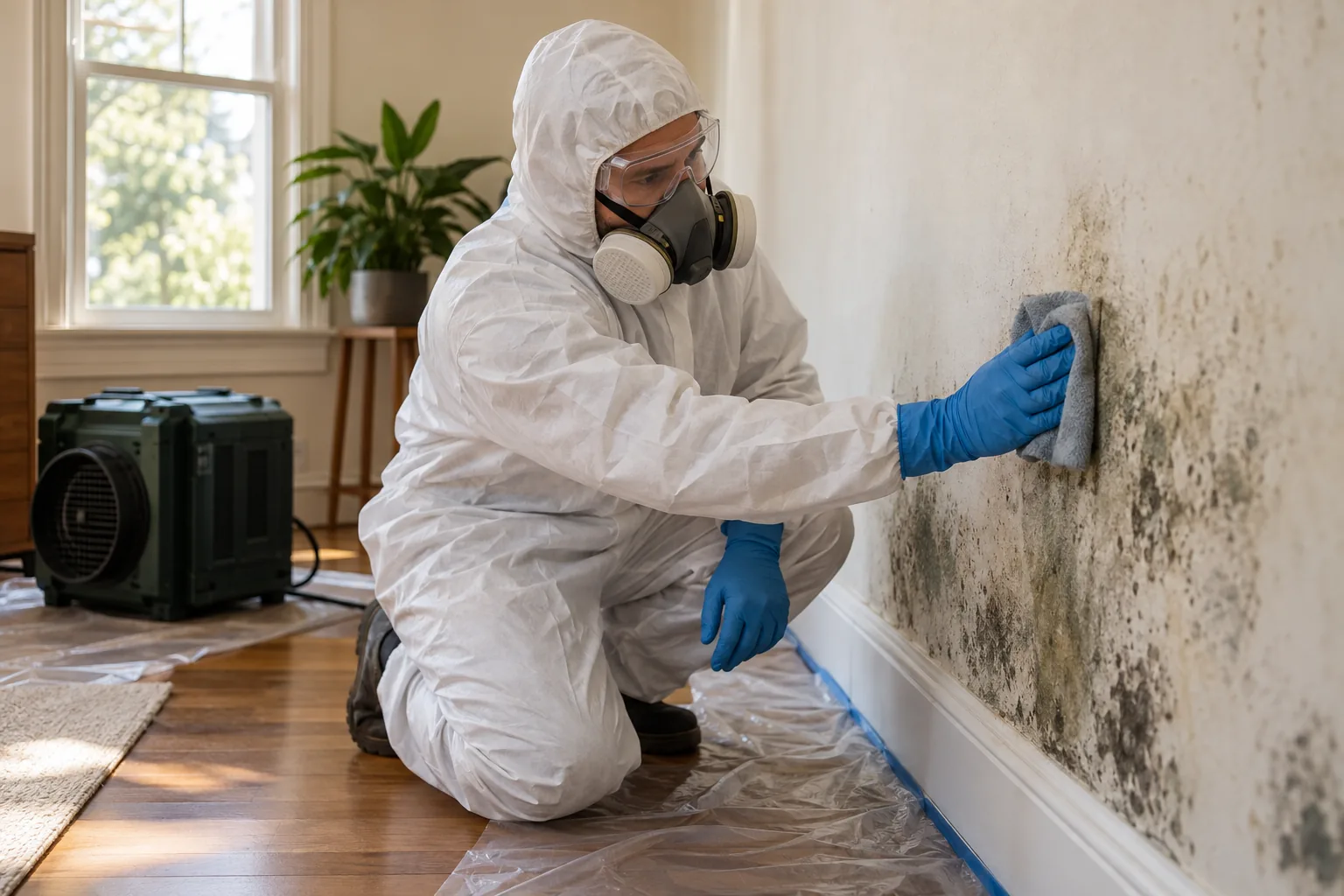

TREATMENT · FILTRATION · FOLLOW-THROUGH
A TREATMENT PLAN WITH CLEAR LIMITS
Treatment starts with what is visible now
The original wet area and today’s mould patch may not have identical boundaries. Explain how water travelled and whether any surface was covered, replaced or cleaned afterwards.
Our remediation service addresses existing visible accessible contamination on structural surfaces. It does not establish the condition of every material exposed to an incident. Damaged linings, concealed insulation and separate restoration decisions should be identified rather than silently added to the room scope.
MOISTURE COMES FIRST
A completed repair and a dry cavity are different claims
Give the dates of the incident, repair and any further wetting. Explain what the repairer actually checked. A professional hygrometer assesses relative humidity in room air; it does not establish how much water remains in a lining or certify that hidden building fabric has dried.
Discuss accessible inspection when the visible extent needs clarification. Plumbing or structural repairs remain separate from treatment. If dampness persists, the underlying source or affected material may require further attention before a new finish hides the evidence.

FROM PREPARATION TO FOLLOW-THROUGH
Work through the exposed contamination systematically
1
Assess the current visible area
Show the technician today’s patches and the incident chronology. Agree accessible surfaces and flag areas where damaged material or concealed conditions need a separate decision.
2
Set up HEPA protection
Before treatment, the confirmed HEPA air scrubber is established. Clear the agreed equipment area; its filtration supports the work without providing a certificate of whole-building air quality.
3
Apply the assessed HOCl treatment
HOCl is used for the agreed treatment. ULV dry fog is included where appropriate, as in most cases, but cannot be assumed to cover unseen incident damage.
4
Remove visible contamination physically
Professional equipment with H-class filtration is used for removal. Explain weakened finishes beforehand and do not assume demolition or rebuilding is included with this stage.
5
Continue final air cleaning
The HEPA scrubber remains in operation during and after treatment. Discuss residual marks, return instructions and outstanding repair questions, without inventing an air-test result or fixed return interval.
Describe the route of water by surface
Walls
Identify the exposed wall patch and any lining already replaced. Hidden material behind the replacement is not assessed by appearance alone.
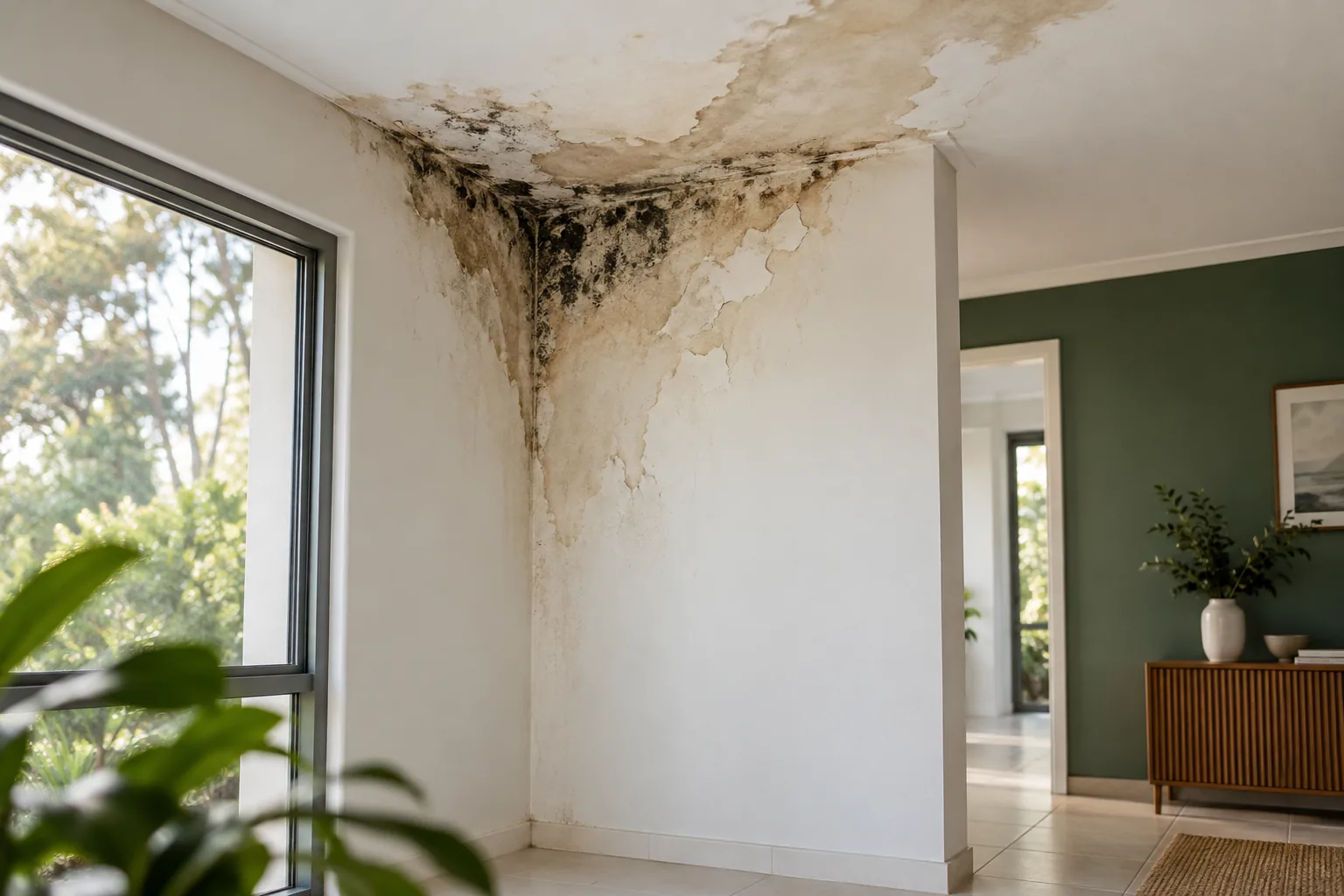
Ceilings
Mention overhead staining and whether new wetting continues. The leak repair and visible ceiling treatment need separate scope.
Bathrooms
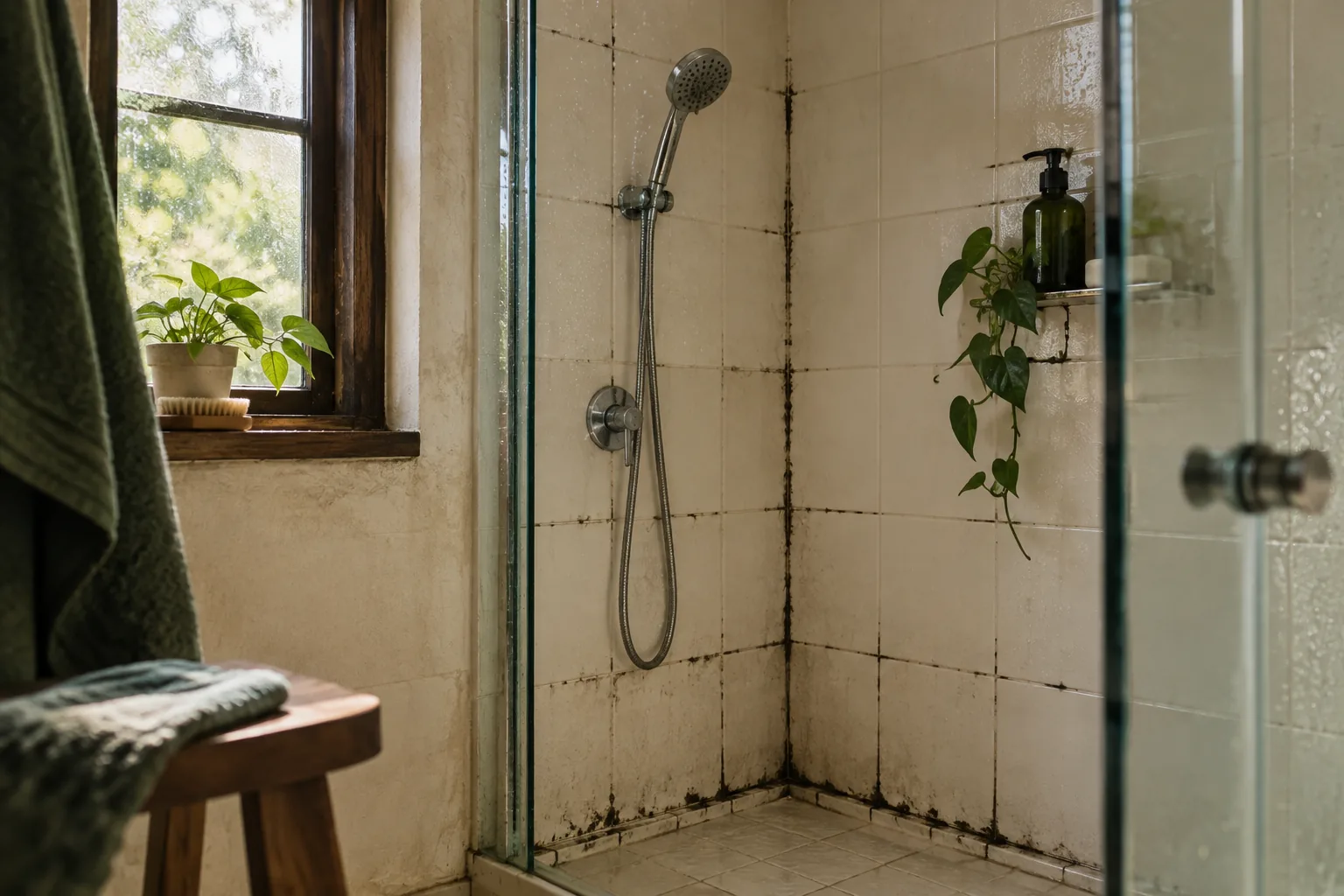
Distinguish an incident from moisture during everyday showering. Describe affected structural surfaces separately from towels or bathmats.
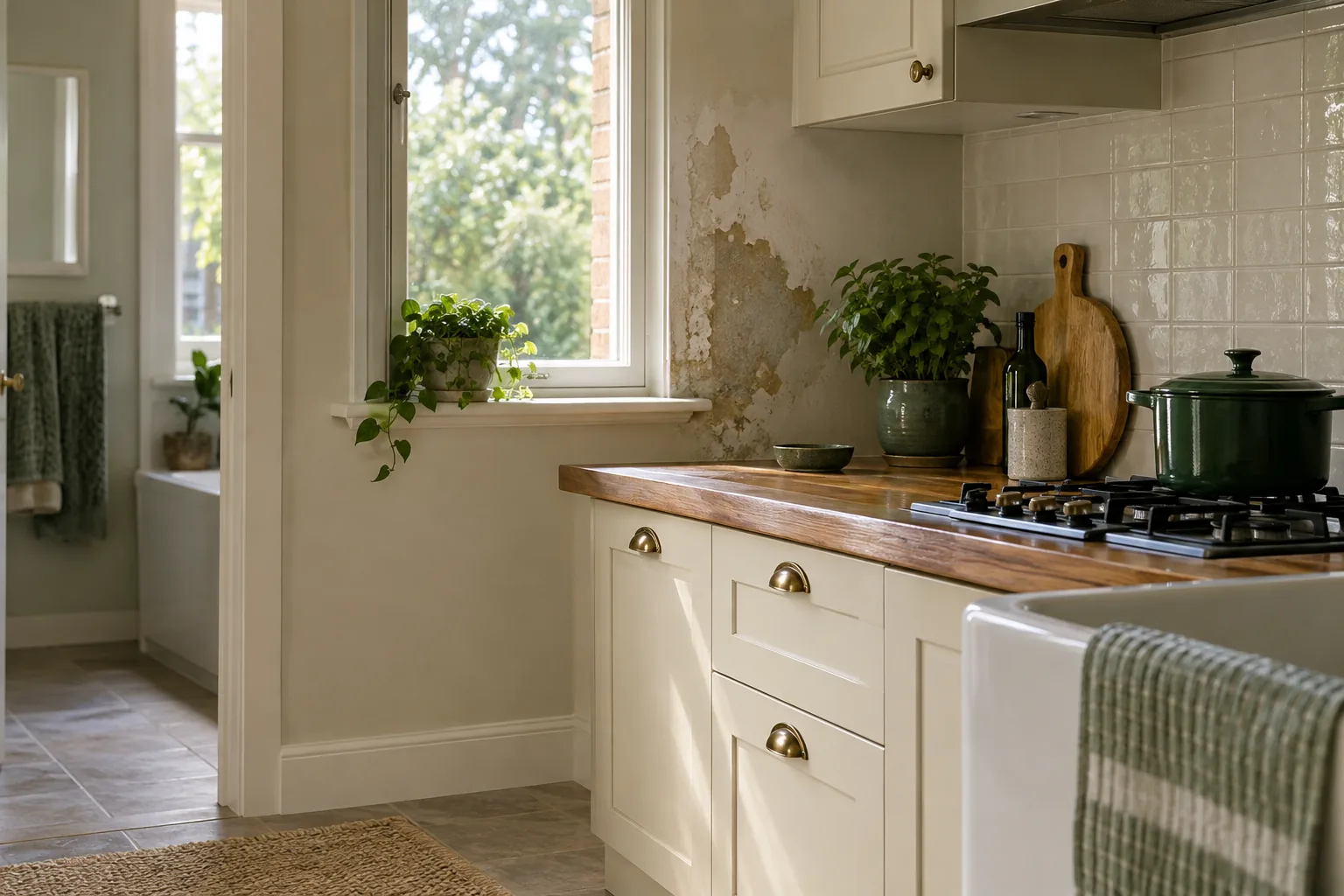
Kitchens
Explain any known plumbing incident around the kitchen wall. Fixed cabinetry may conceal areas beyond standard accessible treatment.
Accessible affected surfaces
Describe exposed floors and their finish after the incident. Carpet and upholstered items are excluded, even if water reached them.
PREPARE FOR THE ACTUAL JOB
Preparation after water damage needs clear boundaries
Agree access and movement of belongings without disturbing damaged linings yourself. People and pets leave during treatment; confirm departure and return instructions. Average source guidance is around three hours per room, depending on size, contamination and accessibility, with no hourly-based pricing promise.
Staining can remain after treatment and decorating is separately quoted. A refreshed appearance cannot confirm that hidden water damage was resolved.
AFTER THE TREATMENT
Follow the incident through to its source
Keep the repair record and respond to fresh wetting. Treatment deals with existing growth while future prevention depends on the conditions that allowed it.
Document renewed dampness with dates and surface locations.
Maintain suitable ventilation after following return advice.
Arrange separate attention to unresolved plumbing or structural defects.
Quote the treatment, identify separate restoration
Describe the incident and accessible contamination when enquiring about cost. Confirm pricing applicability, as the published room table is labelled Mould Removal. Separate repairs, concealed investigation and decorating should be discussed rather than presumed part of a remediation figure.
VICTORIA HARBOUR · EXACT ADDRESS & ACCESS
Address-specific help around Victoria Harbour
Provide the premises and authorised contact. Nearby navigation does not establish attendance or a service agreement with a building.
Questions about remediation
Does stopping the leak mean all wet material is ready for treatment?
Not necessarily. Explain what was repaired and what remains affected. Material condition and hidden damage may require separate assessment rather than an assumption based on stopping water entry.
Should I include the whole original wet footprint in the enquiry?
Describe it, but distinguish it from currently visible growth. The technician can discuss accessible treatment boundaries and any areas that need another investigation.
Will remediation replace damaged plaster?
Replacement is not part of the confirmed standard treatment. Raise damaged lining early so restoration and accessible mould work can be planned separately.
Can a room humidity reading confirm insulation is dry?
No. Room-air relative humidity cannot establish moisture within concealed insulation. Ask what separate investigation is appropriate for that concern.
Is water-damaged carpet included with the floor?
No; carpet is excluded. An exposed structural floor and a carpeted covering have different scope, so describe both without assuming one booking treats both.
Should I report a new patch even if the old stain remains unchanged?
Yes. Record the new growth or wetting separately. An old cosmetic mark and fresh contamination are different observations and should not be treated as the same evidence.
Discuss the incident and the exposed treatment area
Call 03 8652 1296 with the Victoria Harbour address, repair history and currently visible surfaces. Plan treatment alongside the separate moisture response.