
VISIBLE SURFACES · AGREED TREATMENT
Mould Remediation Altona
If visible mould is found in an Altona laundry or utility room, describe the structural surface and the activities that produce moisture there. Clothing, appliances and stored belongings are separate from the wall or ceiling treatment. Agree access without assuming that the room’s function proves why the growth appeared.
Separate room surfaces from laundry items
Discuss extraction and water observations
Agree access around fixed equipment

TREATMENT · FILTRATION · FOLLOW-THROUGH
A TREATMENT PLAN WITH CLEAR LIMITS
Treat the room structure, identify the contents separately
Explain whether growth is on paint, an exposed ceiling or a visible floor beside equipment. Mention fixed appliances or storage that obstruct the area. Do not move heavy equipment or disconnect services just to expose more surface; discuss practical clearance and any separate access work before the booking.
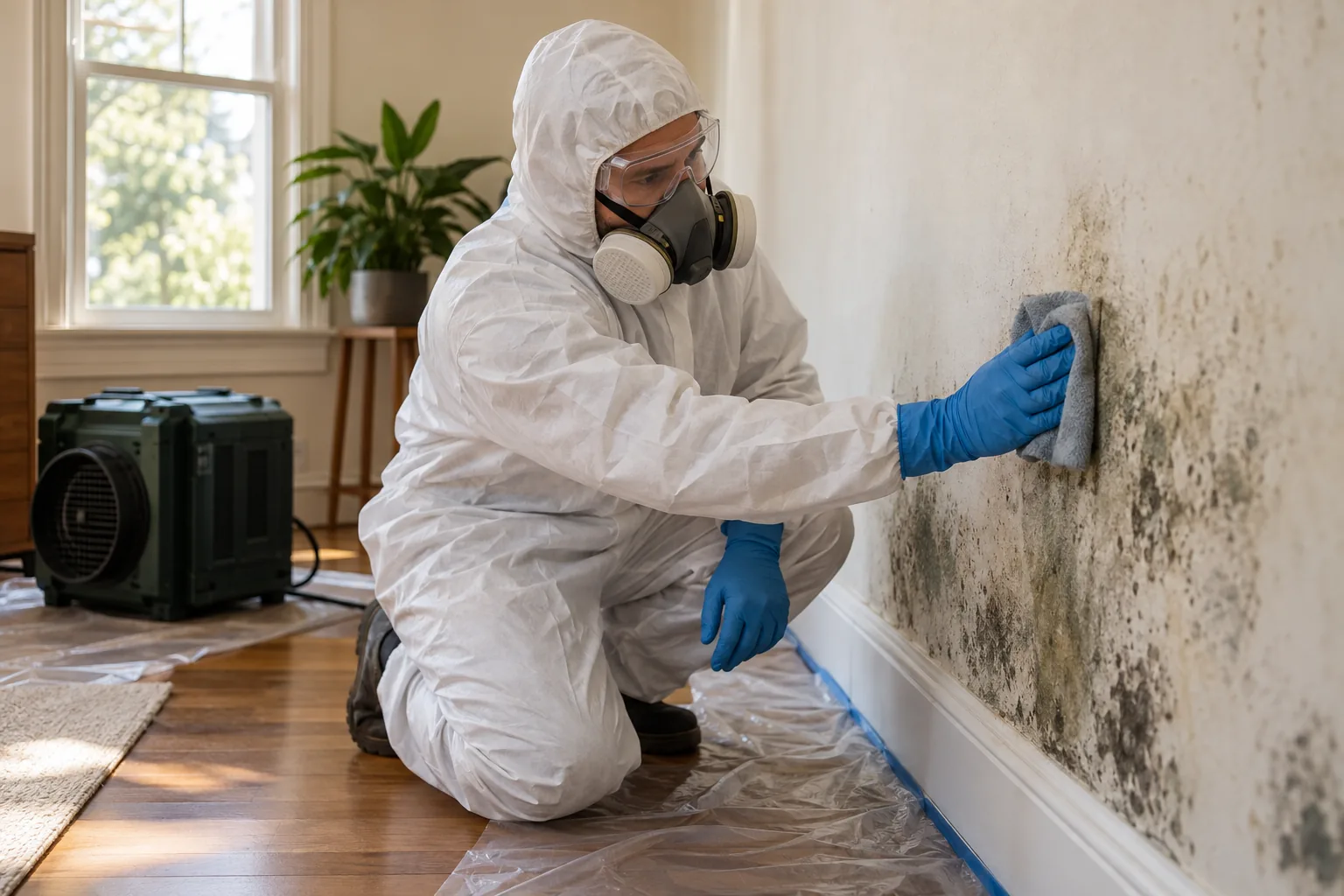
Our remediation service combines assessment, filtration, treatment and physical removal of accessible structural contamination. Clothing, textiles, carpet and furniture are excluded. Appliance servicing and plumbing repairs are not part of mould treatment, even when equipment or a pipe is near the affected patch.
MOISTURE COMES FIRST
Distinguish everyday humidity from a continuing leak
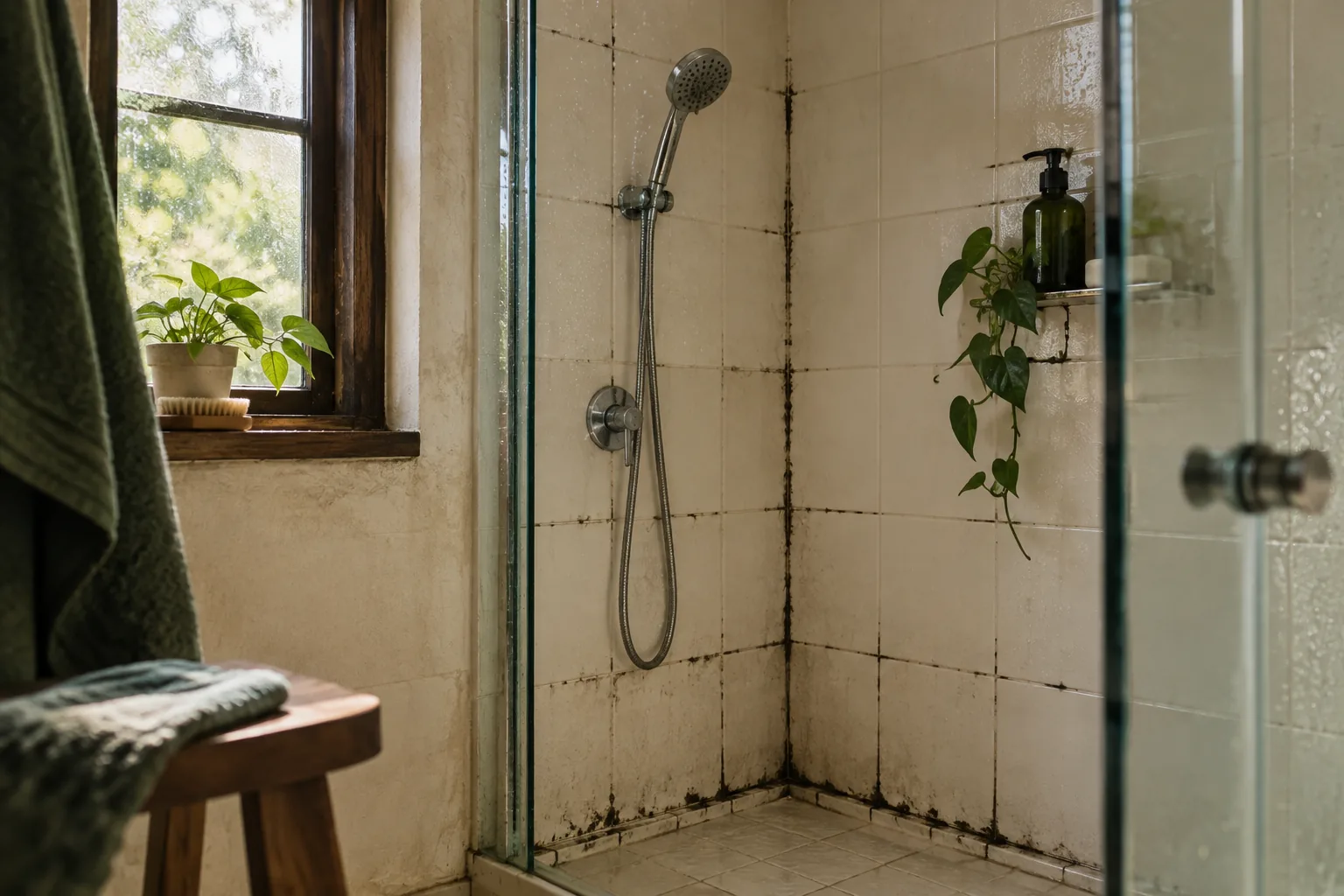
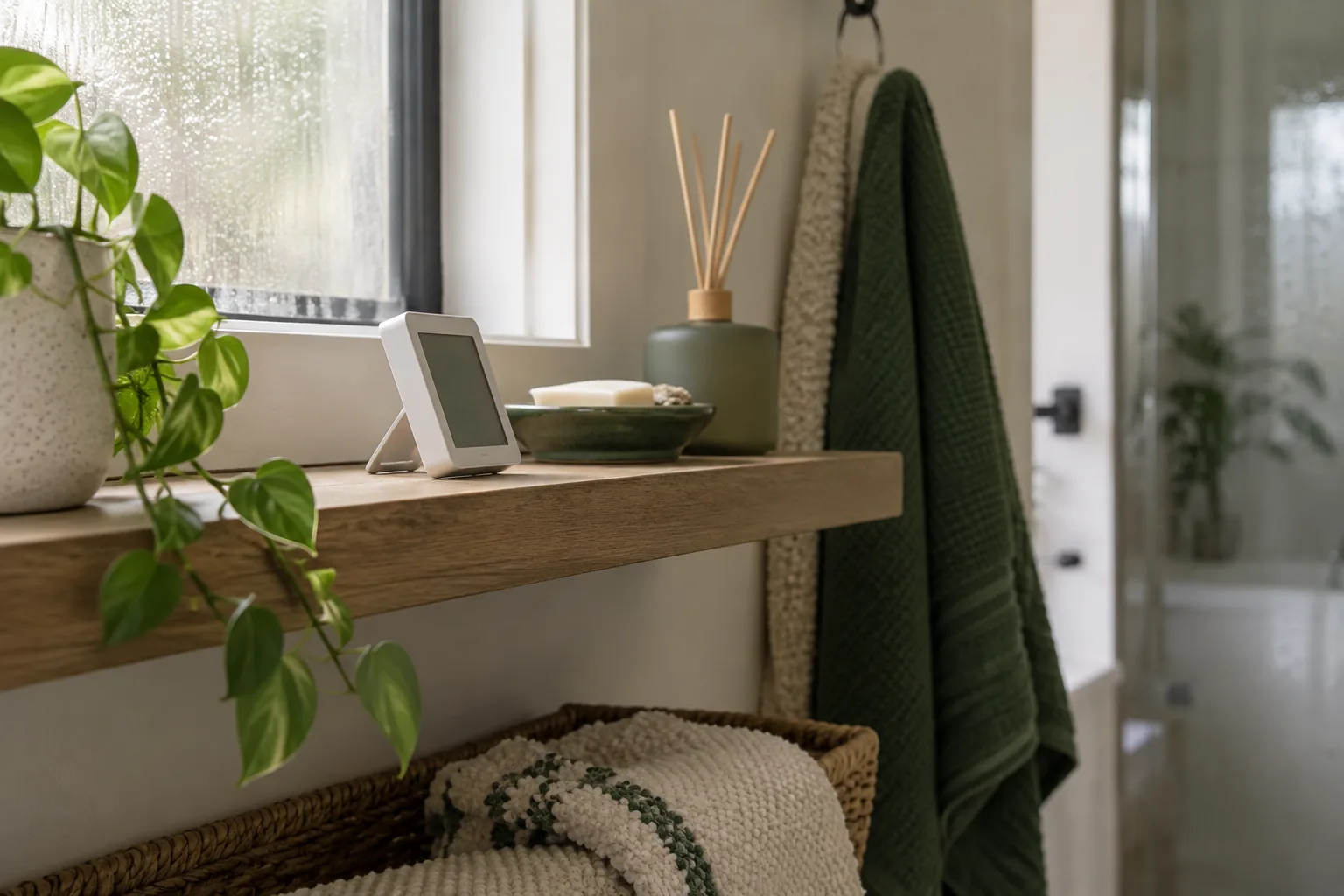
Describe indoor drying, extraction and visible condensation as observations, alongside any water seen around a connection. Neither room use nor patch colour establishes the cause. A professional hygrometer assesses room-air relative humidity; it cannot measure moisture inside clothing or certify the material behind an appliance is dry.
Discuss accessible inspection if the visible symptoms need clarification. Continued water entry requires a separate repair response. Treatment can address existing growth while a moisture-producing routine or unresolved leak still needs attention to reduce the chance of recurrence.
FROM PREPARATION TO FOLLOW-THROUGH
A practical treatment sequence around the accessible surfaces
1
Assess exposed growth and access
Show visible patches and explain the equipment or storage nearby. Agree structural surfaces and flag any inaccessible area requiring another arrangement.
2
Prepare HEPA filtration
The confirmed HEPA air scrubber is set up before treatment. Discuss equipment space and access without assuming fixed appliances must be disconnected or that filtration removes every spore.
3
Apply appropriate HOCl treatment
HOCl is used within the assessed plan. ULV dry fog is used in most cases where suitable, without adding clothing or concealed appliance spaces to the structural scope.
4
Remove the visible mould
Professional H-class filtered equipment supports physical removal. Mention delicate finishes beforehand; removal does not include appliance repairs or rebuilding damaged surfaces.
5
Complete air cleaning and next-step advice
HEPA continues during and after work. Obtain return instructions and discuss cosmetic marks and the separate moisture response before restarting normal room activities.
Identify the accessible structure in each room
Walls
Describe exposed paint and patches obscured by storage. A fixed appliance can limit access to the wall behind it.
Ceilings
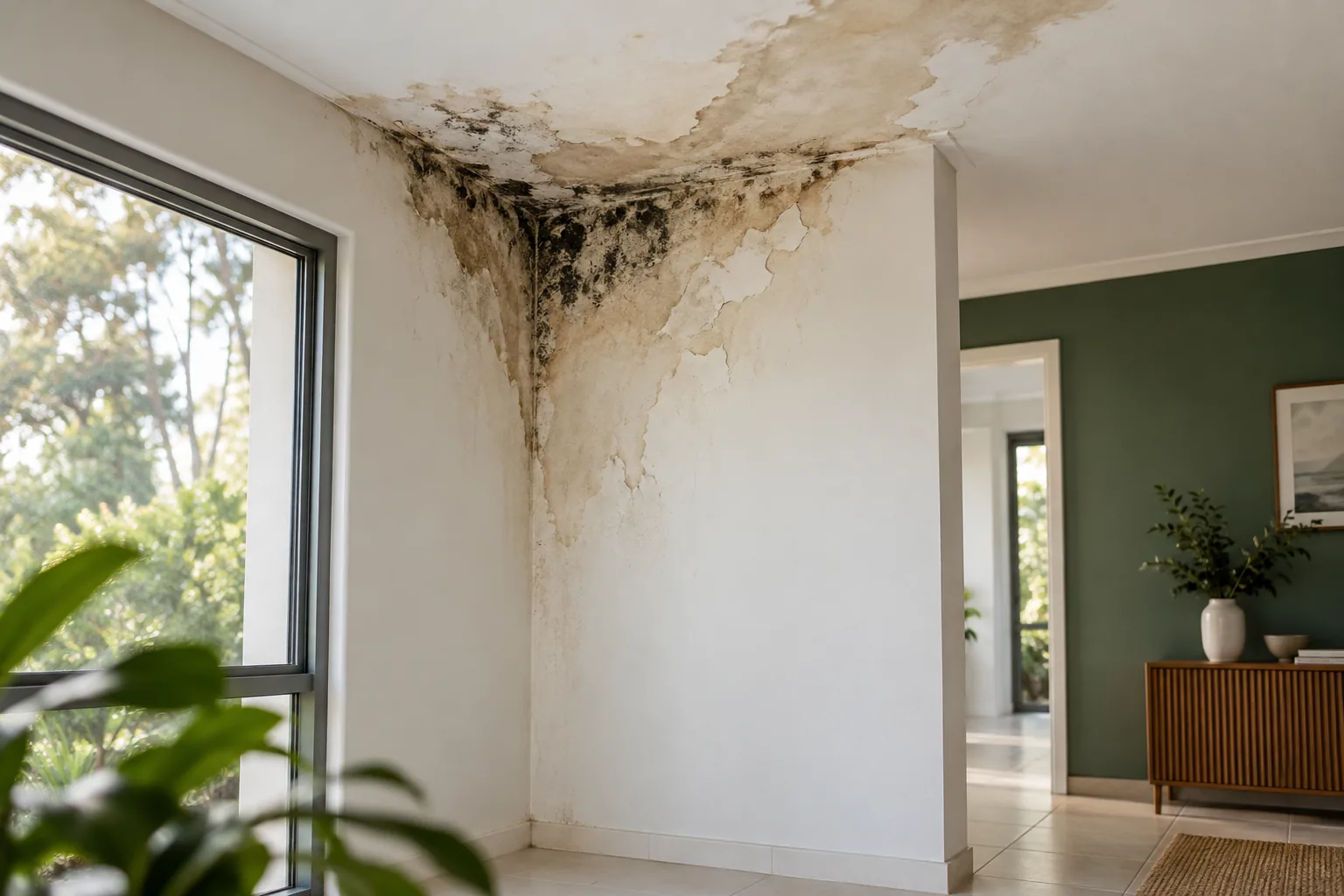
Show overhead growth and note condensation or water history. Treatment does not repair a source above the ceiling.
Bathrooms
If bathroom structural surfaces are affected, describe them separately from towels. Extraction observations can inform the moisture discussion.
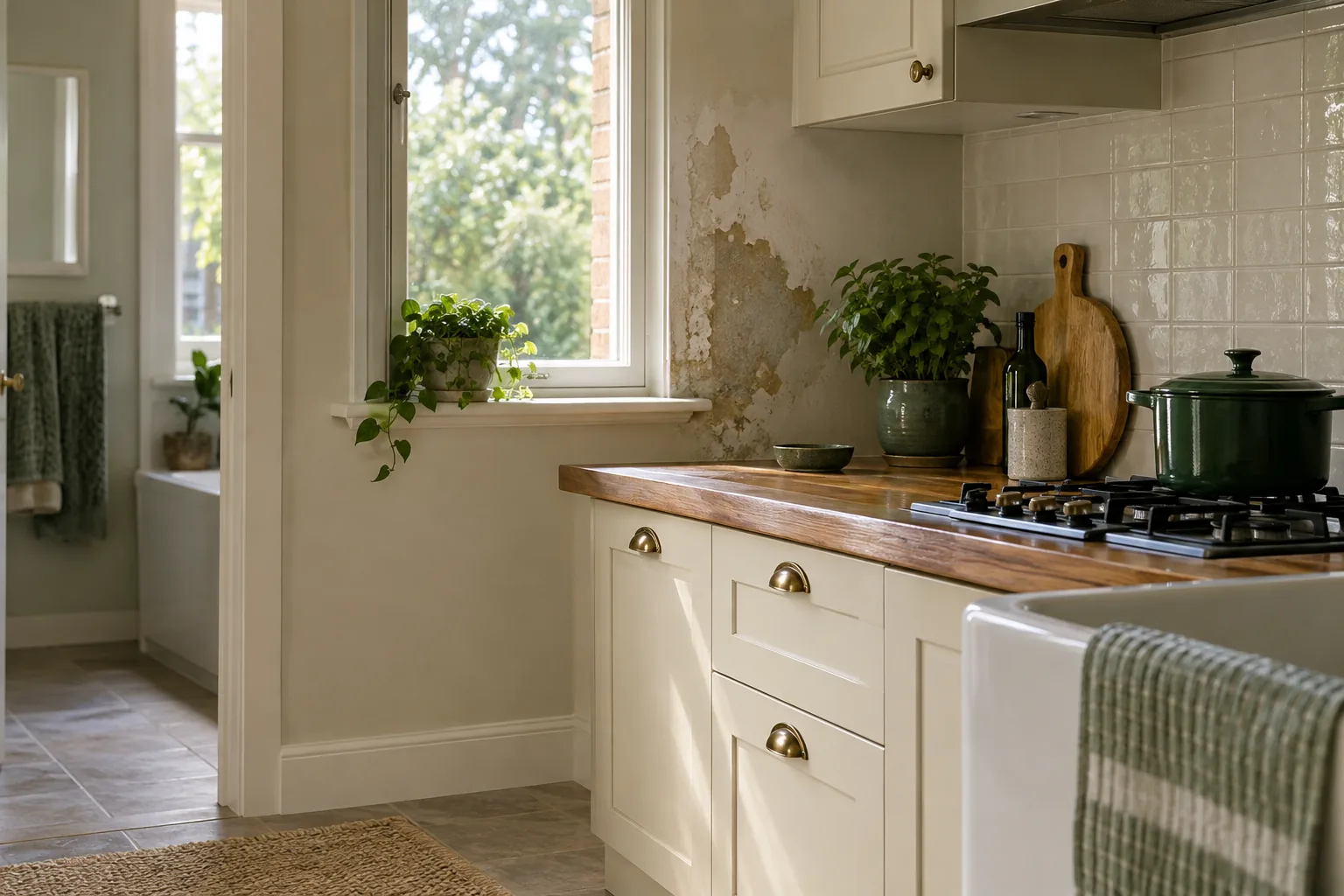
Kitchens
Identify accessible kitchen walls and any cooking or plumbing observations. Cabinet contents and appliances are not automatically included.
Accessible affected surfaces
An exposed floor may be assessed within its finish limits. Textile coverings and clothing remain outside scope.
PREPARE FOR THE ACTUAL JOB
Prepare without disconnecting equipment on assumption
Discuss clearance, fragile items and appliance access with the technician. People and pets leave during treatment; obtain specific departure and return instructions. Duration varies with the job: source guidance averages around three hours per room, with different estimates in some utility-room pricing examples. The service is not hourly based.
Cosmetic stains can remain and decorating is separate. Treatment of an exposed patch cannot establish the condition behind fixed equipment or inside concealed material. Ask what was treated and what remains unresolved before covering the area or replacing stored belongings.
AFTER THE TREATMENT
Make the moisture routine workable after treatment
Consider how steam or indoor drying is managed, alongside a separate response to any leak. Do not assume one change guarantees the patch cannot return.
Use suitable ventilation or extraction during moisture-producing activities.
Observe the treated surface for renewed wetting.
Arrange separate repairs for continuing water around plumbing or equipment.
Confirm the utility-room scope rather than an assumed tariff
Explain the surface extent and equipment restrictions when discussing cost. Check pricing applicability for remediation; the published table is labelled Mould Removal. Do not transpose a utility-room time or price example into a confirmed remediation slot or appliance-service charge.
ALTONA · EXACT ADDRESS & ACCESS
Altona and surrounding room enquiries
Give the address and equipment access details. Nearby pages cannot confirm attendance or permission to move fixed appliances.
Questions about remediation
Should I disconnect the washing machine before the visit?
Do not assume that is required. Explain the access restriction and discuss appropriate arrangements before disconnecting or moving fixed equipment.
Are damp clothes treated with the laundry room?
No; clothing and textiles are excluded. Their needs are separate from treatment of accessible structural surfaces.
Does drying clothes indoors prove it caused the wall patch?
No. Describe drying and condensation observations, but also report leaks or other wetting rather than assuming one activity establishes the cause.
Will treatment repair a leaking appliance connection?
No; plumbing or appliance repair is separate. Arrange the appropriate repair while discussing the existing visible contamination.
Can I assume a utility-room example fixes the treatment duration?
No. Confirm the actual scope and practical arrangements. Published example times are guidance, not a job-specific completion or return promise.
Should storage go back against the treated wall immediately?
Follow return instructions and discuss the finish and moisture issue first. Leave a practical way to observe renewed dampness rather than hiding the area again.
Discuss the Altona laundry-room surfaces
Call 03 8652 1296 with the visible growth, equipment access and moisture observations. Agree structural treatment and separate repairs.