
VISIBLE SURFACES · AGREED TREATMENT
Mould Remediation Westbreen
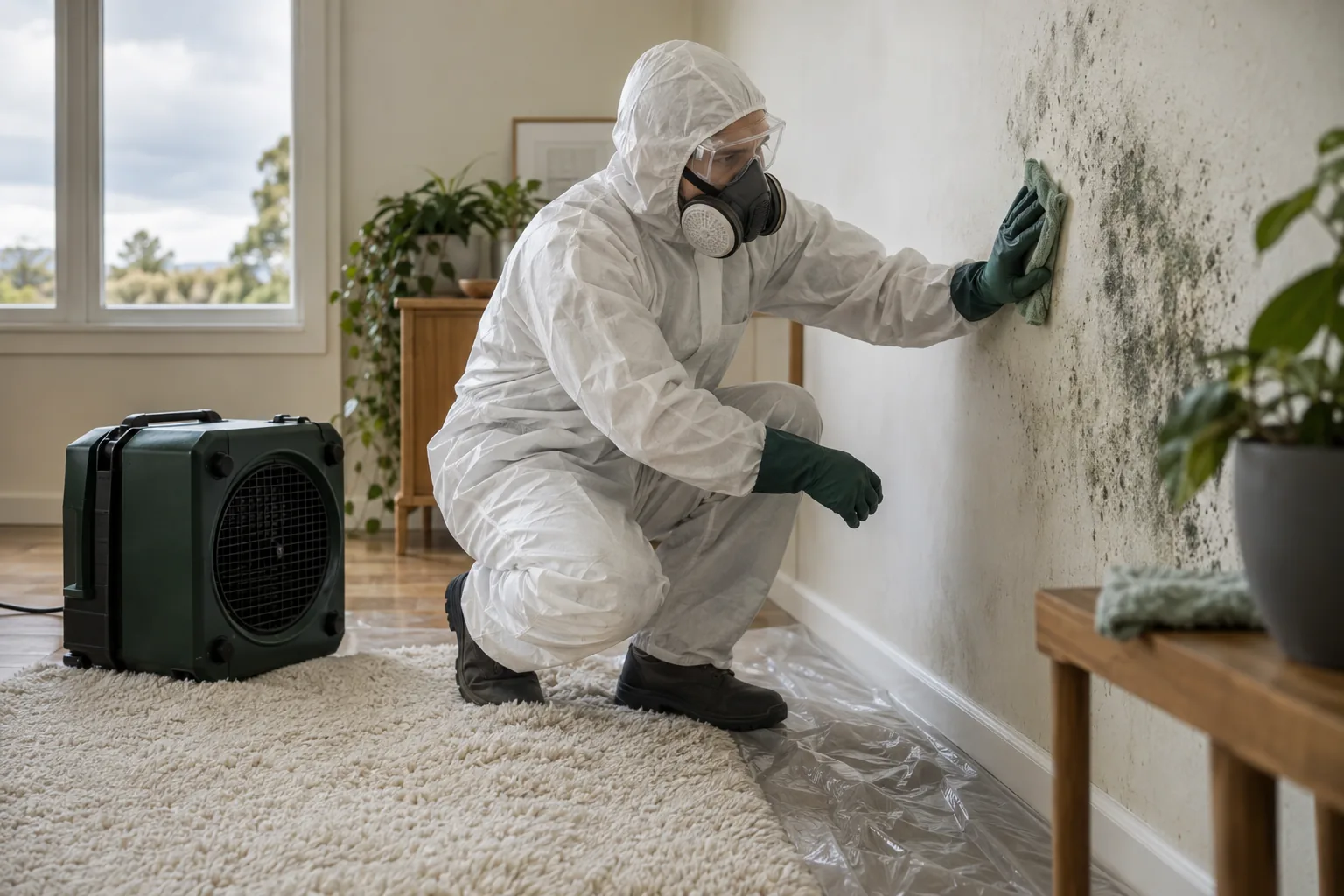
An affected wall adjoins a cupboard with a damp odour. If this is the concern at your Westbreen address, focus on visible scope without asserting concealed treatment. Explain the visible condition and what can be reached before confirming the treatment appointment.
Visible treatment scope agreed
Professional filtration and treatment
Practical preparation discussed

TREATMENT · FILTRATION · FOLLOW-THROUGH
A TREATMENT PLAN WITH CLEAR LIMITS
Plan treatment around the actual surface
An odour and a visible patch should be described as different observations. This allows a sensible scope conversation without asserting what is behind a cupboard or lining. Ask about suitability where material is loose, damaged or unusually delicate. Planning the boundary of the job helps avoid adding unrelated contents cleaning or repairs by implication. The purpose is to treat existing visible contamination within an agreed structural-surface scope.
Start with the reachable surface and avoid turning an odour into an assumed hidden diagnosis. Assessment and treatment should be chosen for what is actually known. Compare the remediation process with the intended job.
MOISTURE COMES FIRST
Treatment and moisture correction have separate roles
A cupboard odour can prompt an assessment discussion, but it does not prove a hidden infestation. Distinguish visible marks, odour and any dampness that can be observed.
The hygrometer’s room reading cannot clear a closed cavity. Agree the reachable surface treatment without presenting fog or filtration as concealed-area investigation. Discuss inspection if assessment is needed before treatment.

FROM PREPARATION TO FOLLOW-THROUGH
A coordinated surface-remediation process
1
Assess and agree
Assess the reachable surfaces and discuss their condition before agreeing treatment.
2
Protect the work area air
Air protection includes the confirmed HEPA scrubber; it does not certify that a room is sterile.
3
Apply the appropriate treatment
The treatment stage uses HOCl, with ULV application where appropriate; hidden-cavity clearance is outside the scope.
4
Remove visible growth
Physically remove visible mould with the confirmed professional equipment using H-class filtration.
5
Complete air cleaning
Continue confirmed HEPA filtration during and after the accessible treatment. Review return advice and visible results without claiming the cupboard odour’s source or any concealed material has been cleared.
Agree the accessible structural surfaces
Walls
Describe wall growth and any loose or fragile finish before agreeing the reachable treatment area.
Ceilings
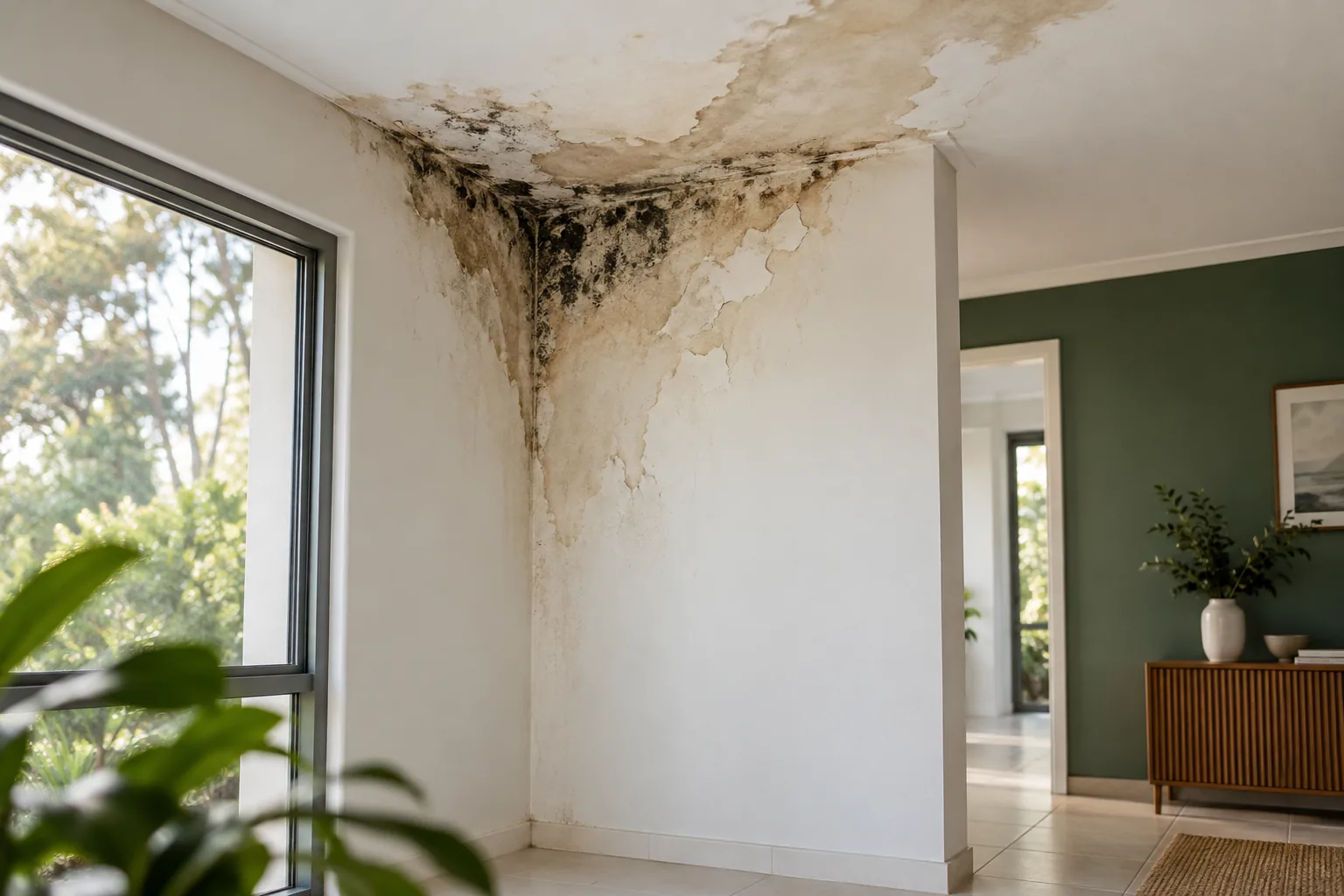
Ceiling treatment concerns reachable surfaces, while sagging material or structural damage needs separate attention.
Bathrooms
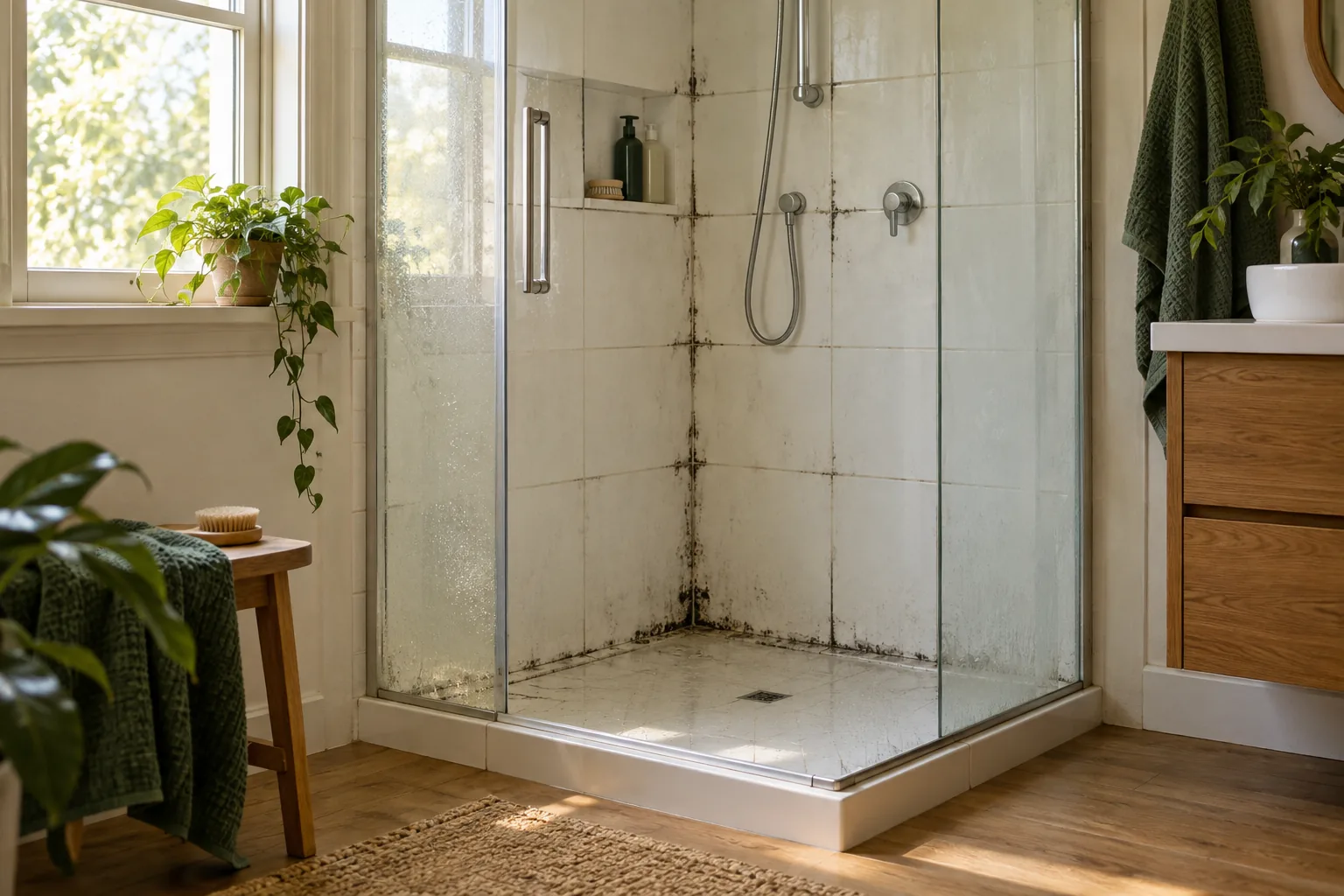
Describe growth beyond the shower recess as well as the recess itself when discussing scope.
Kitchens
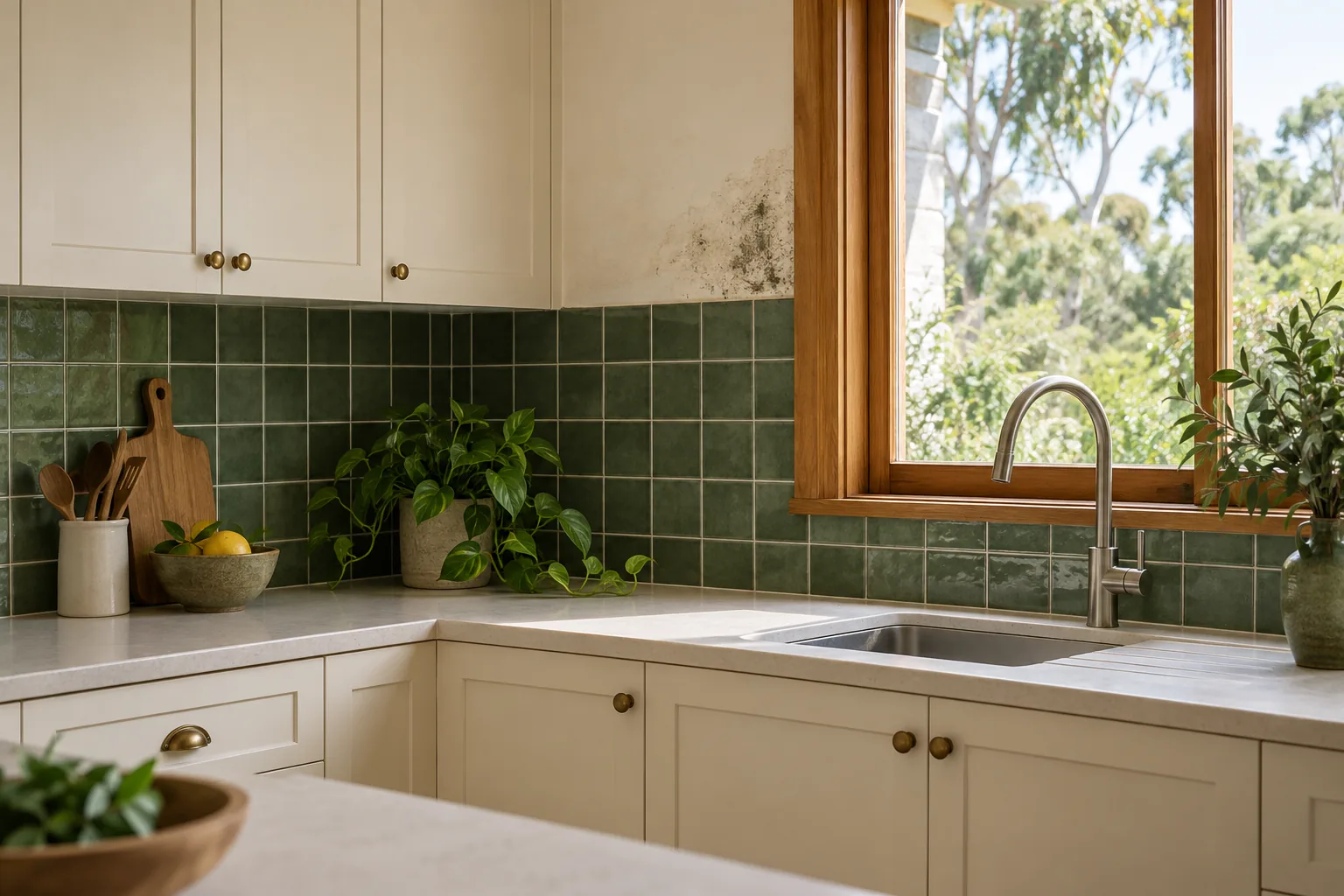
Explain kitchen access and any suspected plumbing concern separately from the visible surface job.
Accessible affected surfaces
The standard scope excludes furniture, carpets, mattresses, curtains, clothing and other textiles.
PREPARE FOR THE ACTUAL JOB
Prepare for a bounded treatment job
Explain which cupboard surfaces can actually be reached and what the odour concern involves. Clear contents as instructed without assuming a concealed cavity is now included.
Ask about the expected work duration and return instructions. Completion of visible treatment is not hidden-area clearance or an odour-source guarantee.
AFTER THE TREATMENT
Keep the moisture question open after treatment
Continue distinguishing what can be seen from what can be smelled after treatment. If the cupboard concern persists, discuss appropriate assessment instead of asserting hidden mould has been eliminated or remains. Keep any moisture observations separate from guesses about the source. The accessible surface result does not establish cavity condition, and room humidity is not concealed clearance. Contents require their own decisions outside the structural job. This approach makes later enquiries more useful: they can address a specific remaining observation without relying on an invented hidden diagnosis or treating fog application as unrestricted investigation.
Arrange separate attention to leaks or building defects where relevant.
Use ordinary ventilation and humidity management appropriate to the room.
Watch for fresh damp signs or new growth, rather than judging only old marks.
Confirm the scope before accepting a price
A cupboard odour does not establish a priced hidden-cavity treatment. Confirm the visible reachable surface and ask whether separate assessment is needed for the concern that cannot be seen. Check pricing information and confirm its applicability to this job.
WESTBREEN · EXACT ADDRESS & ACCESS
Service enquiries around Westbreen
A Westbreen enquiry should distinguish visible marks from the cupboard odour at the actual address. Nearby links are navigation, not confirmation of a hidden local diagnosis. Browse Areas We Cover for the service navigation.
Pascoe Vale · Hadfield · Oak Park · Glenroy
Questions about remediation
Does the cupboard smell establish hidden mould?
No. An odour is a reason to discuss further assessment, not proof of contamination behind the lining.
Can you treat inside a closed wall cavity?
Not under the standard visible accessible scope. Concealed concerns need separate discussion and appropriate investigation.
Are cupboard contents included?
No. Contents and textiles are excluded, so distinguish them from accessible structural surfaces.
Will the HEPA scrubber remove the cause of the smell?
No cause-removal guarantee is supported. Air filtration is a treatment stage and does not establish the source of an odour.
Should the cupboard be emptied before the visit?
Discuss the required access and preparation first. Emptying contents may help reach a surface but does not itself make a cavity accessible.
What should I explain in the enquiry?
Separate what you can see from what you can smell and describe any access restrictions. This helps choose an appropriate scope without inventing a hidden diagnosis.
Discuss the visible problem before booking
Explain both the visible patch and cupboard odour when calling 03 8652 1296. For the Westbreen enquiry, agree the reachable surface and discuss whether assessment is needed, without assuming a concealed-space diagnosis or treatment.