
SURFACE TREATMENT · MOISTURE FOLLOW-THROUGH
Mould Remediation Wildwood
A utility room used for storage and occasional washing can contain several possible water observations without one confirmed cause. If that is the interior you want treated at a Wildwood address, identify the visible structural patch and the practical entry. Confirm availability for the premises before treating a broad property description as a booking.
The utility interior is identified precisely.
Stored items stay outside structural treatment.
Separate water concerns are recorded clearly.
TREATMENT & FOLLOW-THROUGH
UNDERSTANDING REMEDIATION
Define the utility surface rather than all stored contents
Explain whether the growth is on exposed wall, ceiling or floor and what prevents reach. A room containing stored belongings does not turn remediation into a contents-restoration service. Review the treatment process for the structural surfaces actually requested, with furniture, fabric and textiles excluded.
Explain fixed equipment before clearance. Another building needs its own entry and scope; treatment of this utility face does not include blocked backing or stored belongings.
THE MOISTURE CONNECTION
Separate washing activity from a confirmed water source
Describe wetting at the fitting, condensation on a visible surface and any known leak independently. The room’s use does not establish which observation led to the growth. A separate inspection discussion can help frame accessible assessment when the current condition is uncertain.
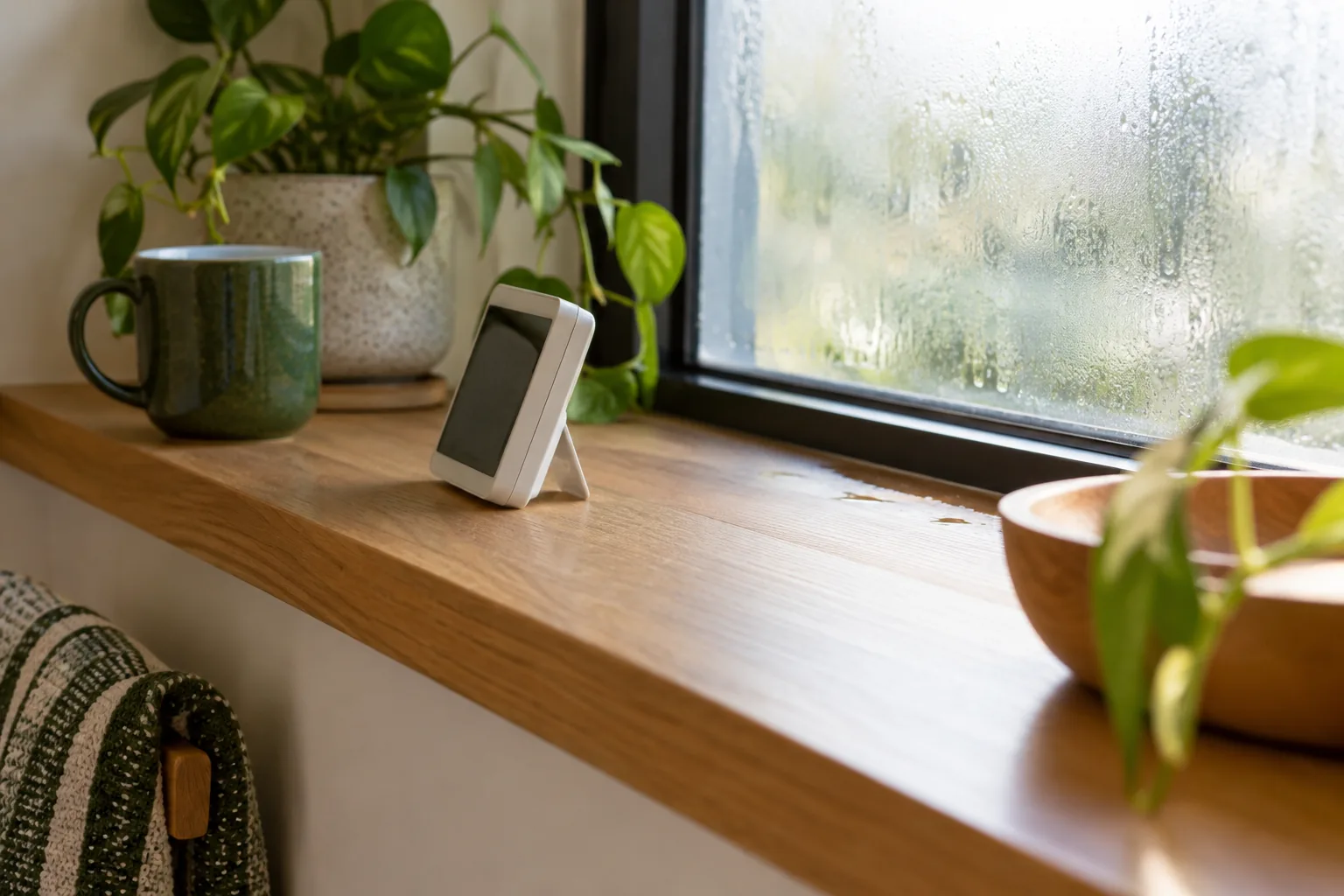
The professional hygrometer measures relative humidity in the room’s air, not moisture inside a wall or below flooring. It cannot prove an appliance connection sound. Have relevant plumbing and building repairs handled by the appropriate provider. Practical ventilation can be considered alongside these repairs, but treatment of visible contamination does not promise future dryness or universal prevention in a room that continues to become damp.
PLAN · FILTER · TREAT · REMOVE · CONTINUE
A sequence for the agreed utility finishes
1
Assess the reachable request
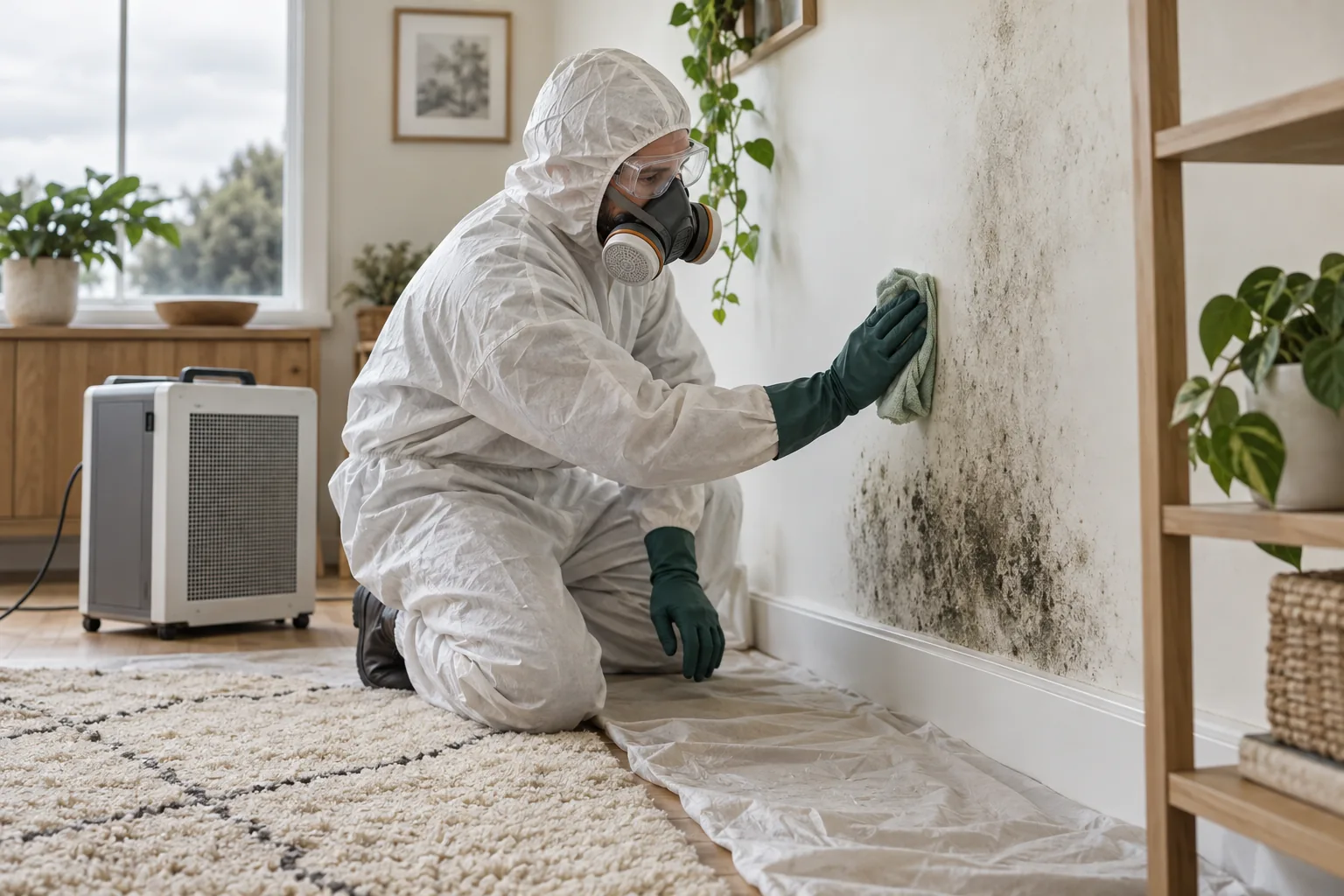
Identify the utility entrance and visible structural contamination, agree suitable surfaces and record restrictions from fixed equipment or stored belongings.
2
Set up HEPA air cleaning
Operate the confirmed HEPA air scrubber before treatment after the work area is prepared, without presenting air cleaning as contents clearance.

3
Choose the suitable application
Apply appropriate HOCl treatment, using ULV dry fog where suitable rather than assuming the utility’s use determines one method.
4
Remove visible growth physically
Use professional equipment with H-class filtration on the agreed accessible structural finishes, keeping plumbing, dismantling and textiles outside the treatment.
5
Continue filtration and explain return
Maintain HEPA air cleaning during and after the process, then discuss actual return advice, remaining staining and any inaccessible section.
Structural finishes within the utility request
Walls
Locate growth on the exposed wall and describe any appliance or shelf blocking its lower section.
Ceilings
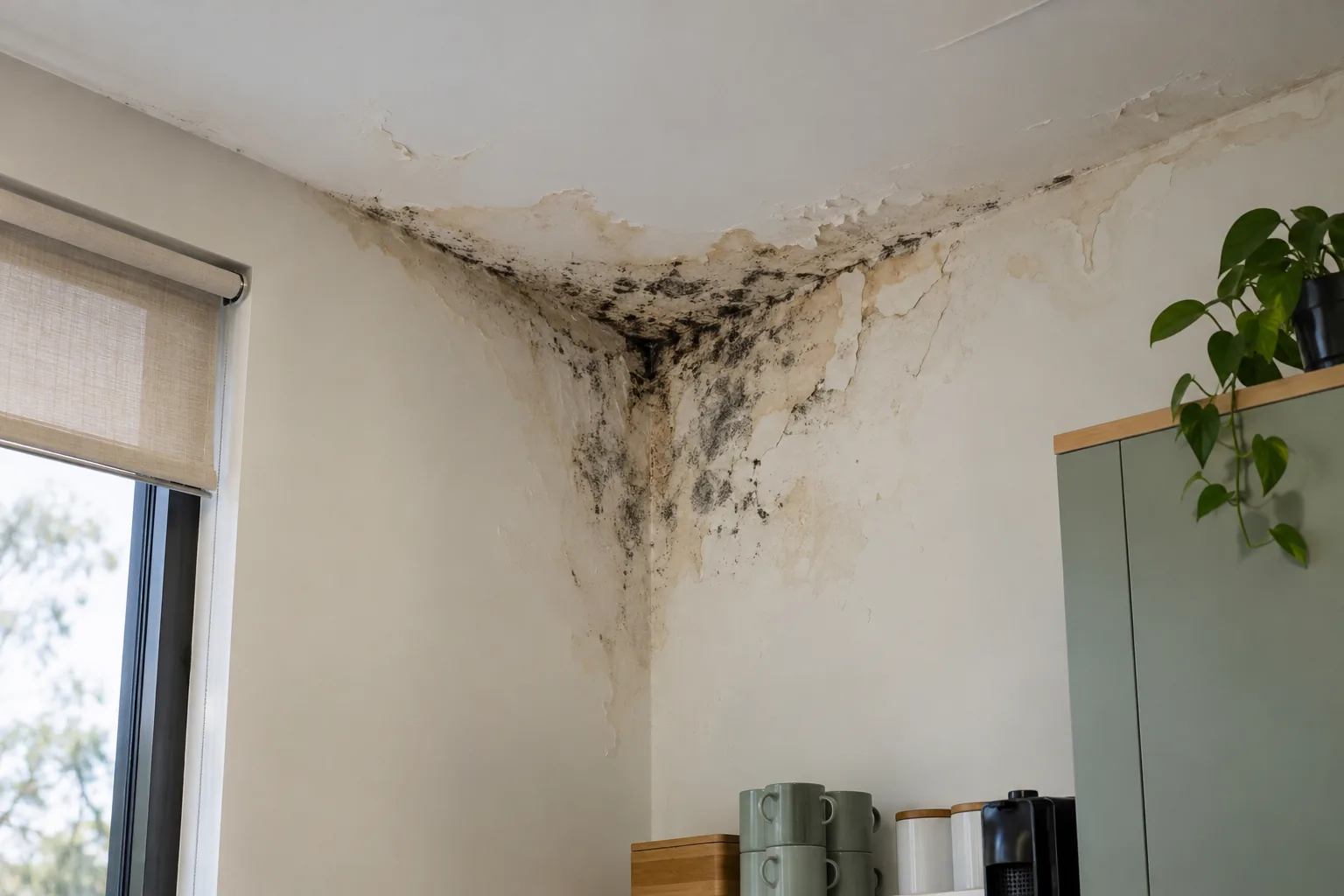
Identify a ceiling patch independently from wetting beside a floor-level fitting.
Bathrooms
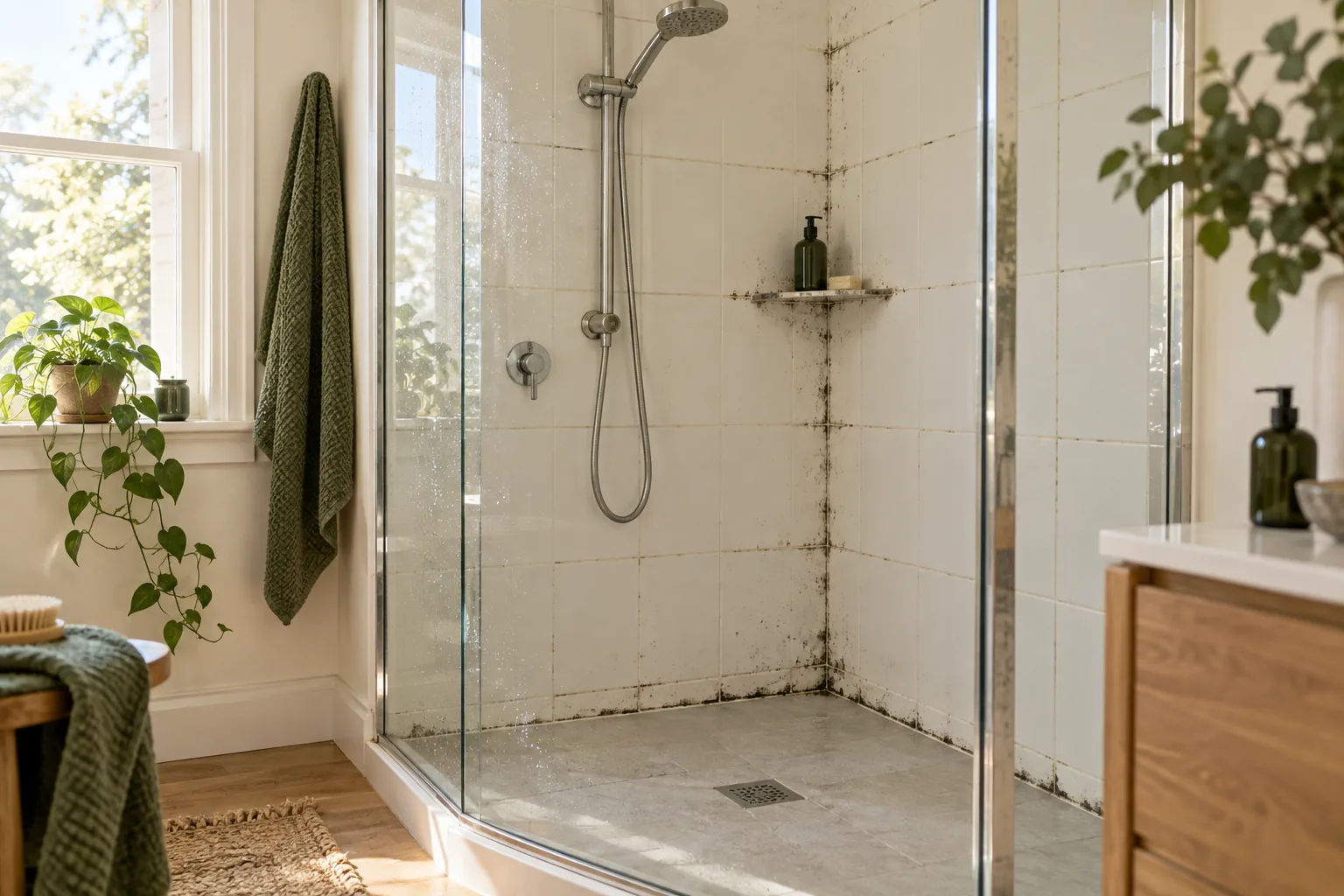
A bathroom request needs its own visible extent; towels and fabric mats are not structural treatment surfaces.
Kitchens
Reachable kitchen finishes remain separate from stored food, utensil cleaning and appliance repairs.
Accessible affected surfaces
Other exposed wall, ceiling or floor areas may be included by agreement, excluding concealed cavities and the room’s contents.
WHAT TO EXPECT
Arrange practical clearance before attendance
Provide the full Wildwood address, intended entrance and preparation contact. Confirm availability and ask which items should be moved without dismantling fixed equipment on assumption. People and pets leave during treatment, with the technician’s specific instructions governing return.
Room guidance averages approximately three hours, depending on size, contamination and accessibility. This is not a fixed regional appointment or hourly appliance-cleaning task. Cosmetic discolouration can remain. A repair provider may still need to address the water concern, and the treated visible face cannot establish the condition beneath a covering or behind equipment.
FOLLOW THE MOISTURE
Keep the utility’s water observations useful
After advised return, note renewed water at its actual location rather than attributing every change to washing use. Maintain relevant ventilation and complete separately arranged repairs. New growth behind an item moved later requires an updated surface request, not an assumption that it was part of the original treatment.
Record fitting leaks separately from window or wall condensation.
Keep stored textile concerns outside the structural result.
Explain changed access if a new patch becomes visible.
Quote the accessible utility work
State the affected finishes and clearance restrictions when discussing cost. The Mould Removal pricing examples need applicability confirmed for remediation; they do not establish appliance servicing, contents restoration or an assumed attendance arrangement for the Wildwood premises.
WILDWOOD · EXACT ADDRESS & ACCESS
Wildwood address details and nearby enquiries
Sunbury and Goonawarra pages can help locate neighbouring enquiry contexts. Supply the Wildwood postal address and particular utility entrance directly; those links cannot confirm attendance or imply that all buildings and belongings at this property are included.
Questions about remediation
Does a washing-room use prove condensation caused the patch?
No. Describe actual wetting and known leaks separately rather than assigning the cause from the room’s use.
Will stored fabric be treated with the room?
No standard textile or contents treatment is confirmed. Keep those items distinct from reachable structural surfaces.
Should I disconnect a fixed appliance for access?
Do not assume that is necessary preparation. Discuss the obstruction and arrange any separate appropriate access work first.
Can the hygrometer confirm an appliance connection is dry?
It measures room air, not the fitting or concealed material. Plumbing condition requires separate advice.
Does a utility-room result extend to another building?
No. A different interior needs its own agreed entry, surface boundary and treatment request.
What should I do about growth revealed after moving storage?
Identify the newly exposed surface and extent before assuming it was treated. Update the scope with the current access details.
Name the utility interior and water observations
Call 03 8652 1296 with the Wildwood premises details and reachable surfaces. Confirm availability, preparation and the separate repair concerns before booking.