
VISIBLE SURFACES · THOUGHTFUL RESTORATION
Mould Remediation Macclesfield
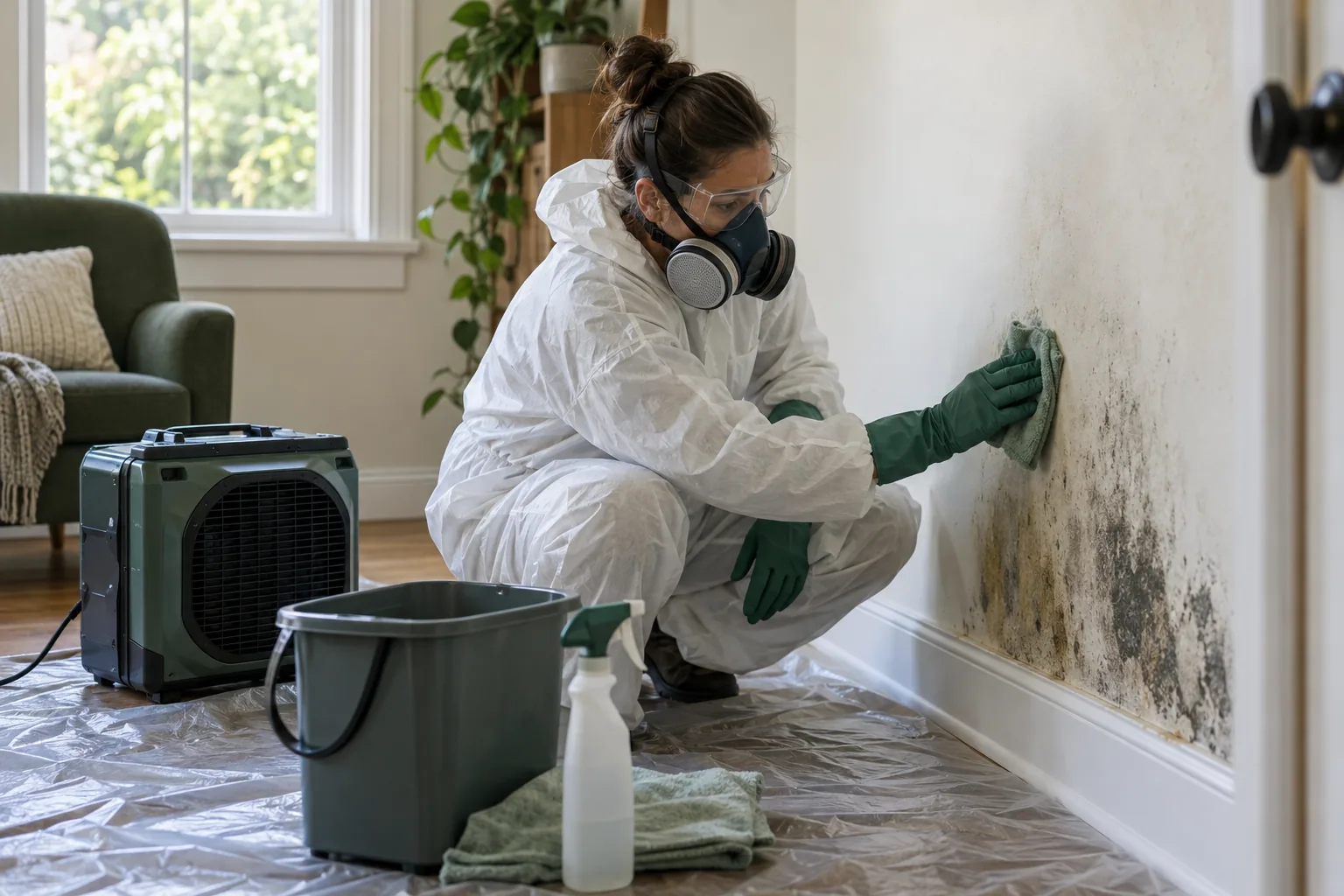
Taking down a wall display may reveal growth that was not visible from the room. For Macclesfield, describe the exposed finish and what still covers adjoining areas. The wall and the displayed object need separate decisions; structural treatment is not an artwork or object-restoration service.
ASSESS · FILTER · RESTORE
Exposed wall described
Delicate objects distinguished
Preparation advice discussed
Explain what is visible without removing more displays
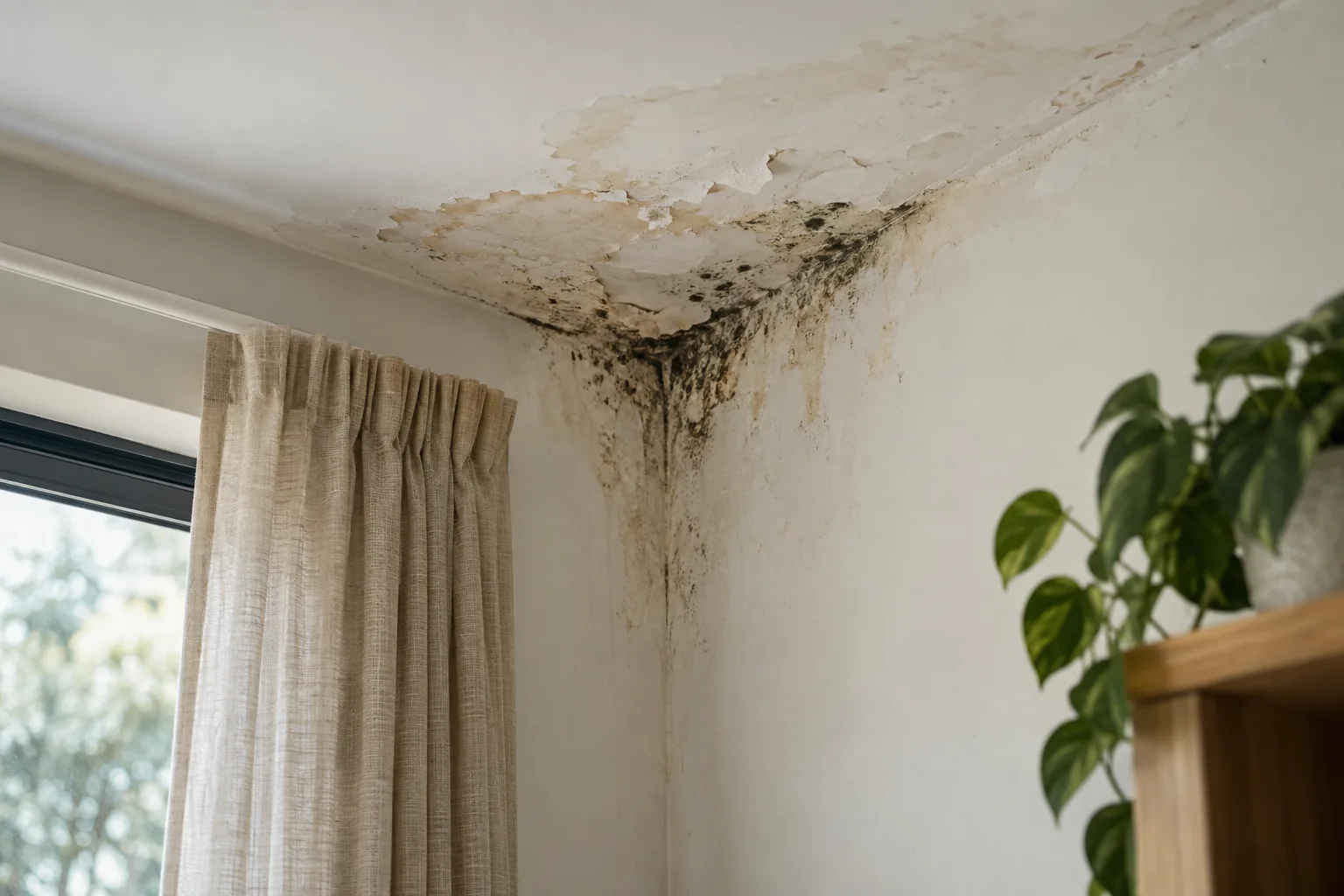
Mention the patch’s location, finish and any display still restricting access. Share observations from the exposed area without dismantling delicate or fixed objects simply to improve the enquiry. Ask how preparation should be coordinated before handling items with their own contamination concern.
The confirmed remediation process treats visible accessible structural surfaces. Furniture, textiles and belongings are not automatically included, and specialist object restoration is not confirmed. Agree the wall boundary and any separate care or access arrangement for the display.
Use the exposure as information, not a diagnosis
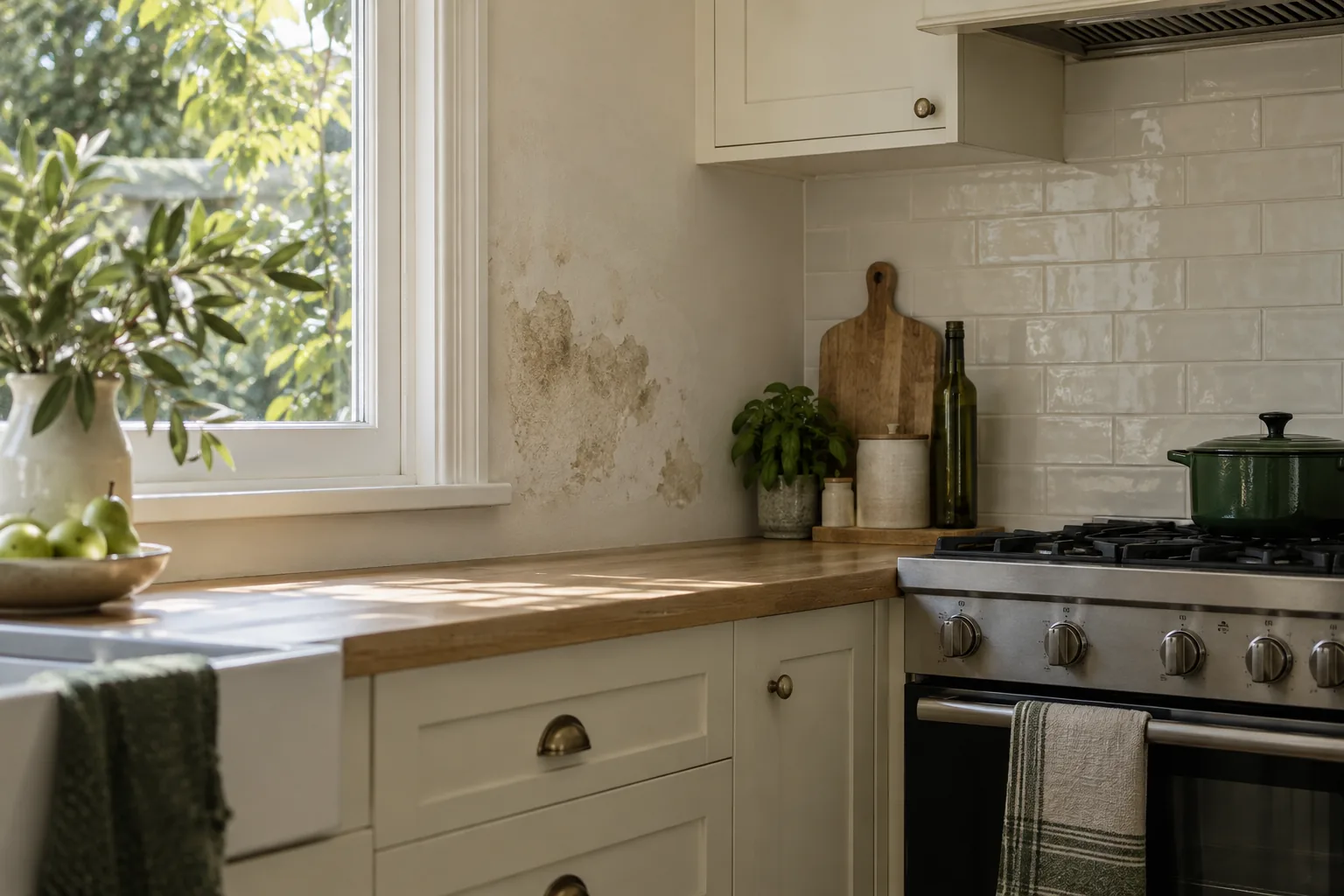
Describe condensation, wetting or known repair history on the wall. A patch behind an object does not prove the object caused the moisture or establish concealed condition. Plumbing and building faults remain separate from treating existing growth.
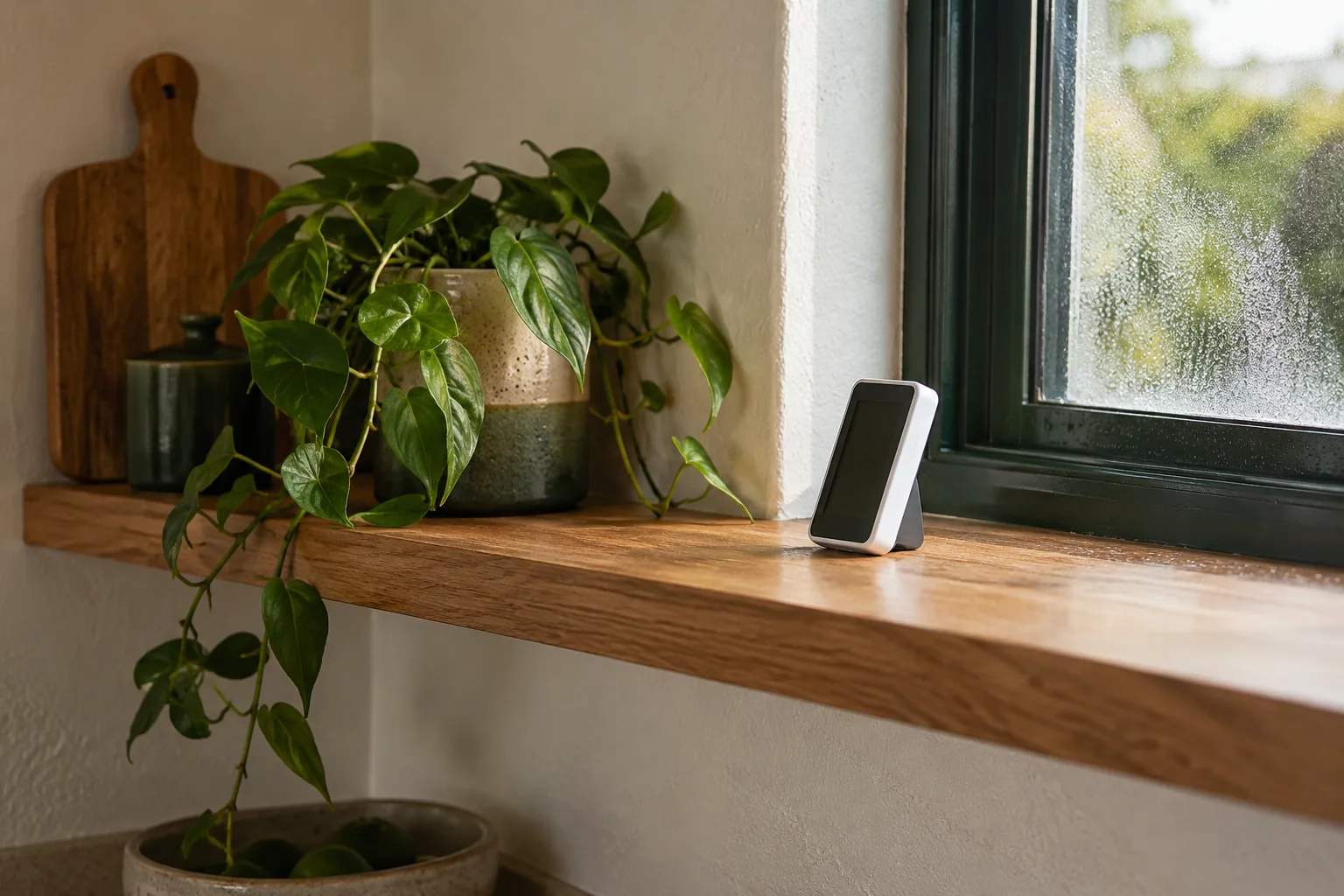
The professional hygrometer reads relative humidity in room air, not moisture inside a frame, object or wall. If the source or material condition remains unclear, discuss assessment questions. No particular probe, laboratory analysis or concealed-area clearance is promised.
PLAN · FILTER · TREAT · REMOVE · CONTINUE
Treatment of the exposed structural finish
1
Assess the visible patch and finish
Review accessible contamination and the objects affecting reach. Identify covered areas before assuming the whole display wall is included.
2
Establish air protection first
The confirmed HEPA scrubber is set up before treatment application. Agree equipment placement and clearance without assuming the technician will move or pack delicate objects.

3
Apply suitable treatment
HOCl is used within the assessed plan, with ULV dry fog where appropriate in most cases. Application does not certify an artwork, frame or concealed wall section treated.
4
Physically remove accessible growth
Professional H-class filtered equipment removes visible structural contamination. Object care, repairs and decorative restoration remain separate arrangements.
5
Continue final air cleaning
HEPA operates during and after remediation. Obtain return advice and discuss remaining marks or moisture concerns before deciding what will be hung on the wall again.
Identify structural surfaces separately from displays
Walls
For walls, describe the exposed face and finish rather than making the display or its backing part of the wall-treatment scope.
Ceilings
For ceilings, list any separate patch with access below it; the display-wall history should not be assigned automatically.
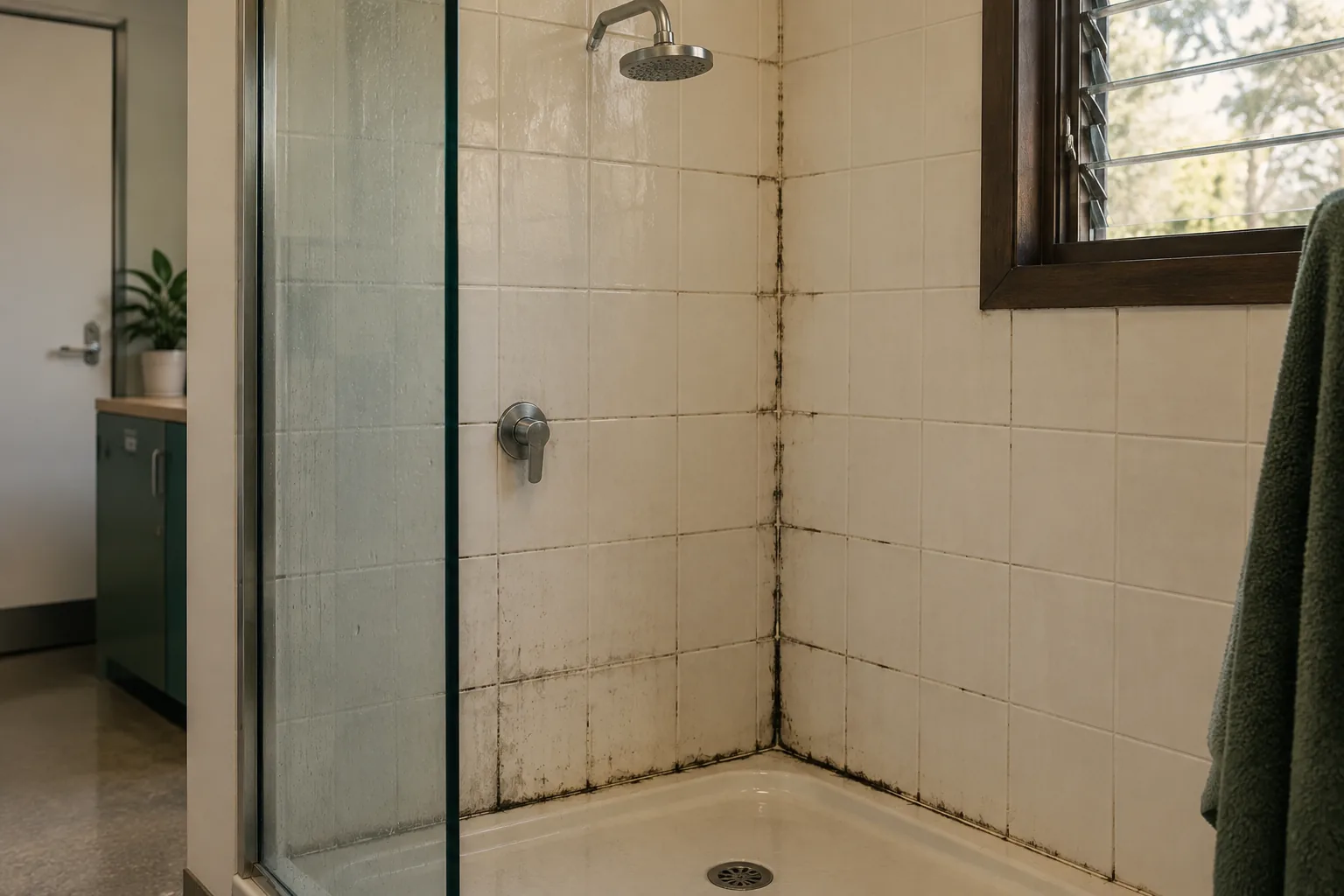
Bathrooms
Bathroom structural areas need their own observations, while towels and mats remain excluded.
Kitchens
Kitchen wall or floor growth should be distinguished from cupboards, appliances and plumbing tasks.
Accessible affected surfaces
An exposed structural floor can be considered separately, while rugs, carpet and objects stored there remain outside the standard textile and contents scope.
WHAT TO EXPECT
Plan careful clearance before attendance
Discuss fragile objects and movement responsibilities rather than preparing by assumption. People and pets leave during treatment and follow specific departure and return instructions. The source average is around three hours per room, varying with size, extent and accessibility; it does not set a timetable for packing or restoring a collection.
Cosmetic stains may remain and decorating is separate. Standard remediation does not certify concealed materials or displayed objects unaffected, and persistent dampness can allow recurrence. Keep the included surface and separate belongings questions clear at completion instead of describing the entire display arrangement as cleared.
FOLLOW THE MOISTURE
Keep later wall observations possible
Rehanging should account for any remaining moisture questions and practical monitoring.
Note renewed dampness or growth on the actual structural face.
Arrange appropriate repair advice for continuing water entry.
Maintain ventilation and avoid immediately concealing the entire included patch behind another display.
Quote wall treatment separately from object care
Use published price information with extent, finish and clearance needs. The Mould Removal examples do not establish a separate remediation-and-restoration tariff. Confirm applicability without assuming packing, object cleaning, decorative matching or a later visit is included.
MACCLESFIELD · EXACT ADDRESS & ACCESS
Other Macclesfield-area enquiries
For another nearby address, provide its own display arrangement, authority and current wall condition. Similar objects do not establish identical treatment needs or combined attendance; availability requires confirmation for each property.
Avonsleigh · Nangana · Cockatoo · Emerald
Questions about remediation
Are pictures and frames treated with the wall?
Do not assume they are included. Agree the structural treatment and arrange any object-care concern separately.
Should every display be removed before I call?
No universal removal requirement is established. Describe the exposed patch and remaining obstruction, then discuss suitable preparation.
Can a patch behind a frame prove the wall is wet inside?
No. Appearance does not measure moisture within construction; share actual wetting and repair observations.
Will fog restore affected artwork?
No specialist artwork service is confirmed. Appropriate fog use does not expand the structural scope to delicate belongings.
Can the objects be rehung immediately on return?
Discuss completion and moisture follow-up before restoring the display. Avoid relying on improved appearance as proof that every concern is resolved.
What if another patch appears behind a different object later?
Locate the newly exposed area and clarify whether it was included. Do not retrospectively extend an earlier visible boundary to a covered section.
Discuss the wall before handling delicate displays
Call 03 8652 1296 with the exposed finish, access and relevant damp history. Agree treatment and the separate object-care decisions.