
VISIBLE SURFACES · THOUGHTFUL RESTORATION
Mould Remediation Portsea
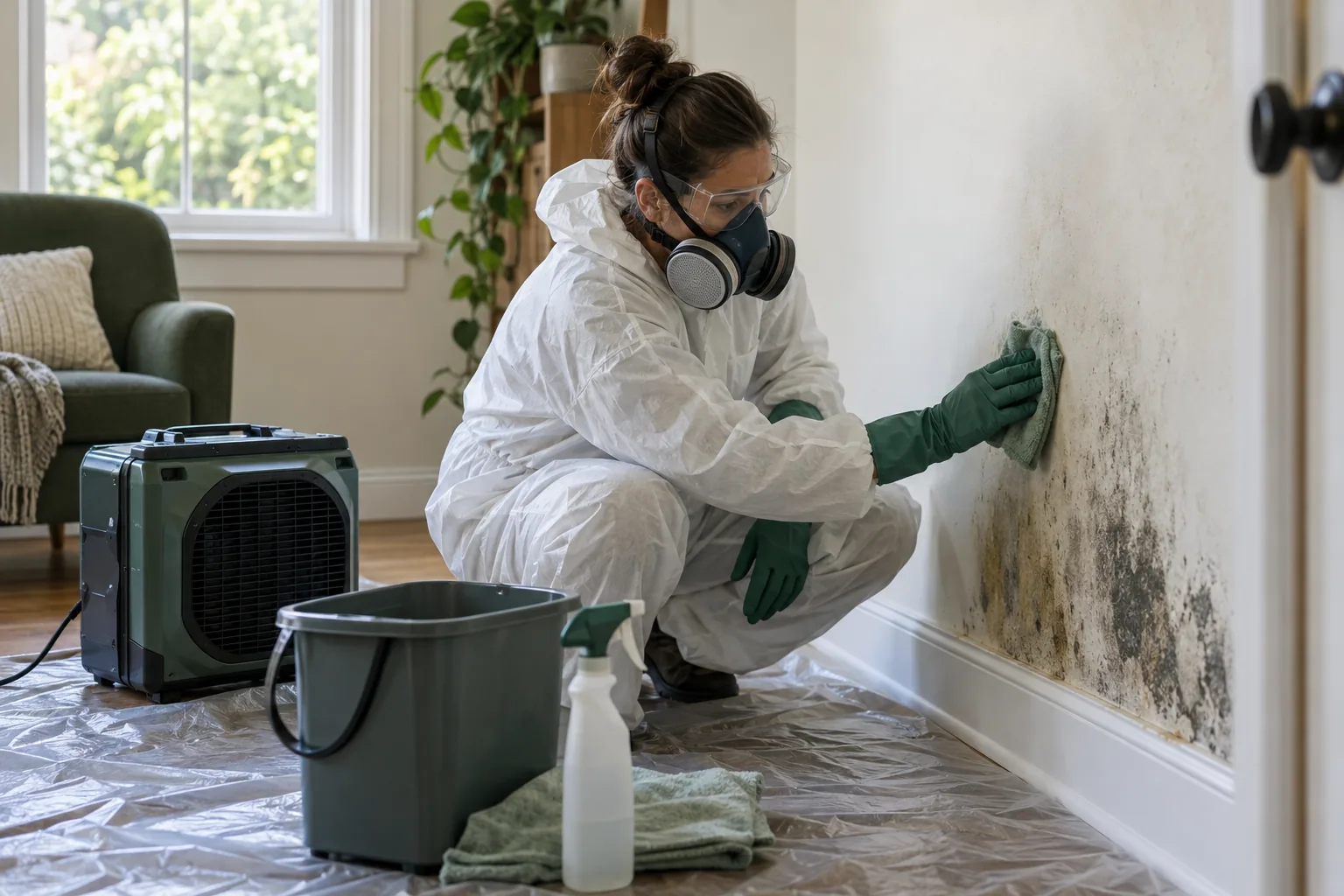
If the affected wall has a decorative finish you want preserved, explain that concern before selecting treatment. For a Portsea enquiry, identify the visible material, condition and accessible extent rather than assuming a premium-looking finish tolerates every method. Remediation and decorative restoration have different scopes, and neither should be promised through a general room booking.
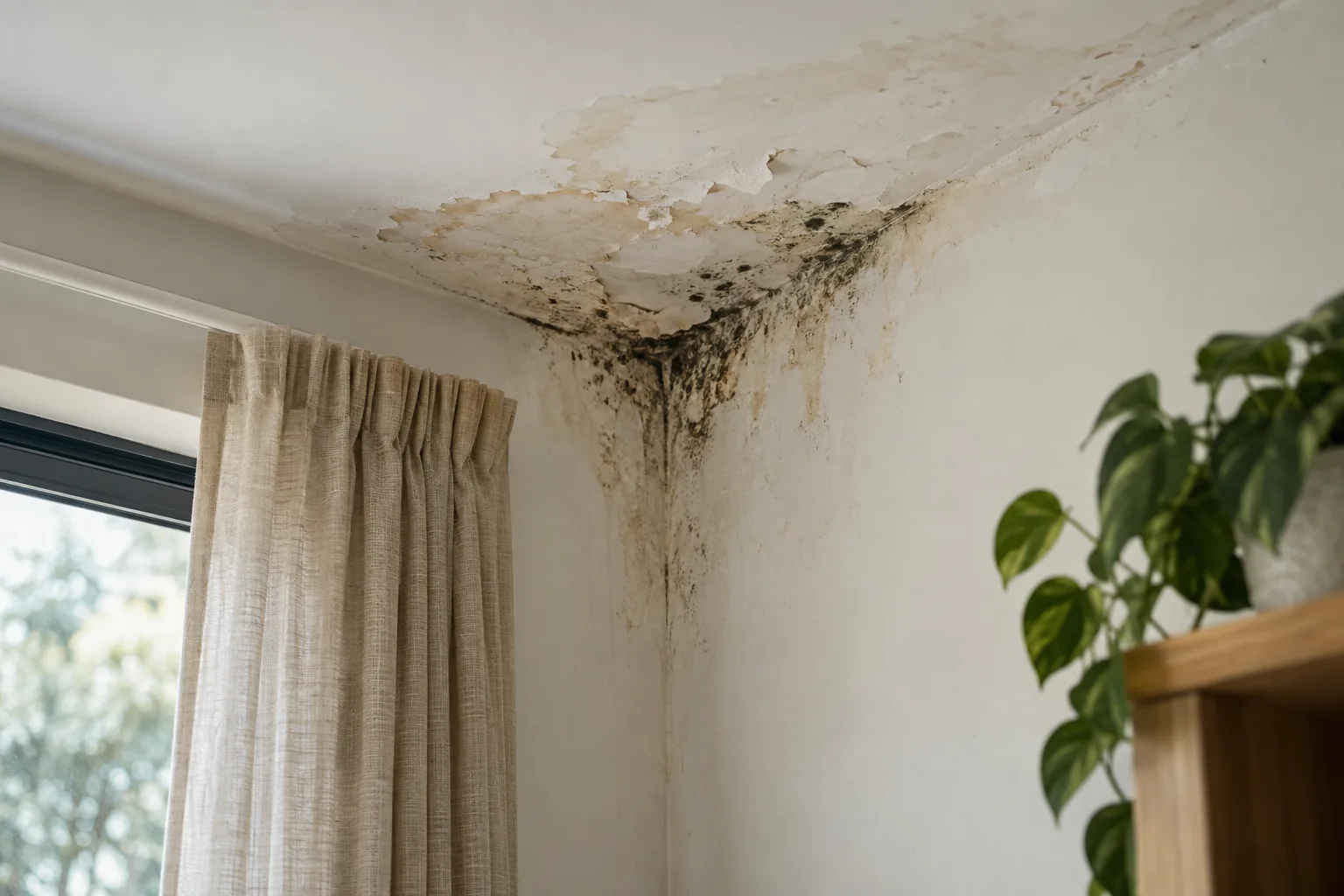
ASSESS · FILTER · RESTORE
The decorative concern is discussed upfront.
Suitability relates to the actual exposed finish.
Restoration decisions remain separately scoped.
Preservation expectations need a separate conversation
Describe the finish and any lifting, damage or uncertain material while leaving the patch undisturbed for the enquiry. The confirmed professional sequence concerns suitable reachable contamination. It does not establish specialist decorative conservation or a universal promise that every colour, texture and coating remains unchanged.
Explain fixed features that prevent reach and retain their limitations in the agreement. Concealed layers and cavities are outside standard scope, while furnishings and textiles are excluded. If restoration work later exposes another face, agree its treatment independently. An aesthetic objective cannot extend the accessible result to hidden material or guarantee a newly decorated appearance.
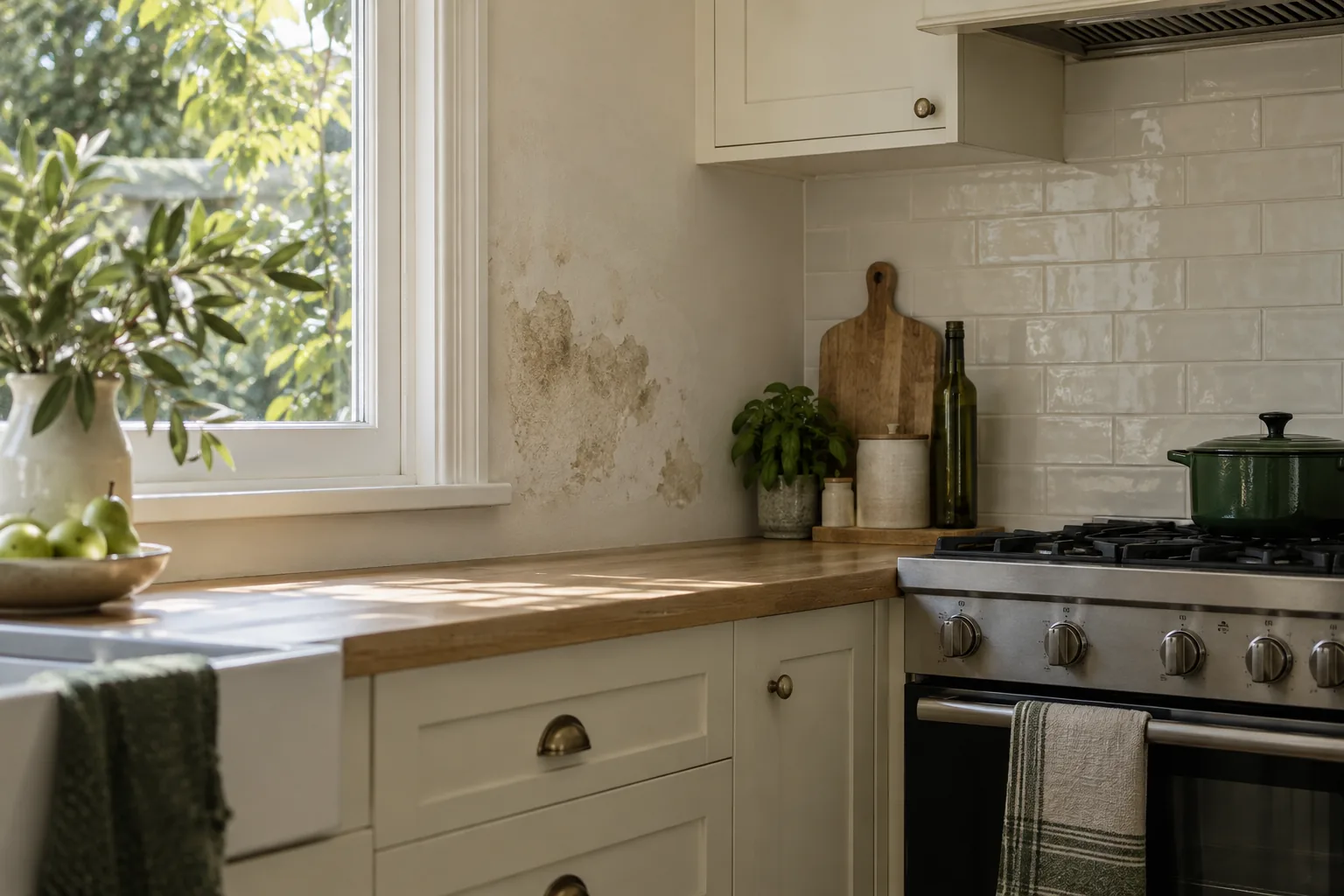
Appearance cannot settle the moisture condition
Give actual condensation, wetting and reliable repair history independently of the decorative pattern. A mark following an ornamental edge cannot establish one cause. A separate visible accessible inspection enquiry can discuss assessment before suitable treatment if the current condition needs clarification.
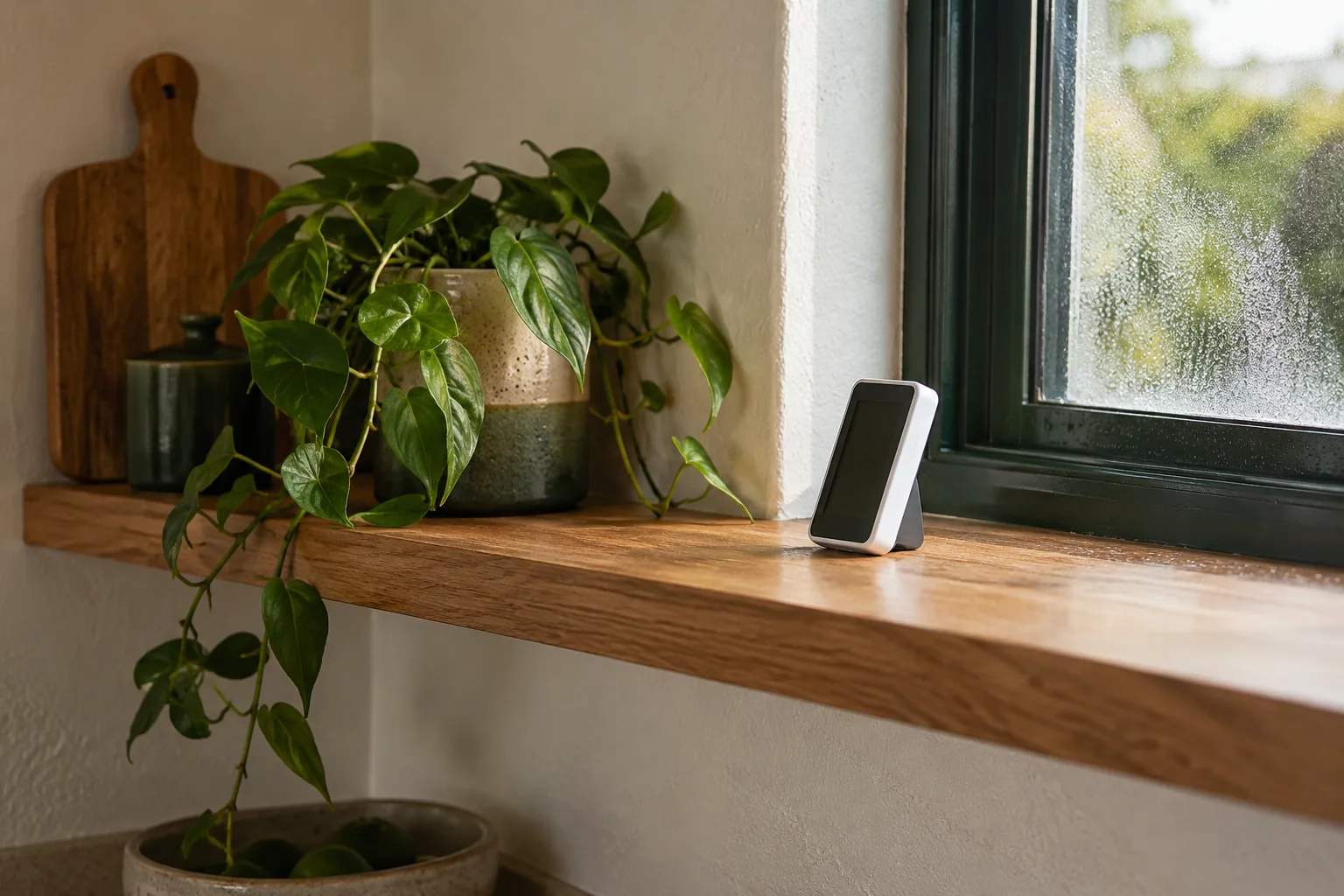
The professional hygrometer measures relative humidity in room air, not moisture within a decorative layer or readiness for restoration. It cannot certify concealed backing dry. Relevant leaks and building defects need appropriate providers. Practical ventilation and source correction support follow-through, while the surface treatment cannot guarantee prevention under continued damp conditions.
PLAN · FILTER · TREAT · REMOVE · CONTINUE
A sequence with realistic finish expectations
1
Assess finish and reachable contamination
Review the visible growth and decorative surface condition, discuss preservation concerns and agree which exposed structural sections are suitable for work.
2
Begin protective HEPA air cleaning
Set up the confirmed HEPA scrubber before treatment in the prepared area, without interpreting filtration as approval of a fragile decorative system.

3
Apply appropriate HOCl
Use suitable HOCl application and ULV dry fog where appropriate, retaining cosmetic limits rather than promising universal finish preservation.
4
Physically remove visible growth
Use professional H-class filtered equipment within the agreed accessible scope, keeping conservation, redecoration and damaged-material repair separately arranged.
5
Continue filtration and clarify completion
Maintain HEPA air cleaning during and after the process, then discuss actual return advice and any remaining cosmetic mark or untreated section.
Structural finish details before a restoration plan
Walls
Identify the decorated wall’s current condition and visible extent without assuming every coating can receive identical work.
Ceilings
A decorative ceiling needs its own material and safe-reach discussion, not transferred wall suitability.
Bathrooms
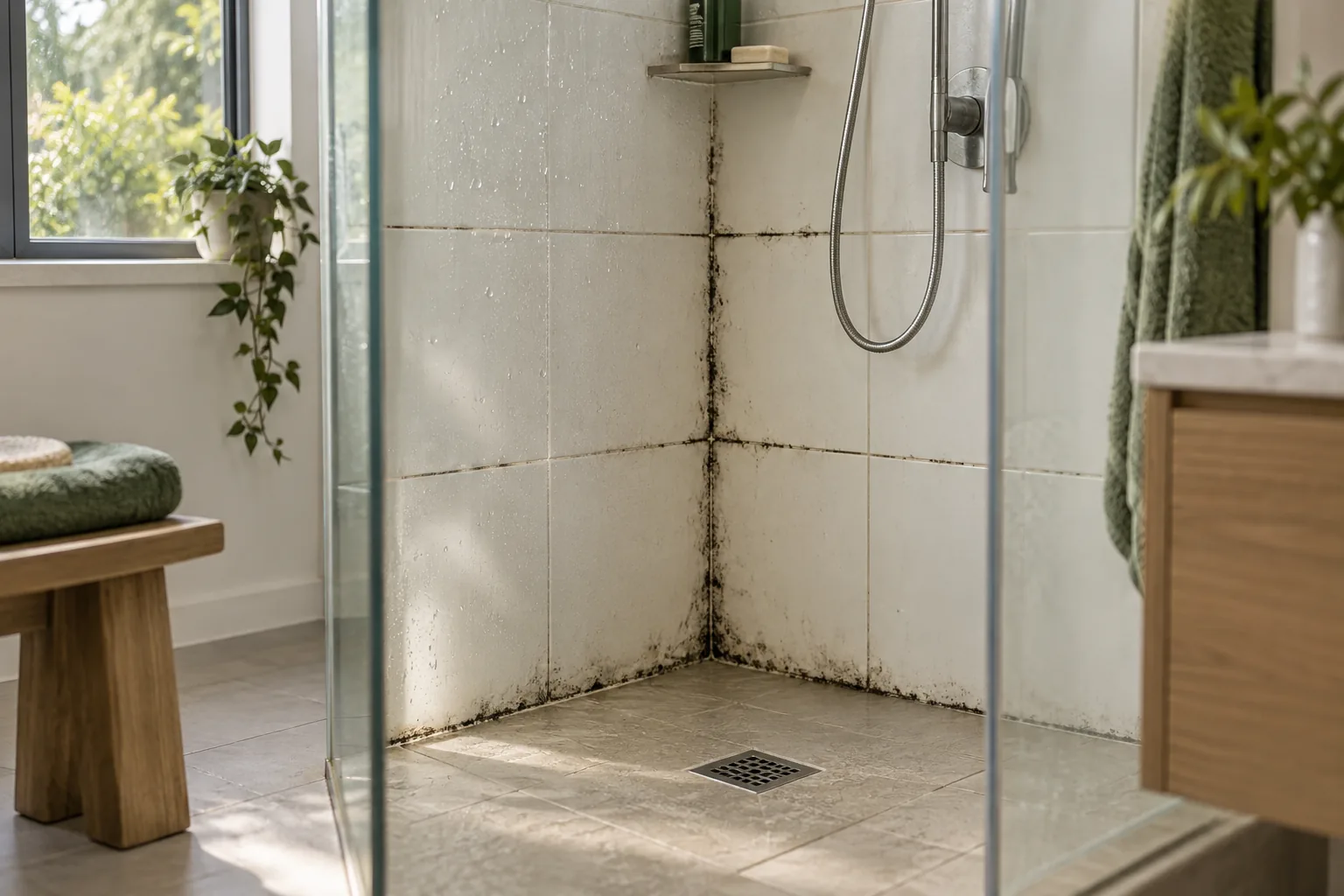
Bathroom structural faces stay distinct from fittings restoration, joint replacement and textile items.
Kitchens
Describe reachable kitchen finishes without including ornate contents, appliances or fixed-unit dismantling.
Accessible affected surfaces
Other exposed structural sections require agreement; concealed material and excluded furnishings are not added through cosmetic expectations.
WHAT TO EXPECT
Discuss preparation without altering the decorative face
Ask what clearance is needed and identify difficult or fragile belongings before moving them. Do not scrape, patch or repaint the finish as an assumed preparation step. People and pets leave during treatment and follow the technician’s specific instructions for departure and return.
A decorative preservation concern needs a realistic programme, with the source’s roughly three-hour room average qualified by affected size, contamination and practical access. It is not an hourly conservation service or guaranteed cosmetic completion. Staining may remain, while repair and restoration providers need their own scope. No lab clearance, hidden-dryness certificate or finish warranty is confirmed through standard visible-surface remediation.
FOLLOW THE MOISTURE
Describe later changes without turning colour into a finding
After advised return, identify fresh water or growth at the exact exposed face and complete relevant repairs. Keep a stable cosmetic outline distinct from new contamination. Separate restoration should not hide a changed condition before it is described and any additional treatment agreed.
Record surface changes with the actual finish and position.
Keep preservation decisions with their appropriate provider.
Discuss newly exposed areas after separate restoration work.
Quote contamination work apart from decorative restoration
Provide extent, finish concerns and reach restrictions when asking about cost. Confirm relevance of Mould Removal pricing guidance to remediation; it does not establish specialist conservation, a paint-preservation warranty or complete removal of cosmetic discolouration.
PORTSEA · EXACT ADDRESS & ACCESS
Portsea premises and nearby finish enquiries
Sorrento and Blairgowrie pages help navigate other nearby property requests. At the Portsea address, describe the actual decorative face and preservation concern. Another property’s finish cannot establish the same method suitability or restoration outcome here.
Sorrento · Blairgowrie · Rye · Tootgarook
Questions about remediation
Will every decorative detail remain unchanged?
No universal preservation promise is confirmed. Explain the material and concern before suitable treatment is discussed.
Is specialist conservation included in remediation?
No conservation service is established. Keep that requirement separate from the agreed structural contamination work.
Should I repaint the mark before enquiring?
Describe the exposed finish first. Covering it changes access and should not substitute for suitability or moisture discussion.
Can the hygrometer approve the wall for restoration?
No. Air relative humidity is not material dryness or a readiness certificate for a decorative system.
What if a cosmetic outline remains after treatment?
Discuss its appearance separately from fresh growth. Restoration or decoration may need another provider’s decision.
How should a section exposed during restoration be handled?
Describe its current material, contamination and reach before agreeing treatment. The earlier visible face did not automatically include newly revealed layers.
Explain the decorative finish before treatment
Call 03 8652 1296 with the Portsea wall, condition and preservation concerns. Agree suitable accessible remediation and separate restoration responsibilities.