
THE JOURNAL · VENTILATION
How to Improve Ventilation to Reduce Damp Conditions at Home
Improving ventilation starts with understanding how moisture is produced and removed in your home. It is not simply a rule to leave every window open all day. Bathrooms, kitchens, laundry drying and cooler rooms can behave differently, while outdoor weather, smoke, noise and security affect what is practical. A useful plan connects the room’s ordinary use with suitable extraction, air replacement and maintenance, and keeps building leaks on a separate repair list.
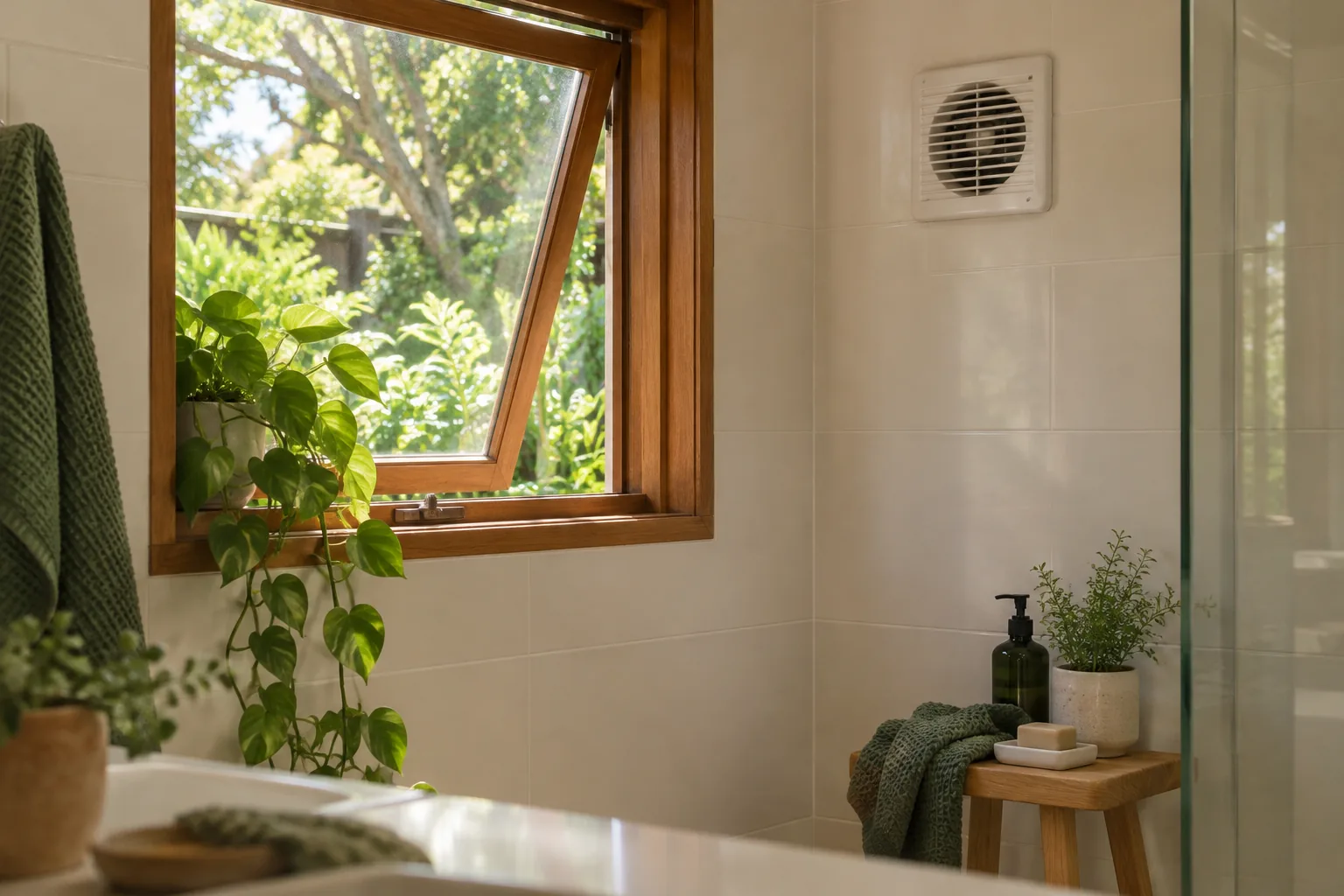
This guide covers observations and sensible questions for household ventilation. It does not provide instructions for modifying ducts, wiring or building assemblies. If there is extensive mould or a damaged finish, organise a defined assessment. Ventilation improvements can help manage conditions, but they do not remove all existing growth, repair a leaking roof or restore wet plaster. Plan those tasks alongside the airflow enquiry.
Identify where moisture enters the indoor routine
Write down the activities that regularly introduce moisture: showering, cooking, washing dishes and drying laundry. Record where they occur and whether extraction is used. Look for visible effects such as fogged mirrors, wet windows and damp surfaces that remain after the activity. Avoid assigning blame to an occupant from one observation. The building’s extraction capacity, configuration and material conditions matter as well as daily habits.
Choose one or two rooms with a clear concern rather than trying to redesign the whole home immediately. A bathroom ceiling that stays wet after showers gives you a specific question. A bedroom window that is wet each morning gives another. Keep a short record under normal use before changing the arrangement. The home moisture log guide explains how to make those notes useful without turning them into a technical diagnosis.
Include room connections. Steam from a bathroom may spread into an adjoining room, while a laundry rack may be placed in a bedroom because there is no other space. These practical constraints should be part of the plan. An instruction that nobody can follow is unlikely to help. Ask how the current layout and household routine can be supported by suitable extraction or a controlled drying arrangement rather than a list of idealised habits.
Check existing extraction before buying another device
Identify the bathroom fan, kitchen rangehood and any laundry extraction. Check that controls operate as expected and note visible dust or blockage on accessible grilles. Follow manufacturer instructions for cleaning user-serviceable parts, with appropriate power isolation. Do not dismantle electrical components, climb into a ceiling space or reach into ducts. A maintenance check should stay within the safe, accessible tasks intended for the user.
Noise is not a reliable measure of airflow. A fan may run while a duct, grille, installation or replacement-air issue limits performance. If moisture persists, describe the room and usage to an electrician or ventilation professional. Ask whether the installed system is suitable and whether it discharges appropriately. For a rangehood, find out whether it recirculates or exhausts outdoors rather than assuming all models remove moisture in the same way.
The Australian Government’s YourHome ventilation guidance explains that ventilation and airtightness need to be considered together. In practice, avoid blocking openings or altering ducts without advice. Improvements should suit the building and its services. A better-performing system is not just a louder fan, and an appliance purchase should follow an understanding of the room rather than substitute for it.
Use windows when conditions make them a useful option
Opening suitable windows can help exchange indoor air, but the practical decision depends on weather, outdoor air quality, security and the property layout. Consider safe, manageable opportunities rather than an all-day requirement. Keep child safety and window restrictions in place. Do not defeat locks or restrictors to create a larger opening. Airflow should not come at the expense of safety, privacy or the ability to secure the home.
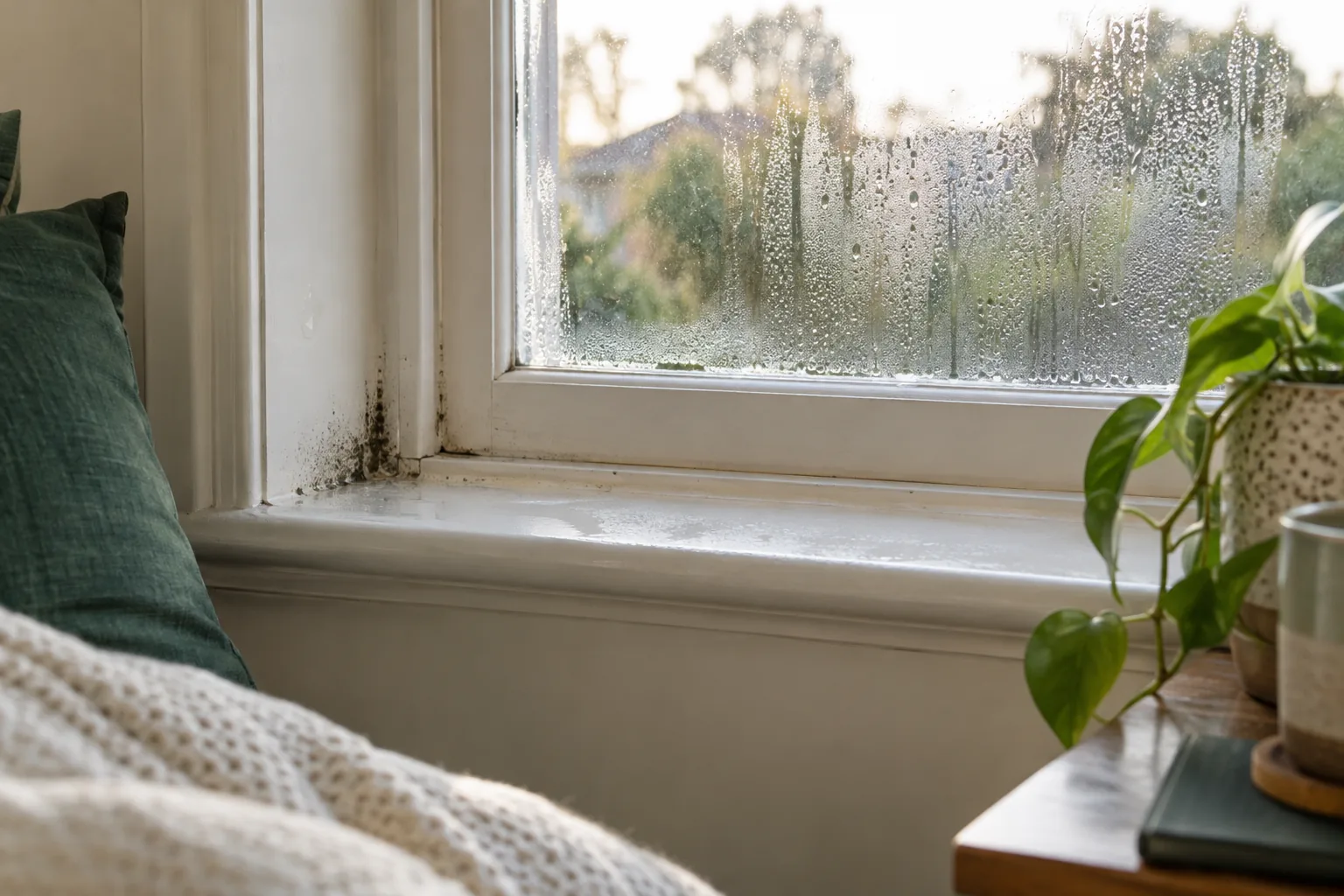
Observe the result in the affected room. Does the glass clear? Does the sill dry? Is a damp corner still concealed behind furniture? A temporary improvement in room feel does not establish that every wet material has dried. Compare observations under ordinary use, and note when rain or outdoor smoke prevents the usual ventilation routine. Those limitations can inform a conversation about mechanical alternatives or changes to moisture-producing activities.
Do not use a window as the only response to water entry around its frame. If marks change after rain, timber deteriorates or paint repeatedly lifts, arrange a suitable repair assessment. The window condensation guide explains how to record the position and timing of water. Keep condensation and suspected external leakage as separate possibilities until an assessment establishes what needs attention.
Give surfaces room to dry and remain visible
Review furniture, curtains and storage near previously affected surfaces. Where safe and practical, make enough access for observation and ordinary maintenance. Do not remove fixed furniture or anti-tip restraints to create airflow. There is no universal furniture gap that guarantees prevention. The aim is to reduce concealed damp spots and notice changes, while keeping the room useful and safe for its occupants.
Check wet items that remain in the room: towels bunched on a rail, a bathmat against cabinetry or a drying rack near a cold window. Spread suitable items as their care instructions allow and consider a drying arrangement that works for the household. Avoid treating textiles with a wall-cleaning product. If belongings have visible mould, obtain separate advice before moving, cleaning or discarding them. Our wall, ceiling and floor scope does not include textile restoration.
Notice whether surfaces actually become dry between uses. A bathroom serving several people in quick succession may need a different extraction discussion from one used occasionally. A bedroom with indoor laundry may need a planned drying location. Keep those details in the enquiry. Useful advice should respond to the real pattern of use instead of repeating a general instruction that cannot be maintained.
Understand what a dehumidifier can and cannot do
If using a dehumidifier, follow the manufacturer’s directions for placement, power, drainage and operation. Keep clearances open and avoid trailing cables or hoses where someone can trip. Check collected water and any drainage arrangement so the device does not introduce another leak. Discuss suitability before buying equipment for a large or persistently damp area, especially where material drying or concealed water damage is involved.
A dehumidifier manages moisture in air; it does not repair the reason water is entering the building. Do not use a lower display reading as proof that a wall cavity is dry or that visible mould has been removed. A room can have improved air conditions while a local defect remains. Keep leaks, damaged finishes and mould removal in the action list, even if the device makes the room feel more comfortable.
Avoid directing ordinary fans across visible growth. Air movement around undisturbed clean surfaces and controlled drying around contamination are different situations. If a professional is managing drying or remediation equipment, ask before changing windows, doors or settings. The mould remediation information explains why preparation and filtration may be part of the scope. Household ventilation adjustments should not interfere with the controls selected for an active job.
Ask for advice that connects the whole arrangement
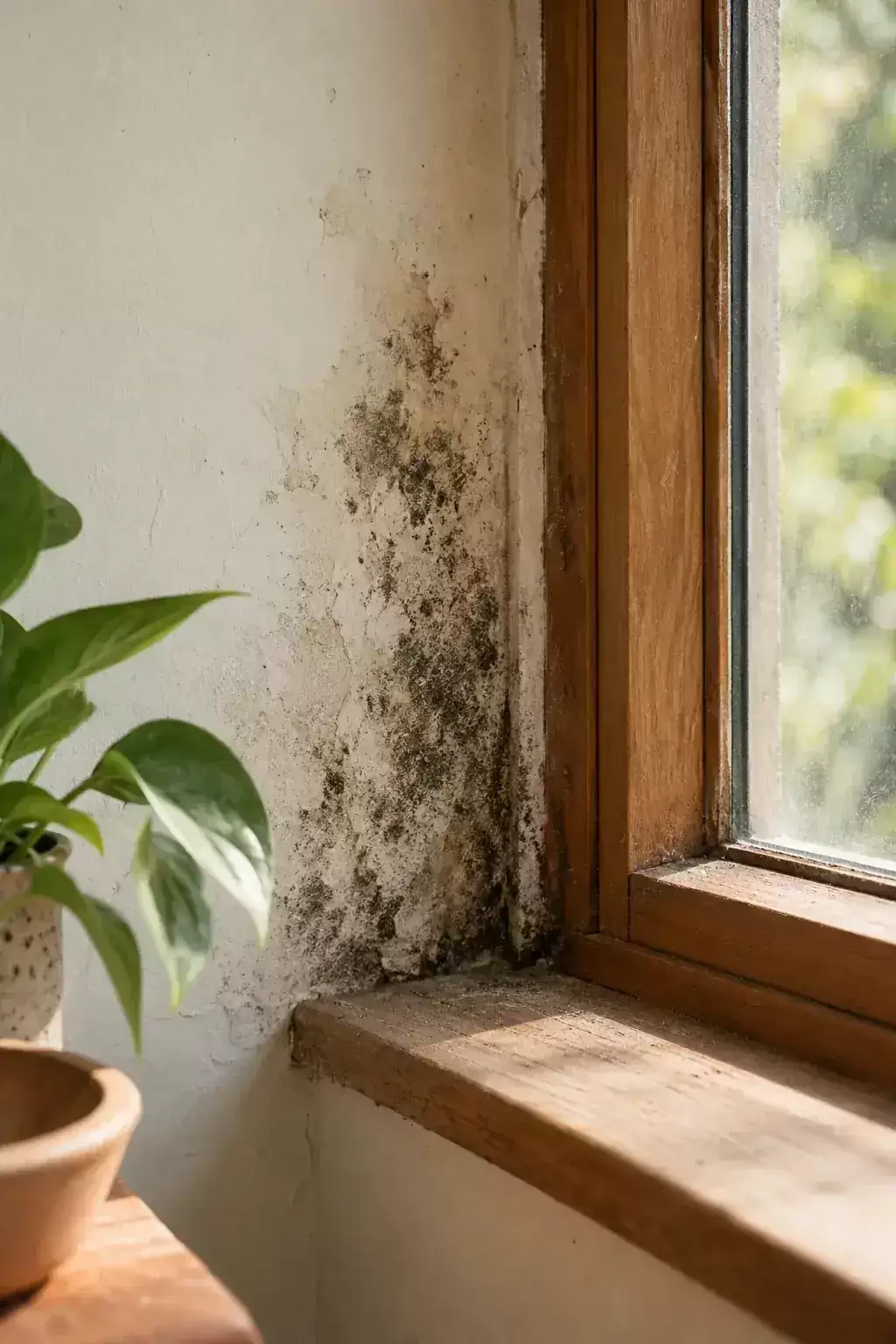
Bring a concise summary to a ventilation enquiry: room dimensions if known, normal use, existing extraction, observed moisture and constraints on opening windows. Include any repairs and the location of visible mould. Ask which parts of the system can be assessed and what work is proposed. If insulation, heating or building-envelope changes are suggested, ask how they relate to moisture and whether another professional is required.
Do not assume that making the home more airtight automatically solves dampness, or that every draught is beneficial ventilation. Building changes can alter how air and moisture move. Use appropriately qualified advice for permanent modifications. Your household observations can help explain the problem, but they cannot replace design or installation assessment. Keep recommendations written down so later works do not conflict with an earlier ventilation plan.
Review results under normal use
After maintenance or improvements, compare the same locations and routines. Record whether water accumulation decreases and whether surfaces dry more readily. Check that fans remain usable and filters are maintained as instructed. If mould persists or returns, organise reassessment rather than treating the ventilation work as proof that the remaining marks are harmless. The mould inspection page provides a starting point for an accessible assessment enquiry.
Call 03 8652 1296 for visible mould on accessible walls, ceilings or floors, and explain the ventilation work already completed. A practical household plan combines suitable extraction, manageable habits, necessary repairs and an appropriate removal scope. It should help you understand and maintain the affected room without promising that one fan, open window or device can prevent every future moisture problem.