
THE JOURNAL · RECURRING MOULD
How to Investigate Mould That Keeps Returning After Cleaning
When mould returns to the same place, it is tempting to change products and repeat the job with more effort. Sometimes the more useful response is to stop, record the history and reassess the moisture and material condition. Recurrence does not identify one particular cause. It tells you that the previous response has not resolved the situation you are observing. This guide helps turn that frustrating cycle into a practical investigation.
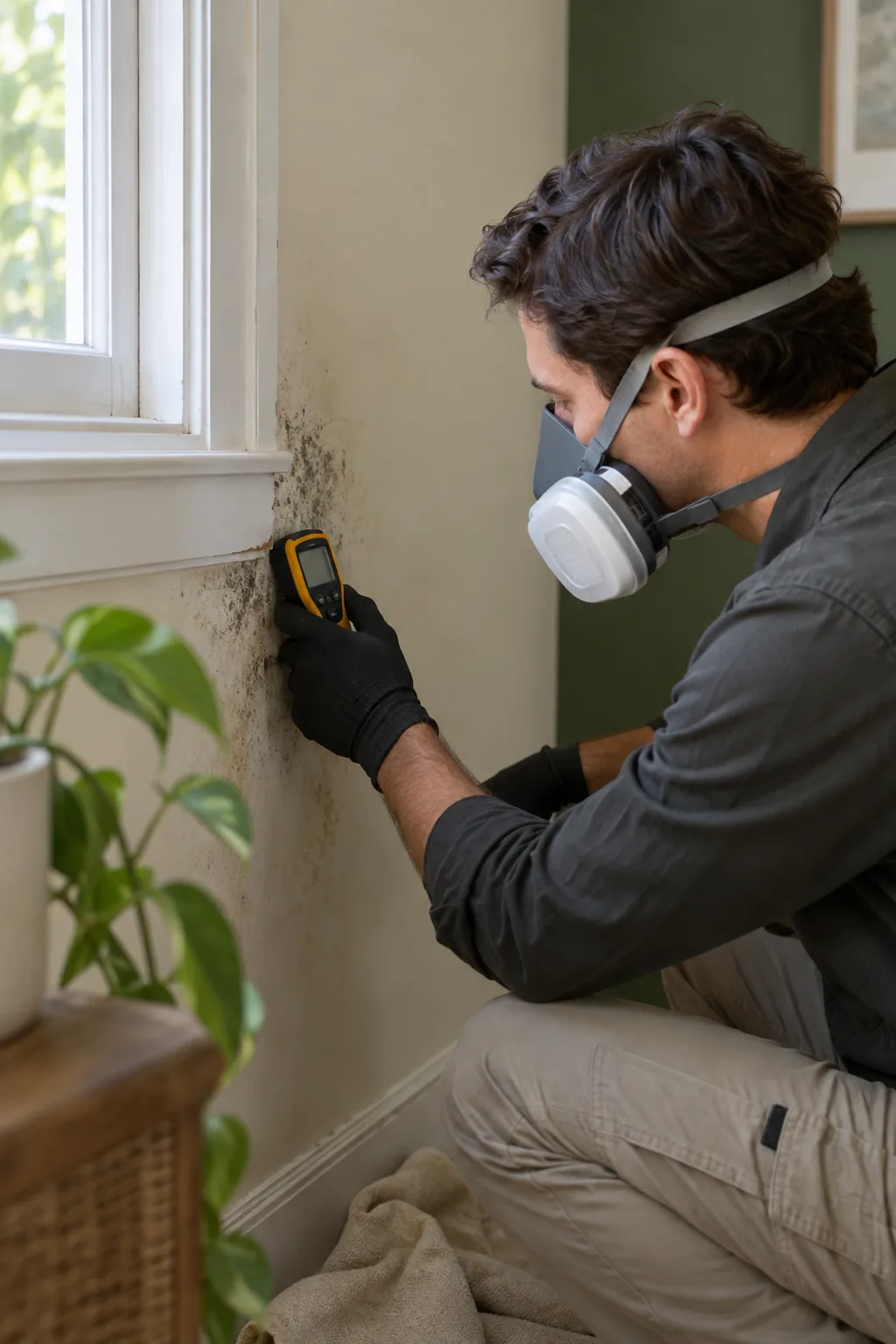
Do not disturb extensive growth or damaged finishes while collecting information. Keep people with relevant health vulnerabilities away from clean-up and seek medical advice for health concerns. If there is an active leak, unsafe electrical fitting or unstable ceiling, arrange the appropriate safety or repair response first. A recurring patch should be assessed in its building context, rather than treated as an isolated stain that only needs a stronger chemical.
Reconstruct what happened last time
Write down where the original patch appeared and approximately when. Record the material, the area cleaned, the product or method used and whether repainting followed. Add any plumbing, roof or ventilation work done around the same time. If a contractor attended, locate the scope or invoice. “The room was treated” can mean several different things, and you need to know which surfaces and tasks were actually included.
Find photographs from before and after the work. Compare the current patch with the original location instead of relying on memory. Is growth appearing in the same corner, at the edge of the cleaned area or on a different material? Did paint remain intact or begin peeling? A wider photograph helps show whether a new piece of furniture, a curtain or a changed room layout now blocks access to the affected surface.
Do not assume that an improved appearance meant the material and its moisture source were resolved. Cleaning, drying, repair and coating are separate actions. A record can show that visible growth was removed but a leaking joint was still awaiting repair. It can also show that a repair occurred while a damaged surface was left in place. The point is to identify what remains uncertain, not to allocate blame from incomplete information.
Describe the new growth as a new observation
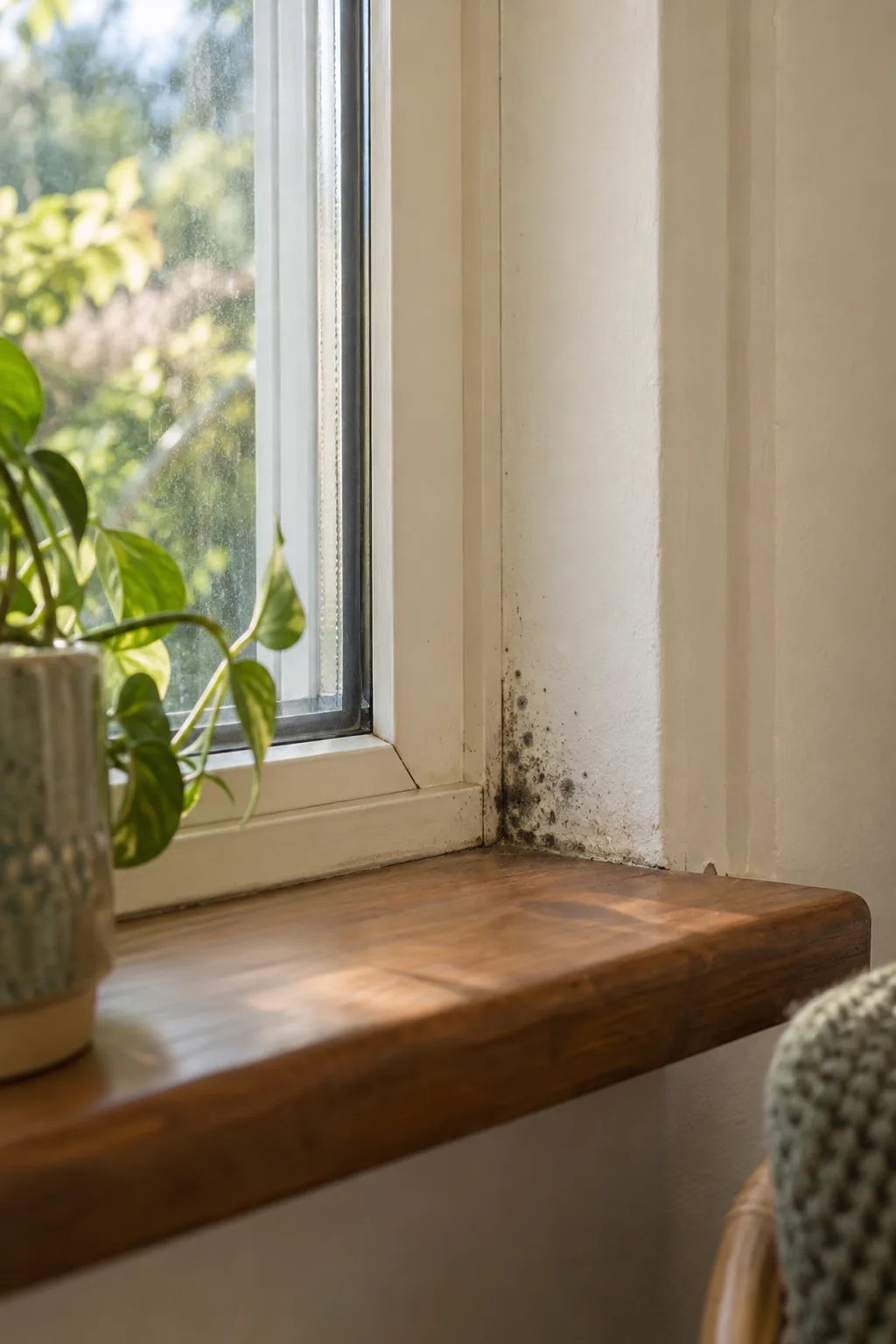
Take fresh photographs and record when the marks were first noticed again. Estimate the accessible area without touching it. Note the finish, staining, condensation and any smell noticed on ordinary entry. Avoid scraping a surface to compare it with last time. Do not call the recurrence a particular mould species based on colour or an image found online. Appearance is useful for documenting location, but it cannot establish a laboratory identity.
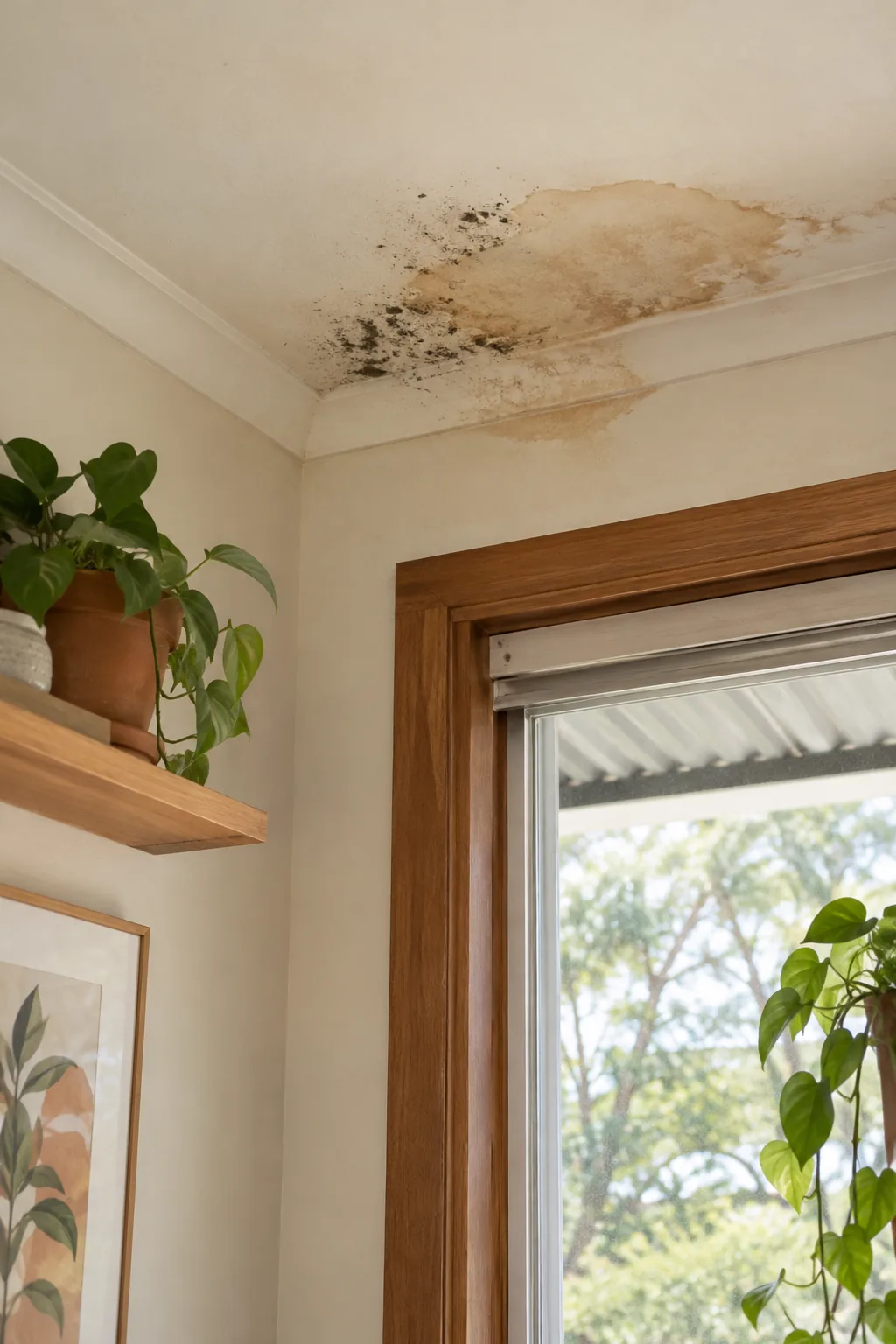
Look at the boundary of the affected area. Marks behind a wardrobe may now be visible at its edge because the room arrangement changed, rather than because the problem suddenly appeared everywhere. A ceiling patch can be accompanied by a water stain that was not recorded previously. Mention those differences. A reassessment needs to understand the current condition, not simply confirm the wording of an old diagnosis.
Explain any access limits. If you cannot safely see behind a built-in unit, say so. Do not remove it to complete your own investigation. Similarly, avoid lifting carpet, opening wall cavities or entering a roof space. The mould inspection service can discuss the visible assessment and when separate building investigation is required. A concealed area should remain an explicit limitation until it is assessed appropriately.
Look for timing rather than jumping to a cause
Notice whether the patch changes after rain, a run of cold mornings, frequent showering or indoor clothes drying. Keep a short log with dates, room activity and visible condition. These associations are clues, not proof. A mark that becomes noticeable after rain might need a roof or window investigation, but you should not diagnose the route of water entry from the calendar alone.
Check what has changed since the previous work. Perhaps an exhaust fan stopped working, curtains were replaced with heavier ones or furniture was moved against the wall. Perhaps nothing in the household changed but a building defect has developed. Record both possibilities without deciding responsibility. A useful history allows the appropriate person to compare room conditions with material moisture and repair findings.
The YourHome condensation guidance provides background on moisture meeting cold building surfaces. Use that explanation cautiously: it may help frame questions about ventilation and surface temperature, but it does not establish that your particular patch is caused by condensation. Keep leak history and visible deterioration in the same enquiry so one plausible explanation does not exclude another prematurely.
Assess the condition of the finish
Check whether paint is intact, chalky, blistering or separating. Note whether timber is swollen, sealant has pulled away or plaster looks damaged. Do this visually from a safe position. Do not press into soft material or sand a finish to find what is underneath. A surface that no longer supports ordinary cleaning may need repair or replacement advice instead of another treatment application.
Consider whether previous cleaning could have affected the appearance. Abrasive scrubbing, incompatible products and repeated soaking can damage some finishes. This does not establish why mould returned, but it matters when planning further work. Share what products were used, including any painting preparation. Never mix cleaners or combine leftover products to create a stronger treatment. Product compatibility and precautions still matter when a job has become frustrating.
For absorbent or seriously deteriorated materials, obtain advice about what can be retained. The US EPA home clean-up guidance notes that mould-affected porous materials may be difficult to clean adequately. Do not translate that into automatically discarding every nearby item. Material type, condition and the work scope need assessment, and valuable belongings may need a specialist rather than a general wall-cleaning method.
Ask for a defined reassessment
Prepare a short brief containing the original photographs, work history, current photographs and any moisture log. Ask which accessible surfaces can be assessed and which require another trade. Explain if the original leak repair has not been confirmed. Ask how the material condition affects the removal decision. These questions move the enquiry beyond “which chemical kills mould best?” towards what can actually be addressed in the property.
Ask the proposed contractor to separate removal from repairs. Does the scope cover visible growth only, or preparation and filtration as well? Are electrical, plumbing, ventilation, plaster repair or painting tasks excluded? Our mould remediation information explains the role of different stages. Confirm who will arrange anything outside the agreed work so a recommendation does not sit unattended after the visible patch has been cleaned.
If a previous contractor is involved, provide the new observations and ask how they relate to the original scope. Do not assume a warranty exists unless it was actually provided, and do not describe recurrence as a breach based on a general promise you remember. A factual comparison of the work and the new condition is more productive. Keep written responses with the records so everyone is working from the same history.
Agree on the order of work
The appropriate sequence depends on the findings. An active leak or unsafe finish can need attention before removal. Other situations may allow visible removal while a separate ventilation improvement is being arranged. Ask the professionals involved to explain the order and any restrictions on room use. Avoid booking repainting solely to meet a date when drying or necessary repair remains unresolved.
Make responsibilities explicit. In a rented home, notify the property contact and confirm authority for repairs. In an apartment, determine whether common property access is involved. For household belongings, establish whether a separate specialist is needed. Record who is doing each task, rather than expecting one mould contractor to cover every part of the property. Coordination is often what breaks the cycle of repeated cosmetic work.
Monitor the result under ordinary conditions
After the agreed work, photograph the same areas and note which moisture or repair recommendations were completed. Keep the previously affected surface accessible for periodic checks. Compare conditions during the weather or room use that previously coincided with recurrence. A clear wall immediately after treatment is a starting point for monitoring, not a promise that every future moisture event has been prevented.
If new marks appear, report them promptly with the dates and photographs. Read how to keep a useful moisture log for an uncomplicated record. Call 03 8652 1296 to discuss a defined assessment or removal scope. Explain the previous work and what remains unresolved. Recurring mould deserves a better question and a clearer plan, rather than an endless escalation in cleaning strength.