
BROOKFIELD · MELBOURNE
Mould Removal Brookfield
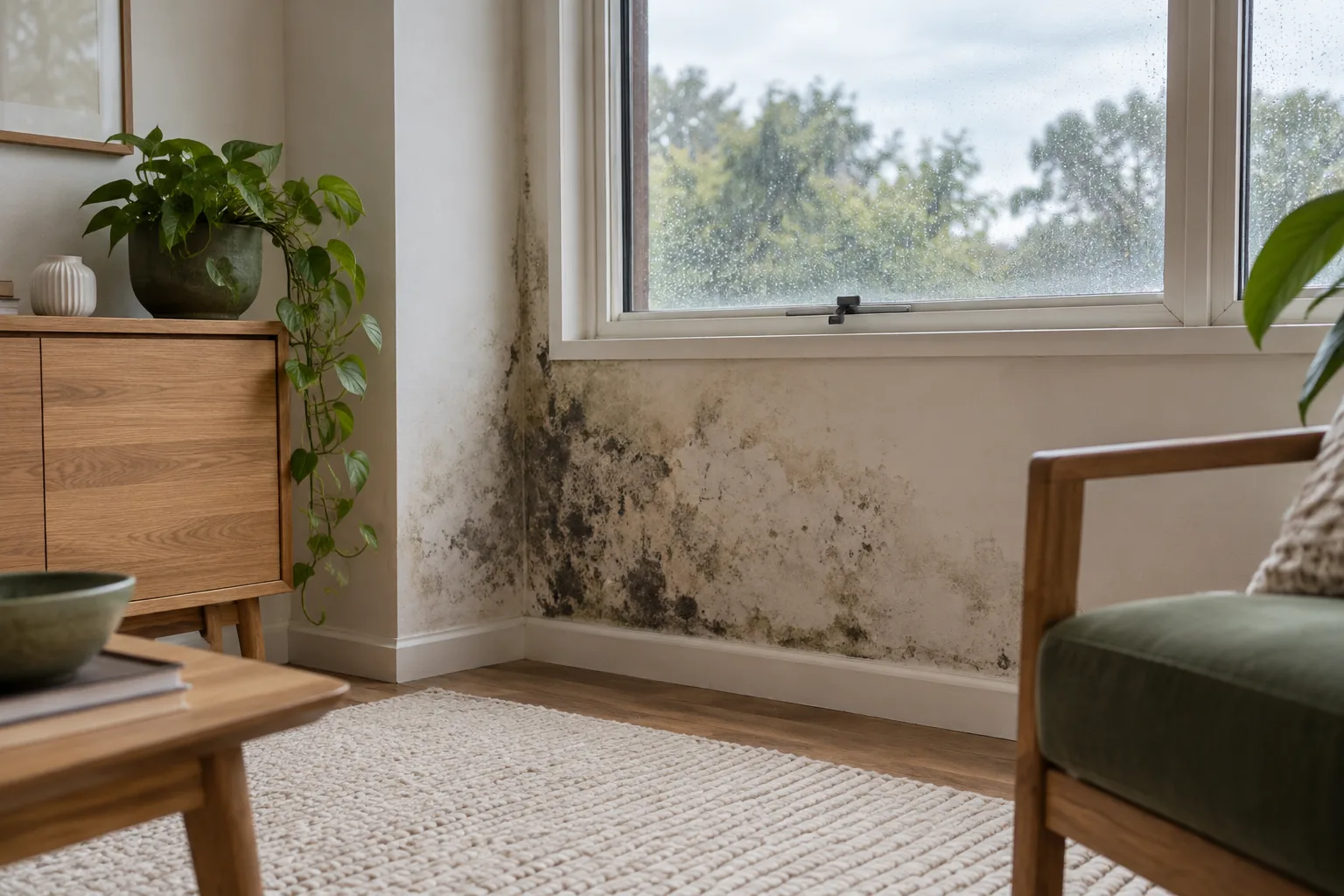
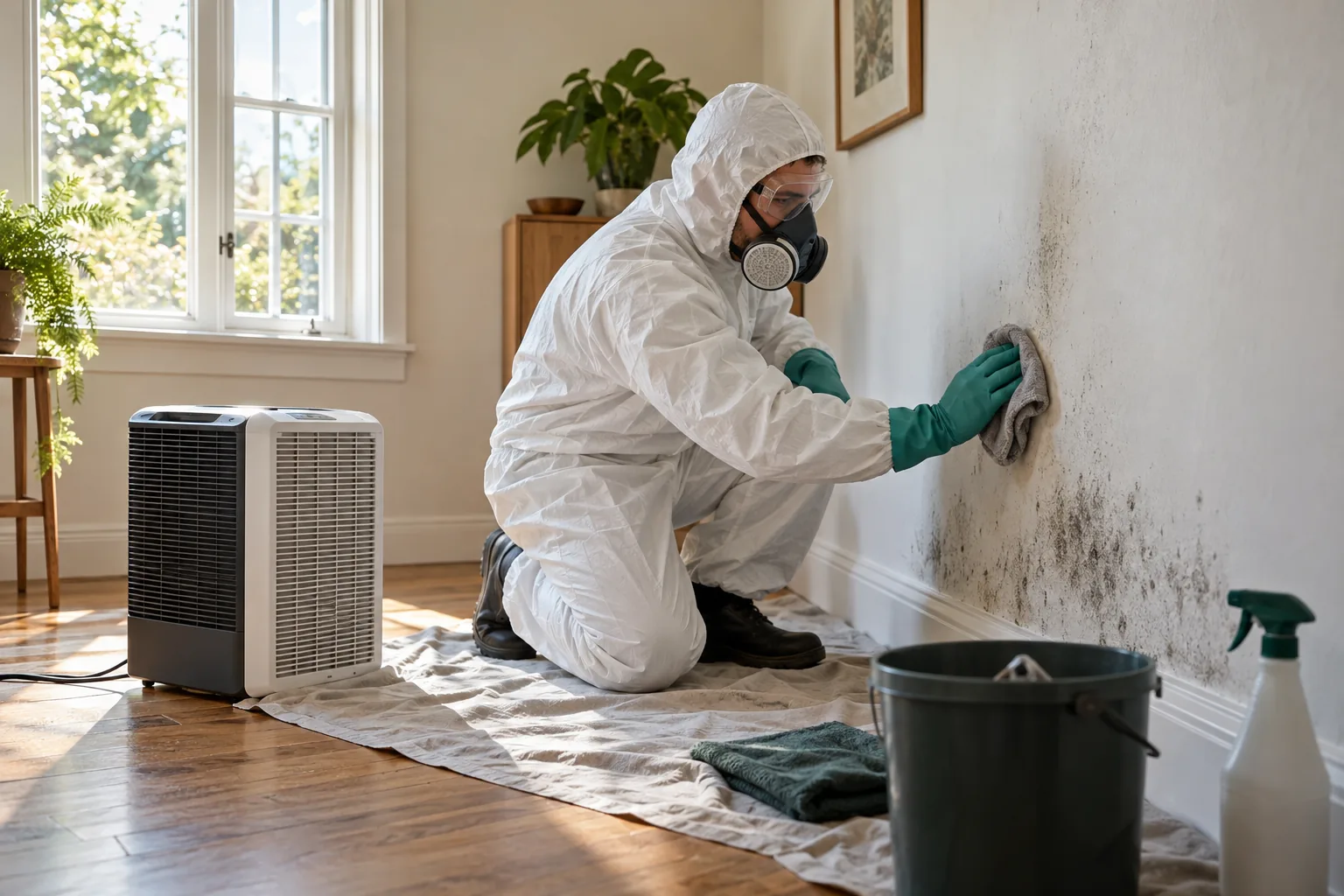
A utility room can combine hard flooring, cleaning equipment and storage beside a wall that has become marked. For Brookfield, describe the visible finish, any damp items and the room’s access without assuming that everything stored there is part of the clean. We can consider accessible walls, ceilings or floors and check the address, while plumbing faults, damaged cabinetry and contents require separate decisions.
Hard surfaces identified
Stored items distinguished
Wet-event questions considered
Utility rooms · Floors · Walls
THE HOME, IN CONTEXT
Give the Brookfield home address
Melton City Council includes Brookfield in its official suburb list and offers an address-based boundary check. Specify the street and the utility-room entrance when enquiring, particularly if the room opens through a side passage or garage.
A wall beside cleaning equipment
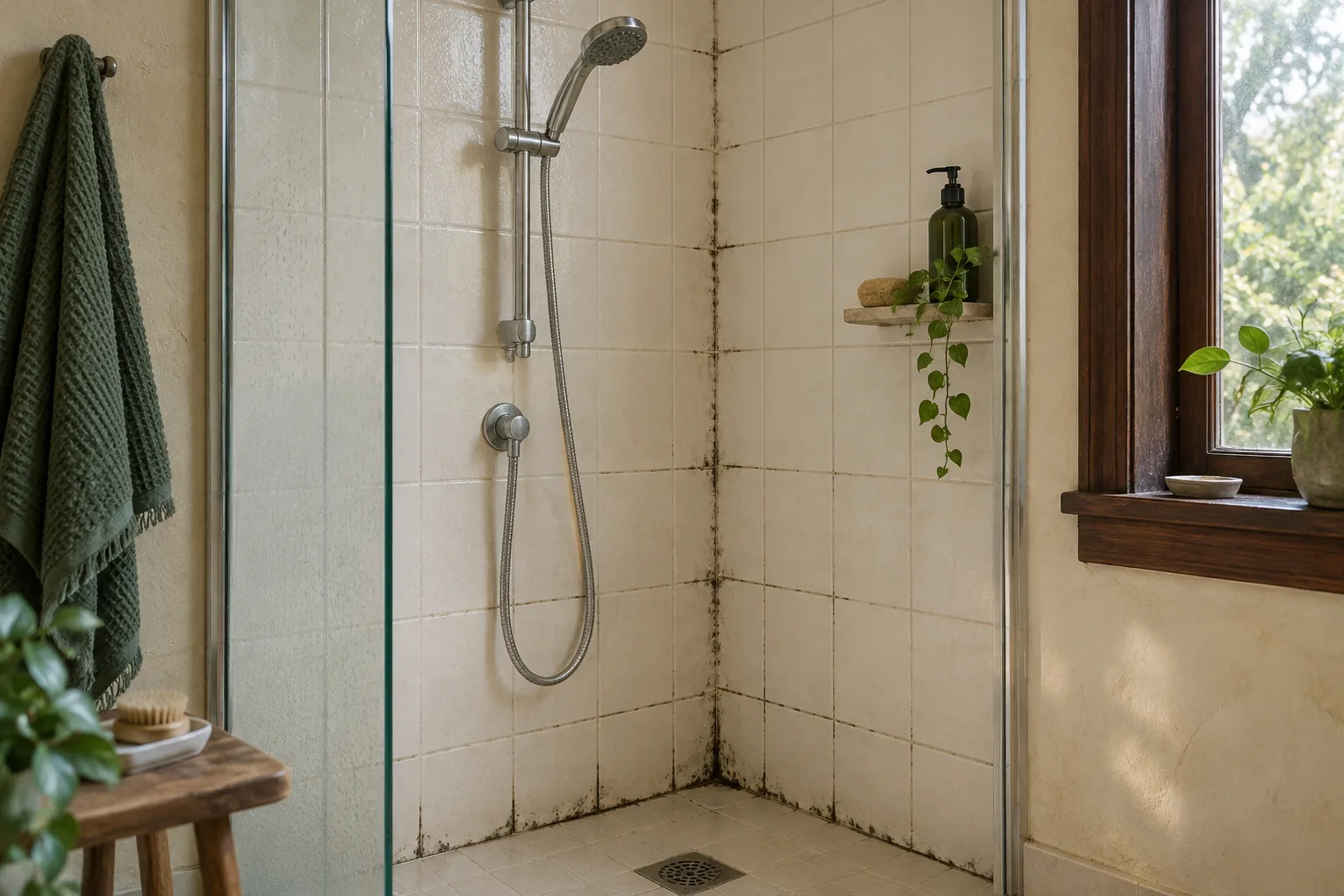
If growth sits behind a mop bucket or stored containers, show what is accessible and describe any observed dampness. Wet equipment is relevant to the room’s use but does not establish the cause of every patch. Avoid labelling the entire room before its materials are considered.
Keep storage preparation manageable
The household should decide where cleaning products and loose possessions will be placed. Do not mix products or leave containers in the route to the affected wall. Surface work should begin with a defined boundary rather than an expectation that technicians will sort unfamiliar household substances.
INSPECTION & MOISTURE
Look at floor, wall and storage together
A wider photo can show the hard floor junction and the arrangement of shelves. Inspection advice helps where the wall remains damp, growth recurs or a damaged material makes ordinary cleaning uncertain.
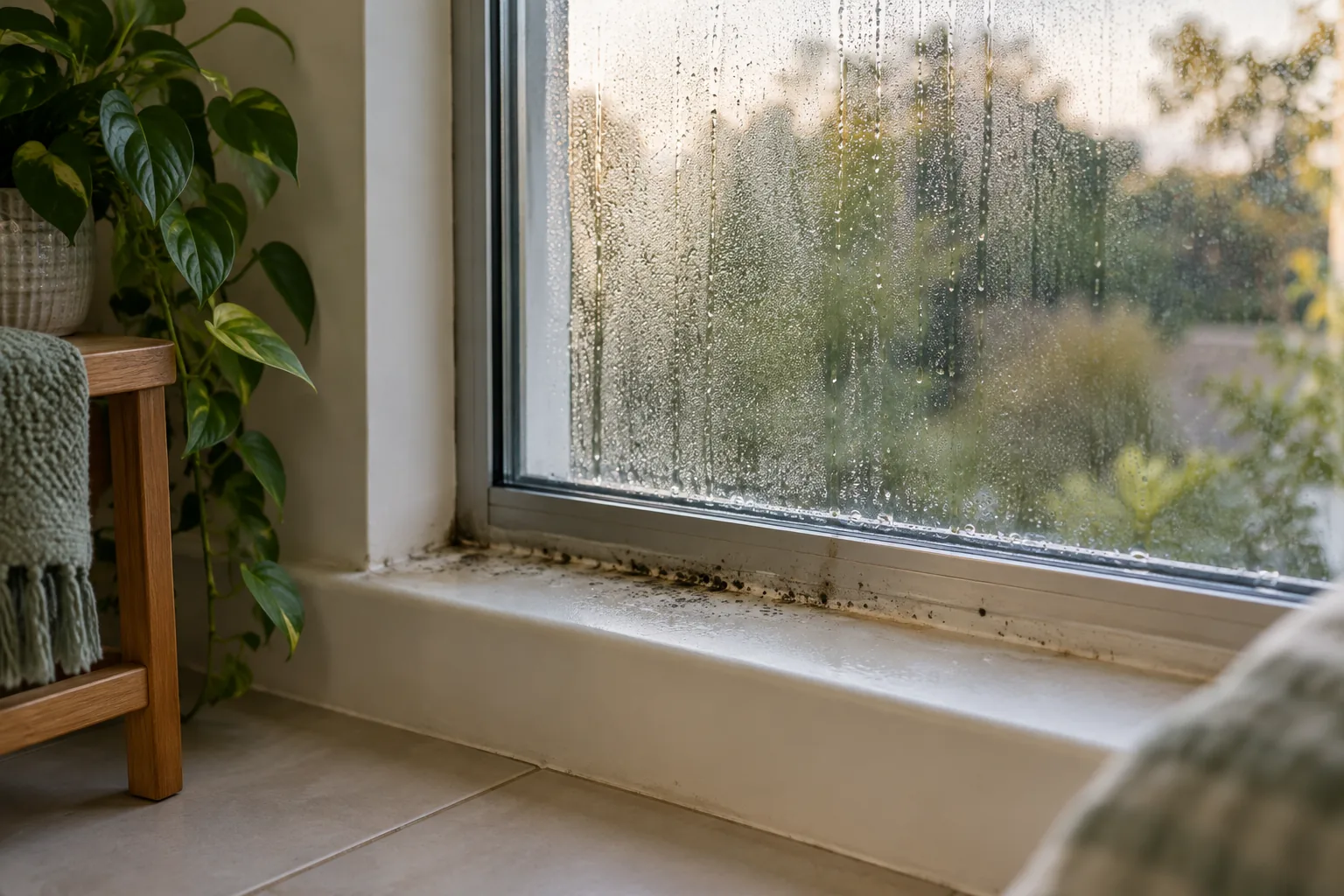
Describe low-level damage
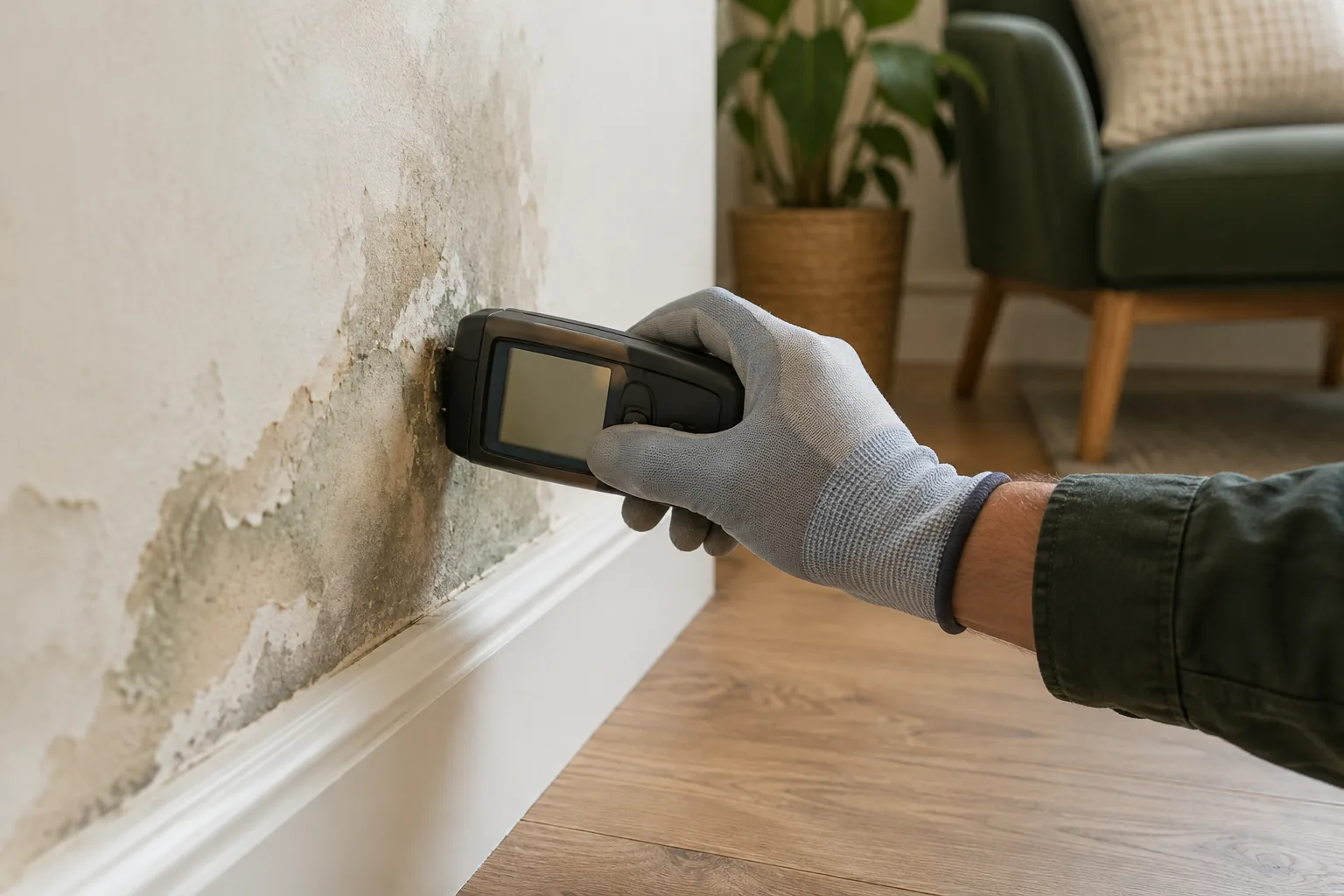
Mention swollen skirting, lifted floor edges or softened board. A hard floor may be suitable for discussion while an adjacent damaged trim needs repair. Do not pull materials apart to test them before the scope is understood.
Explain known wet incidents
Give the date of a spill, plumbing escape or repair if known. State what was observed rather than assigning a source from the patch location. If wetness continues, raise that first so the appropriate repair question remains separate from cleaning. If storage labels or container contents are unclear, leave their handling with the household. A surface enquiry can identify those obstructions without deciding how unfamiliar products should be moved or used.
A CONNECTED PROCESS
A utility-room enquiry in stages
Define surfaces and obstructions
Identify walls, ceiling and hard floor materials with visible concerns. Describe fixed shelves and the areas concealed behind them before selecting a boundary.
Clear loose storage safely
Agree household preparation and keep containers organised outside the work area. Avoid creating an obstruction or mixing cleaning substances during clearance.
Review suitability and wetness
Consider intact finishes separately from deteriorated boards or trims. Continuing water entry or a fitting fault may need repair before surface work is appropriate.
Remove suitable growth
Appropriate physical removal, surface treatment and HEPA filtration may form the method. Remediation information helps explain preparation where storage and living-space access overlap.
Review practical follow-up
Discuss stain, finish damage and unresolved moisture. Ask about the applicable room-use instructions and decide how stored equipment will return without concealing the monitored wall.
WHERE MOULD APPEARS
Utility-room details with different limits
Wall behind buckets
Describe reachable paint and damp items separately. Cleaning stored equipment is not automatically part of wall removal.
Hard floor edges
Identify the actual finish and any lifted junction. A generic floor request can conceal important material differences.
Fixed shelf backing
Covered surfaces may remain inaccessible. Do not assume cleaning includes dismantling storage or inspecting concealed wall spaces.
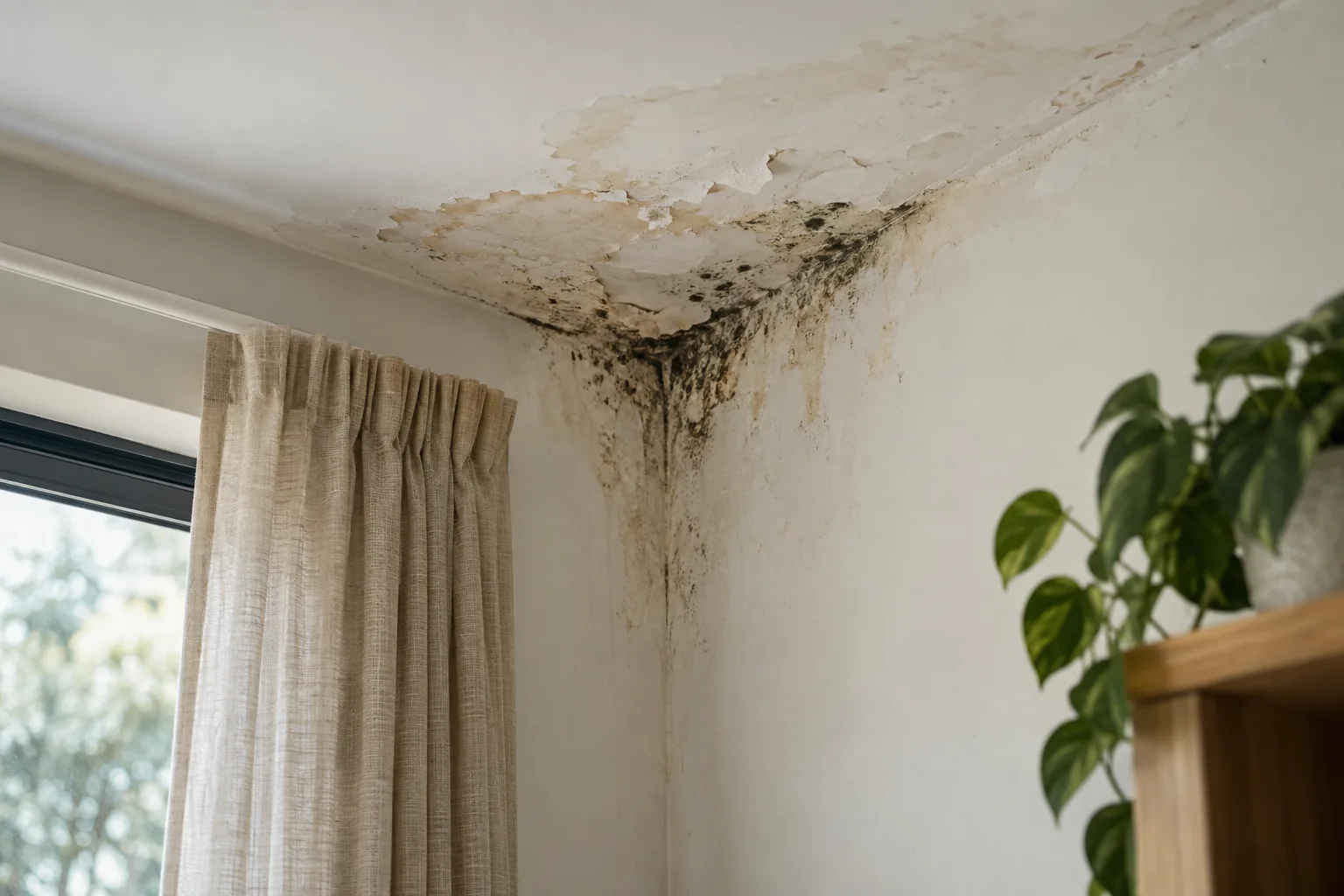
Ceiling over the utility area
Describe overhead growth separately from wet floor edges. Surface position locates the concern but cannot establish a shared moisture cause.
MAKE SPACE FOR DRYING
Store equipment without hiding dampness
After surface and source questions are addressed, allow wet cleaning equipment to dry in an appropriate place and keep the relevant wall observable. A practical check should not require moving every container each time. These habits support monitoring but do not guarantee that growth will never return.
Keep dates and photographs of wet incidents and repairs. If the floor or wall becomes damp again, take that sequence to the appropriate trade rather than relying on repeated cosmetic cleaning. Accessible surface removal can be discussed alongside plumbing, material and storage decisions.
BROOKFIELD & NEARBY
Brookfield and nearby address checks
Give the exact street address and room-entry details when discussing availability. These nearby pages provide surrounding suburb context: Melton, Kurunjang, Rockbank.
QUESTIONS WORTH ASKING
Before the visit.
Do you sort cleaning products before work?
Household storage preparation should be agreed in advance. Technicians should not be expected to sort or mix unfamiliar containers to reach the wall.
Are mop heads and buckets included?
Stored items are separate contents. The stated service concerns accessible walls, ceilings and floors, with other handling decisions clarified independently.
Can a hard floor be considered with the wall?
Identify its material and visible condition. Requested surfaces need a defined accessible scope rather than automatic inclusion of every room component.
What if the cabinet base is swollen?
Material deterioration may require repair or replacement. Surface removal does not restore a damaged board.
Does a wet bucket explain the whole patch?
It is useful room-use context but not a diagnosis. Describe other wet events and the wall condition before assigning a cause.
Should we remove fixed shelves?
Explain what they cover first. Dismantling is not automatically part of preparation and may need a separate arrangement or appropriate trade.
START WITH YOUR ROOM
Talk through the utility-room layout
Call 03 8652 1296 with the Brookfield address, floor finish and storage photographs. Mention ongoing wetness or damaged cabinet edges early so suitable accessible work and preparation can be considered.
Useful references: Melton City Council — suburb boundaries