
CHUM CREEK · MELBOURNE
Mould Removal Chum Creek
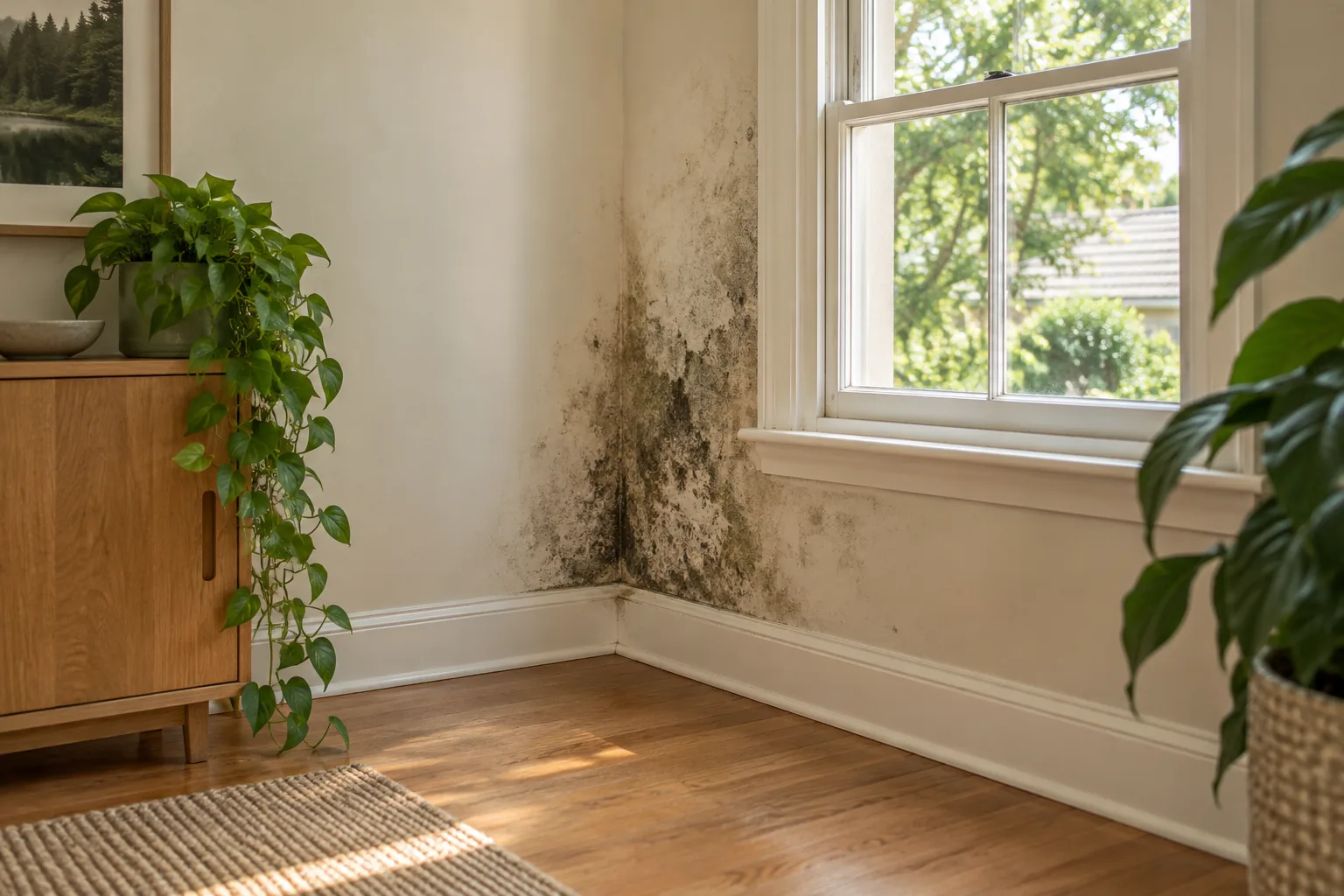
A musty room in Chum Creek may warrant assessment even when the visible patch is small. Explain where the smell is noticed, what can actually be seen and any known water history. We can discuss whether accessible inspection or removal is the appropriate first step, the practical preparation and appointment availability without promising that a surface clean identifies every concealed source.
Evidence-led assessment
Defined treatment boundaries
Clear hidden-access limits
Rooms · Corners
THE HOME, IN CONTEXT
Describe odour and visible marks separately
Chum Creek is included in Council’s Ryrie ward locality description. Provide the full property address and room position when enquiring; neither the locality nor an odour alone establishes the location or extent of hidden growth.
Keep observations separate
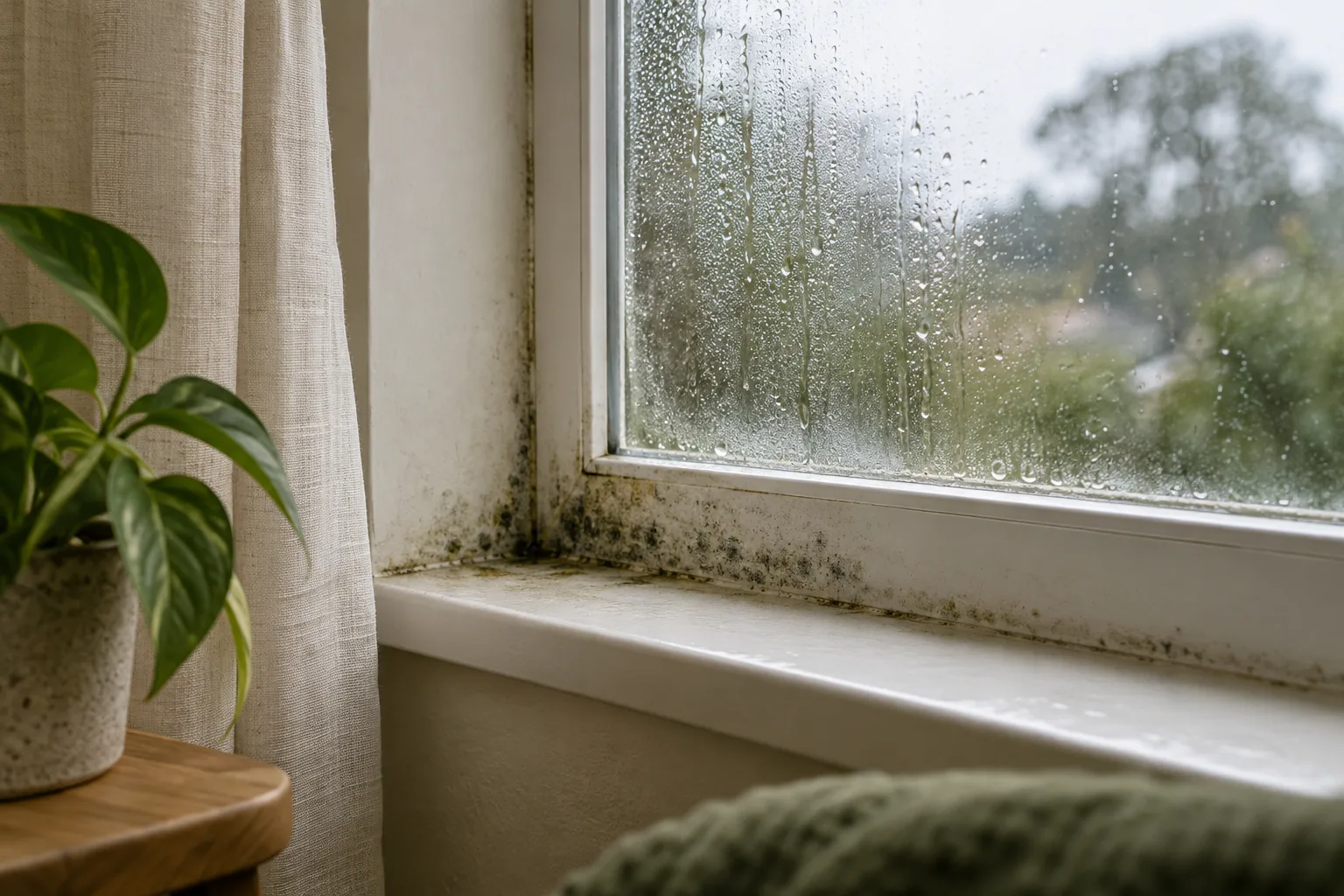
Describe visible growth, discoloration and smell independently. Identify where the odour seems strongest without assigning a concealed cause. Record what changed after airing, a repair or moving an accessible item, and say when those observations were made.
Show the available view
Provide wider room photographs and note fixed cupboards or wall linings that restrict access. A removal enquiry should not assume an unseen area is affected merely because its nearest accessible surface has a patch.
INSPECTION & MOISTURE
What does the visible evidence establish?
Where the concern is mainly odour, the first useful question is what evidence should be assessed before selecting a treatment scope.
Bring relevant water history
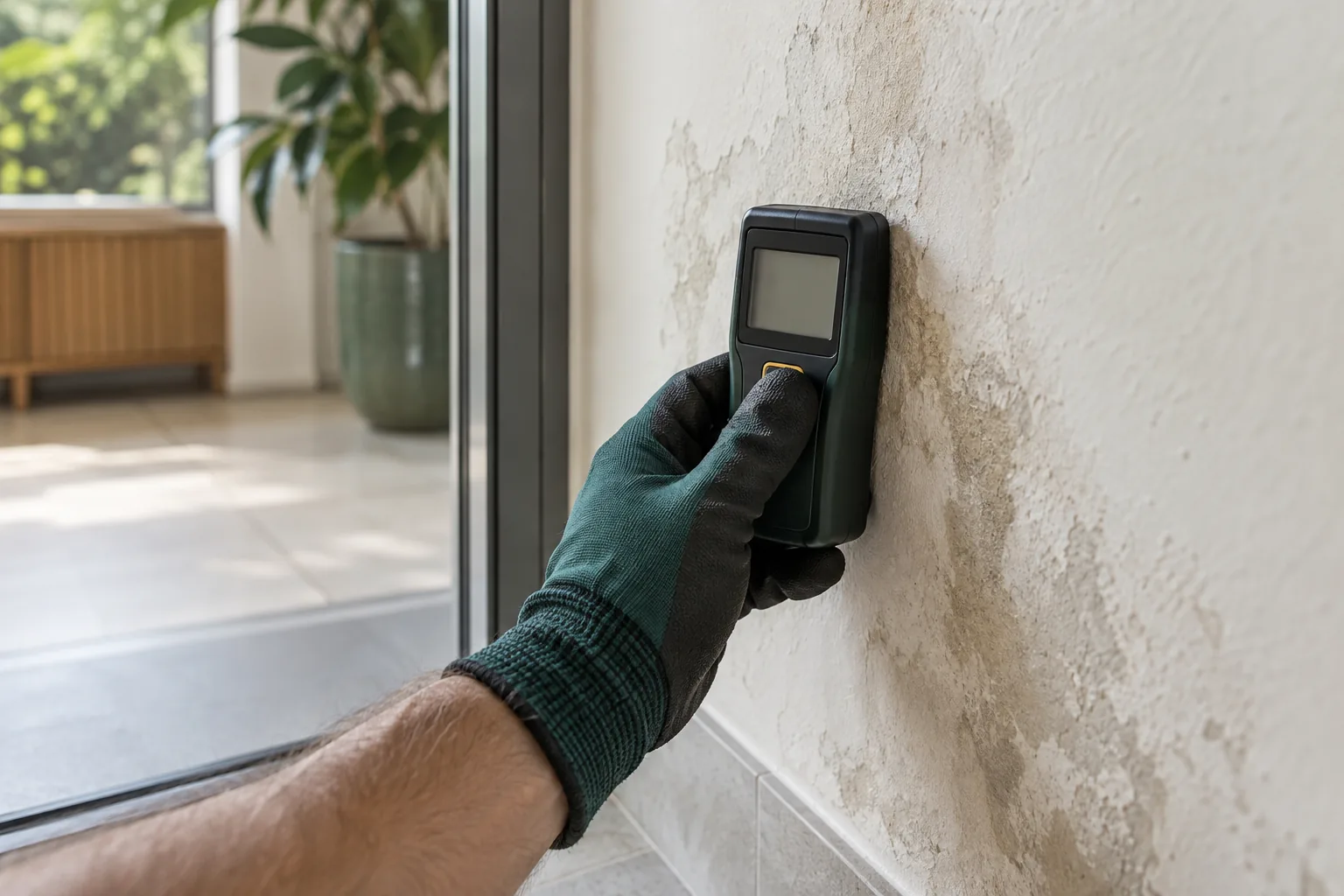
Mention leaks, wet materials and previous investigations, including what remained uncertain. Avoid deodorising being treated as a repair record. One past reading or a single treated patch cannot certify inaccessible room components or explain a continuing smell elsewhere.
Ask about a focused inspection
Discuss inspection before booking an undefined odour remedy. Ask which accessible observations can guide the next action and whether another building or plumbing investigation is appropriate. Do not dismantle cabinetry or open walls merely to create evidence for a preliminary surface enquiry.
A CONNECTED PROCESS
A work plan for the affected surfaces
Establish a supported surface scope
Identify accessible walls, ceilings and hard floors where relevant visible growth and material condition support treatment. Textiles are excluded. Odour alone should not turn every surface or stored item into an assumed affected area.
Arrange viewing access
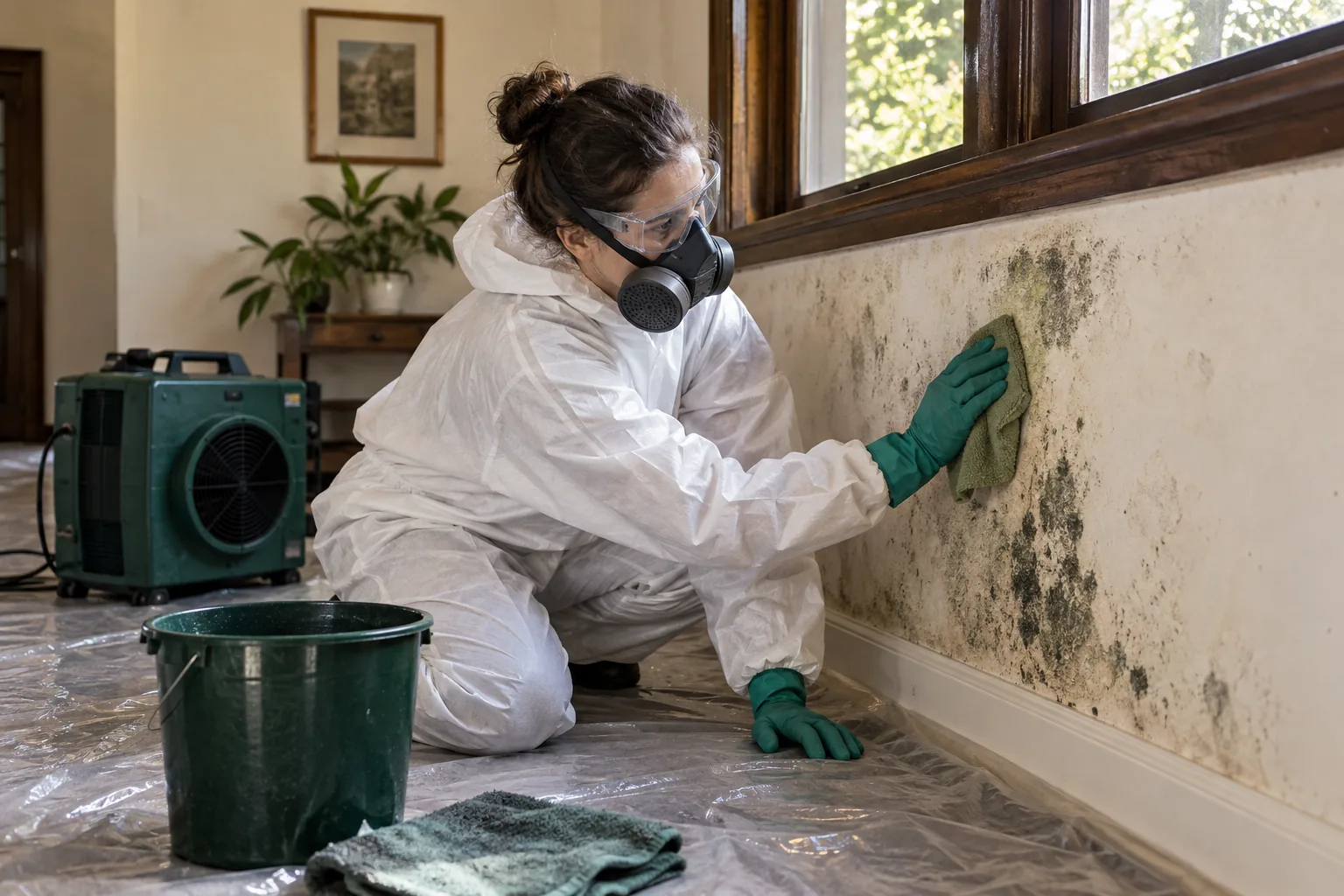
Discuss safe furniture preparation and which fixed elements remain limits. Suitable protective equipment and protection should match any agreed work. The visit should not depend on invasive access that was never authorised or appropriate for the enquiry.
Prepare only the defined work area
Organise HEPA filtration for the treatment task actually chosen. Keep concealed investigations and heavy or connected-item movement separate. Preparation should preserve useful observations rather than mask smell or alter the original patch before assessment.
Treat suitable visible growth
Physical removal and material-appropriate treatment address the agreed accessible surfaces. The remediation decision should recognise damage and uncertainty. Cleaning a small patch cannot guarantee an unrelated odour source will be located or every hidden component certified.
Review different outcomes honestly
Explain treated growth, remaining staining and continuing smell as separate outcomes. Keep unresolved moisture questions linked to the next investigation. A cleaner wall can be a useful result without proving the whole room’s source is resolved or preventing recurrence where damp conditions remain.
WHERE MOULD APPEARS
Give each surface its own description
Bathroom
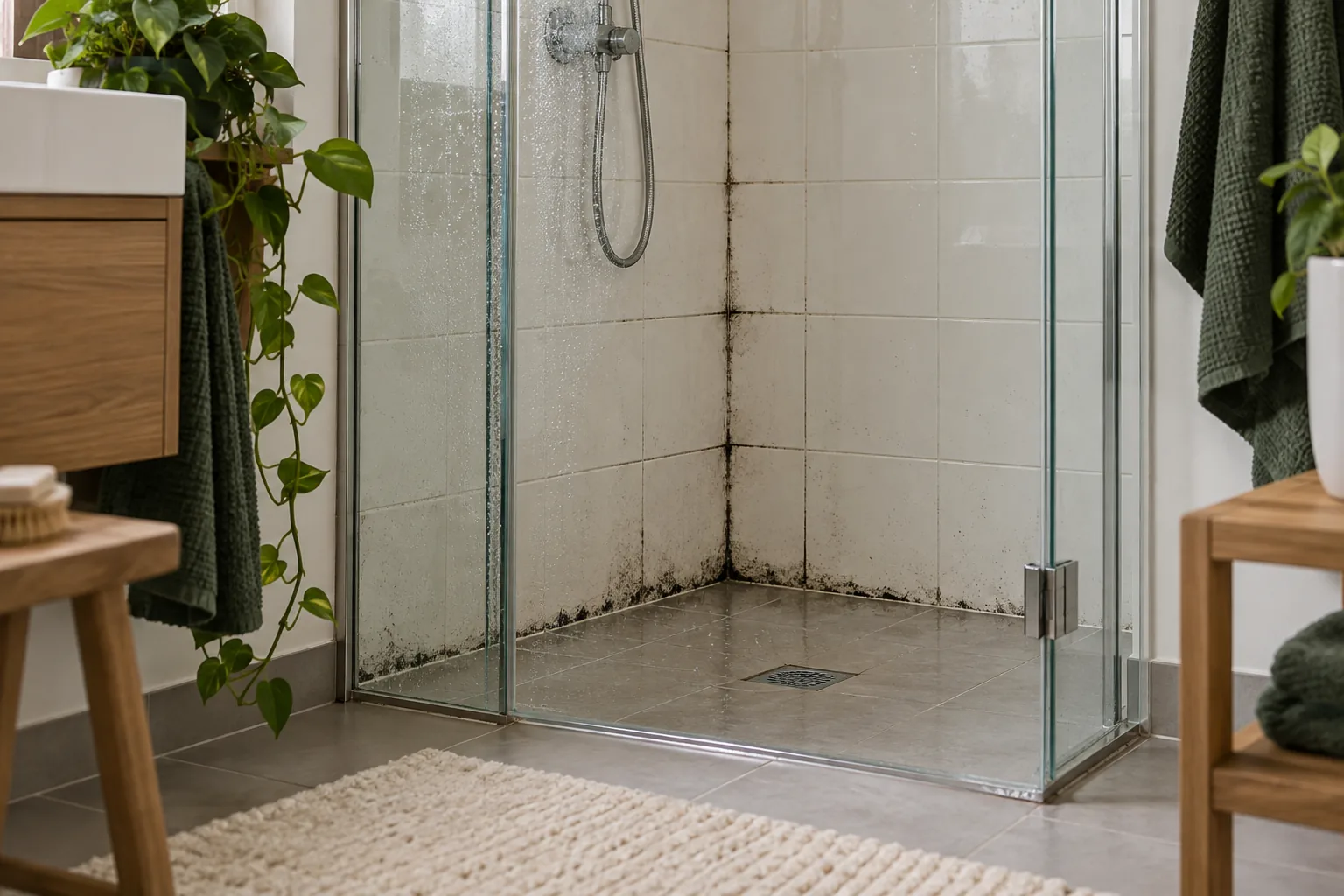
Describe actual visible joints, walls or ceiling patches. Do not label the entire wet area affected on the basis of smell alone.
Cupboard wall
Identify the visible panel and inaccessible backing. Stored fabrics need their own handling plan.
Ceiling
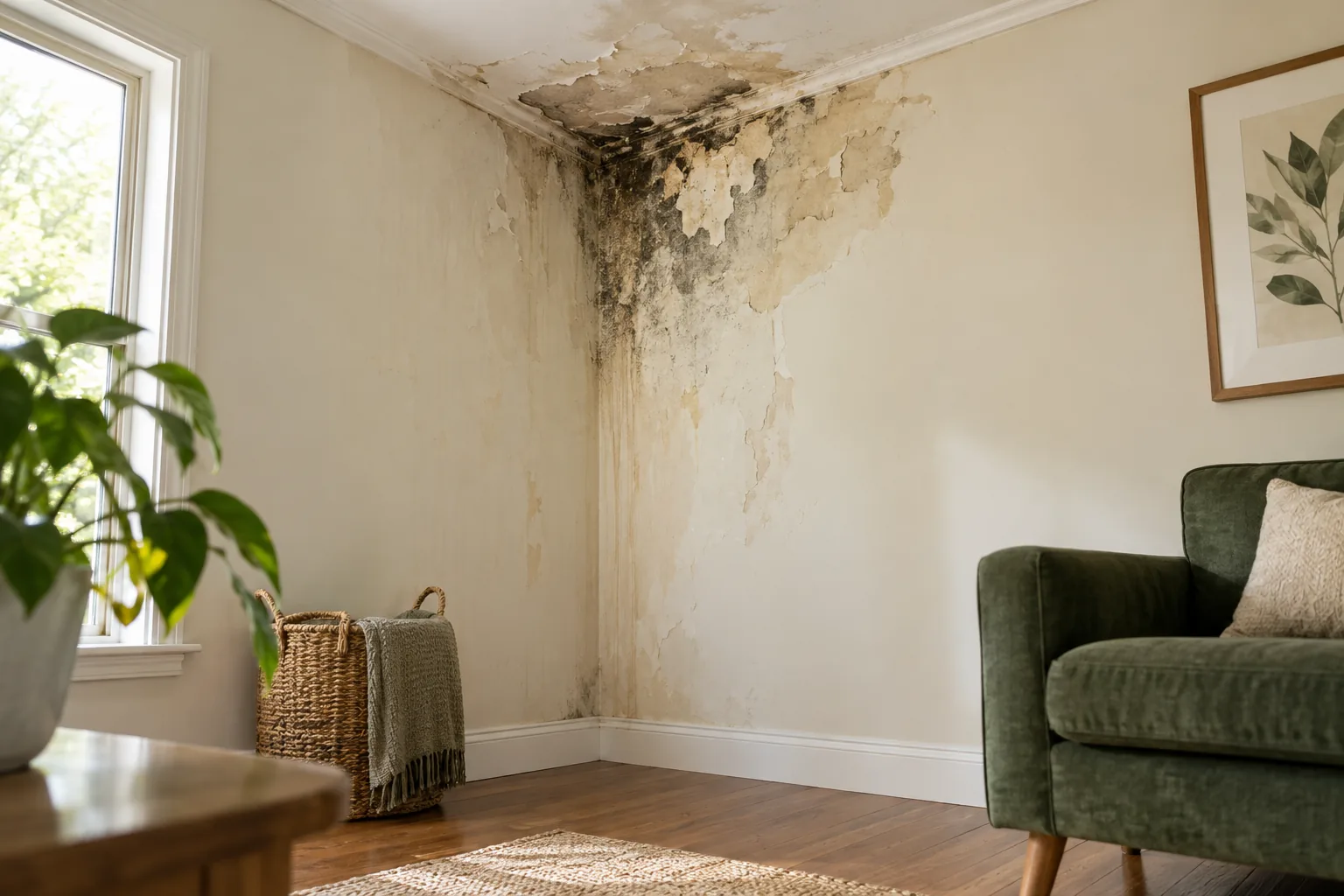
Record visible changes and repair history, including uncertainty. A ceiling face cannot reveal every condition above it.
Hard floor
Name the material and any water exposure. Textile coverings and concealed layers require distinct assessment or handling.
MAKE SPACE FOR DRYING
Keep the source and the surface in view
Once the source is identified and appropriate work is completed, monitor visible patches and smell separately. Keep the original observations so a continuing concern can be described accurately rather than judged only by the room’s improved appearance.
Maintain relevant ventilation and arrange repairs where identified. Masking an odour does not establish moisture control. Persistent or returning concerns deserve the appropriate investigation, while recognising that accessible surface treatment cannot answer every concealed-building question. When describing odour, state when it is noticeable, which room is open and whether visible growth is present at that time. Avoid covering it with fragrance before discussion. A clear account supports investigation while keeping the limits of an accessible surface service explicit.
CHUM CREEK & NEARBY
Nearby location guides
For a different surrounding address, these guides help frame its own visible evidence and inspection question: Dixons Creek, Healesville, Tarrawarra.
QUESTIONS WORTH ASKING
Before the visit.
Does smell prove mould is behind the wall?
No. It may justify investigation, but odour does not establish the hidden location or extent.
Should I book removal when no growth can be seen?
Discuss assessment first so the evidence and appropriate next step can be considered.
Will deodorising resolve a moisture source?
It does not investigate or repair the source and should not substitute for appropriate assessment.
Can one reading certify all room materials?
No. Readings need context and cannot establish every inaccessible component’s condition.
Should cupboard panels be removed before enquiry?
Do not dismantle fixed components merely for the enquiry; any invasive access needs separate agreement.
What confirms Chum Creek availability?
Call with the address, room observations and water history to discuss a suitable assessment or treatment appointment.
START WITH YOUR ROOM
Talk through the room in Chum Creek
Call 03 8652 1296 with the address, room layout and what can actually be seen or smelled. We can discuss a defined assessment, suitable treatment where supported and appointment availability.
Useful references: Yarra Ranges — council locality information