
TARRAWARRA · MELBOURNE
Mould Removal Tarrawarra
If mould appears across different wall finishes in Tarrawarra, identify the materials before assuming one method will suit them all. Painted plaster, timber trim and a cupboard panel can have different condition and access limits. We can discuss visible assessment, appropriate removal and preparation, then confirm availability for the address while separating finish restoration and source repairs from the treatment result.
Finish-specific assessment
Reachable surfaces defined
Honest appearance expectations
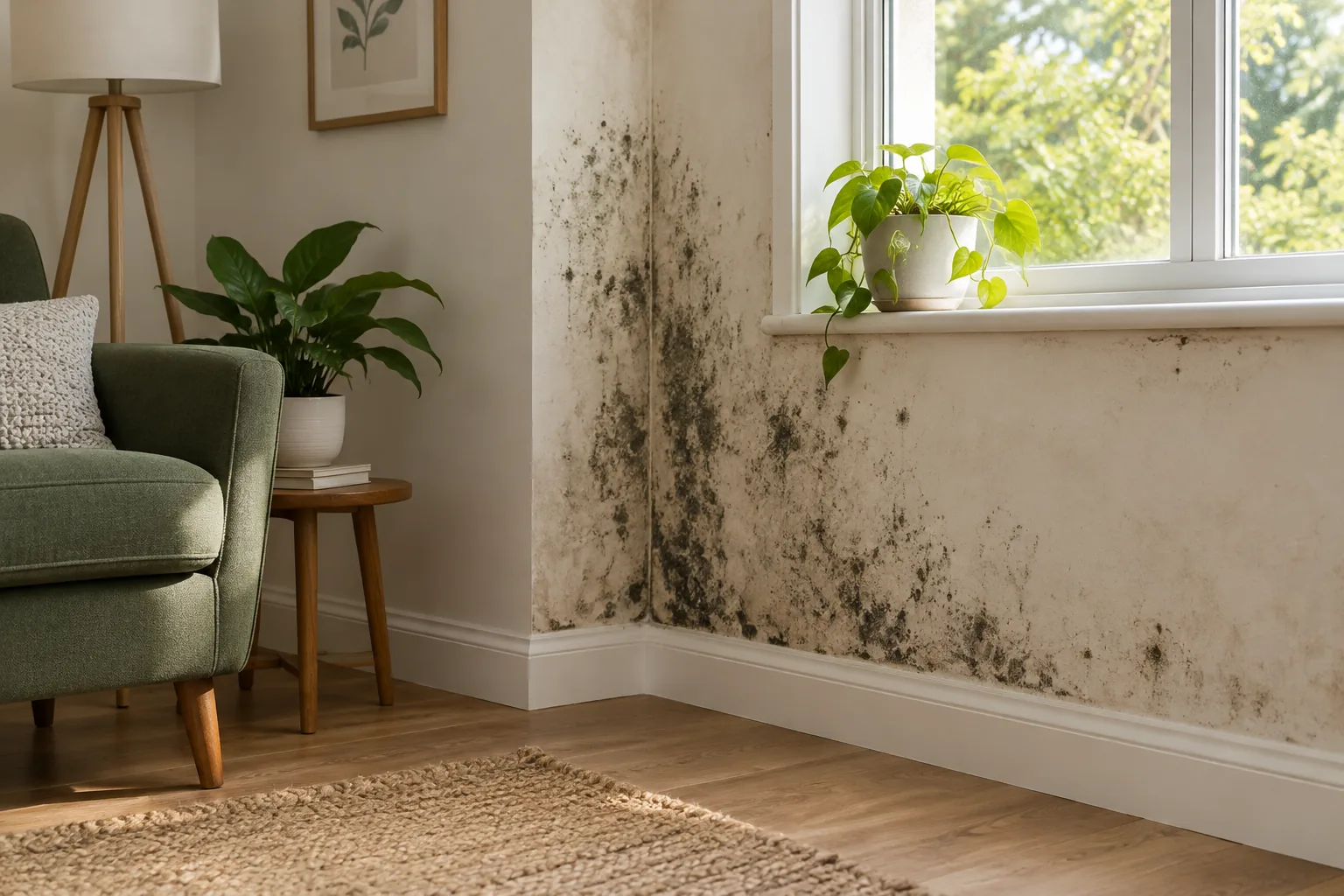
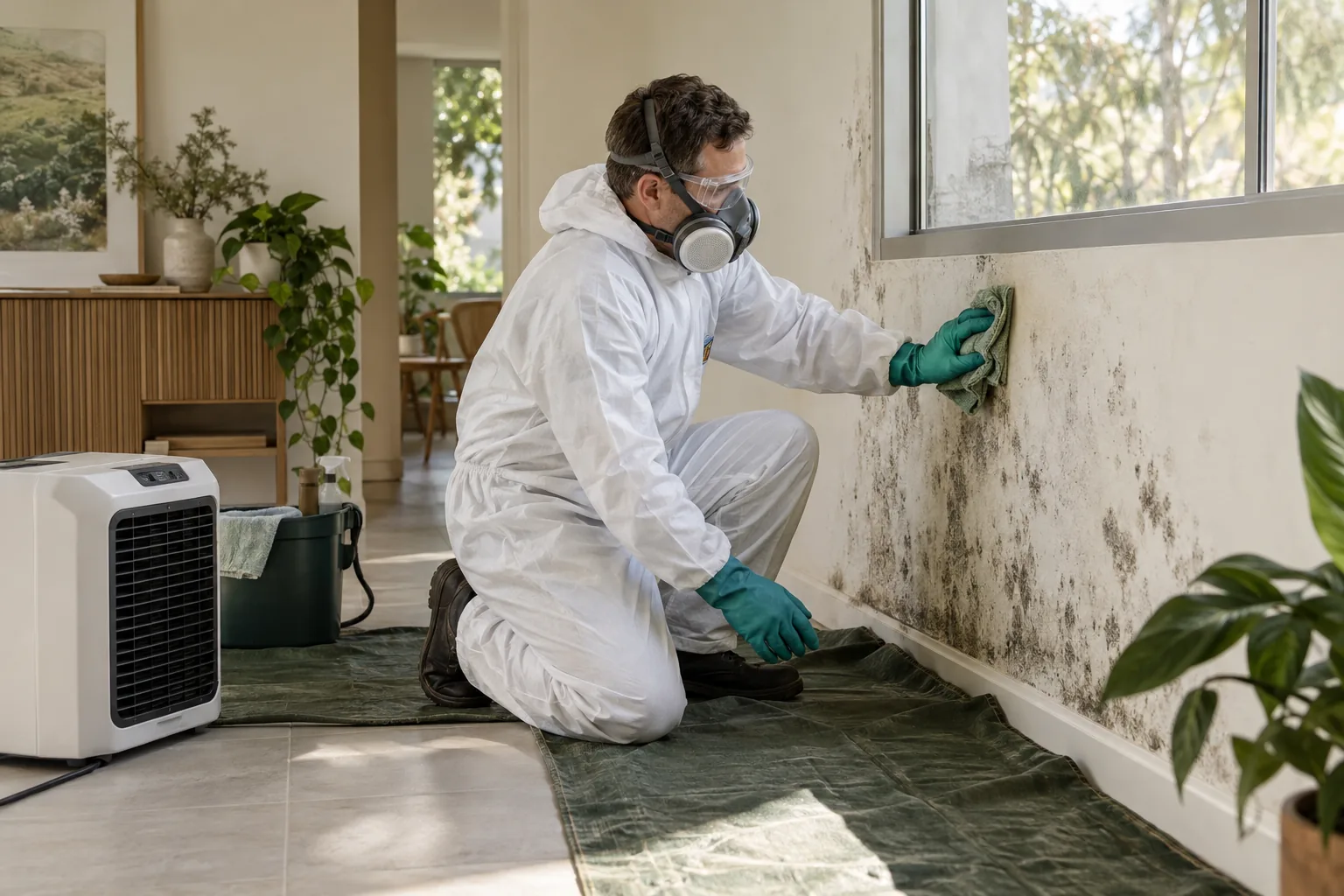
Paint · Panels
THE HOME, IN CONTEXT
Different finishes need different decisions
Yarra Ranges Council includes Tarrawarra in Ryrie ward. Give your precise property address and the room concerned, then describe the actual finishes; the locality information does not establish the age, construction or moisture state of that building.
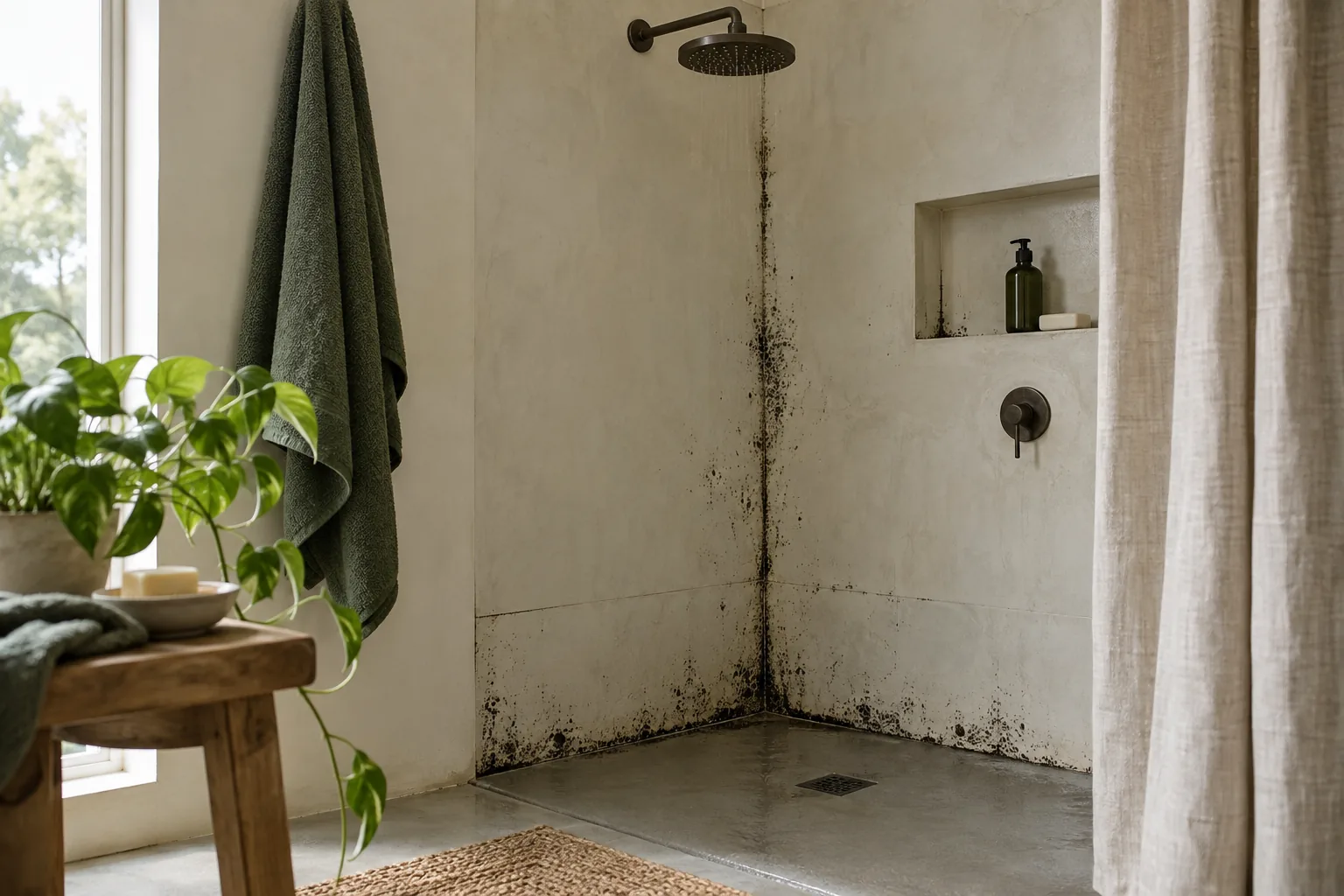
Show the material transition
Photograph where the marked paint meets trim, tiles or a panel. Include a wider view and note any earlier repairs. A transition can be relevant to treatment suitability without proving that the joint is the water source.
Avoid a uniform cosmetic target
Explain what you hope to improve while acknowledging existing deterioration. A removal discussion should distinguish growth, discoloration and material damage rather than promise that every finish will look identical after work.
INSPECTION & MOISTURE
Identify the finish before treatment
The assessment needs both material condition and moisture observations. A method that is suitable on sound paint may be inappropriate on a fragile adjacent finish.
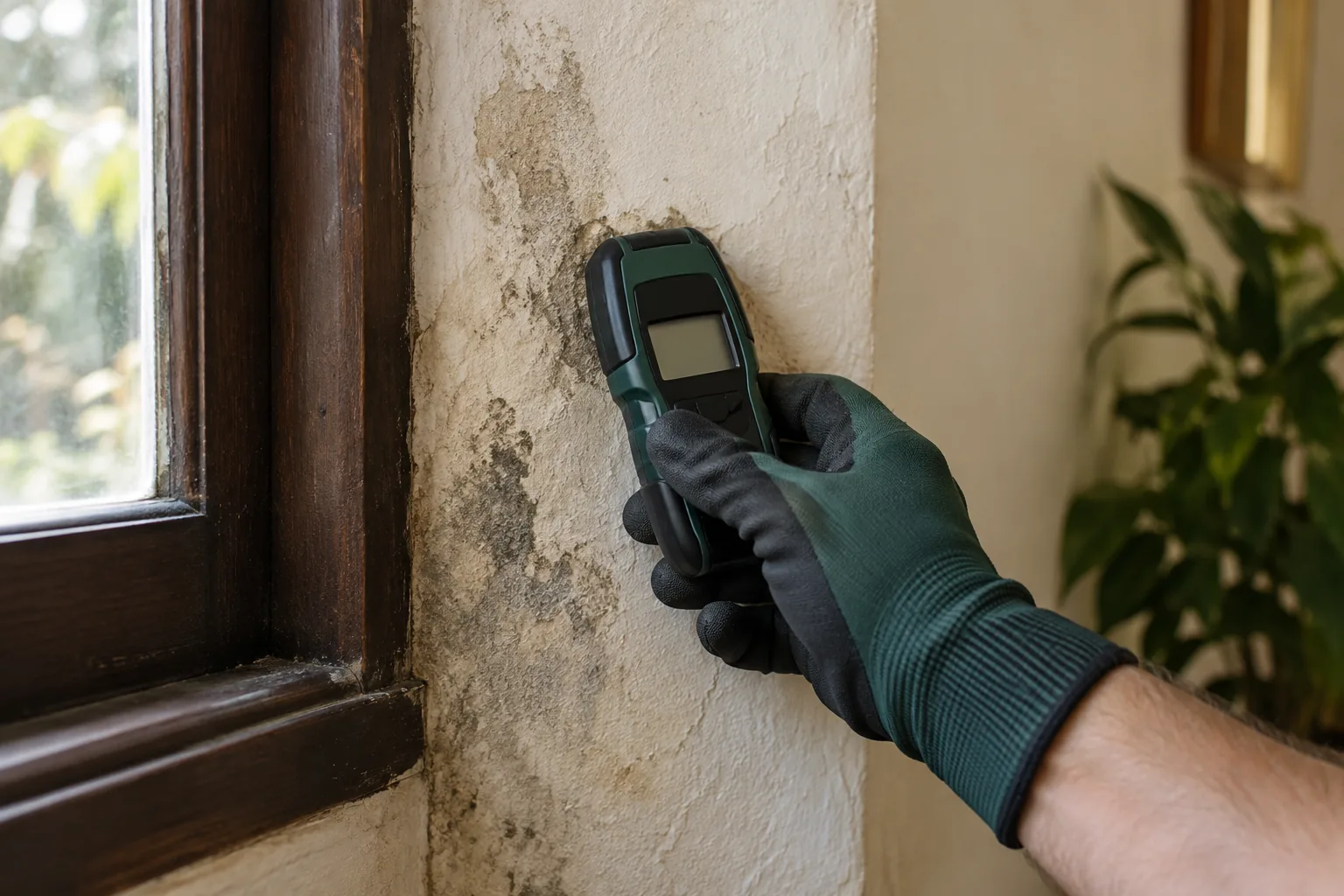
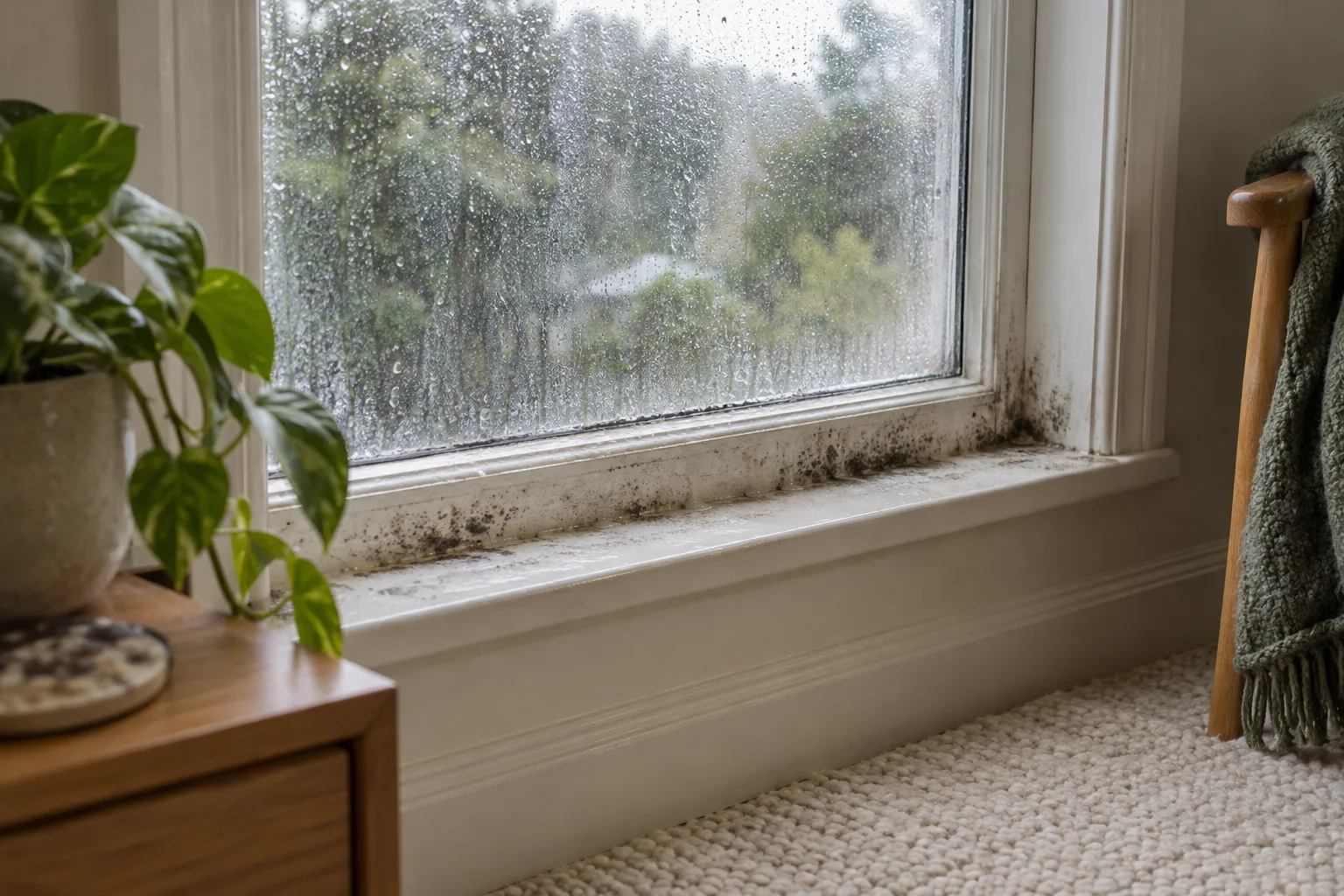
Describe finish changes
Mention peeling, softness, swelling or earlier repainting without pressing or scraping the material. Note when those changes appeared relative to any leak repair. Similar colour can conceal different materials, so photographs should not be treated as a complete specification.
Ask what needs closer assessment
Discuss inspection where the source or material state is unclear. Ask what can be safely observed and whether a test or another trade’s assessment is appropriate. The question is suitability and source control, not how aggressively a stain can be removed.
A CONNECTED PROCESS
A work plan for the affected surfaces
Separate the surfaces
Agree accessible walls, ceilings and hard floors by their actual finish and condition. Textiles are excluded. A cupboard backing, timber trim or tiled area should not be silently grouped with painted plaster merely because growth appears across the boundary.
Prepare without stripping finishes
Discuss furnishing clearance and reachable details before work. Suitable PPE and protection should preserve the material and nearby belongings. Do not sand, scrape or remove fixed trim for the enquiry, since that changes evidence and may damage a finish unnecessarily.
Set up controlled work
Organise HEPA filtration and access around the agreed area. If a small test is useful, discuss its purpose and limits before extending treatment. Repairs or invasive access remain separate decisions rather than assumptions attached to ordinary preparation.
Use a suitable removal method
Physical removal and appropriate treatment should respect each sound finish. The remediation scope may identify material needing replacement or restoration. Cleaning cannot reverse panel swelling or make failed paint adhesion sound through a stronger cosmetic approach.
Review the different results
Explain remaining stains and repair needs separately for each surface. Keep any moisture-source task linked to the relevant trade. Improvement on one finish does not guarantee a fragile adjoining area has recovered or that damp conditions cannot cause growth again.
WHERE MOULD APPEARS
Give each surface its own description
Painted wall
Describe the paint state and previous coatings if known. Do not assume colour identifies the substrate.
Bathroom surfaces
Keep tile faces, joints and painted ceiling separate. Failed joints may require a repair task rather than more surface treatment.
Timber detail
Mention deterioration and access around trim. Its finish may need a different limit from the neighbouring plaster.
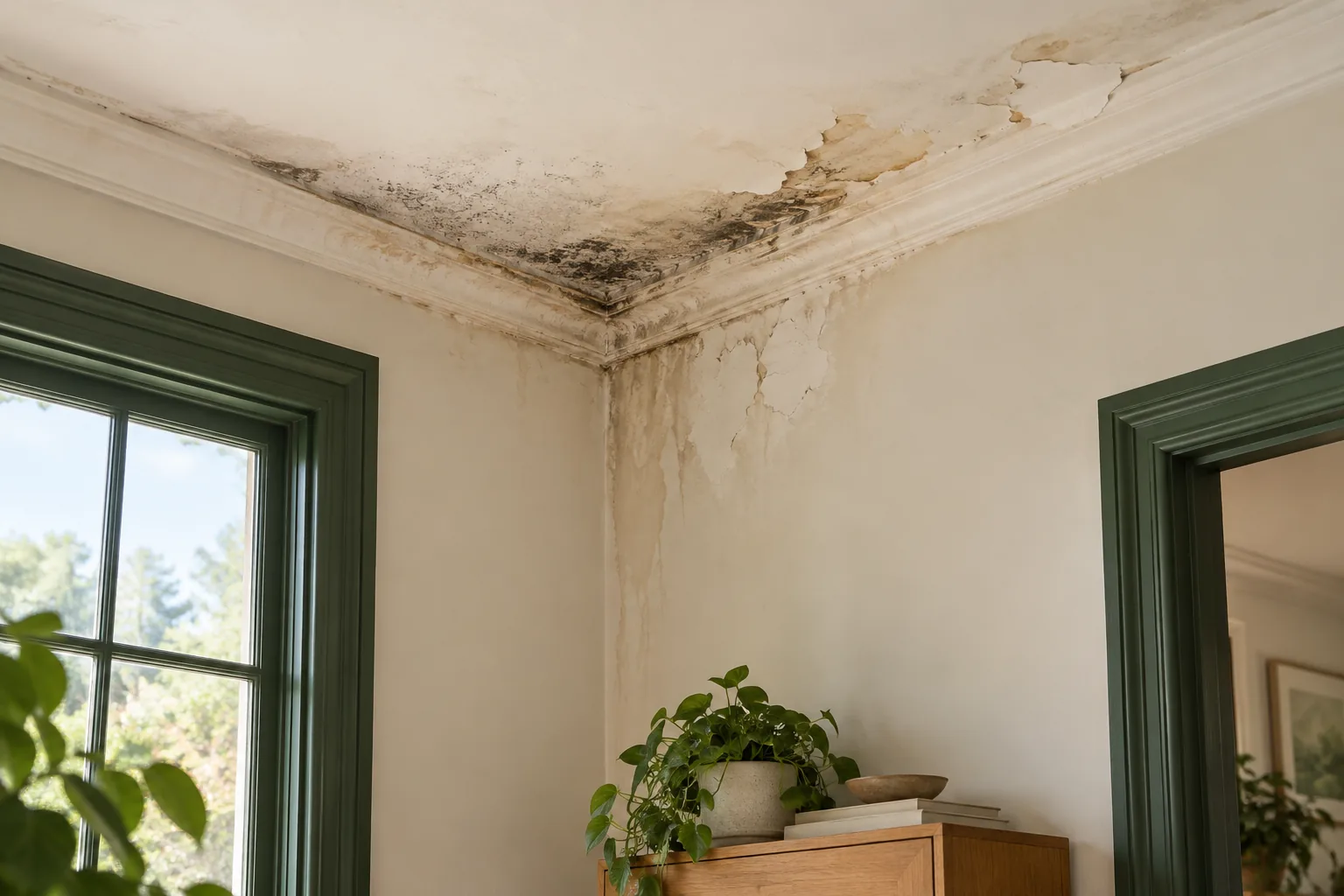
Ceiling with an uncertain finish
Identify overhead lining and coating where known. Photographs cannot establish concealed material condition; avoid probing for a better description.
MAKE SPACE FOR DRYING
Keep the source and the surface in view
After repairs and treatment, monitor the original material boundary without immediately hiding it behind furniture or a new coating. Comparable photographs help distinguish stable staining from another change in the finish.
Address the identified moisture source and obtain appropriate advice before restoration or repainting. A sound decorative result depends on the material and repairs as well as cleaning. Surface removal cannot guarantee every mark disappears or prevent recurrence where dampness remains. If you know the coating product or installation date, retain that information for discussion. Where the finish is unknown, describe its appearance and condition instead. Do not test a solvent or scrape a panel simply to identify the underlying material before assessment.
TARRAWARRA & NEARBY
Nearby location guides
These nearby guides are useful for other locality addresses; their individual finishes and repair history still require separate description: Yarra Glen, Dixons Creek, Healesville.
QUESTIONS WORTH ASKING
Before the visit.
Can one method suit all the wall finishes?
Not necessarily. Material, coating condition and access should guide the appropriate method and limits.
Will treatment restore swollen panels?
It does not reverse deterioration. Replacement or another repair may need separate assessment.
Should I scrape paint to identify the material?
Avoid disturbing the patch. Provide what you know and let the assessment consider suitable next steps.
Is a test area always required?
Its usefulness depends on the finish and uncertainty; discuss the purpose rather than assuming a universal procedure.
Can some staining remain?
Yes. Growth removal and finish restoration are distinct tasks, particularly where material has been affected.
How is Tarrawarra availability checked?
Call with the address, material descriptions and access restrictions so an appropriate scope and appointment can be discussed.
START WITH YOUR ROOM
Talk through the room in Tarrawarra
Call 03 8652 1296 with the address and a clear view of the affected material boundary. We can discuss suitability, preparation and the realistic treatment result before confirming availability.
Useful references: Yarra Ranges — council locality information