
SOMERS · MELBOURNE
Mould Removal Somers
For Somers enquiries about an infrequently used room, describe its closure history, visible materials and known water incidents. Call 03 8652 1296 to check address availability and discuss accessible work. Vacancy does not establish the moisture cause, and stored contents need separate handling decisions.
Room history considered
Contents scope separated
Preparation agreed
CLOSED ROOM · PAINT · CONTENTS
THE HOME, IN CONTEXT
Start with this property, not a coastal assumption
Council’s Somers Township brochure describes a coastal village setting. That local context does not establish the moisture conditions inside your building. Give the address and affected room, including whether it is part of the dwelling or separately accessed.
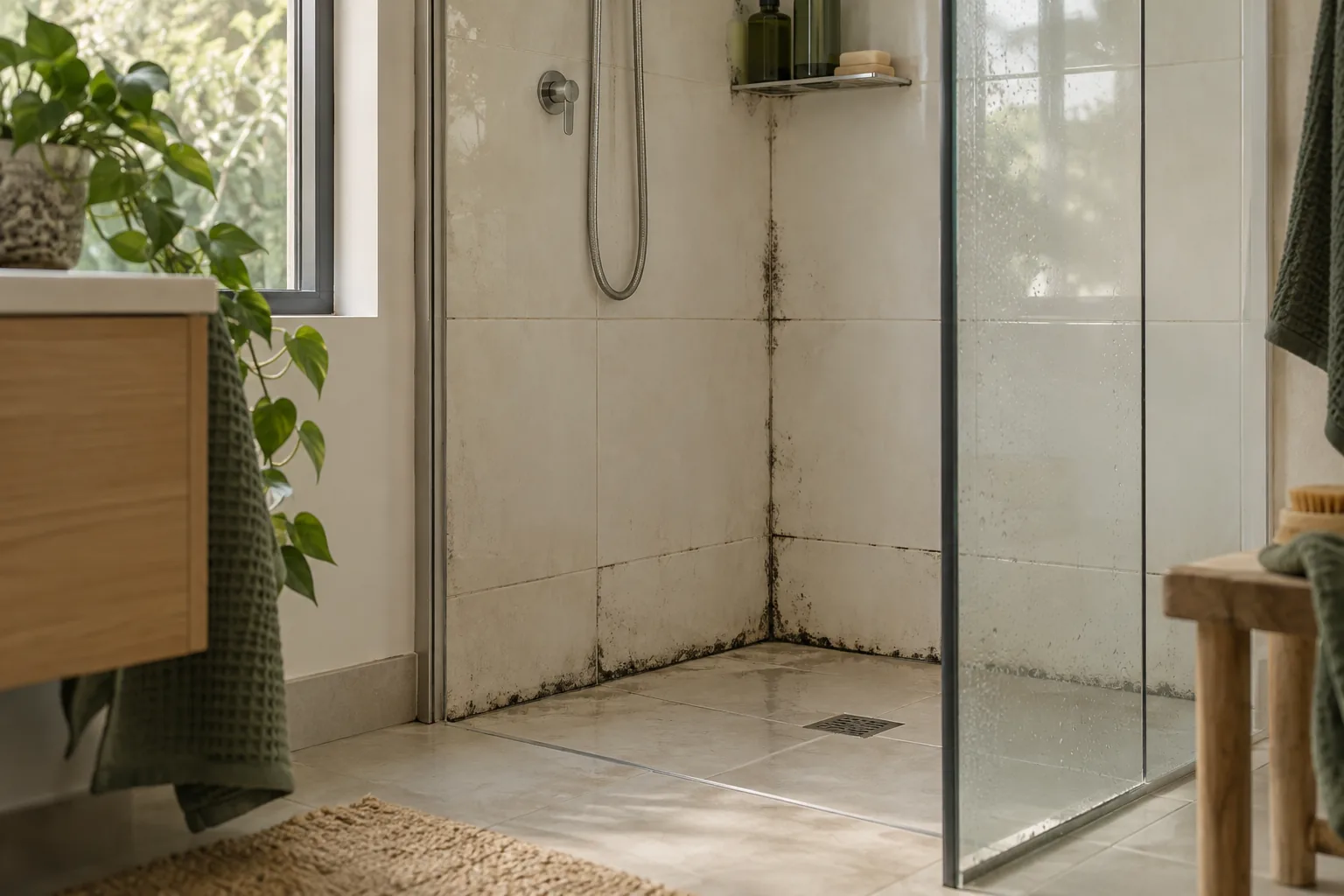
Keep a simple closure timeline
Note when the room was last used, when someone checked it and when the marks were discovered. Include known leaks. The discovery date is not necessarily the date when the material first became affected.
Describe what remained stored
Bedding, furniture and cartons may conceal different surfaces or have their own damage. List them separately from the wall. Clearing storage should not mean shaking affected textiles or carrying damaged boxes through occupied rooms without advice.
INSPECTION & MOISTURE
Assess what reopening has revealed
A closed-room assessment discussion can consider accessible growth, coatings and wetting history. A stale smell deserves mention, but cannot identify a hidden source or define the full extent on its own.
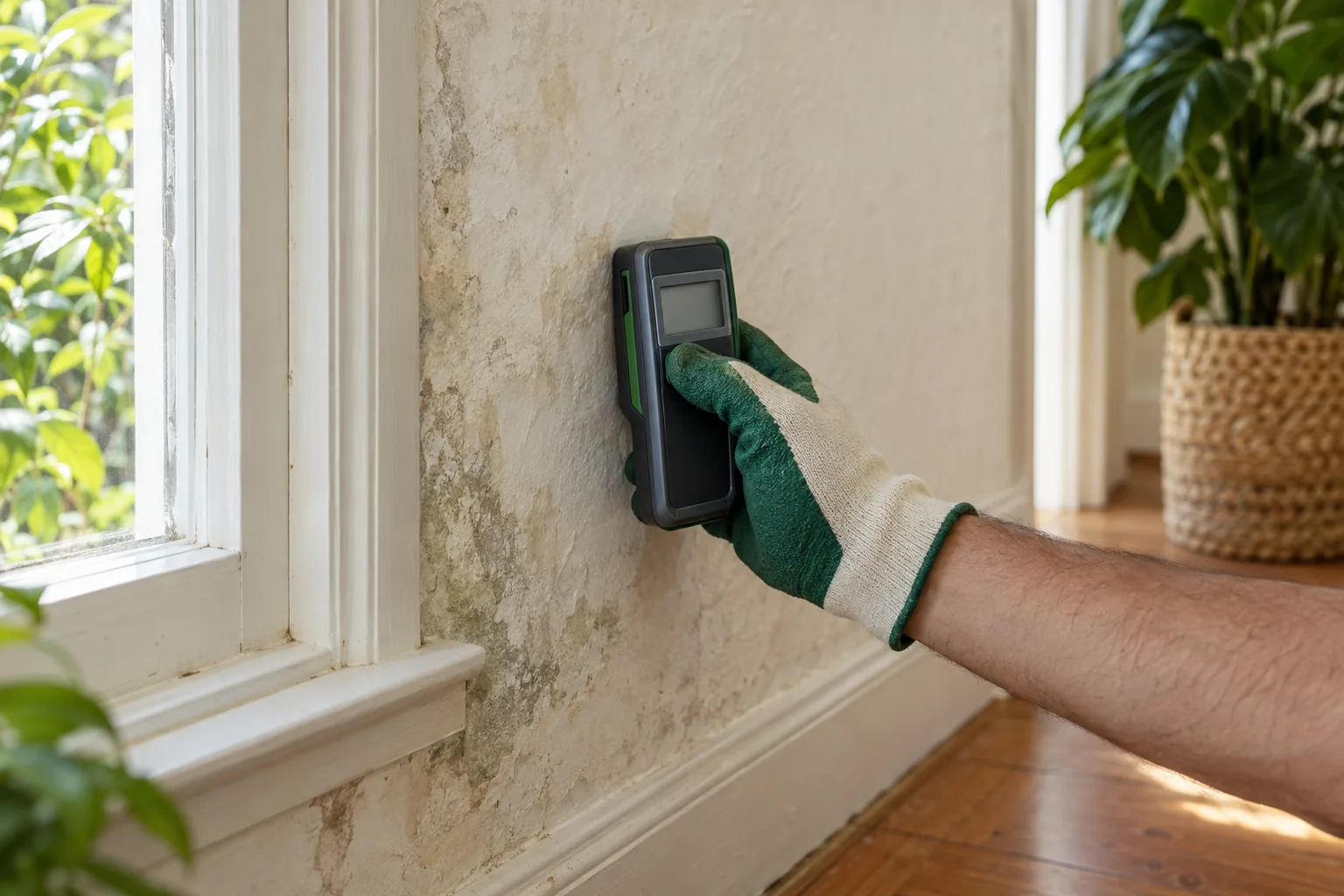
Check conditions without disturbing them
Photograph visible wall bases, window edges and ceiling corners. Mention swollen trim or lifting paint. Do not open linings to create a more complete picture before the purpose and handling of that investigation are agreed.
Explain return-to-use plans
Say whether the room is needed soon and what furniture must remain. Practical preparation should follow the material and moisture questions rather than a deadline that encourages repainting or covering the patch before assessment.
A CONNECTED PROCESS
A reopening plan with clear surface boundaries
Confirm the room and address
Check availability using the full address and identify the particular room. Include entry and utility details if it has been shut. A locality page does not confirm a visit or establish practical access.
Review visible material
Describe firm paint separately from softened lining or swollen board. Removal from suitable accessible surfaces should reflect the actual condition rather than an assumption that every stored-room material can be restored.
Plan contents movement
Ask which sound items can be relocated and how affected belongings should be handled. Heavy furniture needs appropriate help. Do not clear the room by brushing growth off items or dragging them against unaffected surfaces.
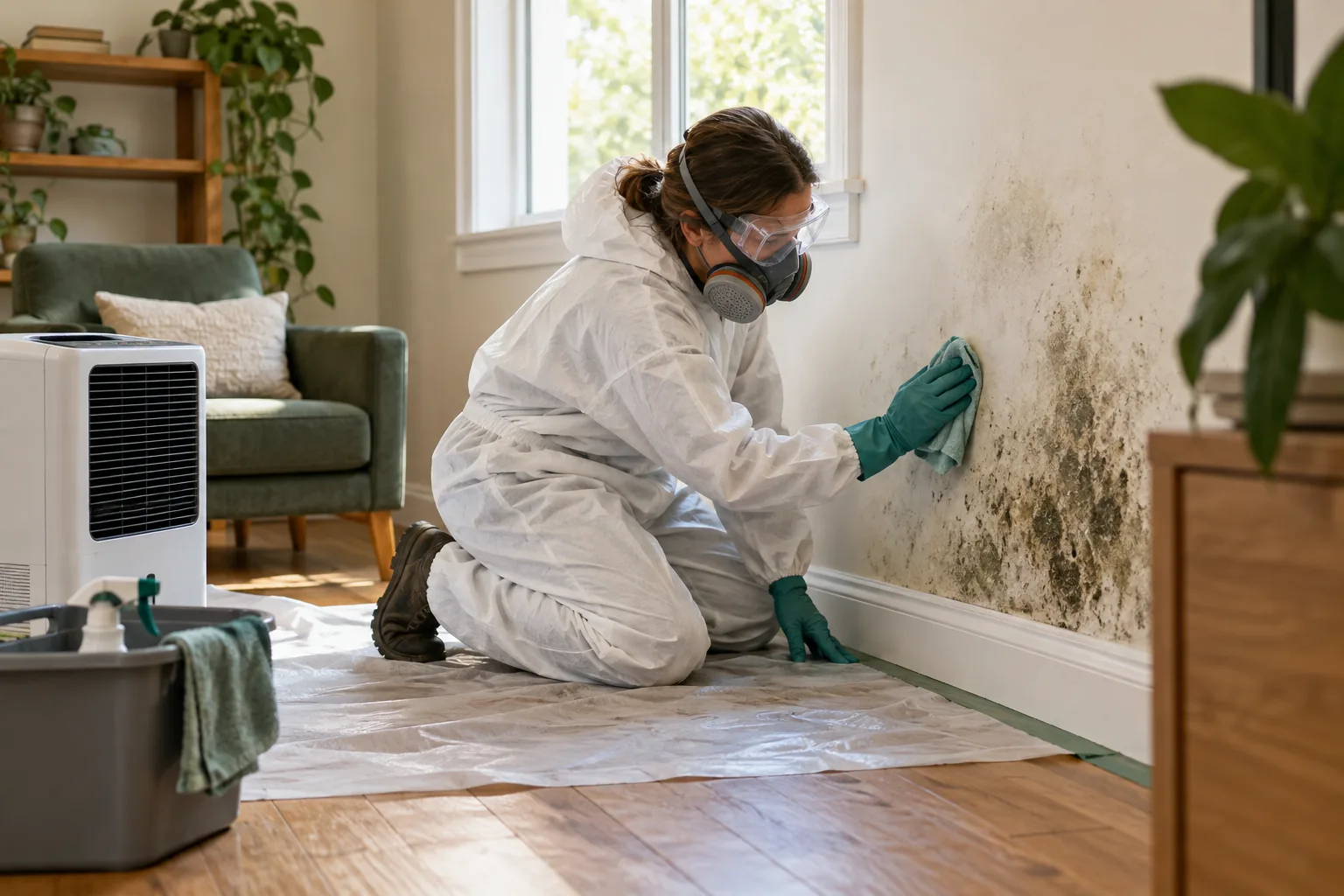
Remove suitable reopened-room growth
Physical removal and material-compatible treatment can be selected for sound accessible finishes, with HEPA filtration where appropriate to the room work. Textiles remain excluded. Continuing water entry, damaged boards and inaccessible material need their separate repair or investigation decisions.
Review before refurnishing
Record included surfaces, remaining staining and any outstanding moisture question. Return storage only according to its own condition and agreed arrangements. A cleaner wall does not determine whether every nearby item should be retained.
WHERE MOULD APPEARS
Materials uncovered when a room reopens
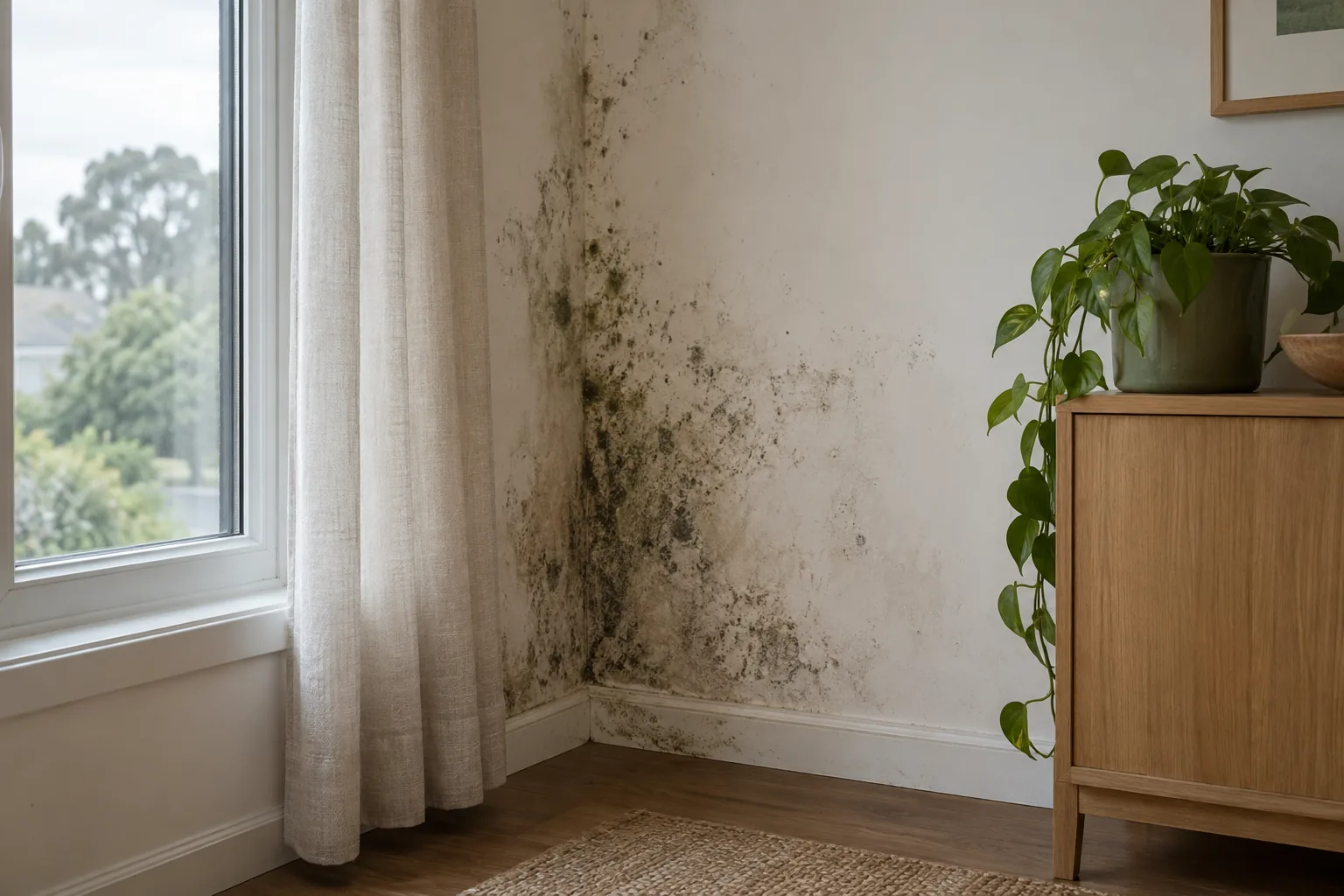
Painted wall behind furniture
A narrow visible edge can hide part of the concern. Describe the obstruction and coating damage. Access limits should be stated rather than treating the unseen section as automatically clear or affected.
Ceiling in the reopened room
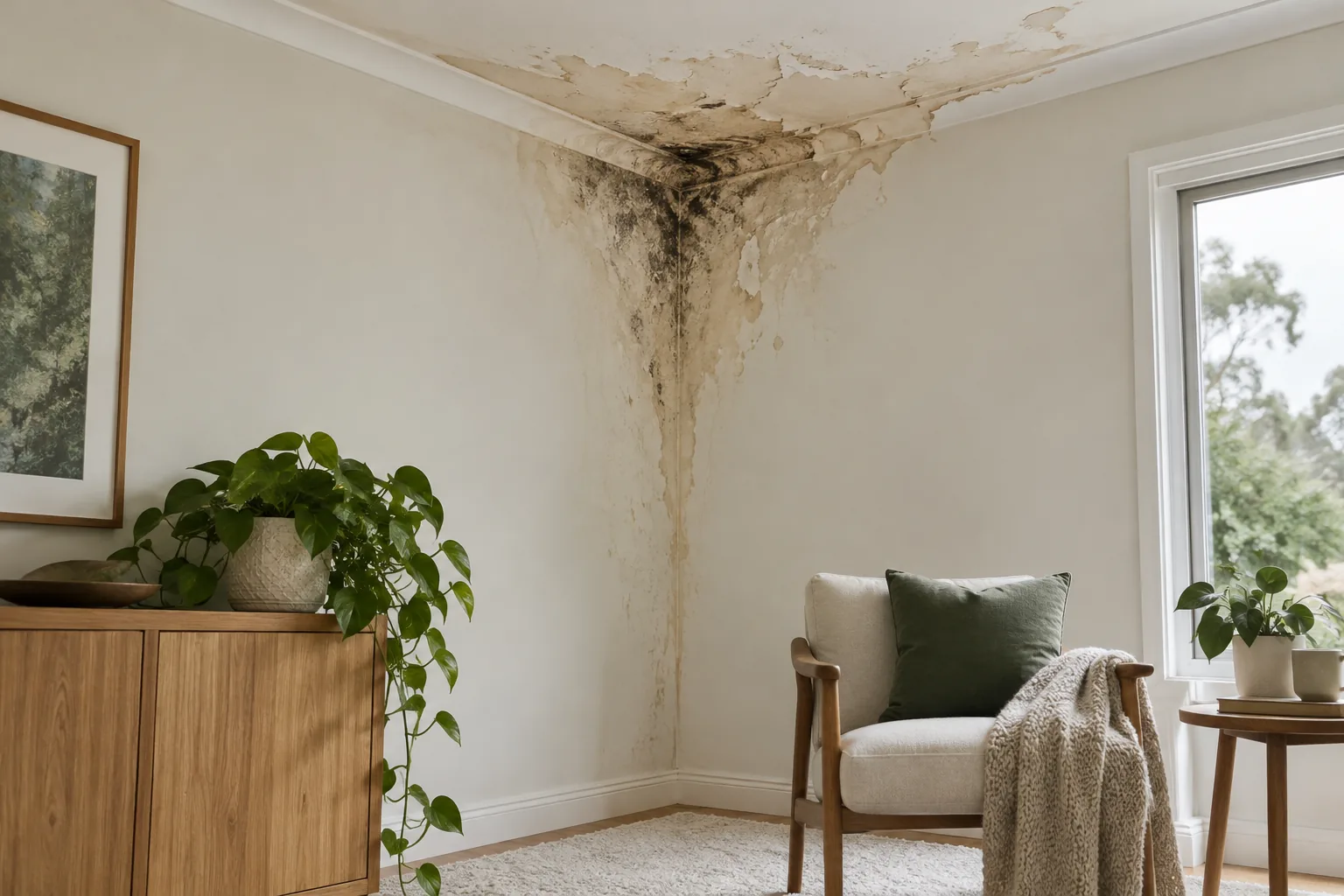
If reopening reveals upper growth, record the ceiling condition and any known water event. Room closure is context, not diagnosis. Photograph from floor level so stored items do not create unsafe access.
Cupboard backing
Thin board may swell or conceal another surface. Explain whether the cupboard is fixed. Opening it and deciding about damaged material should be planned instead of becoming an unexpected part of wall cleaning.
Window trim
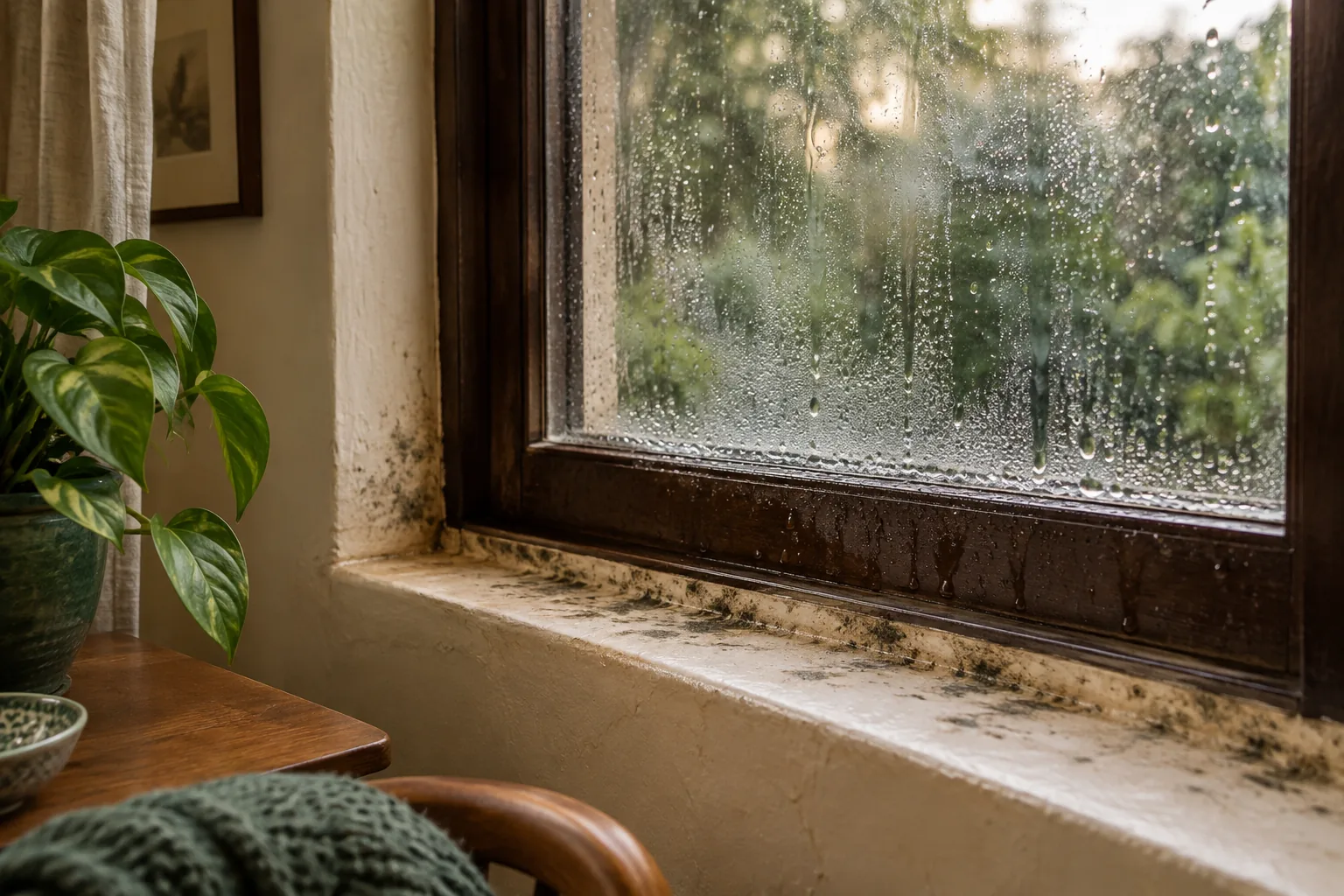
Include wet glass, stains and flaking coatings in the timeline. Those observations guide questions but do not establish that coastal location or room closure explains the condition of the timber and wall.
MAKE SPACE FOR DRYING
Make future checks practical
After relevant repairs and surface work, keep previously hidden locations observable where possible. Date photographs and note whether wetness returns during closure or ordinary use. Consistent observations help another enquiry more than a general report of a damp smell.
Arrange a reasonable maintenance and condition-check routine if the room will be closed again. Ventilation choices depend on the building and equipment. They may support drying, but cannot guarantee prevention or replace repair of continuing water entry.
SOMERS & NEARBY
Nearby property enquiries
Compare location information for Balnarring Crib Point Bittern. Give the exact property address when calling; a nearby page does not confirm an available appointment.
QUESTIONS WORTH ASKING
Before the visit.
Does an unused room always need treatment throughout?
No. Describe visible conditions and separate concerns in other rooms. A closure period alone does not establish that every wall, cavity or item is affected or justify an unrestricted whole-property scope.
Can a musty smell show what is behind the wall?
Not reliably. Odour is useful to report alongside wetting history and visible damage. If accessible observations do not explain it, further investigation may need a separate purpose and access arrangement.
Should I throw away all stored bedding?
Do not make that decision from a wall photograph. Textile condition and care requirements need separate consideration. Tell us about affected belongings so handling questions remain distinct from the proposed building-surface work.
Can repainting make the room ready for use?
Resolve growth, material and moisture questions before decoration. Paint can conceal information without changing the conditions. A return-to-use plan should follow suitable assessment and repairs rather than substitute for them.
What if the property will stay closed afterwards?
Discuss future access and condition checks. Keep records of repairs and wetness. No surface result guarantees that growth will not return if water continues entering or affected material remains unassessed.
How do I enquire about a Somers room?
Call 03 8652 1296 with the address, closure timeline and photographs. Check availability and preparation before clearing storage or making return-to-use arrangements around a visit that has not been agreed.
START WITH YOUR ROOM
Discuss reopening before moving everything
Call with the room history and visible surface condition. Clear contents boundaries, access details and repair questions help organise a realistic enquiry while availability is checked for the actual Somers property.
Useful references: Mornington Peninsula Shire — Somers Township