
COODE ISLAND · MELBOURNE
Mould Removal Coode Island
INTERIORS / ACCESS / RESPONSIBILITY
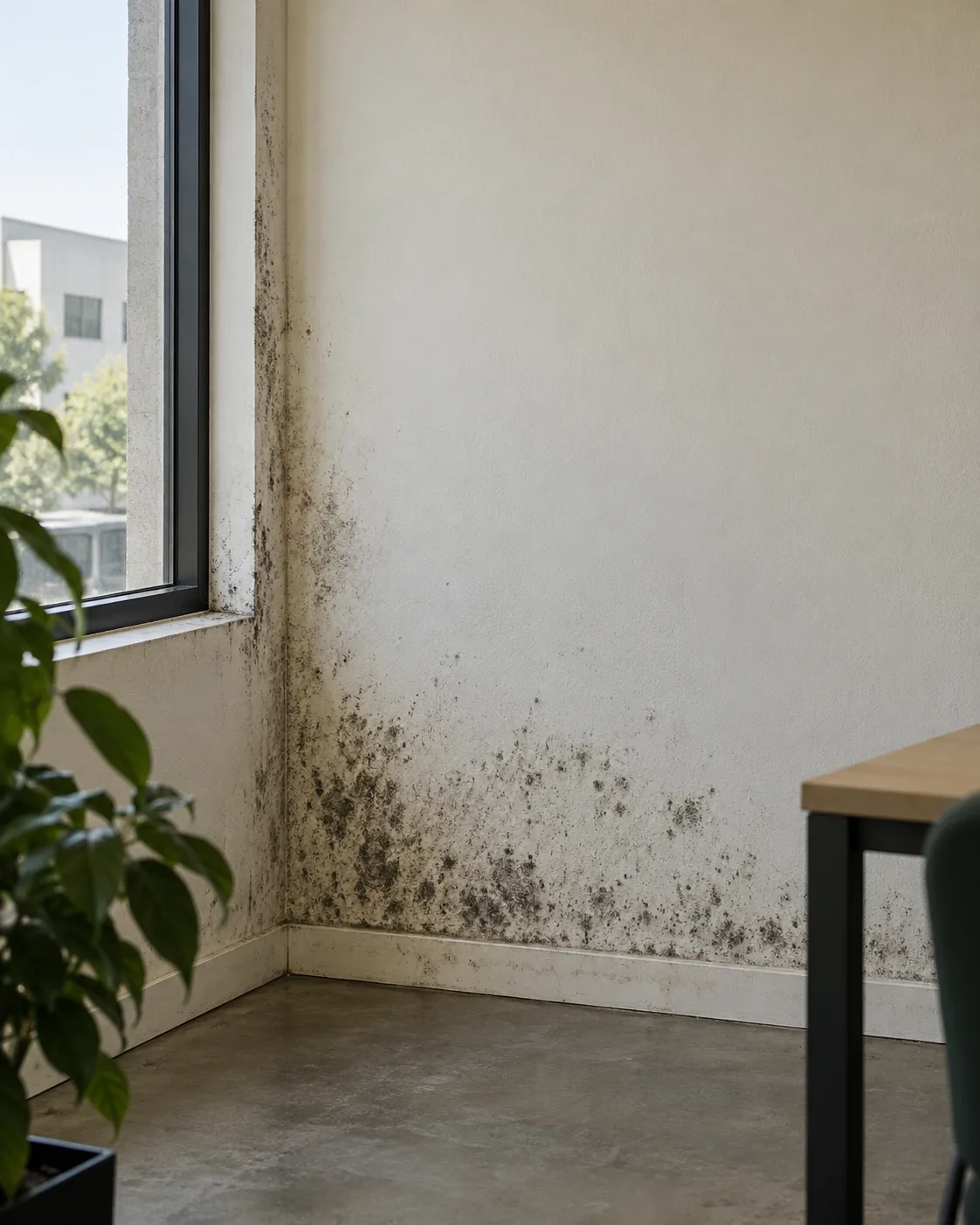
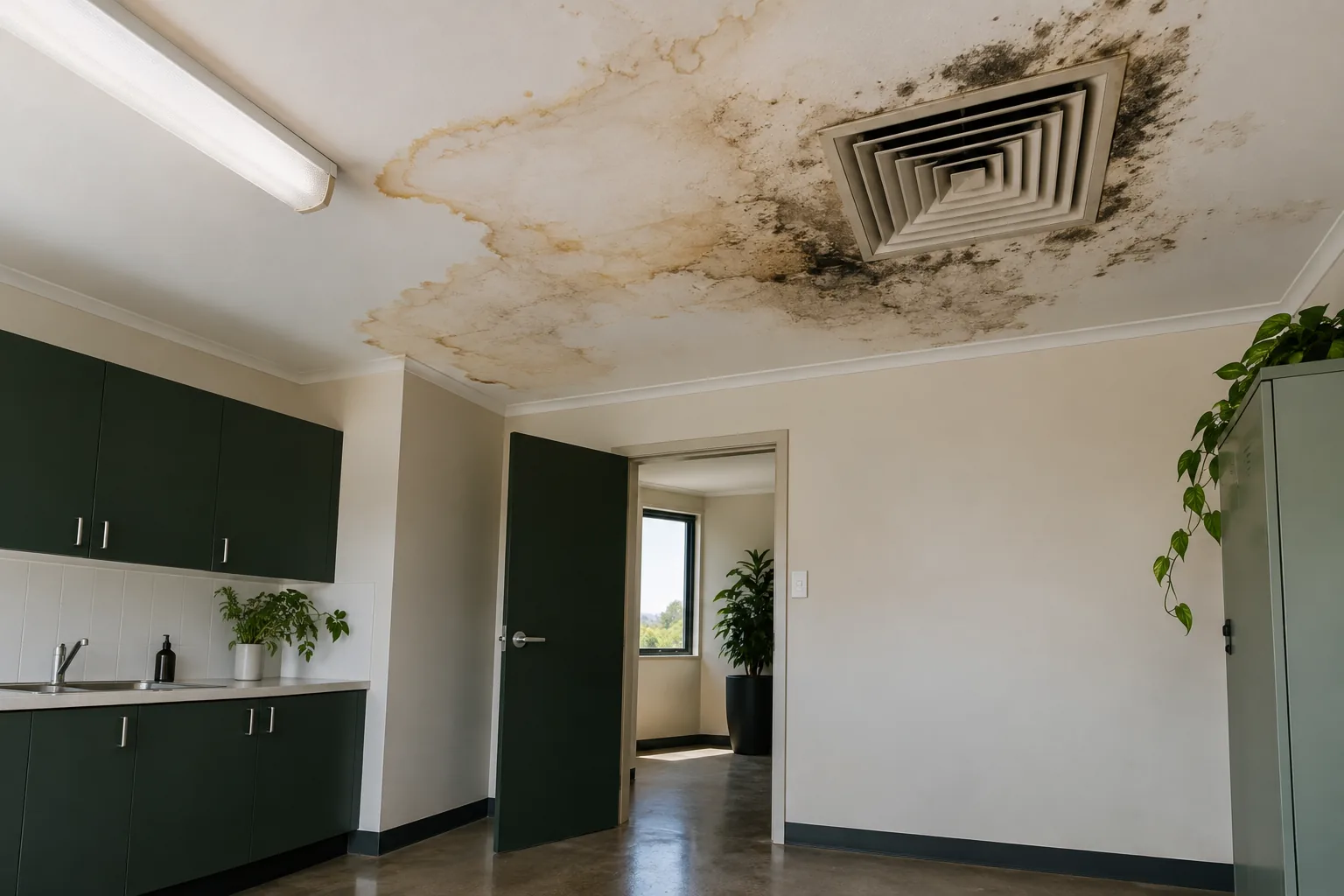
For a Coode Island enquiry, describe the affected interior, active dampness and who controls site access. An office wall, ceiling or hard floor needs an agreed assessment and clear treatment limits before staff return.
Site entry requirements discussed
Accessible structural surfaces assessed
Moisture repairs identified separately
SURFACES & THEIR SETTING
Start with the room, not the postcode
Coode Island is recognised in Melbourne’s port landscape. Identify the actual building and room; ordinary residential access arrangements may not apply.
Describe the interior
Tell us the material, approximate area and room use. Our mould removal service concerns visible, accessible walls, ceilings and hard floors; industrial plant and specialised contamination are not automatically included.
Agree responsibility for entry
Name the authorised contact, escort requirements and available work window. Inductions and neighbouring operations need discussion. Photographs explain access but cannot confirm that the building or surface is ready for treatment.
Separate moisture evidence from assumptions
Describe when the mark appeared and any rainfall, plumbing repairs, room closure or ventilation changes.
Record what is happening now
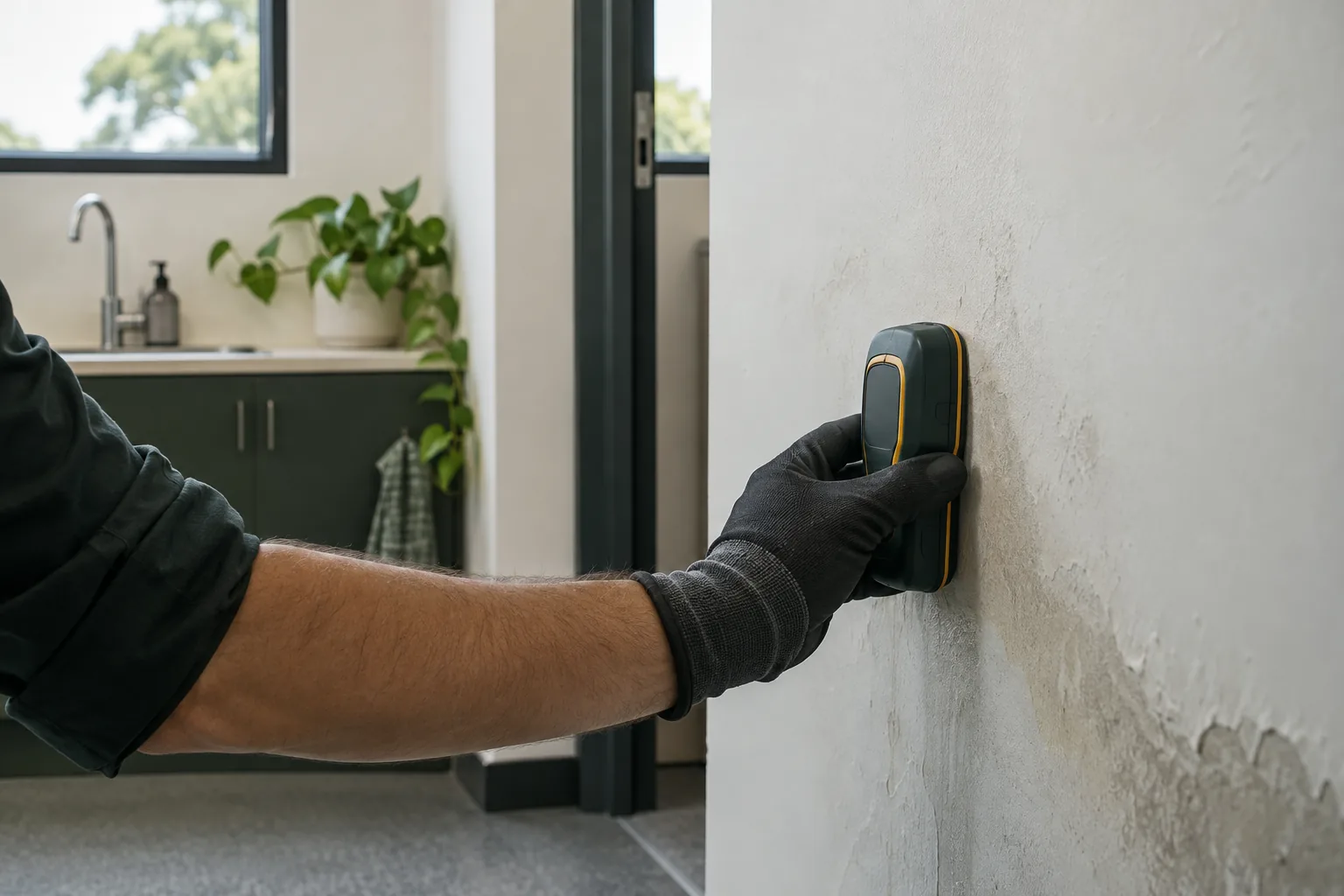
Mention spreading growth, wetness or flaking paint without scraping the area. A mould inspection can include visible observations and humidity or moisture checks. Concealed spaces require separately agreed investigation.
Resolve ongoing water entry
A roof, pipe or building defect needs the relevant repair trade. Treatment of an accessible interior surface does not repair that defect. Provide any repair notes already available so the technician can discuss whether unresolved wetness or material deterioration changes the proposed sequence.
THE SURFACE REMOVAL PROCESS
A planned sequence for an occupied site
01
Inspect the agreed surfaces
The technician reviews the visible growth, surrounding finish and accessible extent. Hygrometer readings and the history supplied by the site contact help frame the assessment without claiming to inspect inside every wall.
02
Prepare the room and air filtration
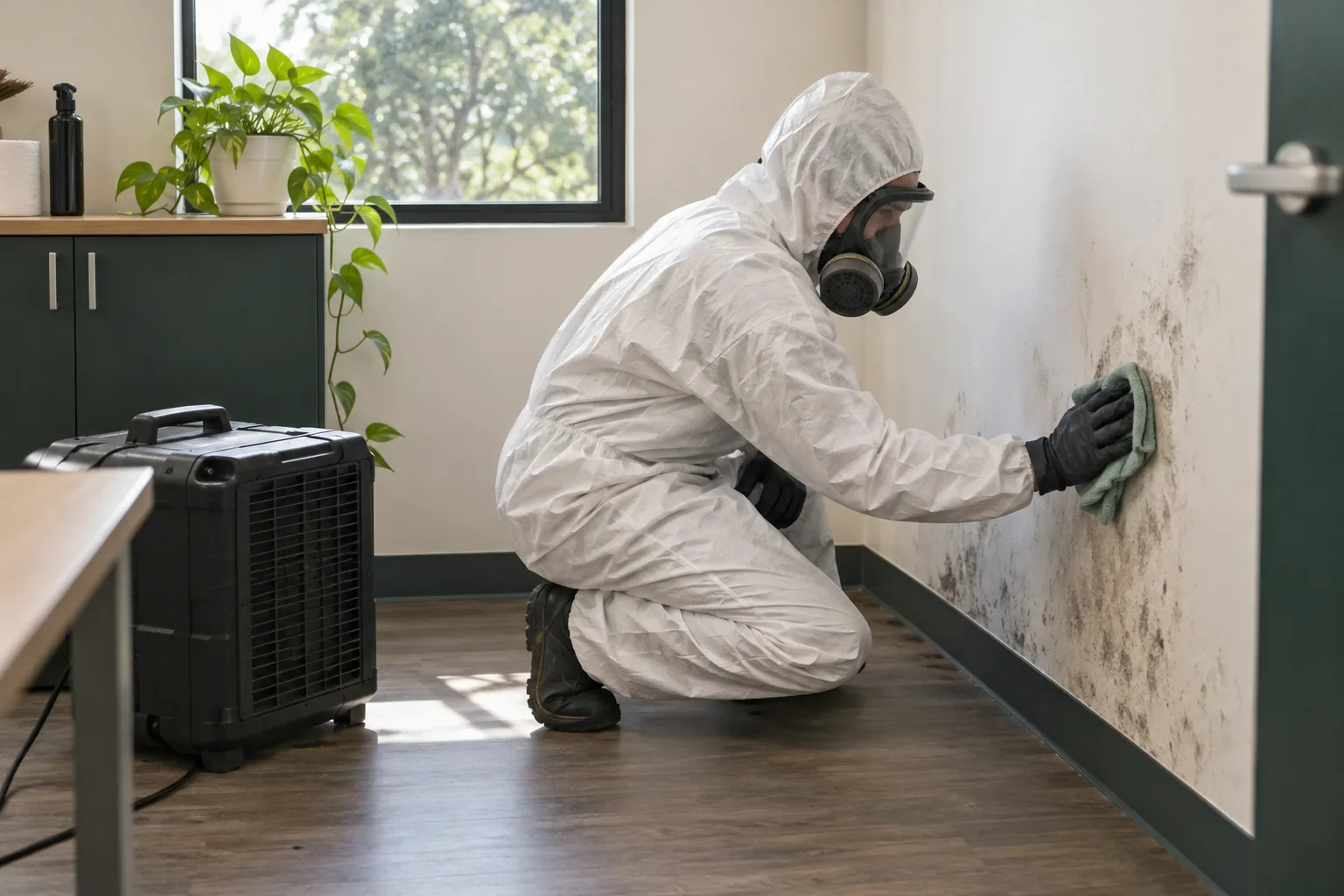
Access routes and belongings are handled as agreed. A HEPA air scrubber can filter airborne particles during the work. Arrangements for staff, visitors and any animals must be established before treatment starts.
03
Select an appropriate treatment
HOCl treatment is considered for the material and condition encountered. Fragile finishes, electrical fittings and surfaces beyond the agreed scope are identified. Application is not a promise that every stain or damaged coating will disappear.
04
Discuss the fog application
Where suitable, ULV application forms part of the treatment plan. The technician explains preparation and return arrangements. Building alarm procedures require an approved decision with the responsible manager; do not simply switch alarms off.
05
Remove visible residues physically
Professional equipment with H-class filtration is used for physical removal where appropriate. This stage addresses accessible residues on the agreed surfaces. Hidden cavities, insulation and contaminated textiles require a different enquiry and are not included.
06
Finish filtration and review next steps
Air filtration continues as appropriate and the completed scope is discussed. The handover should distinguish treated growth, remaining cosmetic marks and repairs still required. Ask which changes to room use or ventilation merit follow-up.
VISIBLE & ACCESSIBLE
Interior surfaces worth describing
Office walls
Give the wall finish and whether desks prevent access.
Amenities ceilings
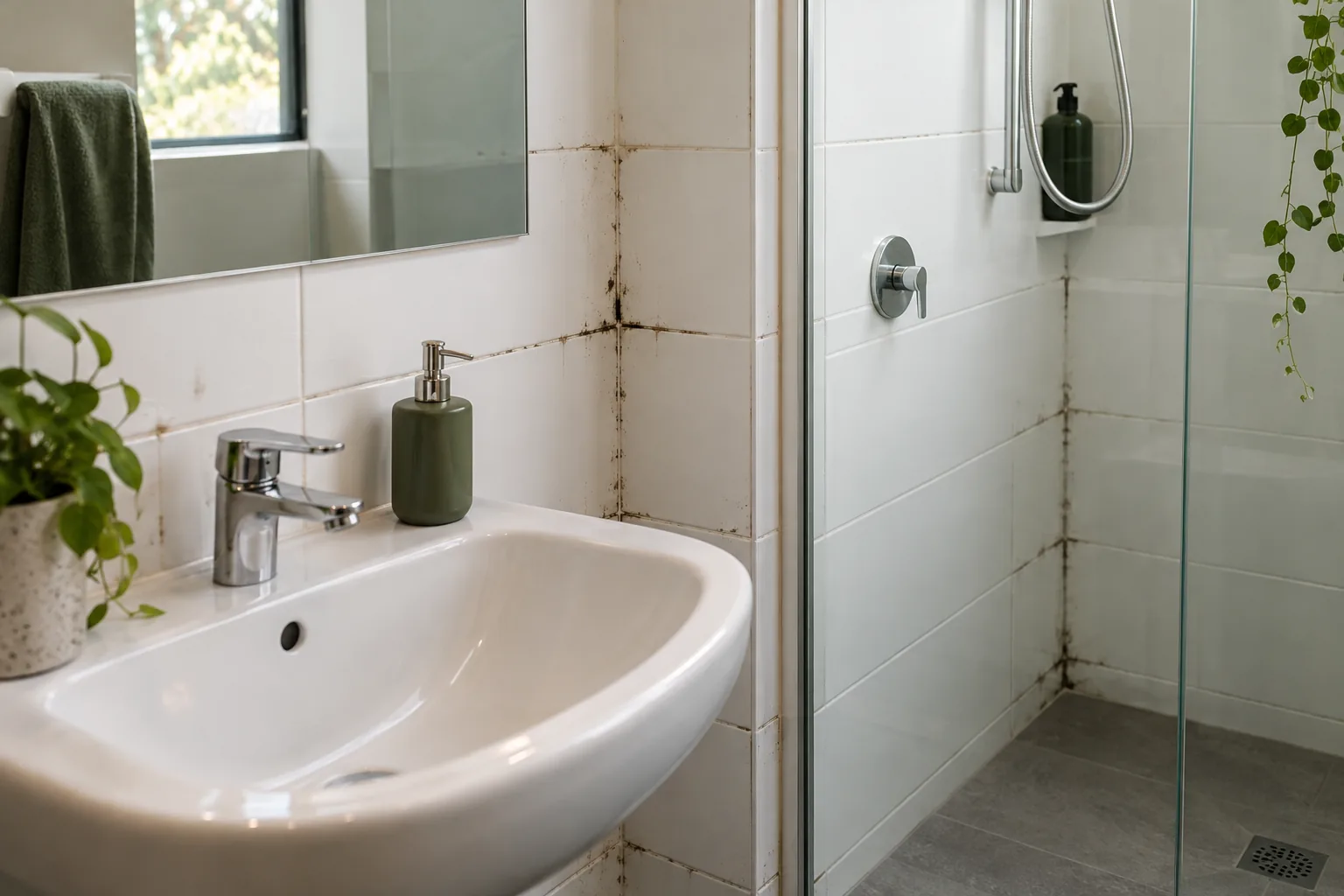
Explain whether marks sit above a shower, sink or pipe route.
Hard floor edges
Report damp perimeter areas and the floor material.
Service corridors
Clarify public access and equipment clearance.
PREPARATION & LIMITS
Clear limits before work begins
Expect an average of around three hours per room, with actual time depending on size, growth and access. This is not hourly pricing or a guaranteed site duration. Discuss the room list and authorised scope before arranging an operational shutdown.
Visible growth removal may leave discolouration or damaged paint. Repainting or decorating requires a separate quote. Mould remediation also needs coordination with any unresolved moisture repair, because damp conditions can allow growth to return.
AFTER THE SURFACE WORK
Keep the handover practical
After the agreed return time, review whether moisture-producing activities have effective extraction. Keep ventilation openings clear and document any repeated water entry. A humidity log can provide useful context, but a room reading alone cannot locate a leak or confirm that construction materials are dry.
Assign responsibility for checking the treated room rather than leaving it between contractors. If marks reappear, note the date, location and recent room conditions. Avoid sealing over a damp surface while waiting for advice; the reason for the dampness still matters.
COODE ISLAND · NEARBY LOCATION PAGES
Enquiries around the port and harbour
Waterfront City, Fishermans Bend and NewQuay provide nearby location pages. For Coode Island, give the actual street entry and building contact when calling; proximity on a map does not confirm site permission, parking or availability.
BEFORE YOU ARRANGE WORK
Questions for your enquiry.
Can I book using only the Coode Island name?
Supply the street address, building or tenancy and authorised contact. The local name helps orientation; entry restrictions and the affected room determine whether a visit can be arranged.
Do you treat machinery as well as walls?
Machinery, process equipment and specialised industrial contamination are not included automatically. This service concerns accessible structural surfaces.
Should staff remain in an adjoining office?
Discuss occupant arrangements with the technician and site manager. The plan depends on the work and layout; shared ventilation or an open connecting door needs consideration.
Can treatment proceed during an active roof leak?
Ongoing water entry requires separate repair. Explain whether the ceiling remains wet or deteriorated so limitations and sequencing can be discussed before treatment.
Will ceiling staining be removed completely?
Cosmetic stain removal is not guaranteed. Remaining marks or damaged coatings may need separately quoted decorating after moisture issues are resolved.
What should the site contact prepare?
Prepare the room list, access rules, photographs and repair history. Agree belongings clearance, occupant arrangements and approved alarm procedures without spreading affected furnishings elsewhere.
Discuss a Coode Island interior enquiry
Call 03 8652 1296 with the site address, visible surface problem and contact authorised to arrange entry. We will discuss availability, preparation and a workable assessment scope before a visit is confirmed.
Useful references: City of Melbourne Coode Island collection record