
MOUNT COOPER · MELBOURNE
Mould Removal Mount Cooper
MOUNT COOPER / THE REACHABLE WALL
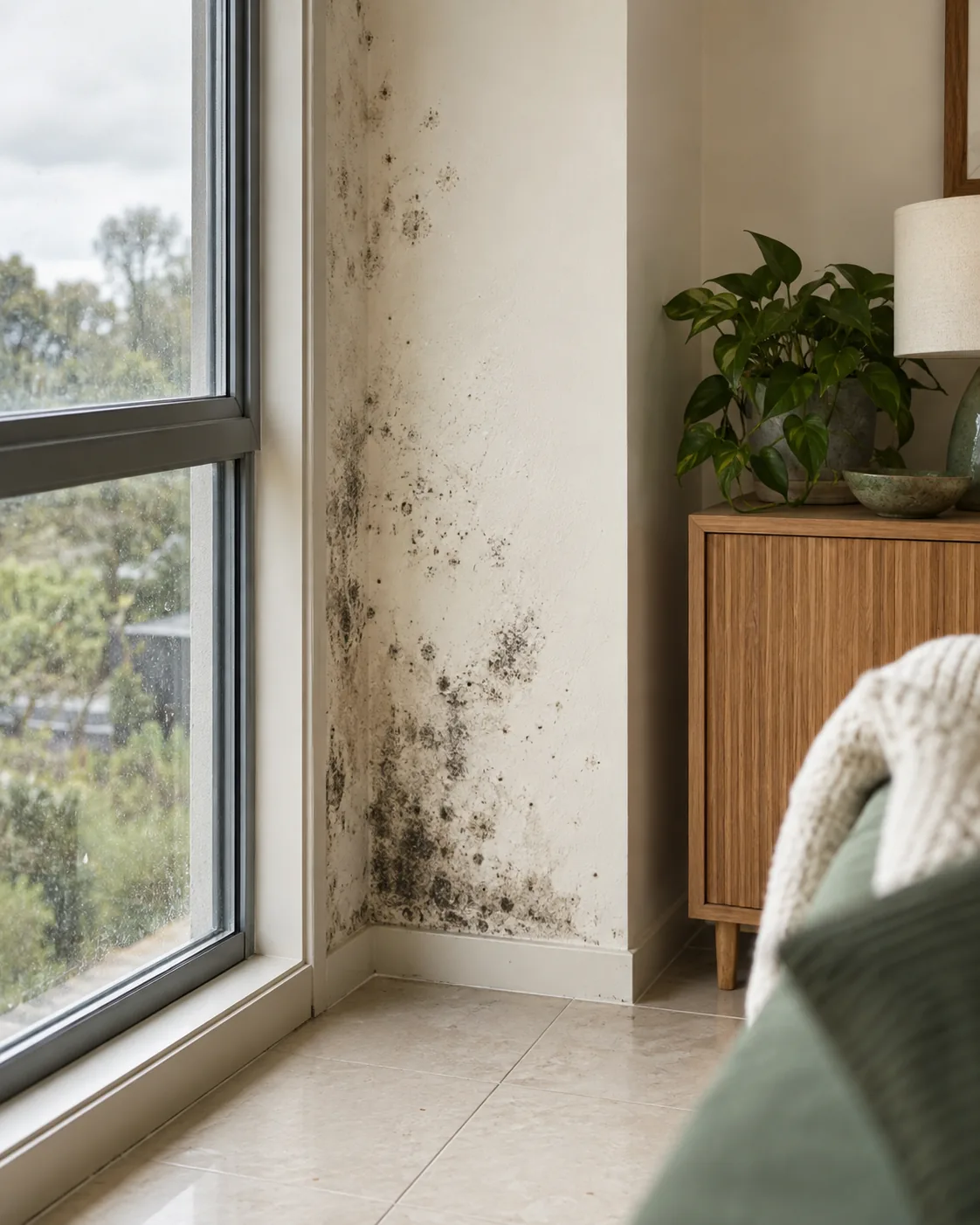
If a Mount Cooper wall changes beside a built-in cupboard, describe the visible section and the part that remains blocked. A narrow gap cannot be assumed accessible. The enquiry should define the structural surface, material and continuing dampness before treatment or cupboard work is planned.
Cupboard access clarified
Visible material assessed
Hidden areas kept outside assumptions
SURFACES & THEIR SETTING
Use the estate name with the property address
Darebin’s heritage study identifies the Mount Cooper Estate in Bundoora. Give the actual address when enquiring; the estate name does not establish the construction, access or moisture conditions of every home.
A patch at the cupboard edge
Show the growth and the obstruction in separate photographs. A mould inspection can consider visible condition, but fixed cabinetry may limit access. Do not dismantle a built-in unit before the investigation and permission requirements are discussed.
Keep the room list specific
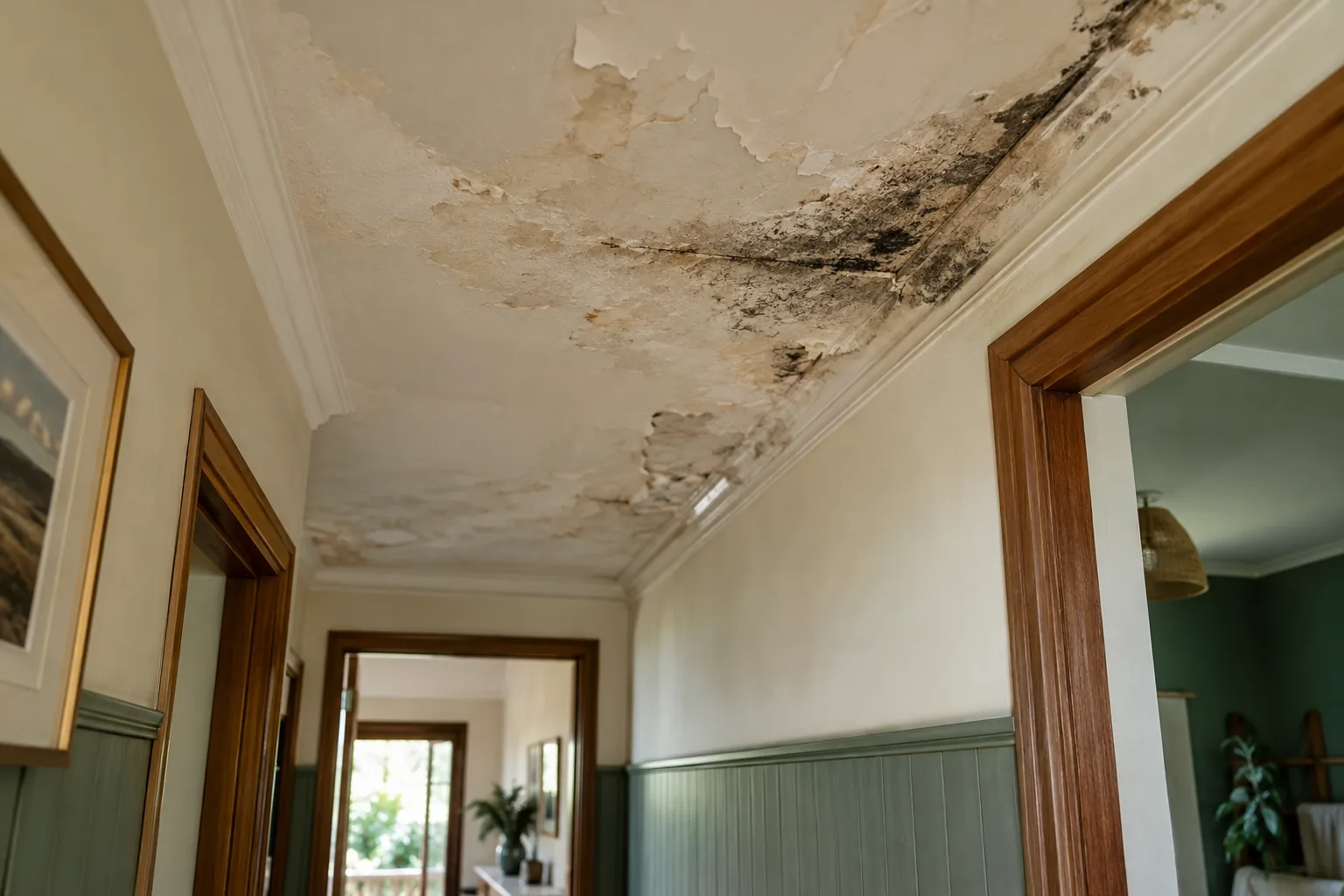
State whether the ceiling or hard floor is also affected, and identify the booking authority. A bedroom enquiry does not automatically cover every room or furnishing. The scope should name the surfaces that are visible and suitable for assessment.
The gap does not reveal the whole wall
Explain condensation, plumbing history and any changes to room use without assuming the cupboard is the confirmed cause. Material and moisture evidence need separate consideration.
Structural treatment limits
The removal service concerns accessible walls, ceilings and hard floors. Furniture, mattresses, carpet, curtains and clothing are excluded. Hidden cavities or wall sections behind fixed construction require a separately defined enquiry.
Source repair and damaged finishes
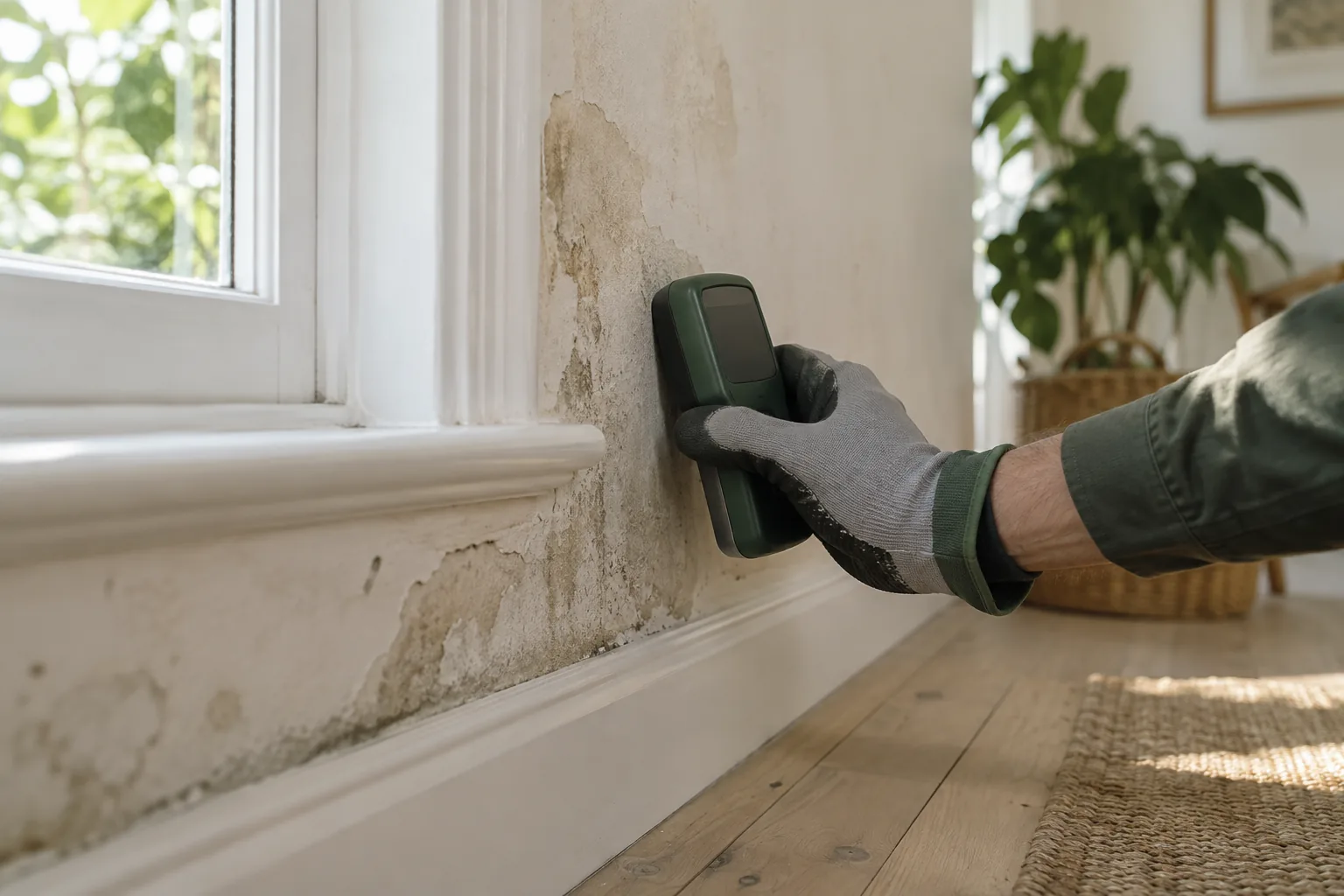
A pipe, roof or building defect needs separate repair. Tell us about soft plaster or peeling paint. Humidity readings offer room context but cannot establish that inaccessible construction has dried or that a moisture source is resolved.
THE SURFACE REMOVAL PROCESS
An access-led plan for the interior
01
Review accessible extent
The technician checks visible growth and material condition, considering room history and useful hygrometer information. Fixed obstructions and hidden sections remain limitations unless additional access or investigation is explicitly agreed.
02
Prepare with HEPA filtration
Agree belongings clearance and people or pet arrangements. Filtration supports the work as appropriate. Clothing or furniture moved to reveal a wall remains outside treatment, so handling should follow the preparation plan.
03
Choose a suitable application
HOCl treatment is considered for the finish and condition. Mention previous cleaning or fragile paint. The method addresses growth without promising cosmetic restoration of damaged coatings or treatment of the cupboard itself.
04
Use ULV application appropriately
Fog application may be included where suitable. Confirm preparation and return timing with the technician. Any alarm arrangement needs approval from the responsible person; it is not an independent instruction to disable equipment.
05
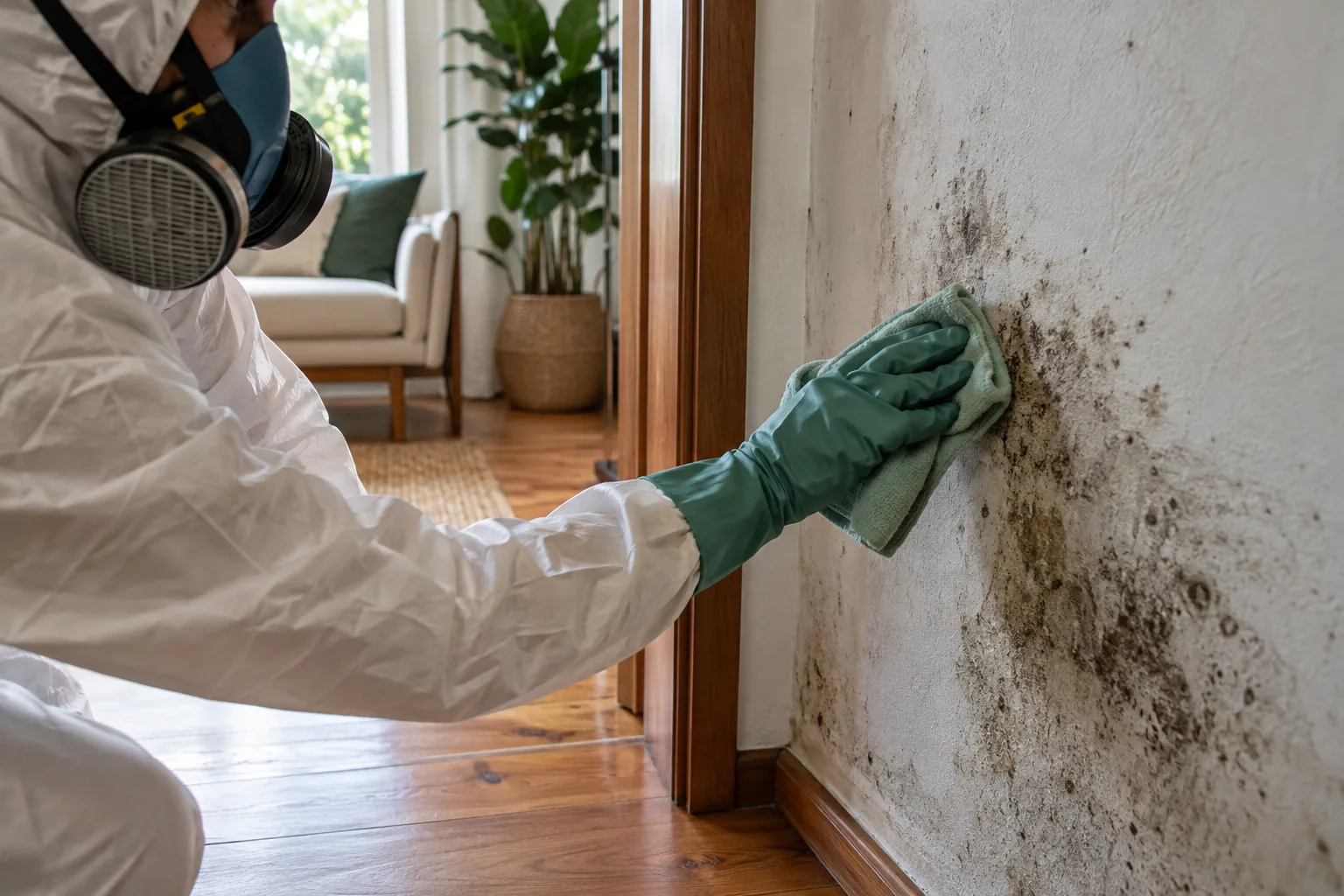
Remove the visible residue
H-class filtered equipment is used for appropriate physical removal on agreed structural surfaces. Concealed cavities, fixed-unit dismantling and textile restoration do not become included merely because growth sits nearby.
06
Complete filtration and clarify limits
Final filtration continues as required. Review remaining marks, inaccessible concerns and outstanding moisture work. A clear handover explains what was addressed and what still needs repair, further investigation or separately quoted decorating.
VISIBLE & ACCESSIBLE
Describe the reachable surfaces
Cupboard-edge walls
Show the available clearance and visible finish.
Bedroom ceiling corners
Mention condensation and wetness.
Bathroom walls
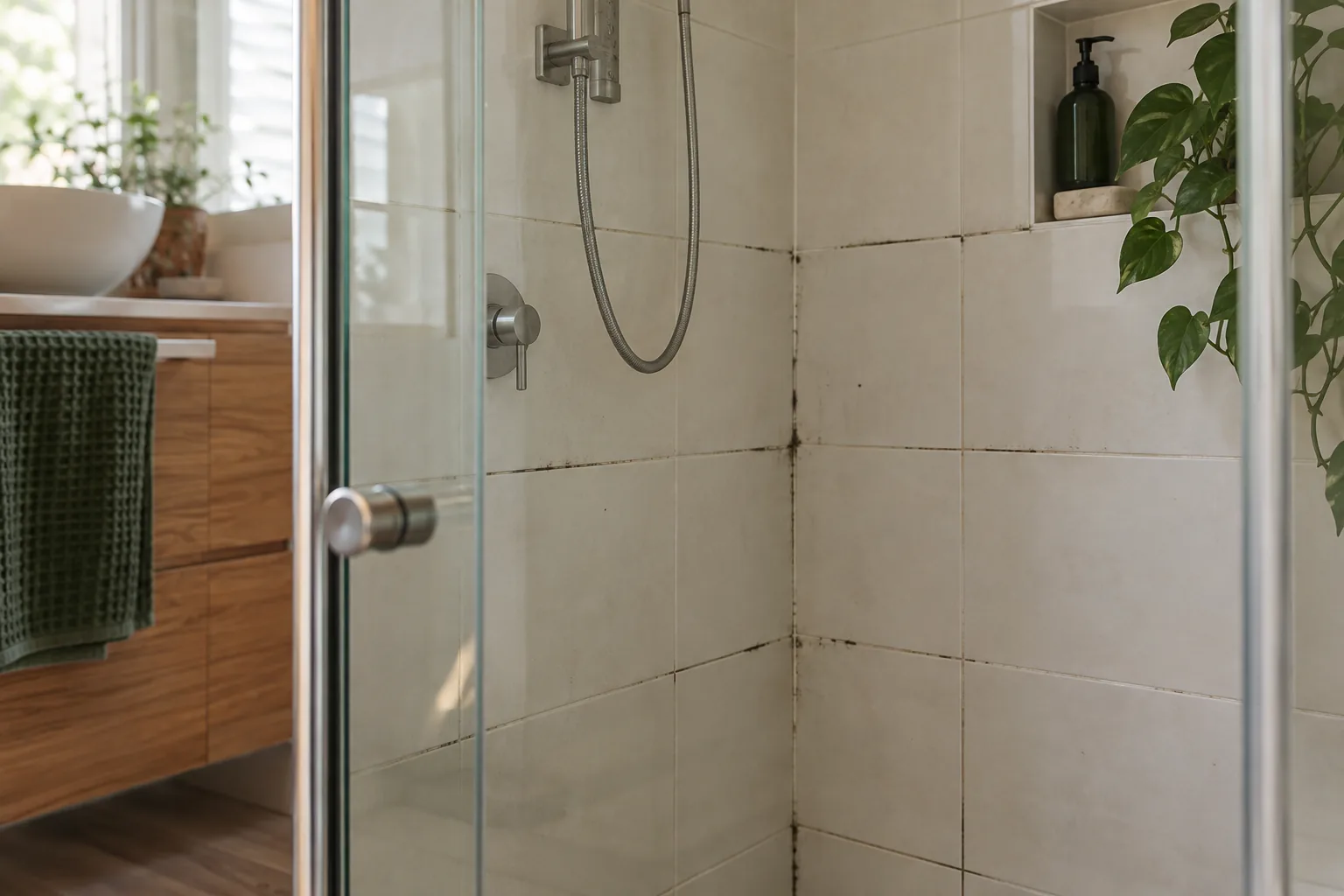
Explain extraction and material condition.
Hard-floor junctions
Identify the finish and water tracking.
PREPARATION & LIMITS
Clear scope prevents unrealistic expectations
Average room-treatment time is around three hours per room. Size, contamination and access affect duration, and the service is not hourly-based. A room containing fixed obstructions needs a specific discussion before a fixed timetable is assumed.
Remediation may leave stains, while decorating requires a separate quote. Removal cannot repair a leak or guarantee that inaccessible material is unaffected. Continued dampness can support recurrence, so unresolved moisture still needs attention.
AFTER THE SURFACE WORK
Monitor what can actually be seen
After the agreed return time, keep ventilation paths clear and use effective extraction where steam is produced. Allow airflow around movable belongings without assuming a gap beside fixed cabinetry resolves every moisture issue.
Retain photographs showing the treated extent and any blocked areas. If marks return, note the date and room conditions and raise continuing wetness with the appropriate contact. Do not dismantle or cover construction without discussing the next investigation.
MOUNT COOPER · NEARBY LOCATION PAGES
Mount Cooper and surrounding location guides
Nearby guides help orient the Bundoora-area enquiry. Give the actual Mount Cooper estate address and affected room when calling, so one property is not described as several separate appointments using different neighbourhood names.
BEFORE YOU ARRANGE WORK
Questions for your enquiry.
Do you remove built-in cupboards?
Dismantling is not assumed in a structural-surface booking. Describe the obstruction and visible growth first.
Can fog treat everything behind the unit?
Fog application does not automatically extend the scope to inaccessible construction. Hidden wall sections or cavities require separate investigation and access decisions.
Are stored clothes included?
Clothing and other textiles are excluded. Agree clearance and separate handling if items may be affected. Treatment of the adjacent wall does not constitute cleaning or restoration of the cupboard contents.
Is Mount Cooper a separate bounded suburb?
This page uses the estate name identified in Darebin’s heritage study. Give the actual property address and postal suburb. The name provides orientation rather than a new treatment boundary or claim of a local office.
What should I say about damaged plaster?
Explain softness, peeling or any change in texture without disturbing the surface. Material condition can limit treatment. Repair or replacement is separate work, and removal does not reconstruct the wall.
Can treatment stop future growth permanently?
No permanent guarantee is made. Existing growth can be treated while leaks or damp conditions remain separate concerns. Keep moisture repair and room management responsibilities clear after the handover.
Explain the access before choosing the method
Call 03 8652 1296 with the Mount Cooper address, visible wall condition and cupboard clearance. Discuss assessment and preparation before treatment.
Useful references: Darebin Mount Cooper Estate reference