
MILL PARK · 3082
Mould Removal Mill Park
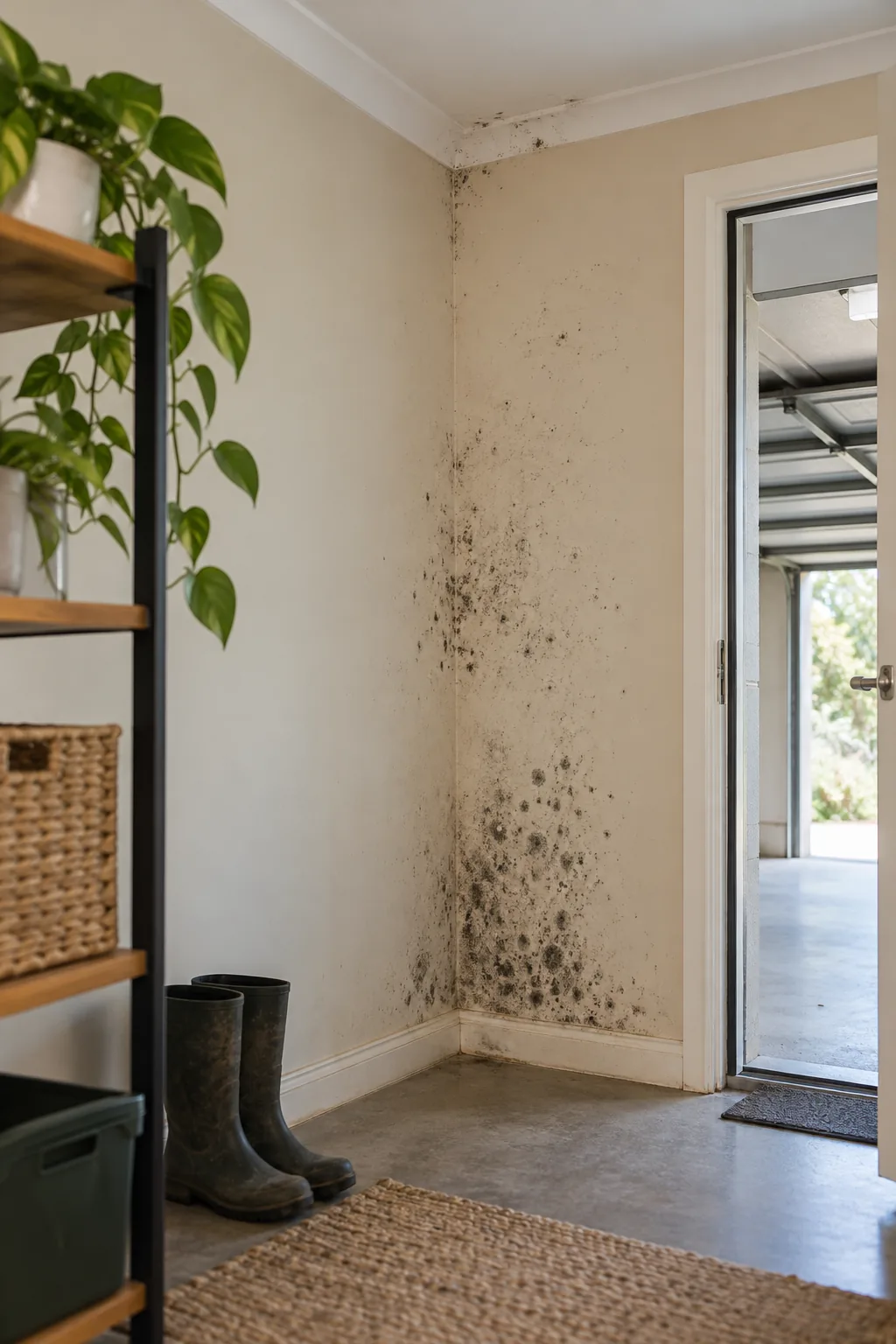
A downstairs room that stays damp while the rest of the home feels dry needs its own assessment. For a Mill Park property, describe the room level, wall finishes and whether it connects to a garage or utility area. We can discuss visible mould removal alongside moisture investigation and any separate repair needs. Call to confirm address availability before preparing the room.
A defined surface scope
Practical preparation
A useful follow-up plan
THE PROPERTY SETS THE PLAN
A practical starting point for Mill Park
Whittlesea Council includes Mill Park among its established residential suburbs. Mill Park is covered by council planning for established residential areas and housing diversity. For your particular dwelling, explain any changes in floor level or room conversion. A lower room adjoining a garage has different use and access questions from a main upstairs bedroom; that example is not a claim about every local home.
Mill Park’s 2021 Census recorded 87.7% of occupied private dwellings as separate houses. This does not identify converted rooms or their building status. If the affected space adjoins a garage or sits at a lower level, describe that particular arrangement and any changes to its use.
For a lower room, explain how it is entered, what space adjoins it and whether its use changed after a renovation. An overall image showing the floor levels can help frame the enquiry. It should not be used to infer building approval, foundation condition or a drainage diagnosis.
BATHROOMS · WALLS · CEILINGS
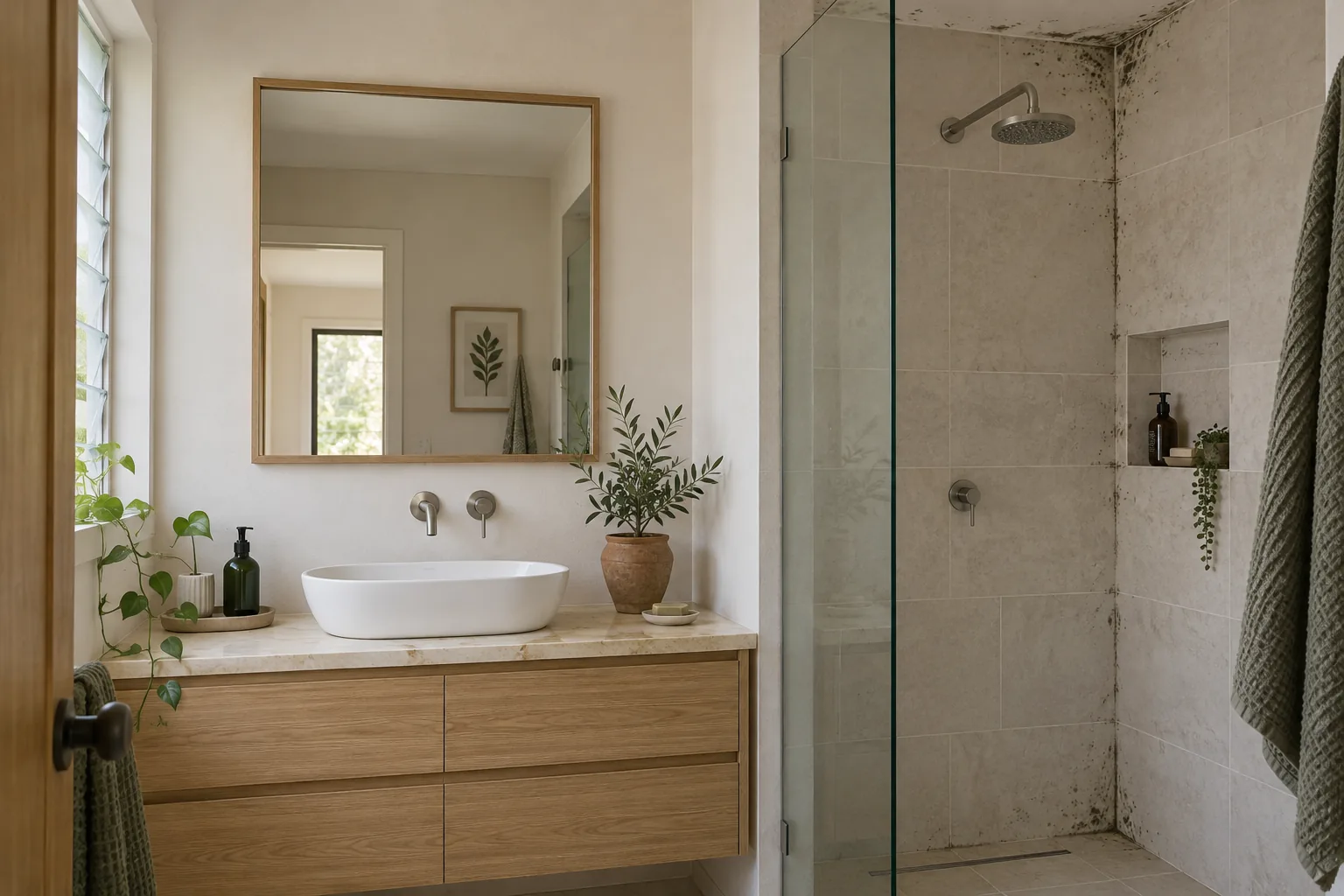
Bathroom, wall and ceiling surfaces
Describe the wall lining, floor finish and any remaining garage-type surfaces. Growth on painted masonry differs from growth on plasterboard or timber trim. Soft lining and damp damaged skirting may need repair. Stored fabric items are excluded, and cleaning an accessible room does not verify whether a conversion meets building requirements.
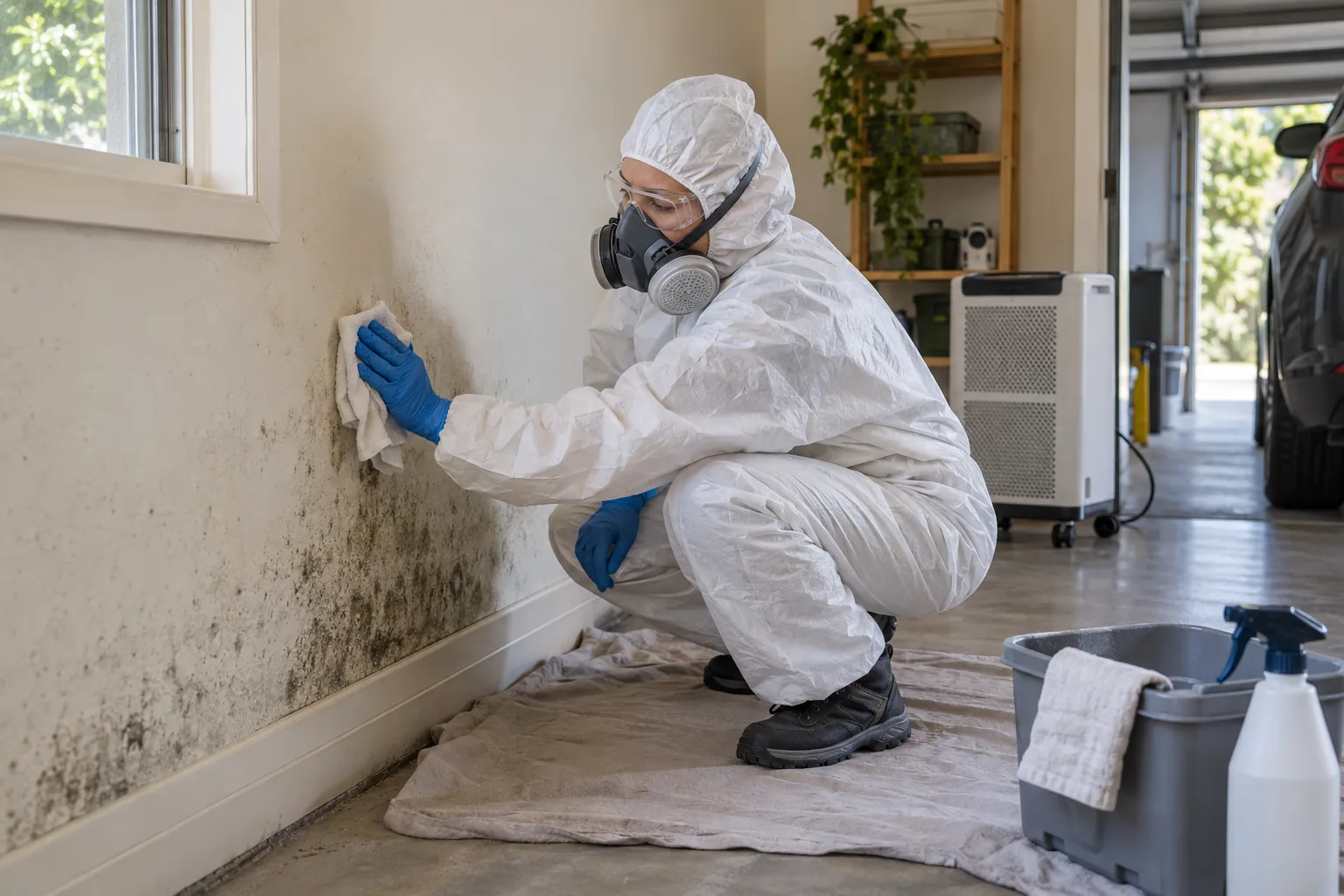
A painted masonry wall, plaster lining and hard floor may each need a compatible approach. Physical removal with appropriate treatment and filtration applies to the agreed accessible finish. Replacing degraded lining and investigating external water entry are separate tasks, even if the room is otherwise tidy.
ASSESS · PREPARE · REMOVE
From the first assessment to the final check
Explain floor levels, room use and any conversion or repair history.
Assess the room and agree the limits
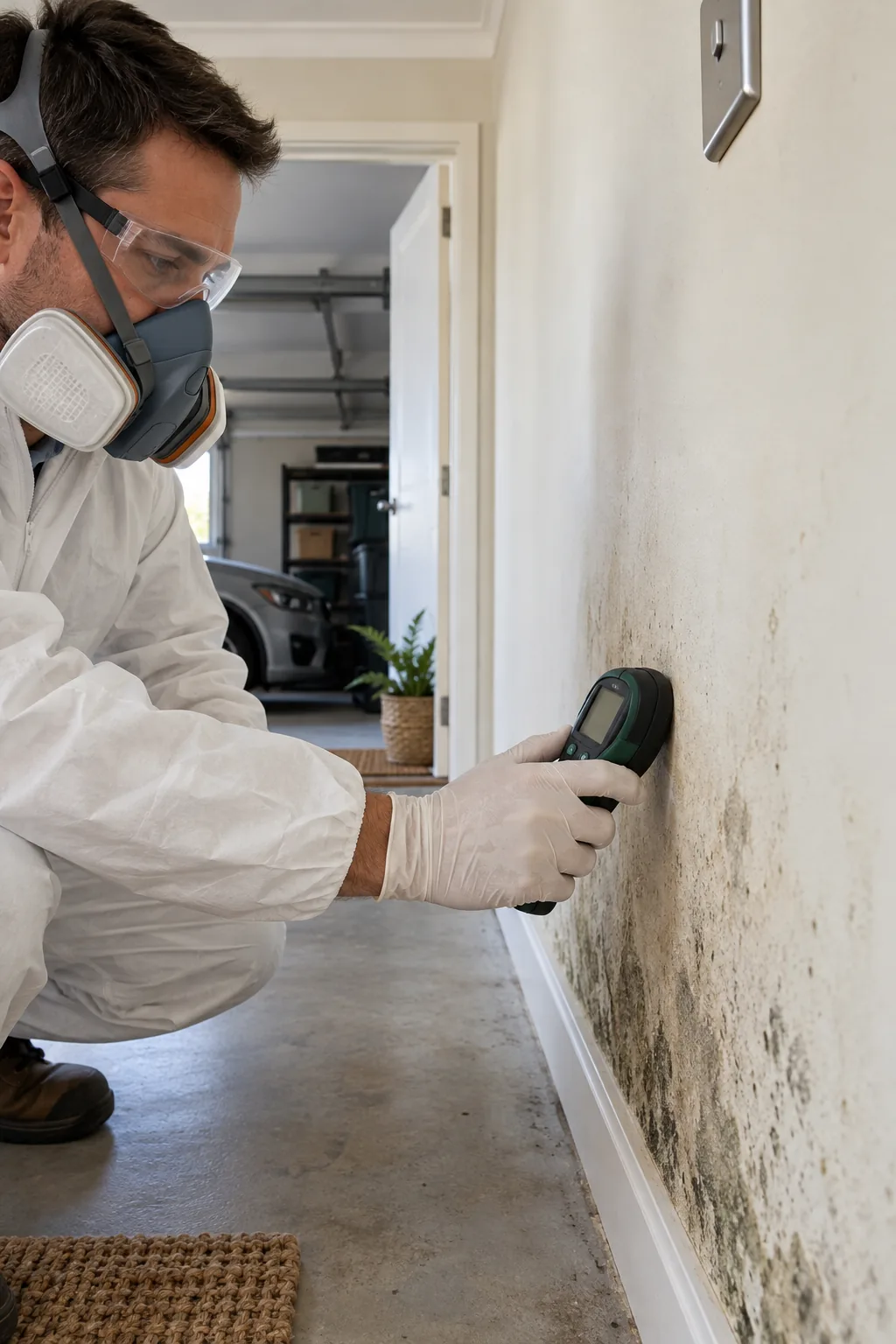
Begin with the room history and the timing of dampness. A professional inspection is useful to discuss when lower-wall conditions are uncertain. It should distinguish observed indoor surfaces from any further drainage, conversion or building-envelope question.
Prepare access and carry out removal
Clear the agreed floor-edge and wall access while keeping affected fabrics separate. The remediation process should respect the identified materials and safe room entry. Concealed substrate or outside drainage work needs another scope, rather than an assumed cleaning inclusion.
Review the finish and next actions
Review the lower-room surfaces and remaining material damage before arranging a new lining or paint finish. Retain the notes with any separate repair record. Later checks should compare the wall base during normal use and relevant weather, with stored belongings kept clear of the observation points.
Investigate the moisture pathway
Note whether the room becomes damp after rain, when an adjoining utility space is used or during periods of closure. A low-level room can raise drainage and building-envelope questions, but these require evidence and suitable trade investigation. Compare affected surfaces with dry areas and explain the history instead of labelling the problem from room level alone.
Know what you are booking
A useful scope respects both the room’s surfaces and its actual use. Ask which areas are suitable for removal and whether a building assessment is needed for damaged or altered materials. The service should not imply that cleaning validates a room conversion or fixes an external water pathway.
The removal overview helps define this room’s surface task. Confirm the actual quotation using the price guide. For Mill Park enquiries, give the complete address by phone and use the directory to navigate related suburbs.
Make the follow-up practical
Arrange any required drainage or building work separately. Once the moisture source is addressed, monitor the floor edges and wall base during ordinary use. Avoid covering damp material with a new lining as the only response. Keep stored belongings away from observation points so changes can be noticed without clearing the whole room.
NEARBY LOCATIONS
Around Mill Park
Lalor · Epping · Thomastown · Plenty
For another address, explore Melbourne areas and call to confirm availability.
BEFORE YOU BOOK
Questions about your Mill Park home
Is mould in a lower room always caused by drainage?
No. Room level is context, not a diagnosis. Water entry, plumbing, condensation and the material history all need consideration.
Does removal certify a converted garage as habitable?
No. Building compliance or approval is separate from the accessible-surface removal scope and needs appropriate advice.
Can painted masonry be included?
It may be suitable if accessible and sound. Describe the finish so a compatible method and any material limits can be discussed.
Should I put new plaster over the damp wall?
Investigate the moisture and material condition first. New lining can conceal continuing dampness rather than resolve it.
Are stored rugs treated with the floor?
Rugs are textiles and are excluded. Agree separate handling for affected belongings before preparing the room.
What should I monitor after repairs?
Check the original floor-edge and wall-base positions during normal use and after relevant weather. Record new wetness or growth rather than relying on fresh paint.
Discuss the affected room in Mill Park
Call 03 8652 1296 about the lower-level room. Give the Mill Park address, room-use history and floor materials when discussing assessment and preparation.
Local context and practical guidance: Whittlesea Council housing diversity strategy · Whittlesea Council sports facility addresses · ABS 2021 Census dwelling structure — Mill Park