
OLINDA · MELBOURNE
Mould Removal Olinda
WINDOWS · WALLS · DRYING
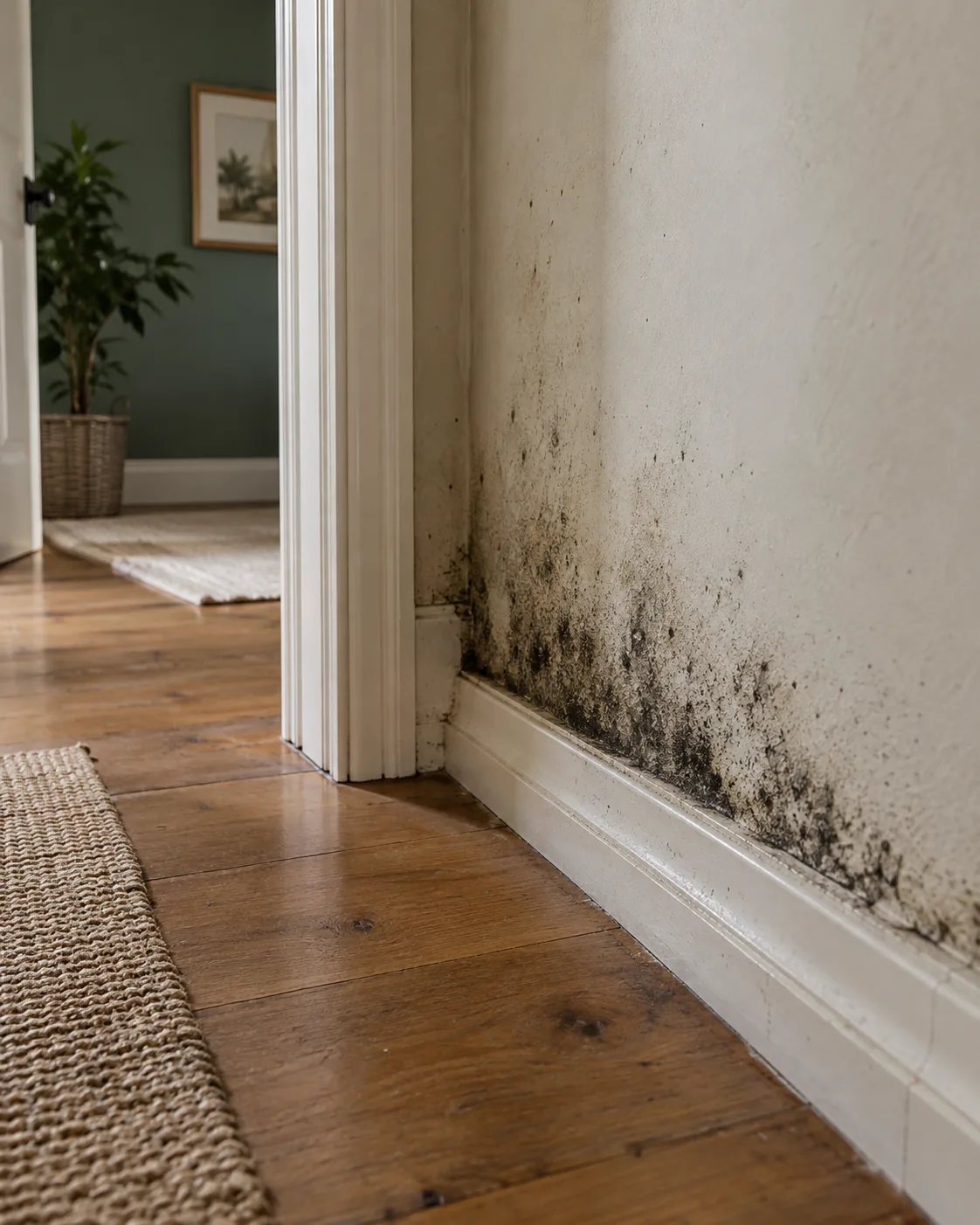
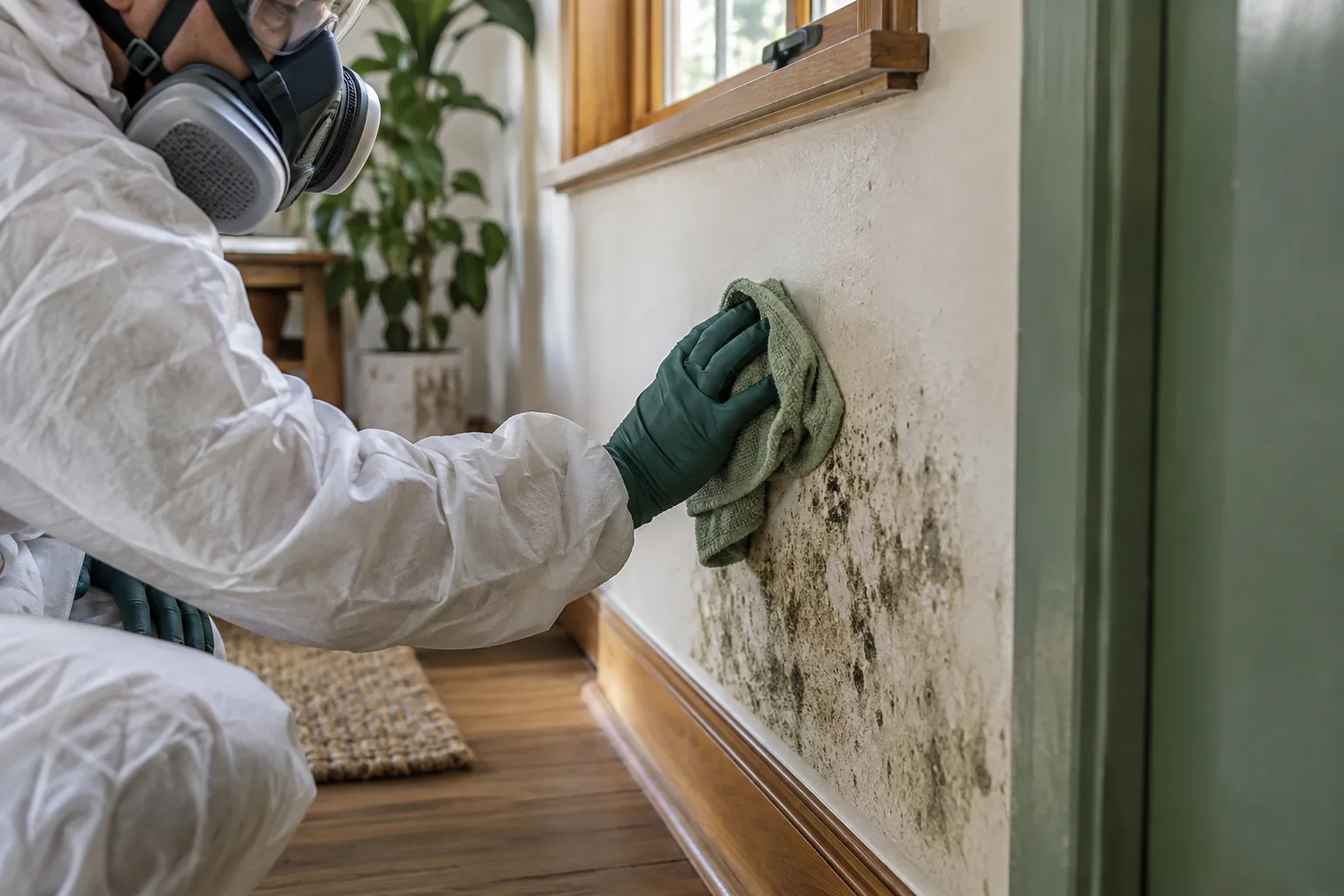
A window-side wall that stays damp deserves attention before the next decorative refresh. For an Olinda enquiry, describe the finish, when wetness appears and whether the ceiling is affected too. We discuss address-based availability and reachable structural surfaces without assuming a cause from the surrounding landscape.
Wetness pattern discussed
Finish condition considered
Availability checked by address
SURFACES & THEIR SETTING
Begin with the property details
Olinda is a recognised locality in the Yarra Ranges. Provide the street address and practical entry details when calling. The area’s identity does not establish how a particular home is built or why an individual room has mould.
The wet window corner
Explain whether condensation appears on glass, paint bubbles beside the reveal or marks change after rain. Our inspection information considers visible growth and moisture conditions. Those details pose useful questions without diagnosing the window.
Ceiling growth nearby
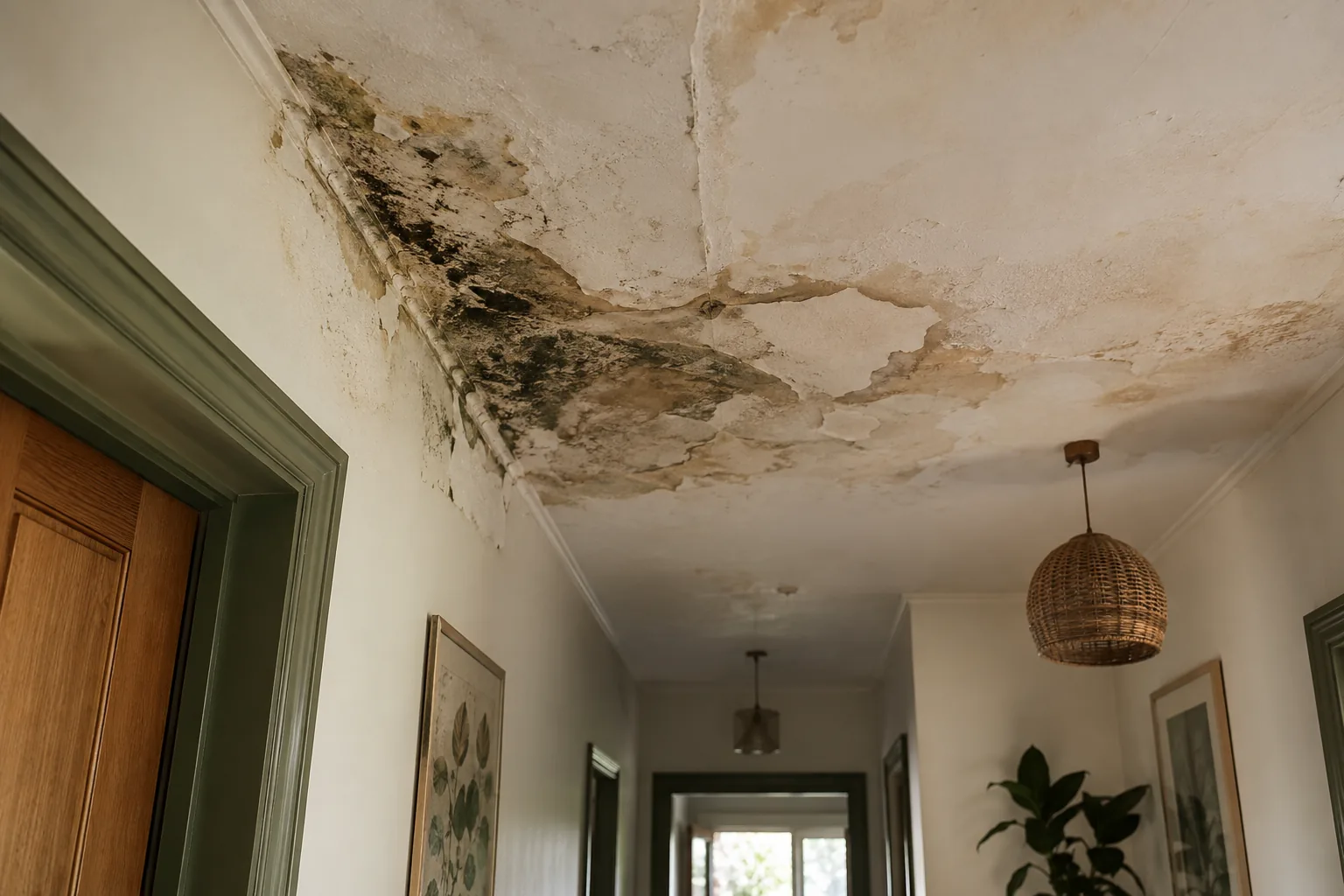
Say whether spotting extends upward or is confined to the wall. Include ceiling height and any loose paint. A room can contain more than one moisture concern, so separate patches should not automatically be assigned the same cause.
Observe the room across time
A single photograph cannot show how long a surface stays wet. Note morning condensation, changes after bathing elsewhere and observations following rain. Any known defect or previous repair should be included in the enquiry.
Material first
Painted plaster, timber trim and a damaged coating need individual consideration. Describe deterioration without scraping. Treatment of growth cannot restore weakened material or guarantee a fresh-looking finish.
Readings in context
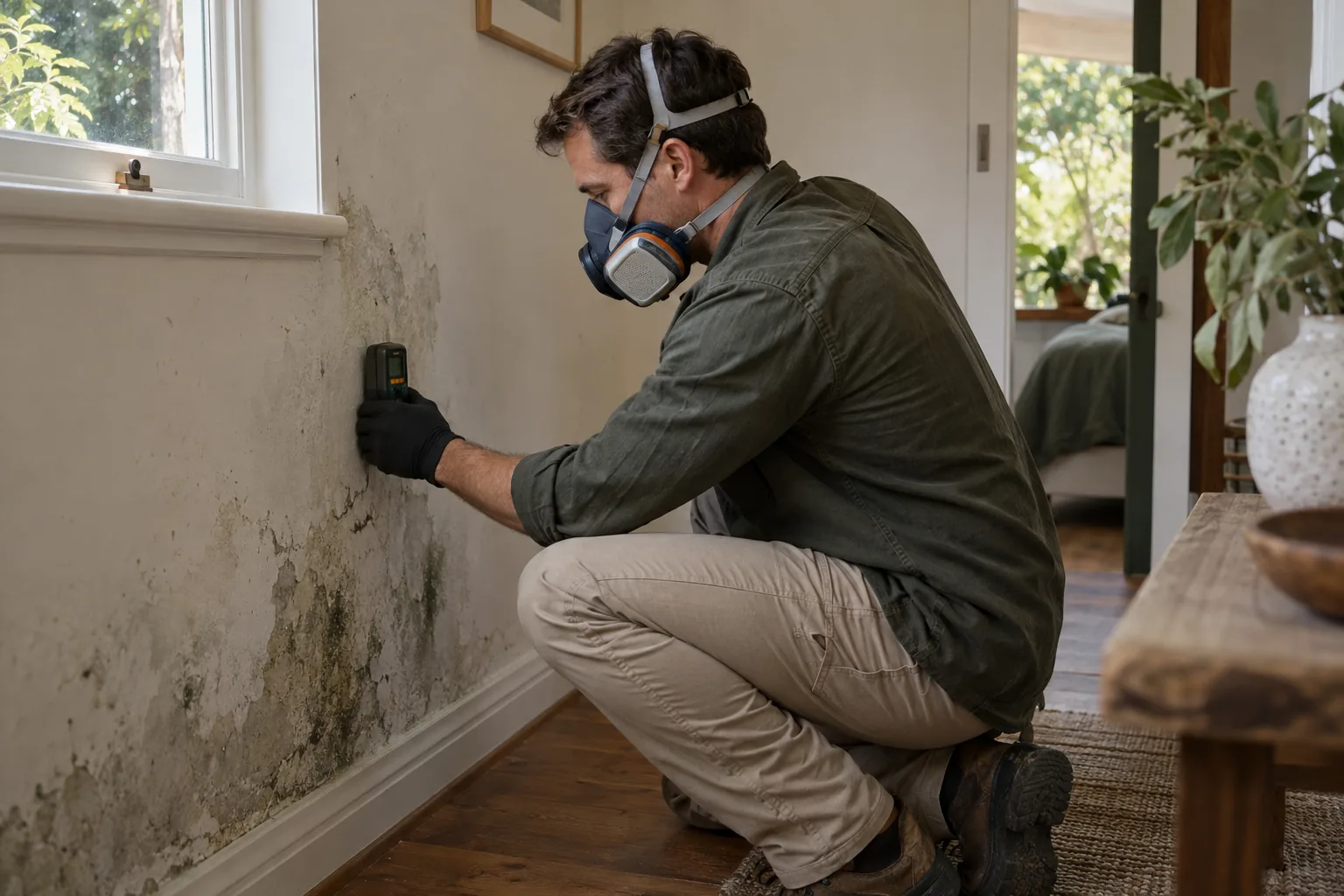
A hygrometer supports assessment of humidity and moisture. It does not certify the window frame, roof or concealed cavity. A persistent source may need separate investigation by the appropriate trade.
THE SURFACE REMOVAL PROCESS
A surface-specific sequence
01
Inspect reachable growth
Check agreed walls, ceiling and hard floor, including the described window-side patch. Discuss damaged finishes and access. Define what is included and what needs repair or another investigation before treatment.
02
Prepare air filtration
Set up HEPA filtration and the working area. Confirm clearance, people and pet arrangements. Entry and equipment routes should suit the actual property, especially where access needs advance coordination.
03
Choose compatible treatment
HOCl may be suitable within the assessed method. Surface condition and compatibility guide use. Existing stains can remain after growth treatment, and cleaning cannot make a leaking window watertight.
04
Review ULV application
Where ULV application suits the job, explain its preparation and restrictions. It supports the agreed room method, not assessment of every hidden material or repair of a moisture source.
05
Remove visible residues
Physical removal uses appropriate H-class filtration equipment. The remediation explanation combines treatment with this stage. Curtains, carpets and furniture near the window are excluded from structural-surface work.
06
Finish filtration and follow-up
Continue air filtration and review treated surfaces. Explain remaining staining and unresolved dampness. Any glazing, roofing or decorative work should be separately arranged rather than implied by completion of cleaning.
VISIBLE & ACCESSIBLE
Details worth identifying
Window-side plaster
Give the wetness pattern and paint condition. A close-up alone cannot establish the source.
Upper wall junction
Show whether marks continue onto the ceiling. Height and access matter to the plan.
Bathroom ceiling
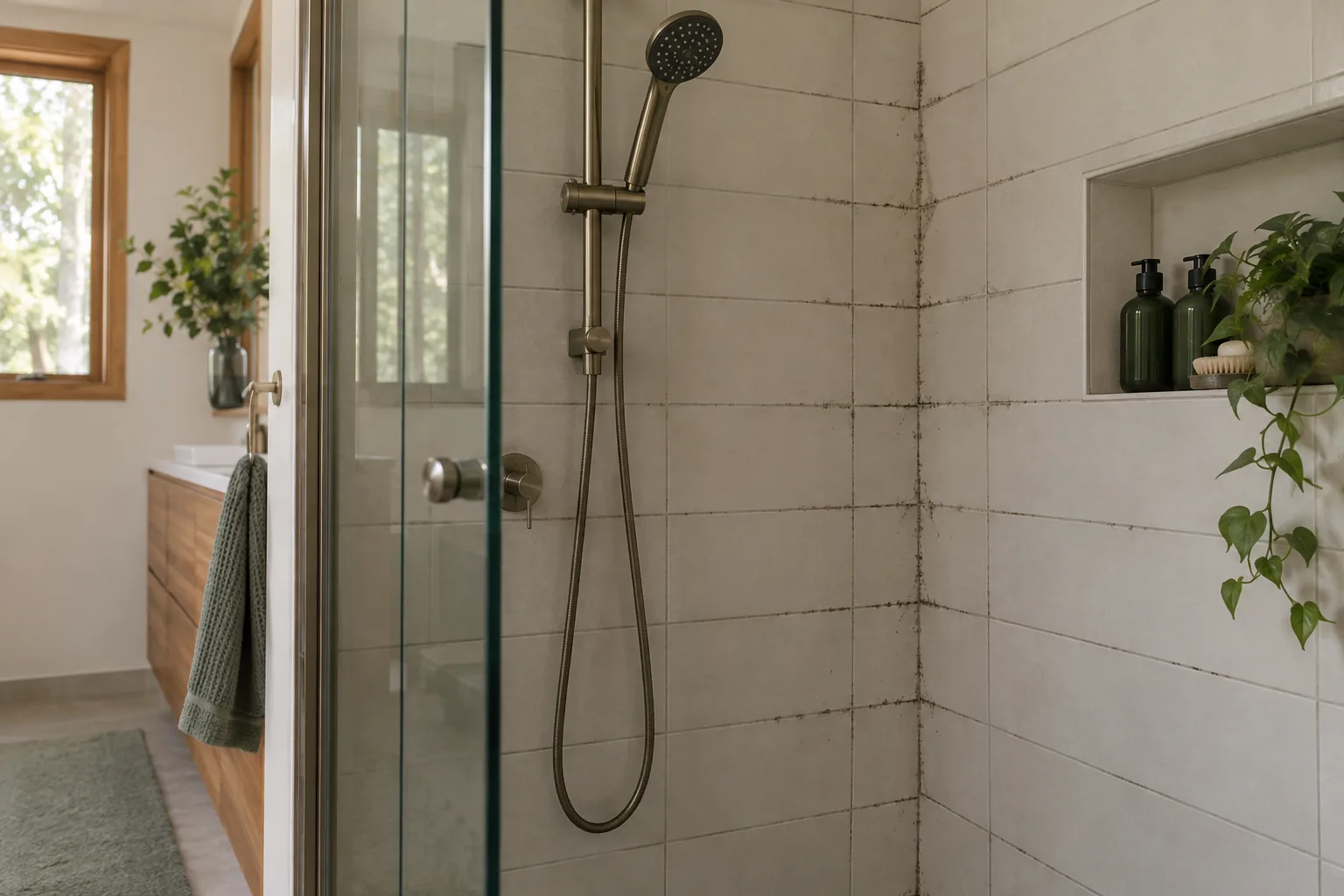
Mention extraction and drying between uses. Its follow-up may differ from a rain-related wall concern.
Hard floor edge
Name the material and any swelling. Soft floor coverings are not included.
PREPARATION & LIMITS
Expect a defined room service
Visible accessible walls, ceilings and hard floors are covered as agreed. Furniture, sofas, mattresses, carpets, curtains, clothing and other textiles are excluded. List affected belongings separately so the structural quotation does not imply treatment of everything beside the window.
About three hours per room is an average guide, with extent and access affecting time; pricing is not hourly. Old cosmetic staining may remain. Repainting or decorating can be quoted separately after ongoing moisture and damaged finishes have been addressed.
AFTER THE SURFACE WORK
Make follow-up observable
Record whether condensation and dampness continue after the job. Use suitable extraction in wet rooms and maintain practical airflow around belongings. A dehumidifier can assist air-moisture control but cannot repair a window, roof or plumbing fault.
The general removal page explains the service limits. If the same surface stays wet or growth returns, arrange source-specific follow-up. Do not attribute recurrence to the locality or assume that another cosmetic clean resolves it.
OLINDA · NEARBY LOCATION PAGES
Nearby locality navigation
Sassafras, Mount Dandenong and Sherbrooke provide nearby pages. Give the actual address and confirm appointment availability and access. We do not claim a separate Olinda office or particular client projects in these localities.
BEFORE YOU ARRANGE WORK
Questions for your enquiry.
Does a wooded setting explain the mould?
No. The wider landscape cannot diagnose an individual room. Moisture history, readings, material condition and any known defects need consideration before the appropriate follow-up is chosen.
Can you repair a window leak?
Glazing repairs are separate from mould removal. Describe the suspected leak before booking so the surface work can be planned alongside the appropriate repair assessment, rather than presented as a substitute.
Will curtains beside the patch be treated?
No. Curtains and other textiles are excluded. Identify affected items separately and follow the agreed clearance plan so the wall or reveal can be reached safely.
Is ceiling spotting necessarily the same problem?
Not necessarily. Describe each patch and its history. Several surfaces in one room can need separate consideration; their proximity does not prove one shared source or automatically include every area in the quote.
What if paint is peeling?
Mention it during the enquiry. A damaged coating may affect the method or require separate repair and decorating. Treatment of growth does not restore the strength or appearance of every finish.
Can a dehumidifier replace source repairs?
No. It can assist moisture control but does not mend water entry. Persistent dampness requires attention to its actual cause, and growth may return while the underlying conditions remain.
Discuss the Olinda surfaces
Call 03 8652 1296 with the address, window-side observations and ceiling access. We can discuss availability and a clear accessible-surface assessment.
Useful references: Official local context