
LAURIMAR · MELBOURNE
Mould Removal Laurimar
ADJOINING ROOMS · WALLS · HISTORY
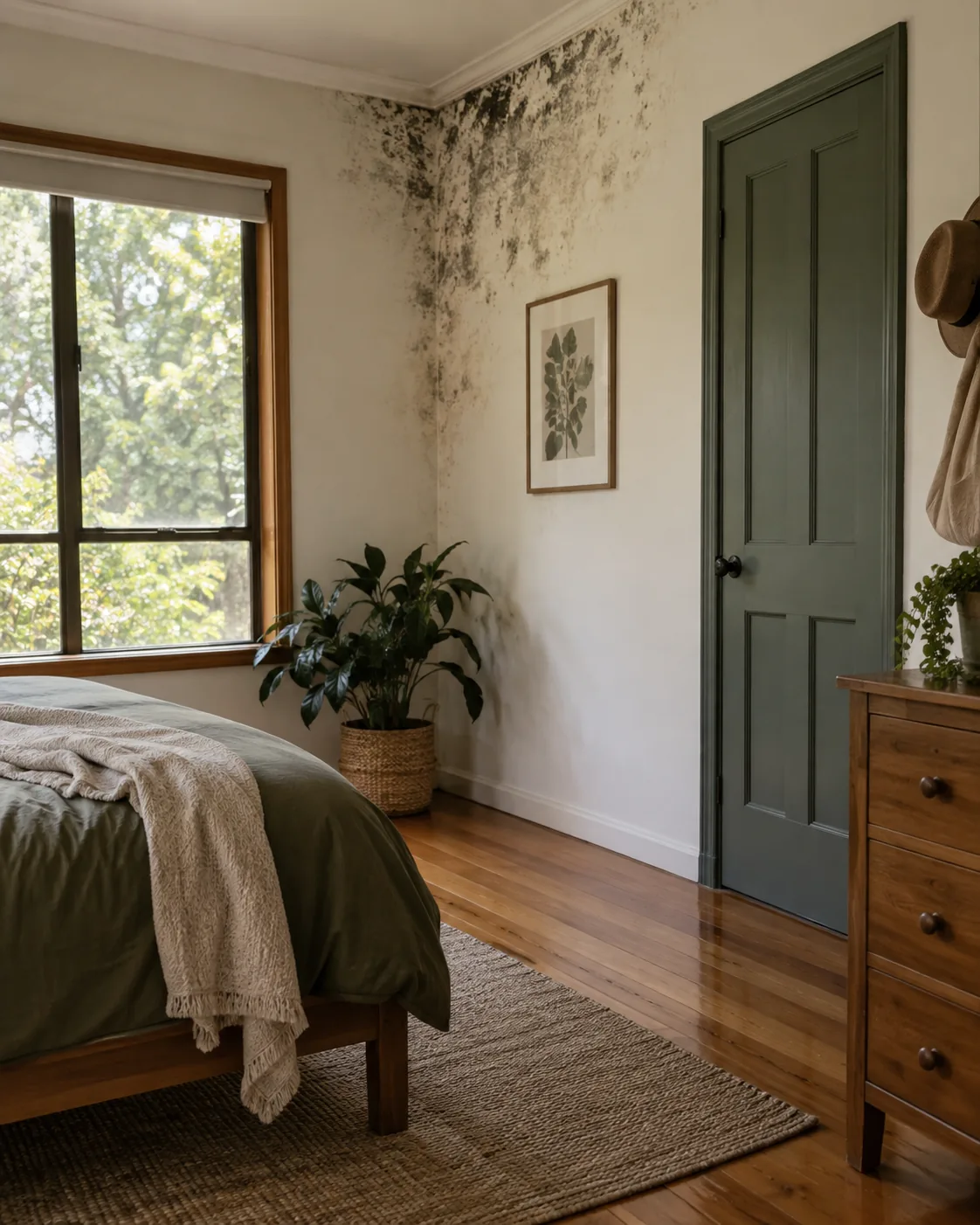
If growth appears on a bedroom wall beside a wet room, describe both spaces before assuming ordinary condensation. For a Laurimar enquiry, provide the Doreen address and the affected finishes. We discuss visible structural surfaces and source follow-up without diagnosing concealed plumbing from the room layout.
Adjoining rooms considered
Separate surface scopes agreed
Moisture source questions clarified
SURFACES & THEIR SETTING
Give the Doreen street address
Laurimar is a neighbourhood name used in Doreen, including local community facilities. Supply the actual property address when calling. It is not presented as a separate suburb with its own office or a predictable pattern of housing defects.
A bedroom beside the bathroom
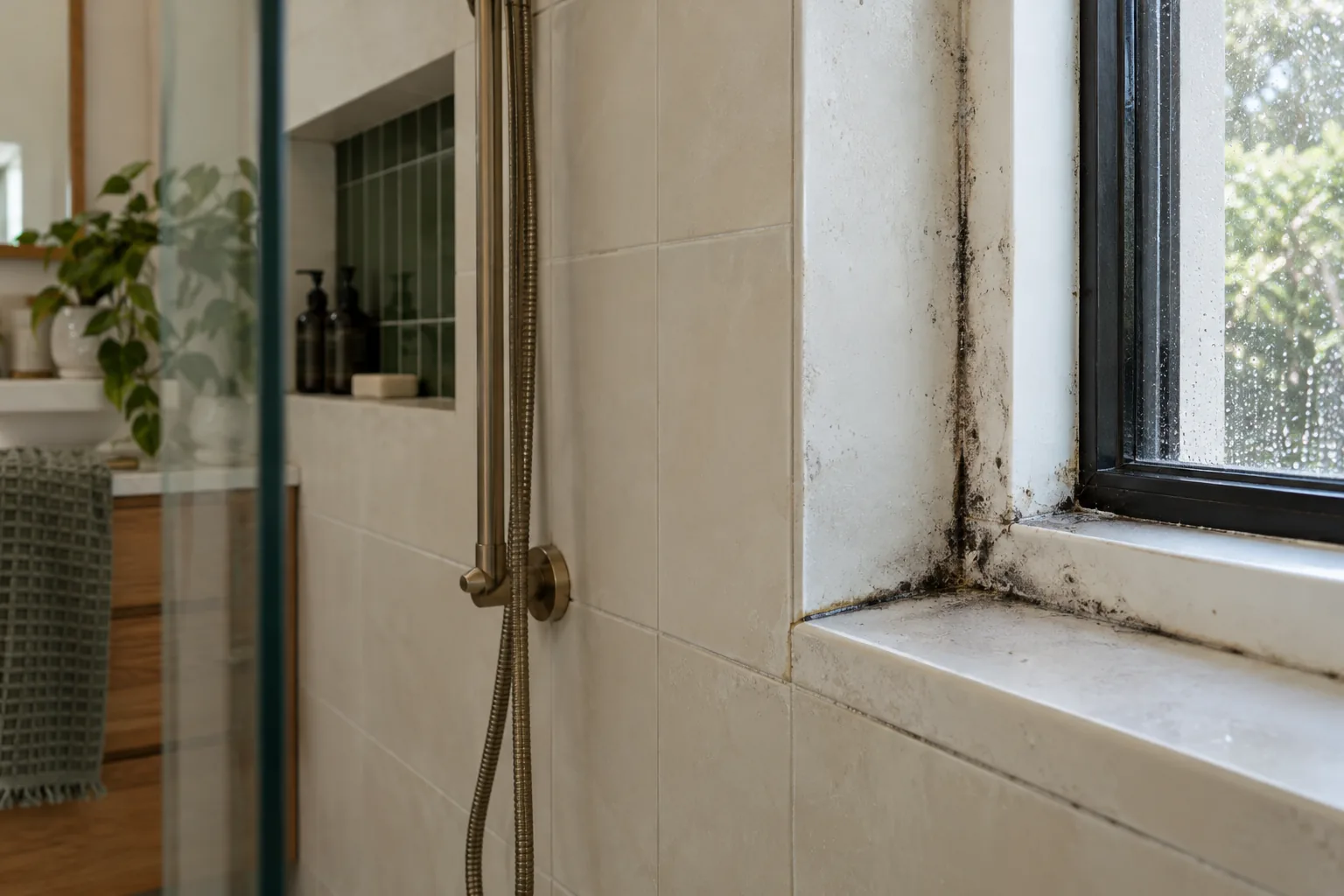
Say which wall is affected and whether the bathroom side shows wetness. The inspection service considers visible growth and moisture conditions. A shared wall raises questions but does not prove a plumbing or waterproofing fault.
Access on each side
Bedroom furniture and bathroom fittings can affect the surfaces available for assessment. Identify fixed obstructions and agree room clearance. Treating one side does not automatically include hidden cavities or the adjacent room.
Understand the moisture history
Note whether marks appeared after a plumbing incident, grow gradually or change after bathing. Explain repairs already made. Removal should be planned alongside the appropriate source investigation rather than used as evidence that the leak has ended.
Distinct surface conditions
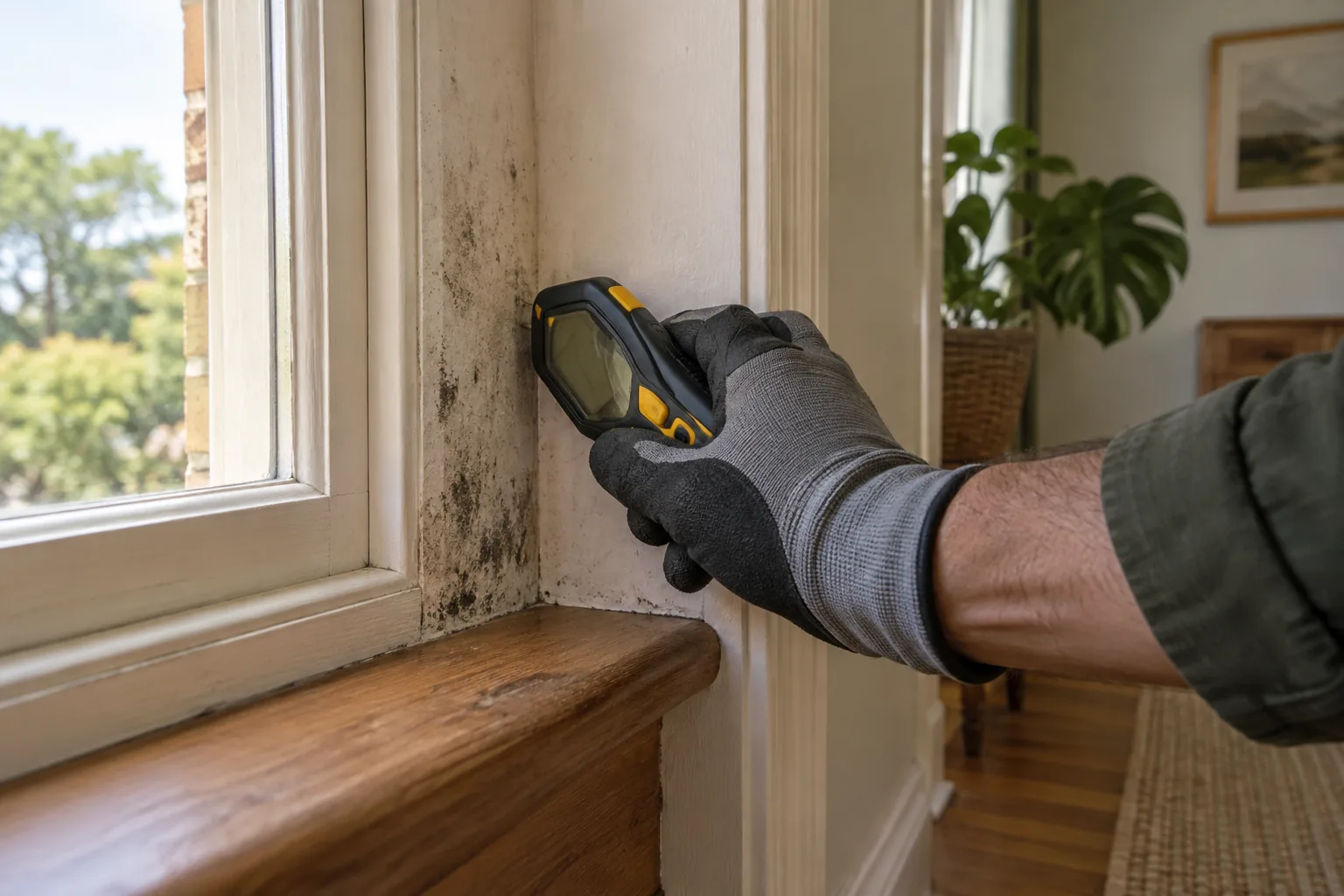
A clean-looking bathroom and a damaged bedroom wall may still need different assessment. Describe bubbling paint, loose plaster and recurring wetness without opening the wall yourself.
Readings support the questions
A hygrometer assists moisture assessment. It cannot locate every concealed pipe defect or certify waterproofing. Persistent dampness or deteriorated material may need additional investigation beyond the visible-surface service.
THE SURFACE REMOVAL PROCESS
A room-by-room approach
01
Inspect agreed surfaces
Check reachable walls, ceiling and hard floor in the included rooms. Define boundaries on each side of the shared wall. Any concealed material or surface requiring dismantling needs a separate access or repair decision.
02
Prepare filtration and clearance
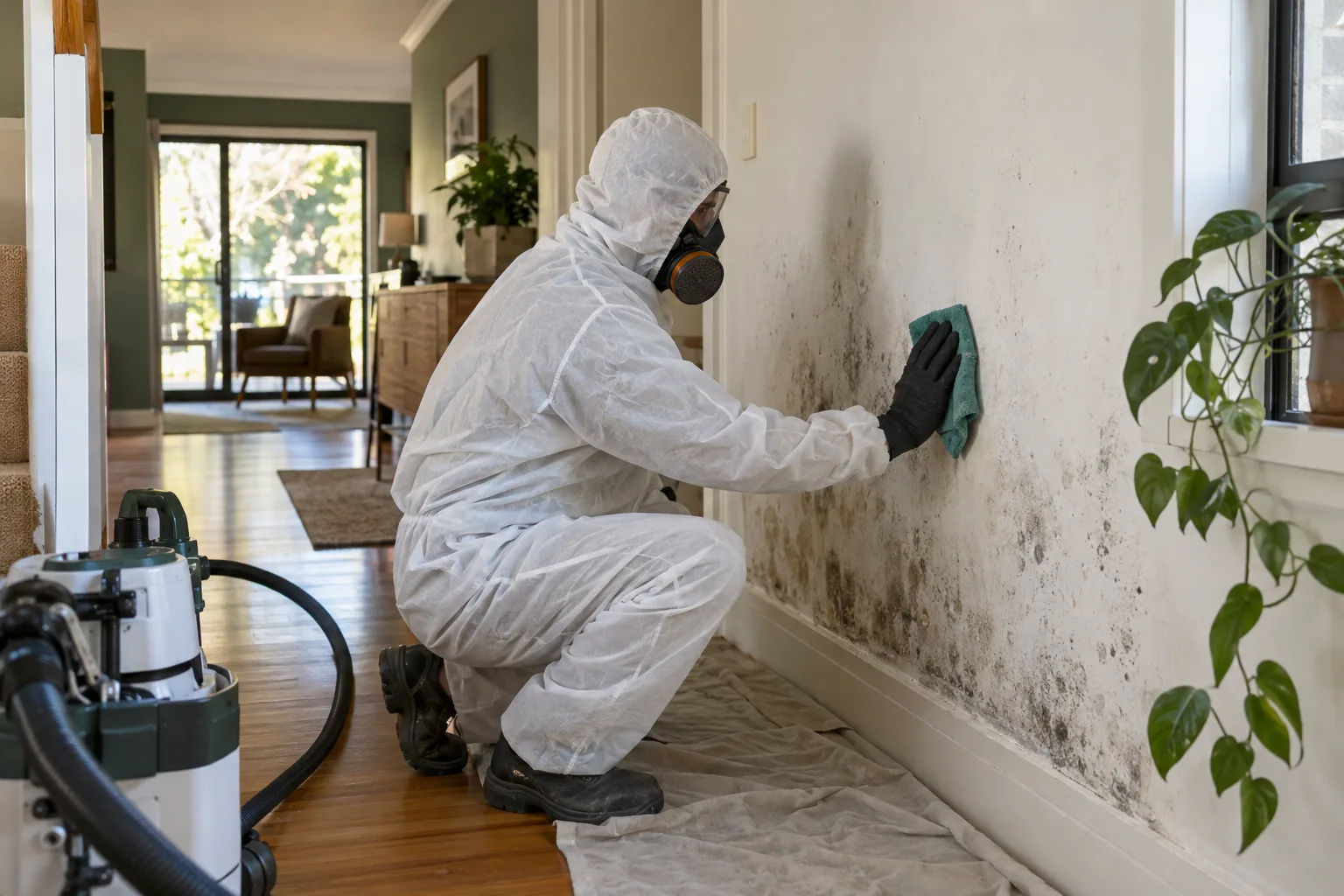
Set up HEPA filtration and the agreed working area. Confirm people and pet arrangements. Furniture clearance and bathroom access should be coordinated before treatment, without assuming heavy moving or fitting removal is included.
03
Choose suitable treatment
Appropriate HOCl treatment may be selected for the assessed finishes. Material condition guides use. Growth treatment does not restore damaged plaster or repair waterproofing behind an accessible surface.
04
Explain ULV application
Discuss a ULV stage where it suits the job. Its preparation and restrictions must be clear. Application in the room does not establish that a shared wall’s hidden layers or plumbing have been inspected.
05
Remove accessible residues
Use suitable physical removal equipment with H-class filtration. The remediation overview explains the combined method. Bedroom textiles, mattresses and bathroom soft items remain outside scope.
06
Finish filtration and review
Continue filtration and explain the treated surfaces and remaining concerns. Identify source follow-up and any separate decorative work. A clear review prevents one room’s cleaning being mistaken for repair of both sides of the wall.
VISIBLE & ACCESSIBLE
Affected areas to identify
Bedroom wall
Give furniture access and the finish condition. Growth behind a bed does not include the bed itself.
Bathroom wall
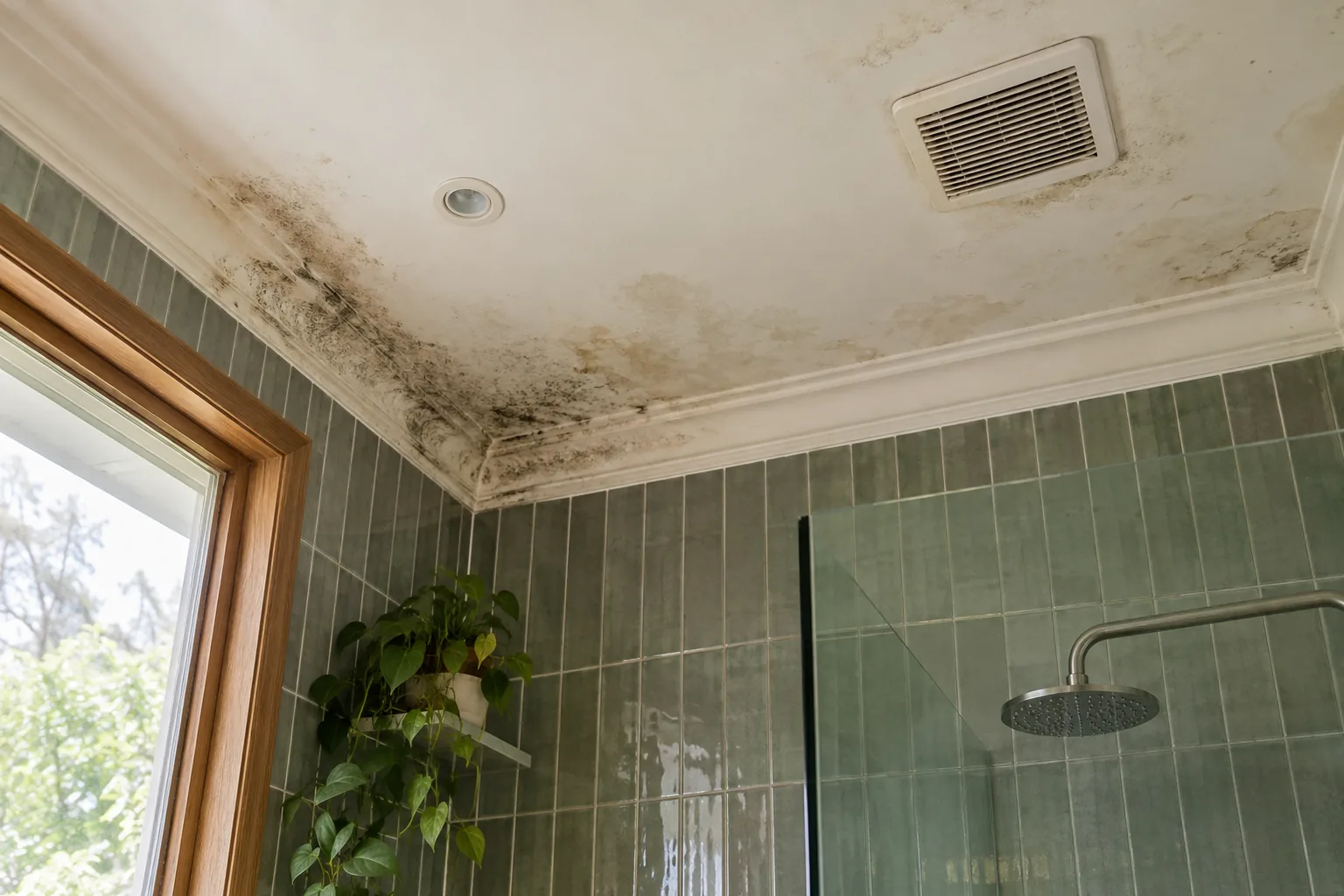
Describe the material, wetness and fittings. Plumbing and waterproofing repairs are separately arranged.
Ceiling junction
Say whether marks extend above the shared wall. Height and paint condition affect access.
Hard floors
Identify material and any swelling in each included room. Carpets are excluded.
PREPARATION & LIMITS
Avoid an undefined two-room quote
The service covers visible accessible walls, ceilings and hard floors as agreed. Furniture, sofas, mattresses, carpets, curtains, clothing and textiles are excluded. List both rooms separately so the enquiry distinguishes structural surfaces from fittings and belongings.
Around three hours per room is an average working guide, with complexity and access affecting time; pricing is not hourly. Existing staining may remain. Repainting or decorating can be quoted separately after the dampness and damaged material have been addressed.
AFTER THE SURFACE WORK
Follow up on both sides
Keep dated observations of the affected wall and note changes after routine wet-room use. Review suitable extraction and drying. If the wall remains damp, involve the appropriate repair trade rather than repeatedly cleaning the visible bedroom side.
The general service scope explains what treatment covers. Do not use a cleaner-looking finish as proof that concealed leakage has stopped. Growth can return if the source or the conditions supporting dampness remain.
LAURIMAR · NEARBY LOCATION PAGES
Nearby Doreen-area navigation
Mernda, Nutfield and Yarrambat provide nearby enquiry pages. Choose the actual property locality and provide its full address. Laurimar is a neighbourhood reference, not a claim of a separate branch or local client history.
BEFORE YOU ARRANGE WORK
Questions for your enquiry.
Does a shared bathroom wall prove a leak?
No. It is useful context for assessment, but does not establish the source. Explain wetness and plumbing history; specialist investigation may be needed separately from visible-surface inspection.
Can both rooms be included?
Discuss each room and accessible surface during the enquiry. Inclusion is agreed, not automatic. Furniture, fittings and concealed areas still require separate decisions even when the rooms adjoin.
Will you open the wall?
Not within standard visible-accessible-surface work. Opening and investigating concealed material requires a separately defined scope and appropriate access or repair arrangement.
Can a mattress against the wall be treated?
No. Mattresses and textiles are excluded. Identify them separately so their handling is not confused with the wall, ceiling or hard floor included in the structural-surface job.
What if the bathroom looks clean?
That does not establish the condition of concealed plumbing or wall layers. Describe the visible concern on the other side and the moisture history rather than using appearance alone to dismiss further investigation.
Is Laurimar a separate service office?
No. The name is used as a neighbourhood reference for Doreen enquiries. Supply the full street address so booking, access and nearby navigation identify the correct property.
Discuss the Laurimar room layout
Call 03 8652 1296 with the Doreen address, shared-wall details and affected finishes. We can discuss assessment and separate source-repair questions.
Useful references: Official local context