
RYE · MELBOURNE
Mould Removal Rye
HANDOVER · HISTORY · SCOPE
A rental handover can reveal marks that were hidden by the previous layout. Before booking for a Rye property, identify the affected room, the person authorised to approve work and any known dampness. Availability and the agreed surfaces are confirmed for the exact address.
Approval pathway clarified
Current condition recorded
Included surfaces agreed
SURFACES & THEIR SETTING
Keep the handover record useful
Rye is included in the Shire’s Peninsula foreshore information. For a mould removal enquiry, the actual tenancy and room details are more useful than assuming a cause from the location. Record what is visible without assigning responsibility from appearance alone.
An uncovered wall at departure
Take a room-wide view and a closer picture of the finish. Note when the surface became visible and whether earlier inspection images exist.
Two people giving instructions
Clarify whether the owner, agent or another authorised representative approves treatment. The occupant’s photographs can explain conditions, but booking authority and preparation need one agreed pathway.
Assessment before a fresh coat of paint
An inspection discussion considers the room history and accessible material. Include leaks, extraction faults and products already applied. A planned repaint or new tenancy does not remove the need to distinguish contamination from substrate damage.
An apparently empty room
Explain remaining joinery, locked rooms or excluded floor coverings. Empty space may simplify access, but fixed obstacles and weak material can still limit the work.
A competing deadline
Tell us about a handover date, but do not assume treatment, repair and decorating fit a single appointment. The room’s condition and address availability determine what can be arranged; separate trades may need their own sequence.
THE SURFACE REMOVAL PROCESS
A room plan with clear responsibilities
01
Inspect and define work
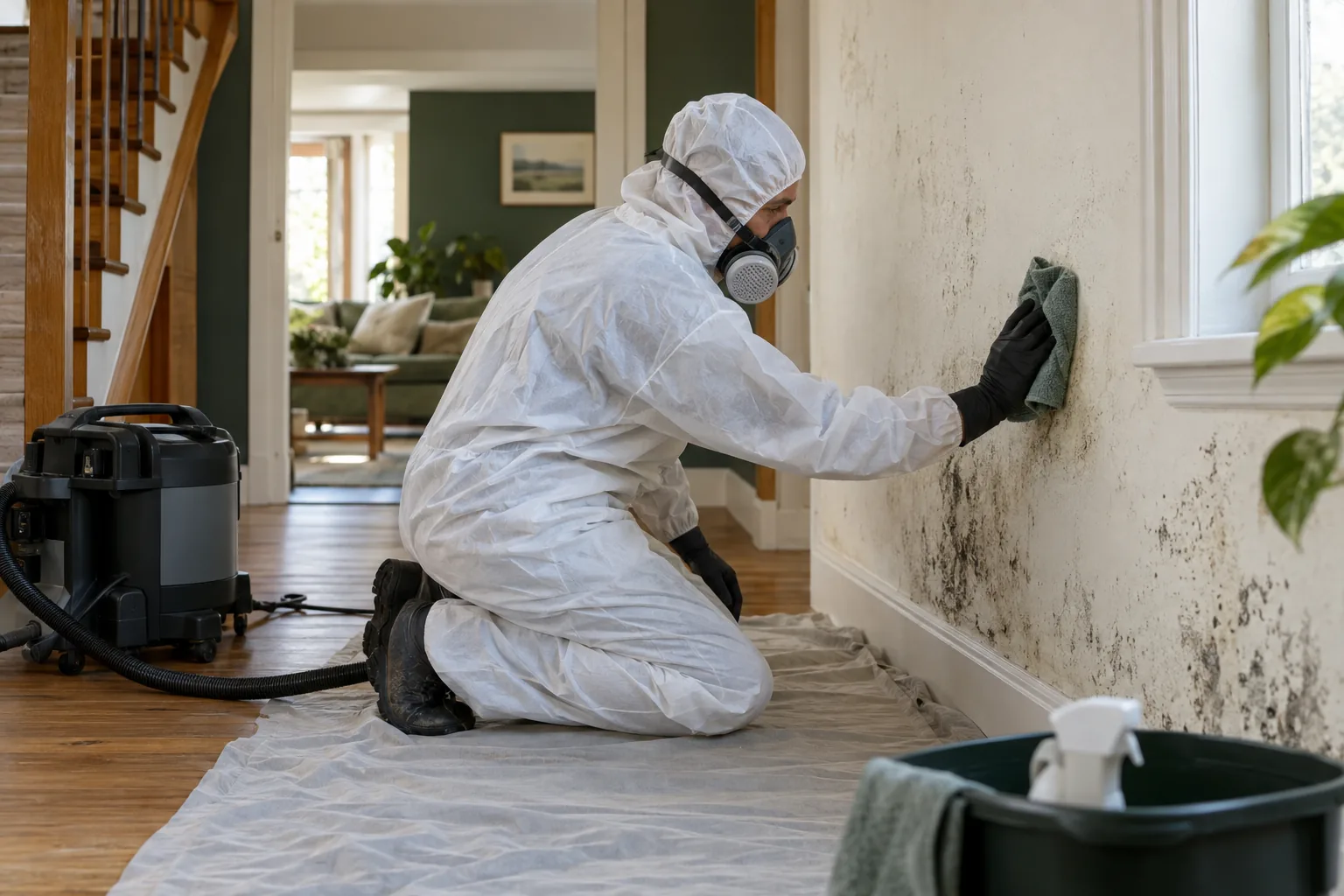
Review visible growth and relevant humidity or moisture readings. Agree reachable walls, ceilings and hard floors with the authorised contact. Record limitations where material is damaged or an inaccessible area requires separate investigation.
02
Prepare air protection
Set up HEPA filtration and suitable power within the planned area. Arrange keys and occupant access before attendance.
03
Select suitable treatment
Appropriate HOCl application follows the assessed material. Tell the technician about earlier cleaners or paint. A desire to meet an inspection deadline does not justify improvised mixtures or assumptions about a guaranteed cosmetic finish.
04
Apply according to the plan
ULV application may be suitable within the procedure. Confirm people, pets and approved building-system arrangements. Upholstery, curtains and carpets are excluded. Concealed cavities require their own investigation and access arrangements.
05
Remove surface contamination
Physical removal uses professional equipment with H-class filtration as required. Keep the work within the agreed structural surfaces.
06
Complete the room handover
Final air filtration is followed by a review of remaining marks and repair questions. Confirm return instructions with the authorised contact.
VISIBLE & ACCESSIBLE
Images that clarify the rental room
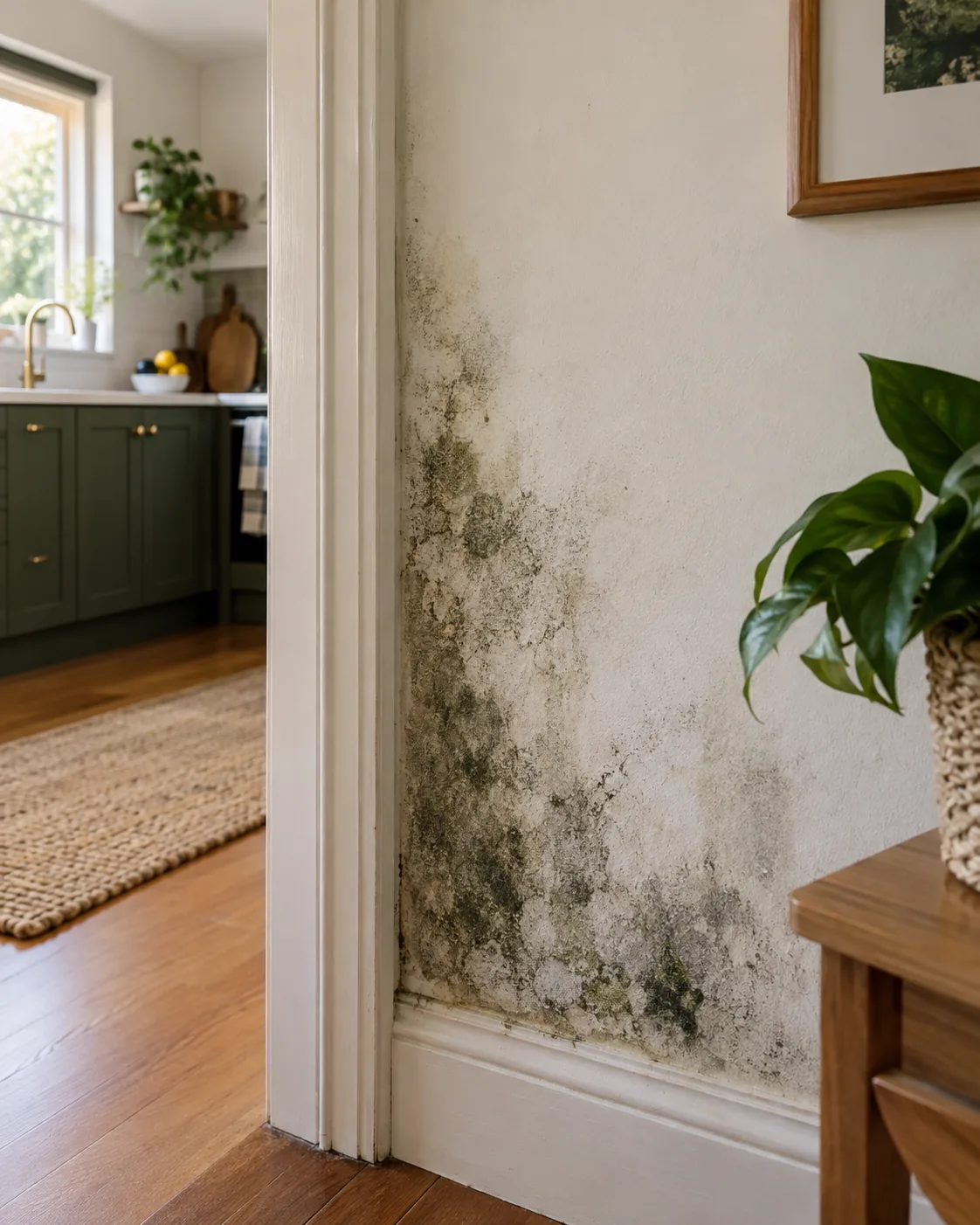
Wall formerly behind furniture
Show the exposed wall and any obstacle remaining. Furniture and stored belongings are not part of the structural treatment.
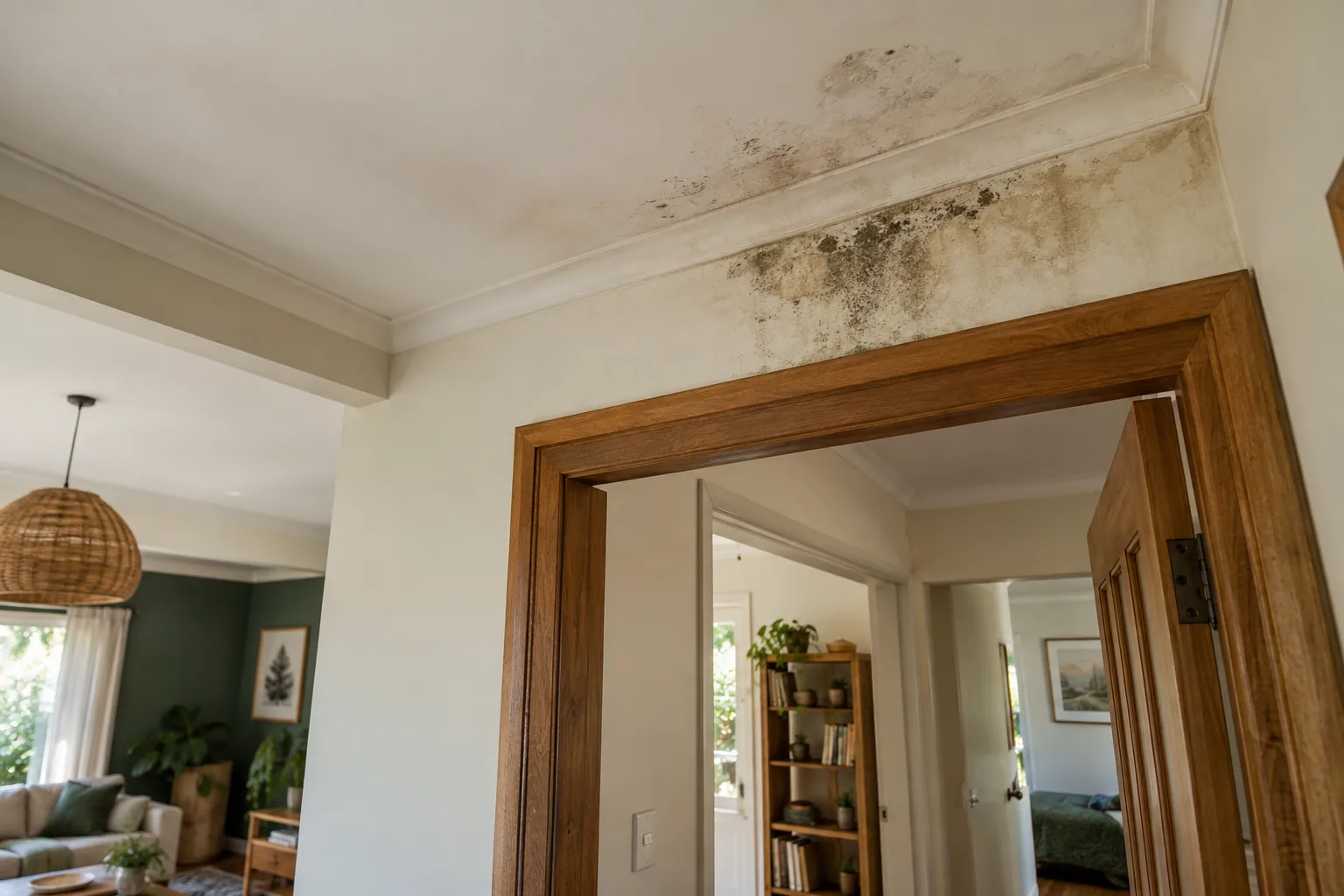
Bathroom ceiling
Include extraction details and damaged paint. A tenancy change does not establish whether ventilation or a leak needs attention.
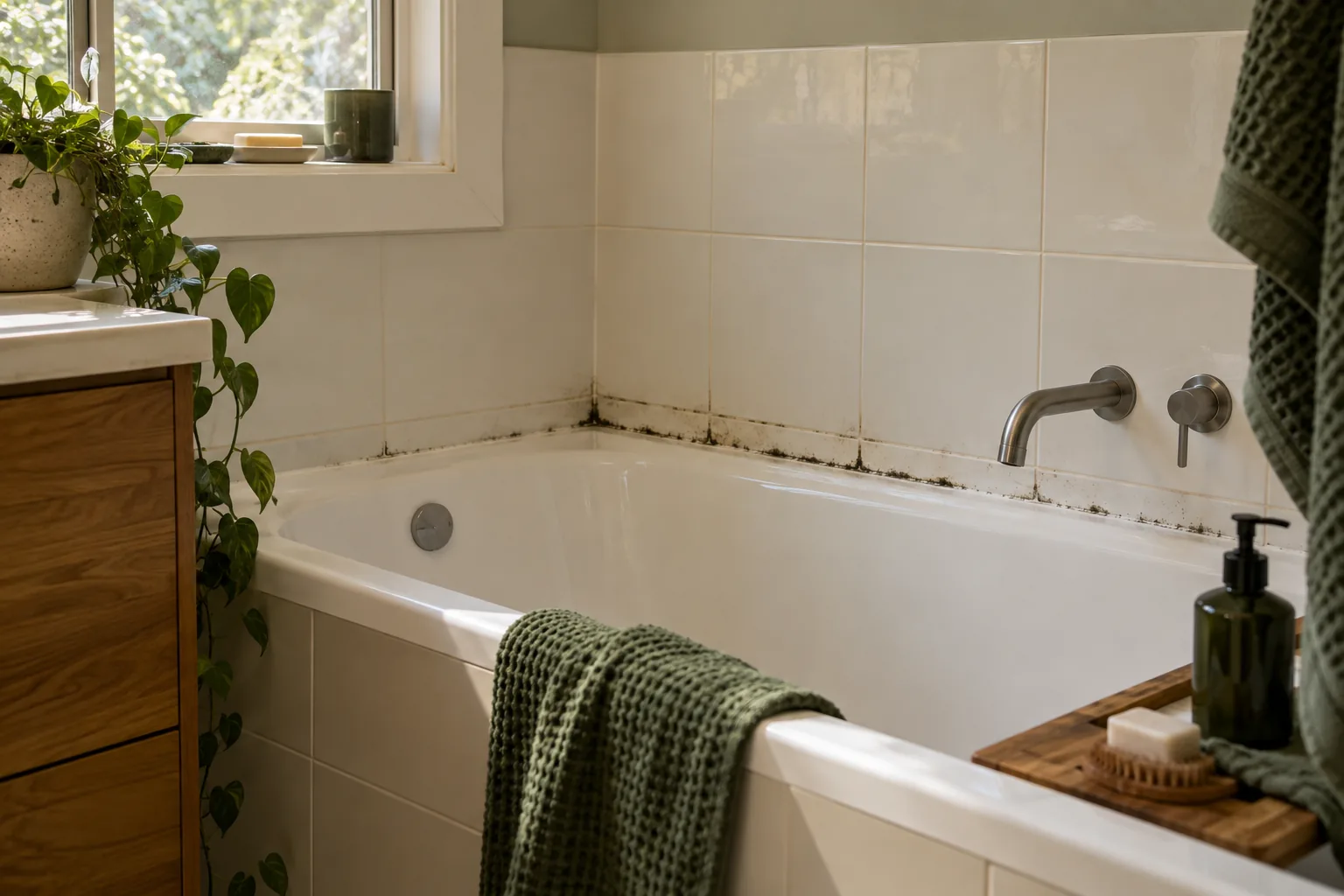
Hallway wall
Identify it as a separate area if marks extend beyond the original room. Additional surfaces need agreement before work.
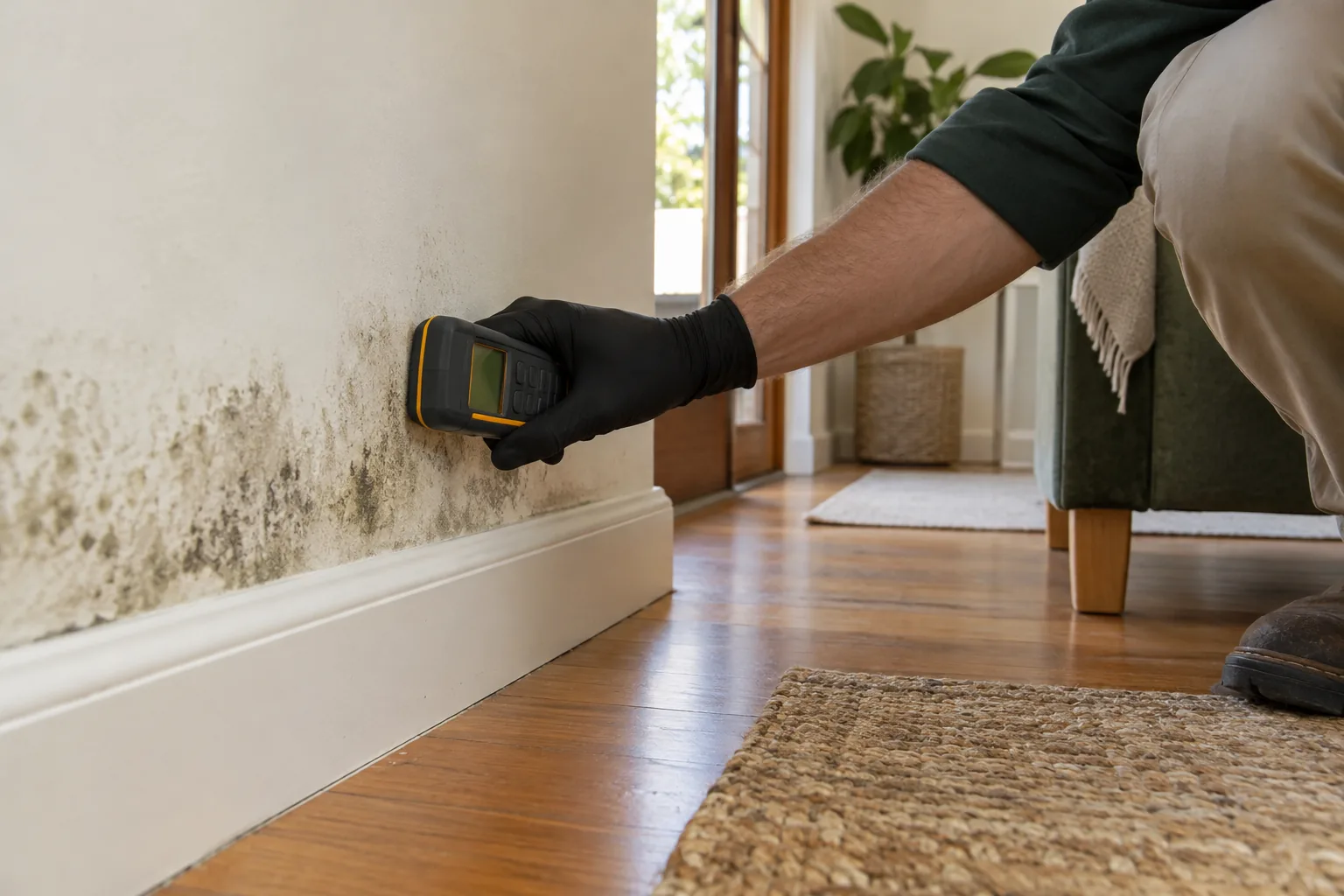
Hard floor at a wall edge
Specify the material and ongoing dampness. Carpet, underlay and rugs are excluded even in an otherwise empty rental.
PREPARATION & LIMITS
Agree an achievable outcome
Approximately three hours per room is the service’s average guide, varying with size, severity and access. It is not hourly pricing. Do not promise a decorator or incoming occupant a precise finish time before the treatment arrangement is assessed.
Cosmetic marks may remain after contamination removal. Decorating is separately quoted where appropriate, and source repairs need their own agreement. Treatment cannot guarantee a stain-free inspection result or prevent recurrence while moisture continues to affect the property.
AFTER THE SURFACE WORK
Give the next occupant useful information
Keep dated records of the treated locations and outstanding repair issues. A concise room handover is more useful than claiming the entire house is mould-proof. Make clear who will respond if water entry, repeated condensation or new marks are observed.
Review extraction and practical ventilation with the appropriate owner or manager. Furniture clearance and indoor moisture routines support ongoing observation. Remediation concerns existing contamination, while repair and continuing moisture management remain important separate responsibilities.
RYE · NEARBY LOCATION PAGES
Rye and neighbouring enquiries
The nearby links help navigate surrounding addresses. Contact us with the actual Rye property, entry arrangement and authorised booking contact. Locality pages do not establish tenancy responsibility, a provider’s local office or guaranteed attendance before a handover deadline.
BEFORE YOU ARRANGE WORK
Questions for your enquiry.
Can you decide whether the tenant caused the mould?
This removal service does not determine tenancy liability. Provide factual observations and relevant history.
Can the agent arrange work for an empty property?
Discuss authority, keys and preparation with the booking contact. The room scope and address availability still require agreement, including who can approve changes and receive completion information.
Does cleaning guarantee the bond inspection will pass?
No. Treatment does not guarantee a cosmetic result or tenancy outcome. Staining, damaged material and repairs are separate issues, and appearance should be discussed realistically before booking.
Should the painter attend the same afternoon?
Do not assume that sequence is suitable. Discuss the surface condition and treatment plan first. Decorating is separate, and unresolved dampness or material damage may affect when painting is sensible.
Is abandoned carpet included?
No. Carpets and underlay are excluded along with furniture and textiles. Identify them so accessible structural surfaces can be discussed without an incorrect assumption about the treatment scope.
Can the new occupant enter as soon as removal stops?
Follow the agreed return arrangements. Final filtration and the planned procedure matter; machinery stopping is not a universal instruction that every activity can resume immediately.
Discuss your Rye address
Call 03 8652 1296 about the Rye property, room condition and authorised booking contact. Mention any handover deadline without assuming a fixed finish time; agree suitable surface scope and preparation first.
Useful references: Official local geographic reference