
TOOTGAROOK · MELBOURNE
Mould Removal Tootgarook
LAUNDRY · EXTRACTION · SURFACES
An indoor drying area can leave moisture in a room long after the washing is put away. If marks appear nearby in Tootgarook, describe the laundry routine alongside leaks, extraction and surface damage. We discuss the actual address and suitable scope before confirming availability.
Room moisture history
Clear textile exclusions
Accessible surface assessment
SURFACES & THEIR SETTING
Describe the drying area as a room
The Shire identifies Tootgarook among its Peninsula foreshore locations. For mould removal, explain where laundry is dried rather than assuming the coastal setting explains growth. The affected surface, ventilation and known water entry all deserve consideration.
Washing moved into a spare room
Tell us how often the room is used for drying and whether windows collect condensation. The routine is relevant information, not proof of a sole cause. Note other changes, including heating, a broken fan or a recent leak.
The wall behind the drying rack
Photograph the structural wall after discussing safe clearance. Clothing and racks do not become included treatment items. If textiles themselves are affected, they need separate consideration rather than being left in place for a wall appointment.
Check the accessible material and moisture pattern
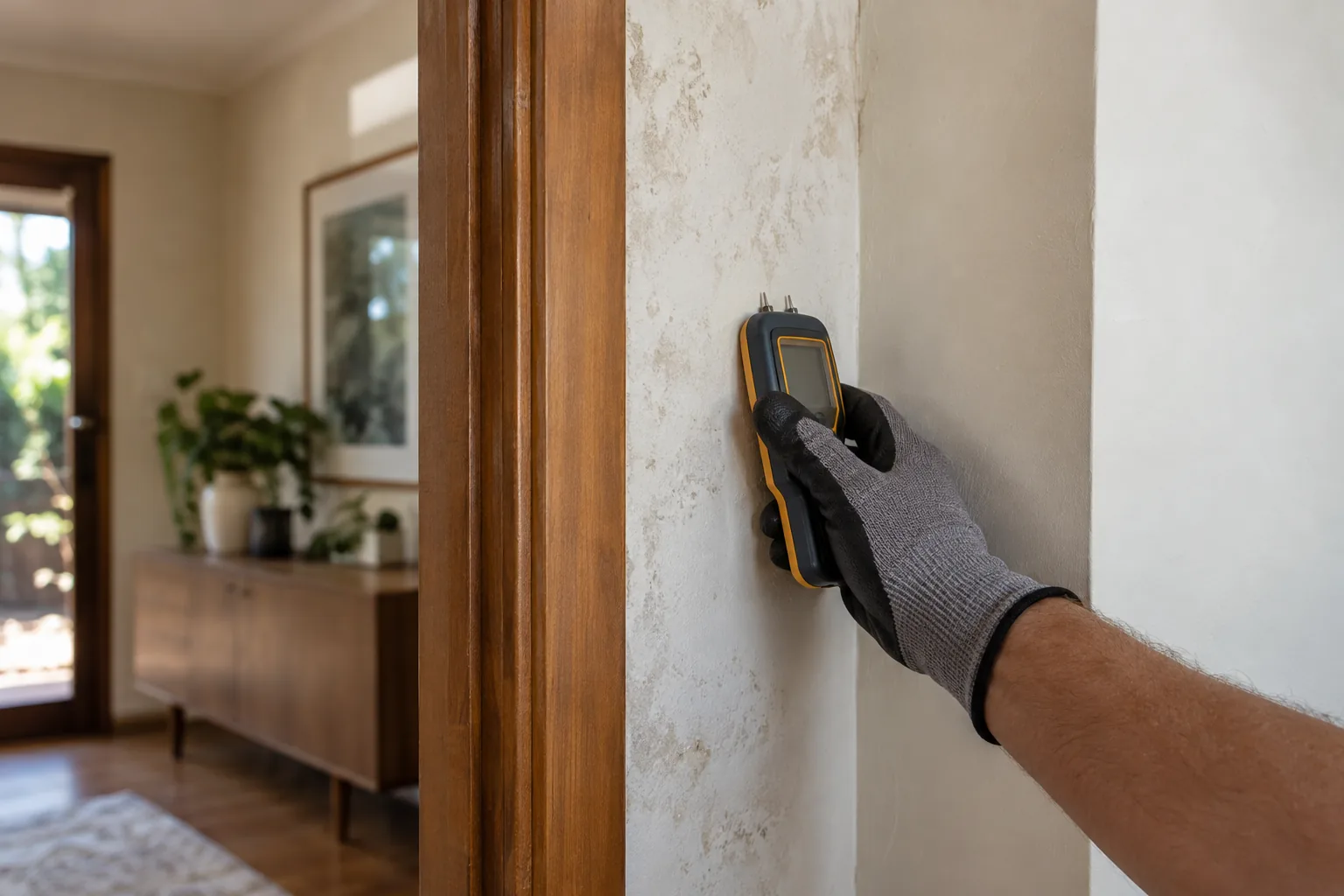
An inspection enquiry should show the room and its affected finish. Moisture and humidity observations can support the assessment. They cannot establish concealed conditions beneath a floor or inside a wall from a single visit to the accessible space.
Marks along a painted edge
Explain whether the coating is sound or lifting. Repeated cleaning or repainting can change the appearance without fixing dampness.
Water beside an appliance
Describe any suspected hose, plumbing or drainage problem separately from indoor humidity. Appliance or plumbing repair is outside mould removal.
THE SURFACE REMOVAL PROCESS
A structured treatment appointment
01
Assess the visible area
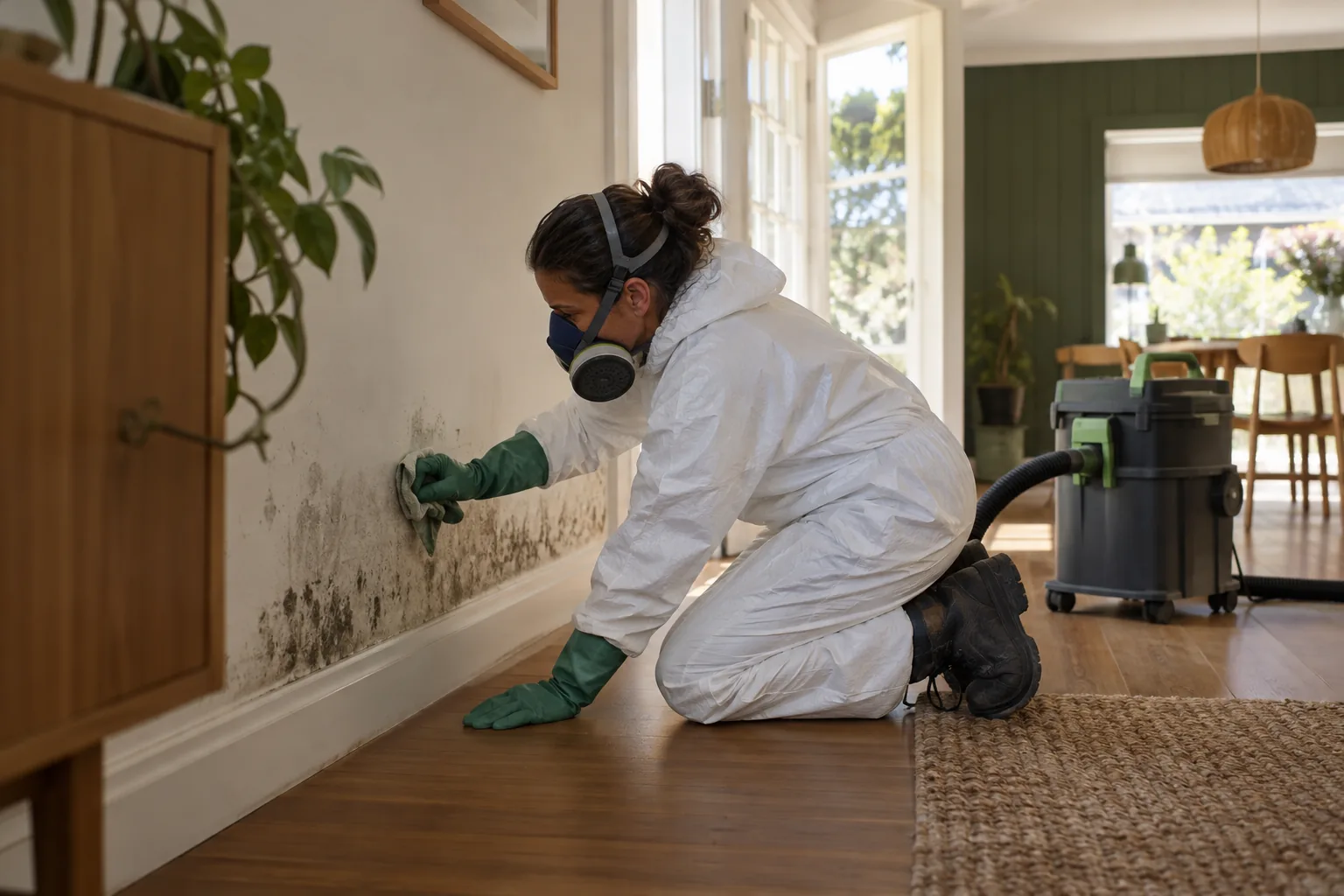
Inspect accessible growth and consider relevant readings with the room history. Agree walls, ceilings and hard floors, plus any material limits.
02
Prepare filtered air
Set up the HEPA air scrubber and suitable power. Confirm where laundry and other excluded items are kept during the agreed work. Plan occupant movement so a busy household is not passing through the area unpredictably.
03
Choose the surface method
Appropriate HOCl use is selected for the finish and work conditions. Report earlier cleaners and avoid mixing another product before attendance.
04
Apply as agreed
ULV application may form part of the procedure where suitable. People, pets and any building-system requirements are agreed first.
05
Remove accessible contamination
Professional physical removal uses H-class filtration as required. Keep the agreed structural scope clear. Carpet, clothing, curtains, furniture and mattresses are excluded, and damaged lining may need another trade rather than a cosmetic cleaning promise.
06
Complete filtration and advice
Final air cleaning follows removal. Review residual stains, separate source repair and return instructions.
VISIBLE & ACCESSIBLE
Useful laundry-adjacent photographs
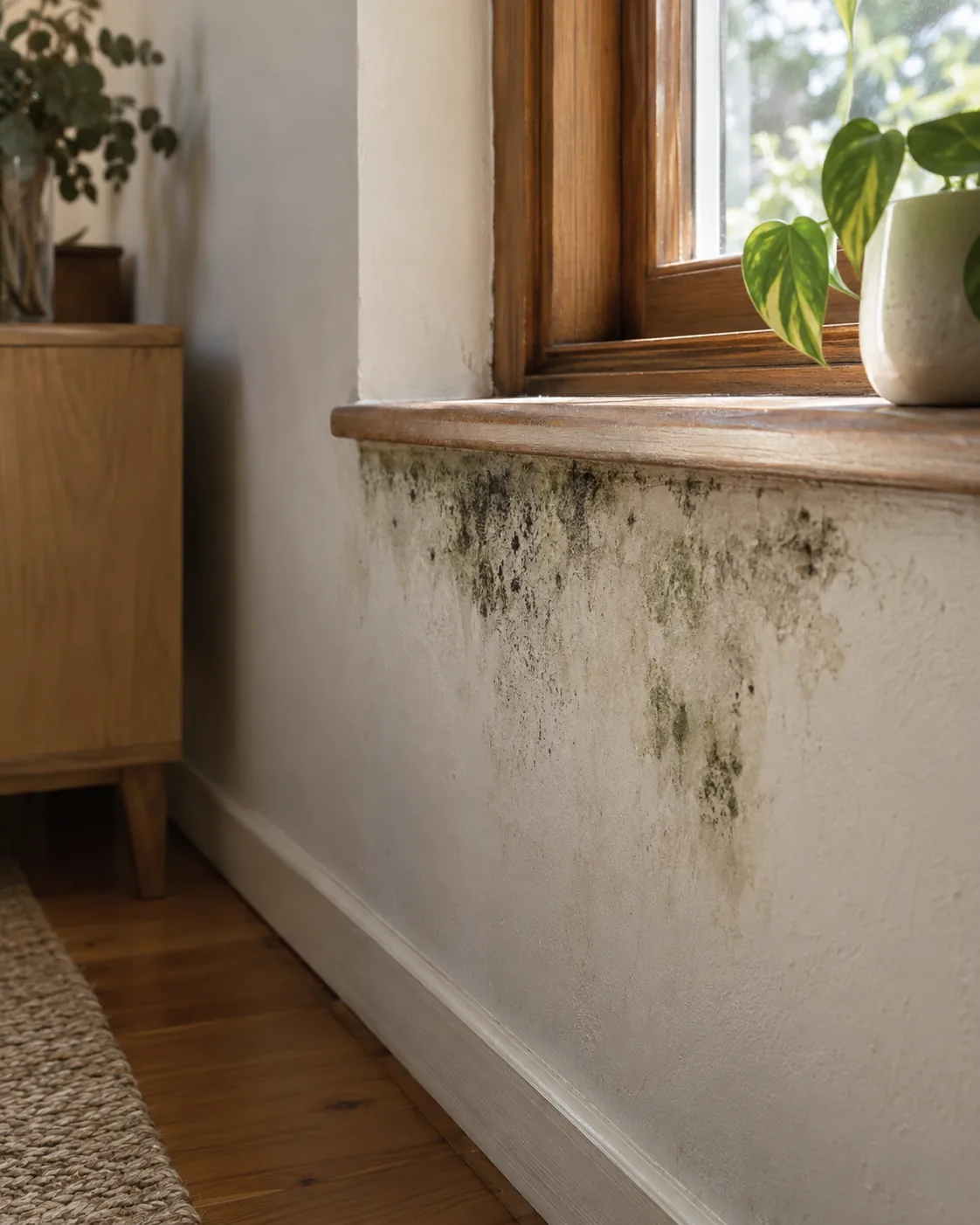
Spare-room wall
Show the whole affected face and nearby window. The drying rack and clothing are outside the structural-surface treatment.
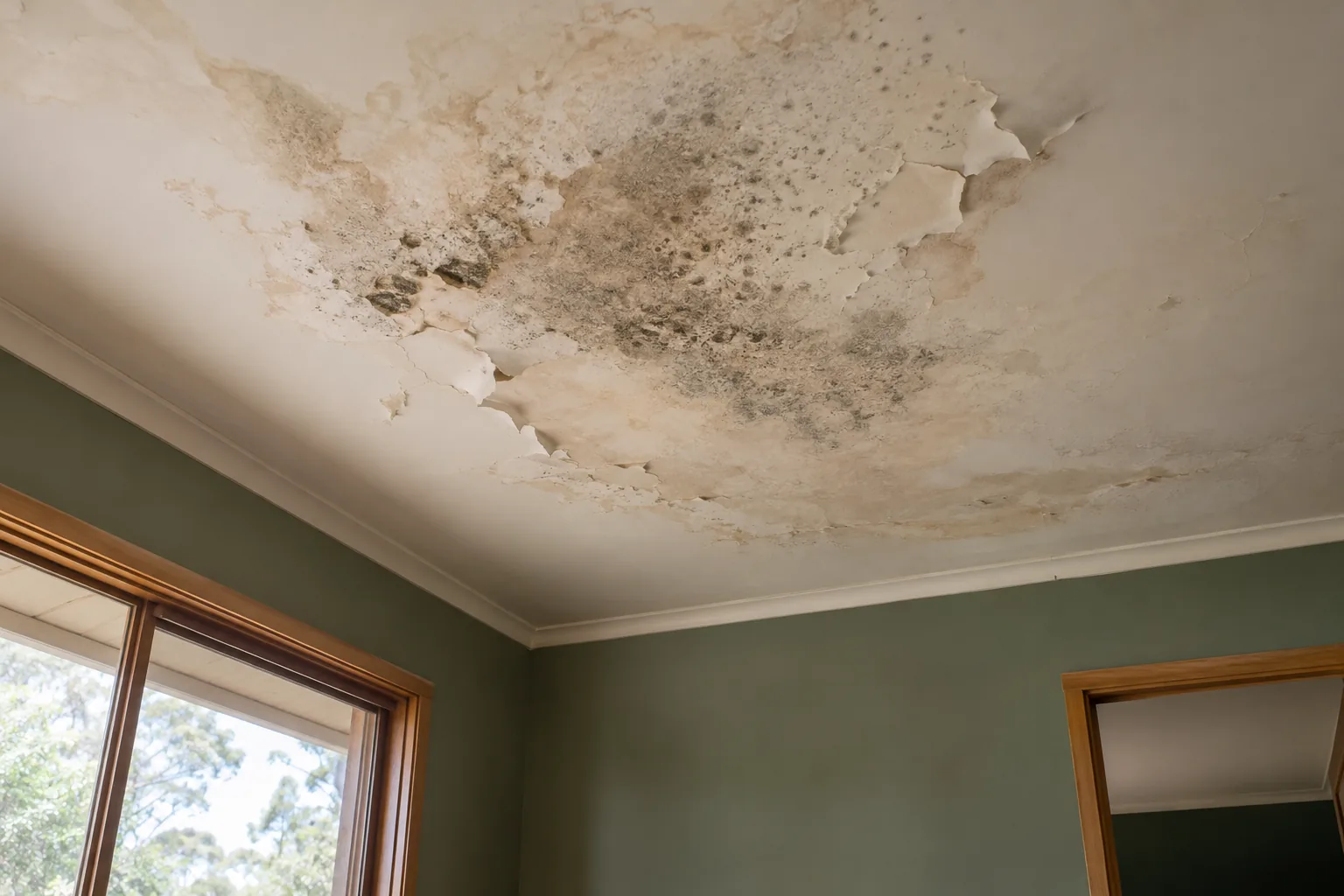
Laundry ceiling
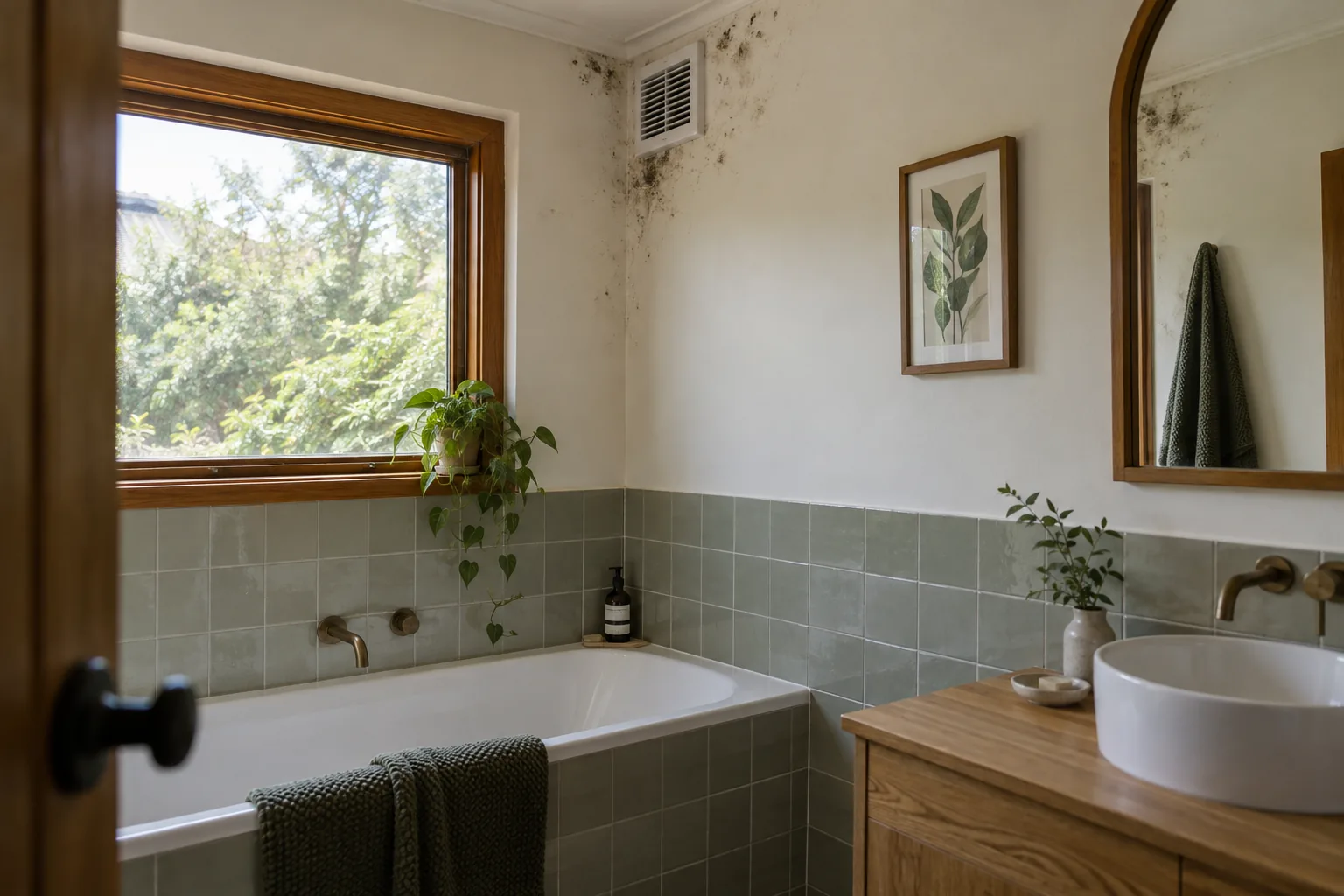
Include visible marks and extraction details. Describe water entry if known instead of assuming steam is the only issue.
Wall beside an appliance
Identify the finish and any plumbing concern. Appliance repair and concealed investigation are separate from treating the accessible wall.
Hard-floor corner
Note dampness, swelling or a lifting finish. Rugs, mats, carpet and underlay are excluded even where laundry moisture affects them.
PREPARATION & LIMITS
Duration is a guide, not hourly charging
The service information averages roughly three hours per room, varying with contamination, size and accessibility. It is not priced by the hour. Discuss the number of rooms and preparation needs instead of calculating an appointment from the size of a laundry alone.
Treatment may leave cosmetic staining. Decorating can be separately quoted after source and material questions are resolved. If indoor moisture or a leak continues, recurrence remains possible; removal of existing growth does not provide permanent protection for the room.
AFTER THE SURFACE WORK
Reduce moisture where it is produced
Use outdoor drying where practical, or discuss effective moisture management if laundry must remain indoors. Ensure extraction arrangements suit the activity and keep the room observable. These habits support moisture control but do not establish that a building leak has been ruled out.
Track repeated condensation and wet edges with dated notes. If the pattern persists, ask about the source rather than using stronger improvised chemicals. Our remediation information explains the separate roles of removing contamination and managing the conditions that can allow it to return.
TOOTGAROOK · NEARBY LOCATION PAGES
Tootgarook and nearby enquiries
The surrounding pages provide location navigation, not confirmation of a booking. Give the exact Tootgarook address, room use and appliance or access constraints when contacting us. Availability and the appropriate scope are considered for that property.
Rye · Rosebud · Blairgowrie
BEFORE YOU ARRANGE WORK
Questions for your enquiry.
Does drying washing indoors prove it caused the mould?
No. It can be relevant to indoor moisture, but leaks, ventilation and material condition may also need consideration. Share the routine alongside your actual observations.
Can you treat clothes hanging in the room?
No. Clothing and other textiles are excluded. Agree where belongings should be kept during preparation rather than assuming a wall appointment includes them.
Will you fix a leaking washing-machine hose?
Plumbing and appliance repairs are separate. Mention the suspected fault before booking so surface treatment is not mistaken for correcting continuing water entry.
Is a dehumidifier enough to solve the problem?
It cannot repair a leak or damaged material. Moisture management may help room conditions, but the appropriate source assessment and repairs remain separate decisions.
Can you remove marks from a carpeted floor?
Carpet and underlay are excluded. Describe the structural hard-floor areas that can be reached and ask separately about affected floor coverings or textile belongings.
Should I dry another load during treatment?
Follow the agreed preparation and occupancy plan. Do not introduce an activity into the work area without discussing it; the technician needs the planned conditions and access arrangements.
Discuss your Tootgarook address
Describe the Tootgarook room and laundry routine when calling 03 8652 1296. Include known leaks, actual dampness and accessible finishes so the enquiry separates structural treatment from excluded clothing and floor coverings.
Useful references: Official local geographic reference