
FIVE WAYS · MELBOURNE
Mould Removal Five Ways
ADDRESS · ROOM · ACCESS
Five Ways can be used as a local address description, so the street and postcode matter when enquiring. Tell us about the actual room, visible growth and practical access. We confirm the property location and availability before considering a structural-surface appointment.
Exact location clarified
Actual room described
Accessible surfaces agreed
SURFACES & THEIR SETTING
Use the locality description carefully
The Victorian School Building Authority records Five Ways in the planning name for Casey Fields Primary School. This does not mean every address using the phrase is a separately bounded suburb. For mould removal, give the full property details so there is no ambiguity.
An informal location on an enquiry
Add the street, postcode and entrance rather than relying on a familiar junction name. Similar informal descriptions can mean different places.
A room near the main entrance
Describe its use, finish and available clearance. Doorway position is useful for planning equipment access but cannot establish the moisture source. Include current photographs and any known plumbing, roofing or extraction issue.
Assess the accessible condition
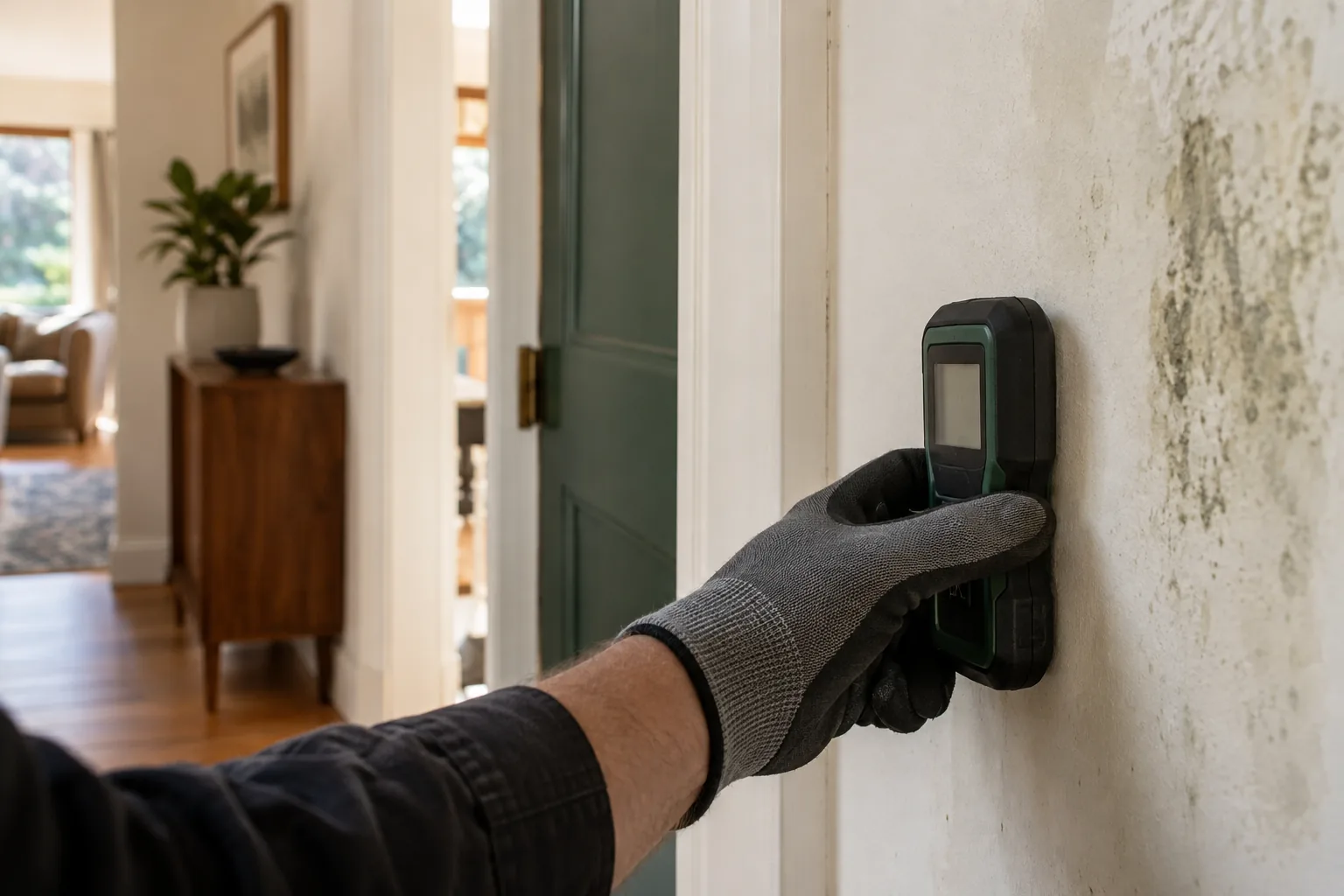
An inspection enquiry should show the room layout and visible material. Moisture and humidity readings can support assessment. Address clarification does not replace the need to understand damaged finishes, concealed spaces or areas that cannot be reached safely.
The wall behind everyday storage
Tell us whether furniture is fixed and what surface is visible. Do not move a loaded cabinet alone to obtain photographs. Furniture, clothing and stored textiles remain excluded even if clearance is needed to reach a structural wall.
Wetness with an uncertain history
Record what you actually observe and when. A musty smell or dark colour alone does not establish concealed growth or a specific building defect. Separate observed conditions from a guessed explanation in the initial discussion.
THE SURFACE REMOVAL PROCESS
A planned appointment after location confirmation
01
Inspect and agree
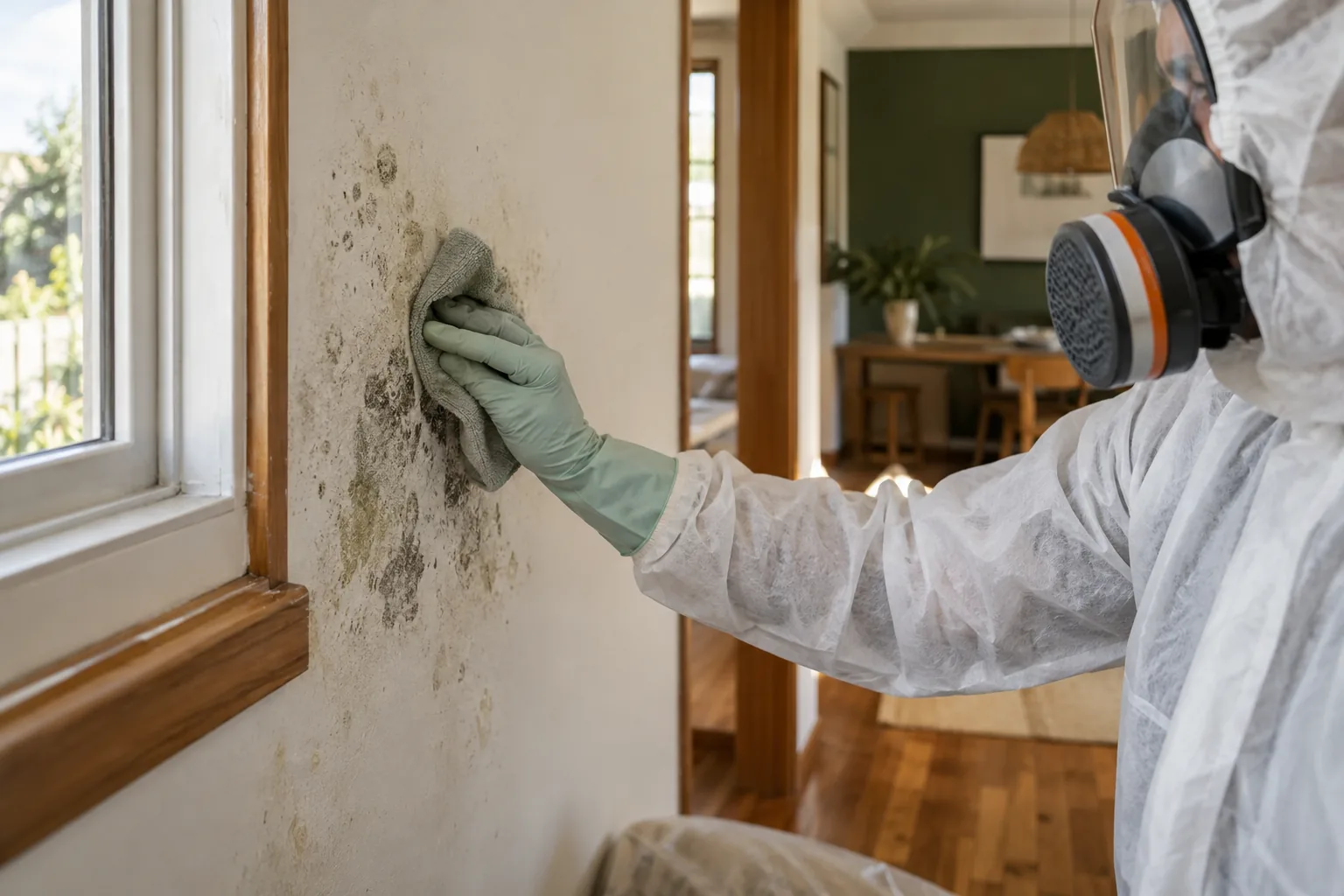
Review accessible growth and relevant readings at the confirmed property. Agree included walls, ceilings and hard floors.
02
Prepare filtered air
Set up the HEPA air scrubber with suitable power and access. Confirm where occupants and excluded belongings stay during work. The preparation plan should reflect the real room and household rather than a generic address description.
03
Choose suitable treatment
Appropriate HOCl use follows the assessed finish and conditions. Report previous cleaners or coatings.
04
Apply within scope
ULV application may be suitable in the agreed procedure. Confirm people, pets and any approved building arrangements first.
05
Remove accessible contamination
Professional physical removal uses H-class filtration as required. Keep the agreed surfaces and room boundaries clear.
06
Complete and review
Final air cleaning follows removal. Review residual marks and any moisture repairs needed separately. Confirm return instructions and the appropriate follow-up contact so the completed room work is understood accurately at the actual property address.
VISIBLE & ACCESSIBLE
Surface details worth documenting
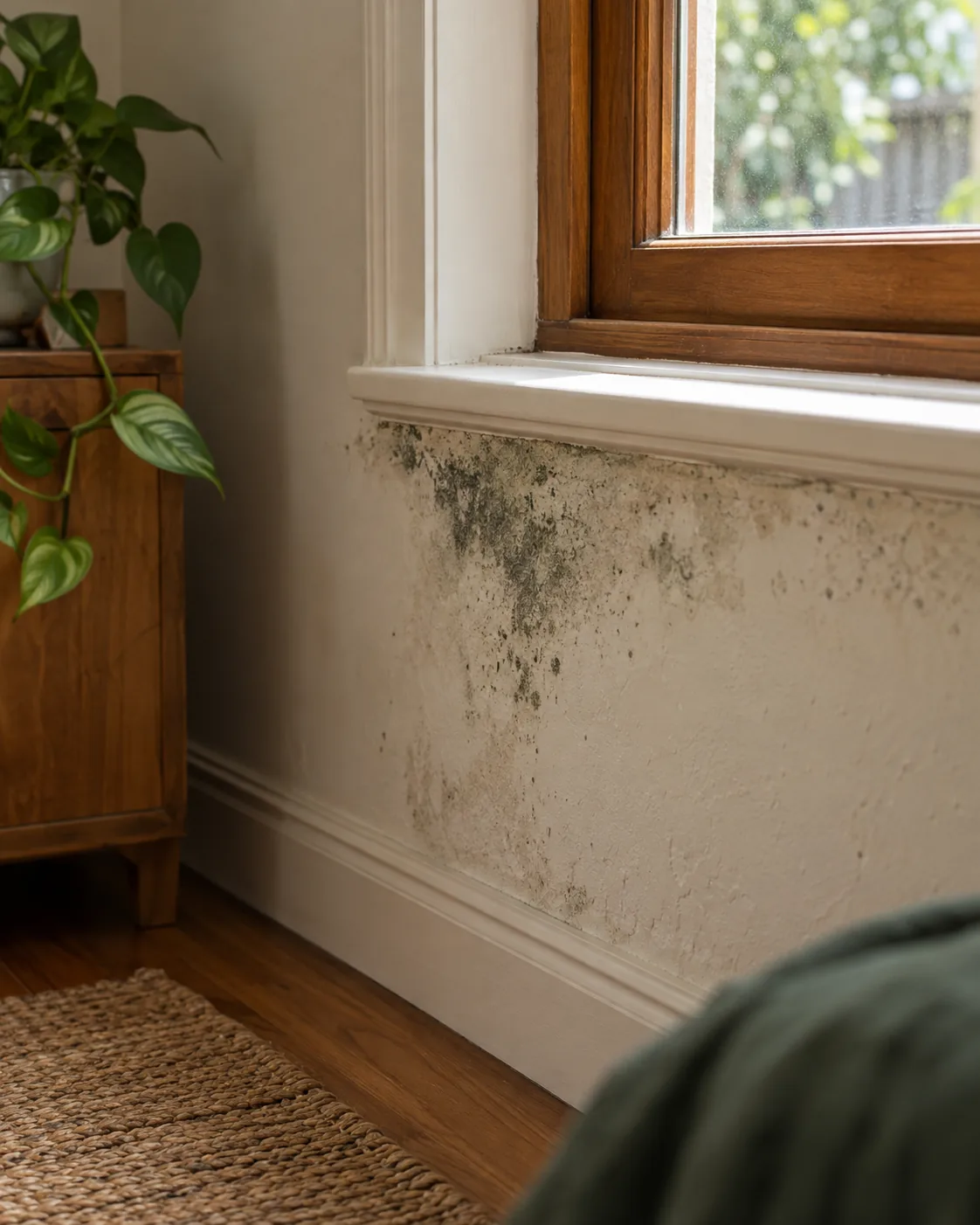
Entry-room wall
Show the accessible finish and nearby opening. Furniture and contents are excluded from the structural-surface service even where they sit alongside growth.
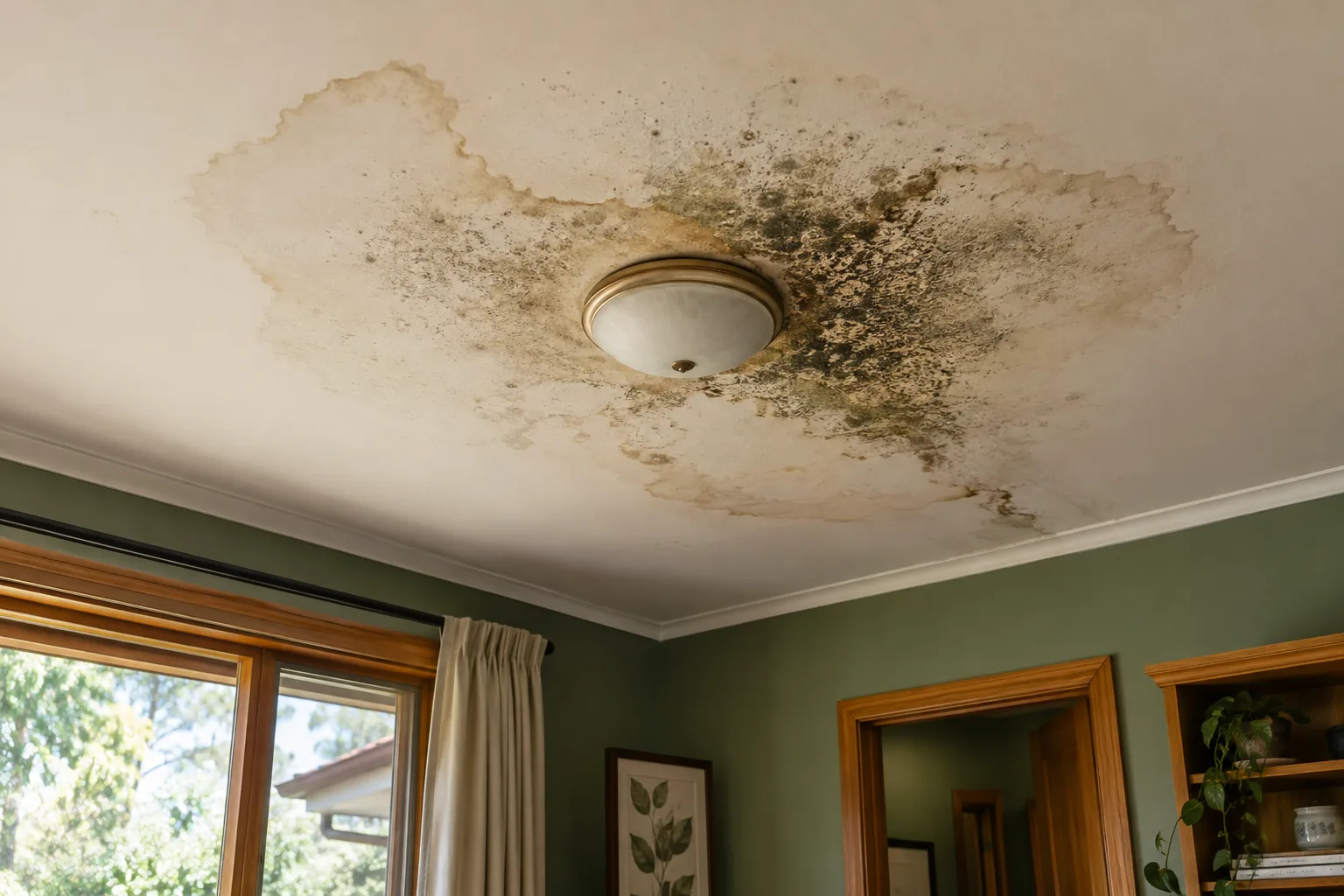
Ceiling patch
Photograph its wider room position. Suspected roof leaks and concealed damage need separate consideration, not a diagnosis from a dark mark.
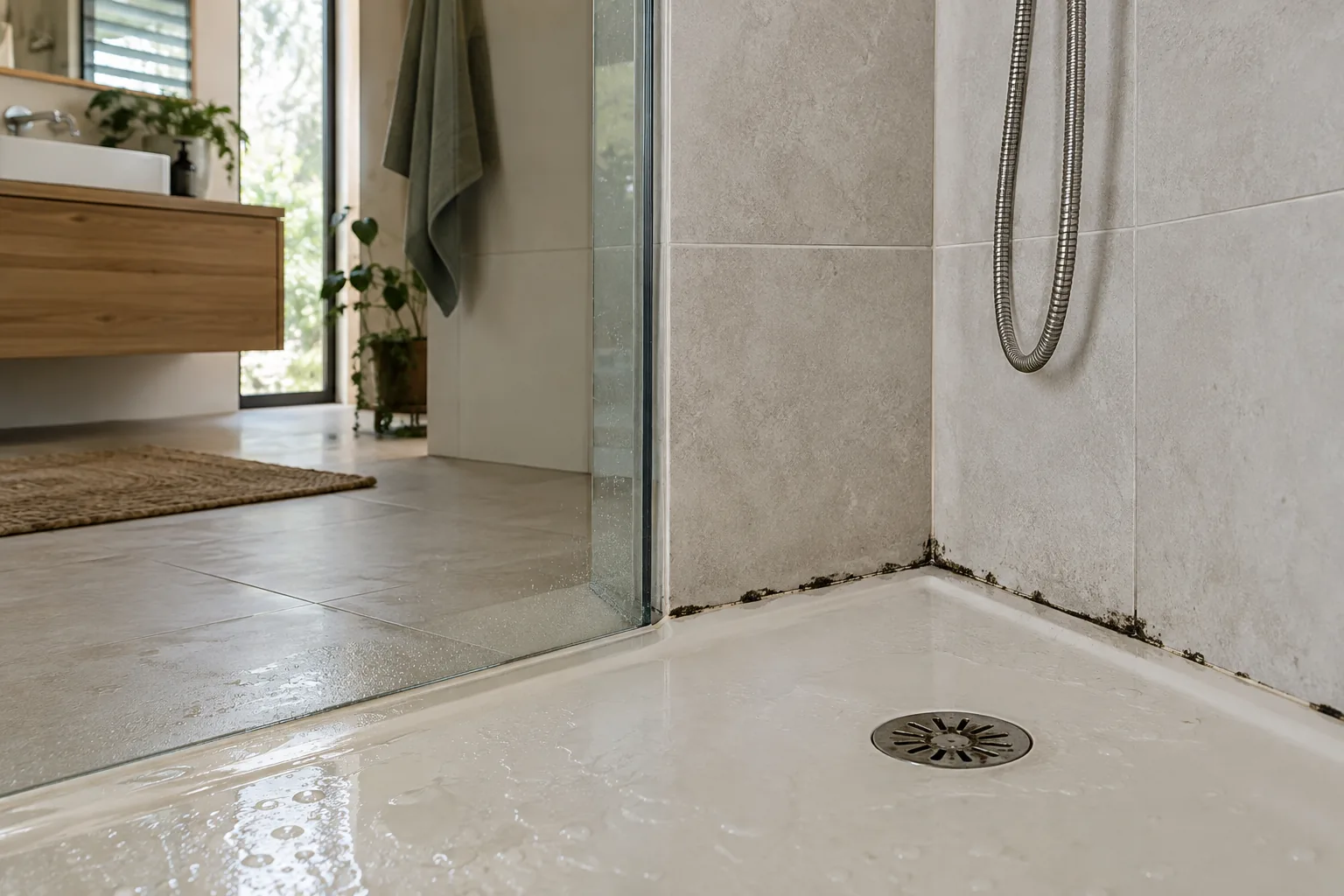
Bathroom ceiling
Explain extraction and recurring dampness. Towels, curtains and other textiles remain outside the room’s structural treatment scope.
Hard-floor perimeter
Identify the finish, any wet edge and damage. Carpet, underlay and rugs are excluded; specify the actual hard structural surface.
PREPARATION & LIMITS
Keep timing and appearance expectations clear
Around three hours per room is the service’s average guide, varying with size, severity and access. It is not hourly pricing. Confirm the actual room count and preparation instead of treating a postcode or small visible patch as a fixed appointment timetable.
Cosmetic staining may remain after contamination removal. Decorating can be separately quoted where appropriate after moisture and material condition are addressed. Treatment cannot guarantee permanent prevention when dampness continues or new water entry occurs at the property.
AFTER THE SURFACE WORK
Record the source question separately
Keep dated photographs and note repeated condensation or water entry. Share specific observations with the appropriate repair trade. A broad locality label does not explain the building’s defect, and a room treatment does not certify that the source is resolved.
Use extraction and practical ventilation according to daily activities, with sensible clearance around walls. Remediation addresses existing contamination in the agreed area. Ongoing moisture management and building repairs remain separate tasks, even when the accessible surfaces have been treated.
FIVE WAYS · NEARBY LOCATION PAGES
Nearby navigation with the address checked
Nearby pages below help locate surrounding enquiries. Confirm which Five Ways description applies to your property and send its full street details. These links do not establish a separately bounded suburb, immediate attendance or automatic coverage of every informally described address.
BEFORE YOU ARRANGE WORK
Questions for your enquiry.
Why do you need the full address for Five Ways?
The phrase can be used as a locality description. A street and postcode avoid ambiguity and let availability and access be considered for the actual property.
Is Five Ways always a separately bounded suburb?
This page does not make that claim. Official references use the description in local planning contexts; the confirmed property address is what matters for an enquiry.
Can you diagnose the wall from its dark colour?
No. Appearance helps the discussion but does not establish material condition, concealed growth or the moisture source. Describe actual wetness, timing and relevant history.
Are stored belongings included?
No. Furniture, mattresses, carpets, curtains, clothing and textiles are excluded. Agree accessible structural surfaces and preparation rather than expecting room application to clean the contents.
Does a room visit repair plumbing or roofing?
No. Source repairs are separate. Mention suspected defects so existing-contamination treatment is not confused with correcting the cause of continuing dampness.
Will treatment guarantee the marks never return?
No. Recurrence is possible if moisture continues or returns. Address the source and keep useful observations after the agreed visible surface work.
Discuss your Five Ways address
Call 03 8652 1296 with the full street and postcode for the Five Ways enquiry. Clarify the actual room, visible material and entrance so location ambiguity is resolved before preparation is arranged.
Useful references: Official local geographic reference