
CLYDE · MELBOURNE
Mould Removal Clyde
PLUMBING · SURFACES · FOLLOW-UP
After a plumbing repair, remaining wall marks still need a realistic surface assessment. For Clyde, explain what was repaired, whether the area remains damp and which finish is affected. We confirm the address and agreed work without treating mould removal as certification of the plumbing repair.
Repair history reviewed
Current material considered
Source and removal separated
SURFACES & THEIR SETTING
Explain what happened before and after repair
The Victorian Government lists Clyde separately from Clyde North in its Casey locality information. Provide the exact address for a mould removal enquiry, along with the room and repair history. Similar names do not establish the right property or appointment availability.
A repaired fitting nearby
Tell us when the work occurred and what the repair trade advised. Note continuing wetness or new marks if observed. An invoice can provide history, but it cannot establish the condition of every wall layer or concealed space.
A stain that has stopped changing
Photograph the whole surface and the mark. Stable appearance alone does not identify whether the substrate is sound or contaminated.
Inspect the accessible surface and its limits
For mould inspection, provide current images and relevant dates. Moisture and humidity observations support assessment at the room. They do not certify plumbing work, rule out concealed damage or include opening the wall as part of ordinary visible treatment.
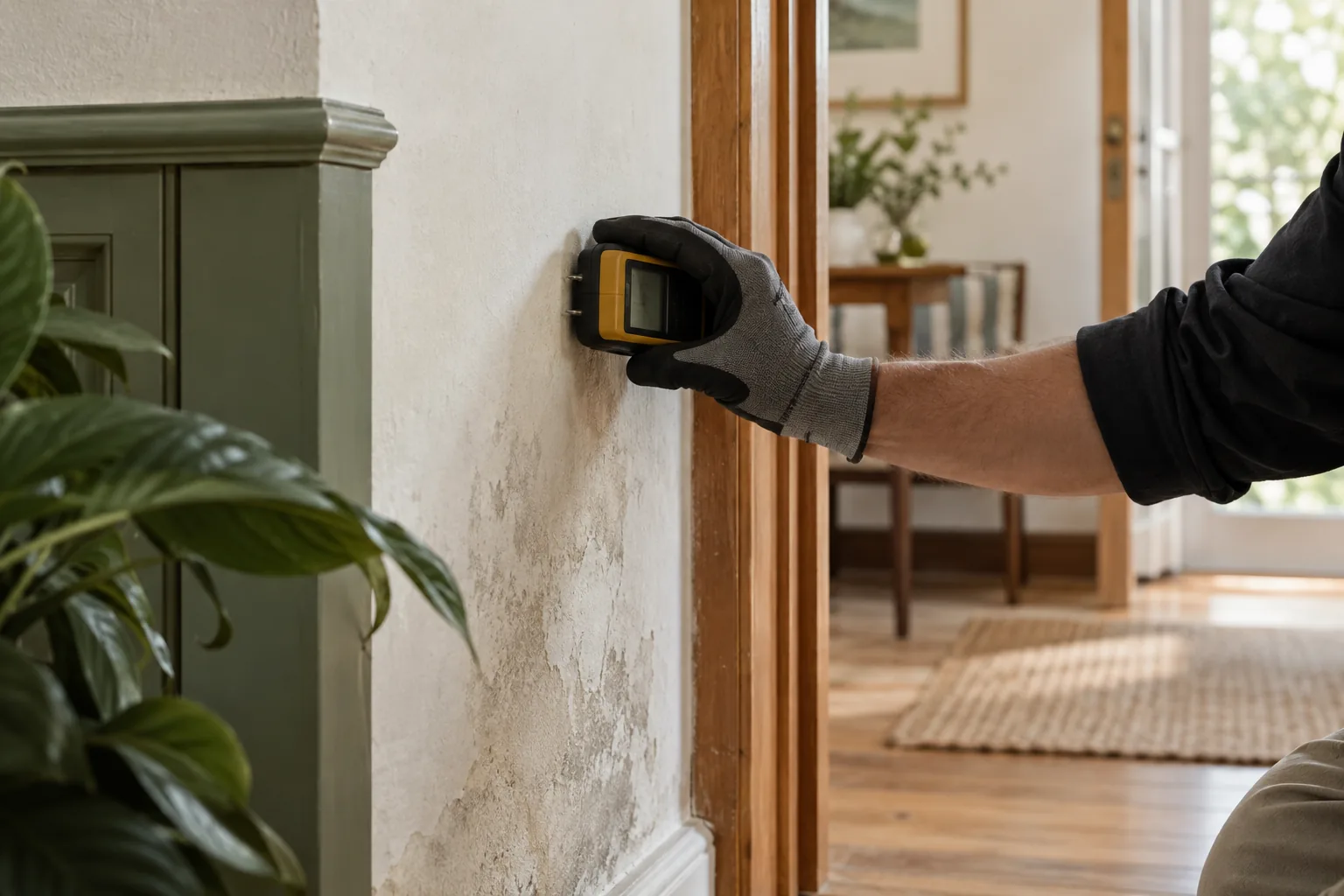
Swelling or softened lining
Report deterioration before booking and avoid disturbing the material. Replacement or repair may require another trade. The appropriate surface work depends on the condition, not simply whether water is believed to have stopped entering.
Access beside cabinetry
Explain fixed fittings and available clearance. Furniture is excluded; fitted joinery may limit access and require a separate material or clearance decision. Inaccessible structural areas can require separate access arrangements, and these should be discussed before attendance rather than discovered during an assumed whole-room job.
THE SURFACE REMOVAL PROCESS
A planned sequence after the enquiry
01
Inspect and agree
Review visible growth, material condition and relevant readings with the repair history. Confirm accessible walls, ceilings and hard floors. Record separate source or lining questions so contamination treatment is not mistaken for plumbing certification.
02
Prepare filtered air
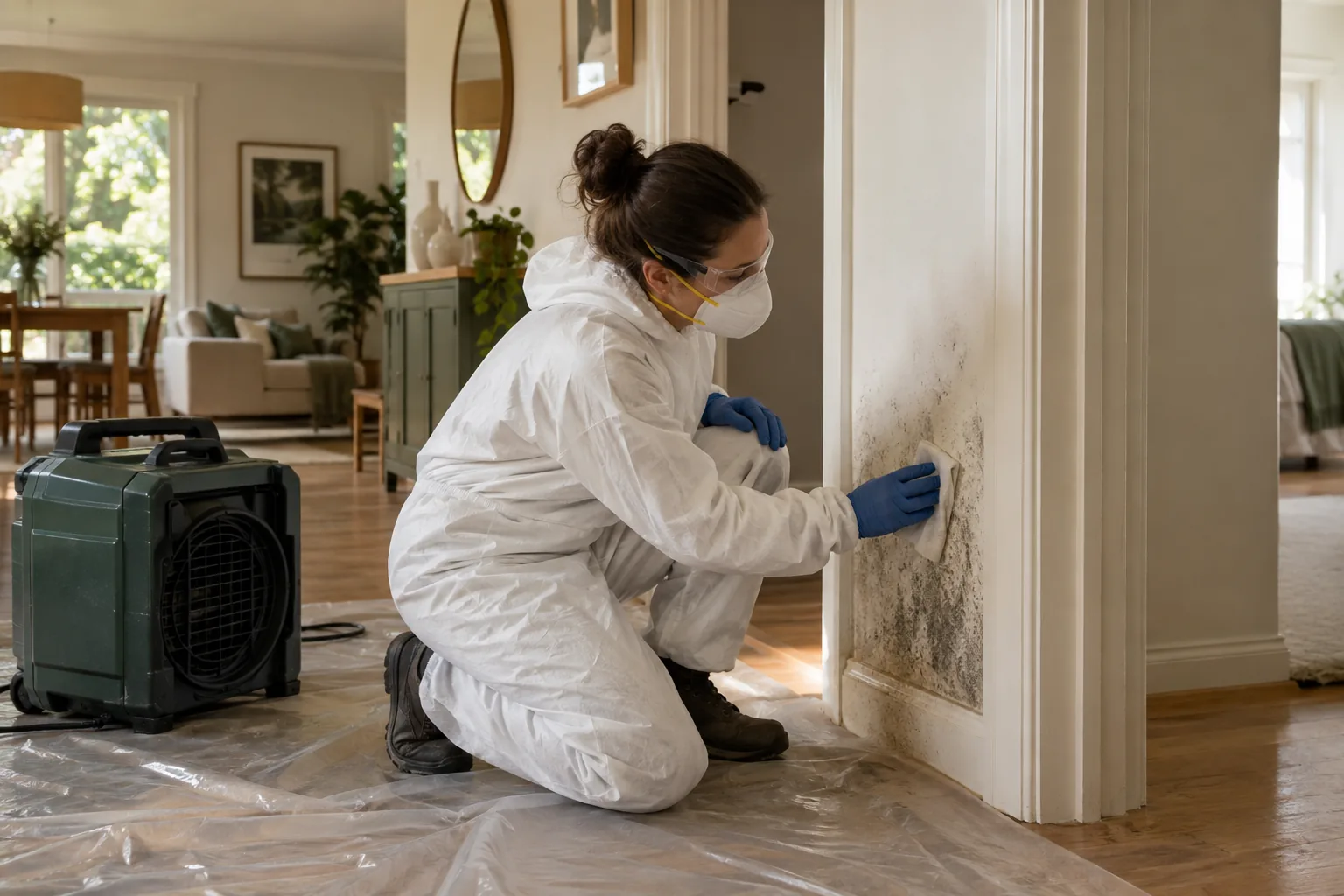
Set up HEPA equipment with suitable power and room access. Discuss occupant movement and preparation of excluded belongings. Coordinate any repair contractor’s return separately rather than assuming both activities can share the room during treatment.
03
Choose appropriate treatment
Suitable HOCl use follows assessed finishes and conditions. Report previous products and coatings.
04
Apply within scope
ULV application may be part of the suitable procedure. Confirm people, pets and approved building arrangements first.
05
Remove accessible residues
Professional physical removal uses H-class filtration as required. Work remains within agreed visible surfaces. Damaged substrate, fragile coatings and staining can limit appearance and may require separately arranged repair or decorating.
06
Finish filtration and review
Final air cleaning follows removal. Review remaining marks and source questions with the booking contact.
VISIBLE & ACCESSIBLE
Surface views that support the discussion
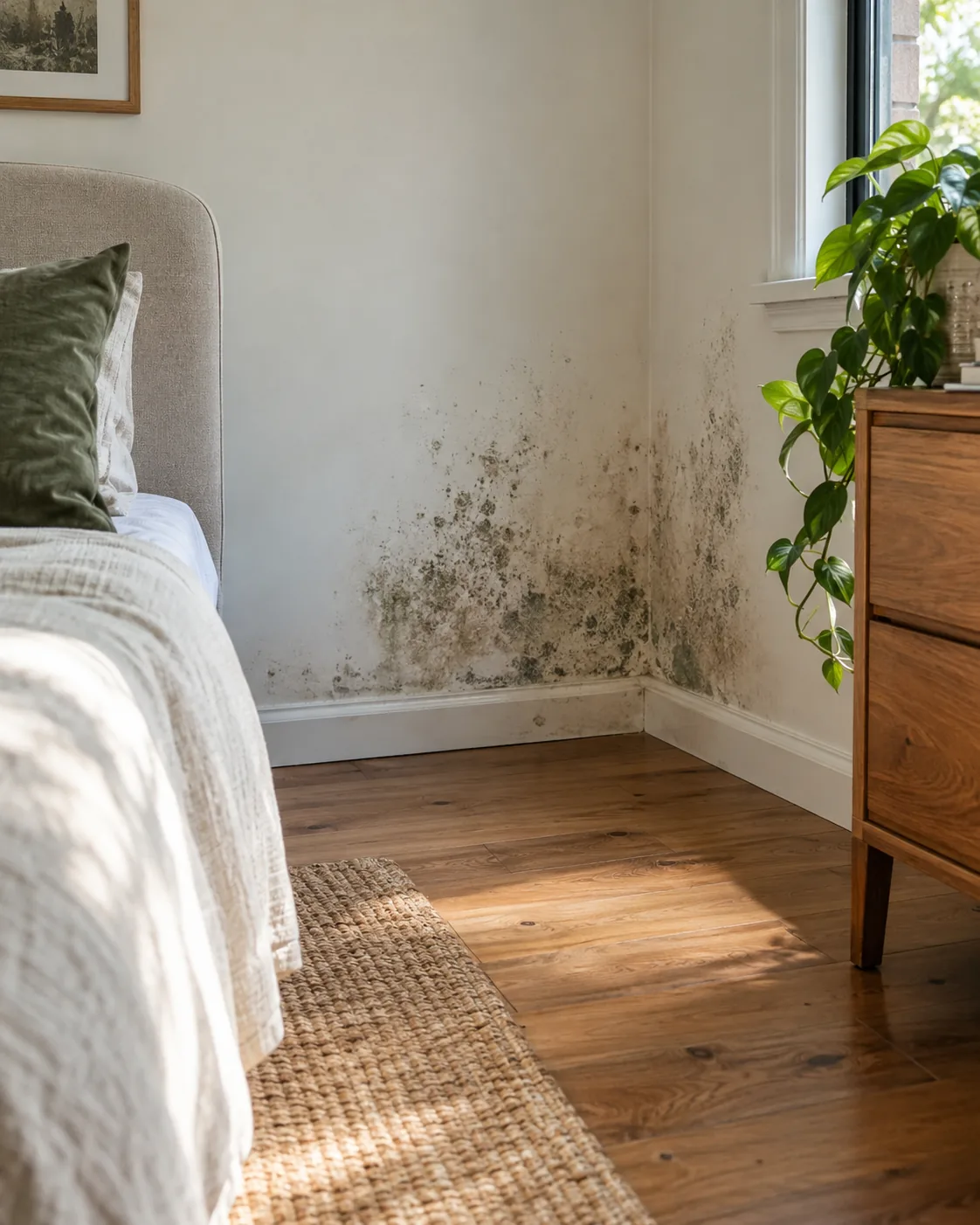
Wall beside the repair
Show the finish and nearby layout without exposing concealed services. Explain when work was completed and whether wetness continues.
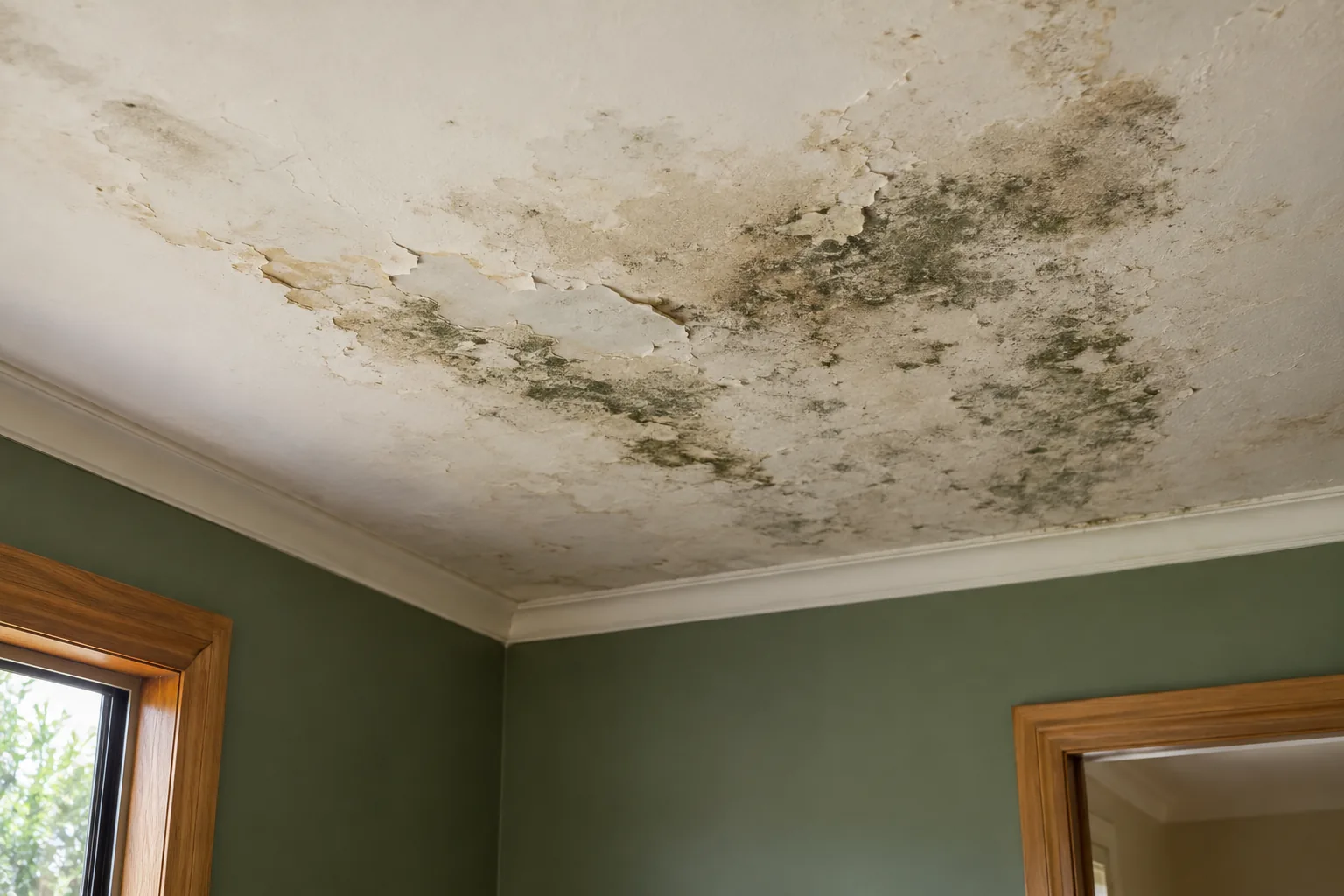
Ceiling below plumbing
Include its wider position and material damage. Separate source investigation may be needed beyond accessible treatment.
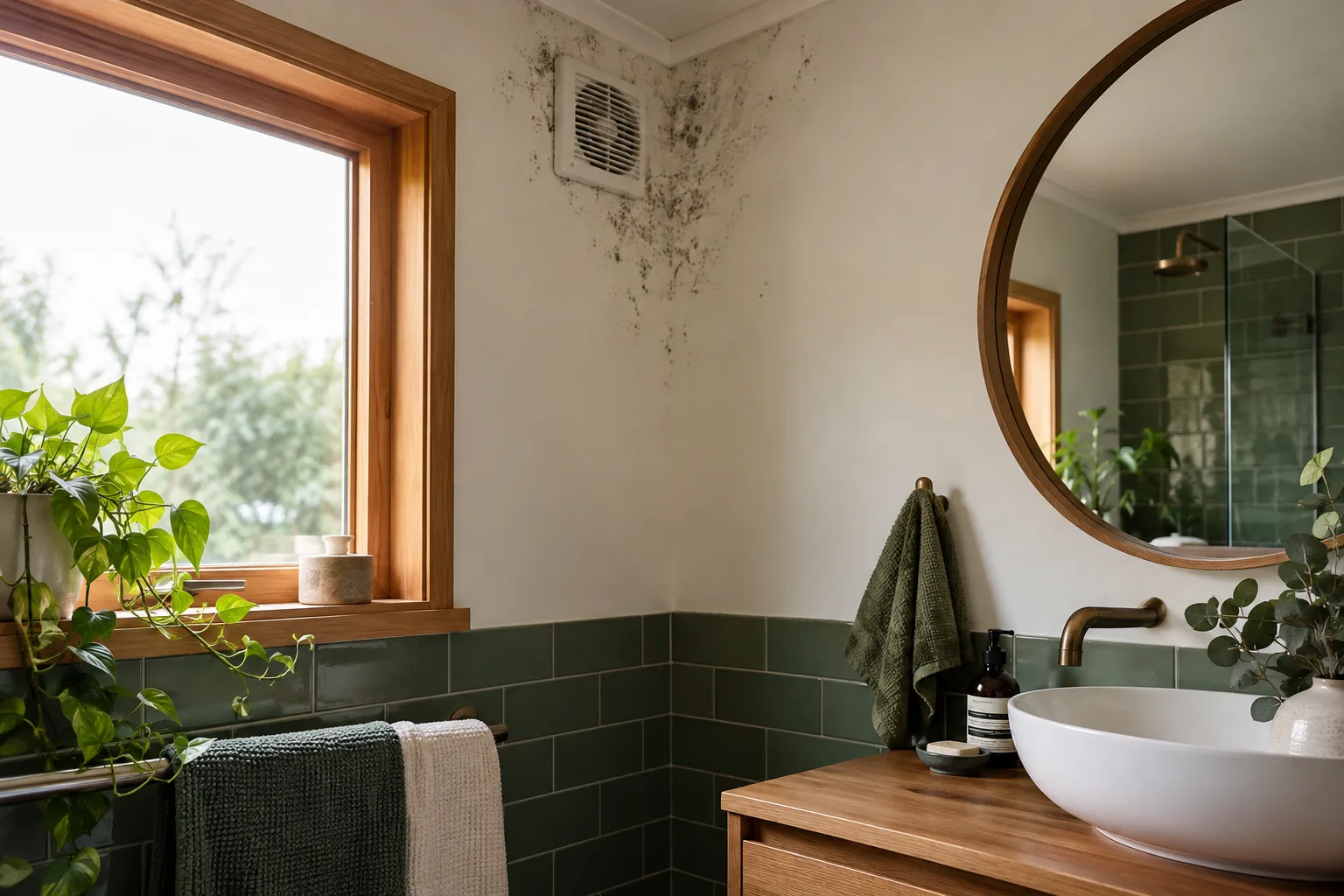
Bathroom painted wall
Describe extraction as well as the repaired leak. Several moisture questions can coexist without one automatically explaining every mark.
Hard-floor perimeter
Identify wetness and the actual floor material. Carpets, rugs and underlay are excluded, even when affected by the original leak.
PREPARATION & LIMITS
Do not expect repair and appearance certification
The service average is approximately three hours per room, varying with size, severity and accessibility. Pricing is not hourly. Material damage or fixed fittings can affect planning, so agree the appointment instead of relying on a simple leak-repair date.
Cosmetic staining may remain after contamination removal. Decorating can be separately quoted once source and material conditions allow it. Growth can recur if water entry continues or another moisture problem develops; treatment is not a permanent prevention guarantee.
AFTER THE SURFACE WORK
Monitor the repaired area with clear records
Keep dated photographs from the same viewpoint and note renewed wetness. Share continuing source concerns with the repair trade. A treated surface is not proof that every fitting or concealed material behind it has been assessed and repaired successfully.
Manage routine room moisture and extraction alongside the separate repair plan. Remediation addresses the agreed existing contamination. It should not be described as plumbing, structural repair or a guarantee that a newly painted area cannot develop future growth.
CLYDE · NEARBY LOCATION PAGES
Clyde and nearby address enquiries
The nearby pages help navigate surrounding locations. Confirm whether your property is in Clyde or another named area and provide its full street address. Availability and work scope are considered for that property, not inferred from the nearest locality page.
BEFORE YOU ARRANGE WORK
Questions for your enquiry.
Is Clyde interchangeable with Clyde North for booking?
State the exact locality and street address. They are separately named areas, and accurate location details help confirm access and availability for the actual property.
Does removal certify my plumber’s repair?
No. Surface treatment does not certify plumbing work. Share the repair history and take any continuing source concern to the appropriate trade for its separate assessment.
Can you treat softened plaster after a leak?
Material condition needs assessment. Damaged lining may require repair or replacement beyond ordinary surface treatment. Mention softness or swelling before booking and avoid disturbing it.
Will a stable stain disappear completely?
No cosmetic guarantee applies. Existing marks may remain after contamination is treated, with decorating separately considered once moisture and substrate condition are addressed.
Can fog treat damage behind the wall?
No concealed-space promise applies. The stated scope concerns visible accessible surfaces; hidden areas can need specialist investigation and additional work.
Should I schedule repainting immediately after the visit?
Discuss the condition and work sequence first. Decorating is separate, and remaining dampness or damaged material may affect when a new finish is appropriate.
Discuss your Clyde address
Discuss the Clyde address and recent plumbing work on 03 8652 1296. Include current wetness, material condition and accessible surfaces so the enquiry separates existing-contamination treatment from certification or source repair.
Useful references: Official local geographic reference