
CALDERMEADE · MELBOURNE
Mould Removal Caldermeade
CEILINGS · CONDITION · CLEARANCE
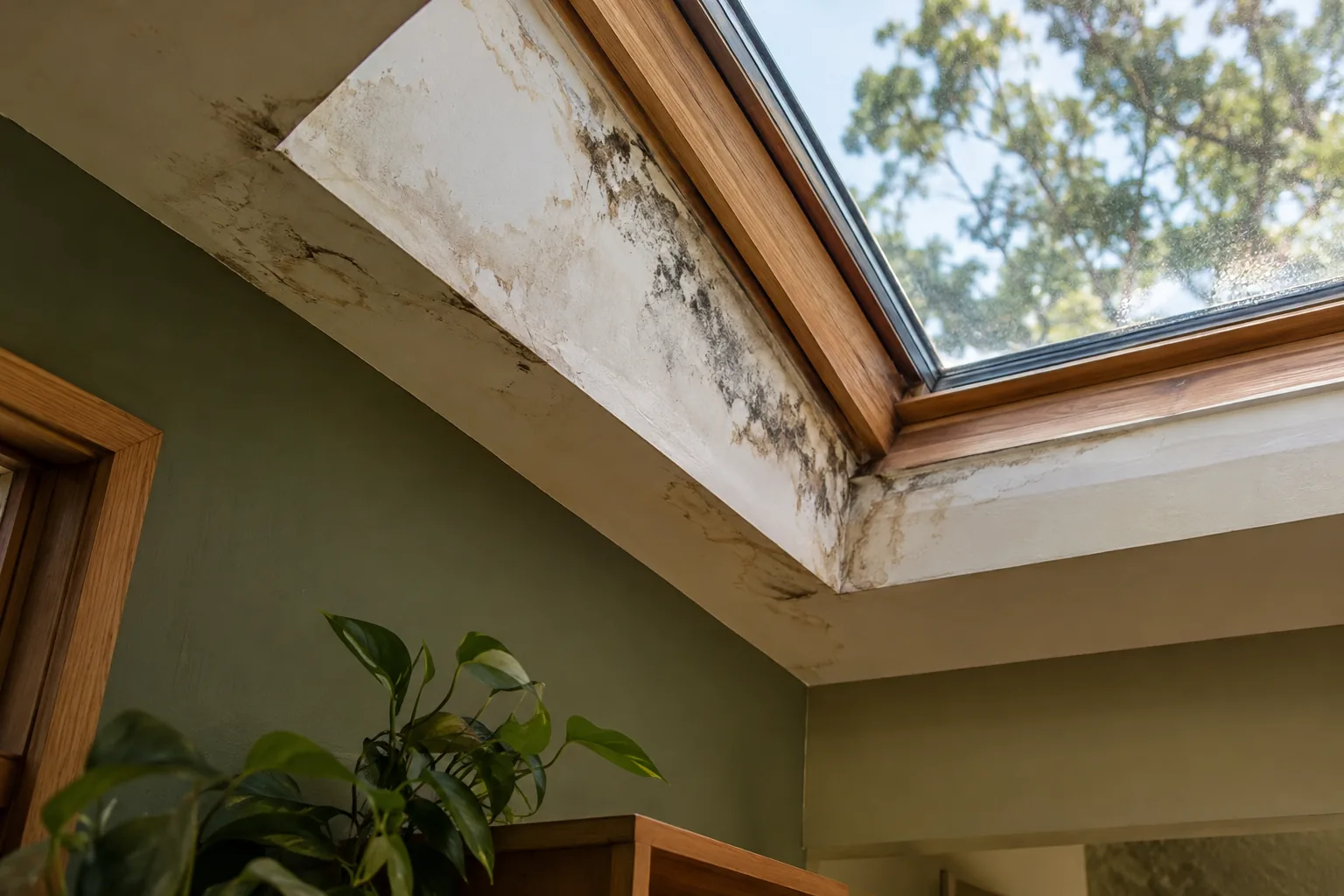
A ceiling photograph needs the room context and material condition around the mark. For Caldermeade, describe access, loose coatings and any roof or plumbing history. We confirm the exact address and suitable structural-surface work without assuming that every ceiling stain has the same cause or outcome.
Ceiling condition reviewed
Practical access discussed
Cosmetic limits explained
SURFACES & THEIR SETTING
Show the ceiling within the room
Caldermeade appears in the Victorian Government’s Cardinia locality information. For mould removal, provide the actual room details and address. The locality does not establish the building layout, finish or source behind one visible ceiling patch.
A mark above a furnished room
Take a wider image from a safe position showing the room and obstacles. Do not climb on furniture to get closer. Furniture and upholstery are excluded, although the accessible structural ceiling can be discussed within the room scope.
Loose material near the patch
Report peeling, softness, swelling or sagging before booking. Damaged lining may need separate evaluation or replacement.
Assessment before appearance promises
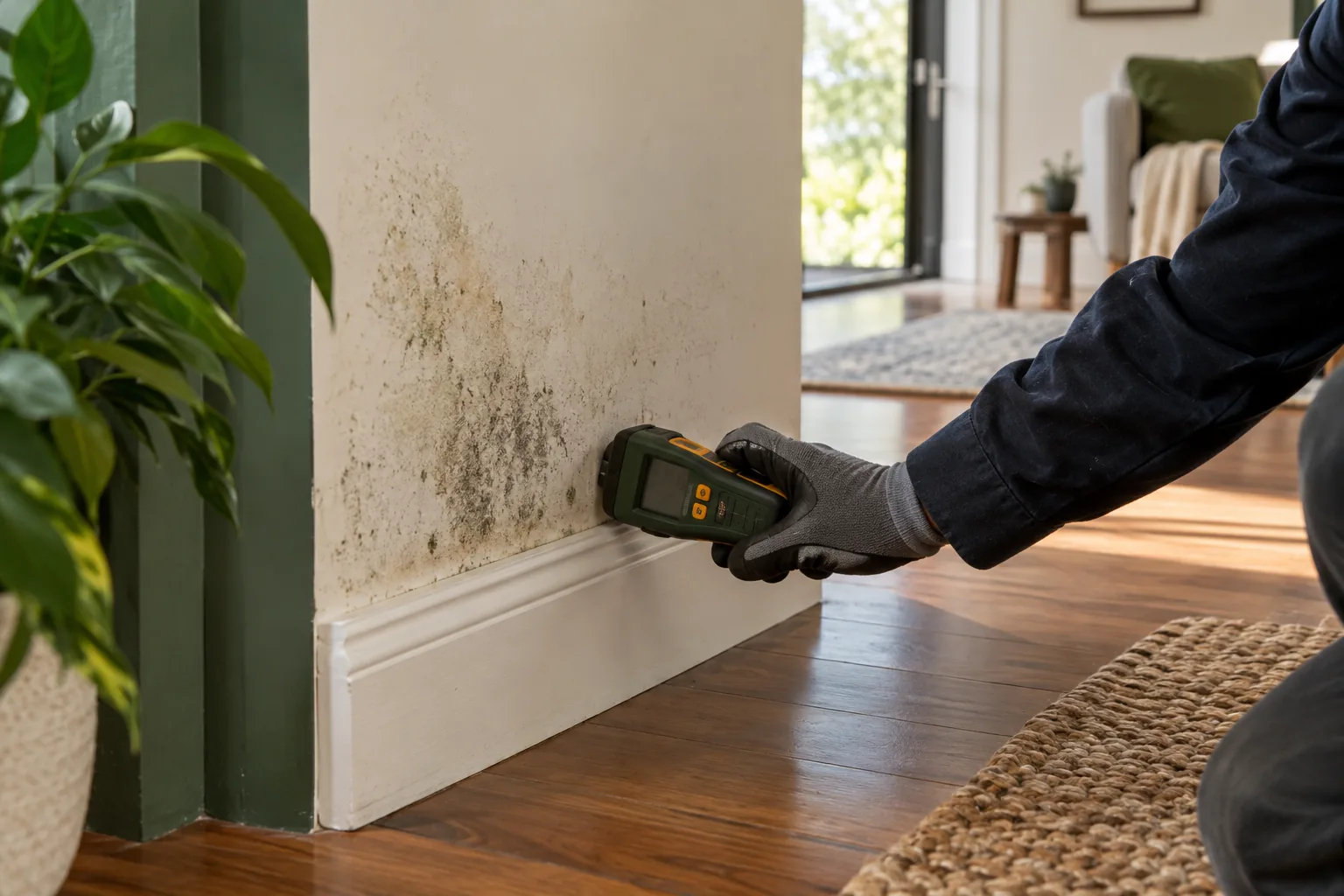
For mould inspection, share current photographs and known repair dates. Relevant moisture and humidity observations support accessible assessment. They do not certify concealed roof spaces or establish that every layer above a discoloured ceiling is unaffected.
The wall-ceiling join
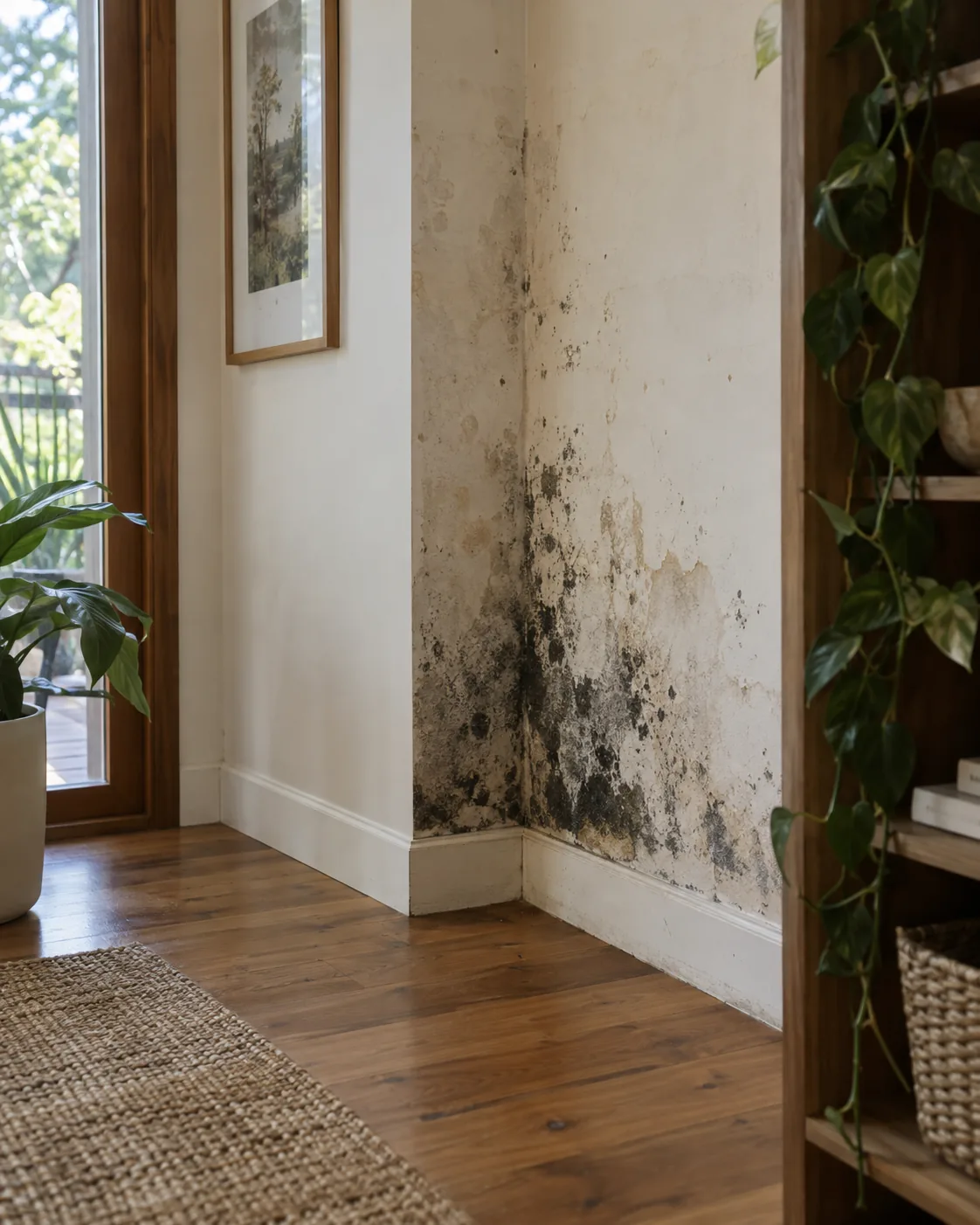
Identify marks continuing onto the wall as a separate surface. Visible continuity does not automatically include the entire room. Agree the actual accessible areas and materials so the work boundary is understood before preparation begins.
The equipment route
Mention steps, doorway restrictions and available power. Clear room access matters alongside the ceiling condition. Confirm who can approve work if limitations are identified, especially where an owner or manager is not attending.
THE SURFACE REMOVAL PROCESS
A considered ceiling-treatment sequence
01
Inspect and agree
Review visible growth, material condition and relevant readings. Confirm walls, ceilings and hard floors included in scope. Record damaged lining and source questions separately rather than assuming cleaning can restore every surface beneath a suspected leak.
02
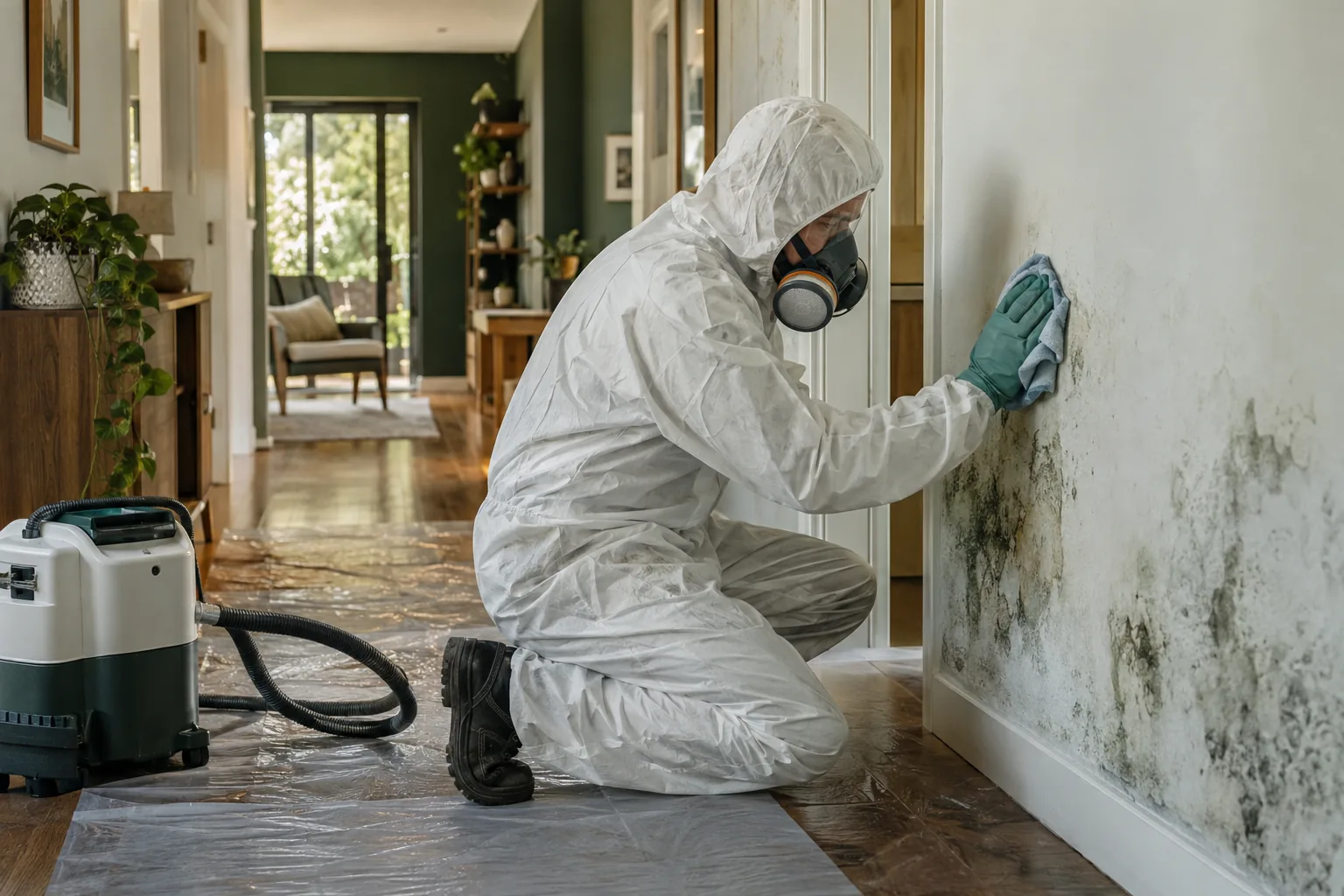
Prepare filtered air
Set up the HEPA air scrubber with suitable power and practical access. Discuss occupants and excluded belongings.
03
Select suitable treatment
Appropriate HOCl use follows assessed materials and conditions. Report earlier cleaners or paint.
04
Apply within the plan
ULV application may form part of the suitable procedure. Confirm people, pets and approved building arrangements first.
05
Remove accessible contamination
Professional physical removal uses equipment with H-class filtration as required. Stay within agreed visible surfaces. Fragile coatings, weak material and staining may limit appearance and require separate repair or decorating decisions.
06
Finish filtration and review
Final air cleaning follows removal. Discuss remaining marks and source actions with the booking contact. Confirm return instructions and any separate material assessment needed so the ceiling handover does not imply a roof or structural certification.
VISIBLE & ACCESSIBLE
Four views that explain the ceiling enquiry
Ceiling centre
Show the wider location, not only the darkest patch. Mention current dampness or damaged lining if observed.
Wall-ceiling corner
Identify both structural faces when affected. Additional surfaces need agreement before treatment rather than automatic inclusion by proximity.
Bathroom ceiling
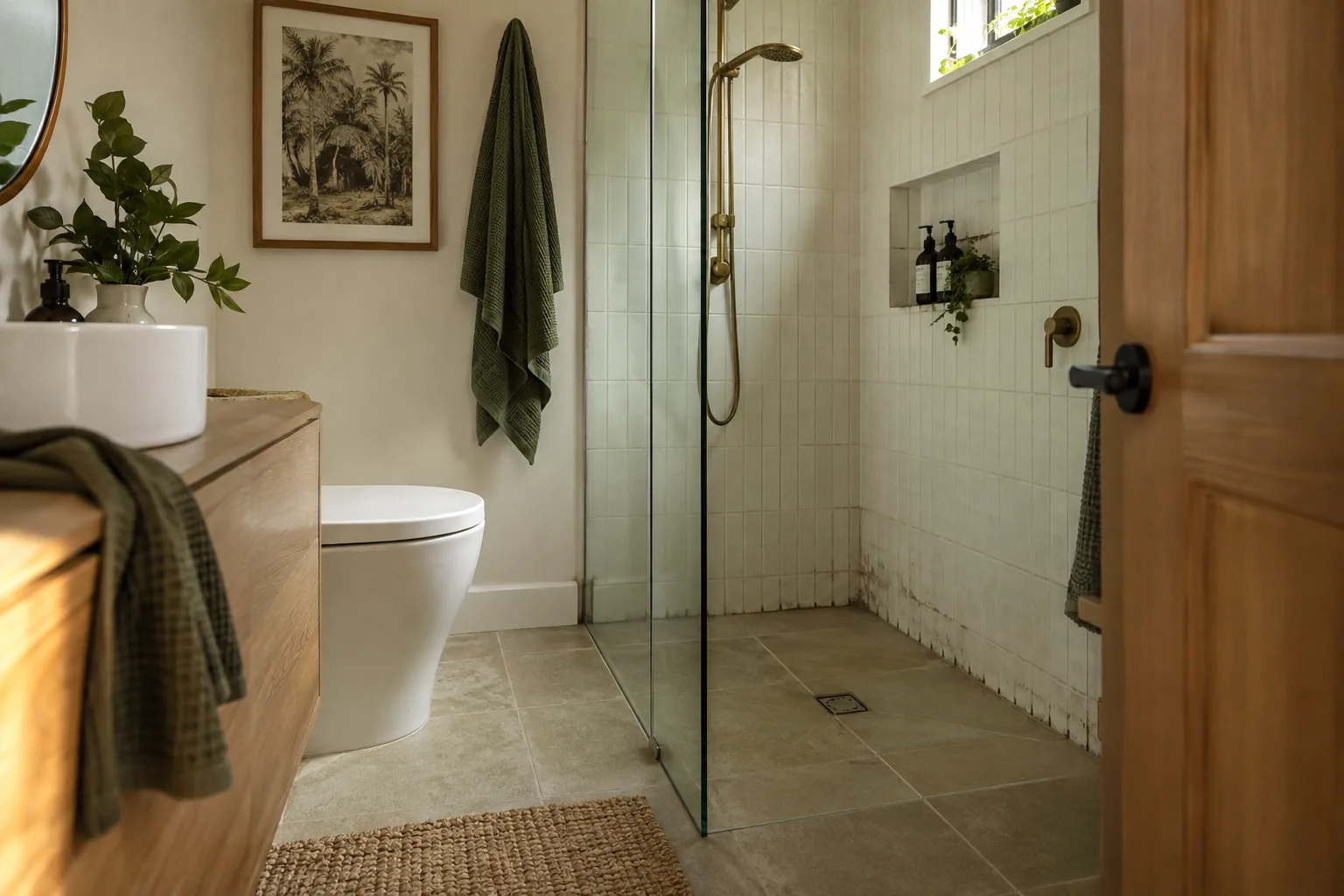
Describe extraction and known water entry. Towels, curtains and other textiles are excluded from the room’s structural service.
Hard floor beneath the area
Report damage or wetness separately. Carpet, underlay, rugs and furniture remain outside the treatment scope.
PREPARATION & LIMITS
Discuss duration and cosmetic restoration separately
Average working time is about three hours per room, varying with size, severity and accessibility. It is not hourly pricing. Fragile material or limited clearance can affect planning; a small ceiling patch does not create a guaranteed short appointment.
Contamination removal can leave cosmetic stains. Decorating is separately quoted where appropriate after source and substrate concerns are addressed. Continued moisture can support recurrence, so treatment is not a guarantee that the ceiling will remain permanently clear or look newly painted.
AFTER THE SURFACE WORK
Keep a useful ceiling record
Photograph the same wider view with dates and note new dampness or changes. Share continuing leak concerns with the appropriate repair trade. A surface treatment does not establish that roof, plumbing or concealed material defects have been resolved elsewhere in the building.
Manage routine moisture with extraction and sensible ventilation while arranging actual repairs separately. Remediation addresses the agreed existing contamination. The ceiling’s material condition and ongoing moisture source remain relevant after removal, especially before any new decorative finish is planned.
CALDERMEADE · NEARBY LOCATION PAGES
Caldermeade and nearby address enquiries
The surrounding pages help navigate neighbouring localities. Confirm the Caldermeade street address, room details and access route when calling. Availability is considered individually; nearby geography does not establish a local office or identical work conditions across different buildings.
BEFORE YOU ARRANGE WORK
Questions for your enquiry.
Should I stand on furniture for a ceiling close-up?
No. Take a wider image safely and describe what you see. Avoid disturbing weak material or creating an unsafe access situation merely to improve a photograph.
Does a ceiling stain prove a roof leak?
No. Its location and history are useful, but the source may need separate investigation. Describe known water entry, repairs and current dampness without diagnosing from colour alone.
Can you treat sagging lining as ordinary mould removal?
Material damage needs assessment before treatment is agreed. Separate repair or replacement may be required; surface cleaning does not restore structural or lining integrity.
Are roof voids included in ceiling treatment?
No automatic concealed-space scope applies. Visible accessible surfaces are covered; roof spaces and hidden material can need separate investigation or additional work.
Will the ceiling look newly painted afterwards?
That is not guaranteed. Cosmetic marks and damaged coatings may remain, with decorating separately considered after moisture and material condition are addressed.
Can occupants remain directly below the work?
Follow the agreed preparation and occupancy arrangements. Do not assume everyday room use can continue through application, physical removal and final filtration.
Discuss your Caldermeade address
Discuss the Caldermeade ceiling safely from your current observations on 03 8652 1296. Include the address, material damage and access; suitable surface treatment and appearance limits can then be considered before booking.
Useful references: Official local geographic reference