
MONOMEITH · MELBOURNE
Mould Removal Monomeith
CLEARANCE · WALLS · OBSERVATION
Clearing a storage room can reveal a wall that has not been checked for some time. For Monomeith, describe the exposed finish, any dampness and what remains obstructed. We confirm the exact address and suitable structural-surface work before agreeing attendance or a plan to replace belongings.
Exposed finish reviewed
Storage exclusions clear
Follow-up access considered
SURFACES & THEIR SETTING
Describe the room after clearance
Monomeith is included in the Victorian Government’s Cardinia locality information. A mould removal enquiry needs the actual address and room condition. The recent removal of storage is useful history, but does not prove how long the marks have existed or what caused them.
Boxes moved away from a wall
Take a wider photograph showing the exposed structural finish. Explain whether the items were touching a damp area. Stored belongings are not included treatment items, and their condition needs separate consideration rather than an assumption that room work cleans them.
Some fixed storage remains
Identify the areas still hidden and whether fittings can be accessed safely. Joinery removal is not automatic preparation.
Assess the material now visible
For mould inspection, include the current finish and relevant damp or repair history. Humidity and moisture observations support accessible assessment. They cannot establish concealed material condition or certify that every stored item and hidden surface is unaffected.
Old stains and fresh-looking spots
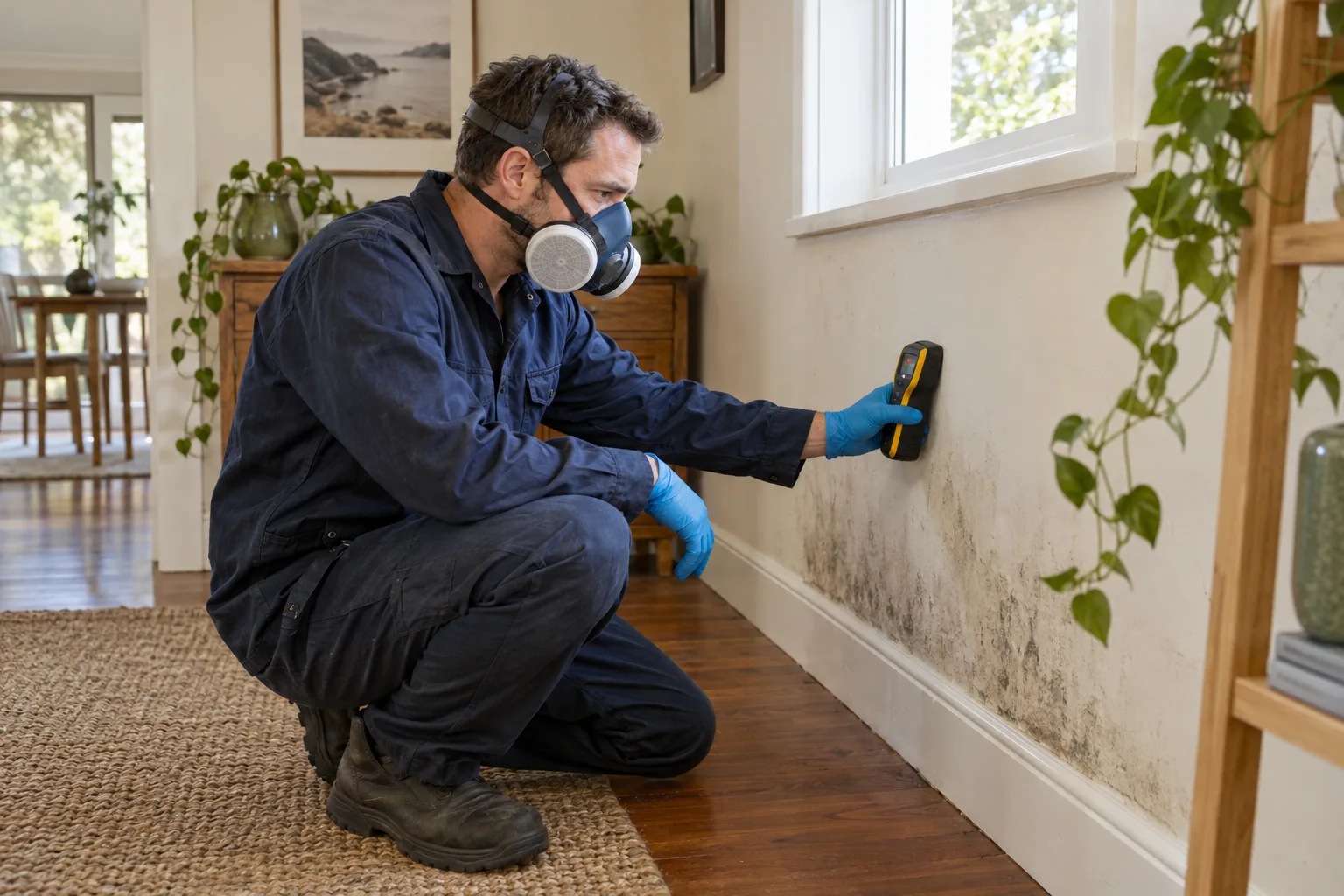
Describe both without deciding from colour alone which is active growth. Dates and comparable photographs help the conversation. Earlier cleaning or repainting should be disclosed so the technician understands how the visible surface has changed.
Damaged finish after long obstruction
Mention peeling paint, softness or swelling before booking. Material repair may be needed separately. Avoid scraping or coating the wall to make it appear uniformly ready for treatment; the actual condition sets realistic work expectations.
THE SURFACE REMOVAL PROCESS
A defined room sequence
01
Inspect and agree
Review visible growth, material condition and relevant readings. Confirm accessible walls, ceilings and hard floors. Record hidden areas, fixed-storage limitations and separate source questions so clearance does not become an unstated whole-room restoration promise.
02
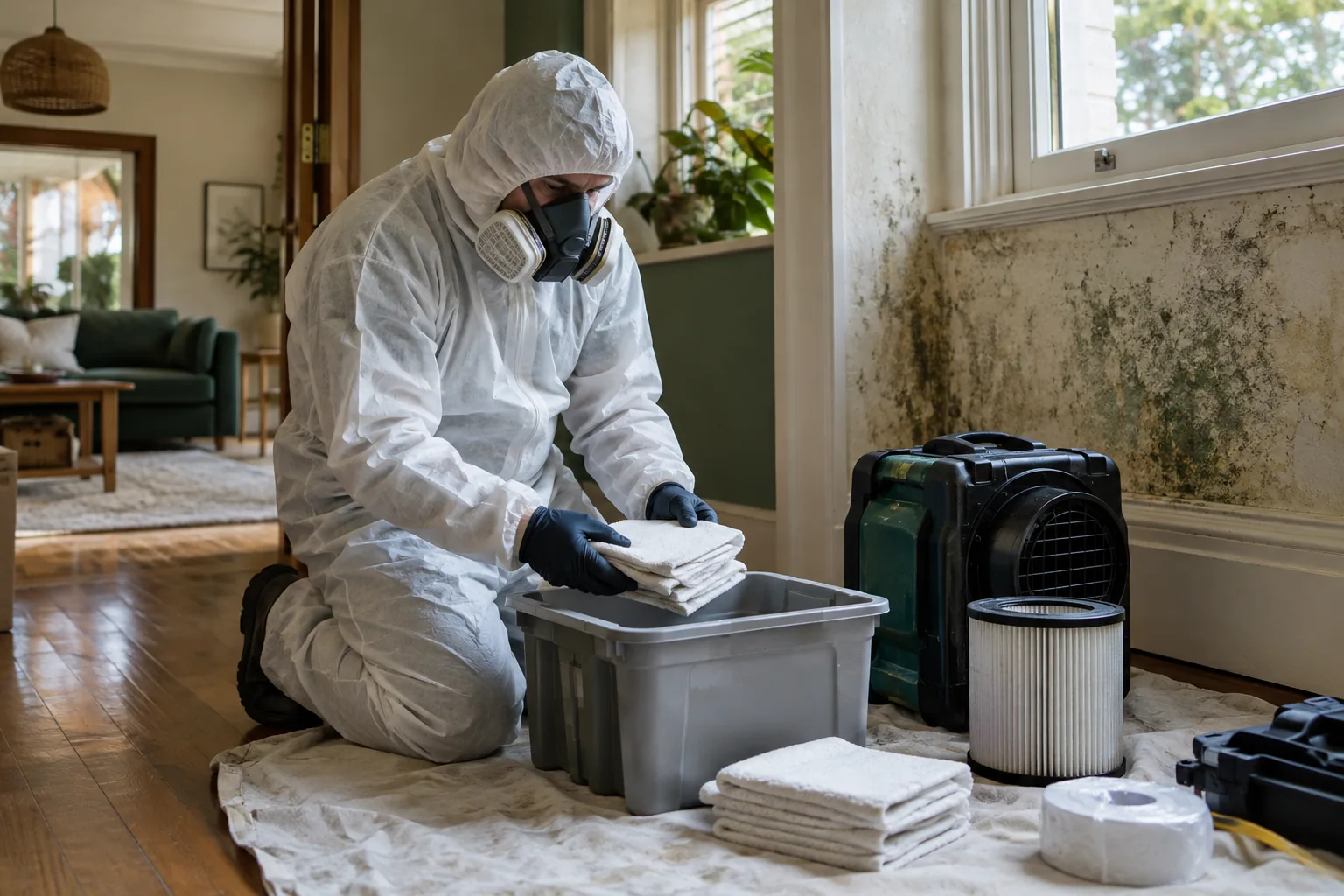
Prepare filtered air
Set up the HEPA air scrubber with suitable power and room access. Discuss occupants and where excluded belongings stay.
03
Select suitable treatment
Appropriate HOCl use follows assessed finishes and conditions. Report previous products and coatings.
04
Apply within scope
Where the assessment supports ULV application, agree the room preparation and return instructions. Include occupants and animals in those arrangements before the work begins.
05
Remove accessible contamination
Professional physical removal uses H-class filtration as required. Keep the agreed structural boundaries clear. Damaged lining, fragile coatings and persistent staining can limit appearance and may require separate repair or decorating decisions.
06
Finish and plan observation
Final air cleaning follows removal. Review remaining marks and moisture concerns, then confirm return instructions.
VISIBLE & ACCESSIBLE
Four useful views of the cleared room
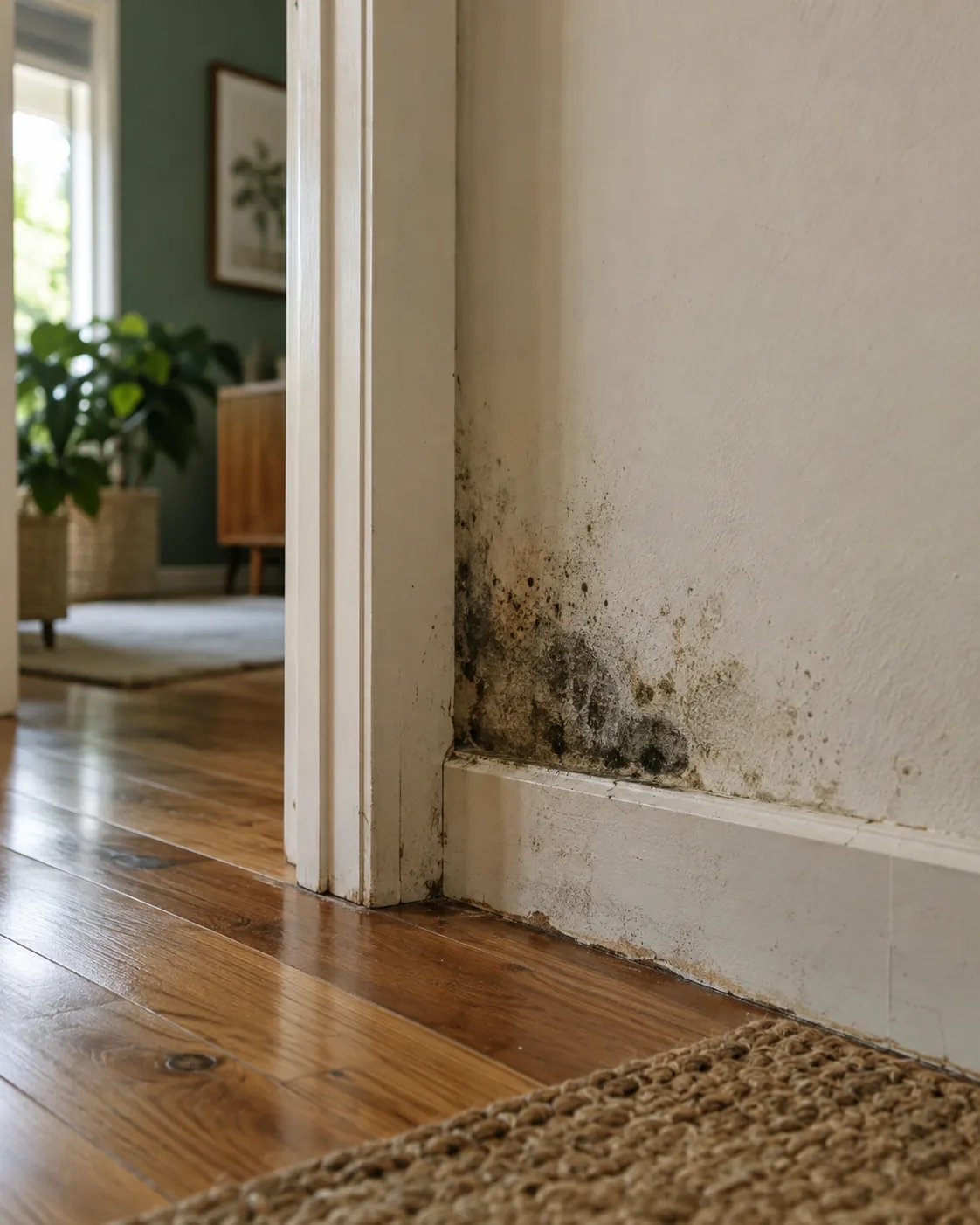
Exposed wall
Show its full accessible face and nearby opening. Boxes, furniture and contents are excluded even where they previously touched growth.
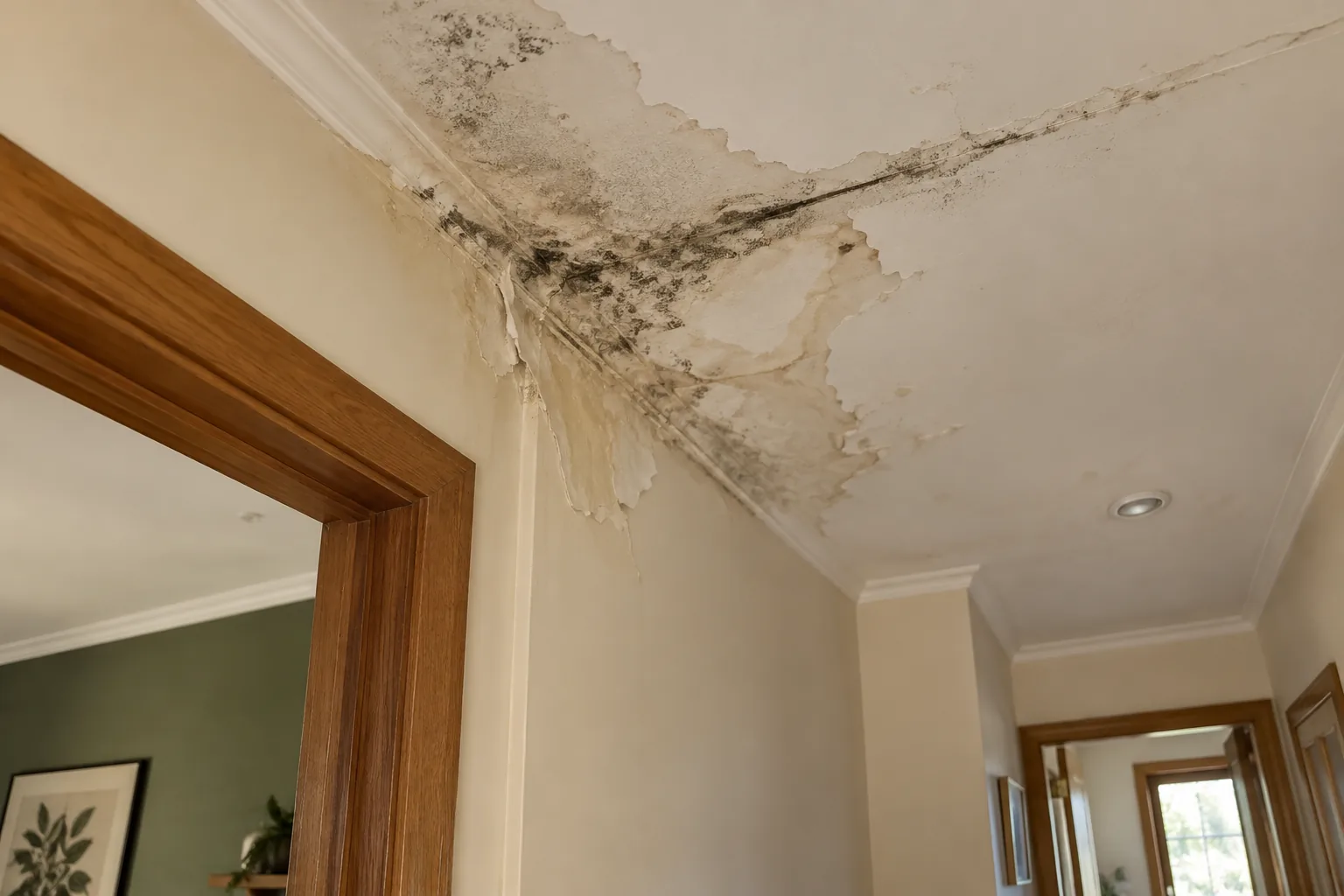
Ceiling above shelving
Identify visible marks and known leak history. Roof repair and concealed investigation remain separate tasks.
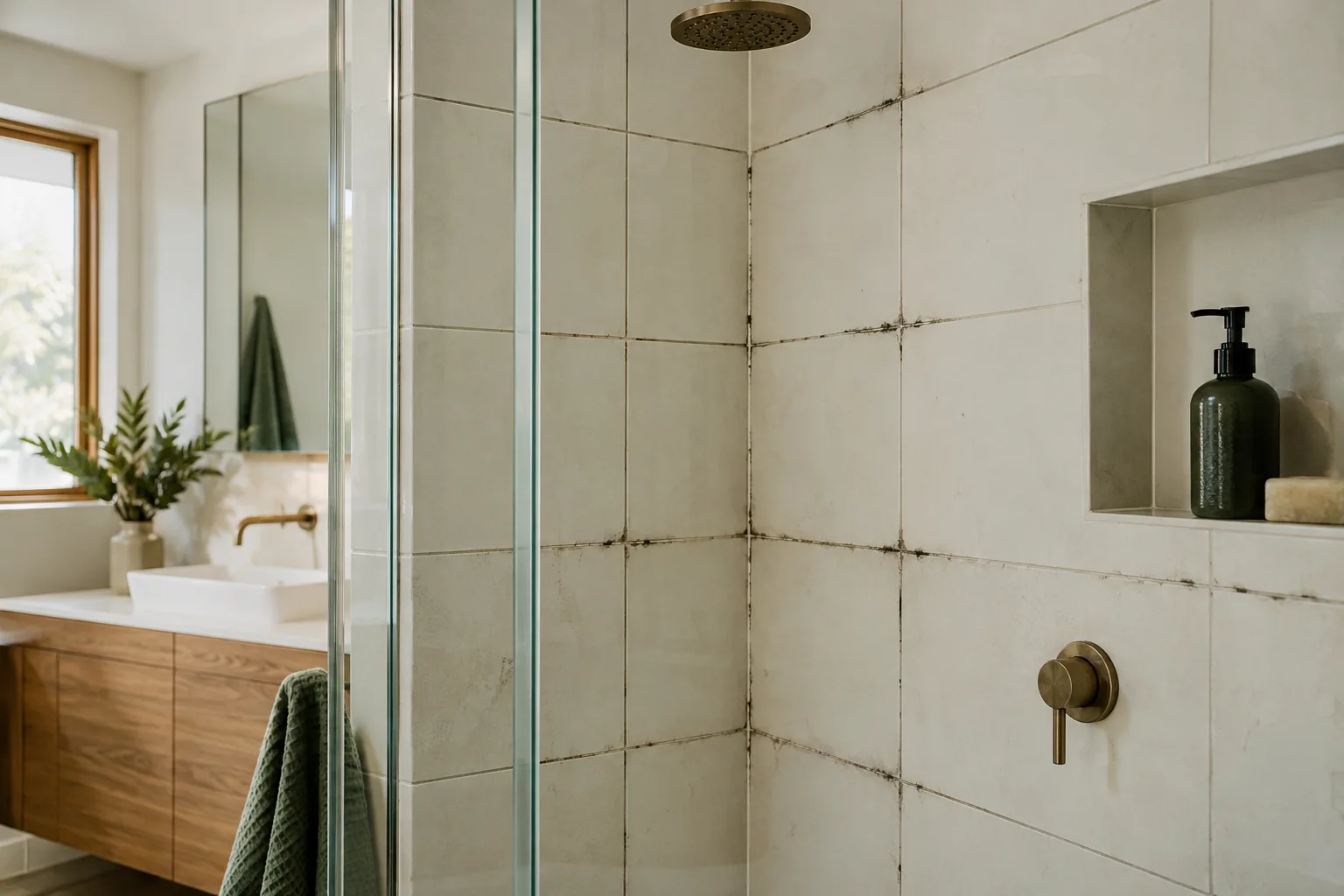
Bathroom storage corner
Describe extraction and dampness if the affected area is in a wet room. Textiles are excluded; any fitting repair or alteration needs a separately agreed scope.
Hard floor under former storage
Specify material and wetness. Carpets, underlay, rugs and stored belongings remain outside structural treatment.
PREPARATION & LIMITS
Discuss the actual appointment and finish
Average guidance is approximately three hours per room, varying for size, severity and accessibility. It is not hourly pricing. Remaining obstacles or damaged material can affect planning even after the room looks clearer than it did before storage was moved.
Cosmetic stains may remain after contamination removal. Decorating is separately quoted where appropriate once moisture and material conditions are addressed. Recurrence is possible if dampness continues, so replacing belongings does not turn treatment into permanent prevention for the room.
AFTER THE SURFACE WORK
Keep the room observable after work
Allow practical air space beside walls and arrange checks of the same surfaces. Storage layout can help airflow and observation but cannot repair water entry or unsound material. Keep affected belongings under separate consideration rather than assuming they were covered by structural treatment.
Record fresh changes with dates and note repeated wetness or condensation. Arrange source repairs through the relevant trade. Remediation addresses existing contamination, while ongoing moisture management and the room’s material condition still matter after the accessible surfaces have been treated.
MONOMEITH · NEARBY LOCATION PAGES
Monomeith and surrounding address enquiries
The nearby pages provide location navigation. Contact us with the actual Monomeith street address, room access and remaining storage constraints. Availability and suitable work are agreed individually rather than assumed from a neighbouring locality or the appearance of a cleared room.
BEFORE YOU ARRANGE WORK
Questions for your enquiry.
Does clearing storage show when the mould began?
No. It shows when the surface became visible. Share the discovery date and any earlier observations or damp events without assigning a precise growth start date from appearance alone.
Are the removed boxes treated with the wall?
No. Stored contents and belongings are outside the structural-surface service. Discuss them separately and agree preparation that avoids unnecessary movement through other rooms.
Can you reach every area behind fixed shelving?
Not automatically. Explain what remains inaccessible. Separate access work may be needed before a hidden structural surface can be considered within an agreed appointment.
Should storage be replaced immediately after removal?
Follow the agreed return instructions and discuss practical clearance. Continued visibility and airflow can support observation, but they do not replace source repairs where dampness persists.
Will the exposed wall look newly painted?
No cosmetic guarantee applies. Staining and damaged finishes may remain after contamination treatment, with decorating separately considered once source and substrate questions are addressed.
Can rearrangement alone prevent recurrence?
No permanent prevention is promised. Air space and observation may help, while continuing leaks, condensation or other moisture conditions need appropriate separate management.
Discuss your Monomeith address
For Monomeith, call 03 8652 1296 with the cleared room’s current finish and remaining obstacles. Confirm the address, accessible structural surfaces and preparation before putting storage back against an unassessed wall.
Useful references: Official local geographic reference