
LANG LANG · MELBOURNE
Mould Removal Lang Lang
PROPERTY · BUILDING · SURFACES
If a property has several buildings, identify the room needing attention rather than describing the whole address as affected. For Lang Lang, explain the building’s use, finish and access. We discuss suitability and availability individually before agreeing work on visible accessible structural surfaces.
Building and room identified
Suitability discussed first
Separate scope boundaries
SURFACES & THEIR SETTING
One address can contain different room conditions
The Victorian Government lists Lang Lang among Cardinia’s localities. For mould removal, specify the affected building and entrance. A locality page does not establish automatic coverage of every room, shed or property type bearing that address.
A room in the main house
Describe visible growth and the room’s moisture history. Include known leaks and ventilation issues. Photographs of the actual finish are more useful than assuming a source from the property’s size, use or wider local setting.
A different space on the property
Explain its construction, lining and use separately. Suitable power and access need consideration.
Assessment before a multi-building assumption
For mould inspection, provide current wider images and relevant repair dates for each proposed area. Moisture and humidity observations support accessible assessment. They do not establish concealed conditions or create a whole-property scope from one room’s marks.
Surfaces with different material
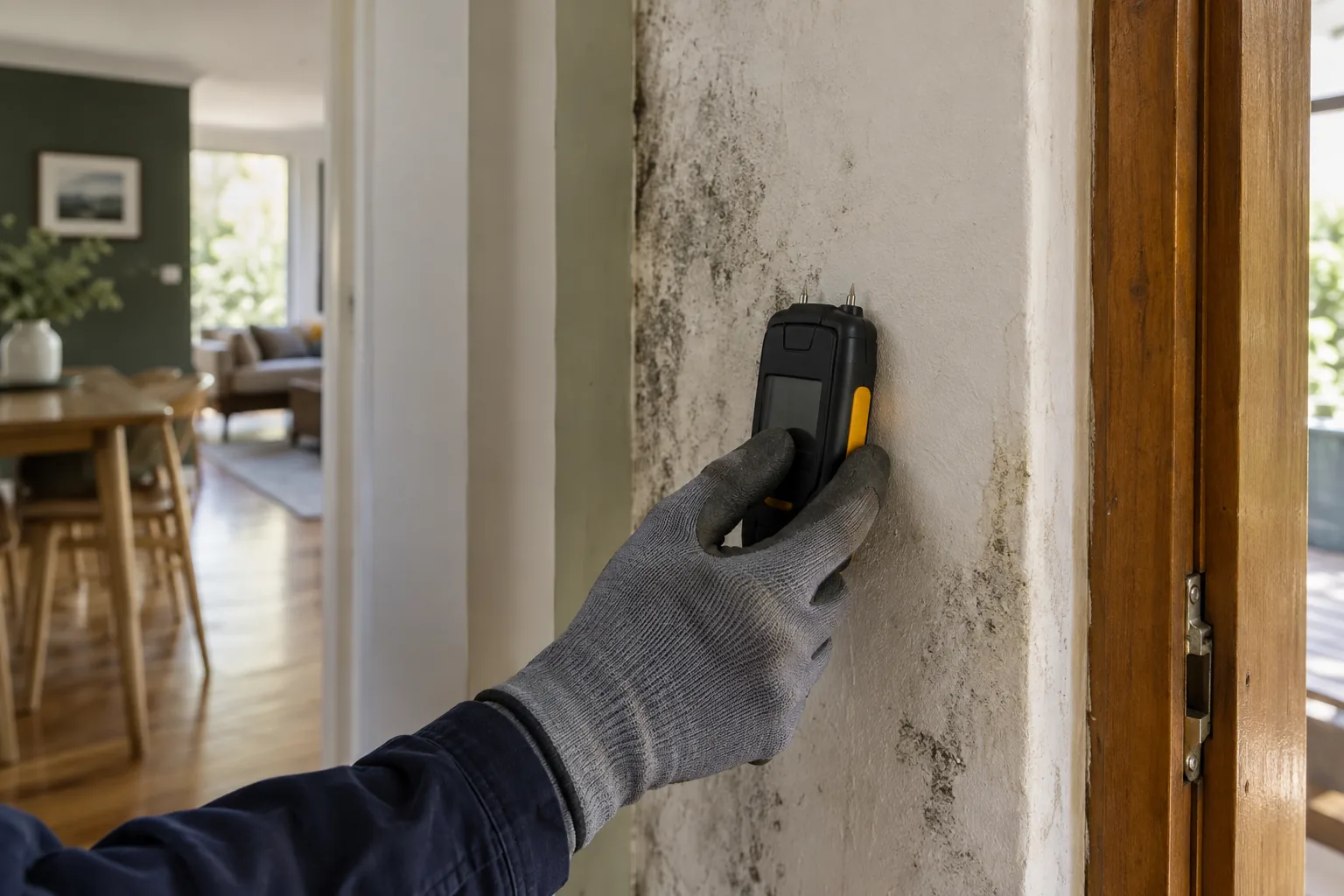
Identify painted lining, masonry or hard floors where known. Mention loose coatings or damaged substrate before booking. Different buildings can require different limitations, and weak material may need repair beyond ordinary contamination removal.
The route between buildings
Describe gates, steps, parking distance and room entrances. Confirm the authorised booking contact and power arrangements. These details need agreement rather than being left until attendance at a property whose address alone reveals little about access.
THE SURFACE REMOVAL PROCESS
A defined procedure for the agreed room
01
Inspect and set boundaries
Review accessible growth, material condition and relevant readings. Confirm included walls, ceilings and hard floors. Record separate buildings or surfaces omitted from scope so the appointment is not presented as assessment of the whole property.
02
Prepare filtered air
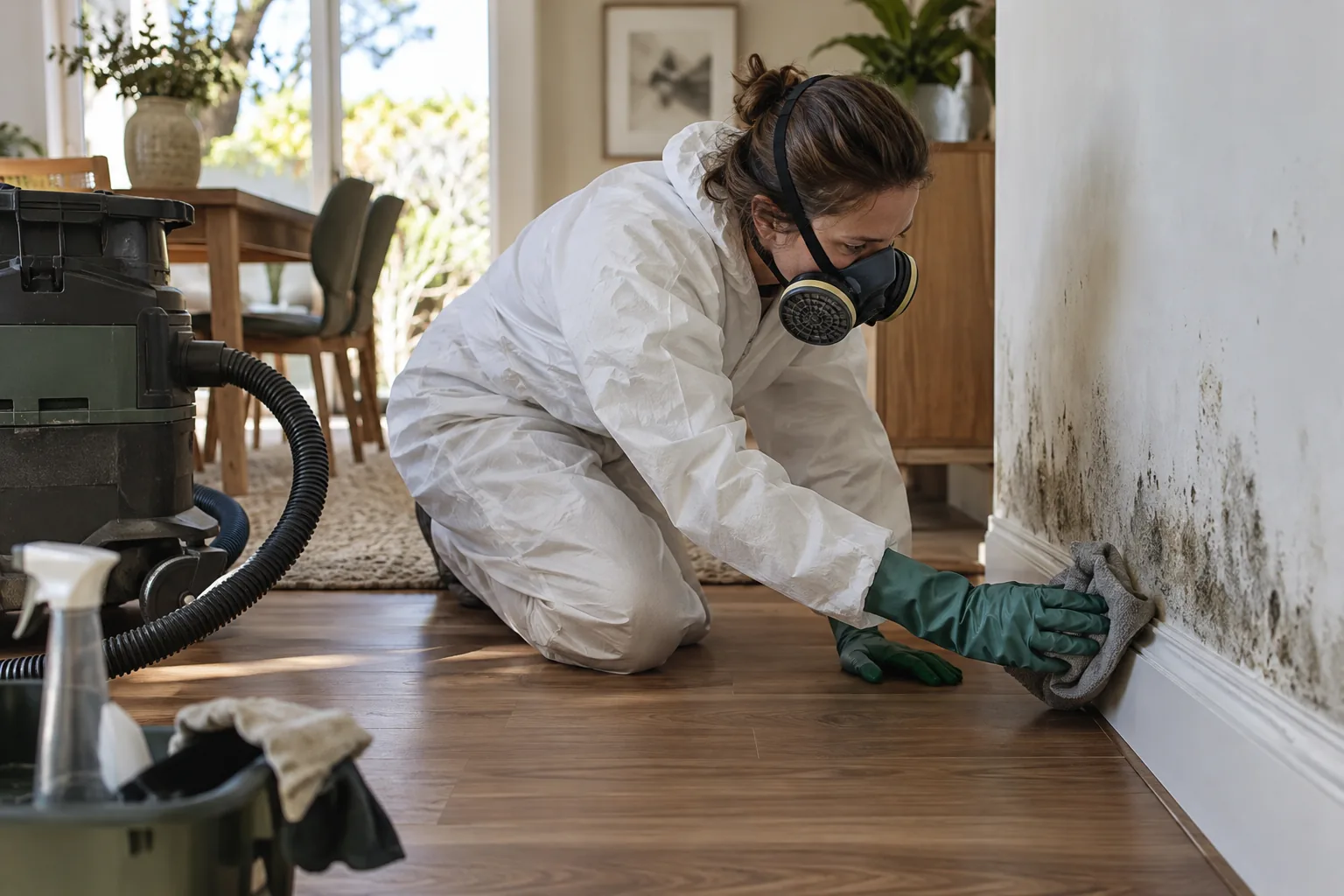
Set up the HEPA air scrubber with suitable power and equipment access. Discuss occupants, pets and excluded belongings. A separate entrance still requires a clear working arrangement and preparation specific to the room being treated.
03
Choose suitable treatment
Appropriate HOCl use follows assessed materials and conditions. Report earlier cleaners and coatings.
04
Apply within the plan
ULV application may be suitable in the procedure. Confirm people, pets and approved building arrangements first.
05
Remove accessible contamination
Professional physical removal uses H-class filtration as required. Keep the agreed structural-surface boundaries clear. Fragile coatings, weak lining and residual stains can limit appearance and may need separately arranged repair or decorating.
06
Finish and review
Final air filtration follows removal. Discuss treated areas, remaining marks and source questions. Confirm return instructions and the appropriate repair pathway, making clear that a completed room job is not whole-property certification or a permanent prevention guarantee.
VISIBLE & ACCESSIBLE
Four room views for a practical enquiry
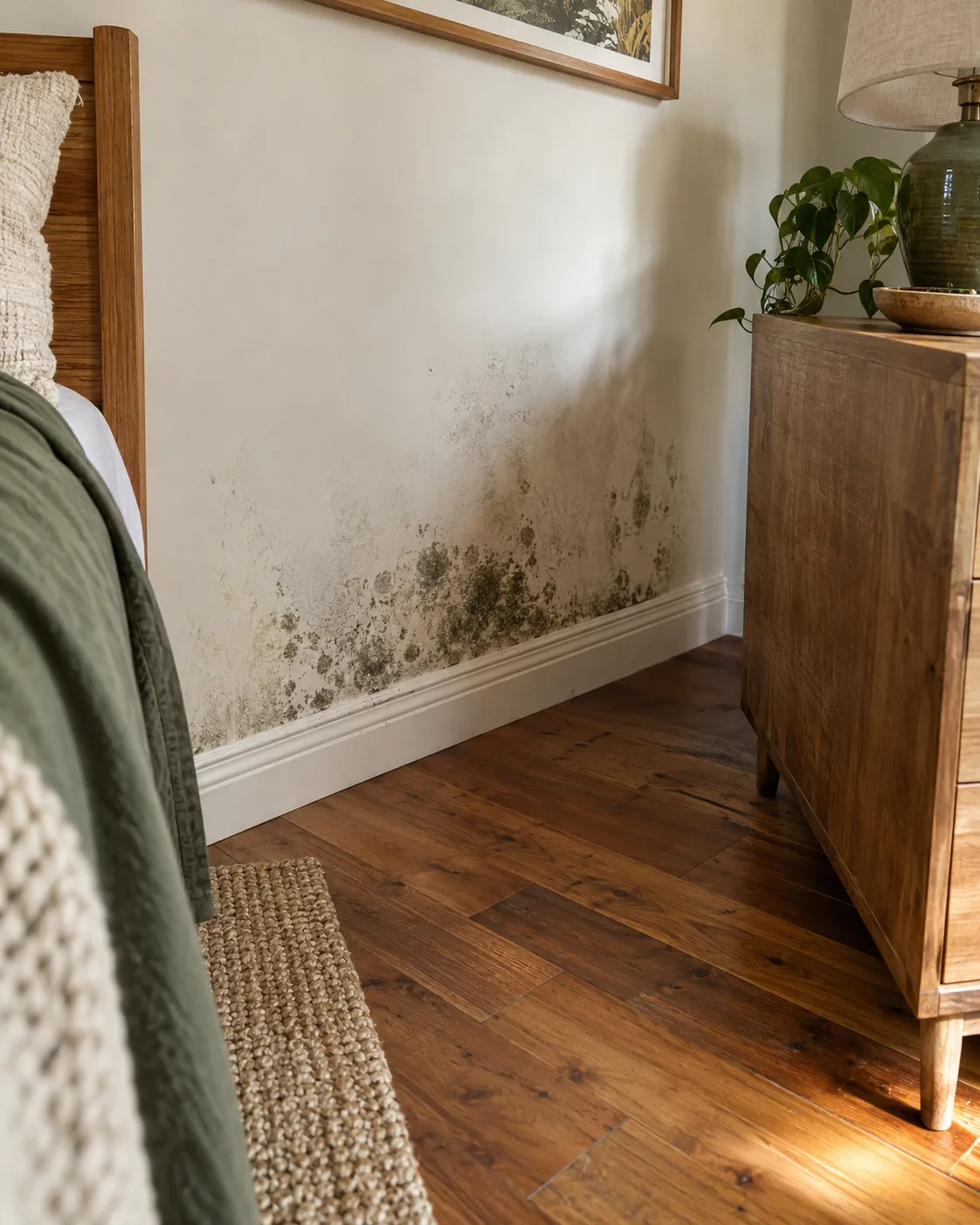
Main-house wall
Show the accessible finish and any obstacles. Furniture, upholstery and stored contents are excluded from structural-surface treatment.
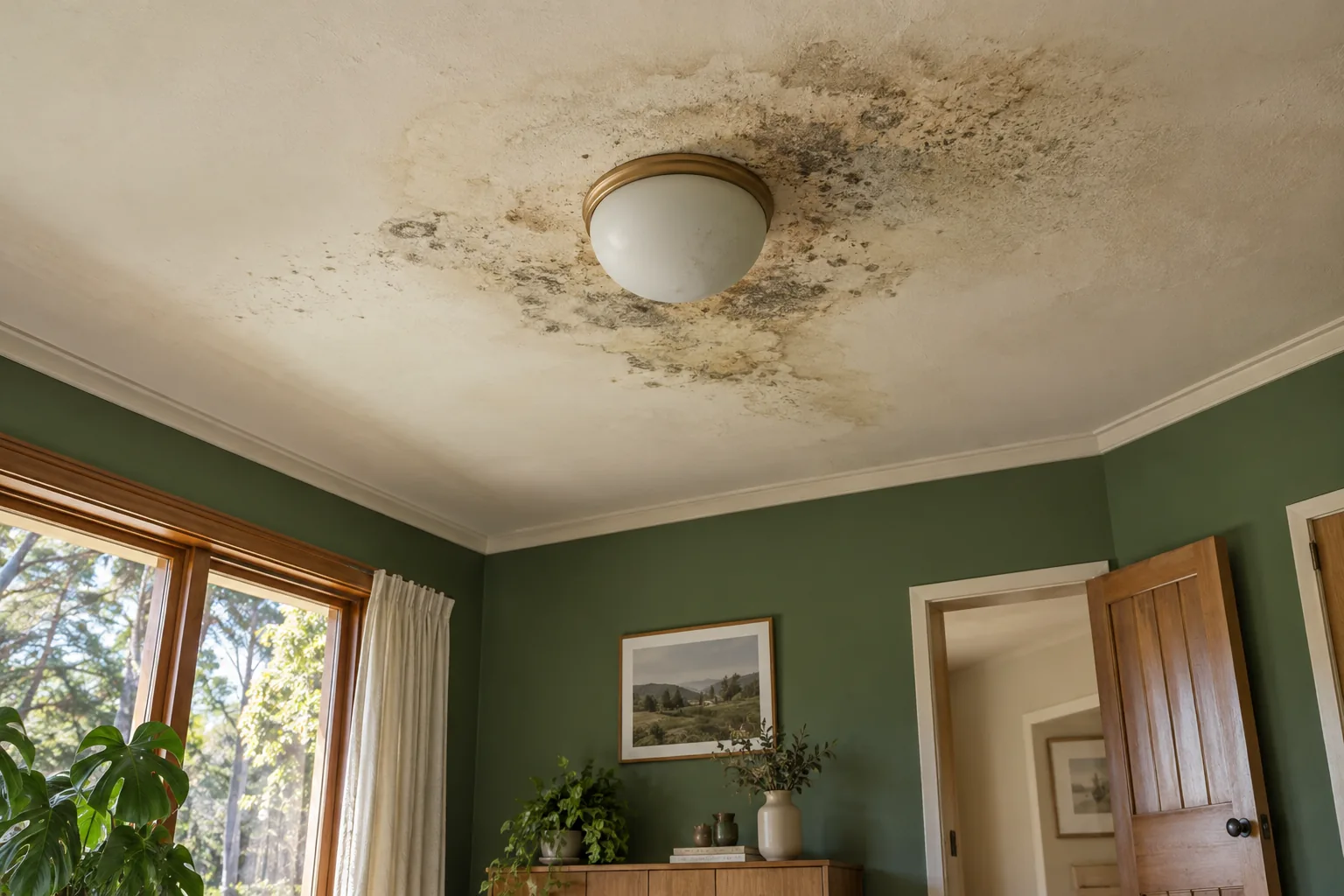
Separate-room ceiling
Identify its building and material condition. Roof repairs and concealed investigation remain separate tasks.
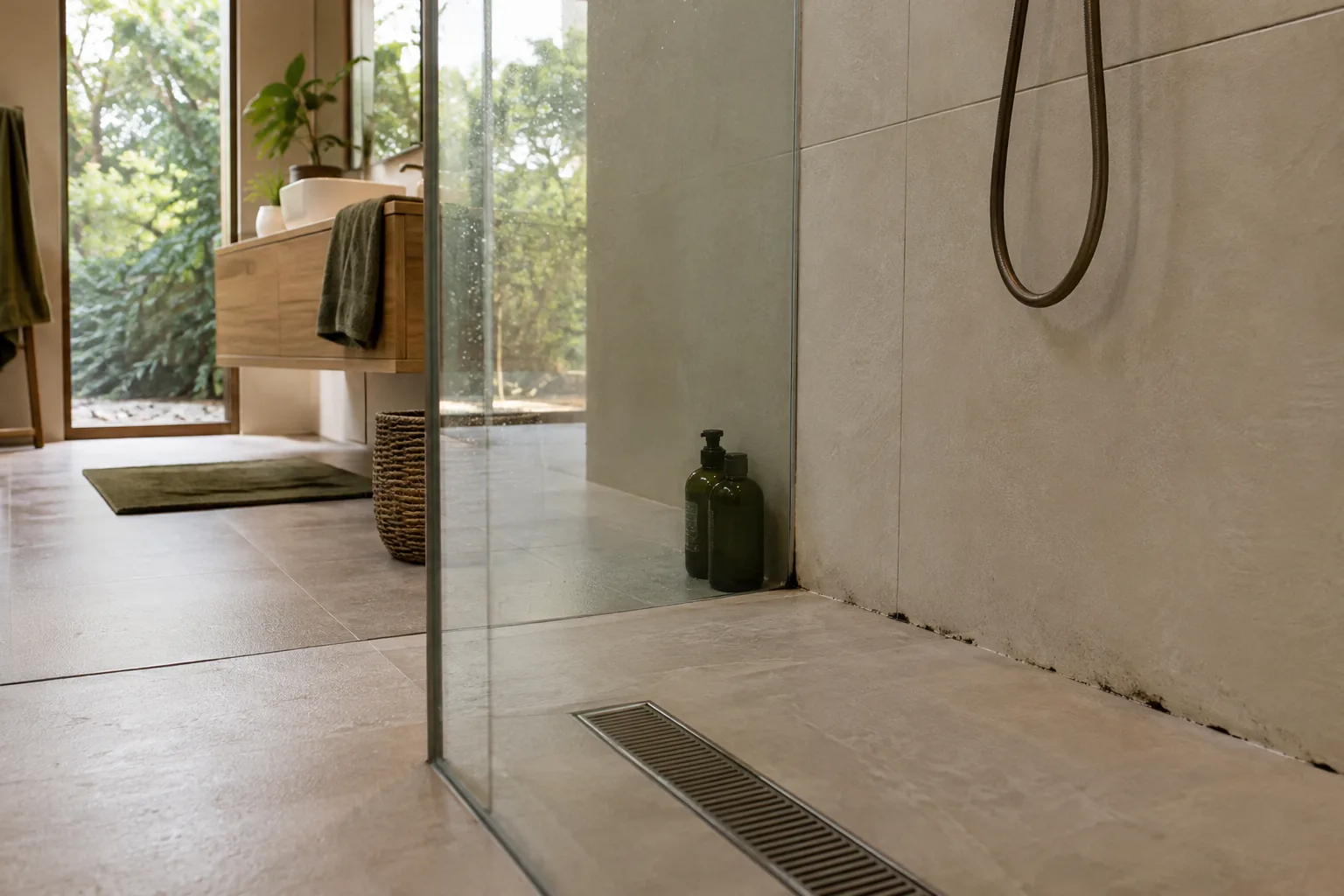
Bathroom surface
Describe extraction and known water entry in that room. Textiles and fittings do not automatically become included items.
Hard-floor edge
Specify the finish and wetness. Carpets, rugs and underlay are excluded, regardless of which building contains them.
PREPARATION & LIMITS
Discuss planning for the actual rooms
The service average is around three hours per room, varying with size, contamination and accessibility. It is not hourly-based pricing. Several buildings require practical discussion; multiplying a room count cannot produce a guaranteed timetable without assessing access and suitable scope.
Cosmetic staining can remain after contamination removal. Decorating is separately quoted where appropriate after moisture and substrate conditions are considered. Growth can recur when dampness continues or returns, so treatment does not permanently protect every building at the property.
AFTER THE SURFACE WORK
Assign follow-up by building and room
Keep dated photographs and notes identifying where each concern appears. A main-house plumbing leak and another building’s roof defect can need different repair actions. Share specific observations with the relevant trade rather than describing the entire address as one moisture problem.
Manage routine moisture and practical ventilation according to each room’s use. Remediation addresses agreed existing contamination. Source repair, material condition and any decision about changing a building’s use remain separate matters after the accessible surfaces are treated.
LANG LANG · NEARBY LOCATION PAGES
Lang Lang and surrounding enquiries
Nearby pages provide geographical navigation. Send the full Lang Lang address, building details and authorised contact when calling. Availability and suitable work are confirmed for the property; a neighbouring listing does not establish automatic attendance at every type of site.
BEFORE YOU ARRANGE WORK
Questions for your enquiry.
Is every building at my address included?
No automatic whole-property scope applies. Identify each proposed room, material and access arrangement so appropriate work can be considered and agreed separately.
Can you treat an indoor room in a separate building?
Discuss its use, lining and condition. Suitability and address availability require confirmation; an indoor space is not automatically accepted based solely on its label.
Does removal certify the building is fit for occupation?
No. This service is not building-compliance or occupancy certification. Construction, damage and suitability can require separate qualified assessment beyond visible contamination treatment.
Are stored furniture and textiles included?
No. Furniture, carpets, mattresses, curtains, clothing and other textiles are excluded. Agree structural surfaces and sensible clearance rather than expecting room application to clean contents.
Does the average duration cover travel between buildings?
It is room-based guidance, not a fixed whole-property timetable or hourly pricing. Explain the actual access arrangement so practical planning can be discussed.
Will treatment prevent mould across the whole property?
No permanent or whole-property prevention guarantee applies. Ongoing moisture and building defects need their own management and repair, even after agreed accessible surfaces are treated.
Discuss your Lang Lang address
Call 03 8652 1296 with the Lang Lang address and the specific building containing the room. Describe use, material and entrance so suitability is considered without an automatic whole-property treatment assumption.
Useful references: Official local geographic reference