
VISIBLE SURFACES · AGREED TREATMENT
Mould Remediation NewQuay
If mould appears beside a window at your NewQuay premises, describe the growth and observed wetting. Distinguish the accessible wall from concealed junctions and separate building defects. Confirm authority and attendance before booking.
Map the exposed window-wall area
Discuss fragile finishes before treatment
Keep water-entry repairs separate

TREATMENT · FILTRATION · FOLLOW-THROUGH
A TREATMENT PLAN WITH CLEAR LIMITS
A visible window patch has several boundaries
Describe whether the growth is on the wall return, ceiling corner or an exposed floor below. Mention fixed blinds and furniture that limit access.
Remediation treats existing accessible structural contamination. It is not a window-repair service or permission to alter shared building elements. Agree which surfaces belong to the treatment and which suspected water-entry issue needs a responsible repairer or building contact.
MOISTURE COMES FIRST
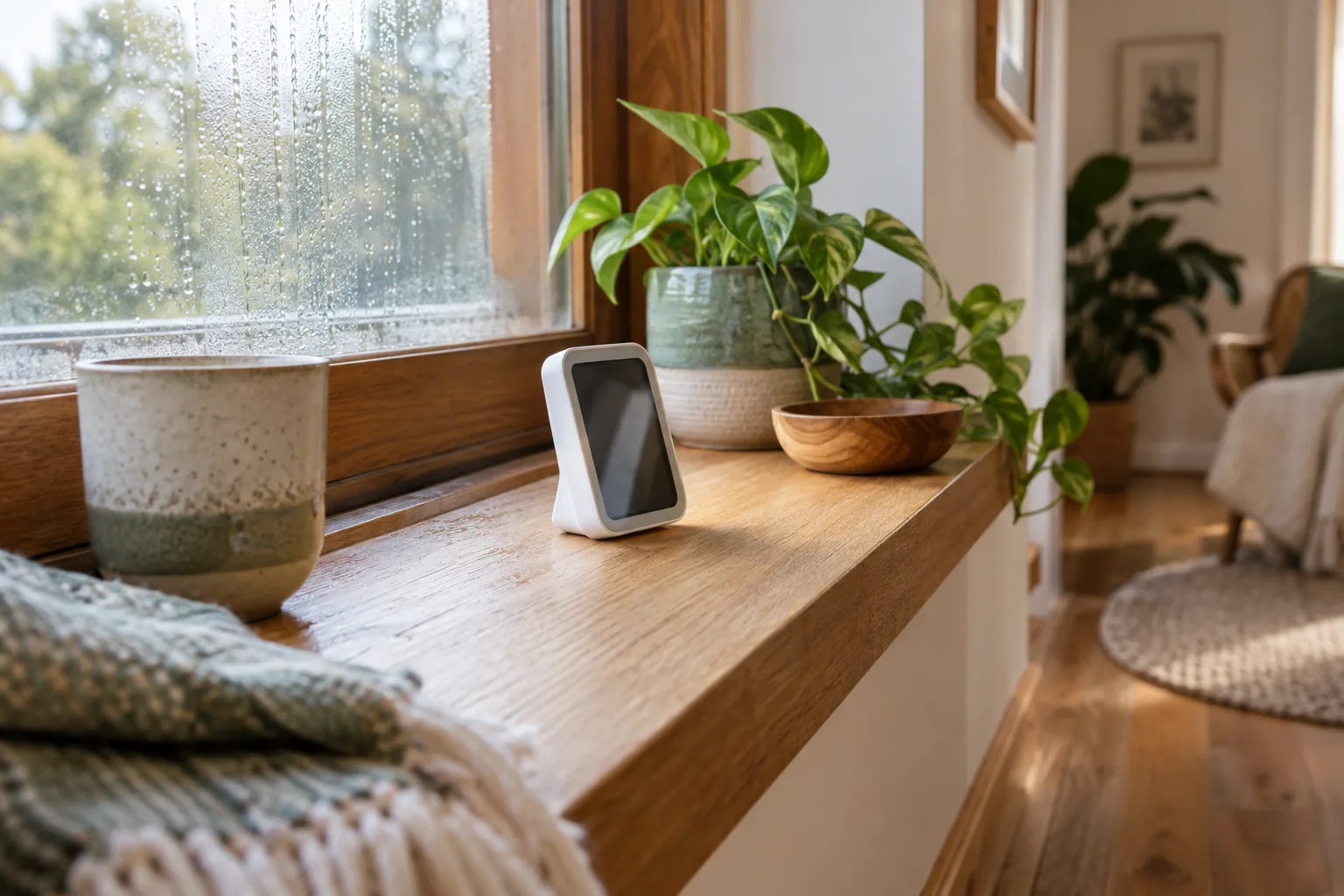
Distinguish water on glass from water entering a junction
Note whether wetting appears on glass, runs across a sill or emerges from the wall after rain. These observations describe the problem without diagnosing it. A professional hygrometer gives room-air relative humidity information; it does not prove a seal has failed or that moisture inside a junction has disappeared.
If the history is unclear, discuss accessible inspection before assuming a cause. Leak repair and structural work are separate. Continuing wetting can support recurrence after treatment, so the exposed patch and the source need coordinated attention rather than repeated cosmetic cleaning alone.
FROM PREPARATION TO FOLLOW-THROUGH
Treat the agreed area without assuming hidden access
1
Review the visible boundary
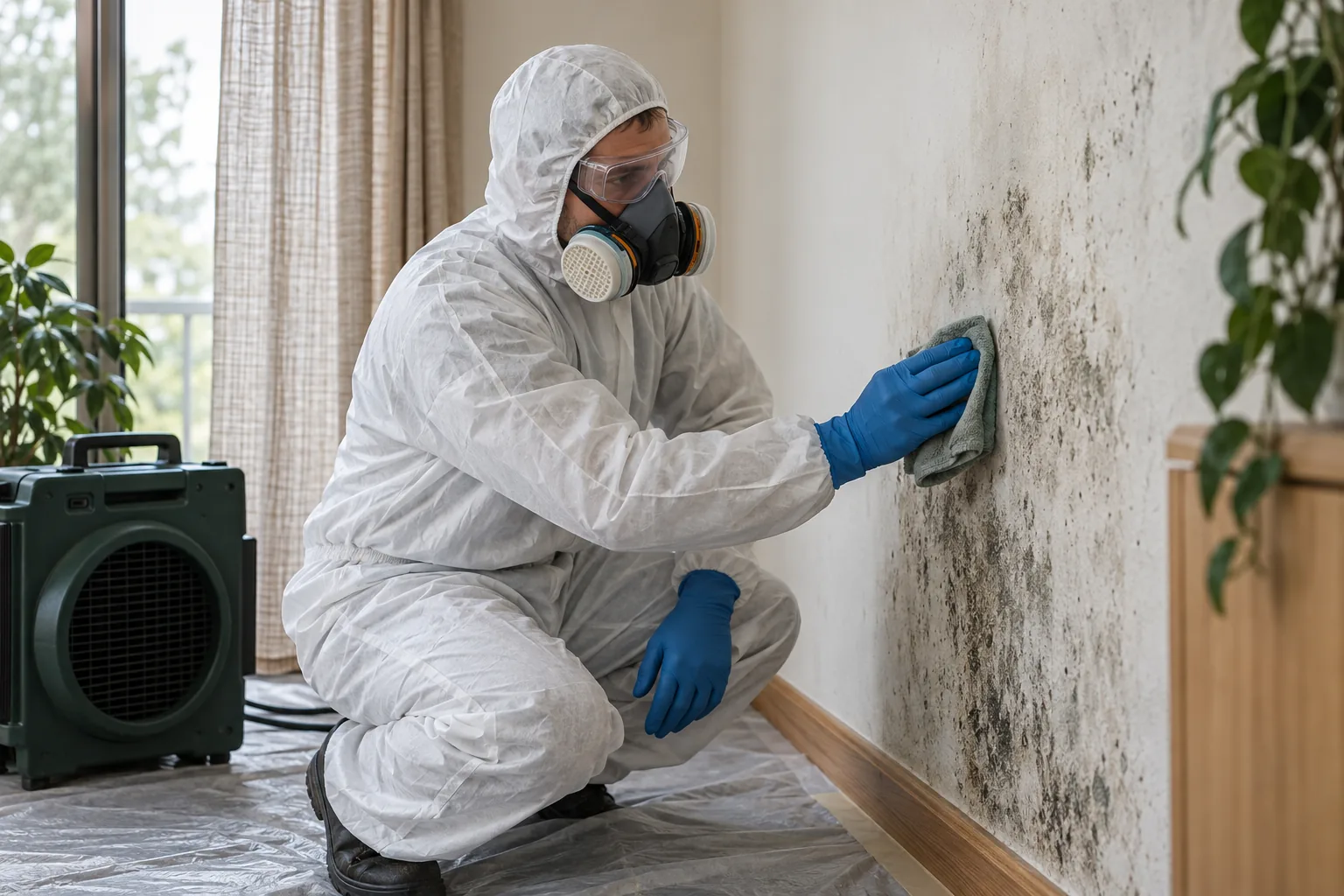
Show the exposed patch and describe wetting around the window. Agree access, material concerns and any fittings that remain outside the treatment area before work begins.
2
Prepare HEPA air protection
The confirmed air scrubber is established before treatment. Leave the agreed working area clear and coordinate equipment access; filtration is part of treatment, not proof of completely uncontaminated air.
3
Apply suitable HOCl treatment
The technician applies HOCl within the assessed scope. ULV dry fog is used in most cases where appropriate, with no assumption that an inaccessible window junction becomes covered.
4
Remove exposed growth
Professional H-class filtered equipment is used for physical removal. Explain delicate paint or trim before work; removing mould does not guarantee every stain or finish defect disappears.
5
Complete air cleaning and follow-through
HEPA filtration continues during and after the process. Confirm return instructions and discuss the remaining finish and water-source questions without expecting a universal re-entry time or clearance test.
Look at the room beyond the glass
Walls
Identify the accessible painted return and any growth behind curtains. Curtains themselves are excluded from structural treatment.
Ceilings
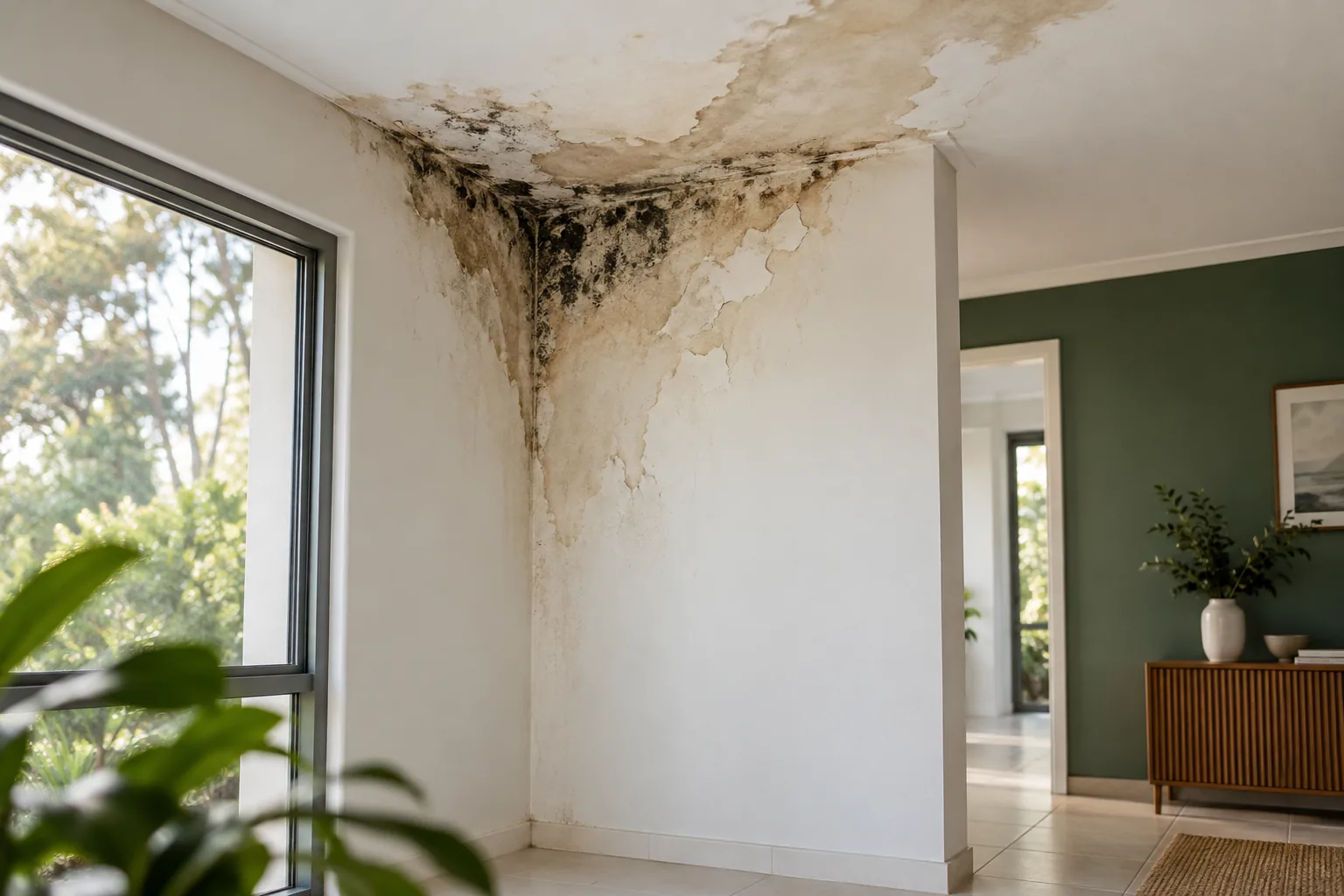
Describe growth at the overhead junction separately from a stain. Ceiling wetting may need another trade to address its cause.
Bathrooms
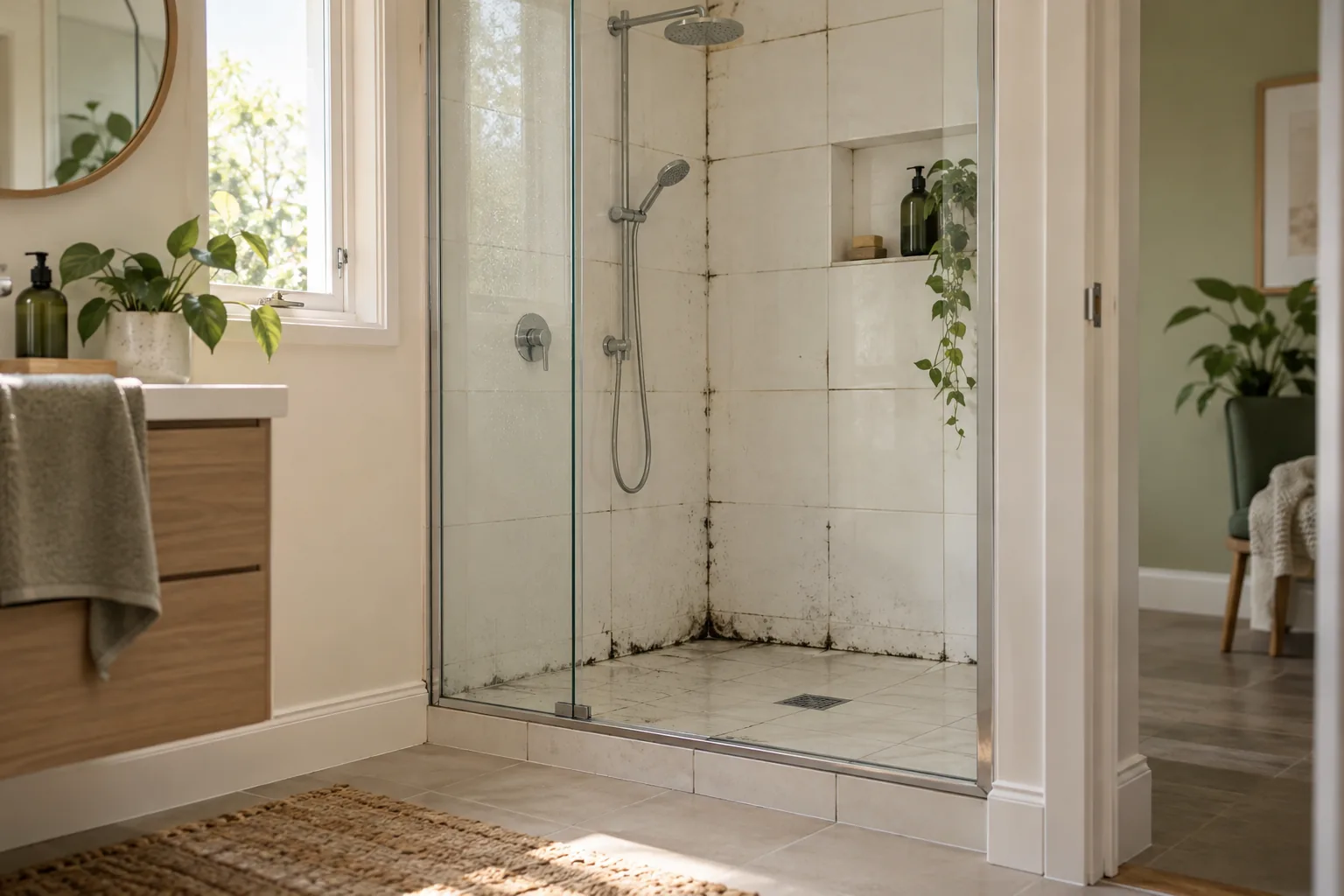
Report growth on bathroom walls or ceilings separately from the window issue. Explain recurring steam and extraction without assuming one cause for both rooms.

Kitchens
If a kitchen wall is also affected, identify cooking steam and plumbing observations. Fixed cupboards can limit what is visible.
Accessible affected surfaces
Mention an exposed floor below the window and its finish. Carpet, mattresses and other furnishings are not included.
PREPARE FOR THE ACTUAL JOB
Clear access without disturbing building components
Agree movement of nearby belongings and protect fragile items as directed. People and pets leave during treatment; ask for job-specific departure and return instructions. Average guidance is approximately three hours per room, varying with size, contamination and access, rather than an hourly charge.
Decorating requires separate scope. Nor does a dry-looking sill prove concealed material is clear; unexplained renewed wetting should be reported for further assessment.
AFTER THE TREATMENT
Observe the window after the source work
Useful follow-through compares new wetting with the repair history and ordinary room use. Avoid replacing that observation with assumptions about the precinct.
Record when water appears and where it starts.
Maintain appropriate room ventilation and extraction.
Follow up unresolved leaks before covering the treated junction.
Describe the exposed area when discussing cost
Explain the accessible wall area, finish and obstructions, and confirm remediation applicability against published pricing. Its room examples are labelled Mould Removal. Window repair, textile work and decorating should not be assumed included in a treatment quotation.
NEWQUAY · EXACT ADDRESS & ACCESS
Enquire for a nominated NewQuay room
Specify the premises and authorised access contact. Surrounding area links do not confirm a contract, attendance or permission to work on shared window components.
Waterfront City · Digital Harbour · Victoria Harbour · Batman’s Hill
Questions about remediation
Should I remove the window trim before booking?
Do not assume dismantling is needed or authorised. Describe the exposed patch and obstruction first so access and any separate investigation can be discussed.
Does condensation on glass prove the wall patch has the same cause?
No. Record both observations and their timing. Water entry and other sources still need consideration rather than a diagnosis based only on glass droplets.
Are mouldy curtains included beside the window?
No. Curtains are excluded textiles. Discuss their separate needs and agree clearance so the accessible structural surface can be considered.
Will treatment repair a damaged window seal?
No. Leak and component repairs are separate. Raise the suspected issue with the person responsible for the window while agreeing the visible treatment scope.
Can dry fog guarantee the junction behind trim is treated?
No. Standard scope remains visible and accessible. A concealed junction may need additional investigation rather than an assumption about fog application.
What should I record if the sill becomes wet again?
Record the date, weather or room activity and where water first appeared. Share those observations with the responsible repair contact rather than simply repainting the patch.
Discuss the visible window-wall problem
Call 03 8652 1296 with the NewQuay address, exposed affected surface and wetting history. Clarify access and separate repairs before treatment.