
VISIBLE SURFACES · AGREED TREATMENT
Mould Remediation Waterfront City
If mould is found when a room is reopened at a Waterfront City premises, explain its period of vacancy and what is visible now. An empty room can simplify access but does not establish why growth occurred or whether hidden surfaces are clear. Confirm suitability and attendance for the address.
Review the room before reuse
Identify exposed treatment surfaces
Plan moisture follow-through
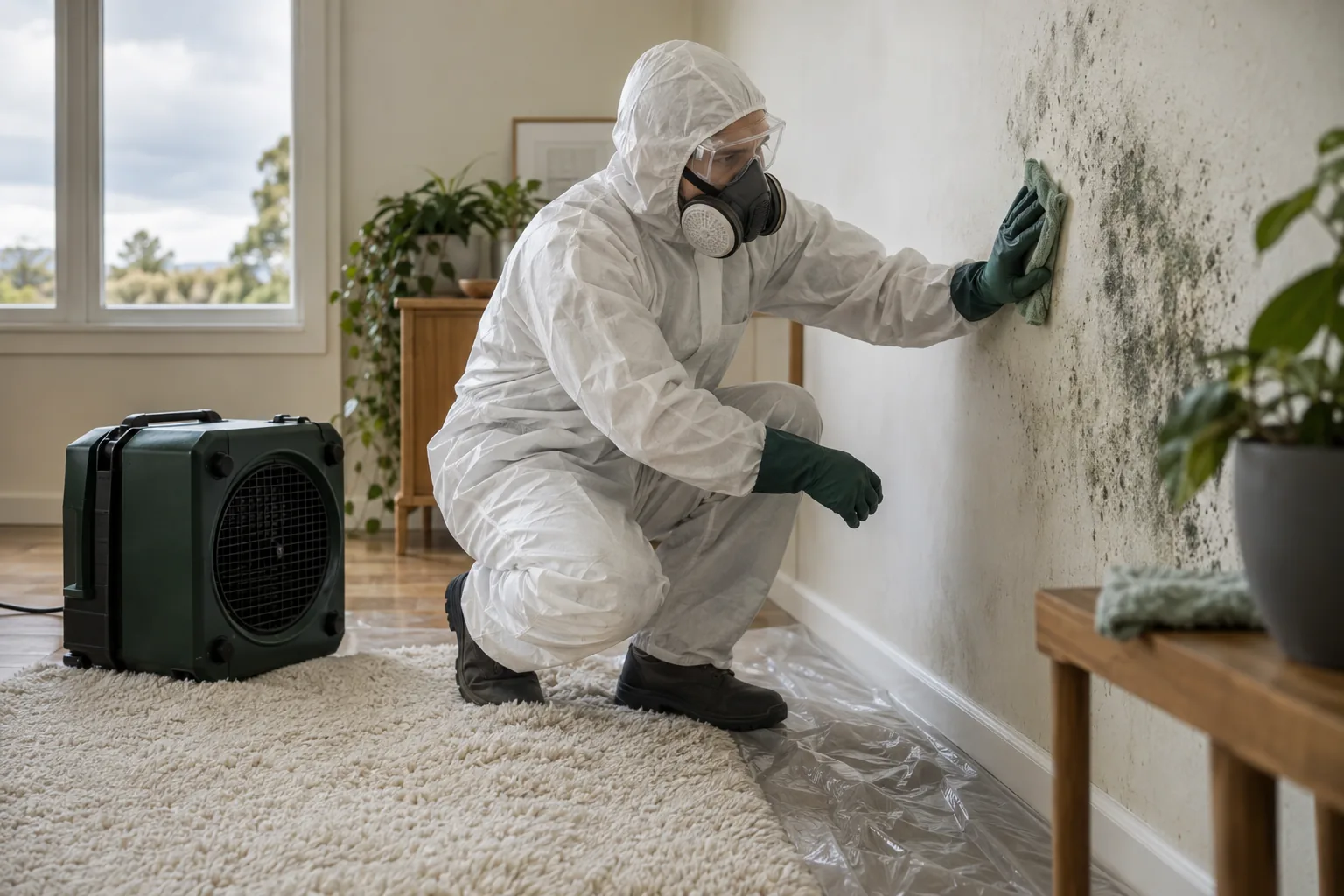

TREATMENT · FILTRATION · FOLLOW-THROUGH
A TREATMENT PLAN WITH CLEAR LIMITS
An unused room still needs an agreed scope
Describe the room’s condition, not an assumed cause based on it being closed. Mention visible growth, unusual wetting and any belongings still against the walls.
Mould remediation treats existing accessible structural contamination. It is not a complete reset of every item in the room. Curtains, mattresses, carpet and furniture are excluded, and a concealed space requires its own investigation rather than being assumed clear because the visible room is empty.
MOISTURE COMES FIRST
Reconnect the room’s history with present conditions
Ask whoever last used the room whether a leak, condensation or repair was noticed. If there is no reliable history, say so. A professional hygrometer helps assess room-air relative humidity at the time of the visit; it cannot reconstruct months of conditions or certify dryness behind linings.
Discuss accessible inspection if the extent needs clarification. Separate building or plumbing defects must be addressed through appropriate repairs. Returning the room to use without responding to continuing dampness can allow growth to recur after treatment.

FROM PREPARATION TO FOLLOW-THROUGH
Move from reopening to an informed treatment plan
1
Assess the room as found
Show visible patches and explain any known period of vacancy. Agree the exposed surfaces, remaining obstructions and areas where insufficient history or hidden conditions need separate attention.
2
Establish air filtration
The confirmed HEPA air scrubber is set up before treatment. An empty room still needs working space and preparation; filtration does not guarantee all spores are eliminated.
3
Apply the suitable treatment
HOCl is used according to the assessed scope. ULV dry fog is applied where appropriate, as in most cases, without treating vacancy as a reason to promise concealed coverage.
4
Remove visible growth
Professional H-class filtered equipment supports physical removal. Explain the condition of painted finishes and belongings left nearby; textile cleaning and building restoration are not included by default.
5
Complete final air cleaning
HEPA continues during and after the work. Discuss the technician’s return instructions, remaining cosmetic marks and the moisture measures needed before ordinary room use resumes.
Inspect the visible room, distinguish excluded items
Walls
Identify growth revealed after belongings are moved safely as agreed. Unexposed areas behind fixed fittings remain a separate access question.
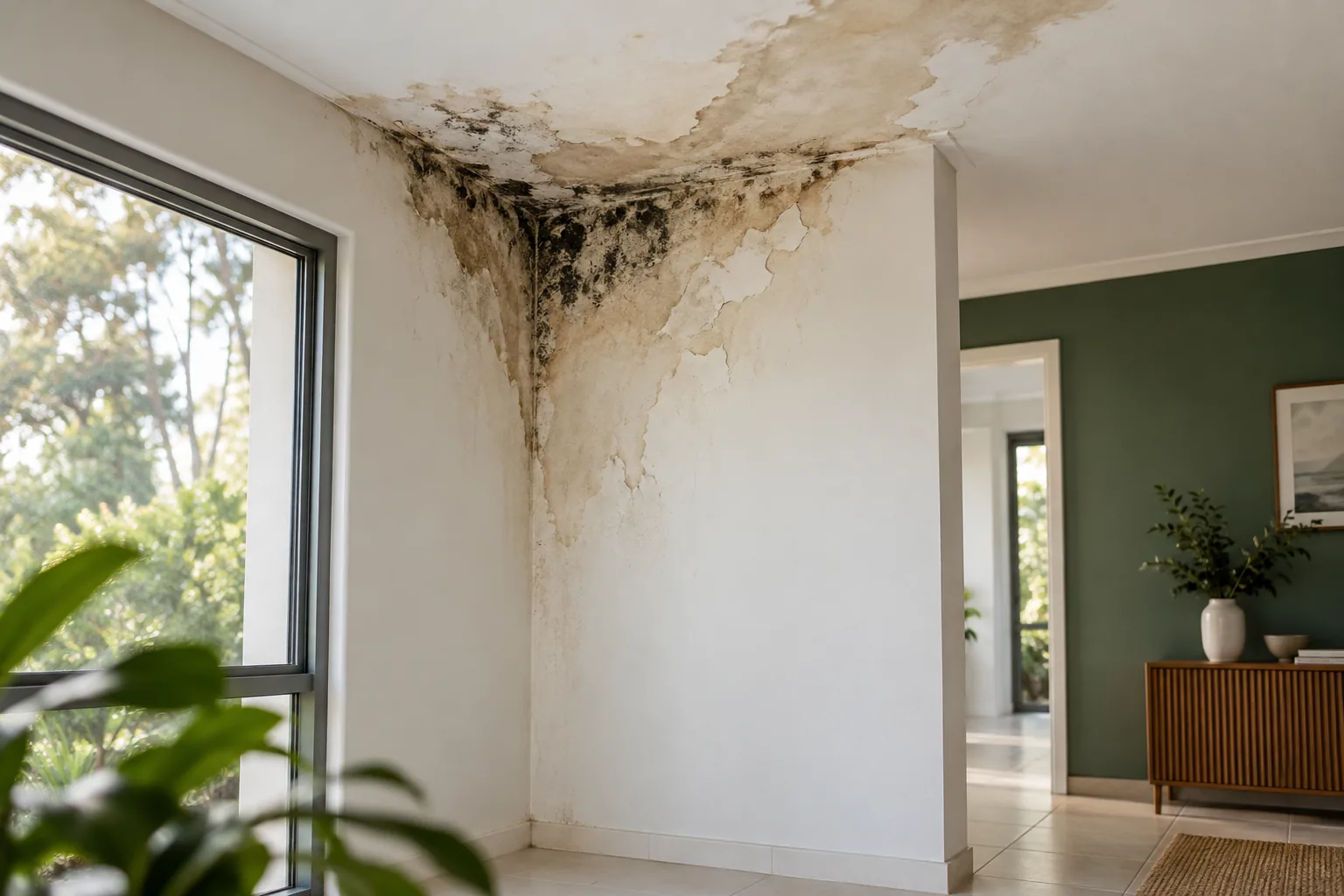
Ceilings
Describe overhead patches and old staining. Missing history should not be replaced with an assumption that roof leakage was the cause.
Bathrooms
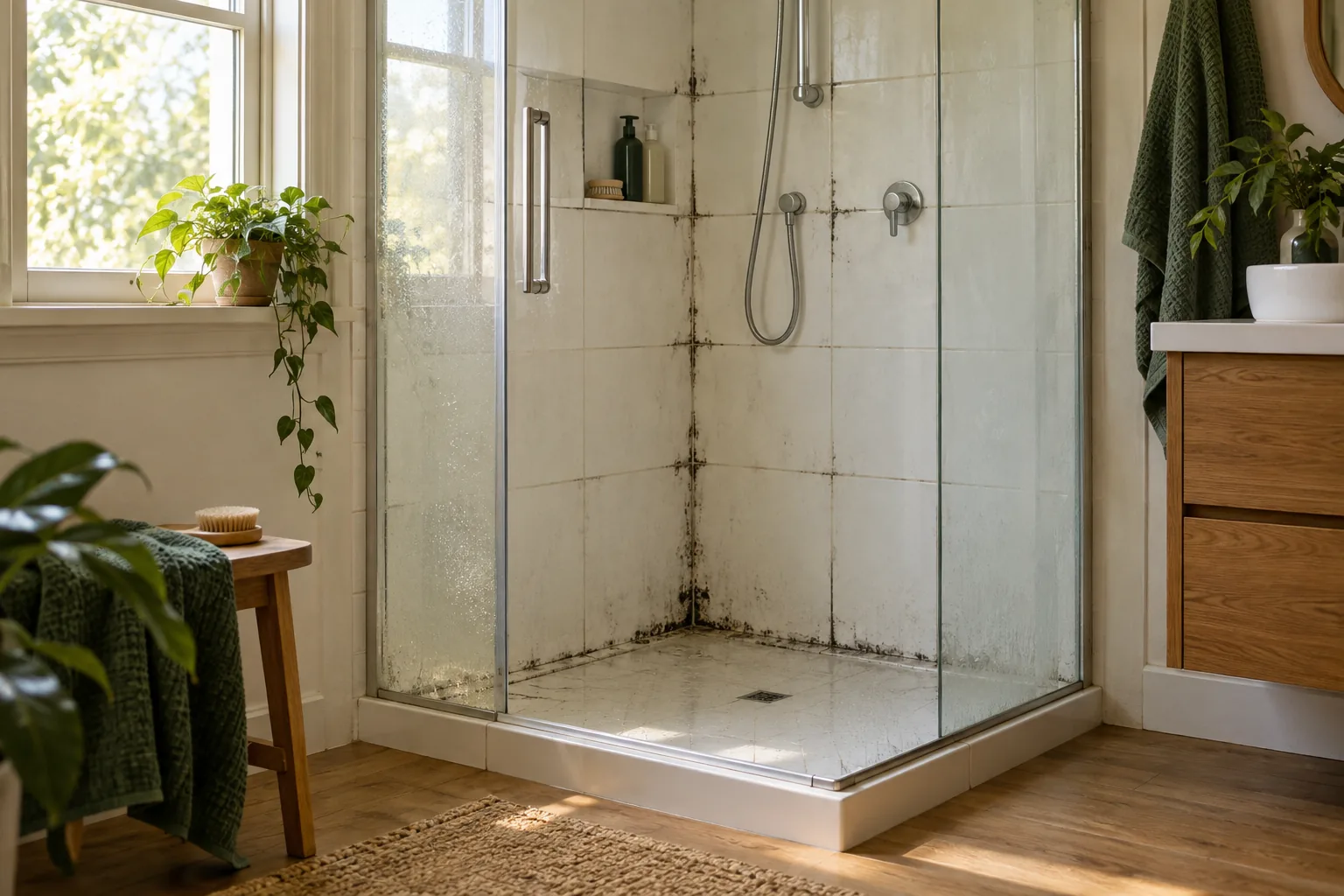
If a bathroom is affected, describe its structural surfaces and current ventilation. Towels and fabric coverings are excluded.
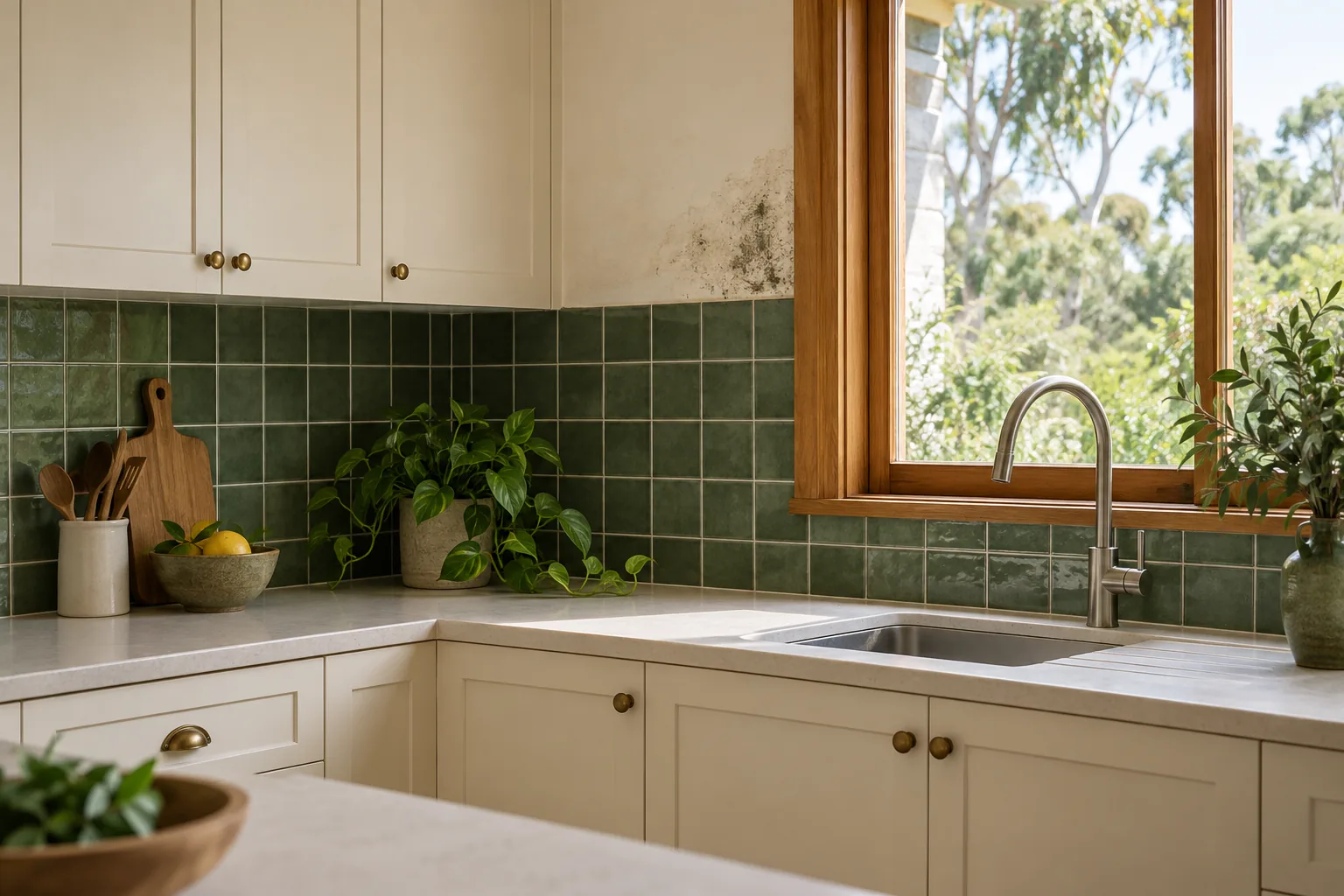
Kitchens
Mention exposed wall growth separately from appliances or stored items. Any plumbing observations can help plan a separate repair discussion.
Accessible affected surfaces
An exposed floor can be considered within its finish and access. Carpet remains outside scope even when no furniture is present.
PREPARE FOR THE ACTUAL JOB
Plan reuse without assuming immediate return
People and pets leave during treatment, even if the room was previously vacant. Confirm who can provide access and follow job-specific departure and return instructions. Average working guidance is approximately three hours per room, depending on size, contamination and accessibility; the service is not hourly based.
Treatment may leave cosmetic discolouration. Decorating is separate, and apparent improvement does not resolve concealed damage or certify a room’s suitability for every use.
AFTER THE TREATMENT
Put a workable routine in place when use resumes
Choose practical moisture habits for the actual room and respond to new wetting rather than assuming vacancy explained everything.
Use appropriate extraction when the room produces steam.
Check exposed treated areas for renewed dampness.
Arrange separate repair of a continuing leak or building defect.
Describe the current state when asking about cost
Explain what is accessible now and which excluded belongings remain. Check pricing applicability for the proposed remediation; the published affected-room examples are labelled Mould Removal. Vacancy alone is not a confirmed discount or a guarantee of a shorter job.
WATERFRONT CITY · EXACT ADDRESS & ACCESS
A nominated Waterfront City premises enquiry
Give the address and responsible access contact. A location page does not imply an affiliation with any building or establish attendance before the scope is discussed.
Questions about remediation
Does an empty room need preparation?
Yes. Equipment access, fragile items and affected surfaces still need discussion. Confirm the preparation rather than assuming vacancy makes the space ready.
Can you determine when mould started while the room was unused?
That is not promised. Describe the known history and acknowledge gaps; visible assessment and a current room-air reading cannot reconstruct every past condition.
Should I put furniture back before treatment?
Keep the affected area accessible until the clearance plan is agreed. Explain what was moved and where growth is visible so the technician can advise on practical preparation.
Are belongings left in storage within the room included?
No; structural treatment does not include furniture or textiles. Identify affected items separately instead of assuming they are covered by the room booking.
Can the room reopen immediately when work finishes?
Follow the technician’s specific return instructions. No universal interval is confirmed, so avoid scheduling use around an assumed immediate return.
Will keeping the room occupied prevent recurrence?
Occupancy alone is not a guarantee. Continuing moisture, leaks and ventilation conditions matter; address those causes and monitor the exposed surfaces.
Plan treatment before the room returns to use
Call 03 8652 1296 with the Waterfront City address, current accessible surfaces and known room history. Discuss preparation and remaining moisture questions.