
VISIBLE SURFACES · AGREED TREATMENT
Mould Remediation Footscray
If a Footscray wall patch returns after earlier cleaning, explain what was used and what changed afterwards. The next step is to agree the visible treatment scope and examine the continuing moisture question, rather than simply repeating the same cleaning routine. Do not mix products or prepare a new application before discussing it.
Explain previous cleaning clearly
Agree suitable exposed-surface treatment
Address the reason growth returns

TREATMENT · FILTRATION · FOLLOW-THROUGH
A TREATMENT PLAN WITH CLEAR LIMITS
Give the treatment history as well as the current picture
Tell the technician when you first noticed growth, what products were applied and whether the patch was rubbed, painted or covered. A surface that looks different after cleaning may still have an unresolved dampness problem.
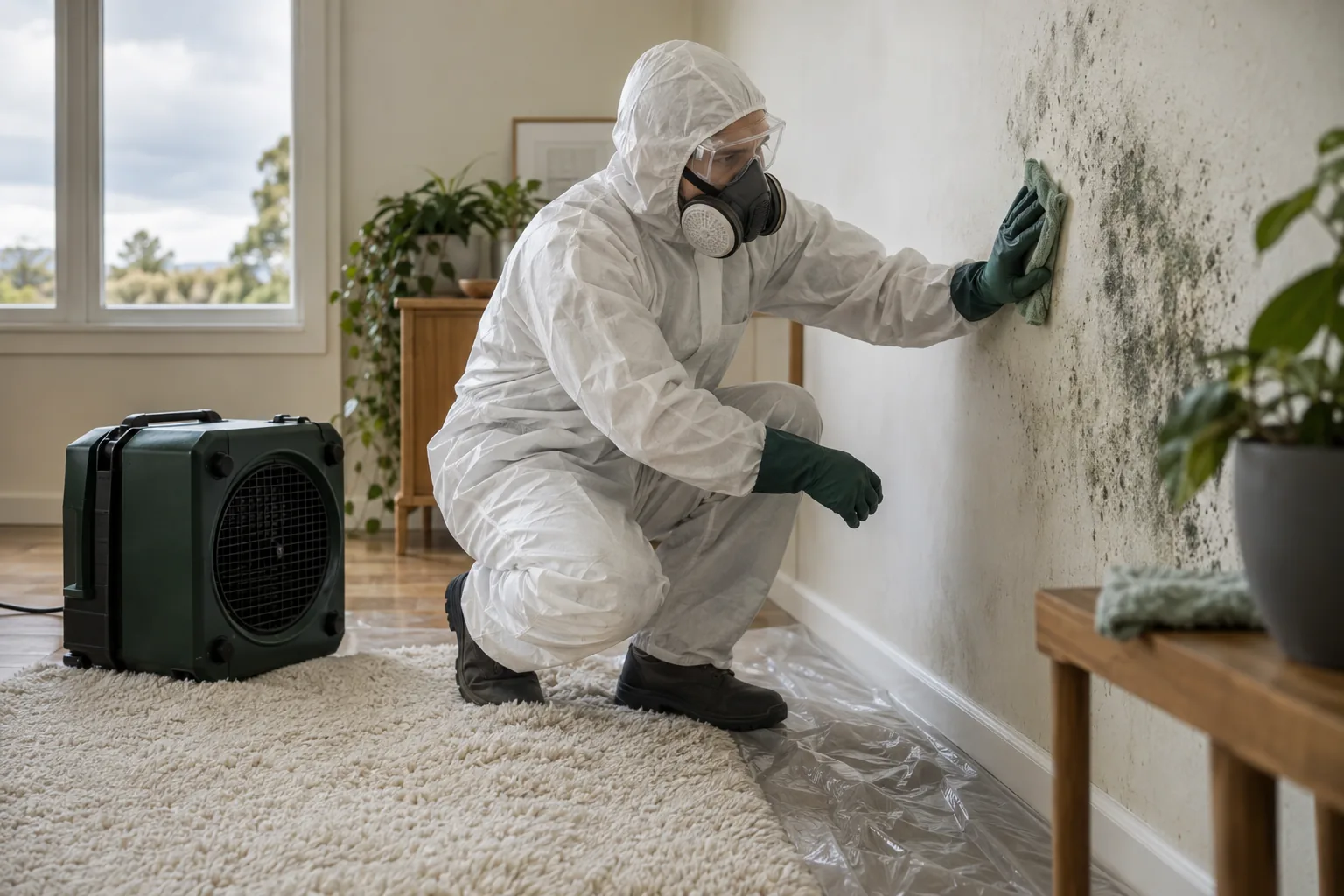
Our remediation process combines assessment, air filtration, suitable treatment and physical removal. It addresses visible accessible structural contamination, not excluded textiles or hidden cavities.
MOISTURE COMES FIRST
A returning patch needs a continuing-source conversation
Record whether wetting continued after the earlier cleaning and whether any leak was repaired. Condensation, plumbing and other water-entry concerns need appropriate consideration, not a diagnosis from colour alone. A professional hygrometer measures room-air relative humidity; it cannot prove material inside the wall is dry.
Discuss accessible inspection when the cause or extent is unclear. Remediation does not repair plumbing or structural defects. Returning growth can occur where moisture conditions persist, so arrange a separate response to the cause alongside treatment of the current contamination.

FROM PREPARATION TO FOLLOW-THROUGH
Start from the surface as it is now
1
Assess the current condition
Describe earlier cleaning and show each visible patch. Agree accessible surfaces, finish concerns and any issue needing further investigation before deciding the treatment approach.
2
Prepare HEPA air protection
The confirmed HEPA air scrubber is set up before treatment. Allow the agreed equipment access; its role is filtration during the process, not a guarantee of sterile room air.
3
Apply assessed HOCl treatment
HOCl is used within the treatment plan, with ULV dry fog where appropriate in most cases. Previously applied products should be disclosed rather than assuming all surfaces are ready for further application.
4
Remove visible contamination
Physical removal uses professional H-class filtered equipment. Discuss damaged paint or rubbed areas beforehand. Removal cannot promise that a worn or stained finish returns to its original appearance.
5
Complete filtration and review
HEPA continues during and after work. Obtain return instructions and discuss remaining marks and moisture action, without expecting a permanent guarantee or a laboratory clearance.
Earlier cleaning may have affected different finishes
Walls
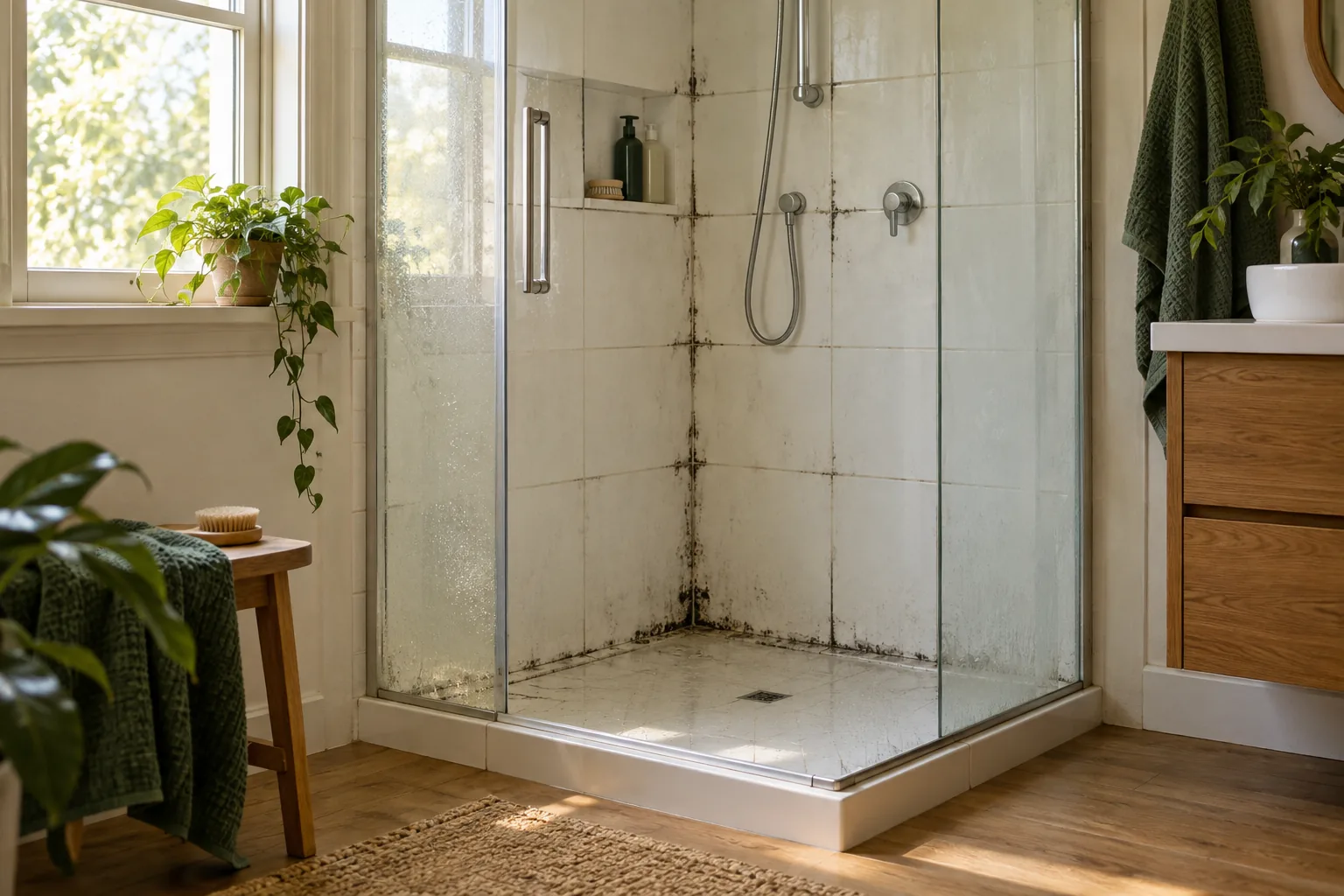
Describe paint damage or a patch previously covered. Show the accessible extent rather than sanding it to improve appearance.
Ceilings
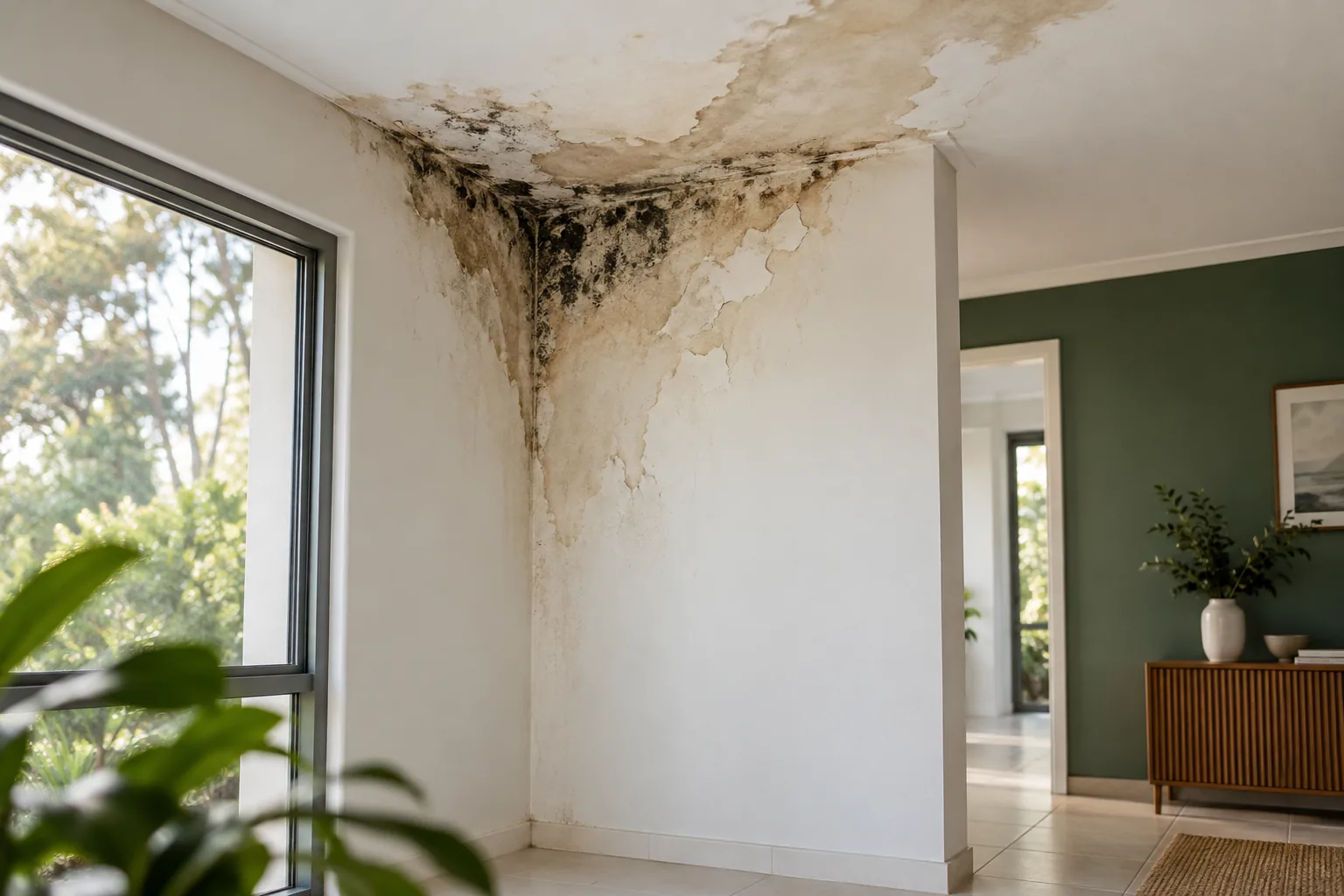
Mention products previously used overhead and any continuing wetting. Ceiling treatment does not include repairing the source above.
Bathrooms
Distinguish growth on structural surfaces from towels and fabrics. Explain recurrent steam and extraction problems separately from past cleaning.
Kitchens
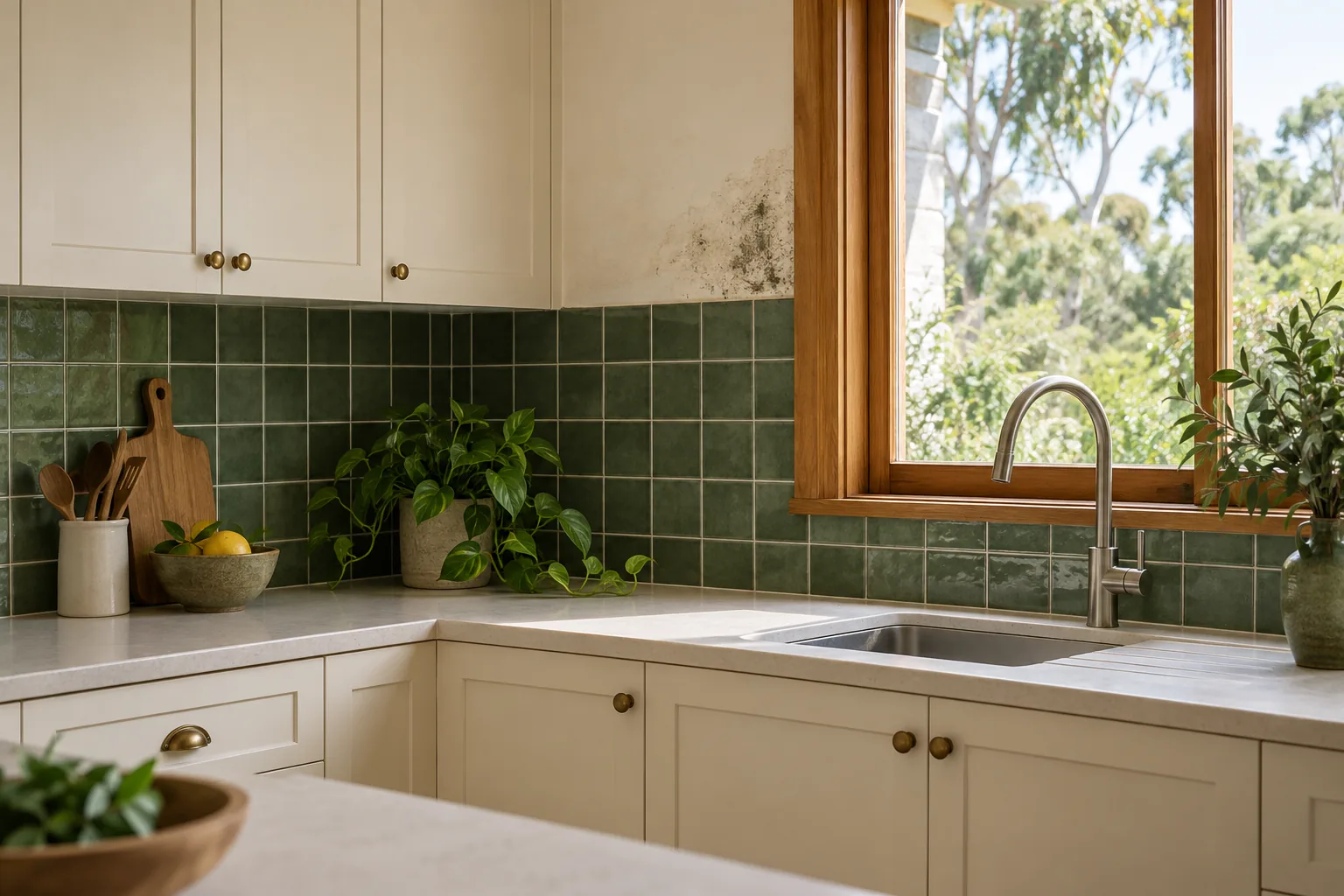
Identify wall patches near cooking steam or plumbing. Do not assume a marked appliance or cabinet belongs to structural treatment.
Accessible affected surfaces
For an exposed floor, explain its finish and previous application. Carpet and furnishings remain outside the confirmed scope.
PREPARE FOR THE ACTUAL JOB
Prepare without another unplanned chemical application
Disclose earlier products and follow the technician’s preparation advice. People and pets leave during treatment; confirm departure and return arrangements and safely coordinate any building requirements. Average guidance is approximately three hours per room, depending on extent, size and access. Treatment is not charged hourly.
Cosmetic marks and damaged paint can remain after mould is treated. Decorating is separately quoted, while concealed spaces may need additional investigation. Ask about the condition of the finish before covering it, and respond to new wetting rather than repeatedly painting or cleaning the same area.
AFTER THE TREATMENT
Change the follow-through, not just the product
Continued moisture needs attention even if a patch looks cleaner immediately after treatment. Make a practical plan for observing it and resolving the source.
Record fresh wetting and the date it occurred.
Use appropriate extraction when cooking or showering.
Arrange separate repairs for continuing leaks or defects.
Explain previous work when discussing the quote
Describe the visible extent, finish damage and prior applications. Confirm price applicability for remediation, since the published room examples are labelled Mould Removal.
FOOTSCRAY · EXACT ADDRESS & ACCESS
Footscray and surrounding premises enquiries
Provide your actual address and access arrangements. Nearby location navigation cannot confirm an appointment or the condition of your room.
Questions about remediation
Should I clean the patch again before the visit?
Ask first and explain what was already used. Another application can change the visible evidence or add product considerations without resolving continuing moisture.
Is the product name useful if I no longer have the bottle?
Yes, if you know it. Share the name and approximate application date honestly; do not guess details you cannot recall.
Does recurrence prove that stronger chemicals are required?
No. Continuing moisture or other unresolved conditions may be involved. Discuss the visible condition and source before assuming a different product is the answer.
Will remediation repair paint damaged by rubbing?
Finish restoration is separate. Tell the technician about the damage and discuss decorating after treatment and moisture questions are addressed.
Can I mix leftover cleaners to prepare the wall?
Do not mix products. Disclose previous applications and follow the technician’s preparation instructions rather than creating another unassessed treatment.
What matters if the patch returns after remediation?
Record fresh growth and wetting, including timing and location. Revisit the underlying moisture issue instead of assuming a cosmetic stain and renewed contamination are the same thing.
Discuss the returning Footscray patch
Call 03 8652 1296 with the affected surfaces, earlier cleaning details and wetting history. Agree treatment and a separate plan for continuing moisture.