
VISIBLE SURFACES · AGREED TREATMENT
Mould Remediation Kingsville
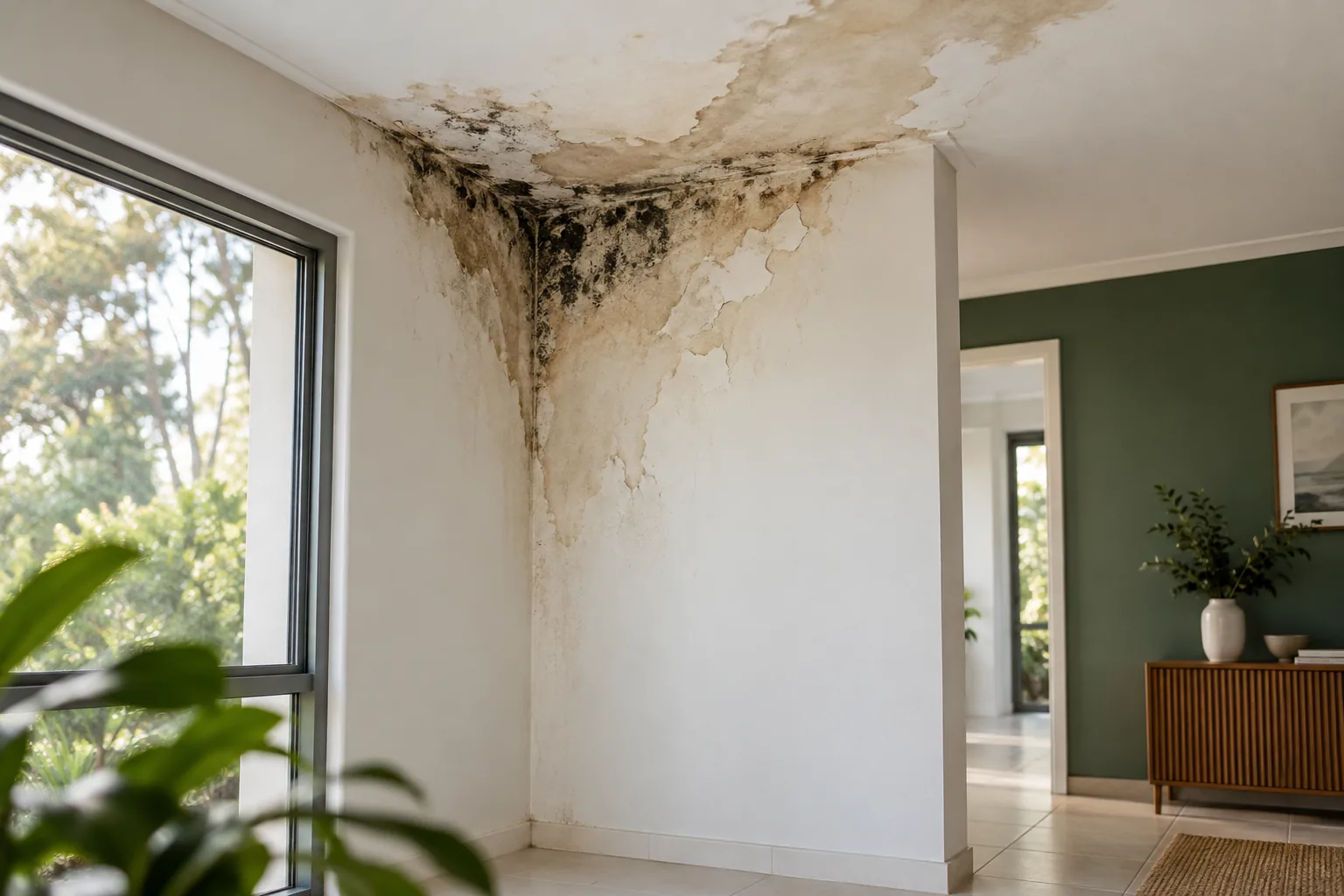
A ceiling patch in a Kingsville room needs an access conversation as well as a treatment decision. Describe its height, visible extent and any sign of ongoing wetting. Do not climb or disturb an overhead finish to improve the enquiry photograph; explain what you can observe safely.
Describe overhead access before booking
Keep leak repairs separate from treatment
Understand remaining finish marks

TREATMENT · FILTRATION · FOLLOW-THROUGH
A TREATMENT PLAN WITH CLEAR LIMITS
Overhead growth needs clear access information
Explain whether the patch sits across a broad ceiling area, along a junction or above a fixed obstruction. A photograph taken from floor level can help explain the location without establishing what is above the lining.
Our remediation service addresses visible accessible structural contamination. It does not automatically include a roof inspection, opening ceiling cavities or replacing damaged plaster. Agree what can be reached appropriately and what requires another investigation or trade before the treatment is booked.
MOISTURE COMES FIRST
Separate ceiling wetting from room-air humidity
Note whether wetting follows rain, upstairs plumbing use or another known incident, without diagnosing the cause from timing alone. The confirmed professional hygrometer assesses room-air relative humidity. It is not a roof-leak detector or proof that material above the ceiling has dried.
Discuss accessible inspection where the visible condition needs clarification. Plumbing and structural repairs remain separate. Treating the exposed ceiling cannot stop a continuing water source, and recurrence can follow if dampness persists above or around the room.

FROM PREPARATION TO FOLLOW-THROUGH
Plan the overhead work within the agreed scope
1
Assess ceiling condition and access
Show the visible area from a safe position and explain overhead obstructions. Agree accessible treatment and flag damaged lining or concealed concerns needing separate attention.
2
Prepare HEPA filtration
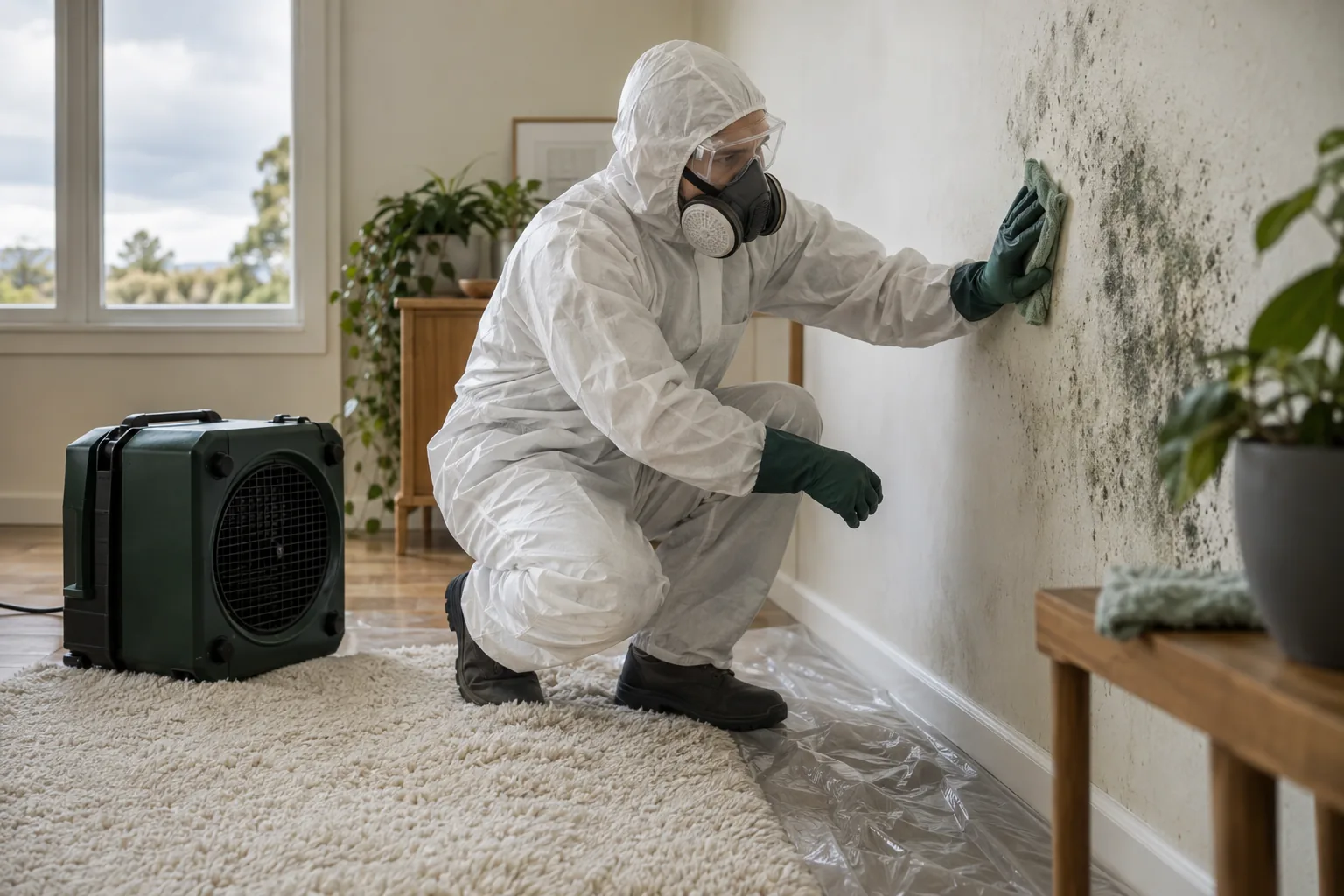
A HEPA air scrubber is established before treatment. Clear agreed space for equipment and overhead access; filtration supports the process without promising every airborne spore is eliminated.
3
Apply appropriate HOCl treatment
HOCl is used within the assessed plan. ULV dry fog is used in most cases where suitable, without implying that the concealed ceiling space is included.
4
Remove visible mould physically
Professional H-class filtered equipment is used for removal. Mention fragile paint or damaged lining beforehand. Removal does not rebuild the ceiling or guarantee all water marks disappear.
5
Finish air cleaning and next-step discussion
HEPA continues during and after treatment. Obtain return instructions and discuss residual staining, separate repairs and decorating needs without assuming an unconfirmed clearance test.
Consider adjoining surfaces without assuming one cause
Walls
Identify growth below the ceiling junction separately. A wall patch may have its own wetting history or access obstruction.
Ceilings
Describe the finish, height and visible extent. Sagging or damaged material needs a separate condition discussion before treatment.
Bathrooms
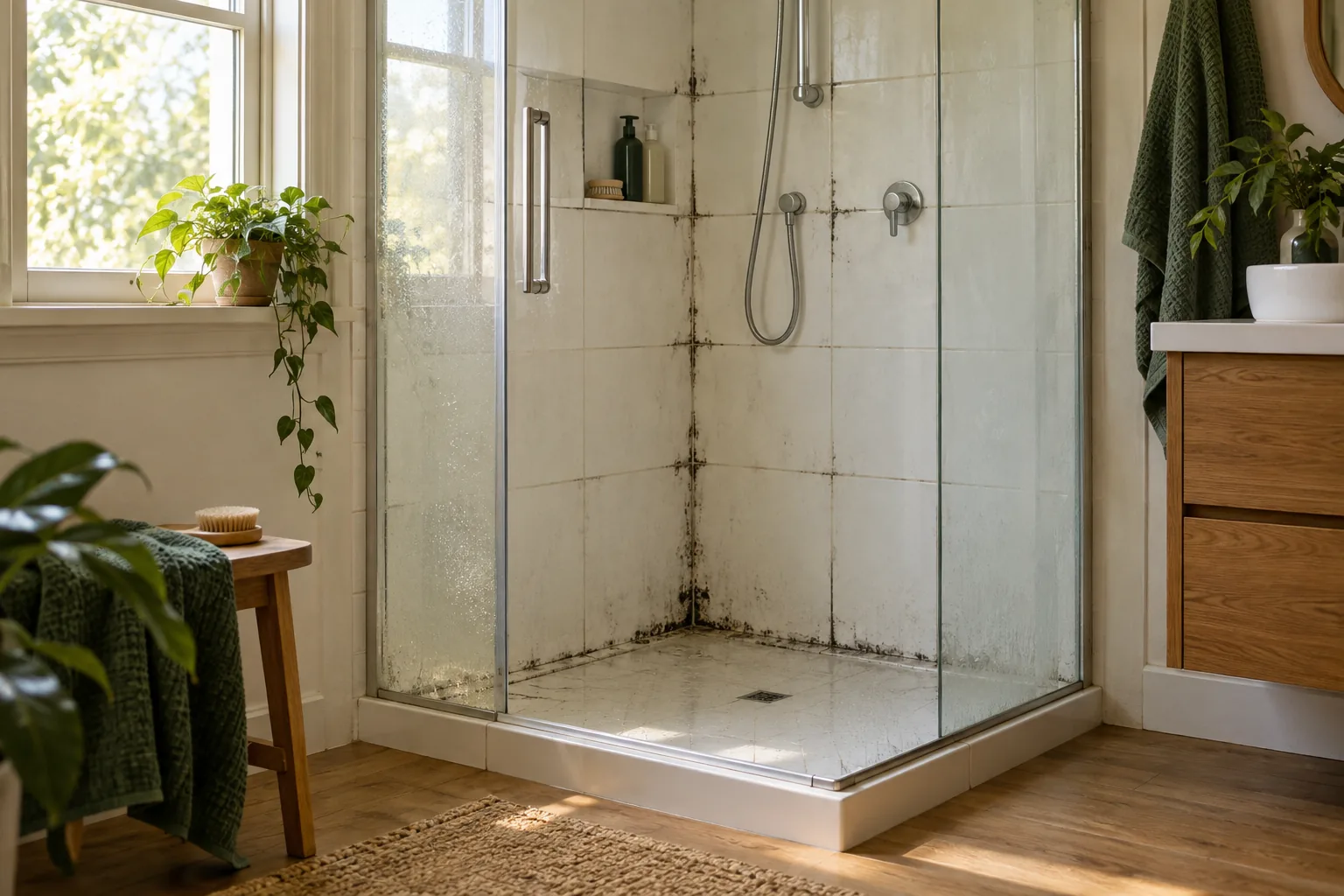
Explain ceiling growth in relation to showering and extraction observations. Towels and other textiles remain excluded.
Kitchens
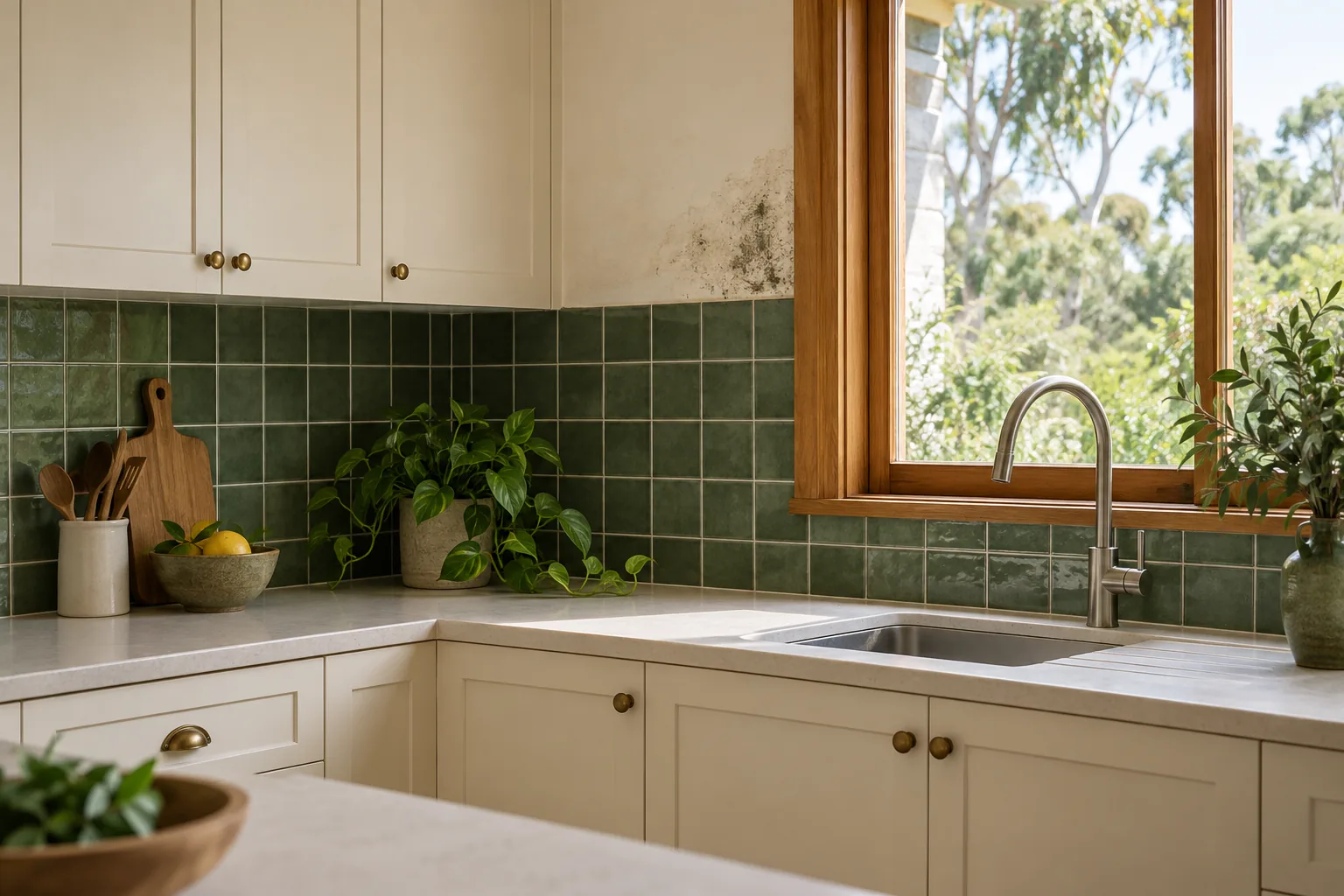
Identify kitchen ceiling or wall patches near steam separately from a known plumbing event. Do not assume all overhead marks share one cause.
Accessible affected surfaces
Mention any exposed floor affected by water from above. Carpet and furnishings are outside structural remediation.
PREPARE FOR THE ACTUAL JOB
Preparation for an overhead treatment area
Discuss furniture below the patch and fragile items near the working area. People and pets leave during treatment, following job-specific departure and return instructions. Average source guidance is about three hours per room, varying with size, extent and accessibility; the service is not hourly based.
Cosmetic staining can remain on the ceiling. Repainting or decorative restoration is separately quoted, while hidden spaces can require further investigation. Ask what work was completed and what remains unresolved above the visible surface before a new finish is applied.
AFTER THE TREATMENT
Follow renewed overhead wetting through to its source
Keep the repair history and new observations together. A treated ceiling still needs protection from any ongoing water entry.
Record new stains or wetting and their dates.
Use appropriate extraction for moisture-producing room activities.
Arrange separate repairs for continuing roof, plumbing or structural issues.
Describe access when discussing treatment cost
Explain the ceiling height, extent and obstacles when requesting a quote. Confirm pricing applicability for remediation; the published room table is labelled Mould Removal. Do not assume overhead access includes roof work, cavity investigation or decorating.
KINGSVILLE · EXACT ADDRESS & ACCESS
Kingsville premises and nearby enquiries
Give the room and address details with practical overhead access information. Nearby service navigation does not establish availability or permission for shared building work.
Yarraville · Seddon · Tottenham · Footscray
Questions about remediation
Should I climb up for a close ceiling photograph?
Do not create an access risk for the enquiry. Describe the patch and provide a photograph from a safe position if possible.
Does ceiling treatment include looking inside the roof?
No such investigation is confirmed. Standard scope is visible and accessible, while roof or concealed-space concerns need separate discussion.
Will treatment repair a sagging ceiling?
Repair is separate from remediation. Mention sagging or other damage early so the material and appropriate next step can be considered.
Can an old water mark remain after the mould is treated?
Yes; cosmetic staining may persist. Ask about the finish before decorating and report fresh wetting separately from an unchanged old mark.
Should I move the furniture underneath immediately?
Agree the clearance with the technician first. Explain the obstacles and fragile belongings rather than assuming every item must be moved unaided.
Does a ceiling patch after rain prove the roof is the source?
No; timing is useful evidence but not a diagnosis. Share the observation and arrange appropriate separate investigation of continuing water entry.
Discuss your Kingsville ceiling treatment
Call 03 8652 1296 with the patch location, safe access description and wetting history. Agree the visible scope and separate repair questions.