
VISIBLE SURFACES · AGREED TREATMENT
Mould Remediation Tottenham
If a musty smell accompanies visible growth at a Tottenham premises, describe both without assuming the smell identifies every affected surface. A treatment enquiry needs the actual room, visible contamination and authorised access details. Attendance and suitability for the nominated premises must be confirmed, including any operational restrictions.
Separate visible growth from odour clues
Nominate authorised premises access
Understand concealed-area limits
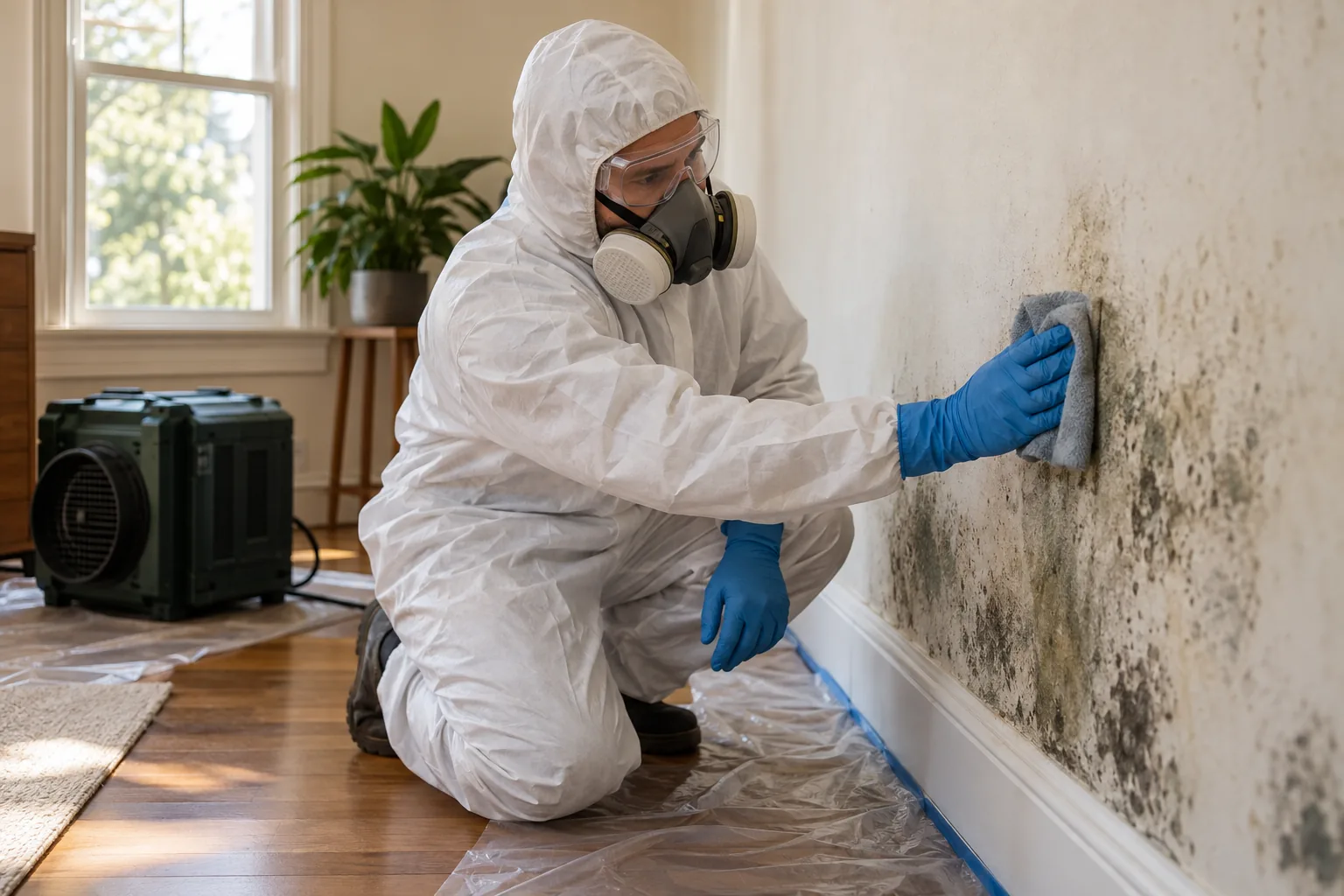

TREATMENT · FILTRATION · FOLLOW-THROUGH
A TREATMENT PLAN WITH CLEAR LIMITS
An odour is information, not a treatment map
Explain where the smell is noticed and whether it changes with room use or wetting. Then describe the structural surfaces where growth can actually be seen. Odour alone does not establish that a wall cavity, stored item or neighbouring room is included in the proposed treatment.
Our remediation service addresses existing visible accessible contamination. It does not promise to locate every hidden source or remove every smell. Controlled premises need confirmed authority and workable access; this location page does not imply a site contract or specialist operational clearance.
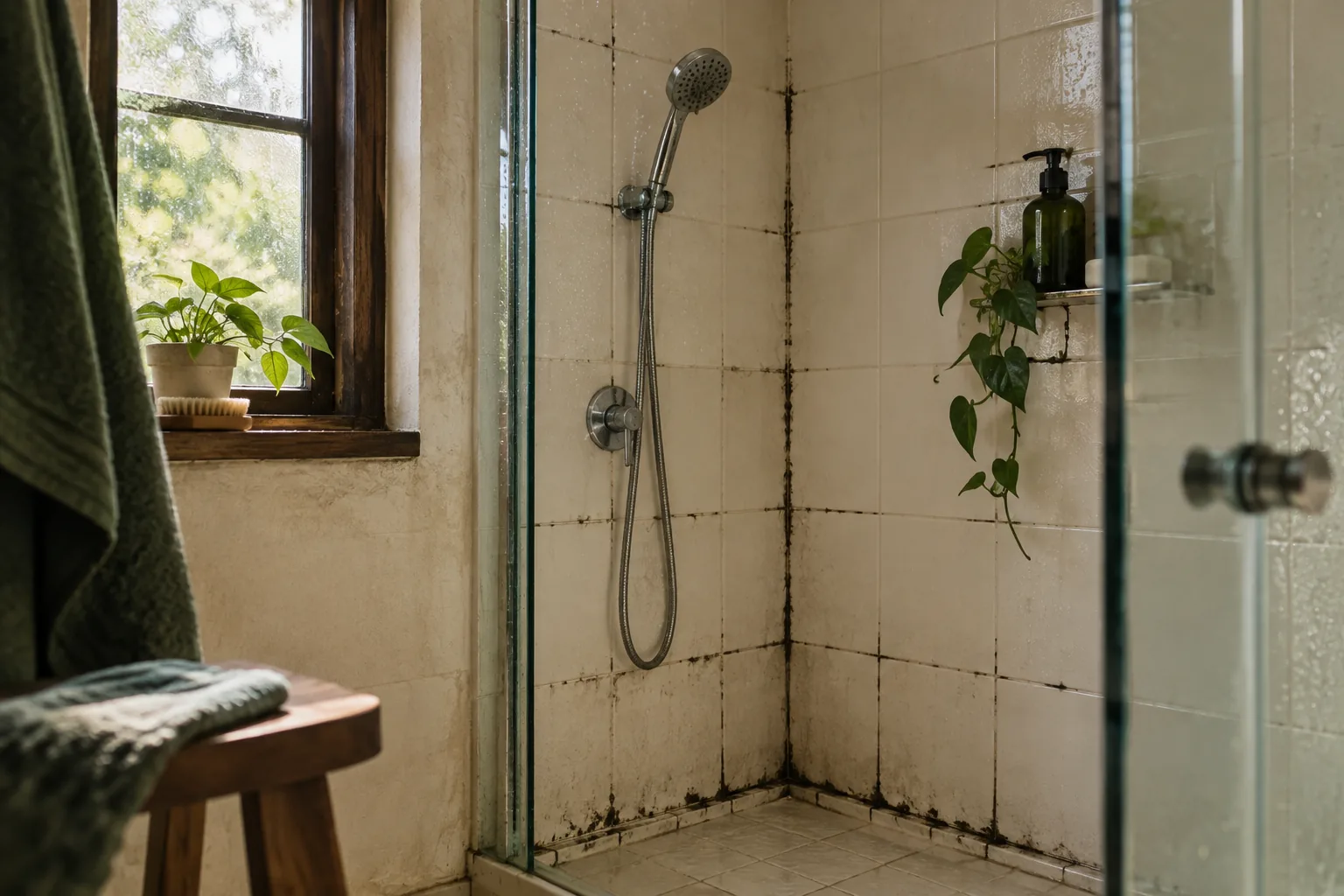
MOISTURE COMES FIRST
Record wetting alongside the odour observations
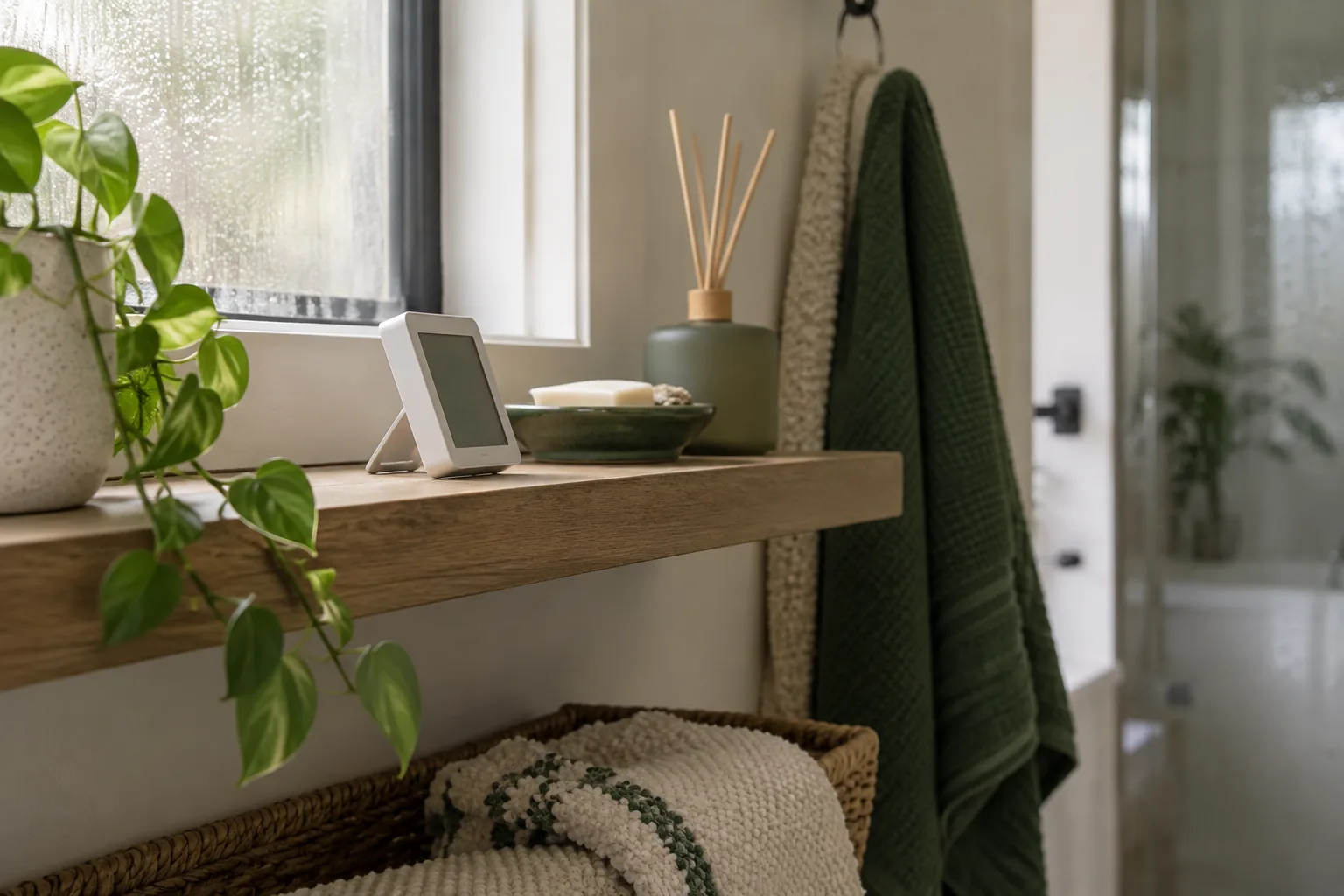
Mention a known leak, recurring dampness or earlier repairs, and identify what remains uncertain. A professional hygrometer gives room-air relative humidity information. It cannot locate hidden mould by itself, identify odour chemicals or establish the moisture percentage inside a wall.
Discuss accessible assessment if visible symptoms need clarification. Concealed concerns can require additional investigation, while plumbing and structural repairs remain separate. Remediation can address the agreed growth without resolving a continuing moisture source or every unrelated odour.
FROM PREPARATION TO FOLLOW-THROUGH
Treat what has been assessed and agreed
1
Assess the visible surfaces
Show exposed growth and describe the odour separately. Agree structural surfaces and authorised access, with concealed or operational concerns identified as separate matters.
2
Establish HEPA filtration
The confirmed HEPA air scrubber is set up before treatment. Discuss its placement and premises requirements; air filtration is not a guarantee that every odour or airborne particle disappears.
3
Apply suitable HOCl treatment
HOCl is used within the assessed plan. ULV dry fog is applied in most cases where appropriate, without promising hidden-cavity investigation or a universal deodorising outcome.
4
Physically remove exposed growth
Professional H-class filtered equipment is used for removal. Explain finish condition and nearby excluded items, rather than assuming the same process treats stock, furniture or textiles.
5
Complete air cleaning and follow-through
HEPA continues during and after treatment. Obtain return instructions and discuss remaining marks, odour observations and separate moisture work without expecting an unconfirmed laboratory test or clearance certificate.
Keep odour clues separate from structural surfaces
Walls
Identify accessible wall growth and any fixed obstruction. A smell behind a lining is not proof that the hidden area was treated.
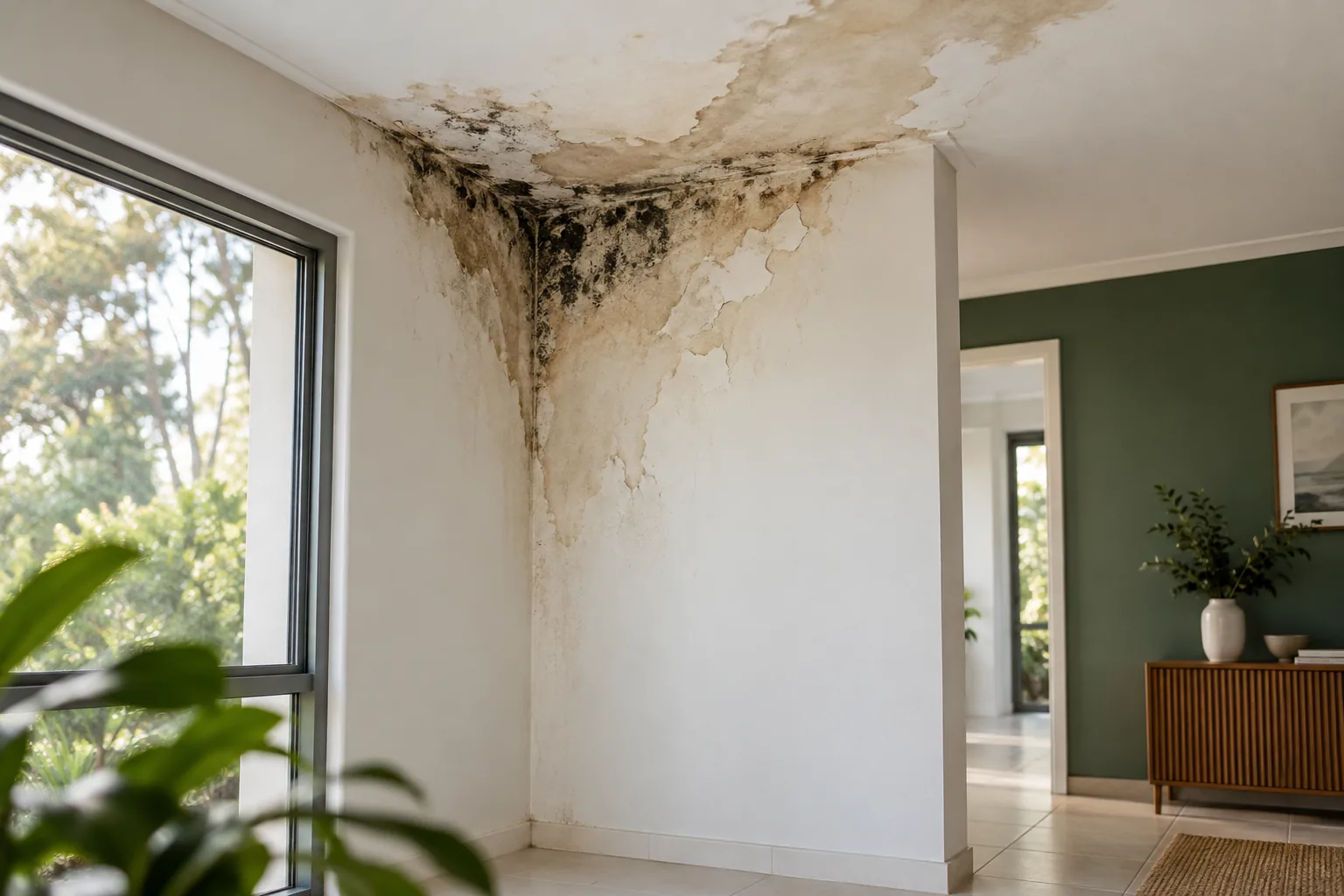
Ceilings
Describe visible overhead patches and wetting history. Ceiling treatment does not include opening cavities or repairing water entry.
Bathrooms
Show structural growth and report moisture observations. Towels and other fabrics require separate handling.
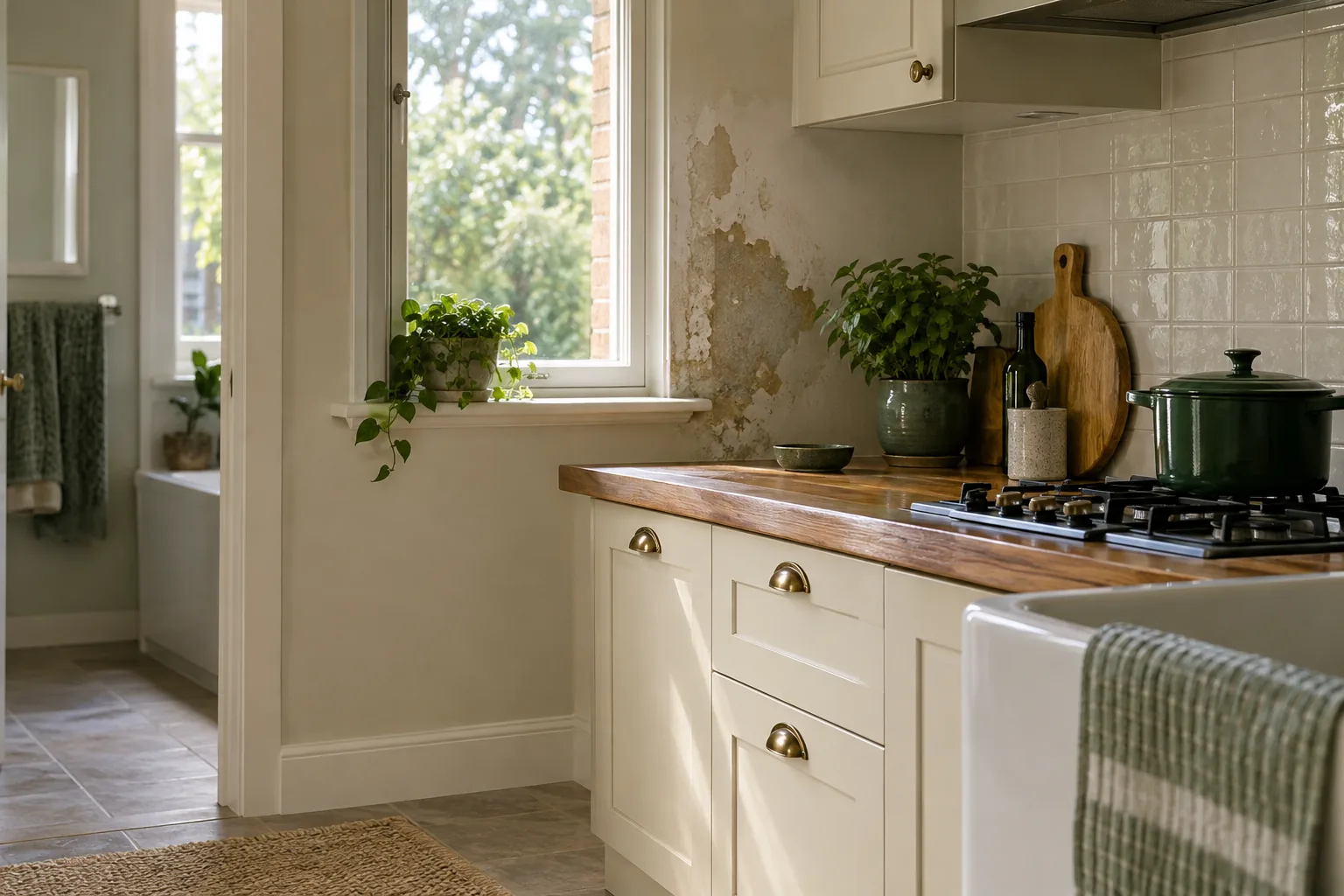
Kitchens
Distinguish exposed wall contamination from appliances, food or storage odours. Those items are not automatically part of remediation.
Accessible affected surfaces
An exposed floor can be assessed within its finish and access limits. Carpet, furniture and operational goods remain outside confirmed structural scope.
PREPARE FOR THE ACTUAL JOB
Prepare the nominated room, confirm the premises rules
Coordinate access and agreed clearance through the authorised contact. People and pets leave during treatment; follow specific departure and return instructions. Source guidance averages about three hours per room, varying with extent, size and access; treatment is not hourly based.
Cosmetic staining can remain and decorating is separately quoted. If an odour persists, describe that observation rather than assuming visible treatment included a hidden source. Further investigation may be needed, and no promise is made that every smell or airborne spore will be eliminated.
AFTER THE TREATMENT
Follow continuing symptoms without guessing
Record new wetting and renewed visible growth separately from odour alone. Useful observations help guide the appropriate next enquiry.
Keep dates and locations of changing dampness.
Maintain suitable ventilation for the room’s use.
Arrange separate repairs for unresolved plumbing or building defects.
Describe the visible job before price assumptions
Explain accessible contamination, premises restrictions and odour concerns when enquiring. Confirm remediation applicability against published prices, whose room table is labelled Mould Removal. Hidden investigation and operational requirements are not assumed included in those examples.
TOTTENHAM · EXACT ADDRESS & ACCESS
A nominated Tottenham premises enquiry
Provide the authorised contact and actual address. Nearby service navigation does not imply attendance eligibility, operational certification or a contract with the premises.
Braybrook · Brooklyn · Kingsville · Maidstone
Questions about remediation
Does a musty smell prove there is mould inside the wall?
No. Describe where and when the smell occurs, but do not treat it as confirmation of concealed contamination. Additional investigation may be needed.
Can remediation promise that every odour disappears?
No such outcome is confirmed. The service addresses agreed visible accessible mould, and an odour can have a separate or concealed source.
Is odour testing included?
No laboratory or chemical odour test is confirmed. Explain the concern before booking rather than assuming such testing accompanies treatment.
Can stored goods be treated because they smell musty?
Not within the confirmed structural-surface scope. Describe them separately and agree appropriate next steps rather than adding them to wall treatment.
Should I mention premises entry restrictions at the start?
Yes. Confirm authority, entry rules and practical equipment access early so suitability can be considered for the actual premises.
What if the visible patch improves but the smell remains?
Report the remaining observation and any continuing wetting. Do not assume every hidden source was treated; a separate investigation may be appropriate.
Discuss visible growth and the separate odour concern
Call 03 8652 1296 with the Tottenham premises, authorised contact and accessible affected surfaces. Clarify scope and investigation limits before booking.