
VISIBLE SURFACES · AGREED TREATMENT
Mould Remediation Brooklyn
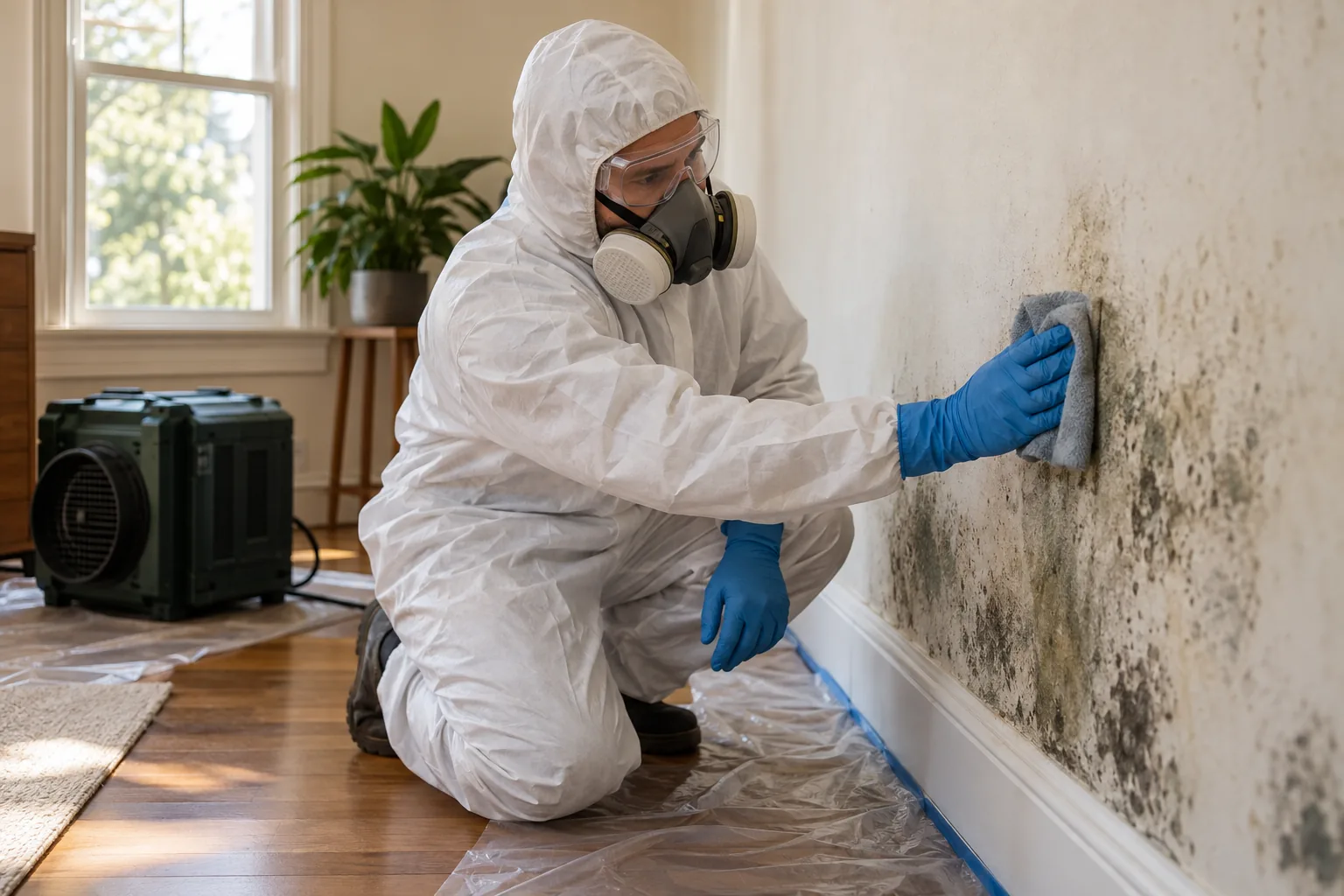
If growth is visible near the floor of a Brooklyn room, distinguish the exposed structural surface from its coverings. Carpet, a rug or furniture may need separate attention and can limit access. Describe the visible wall edge and floor finish before assuming one treatment covers every layer.
Distinguish floors from coverings
Agree access to lower wall edges
Plan separate moisture repairs

TREATMENT · FILTRATION · FOLLOW-THROUGH
A TREATMENT PLAN WITH CLEAR LIMITS
An edge patch is not a view of every layer
Explain whether growth is on the wall, skirting-adjacent surface or an exposed floor. Mention lifting finishes, softness or an obstruction without pulling materials apart yourself.
The remediation service treats existing visible accessible structural contamination. It excludes carpet, furniture and other textiles. Removing a covering, dismantling trim or rebuilding damaged material is not a confirmed part of the standard treatment merely because growth appears at floor level.
MOISTURE COMES FIRST
Describe the direction of wetting, not an assumed source
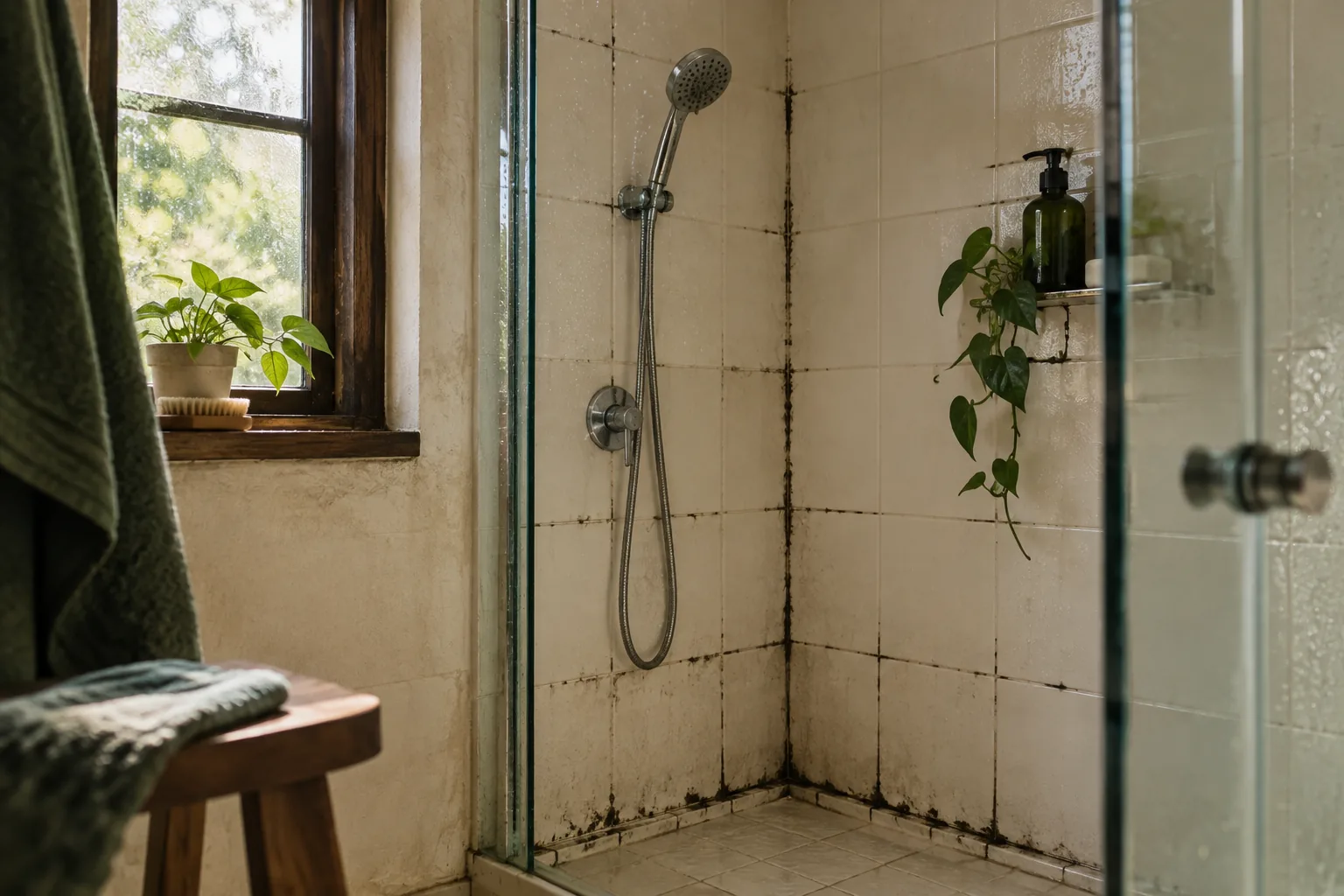
Record where water was first noticed and whether it followed a plumbing event, outside water entry or recurring condensation. Those details help frame the enquiry without proving a cause. A professional hygrometer assesses room-air relative humidity; it does not measure moisture beneath a floor covering or certify concealed material is dry.
Discuss accessible inspection when the visible extent needs clarification. Separate plumbing or building repairs may be required. Treatment of exposed growth does not resolve a continuing source beneath or beside the room, and recurrence remains possible while dampness persists.

FROM PREPARATION TO FOLLOW-THROUGH
Treat the exposed area within its material limits
1
Assess the floor and wall boundary
Show visible growth and identify coverings or fixed obstructions. Agree the accessible structural surfaces and flag damaged or concealed material that needs a different scope decision.
2
Establish HEPA air protection
The confirmed HEPA air scrubber is set up before treatment. Clear agreed equipment access and discuss nearby belongings; filtration supports the process without guaranteeing sterile room air.
3
Apply suitable HOCl treatment
HOCl application follows the assessed material and treatment scope. ULV dry fog is used in most cases where appropriate, without promising access beneath coverings or behind trim.
4
Physically remove exposed mould
Professional equipment with H-class filtration is used for removal. Describe delicate or lifting finishes beforehand. Removal is not a promise to restore every mark or rebuild the floor.
5
Complete filtration and surface review
HEPA air cleaning continues during and after work. Confirm return instructions and separate repair or finish decisions before replacing belongings or covering the treated area.
What lies beside the lower wall matters
Walls
Identify the exposed lower wall and any wetting above it. A low patch does not prove that the source originates at floor level.
Ceilings
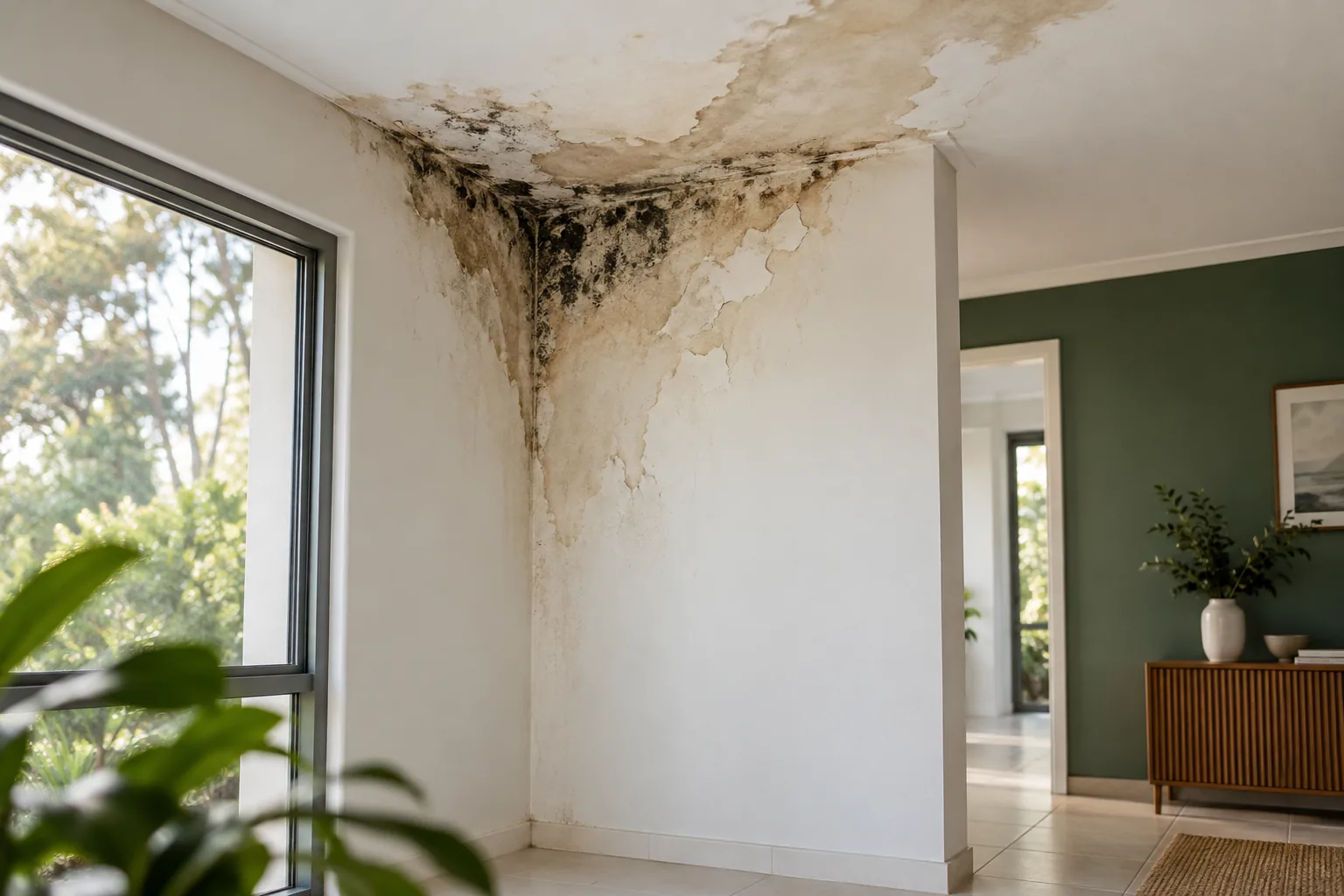
Mention overhead wetting separately, especially if water may have travelled down. Treatment and water-entry repairs have different scope.
Bathrooms
Describe structural surfaces near repeated wetting. Bathmats, towels and other textiles are excluded even where adjacent wall treatment is proposed.
Kitchens
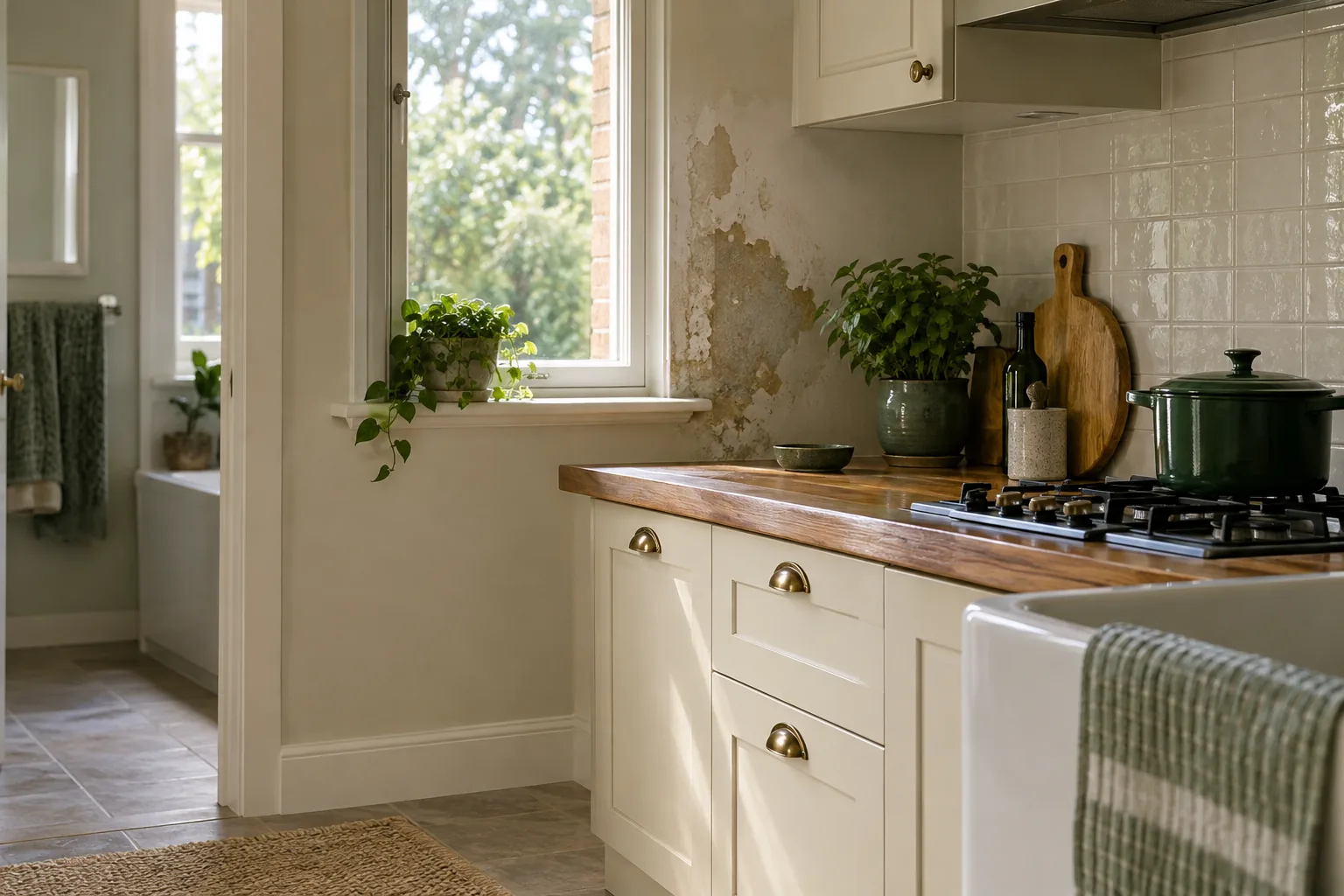
Show exposed wall or floor areas around known plumbing incidents. Access behind built-in cabinets needs separate consideration.
Accessible affected surfaces
An exposed floor finish can be assessed for treatment. Carpet and concealed layers are not automatically included with the visible surface.
PREPARE FOR THE ACTUAL JOB
Agree clearance without lifting materials unnecessarily
Ask what belongings should move and how access can be created safely. People and pets leave during treatment; confirm job-specific departure and return instructions. Source guidance averages about three hours per room, with size, contamination and accessibility affecting duration; pricing is not hourly based.
Remaining marks may be cosmetic, and decorating or restoration is separate. Ask what the exposed finish needs before covering it again.
AFTER THE TREATMENT
Keep the treated edge observable
Follow the separate moisture response through before obscuring the area again. Practical observation helps distinguish an old mark from new wetting or growth.
Record fresh dampness and its starting point.
Maintain suitable ventilation for room activities.
Arrange appropriate repairs where water entry continues.
Describe coverings when requesting treatment cost
Explain the exposed floor finish, wall area and access constraints. Confirm remediation applicability against published pricing, which labels the room examples Mould Removal. Do not assume carpet work, dismantling or hidden-layer treatment is included in a structural-surface quotation.
BROOKLYN · EXACT ADDRESS & ACCESS
Brooklyn and nearby address enquiries
Provide the actual premises and accessible surface details. Nearby geography cannot establish attendance or the condition beneath your floor covering.
Questions about remediation
Is carpet included because mould is near the floor?
No; carpet is explicitly excluded. Distinguish the covering from the exposed structural floor and discuss each concern separately.
Should I lift flooring before the appointment?
Do not assume that is required or included. Describe the finish and visible evidence first so appropriate access or further investigation can be discussed.
Does a lower wall patch prove rising damp?
No. Patch position alone does not establish the moisture source. Record wetting history and raise the cause as a separate assessment question.
Will physical removal rebuild a damaged floor edge?
No rebuilding is confirmed within standard treatment. Mention damage beforehand and arrange a separate restoration discussion where necessary.
Can fogging treat everything beneath a covering?
That is not promised. Standard scope is visible and accessible; concealed layers require separate consideration instead of assumptions about application reach.
Should a rug go back over an old treatment mark?
Discuss the finish and moisture issue first. A cosmetic mark may remain, but keeping new wetting observable is useful before the area is covered again.
Discuss the visible Brooklyn floor-edge problem
Call 03 8652 1296 with the exposed surface, coverings and wetting history. Agree structural treatment and any separate access or repair needs.