
VISIBLE SURFACES · AGREED TREATMENT
Mould Remediation Kings Park
If you have humidity readings for a Kings Park room, bring them into the enquiry with the visible surface details and dates. A reading can help describe conditions, but it does not establish the treatment boundary or prove moisture inside a wall has gone. Plan the contamination and source questions separately.
Put humidity observations in context
Agree visible accessible treatment
Keep material dryness outside assumptions

TREATMENT · FILTRATION · FOLLOW-THROUGH
A TREATMENT PLAN WITH CLEAR LIMITS
A room reading and a mould patch answer different questions
Describe where growth is visible, its extent and what obstructs it. Then explain when your readings were taken and what the room was doing at the time. Do not replace the surface description with a number or assume a lower later reading means contamination no longer needs attention.
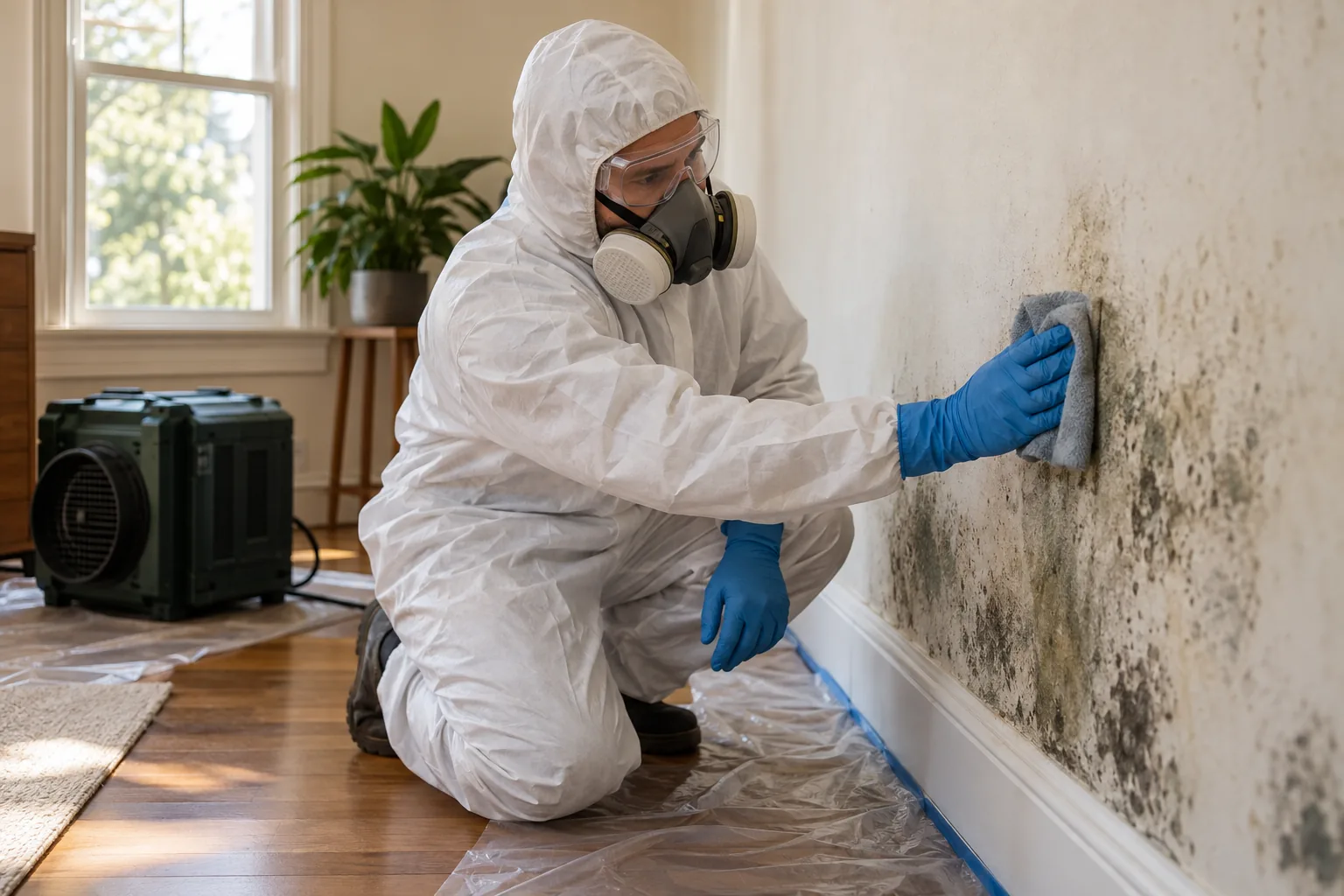
Our remediation service addresses existing visible accessible structural contamination through assessment, filtration, treatment and removal. It does not certify a hidden cavity or guarantee a future humidity level. Furniture, textiles and concealed areas remain outside the standard structural treatment scope.
MOISTURE COMES FIRST
Keep air conditions distinct from material condition
The confirmed professional hygrometer assesses room-air relative humidity. That is not a moisture percentage for plaster, timber or insulation. Explain visible wetting, known leaks and repairs alongside any readings, rather than treating room air as evidence that all materials in the room are dry.
Discuss accessible inspection if the visible condition requires clarification. Leak and structural repairs are separate. Treatment addresses current growth, while condensation, ventilation issues or continuing water entry can still allow recurrence if the underlying conditions persist.

FROM PREPARATION TO FOLLOW-THROUGH
Assess the surface before assuming what a number means
1
Review visible contamination and observations
Show accessible patches and share dated humidity or wetting observations. Agree structural surfaces and identify any concealed or material concern needing separate investigation.
2
Prepare HEPA air protection
A HEPA air scrubber is set up before treatment. Arrange workable equipment access; filtration supports the process without guaranteeing sterile air or fixing room humidity.
3
Apply suitable HOCl treatment
HOCl is used within the assessed scope. ULV dry fog is applied in most cases where appropriate, without promising that concealed damp material is treated or dried.
4
Physically remove exposed growth
Professional H-class filtered equipment is used for removal. Discuss finish condition and obstacles beforehand. Removal is distinct from drying repairs or complete cosmetic restoration.
5
Complete air cleaning and follow-through
HEPA continues during and after work. Confirm return instructions and discuss remaining marks and moisture action, without expecting readings to function as an unconfirmed clearance certificate.
Describe each surface beyond the room-air reading
Walls
Show the exposed finish and any obstruction. A room-air reading cannot establish conditions behind that wall.
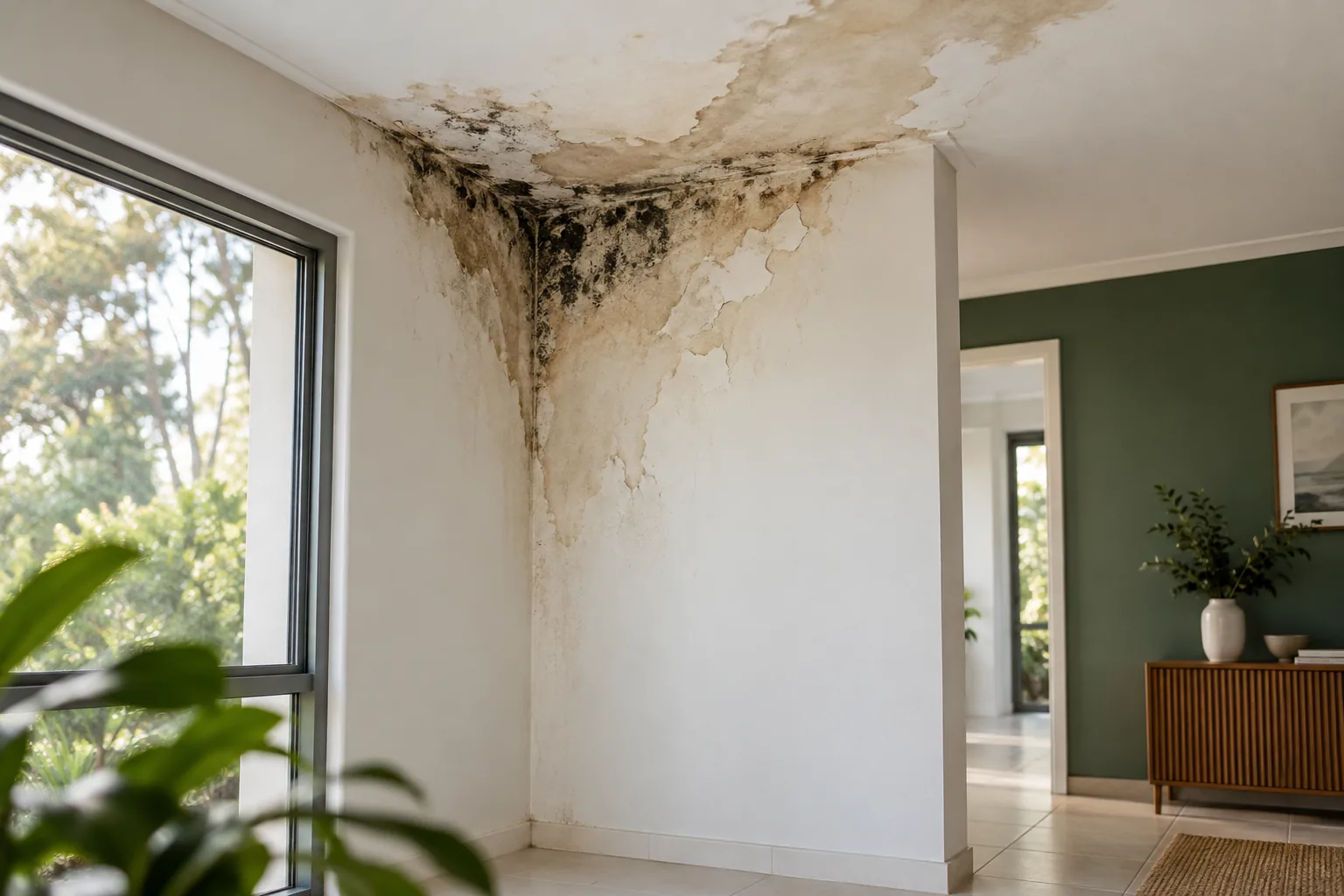
Ceilings
Describe overhead growth and water history. A lower humidity observation does not certify concealed ceiling material is dry.
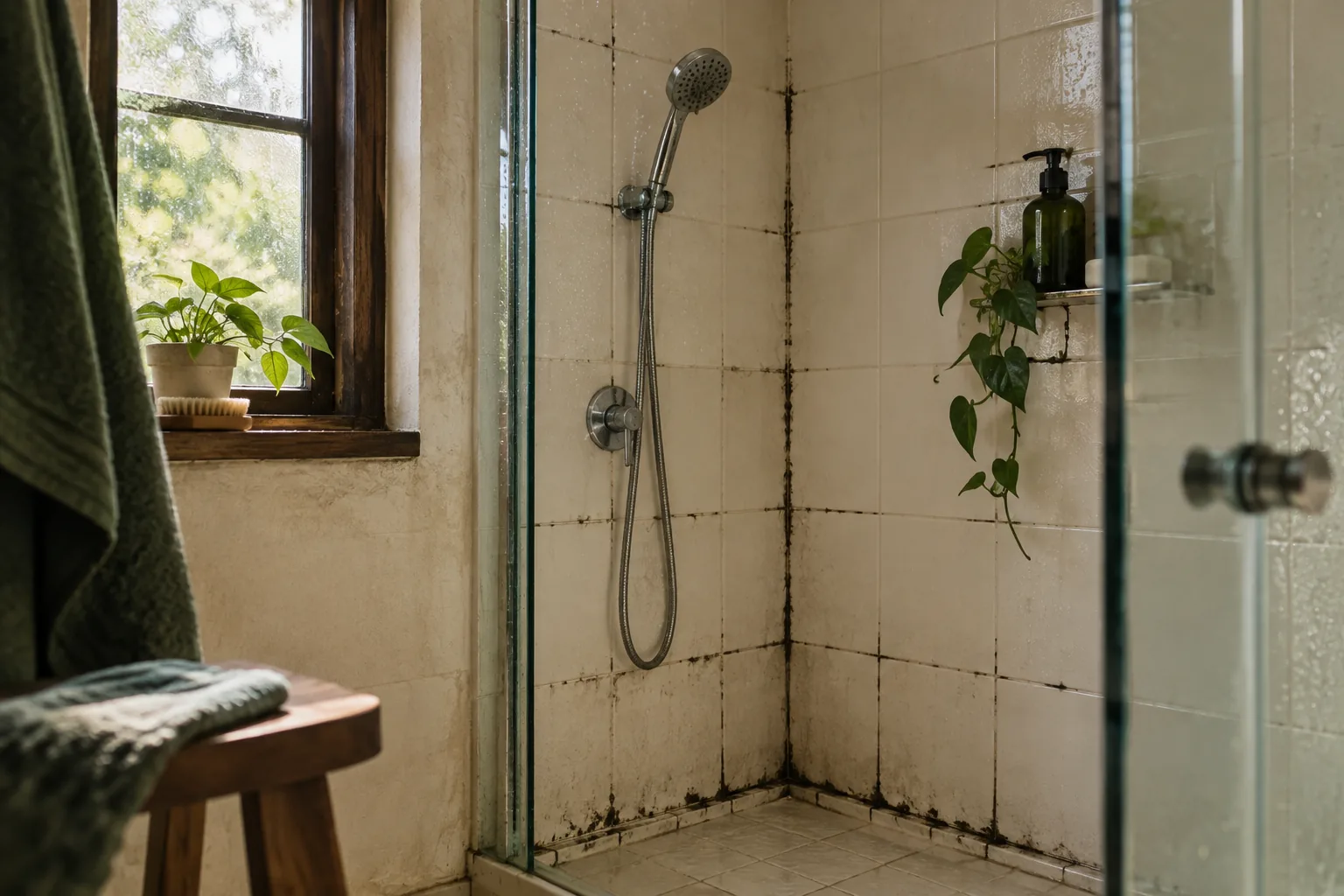
Bathrooms
Explain structural growth and moisture during use. Towels and textiles remain excluded even if readings were taken nearby.
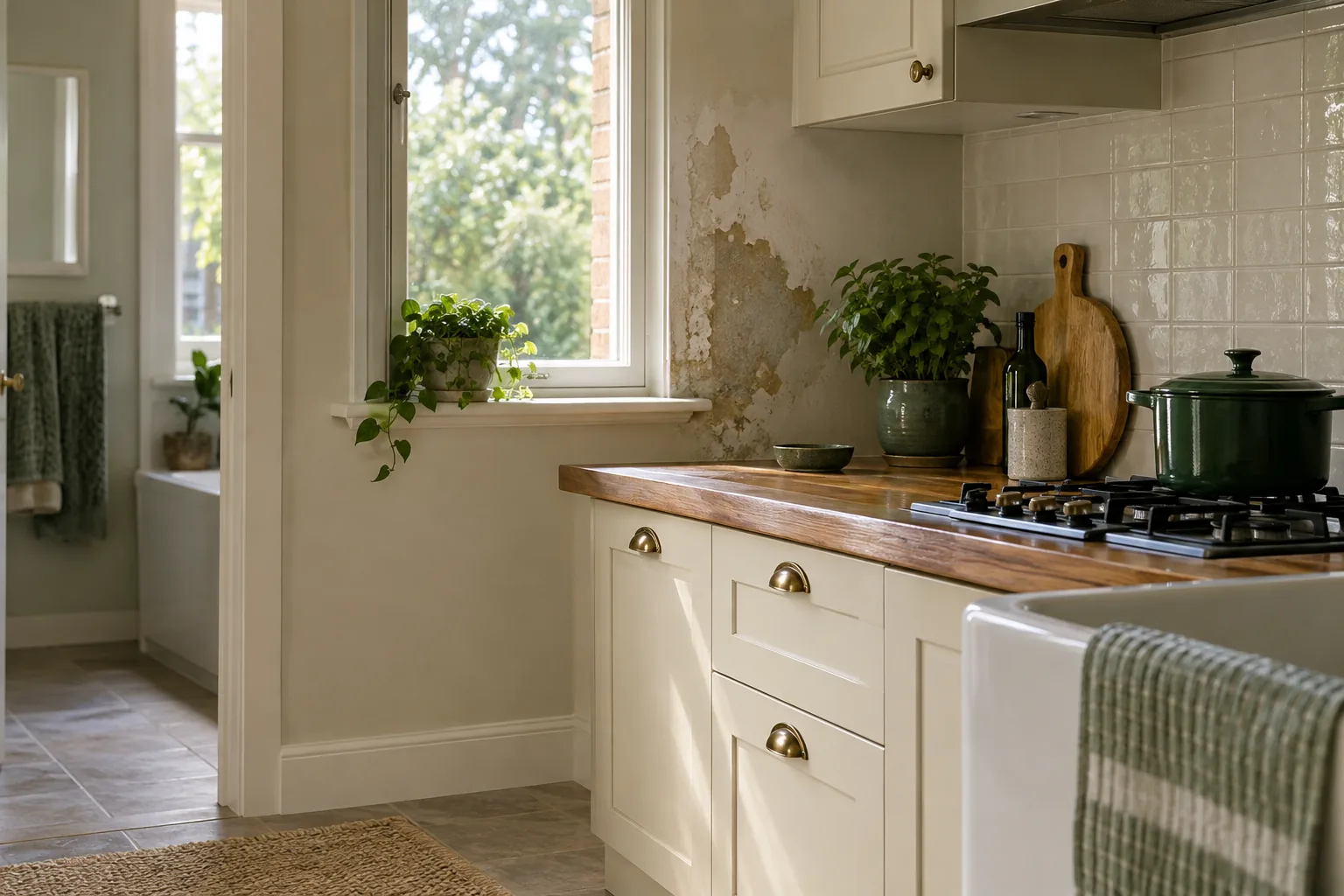
Kitchens
Identify exposed wall patches and cooking or plumbing observations. Fixed cabinets may hide areas beyond standard access.
Accessible affected surfaces
An exposed floor can be assessed within its finish limits. Carpet, furniture and concealed layers are separate concerns.
PREPARE FOR THE ACTUAL JOB
Preparation still follows the treatment instructions
Agree clearance and protection of fragile belongings. People and pets leave during treatment; obtain job-specific departure and return advice. Average source guidance is around three hours per room, depending on size, contamination and access; it is not hourly based or calculated from a humidity number.
Cosmetic marks may remain; decorating is separate. Clarify treated surfaces and remaining moisture tasks. Readings and appearance cannot establish hidden condition; report fresh wetting before covering the evidence.
AFTER THE TREATMENT
Use observations to guide practical moisture habits
Keep dated observations alongside room use and repairs. Monitoring is useful when it leads to appropriate ventilation or action on a continuing source, rather than an assumed permanent guarantee.
Record readings with the room activity and date.
Use suitable extraction while cooking or showering.
Arrange separate repair of continuing water entry.
Quote the visible scope rather than the humidity result
Describe surfaces, extent and access when discussing cost. Confirm remediation applicability against published pricing, which labels the room table Mould Removal. A number does not establish a price category, a material-drying service or a guaranteed clearance test.
KINGS PARK · EXACT ADDRESS & ACCESS
Kings Park premises and nearby enquiries
Give the actual address and visible room details. Nearby service navigation cannot interpret your readings or confirm attendance for the proposed treatment.
Questions about remediation
Does a low room reading mean the wall is dry inside?
No. Room-air relative humidity is different from material moisture. Concealed condition may need separate investigation rather than an assumption from the number.
Should I cancel treatment because the reading fell?
Do not decide from the reading alone. Describe the remaining visible growth and discuss the actual treatment scope and moisture history.
Can my own readings be useful for the enquiry?
Yes, as observations. Include dates, room activity and where readings were taken, without presenting them as a diagnosis or certificate of concealed dryness.
Will the HEPA scrubber control room humidity permanently?
No such humidity-control outcome is confirmed. Its role is air filtration during the treatment process; moisture prevention requires its own practical response.
Does a high humidity number identify a leak?
No. Share wetting and repair observations separately. A room-air number alone cannot locate or prove a plumbing or structural defect.
Can before-and-after readings prove all mould has gone?
No. They describe air conditions, not complete contamination clearance. Ask what visible surfaces were treated and recognise concealed and excluded areas separately.
Discuss the Kings Park surface and moisture observations
Call 03 8652 1296 with visible growth, access and dated observations. Agree treatment and a separate response to continuing moisture.