
VISIBLE SURFACES · AGREED TREATMENT
Mould Remediation Yuroke
A mark crossing from the base of a wall onto an exposed hard floor needs more than one material description. For your Yuroke enquiry, locate the visible boundaries and explain any water observed there. Remediation planning should distinguish accessible finishes from covered layers, without promising to open skirting, repair flooring or treat adjacent carpet as part of the same request.
Wall and floor materials are distinguished.
Covered layers stay outside assumed scope.
Water repair is considered separately.

TREATMENT · FILTRATION · FOLLOW-THROUGH
A TREATMENT PLAN WITH CLEAR LIMITS
A corner can contain several different finishes
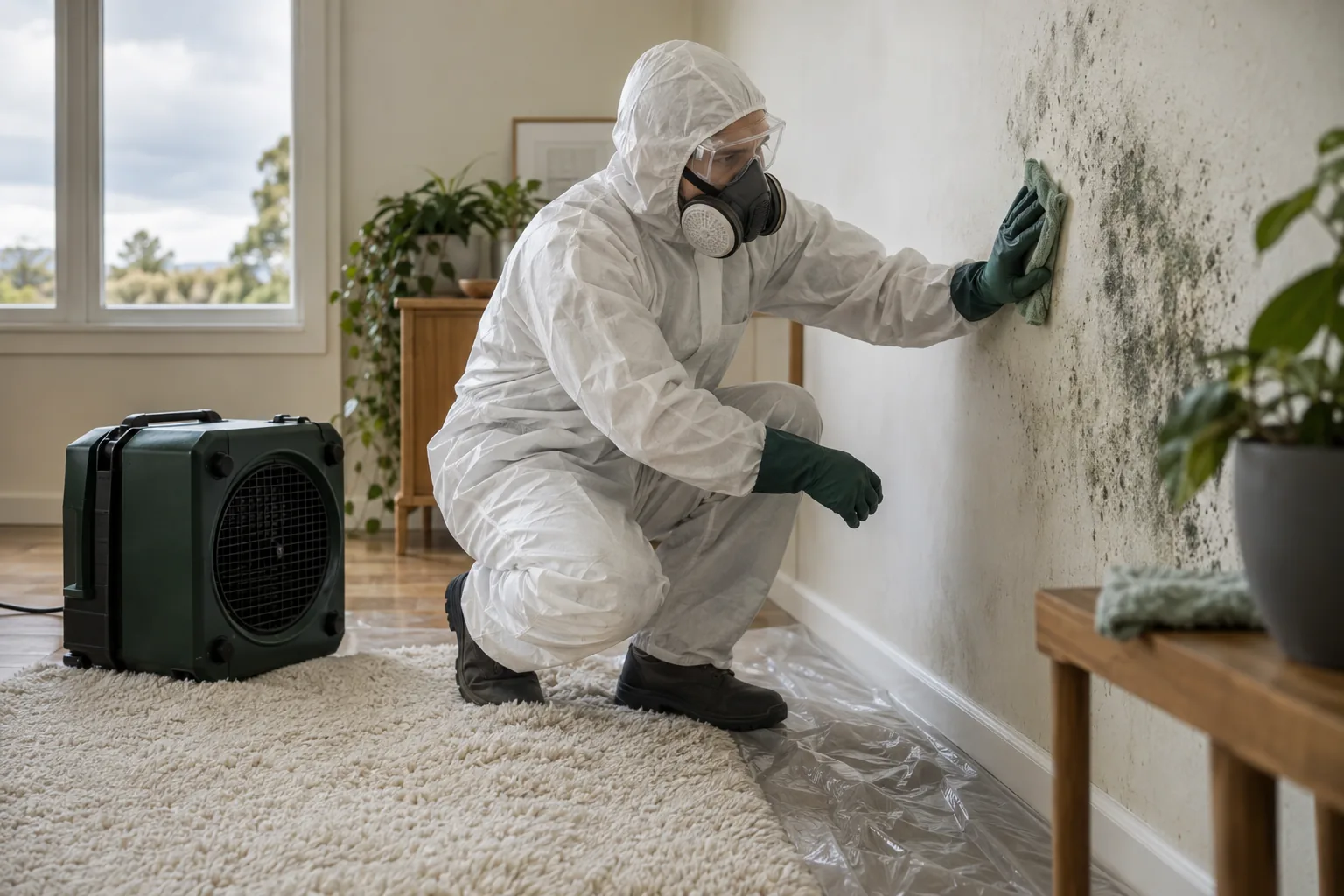
Remediation coordinates assessment, air protection, appropriate treatment and physical removal of visible mould. Explain whether the affected floor is exposed tile, another hard finish or a textile covering. A photograph of a corner does not establish what lies underneath the floor or behind the wall edge.
Our remediation overview explains the supported surface work. Flooring replacement, skirting removal and building repair require separate arrangements. Carpets, rugs and furnishings are excluded, even when they sit immediately beside a finish that may be considered for treatment.
MOISTURE COMES FIRST
Describe actual water at the junction
State where water was actually seen: on the floor, the wall face or at a joint. Keep any suspected concealed route clearly identified as uncertain. The professional hygrometer provides room-air relative-humidity context; it does not measure moisture beneath flooring or certify a covered junction as dry.
Correct a known source through the appropriate separate provider. Continuing dampness may allow recurrence after visible treatment. Where access or the exposed condition first needs consideration, discuss inspection without promising material probes, destructive opening or laboratory findings as part of the room enquiry.

FROM PREPARATION TO FOLLOW-THROUGH
Treatment within the exposed boundary
1
Agree the accessible scope
Assess the accessible junction and exposed materials, agreeing suitable checks and any covered section outside scope.
2
Begin air protection
Start confirmed HEPA air-scrubber protection before treatment, with safe working clearance at the requested corner.
3
Choose the treatment application
Apply HOCl suitably to the agreed finishes, using ULV dry fog where appropriate rather than to promise subfloor coverage.
4
Remove visible growth
Physically remove visible mould with professional H-class filtered equipment, respecting the hard-surface and access boundaries.
5
Continue final air cleaning
Continue HEPA air cleaning during and after work, then explain residual appearance, separate moisture correction and specific return advice.
Separate walls, joints and floors
Walls
Wall bases need their visible edge identified, with areas behind skirting distinguished from the exposed face.
Ceilings
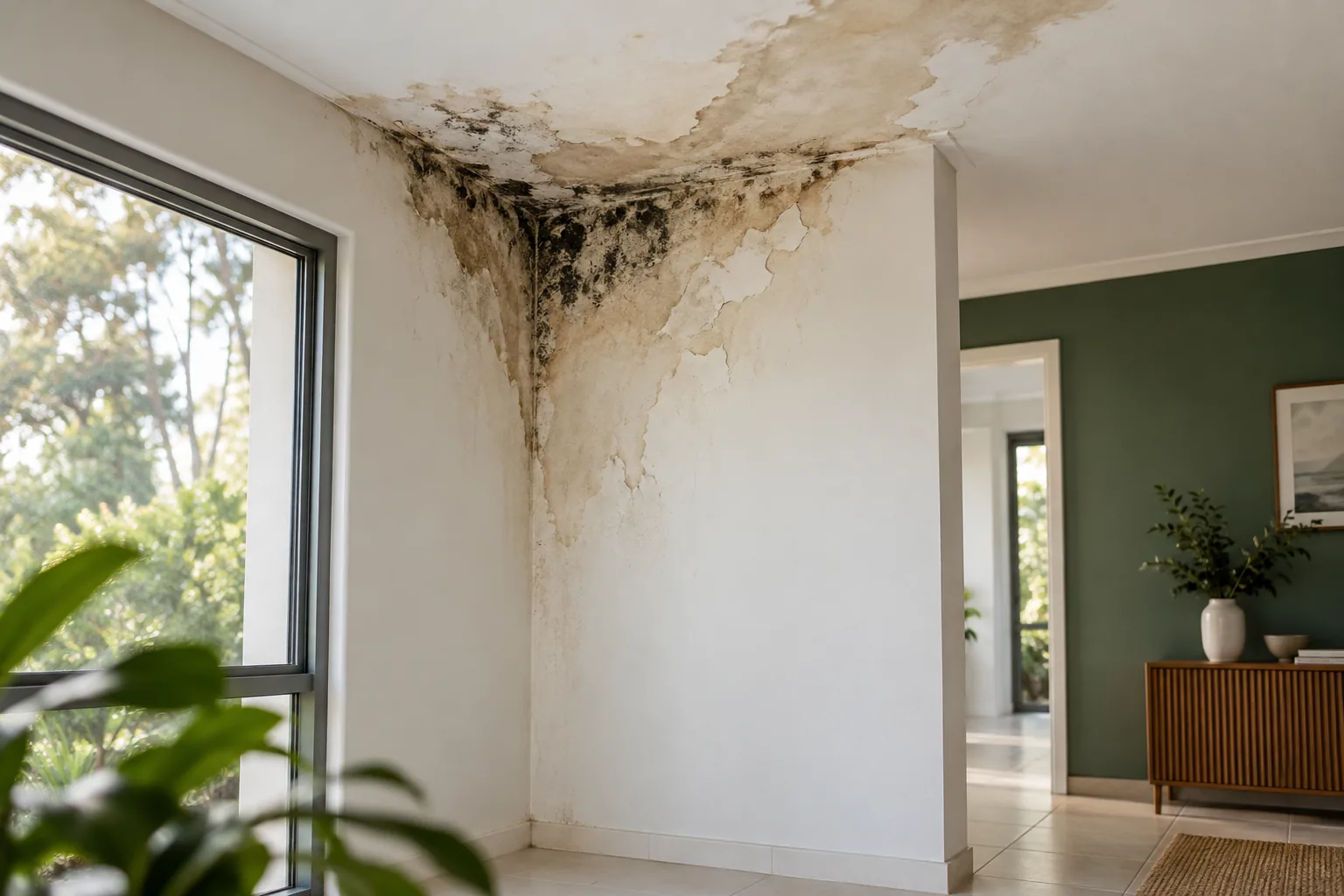
Ceilings are a separate surface request and require safe access rather than an assumption from floor-level work.
Bathrooms
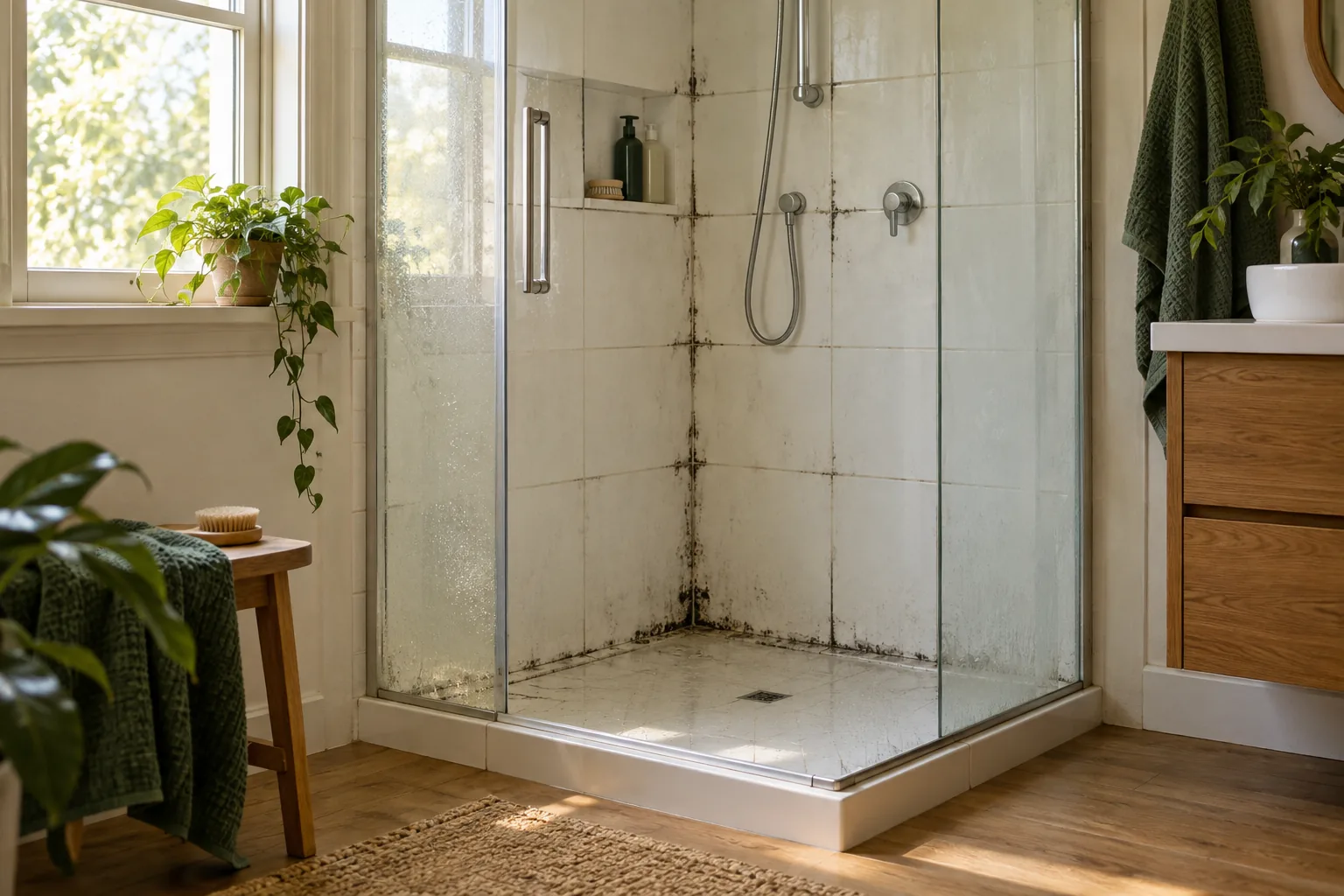
Bathroom tile joints and nearby paint may need different decisions; an exposed floor does not establish waterproofing condition.
Kitchens
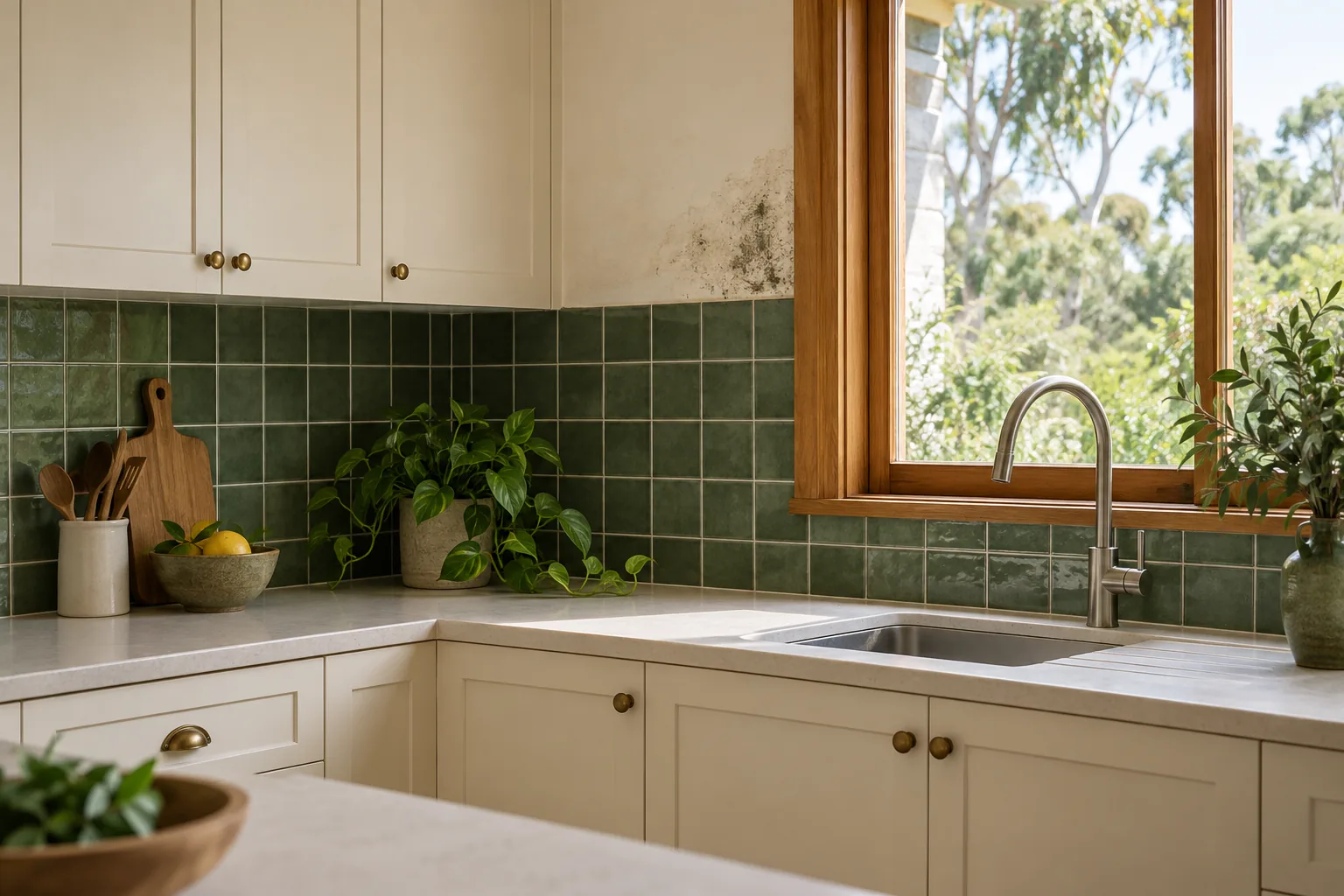
Kitchen finishes should distinguish accessible walls and hard floors from cabinetry and stored contents.
Accessible affected surfaces
Other affected exposed floors, walls or ceilings can be agreed, while rugs, carpet and concealed layers remain excluded.
PREPARE FOR THE ACTUAL JOB
Prepare access without lifting materials
Prepare movable belongings as instructed, without lifting flooring or pulling skirting away merely to create access. People and pets leave during treatment. Average source guidance is approximately three hours per room, with size, contamination and accessibility affecting the actual schedule rather than a fixed repair-ready interval.
Treatment may leave cosmetic stains on one finish even where another looks different. Repairs and decorating need separate agreement. Obtain the technician’s specific return instructions; neither a dry-looking corner nor ongoing filtration establishes laboratory clearance, concealed dryness or completion of an unagreed floor repair.
AFTER THE TREATMENT
Watch the visible junction after source correction
Follow the visible wall and floor as separate materials.
Note new water and the timing of any fresh growth at the junction.
Pursue outstanding source repair rather than repeatedly covering the affected edge.
Keep safe access to observe the agreed exposed area.
Quote for the materials actually available
Identify the wall area, exposed floor material and any covered edges before asking for the quote. The listed examples concern Mould Removal, so confirm their applicability to remediation. Do not assume a room amount includes floor lifting, carpet work or skirting replacement; establish the supported visible treatment first.
YUROKE · EXACT ADDRESS & ACCESS
Enquiries for nearby addresses
For the Yuroke property, provide the complete address and identify the room containing the wall-to-floor mark. Explain who can provide entry and whether the hard-floor section is currently exposed. Nearby location links help with separate addresses, while this particular junction needs its own access, availability and treatment agreement.
Mickleham · Konagaderra Springs · Craigieburn · Oaklands Junction
Questions about remediation
Does the wall quote automatically include the floor?
No. Identify the exposed floor and ask whether it is part of the agreed treatment, rather than assuming every adjoining finish is included.
Will skirting be removed to reach hidden growth?
That is not a standard promise. Covered layers need separate access or repair decisions; agree the visible face without implying concealed treatment.
Is carpet beside the hard floor included?
No. Carpets and rugs are excluded from standard remediation, even when the requested exposed hard finish is adjacent.
Can the hygrometer tell whether the subfloor is wet?
No. The confirmed instrument informs room-air relative humidity, not moisture beneath flooring or the condition of a concealed subfloor.
Should I lift tiles before the technician arrives?
Do not do so merely as preparation. Explain the suspected hidden concern and arrange any necessary repair or access separately.
What if water returns to the same edge?
Record where and when it appears and seek appropriate source correction. Report the new visible change rather than treating surface work as a guarantee against continuing water.
Discuss the wall-to-floor concern
Call 03 8652 1296 with the exposed wall and floor materials, visible boundary and water history. Agree the treatment and separate repair needs before attendance.