
VISIBLE SURFACES · AGREED TREATMENT
Mould Remediation Mickleham
Curtains or tall furniture can obscure an upper wall without making the covered finish part of an agreed treatment. For your Mickleham enquiry, describe the visible ceiling or wall section and the current obstruction. Remediation planning should address safe available access, keeping curtain cleaning, fitting removal and hidden materials outside assumed surface work.
Upper-surface access is discussed.
Obstructions are disclosed beforehand.
Textile exclusions remain explicit.

TREATMENT · FILTRATION · FOLLOW-THROUGH
A TREATMENT PLAN WITH CLEAR LIMITS
High surfaces need their own access decision
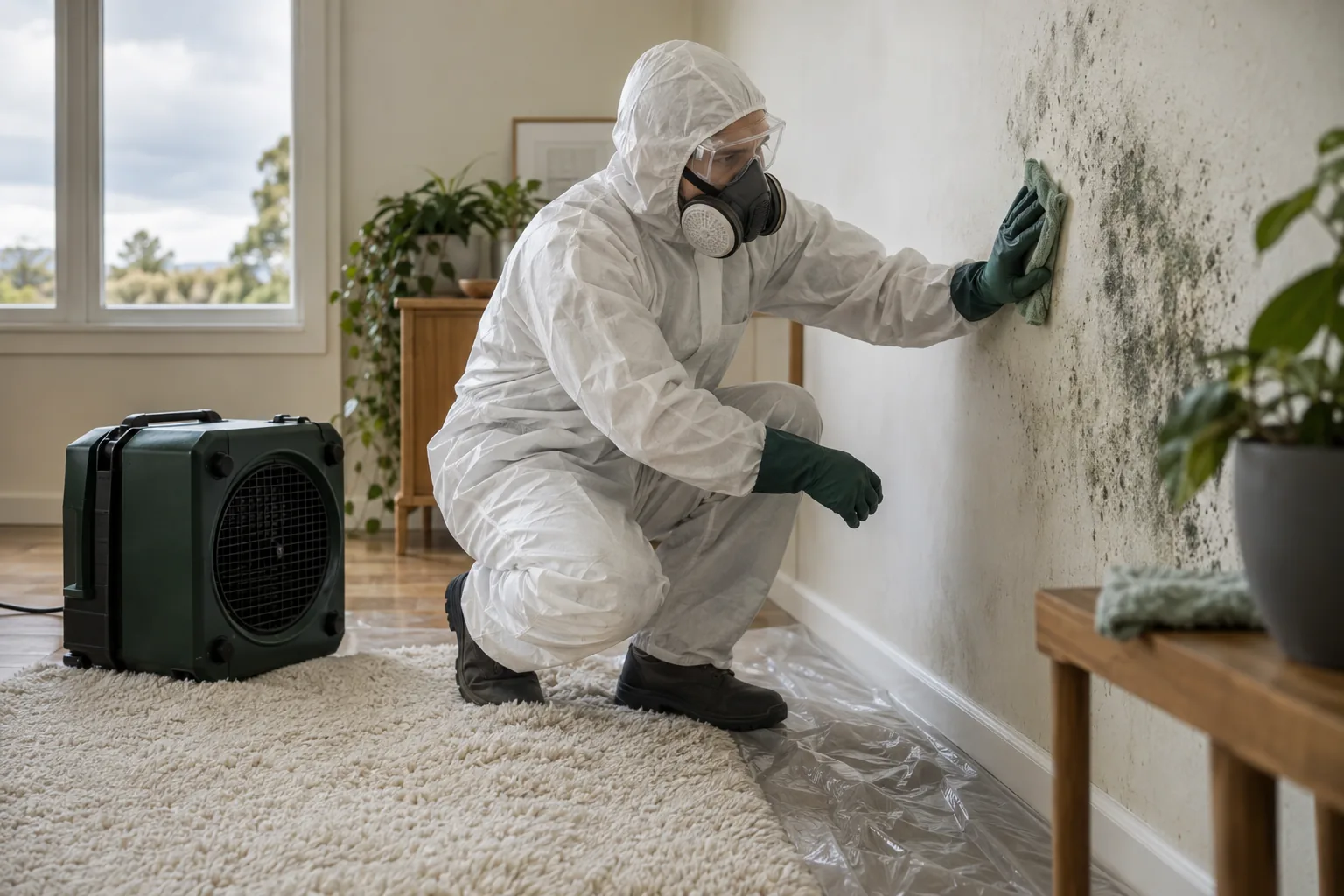
Remediation includes assessment, filtration, appropriate treatment and physical removal of visible contamination on agreed accessible surfaces. State the height, visible boundary and any obstruction without treating a close photograph as evidence of safe working access. Peeling or loosened material should also be disclosed.
Our service overview explains supported work. Curtains, furniture and textiles are excluded from treatment. Any fitting removal, lining repair or decorating requires another agreement; the booking should not imply that every concealed surface above or behind room contents will be reached.
MOISTURE COMES FIRST
Describe water where it is visible
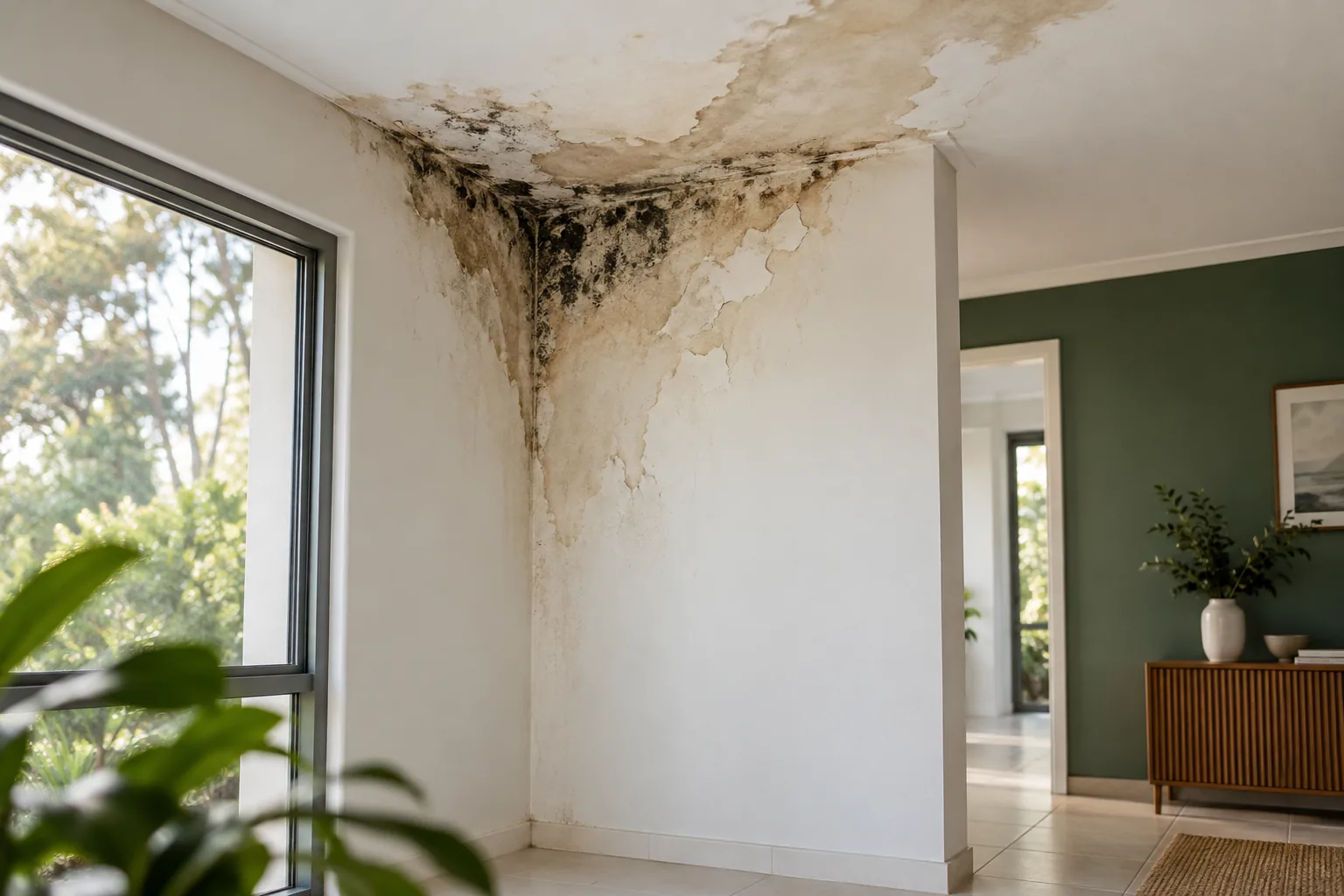
Locate water staining or condensation on the ceiling, upper wall or window rather than assigning one cause from height alone. The professional hygrometer provides room-air relative-humidity information. It does not establish moisture inside a ceiling lining or dryness in the concealed space above.
Follow through separately on a known roof leak, window fault or ventilation problem. Continued dampness may support another occurrence after visible work. Discuss accessible-condition inspection if the available boundary first needs clarification, without promising roof-space access, material probes or laboratory testing.

FROM PREPARATION TO FOLLOW-THROUGH
The supported sequence within safe reach
1
Agree the accessible scope
Assess the exposed upper finish and safe working access, agreeing suitable checks and any area left unavailable.
2
Begin air protection
Begin confirmed HEPA air-scrubber filtration before application, with the work area prepared for the agreed overhead task.
3
Choose the treatment application
Apply HOCl appropriately, considering ULV dry fog where suitable without promising treatment of curtains or concealed ceiling layers.
4
Remove visible growth
Physically remove visible mould using professional H-class filtered equipment within the agreed reachable surface boundary.
5
Continue final air cleaning
Continue HEPA air cleaning during and after the process, discussing remaining appearance limits, repair follow-up and specific return instructions.
Distinguish upper walls from room contents
Walls
Upper wall marks need exposed edges and height described separately from the curtain fabric beside them.
Ceilings
Ceilings require safe available access and disclosure of loose or damaged finishes before treatment is agreed.
Bathrooms
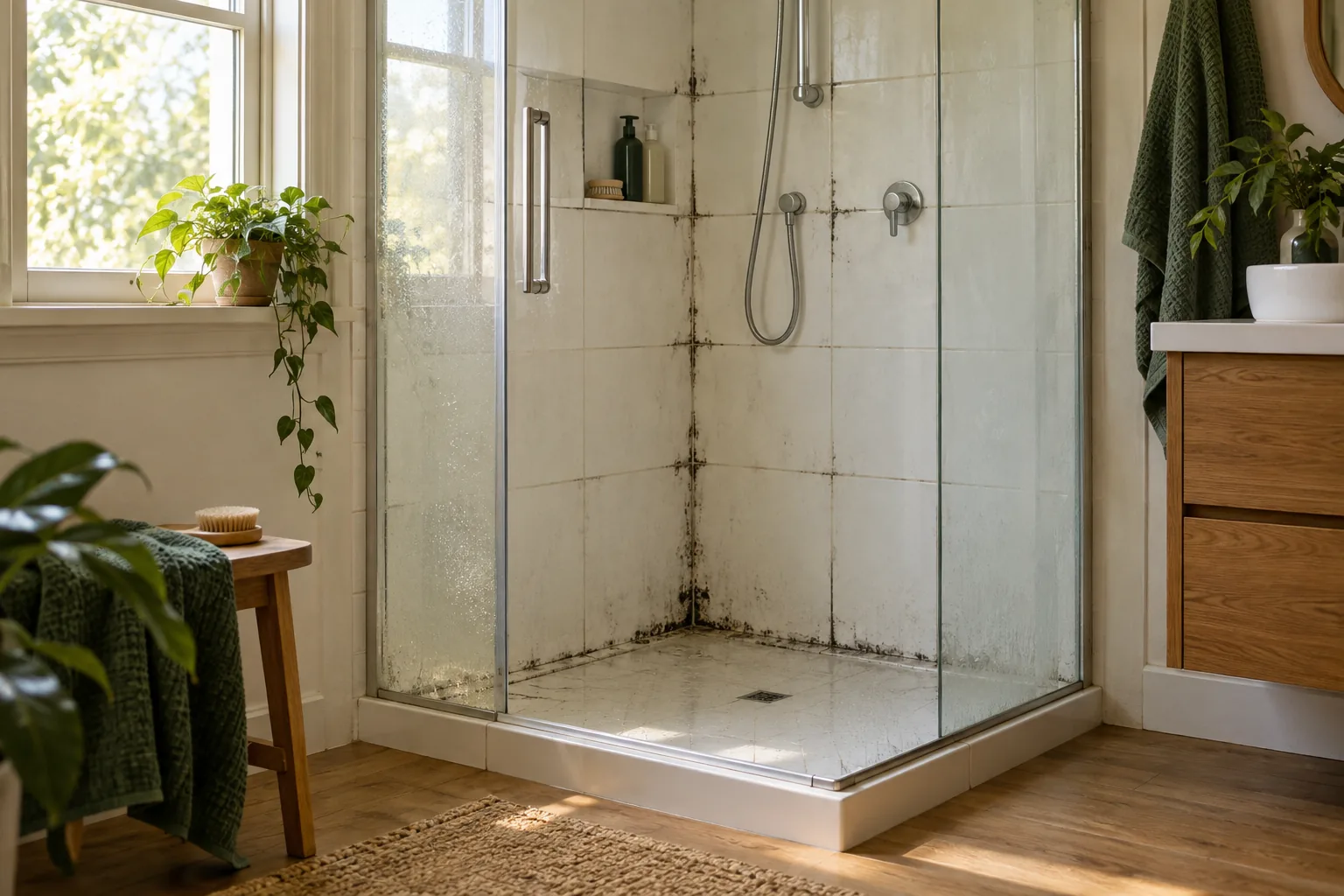
Bathroom ceiling paint and shower joints are different requests, with textile towels and mats excluded.
Kitchens
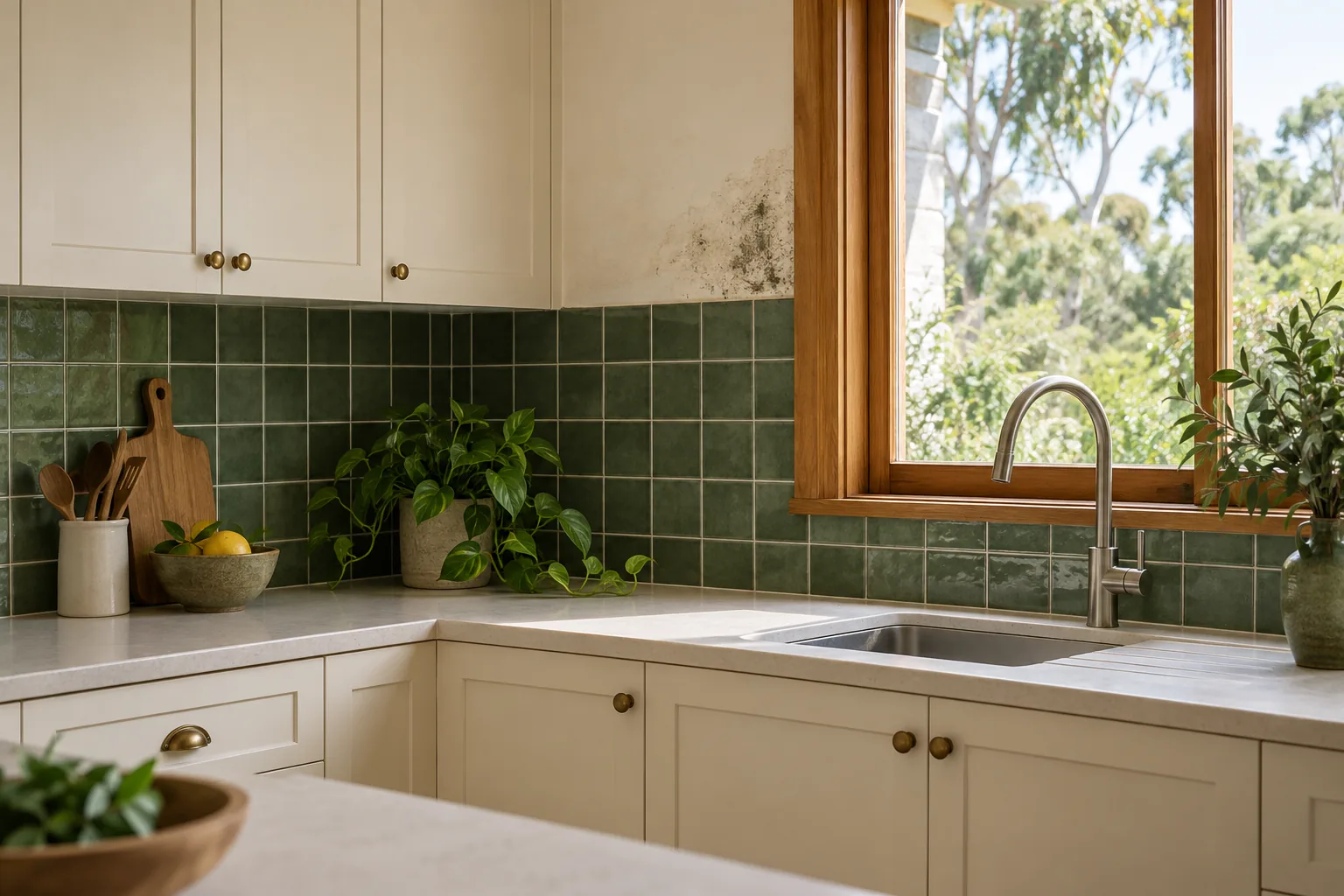
Kitchen upper surfaces should be distinguished from high cabinetry and its concealed backing.
Accessible affected surfaces
Other accessible affected walls, hard floors or ceilings may be agreed, while furnishings and hidden construction layers remain outside standard work.
PREPARE FOR THE ACTUAL JOB
Prepare without makeshift access
Do not climb on furniture or create makeshift access to improve photographs or preparation. Discuss safe clearance beforehand and follow instructions for movable belongings. People and pets leave during treatment. Approximately three hours per room is average guidance, with actual timing influenced by size, contamination and accessibility rather than the photograph’s apparent simplicity.
Residual cosmetic stains may remain, particularly where water damage or old paint differences already exist. Repairs and decorating are separate decisions. Obtain return advice directly from the technician; work at a high surface does not create a clearance certificate or guarantee about the condition of covered materials or curtains.
AFTER THE TREATMENT
Watch the visible upper finish safely
Observe the exposed upper finish from a safe position.
Report fresh staining or growth with the location and timing.
Pursue unresolved roof, window or ventilation repairs separately.
Keep any aftercare record clear about areas that remained obstructed.
Quote for the accessible height and area
Describe the surface height, area and obstruction when asking for the quote. The published table lists Mould Removal examples, so confirm applicability to remediation. Curtain treatment, fitting removal and complete concealed-ceiling work should not be inferred from a room amount; agree what can actually be accessed.
MICKLEHAM · EXACT ADDRESS & ACCESS
Enquiries for nearby addresses
For the Mickleham property, give the full address and room containing the upper-wall or ceiling concern. The person providing entry should know the current obstruction and safe clearance available. Nearby pages are navigation for different premises; this room still needs attendance, access and treatment scope confirmed individually.
Questions about remediation
Should I stand on furniture to photograph the ceiling?
No. Use a safe position and describe the access limitation. A closer photograph is not worth creating unsafe improvised access.
Are marked curtains included with the upper wall?
No. Curtains and other textiles are excluded from standard treatment. Keep the fabric concern separate from the visible wall enquiry.
Does fogging guarantee the covered upper edge is treated?
No. Conditional ULV use does not establish complete coverage of inaccessible surfaces. Identify the exposed and obstructed boundaries explicitly.
Will curtain fittings be removed during treatment?
No removal is promised. Discuss preparation and arrange any necessary fitting work separately before assuming the wall will be fully available.
Can ceiling humidity be tested through the room reading?
The confirmed hygrometer informs room-air humidity, not material moisture inside the ceiling or hidden space. No concealed dryness assessment is promised.
How should I report another high mark after work?
Describe its safe visible location, timing and any fresh water observations. Distinguish an agreed treated section from a part that remained covered or unavailable.
Explain the upper-surface concern
Phone 03 8652 1296 with the height, visible finish and obstruction. Agree safe available access and preparation before planning treatment.