
VISIBLE SURFACES · AGREED TREATMENT
Mould Remediation Kalkallo
A changed room layout can reveal one wall while covering another. For your Kalkallo enquiry, describe the interior as it is now rather than relying on photographs taken before the change. Remediation planning should define currently accessible contamination and any ongoing work, without claiming that a recent fit-out proves dryness or gives permission to open every remaining layer.
Current access is described.
Ongoing work is coordinated.
Covered layers remain outside assumed scope.
TREATMENT · FILTRATION · FOLLOW-THROUGH
A TREATMENT PLAN WITH CLEAR LIMITS
Use the room’s present arrangement
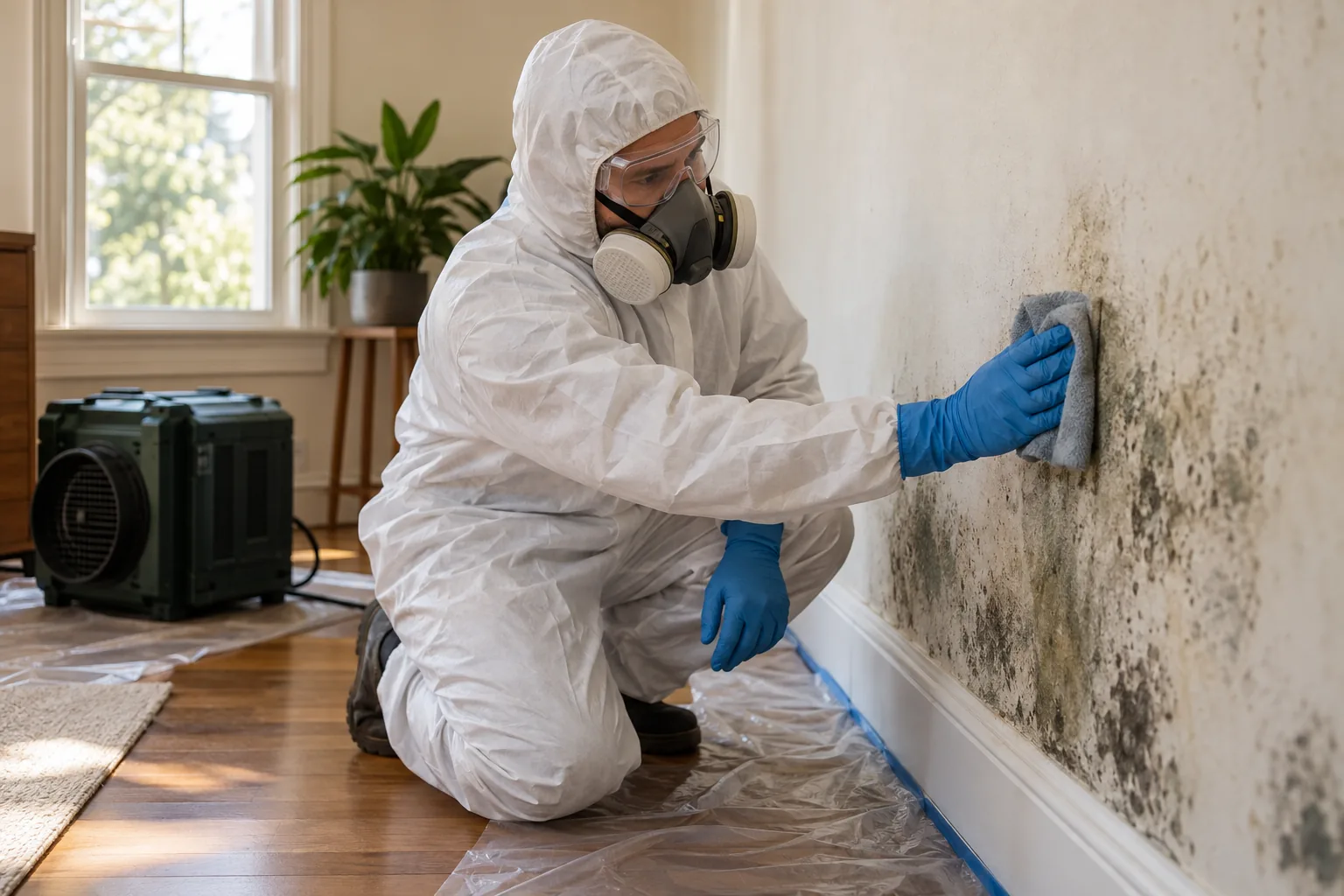
Remediation coordinates assessment, filtration, suitable application and physical removal of visible mould. Identify whether the requested wall or ceiling is exposed, partly covered or awaiting another contractor. An earlier photograph may locate the original concern without establishing today’s condition or safe working access.
Our remediation overview sets out supported work. Fit-out completion, surface repair and decorating need separate responsibilities. The treatment agreement does not promise demolition, cabinet removal or work in concealed cavities simply because alterations have already occurred elsewhere in the room.
MOISTURE COMES FIRST
Keep alteration history separate from water evidence
Explain visible water events and known repair work alongside the alteration dates. A professional hygrometer measures room-air relative humidity; it does not certify new linings, a concealed cavity or the condition beneath a recently installed coating as dry.
If the water source or ventilation concern remains unresolved, arrange appropriate separate correction. Recurrence remains possible where dampness continues. Discuss inspection of accessible finishes when the current visible condition needs clarification, rather than treating a recent fit-out as proof that assessment is unnecessary.

FROM PREPARATION TO FOLLOW-THROUGH
A supported sequence for available finishes
1
Agree the accessible scope
Assess the presently available finishes and agree suitable checks, access boundaries and any room work that must happen separately.
2
Begin air protection
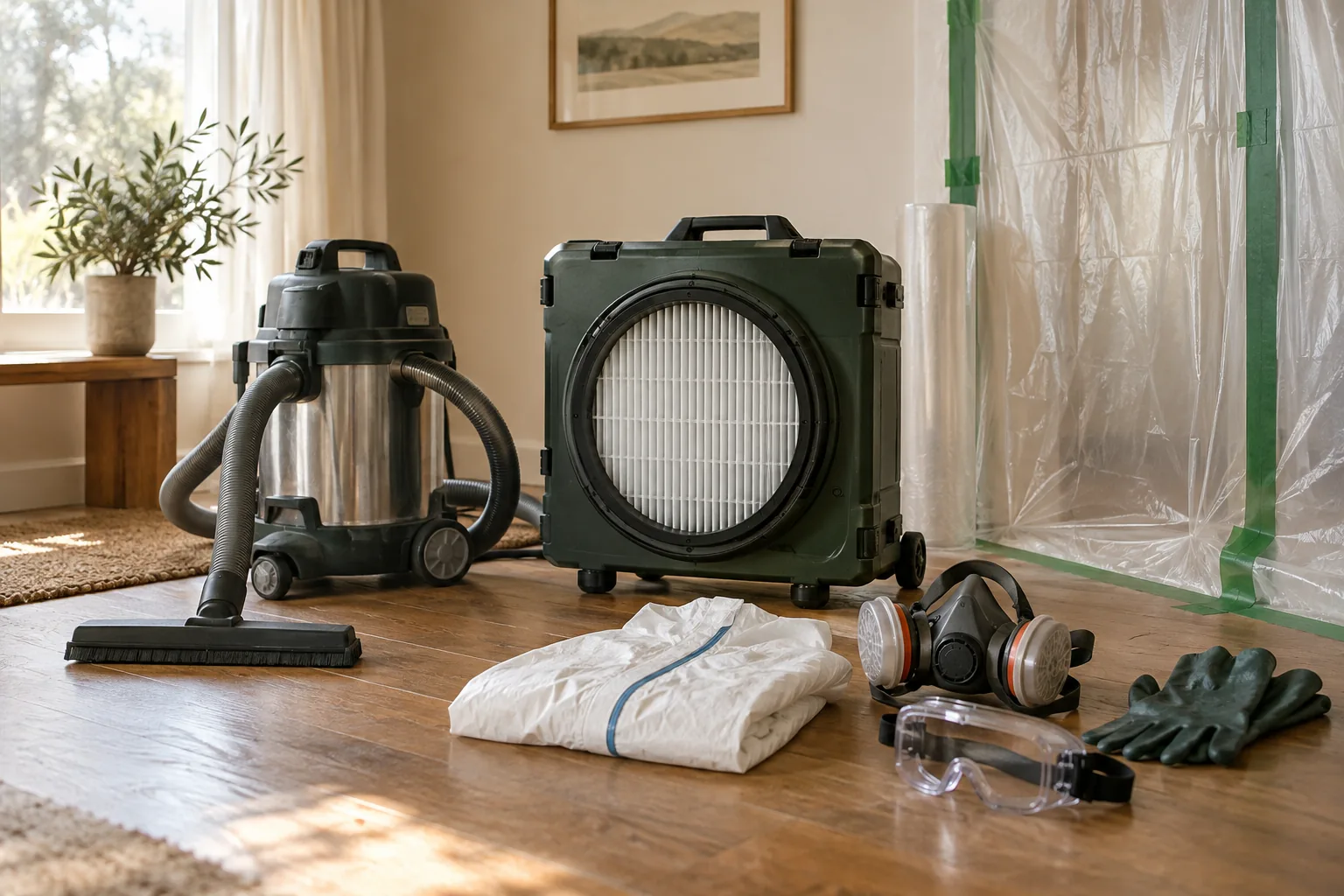
Set up confirmed HEPA air filtration before treatment application, with equipment placement suited to the current room arrangement.
3
Choose the treatment application
Use suitable HOCl treatment, considering ULV dry fog where appropriate instead of promising application through newly covered layers.
4
Remove visible growth
Remove visible mould with professional H-class filtered equipment on agreed accessible surfaces, leaving unagreed fit-out tasks separate.
5
Continue final air cleaning
Continue HEPA air cleaning during and after work, discussing remaining appearance limits, repair follow-through and particular return advice.
Identify what is exposed today
Walls
Walls should be described by their current exposed finish, not solely by what an earlier photograph showed.
Ceilings
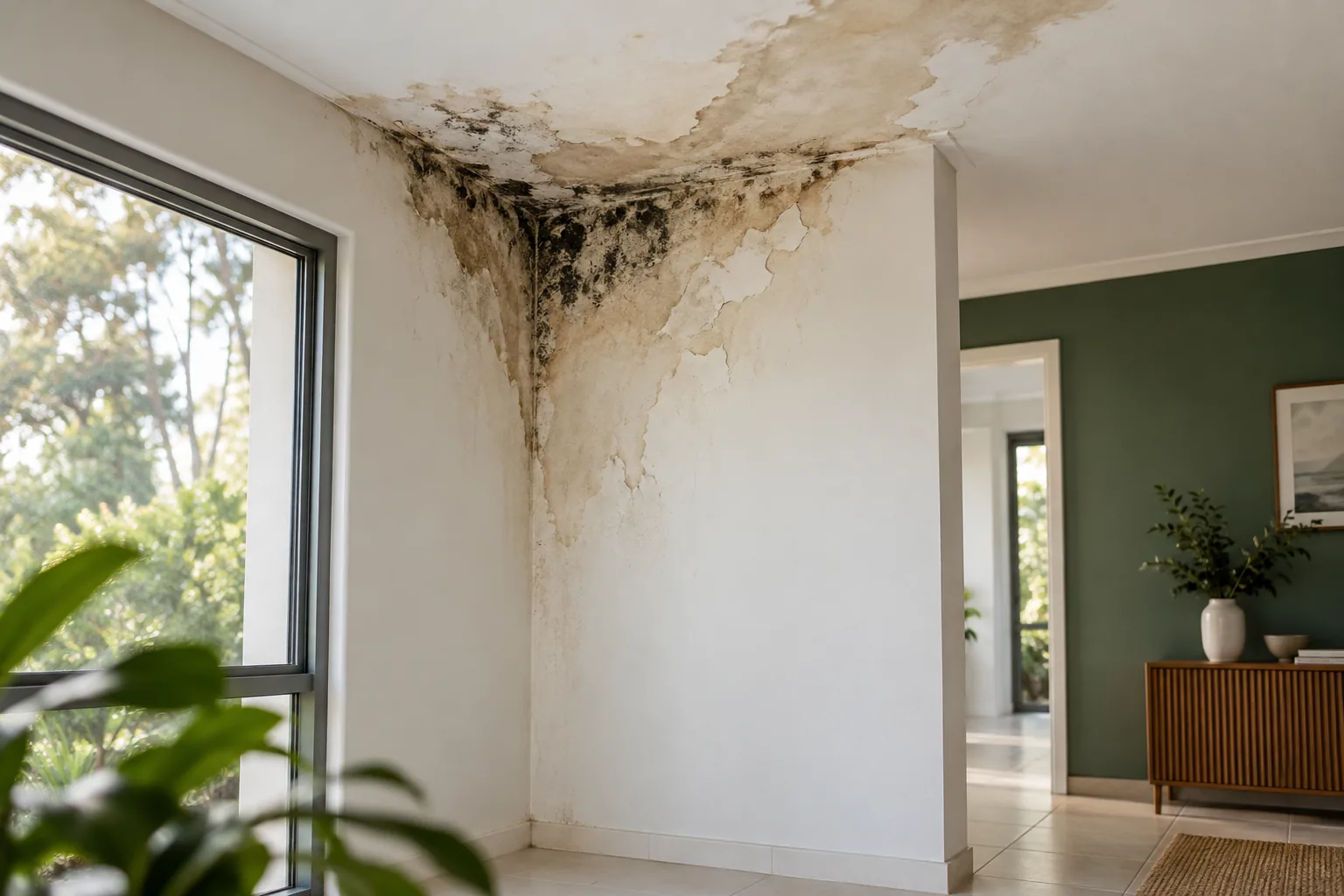
Ceilings need safe available access and any changed fittings or visible lining damage identified beforehand.
Bathrooms
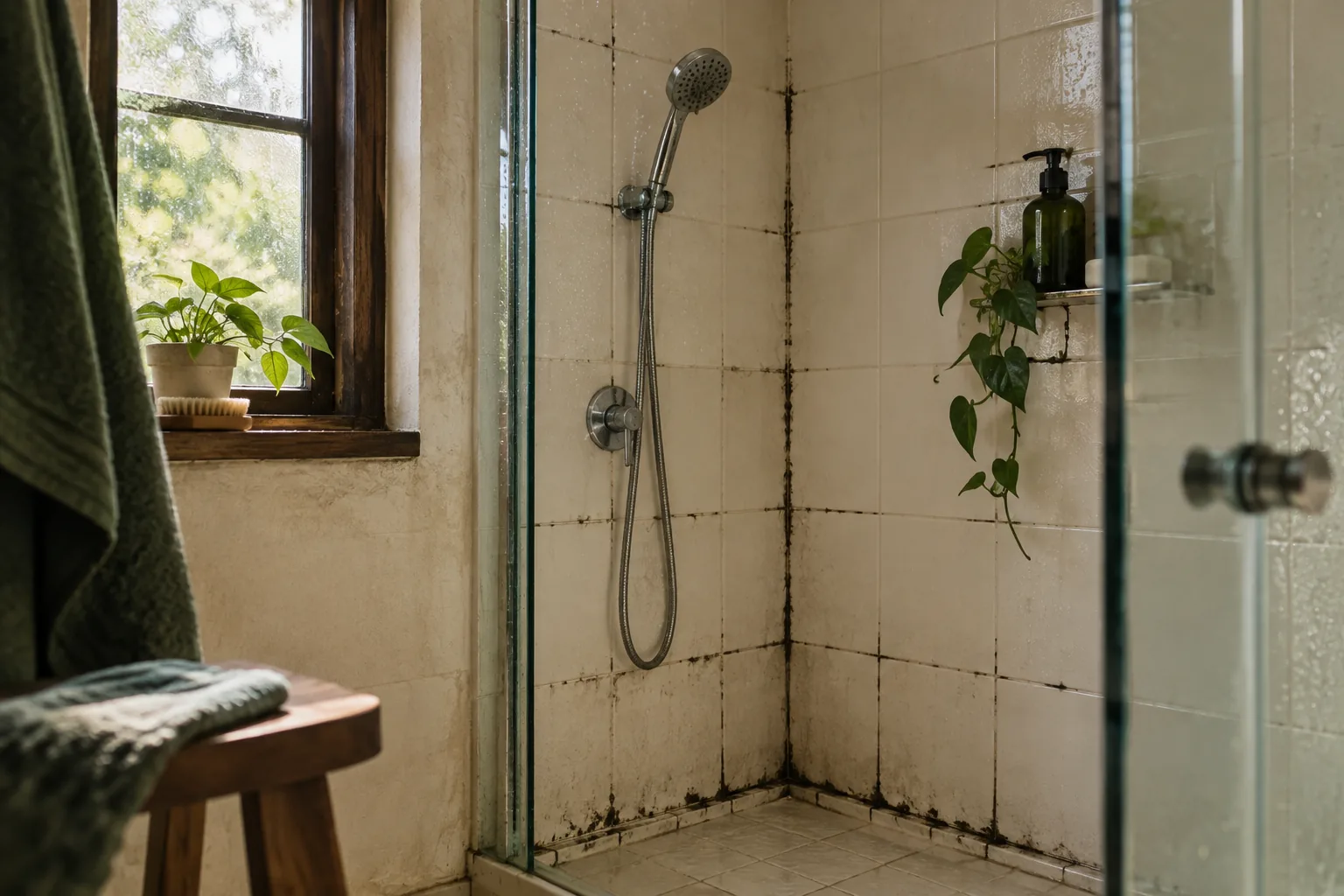
Bathroom surface work distinguishes newly altered areas from exposed joints and paint still requiring consideration.
Kitchens
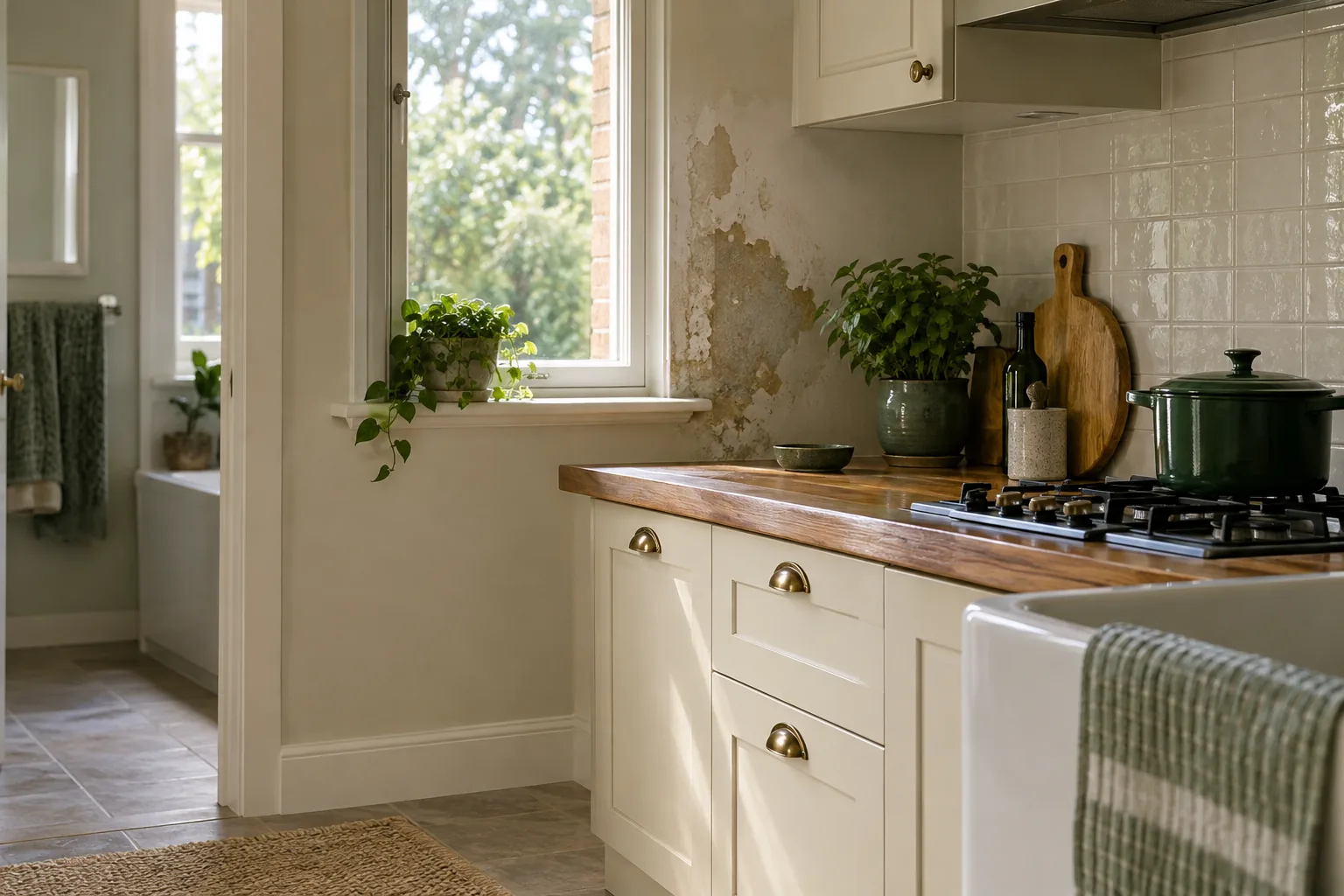
Kitchen requests should identify accessible finishes around current fittings, without assuming installed cabinetry will be dismantled.
Accessible affected surfaces
Other affected exposed floors, walls or ceilings can be agreed, excluding textiles and concealed construction layers.
PREPARE FOR THE ACTUAL JOB
Prepare around work still underway
Coordinate dates with any other work so the room is actually available and prepared. People and pets leave during treatment. Average source guidance is approximately three hours per room, depending on area, contamination and access; it is not a guarantee about fit-out schedules or when a decorator can begin.
Cosmetic staining or existing damage may remain after visible mould work. Ask how those limits affect the next separately agreed task. No clearance certificate or hidden-material assessment is promised. Return arrangements come from the technician for this job, rather than from the room’s recent renovation history or its apparent newness.
AFTER THE TREATMENT
Observe changes after the layout settles
Keep follow-up observations linked to the room’s changing arrangement.
Note new visible growth or water after subsequent alterations.
Complete separately required leak or ventilation repairs.
Retain safe practical access to watch the agreed treated finish.
Quote for current surfaces rather than old plans
Describe the current exposed area, fixed fittings and other work still planned when requesting the quote. The price examples relate to Mould Removal, not a separately confirmed remediation fit-out package. Confirm applicability and which tasks are excluded, rather than assuming dismantling, finishing or repair is part of a room amount.
KALKALLO · EXACT ADDRESS & ACCESS
Enquiries for nearby addresses
Provide the complete Kalkallo premises address and say which current interior the photographs show. If an entry contact has only seen the old layout, explain the changes before attendance is promised. Nearby pages relate to separate addresses; this particular booking needs availability and access agreed against the room’s present arrangement.
Questions about remediation
Are old layout photographs enough to confirm treatment access?
No. Explain the room’s current arrangement and any new obstruction. Older images may locate a concern without establishing today’s exposed finish or safe clearance.
Does a recent fit-out prove the room is dry?
No. New appearance does not establish hidden material condition or source correction. Describe actual water observations and known repairs separately.
Will installed cabinets be removed to reach the mark?
No dismantling is promised. Agree visible accessible work and arrange any necessary fit-out access separately.
Can other contractors work in the room during treatment?
Do not assume that. People leave during treatment, so coordinate the work sequence and the technician’s instructions before overlapping appointments.
Is decorating immediately afterwards guaranteed?
No. Residual staining or damage may remain and decorating has a separate scope. Discuss appearance and timing before arranging the next trade.
What if alterations reveal another marked section later?
Identify it as a newly exposed concern with its own location and condition. It should not be described as already treated simply because work occurred elsewhere in the room.
Discuss the room in its current state
Call 03 8652 1296 with the present room layout, exposed finishes and other work planned. Confirm preparation and the applicable treatment scope before attendance.