
SURFACE TREATMENT · MOISTURE FOLLOW-THROUGH
Mould Remediation Bellevue
If the booker and occupant describe different affected rooms at your Bellevue address, resolve the nominated surface before a treatment handover. Confirm which room each contact means and who receives instructions before handing over access to the property.
Room descriptions resolved
Authorised scope confirmed
Instruction recipient nominated
TREATMENT & FOLLOW-THROUGH
UNDERSTANDING THE AFFECTED ROOM
Resolve the room description first
Two descriptions of the same booking can lead to different rooms being prepared. Resolve the intended interior and label its visible surfaces before treatment is arranged. Keys allow entry, but do not by themselves establish permission for every proposed task or belongings movement. Review remediation scope before selecting the structural-surface job.
An authorised scope can be agreed without making the booker responsible for observations they did not make. Use a precise room description and distinguish confirmed information from messages relayed by others. The supported process concerns accessible contamination, not resolution of a household disagreement. A single clear work agreement is more useful than a broad request that changes whenever another contact describes the property.
MOISTURE & CONTAMINATION
Keep observations attributed
Conflicting room descriptions should not be combined into one moisture history. Identify who saw the dampness and where, keeping another person’s observations clearly attributed. Use an inspection discussion when the actual accessible condition needs clarification.
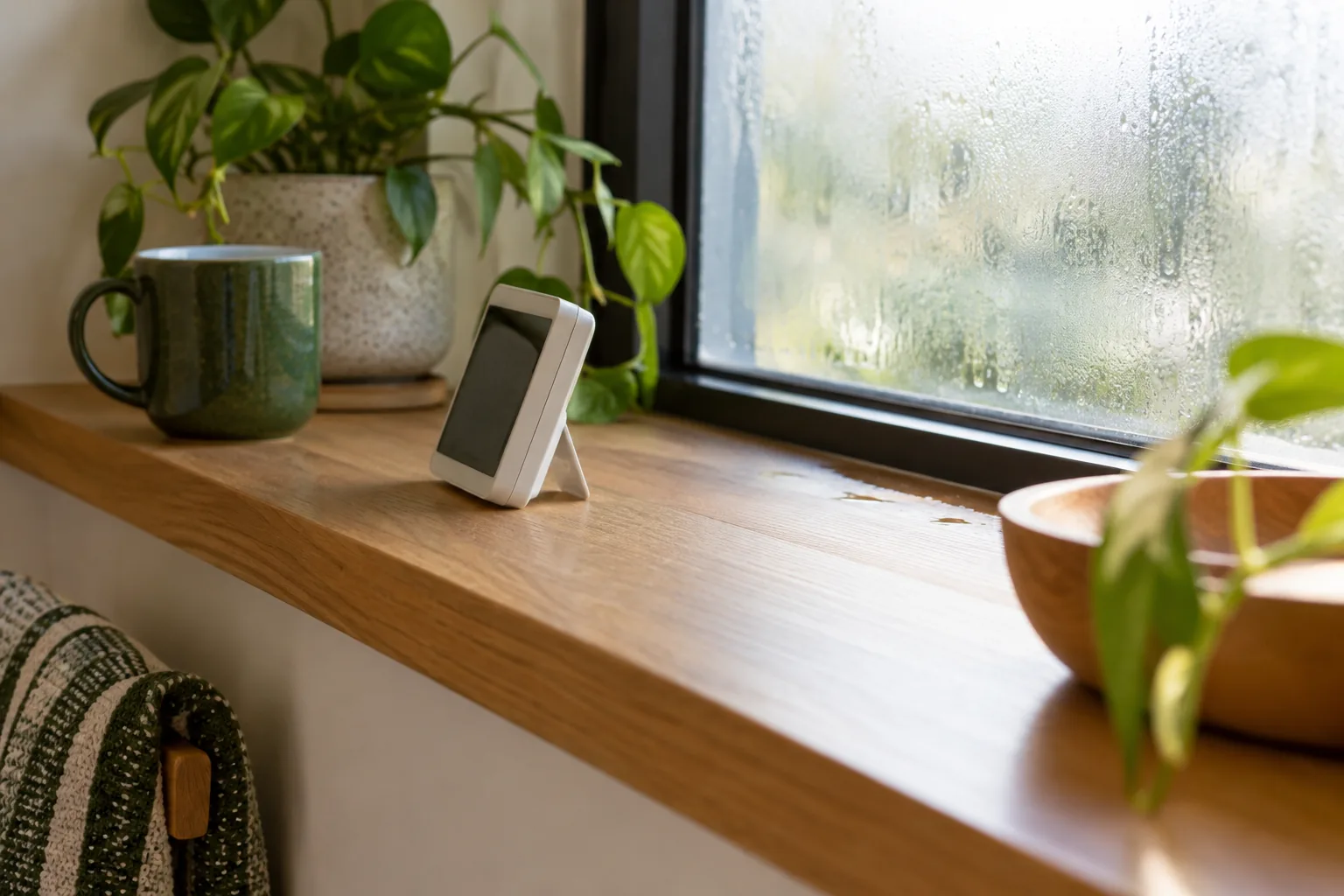
Attribute the professional hygrometer’s room-air humidity reading to the interior measured; it cannot resolve conflicting descriptions of concealed moisture.
A DEFINED TREATMENT SEQUENCE
An agreed room and instruction route
1
Assess the accessible scope
Resolve the intended room and visible surfaces with the authorised contact before assessment is converted into a treatment agreement.
2
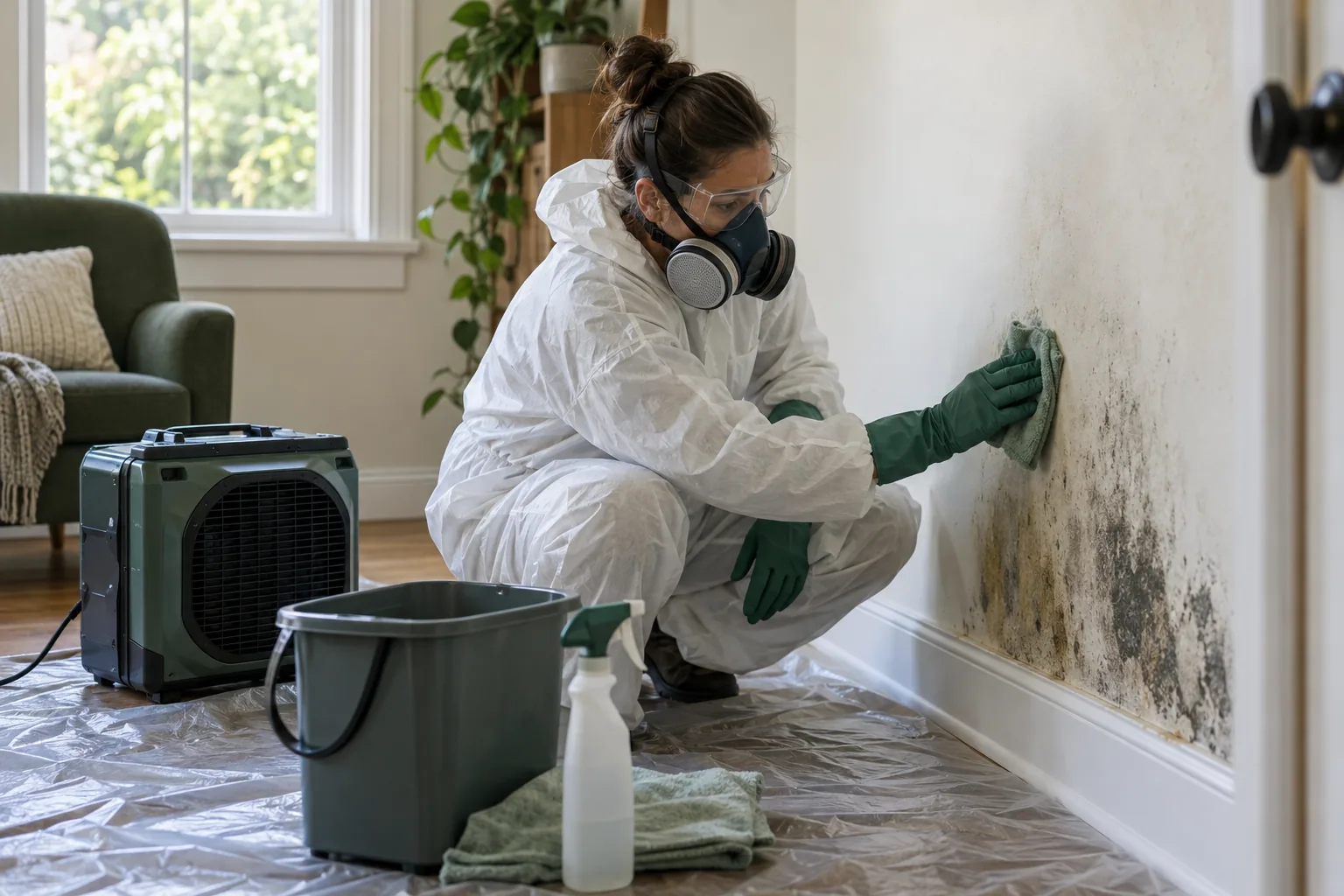
Set up HEPA protection
Place the confirmed HEPA air scrubber before treatment, using the work area identified in the agreed room description.

3
Choose suitable application
Apply appropriate HOCl to the nominated finishes; conditional ULV dry fog does not authorise a substitute room or broader property scope.
4
Remove visible contamination
Remove visible contamination with H-class filtered equipment inside the settled boundary, keeping belongings and unvisited rooms distinct.
5
Continue final air cleaning
Maintain HEPA air cleaning during and after the process; pass room-specific return advice through the nominated instruction contact.
Surfaces shared contacts can identify
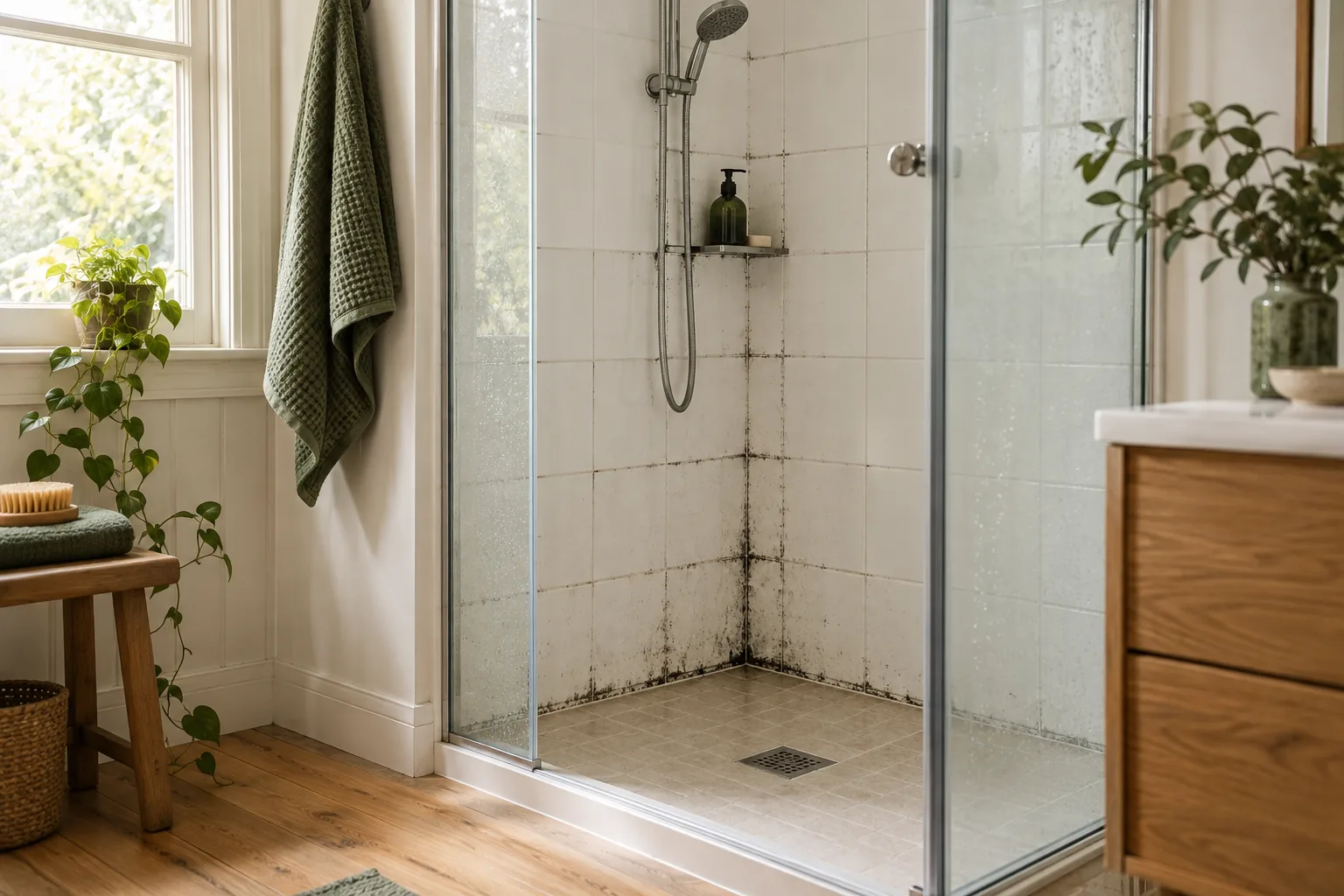
Walls
Use a precise wall location so the booker and occupant refer to the same surface.
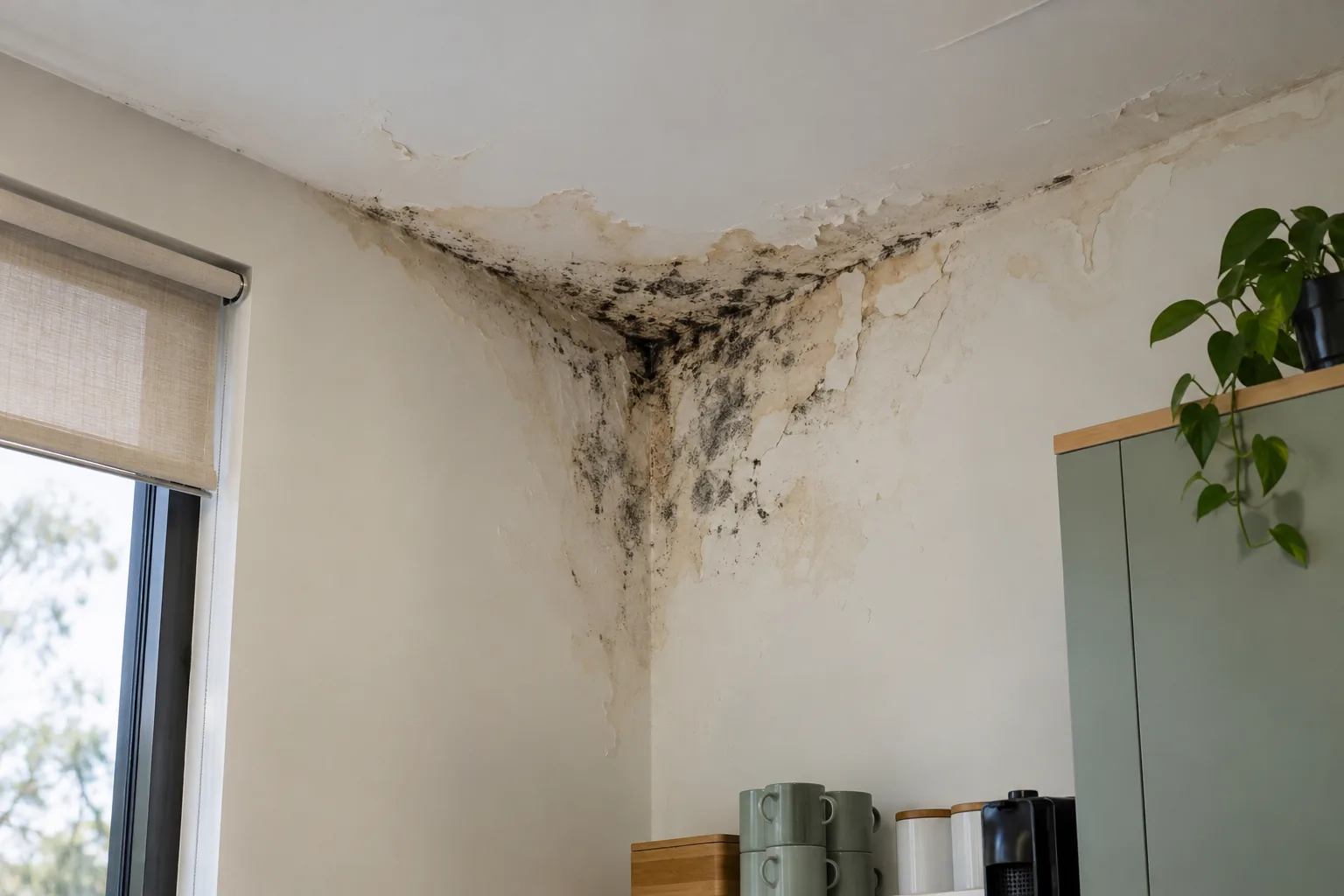
Ceilings
Identify the ceiling in the agreed room, not overhead marks reported in another interior.
Bathrooms
Bathroom requests need a room identifier and exposed-material description before inclusion is accepted.
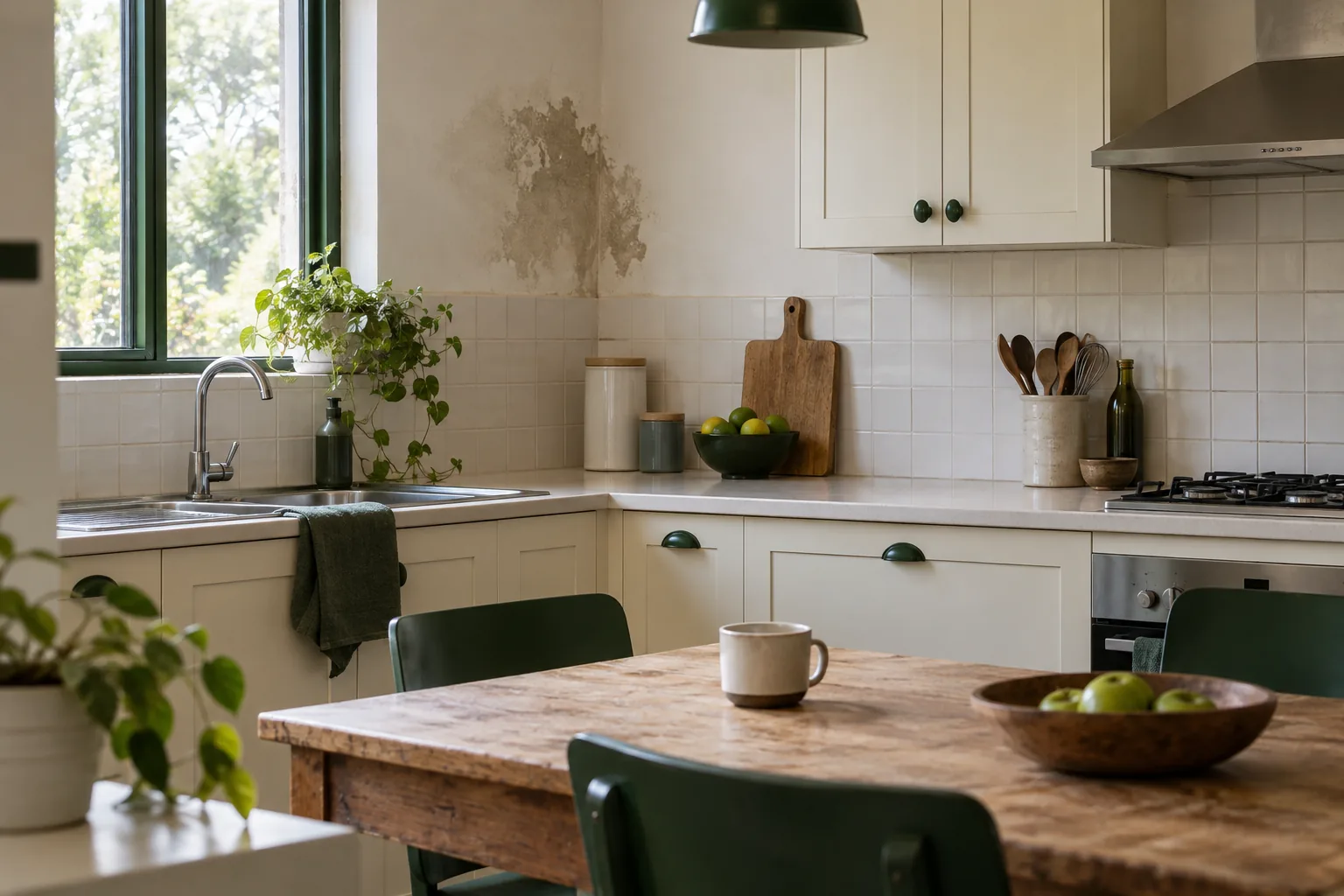
Kitchens
Kitchen work should specify the actual accessible wall or ceiling rather than an unlabeled photograph.
Accessible affected surfaces
Any extra structural surface needs authority and access confirmed; contents and textile items remain excluded.
AFTER TREATMENT
Settle the practical handover
Resolve the room description, authority and instruction recipient before entry is handed over. Preparation should expose the agreed surface rather than allow different contacts to substitute another room. People and pets need confirmed departure and return arrangements. All occupants and pets leave the property while treatment proceeds, and the technician confirms return advice.
Approximately three hours is average room guidance, not a handover promise; confirm the actual scope before contacts plan return. Contacts should not convert the room’s work guidance into an hourly charge.
KEEP MOISTURE IN VIEW
Keep follow-up descriptions consistent
Make sure the instruction recipient can identify the treated room and pass on the actual return advice. If another contact notices a different mark, label it separately before assuming the earlier scope includes it. Continue appropriate ventilation and arrange relevant moisture follow-up through the responsible person. Keys and a completion message do not establish permission for new work or certify unvisited interiors. Keep residual cosmetic marks distinct from fresh observations. This practical clarity makes later enquiries more useful than relying on an informal chain of descriptions that gradually changes the room or surface being discussed.
Use one reliable recipient for technician instructions.
Identify the room whenever a new concern is reported.
Confirm authority before adding another surface or task.
Quotation through the authorised contact
Settle the room identity and authorised quotation contact first. Check published pricing for applicability rather than treating two competing descriptions as one agreed remediation package.
BELLEVUE · EXACT ADDRESS & ACCESS
Postal details behind the room description
A Bellevue enquiry needs the precise postal address and room, especially when the booker and occupant use different descriptions. Local navigation does not resolve permission or the intended surface.
Eaglemont · Bulleen · Greythorn · Heidelberg
Questions about remediation
Can the technician choose between the two room descriptions?
Clarify the intended room before attendance. The booking should not rely on the technician resolving conflicting permissions or scope.
Are photographs enough when nobody labels the room?
No. Identify their property, room and current date so unrelated surfaces are not combined into one request.
Does handing over keys confirm permission for all work?
No. Entry access and authority for treatment are different matters; confirm the actual agreed surface scope.
Who passes treatment instructions on when the booking contact is not the occupant?
Nominate a reliable authorised contact who can pass the technician’s instructions to affected occupants before they plan their movements.
What if the occupant reports an extra patch?
Describe it as additional information and discuss inclusion. Do not silently replace the surface that was originally agreed.
Can a completion message cover unvisited rooms?
No. Keep any explanation of the result tied to the accessible surfaces actually treated.
Agree which interior is requested
Call 03 8652 1296 once the Bellevue room and contact are clear. Agree the requested surfaces and how treatment instructions will reach occupants.