
SURFACE TREATMENT · MOISTURE FOLLOW-THROUGH
Mould Remediation Greythorn
If a visible patch is close to a recently installed decorative panel at your Greythorn address, separate treatment from assumptions about the covered junction. Mention the fixed panel and the accessible edges so the visit is planned around actual reach.
Visible junction assessed
Panel obstruction explained
Decorative limits retained
TREATMENT & FOLLOW-THROUGH
UNDERSTANDING THE AFFECTED ROOM
The exposed edge is not the hidden junction
A decorative panel can conceal part of the problem without resolving it. Identify the exposed edge and the sections now blocked from view. Remediation should address an agreed reachable finish rather than imply the panel, hidden junction and decorative restoration are all included. Review remediation scope before selecting the structural-surface job.
A reachable edge can be considered without claiming the covered junction is part of the result. The confirmed treatment and removal stages remain bounded by what was agreed and made accessible. If separate access is needed, discuss its responsibility before booking rather than using fog application as a substitute. This keeps visible work useful without promising restoration of decorative material or clearance behind it.
MOISTURE & CONTAMINATION
Observe what the panel leaves visible
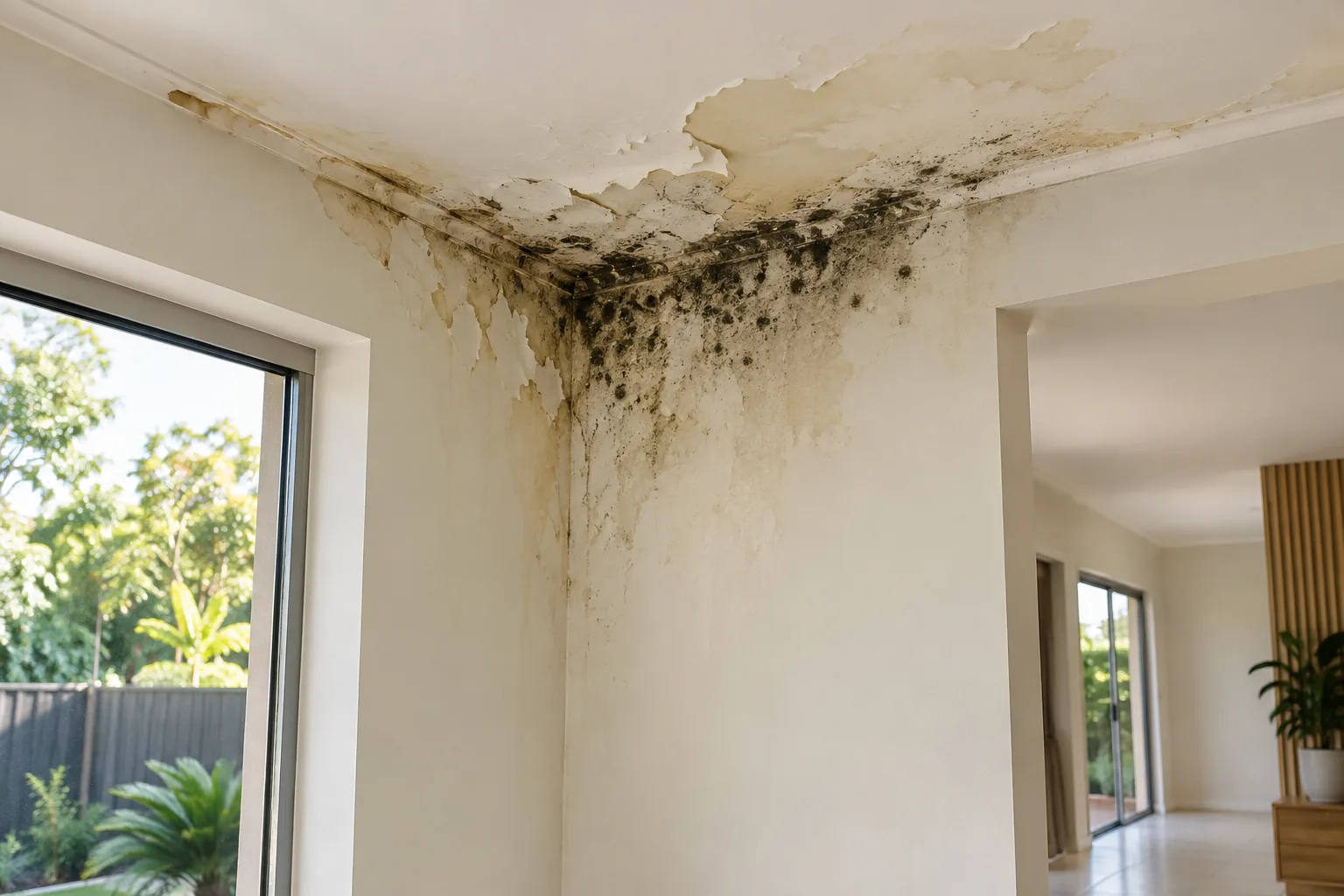
A panel covering the junction can restrict observation as well as access. Report dampness at the exposed edge without asserting what lies behind the fitting. A separate assessment enquiry may be appropriate for the visible concern.
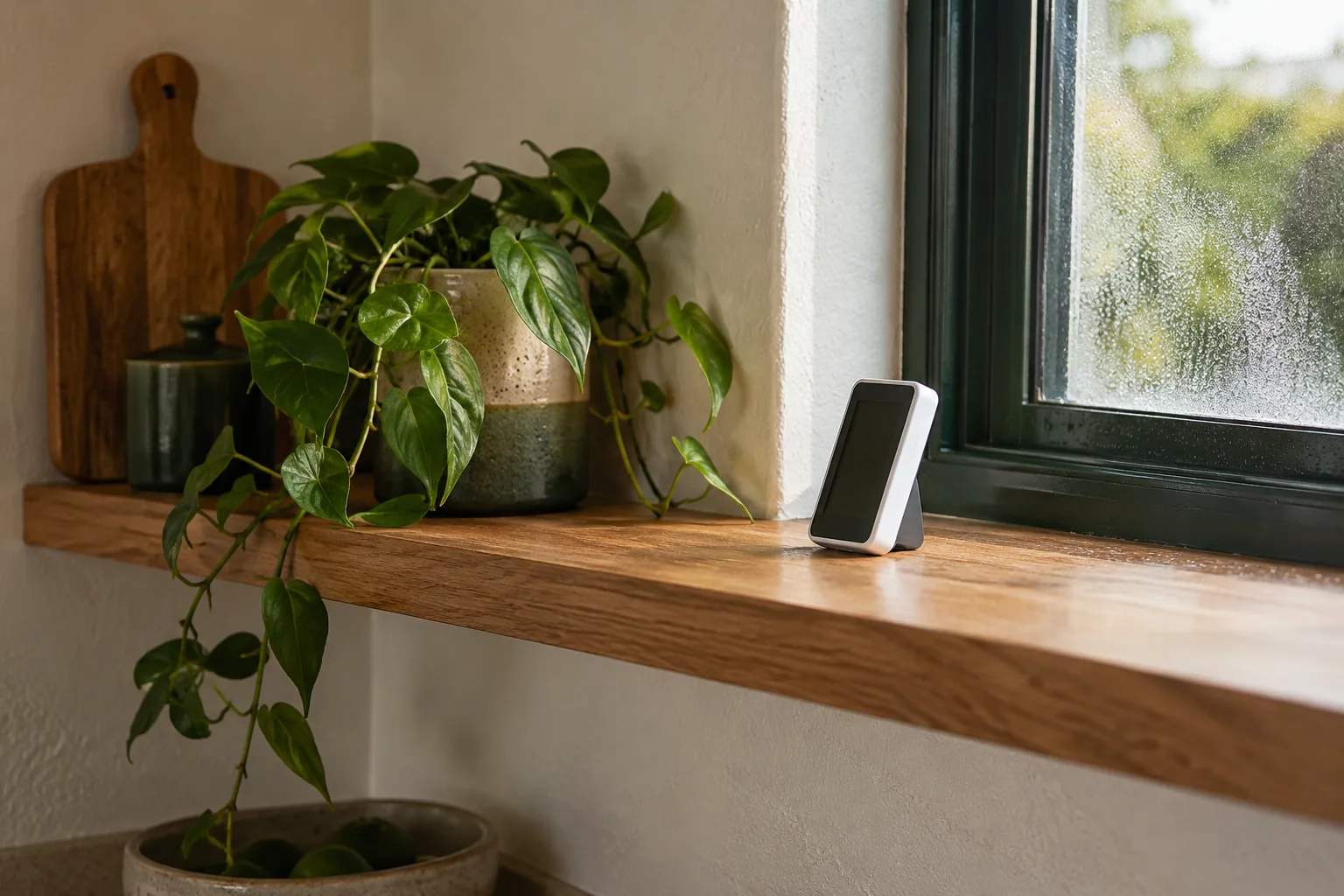
Room humidity measured with the professional hygrometer does not establish the moisture state of the junction hidden by the panel.
A DEFINED TREATMENT SEQUENCE
Treat the accessible panel-side finish
1
Assess the accessible scope
Assess the exposed junction and document which sections remain blocked by the panel before agreeing the accessible work.
2
Set up HEPA protection
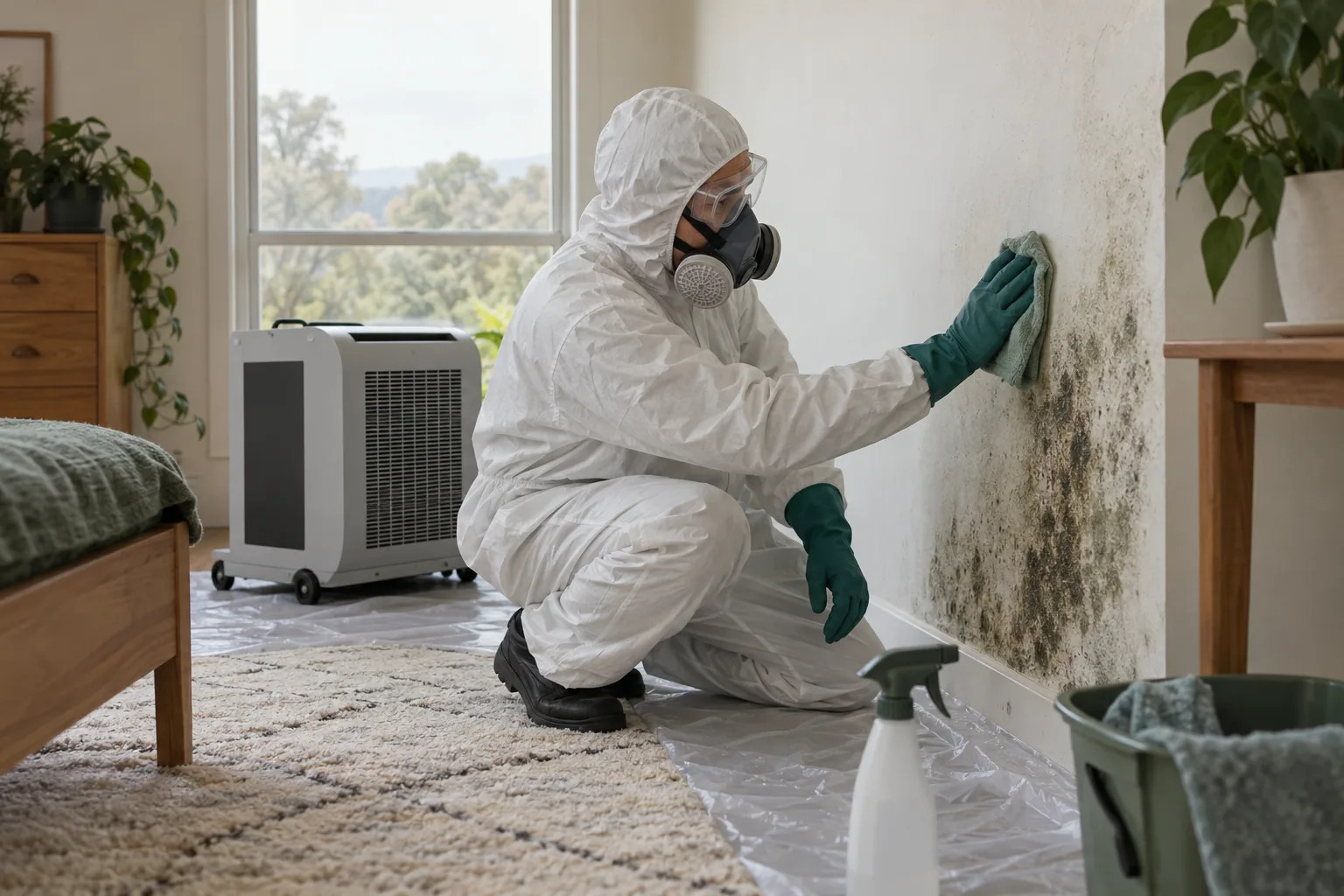
Set up HEPA air protection before application, making room for the scrubber without assuming panel removal is included.

3
Choose suitable application
Use suitable HOCl treatment, with ULV dry fog only where appropriate and no implied clearance behind the decorative fitting.
4
Remove visible contamination
Physically remove visible growth with professional H-class filtered equipment from the agreed exposed finish, without restoring the panel.
5
Continue final air cleaning
Keep HEPA filtration operating during and after treatment; review return instructions and the visible result’s remaining access limits.
Structural faces beside fixed features
Walls
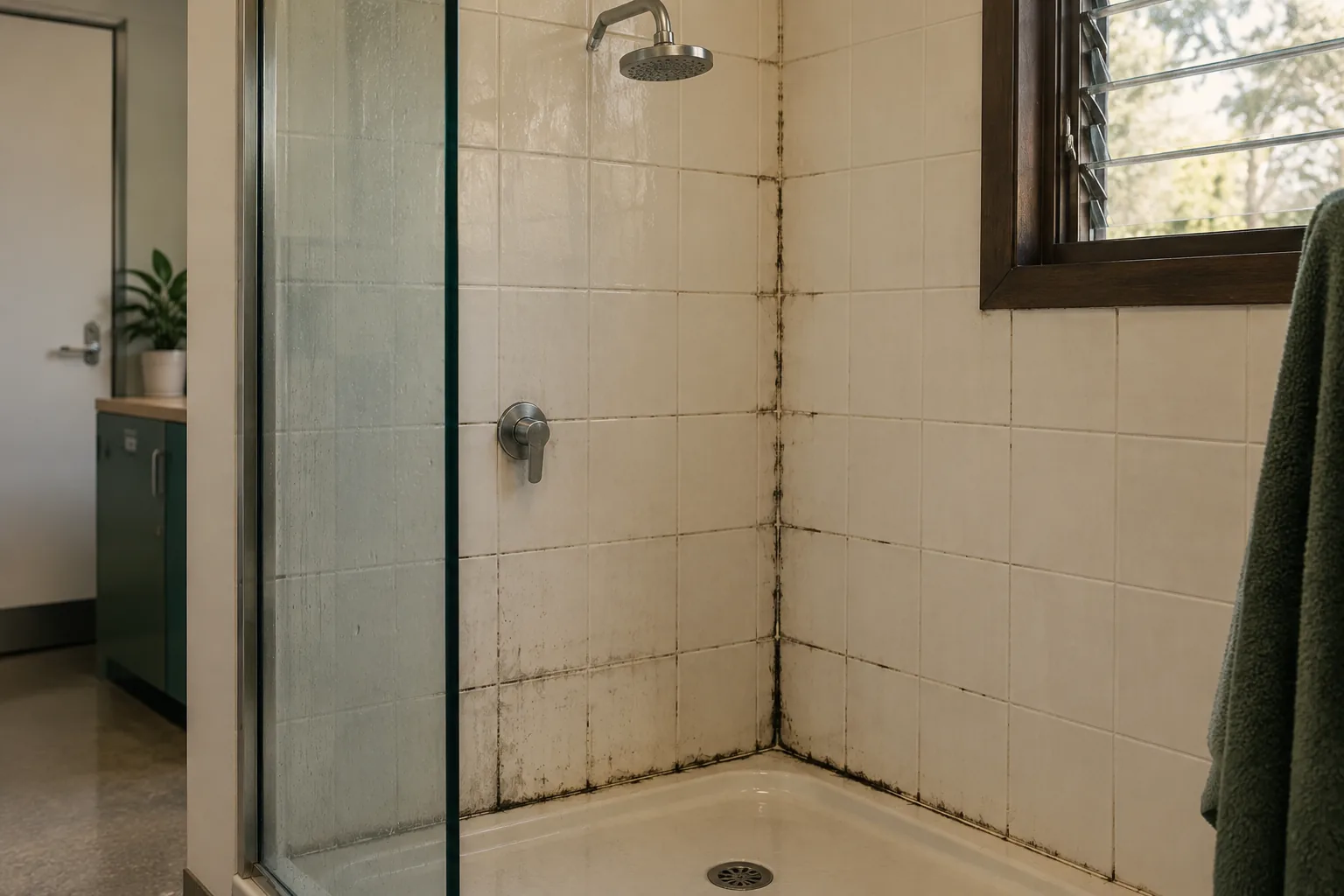
Describe the exposed wall edge and the panel-covered portion as separate access conditions.
Ceilings
A ceiling feature can also obstruct reach; disclose it without assuming fittings will be removed.
Bathrooms
Bathroom joints and paint retain their own treatment and separate repair questions.
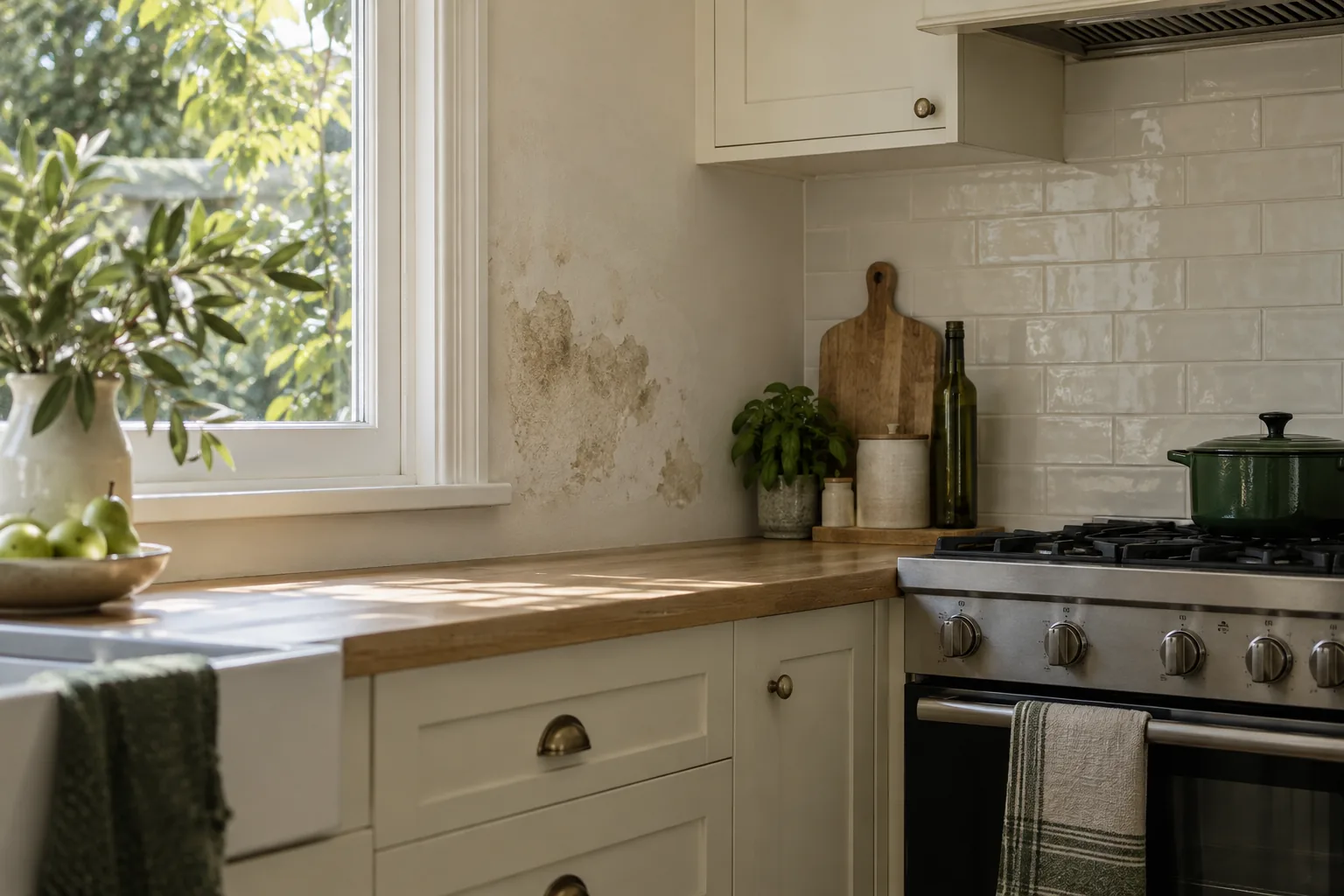
Kitchens
Kitchen walls behind fixed panels are not automatically reachable because the room is available.
Accessible affected surfaces
Other agreed exposed finishes may be considered, while concealed faces, furnishings and fabrics stay outside implied scope.
AFTER TREATMENT
Preparation around the panel limit
Discuss the panel obstruction before the appointment and leave fitting removal to an appropriate separate arrangement. Clear the reachable working area as instructed. Treatment requires people and pets to leave; confirm the particular return advice.
The average per-room guide is about three hours, varying with accessible area and contamination rather than a guaranteed panel-related work slot. Discuss the treatment price without inventing an hourly panel-access allowance.
KEEP MOISTURE IN VIEW
Preserve an honest access boundary
Keep the exposed edge observable where practical and avoid treating the covered junction as cleared. A decorative panel can still limit what is known even after the visible surface looks better. Report fresh dampness or growth with its location and timing, and discuss separate access or repair where needed. Cosmetic renewal of the panel has its own scope. Appropriate ventilation may support room conditions without establishing hidden dryness. A later enquiry should explain what can currently be reached rather than assuming the previous application addressed every section now concealed by the fitting.
Keep the exposed junction observable where practical.
Explain access changes if the panel is later removed.
Arrange appropriate investigation rather than assuming hidden clearance.
A quotation for the exposed work
Describe the panel and exposed junction before discussing cost. Confirm pricing applicability without assuming the treatment amount includes removing the fitting, hidden clearance or restoration of decorative material.
GREYTHORN · EXACT ADDRESS & ACCESS
Enquiries with fitting access clarified
At a Greythorn property, explain the panel-related access and who can approve any separate fitting work. Nearby pages cannot establish that concealed sections are available for treatment.
Questions about remediation
Will you remove the decorative panel during treatment?
Removal is not a confirmed inclusion. Explain the obstruction and arrange any necessary access work separately.
Does new installation prove there is no dampness behind it?
No. A new appearance does not establish concealed material condition or source correction.
Can fogging clear the covered junction?
No hidden-junction clearance is promised. Appropriate ULV application remains part of the agreed visible accessible treatment.
Should I seal the gap before the appointment?
Discuss the visible condition first. Covering the junction can alter the evidence and access without resolving the concern.
Is restoration of the panel included?
No restoration package is confirmed. Keep decorative repair and the structural-surface treatment as separate decisions.
How should later edge marks be described?
Record their location and timing, including any fresh water observed. Do not assume the covered area was previously assessed.
Discuss the junction beside the panel
Phone 03 8652 1296 about the Greythorn exposed edge. Clarify the reachable surface, panel obstruction and separate access decisions before booking.