
SURFACE TREATMENT · MOISTURE FOLLOW-THROUGH
Mould Remediation Balwyn
If two finishes meet where visible contamination changes appearance at your Balwyn address, describe each material before selecting the treatment scope. Describe the change in finishes and earlier coatings before assuming both patches suit the same application.
Materials considered separately
Application suitability reviewed
Colour expectations clarified
TREATMENT & FOLLOW-THROUGH
UNDERSTANDING THE AFFECTED ROOM
Two finishes need a clear agreement
A patch crossing a material junction should not be described as though every section behaves alike. Name the coatings, textures and visible damage so the treatment approach can be considered. The aim is a defined remediation job, not a promise to match every decorative surface. Review remediation scope before selecting the structural-surface job.
The junction may be reachable without both materials having identical treatment needs. Explain earlier coatings and delicate sections honestly, and ask how suitability will be decided. Professional application and filtered physical removal belong to an agreed structural job, while decoration or repair of one side has another purpose. Keep those expectations separate rather than describing the whole finish as uniformly restored.
MOISTURE & CONTAMINATION
Observe moisture across the junction
Different materials can retain different appearance without proving different causes. Give actual wetting observations for each section and keep decoration separate from moisture correction. Ask about assessment where the accessible condition remains uncertain.
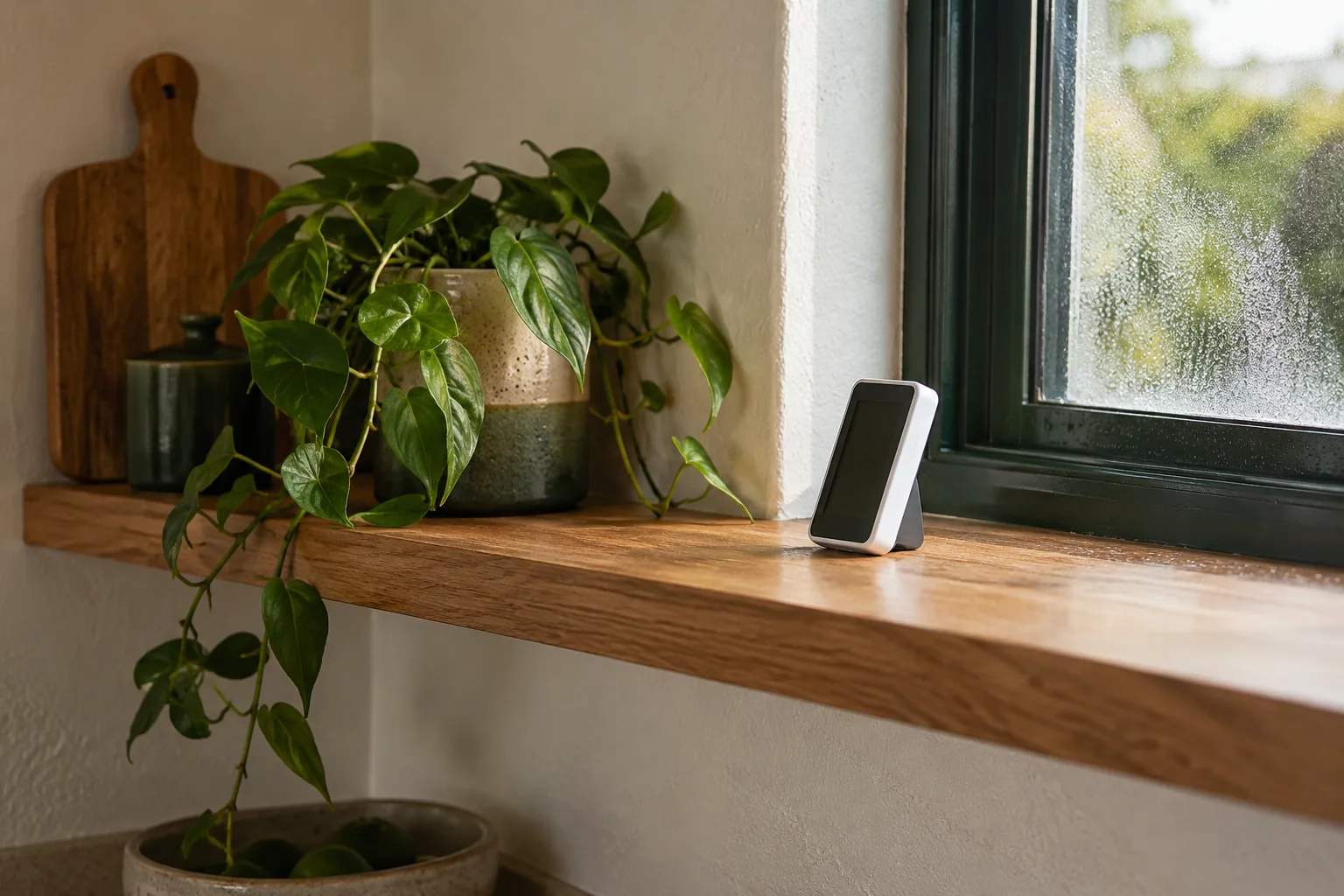
Room-air relative humidity from the professional hygrometer is different from moisture inside either material at the junction.
A DEFINED TREATMENT SEQUENCE
Methods matched to the assessed materials
1
Assess the accessible scope
Assess both materials at the junction, noting coatings and visible damage before agreeing suitable treatment for each reachable section.
2
Set up HEPA protection
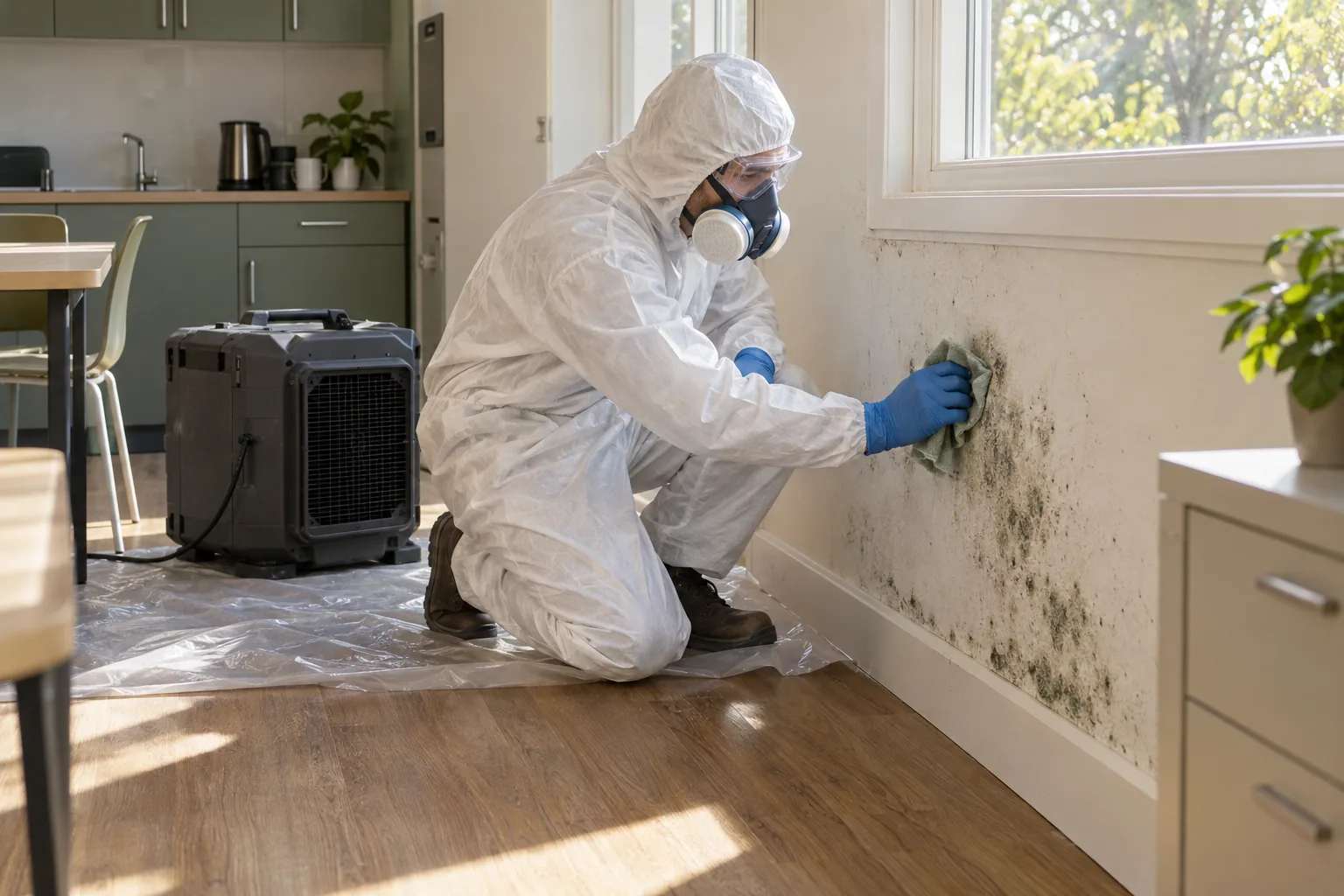
Begin HEPA air-scrubber protection before treatment, arranging working access around the actual material boundary.

3
Choose suitable application
Select appropriate HOCl application for the assessed finishes; include ULV dry fog only where suitable for the job.
4
Remove visible contamination
Remove visible growth with professional H-class filtered equipment, keeping decorative colour-matching outside the physical treatment expectation.
5
Continue final air cleaning
Keep HEPA air cleaning running during and after work; clarify return advice and appearance limitations on each material.
Describe each structural material
Walls
Identify each wall material and coating at the junction before requesting a uniform treatment method.
Ceilings
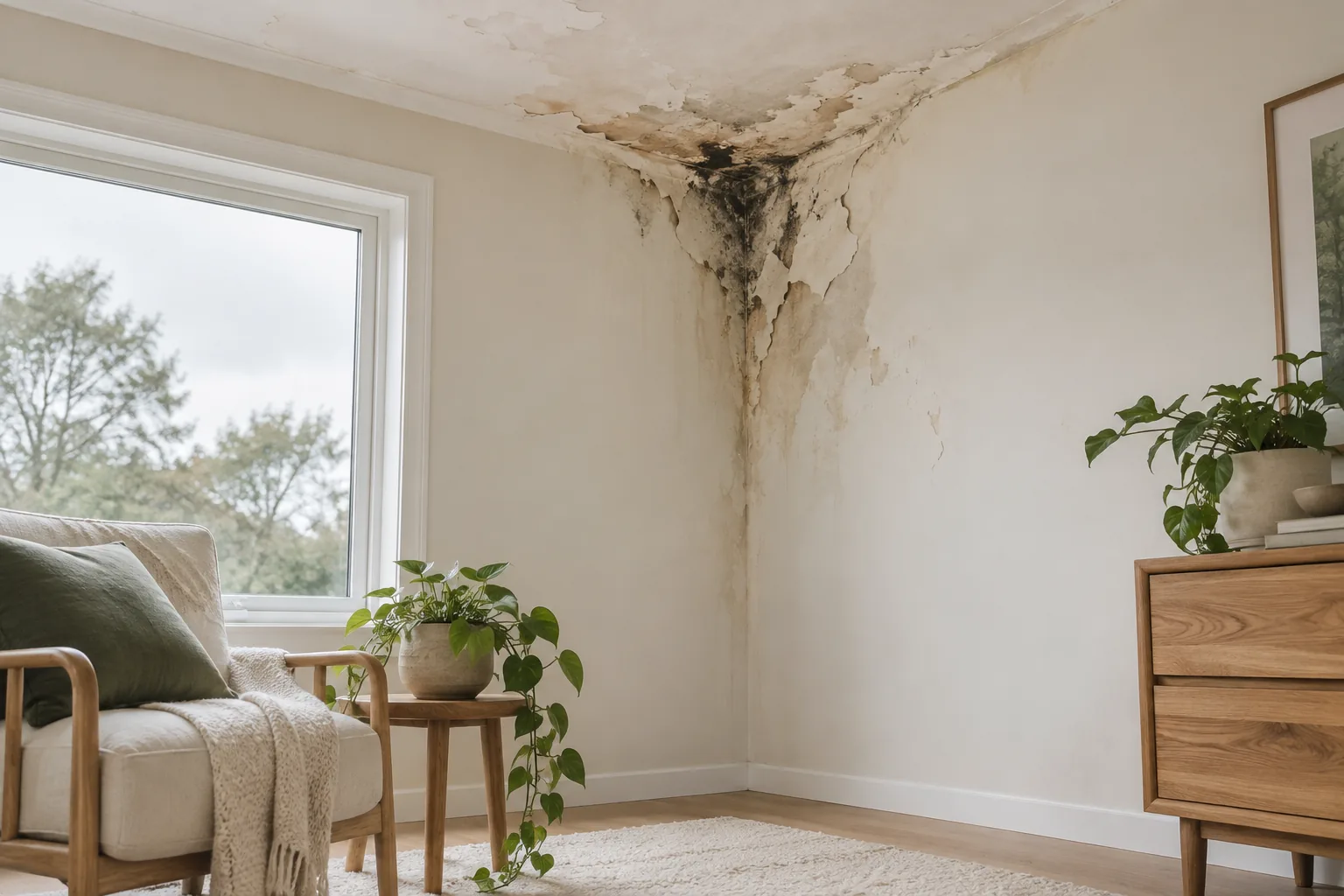
Ceiling finishes can differ from adjoining walls; provide their condition and practical viewing height separately.
Bathrooms
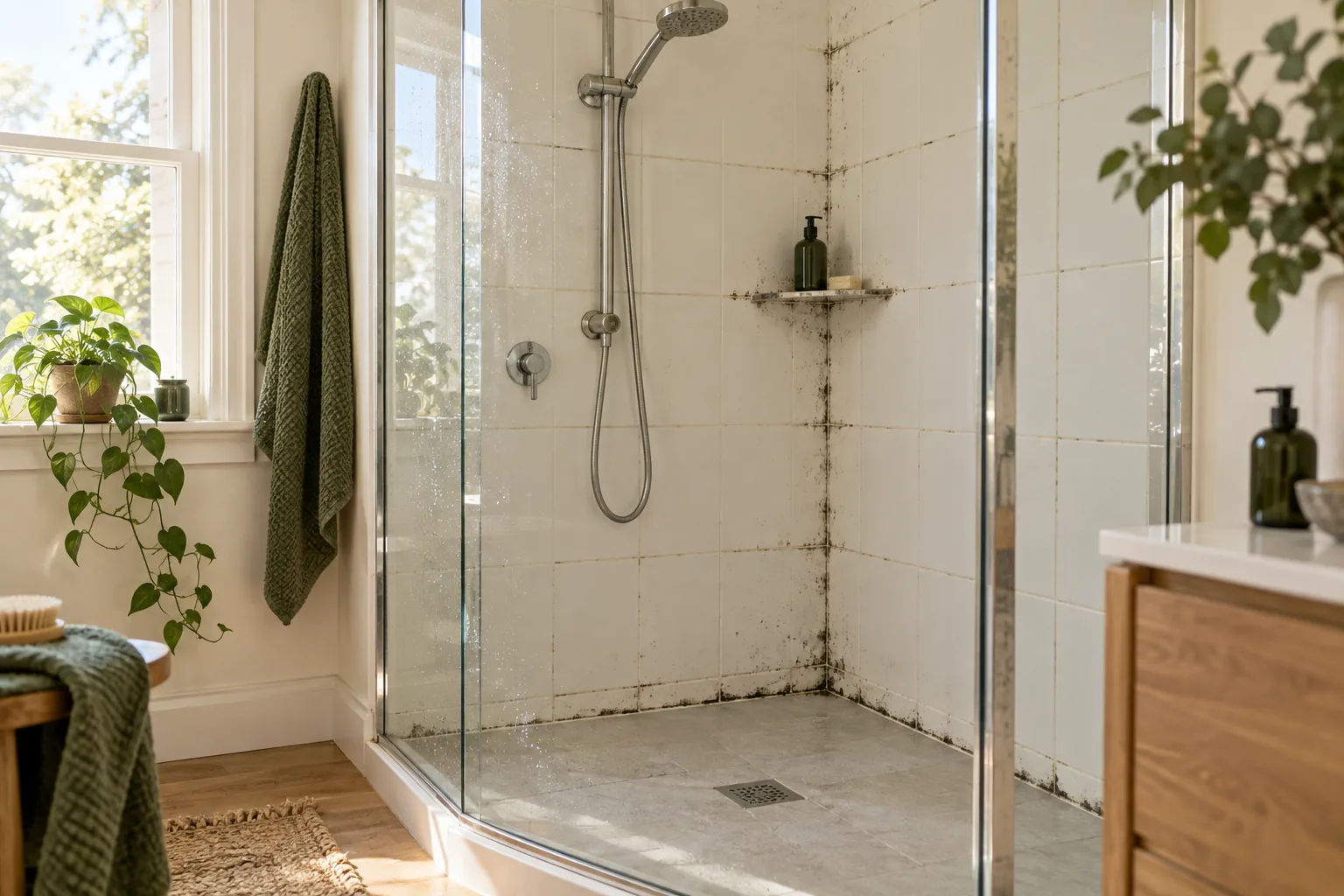
Name bathroom tiles, joints and paint instead of assuming identical materials throughout the wet area.
Kitchens
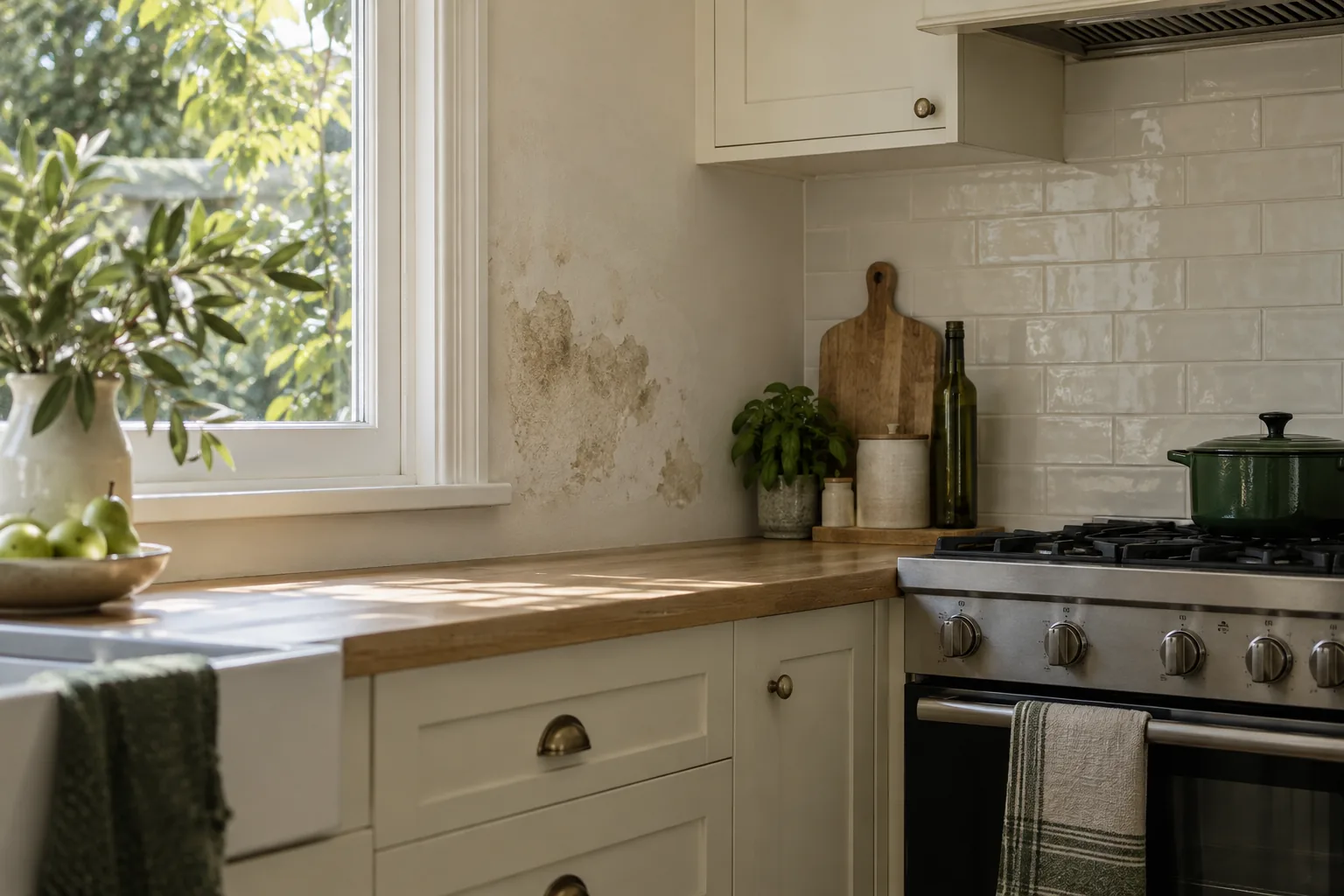
Kitchen surfaces should be described by their exposed finish, with contents kept outside the structural request.
Accessible affected surfaces
Agree other exposed structural sections by material, without including furnishings or textile coverings through proximity.
AFTER TREATMENT
Prepare without another coating
Describe both finishes and any previous applications before the visit. Avoid applying a new coating to make the patch look consistent. Clear the agreed work area, with people and pets leaving during treatment and return advice confirmed directly.
Average guidance is approximately three hours per room, with actual duration influenced by access, area and the assessed contamination. Pricing concerns the agreed service rather than hours spent on each material.
KEEP MOISTURE IN VIEW
Compare changes by material
Record new changes by material so a later enquiry can distinguish paint from the adjoining exposed surface. Colour or texture differences may persist without establishing either complete clearance or renewed contamination. Continue appropriate room ventilation and follow through on relevant water-source repairs. Decoration needs its own decision about suitability and finish condition, rather than relying on remediation for colour matching. Keep the actual treatment boundary clear when comparing photographs. If only one section changes, report that section accurately instead of presenting the entire junction as a new identical problem.
Record changes separately on each material.
Discuss cosmetic finishing through a separate scope.
Follow up water observations without diagnosing from texture.
Price the actual treatment boundary
Give both material descriptions when discussing the quote. The pricing page does not confirm an independent remediation tariff; establish the accessible sections without implying colour matching or coating restoration.
BALWYN · EXACT ADDRESS & ACCESS
Local enquiries with material detail
At a Balwyn address, identify the particular room and its material junction. Nearby links help find service information but cannot establish that another property’s surfaces suit the same method.
Questions about remediation
Is one method guaranteed to suit paint and exposed brick?
No. Identify both materials and their condition so suitability can be discussed separately.
Can a patch crossing the material boundary be treated as one surface?
Describe the full boundary rather than assuming it has one finish. Agree which accessible sections the proposed work includes.
Will treatment match the colour on both sides?
No colour-matching result is promised. Remaining appearance concerns may need separate decorating or material advice.
Does a different texture prove the growth has a different cause?
No. Surface texture alone does not establish the moisture source. Explain actual wetting observations for each section.
Should I coat the porous area before attendance?
Do not apply a new coating merely as preparation. Discuss the present surface and any previous products first.
What if only one section changes afterwards?
Identify that section and the new observation. An unchanged cosmetic mark on the other material is different information.
Talk through the mixed finishes
Call 03 8652 1296 about the Balwyn material boundary. Explain the visible finishes and agree a treatment scope with realistic decorative expectations.