
SURFACE TREATMENT · MOISTURE FOLLOW-THROUGH
Mould Remediation Canterbury
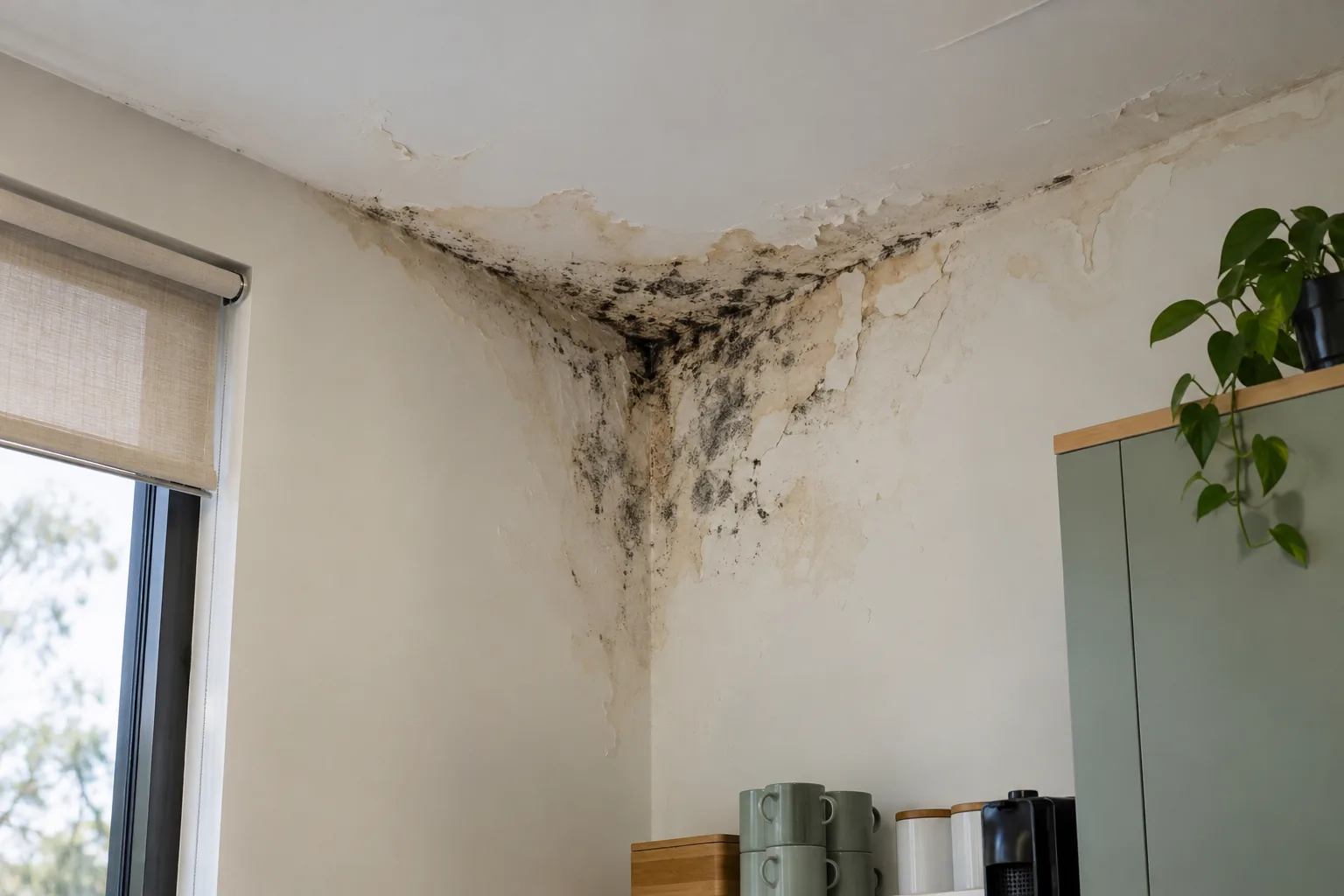
If a ceiling mark remains unchanged while another patch is newly visible at your Canterbury address, avoid judging the whole room from the older outline. Explain which ceiling marks are recent and whether fresh dampness has appeared since the earlier patch.
New overhead patch located
Old marks treated as history
Safe access considered
TREATMENT & FOLLOW-THROUGH
UNDERSTANDING THE AFFECTED ROOM
A new patch beside an older outline
An older ceiling outline and a fresh patch need different observations. Describe the new area’s timing and access instead of treating one unchanged stain as evidence for the entire room. Treatment and cosmetic decoration should remain separate decisions, particularly around deteriorated overhead material. Review remediation scope before selecting the structural-surface job.
A ceiling enquiry should distinguish the new area from a familiar old mark without requiring unsafe closer access. Explain deterioration and any changed obstruction while keeping the hidden assembly outside the standard scope. Filtration and appropriate removal address the agreed visible contamination, not every layer above it. Later decoration can have a separate purpose if cosmetic outlines remain after the treatment itself is complete.
MOISTURE & CONTAMINATION
Current wetting has its own evidence
An unchanged older mark does not rule out continuing moisture around the new patch. Report each area’s timing and any water observed. Discuss accessible inspection if the current ceiling condition needs further consideration.
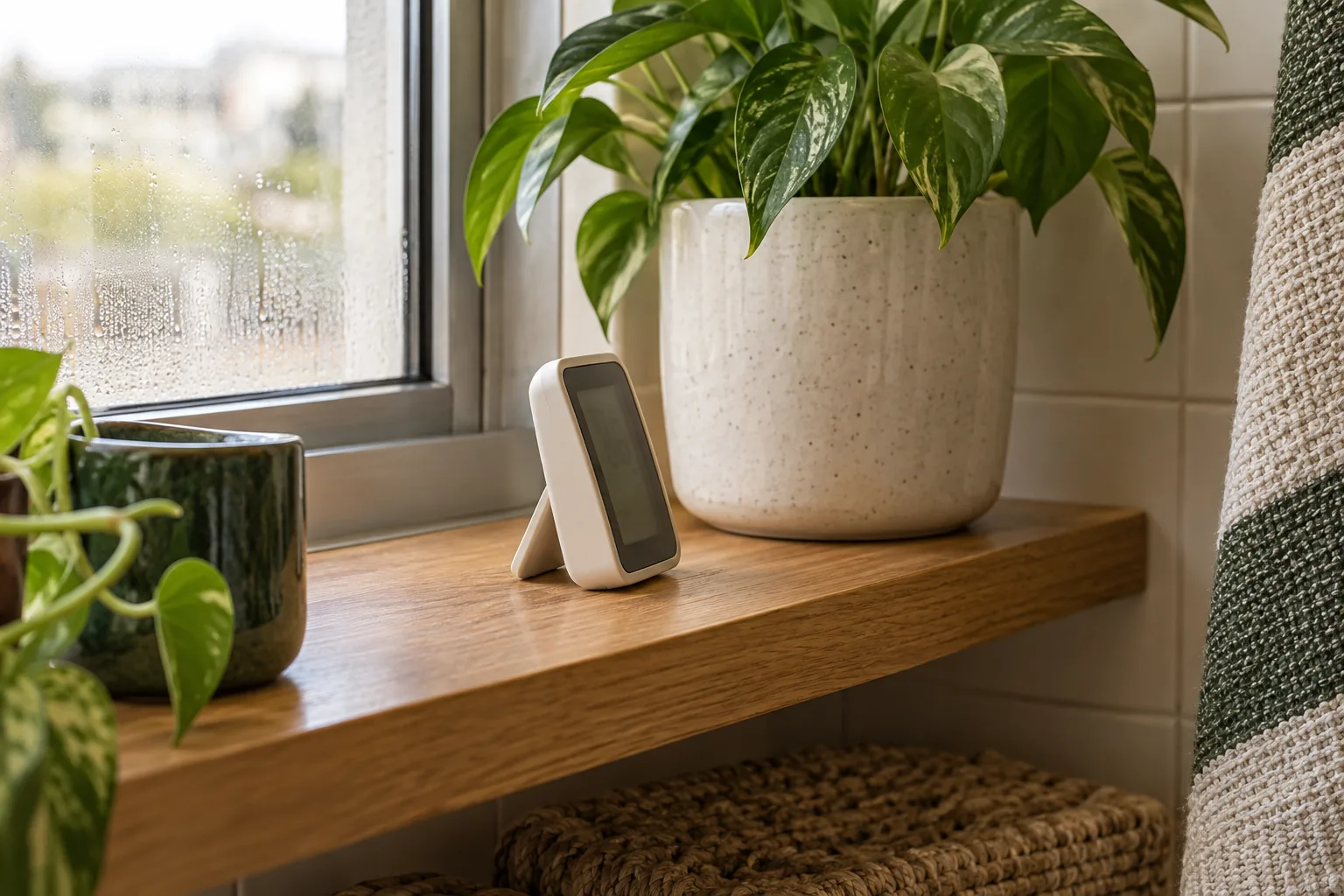
The professional hygrometer informs room-air humidity, not concealed ceiling dryness or the condition of an older outline’s backing material.
A DEFINED TREATMENT SEQUENCE
Treat the agreed new ceiling concern
1
Assess the accessible scope
Assess the new ceiling patch independently of the old outline, considering accessible height and any deterioration.
2
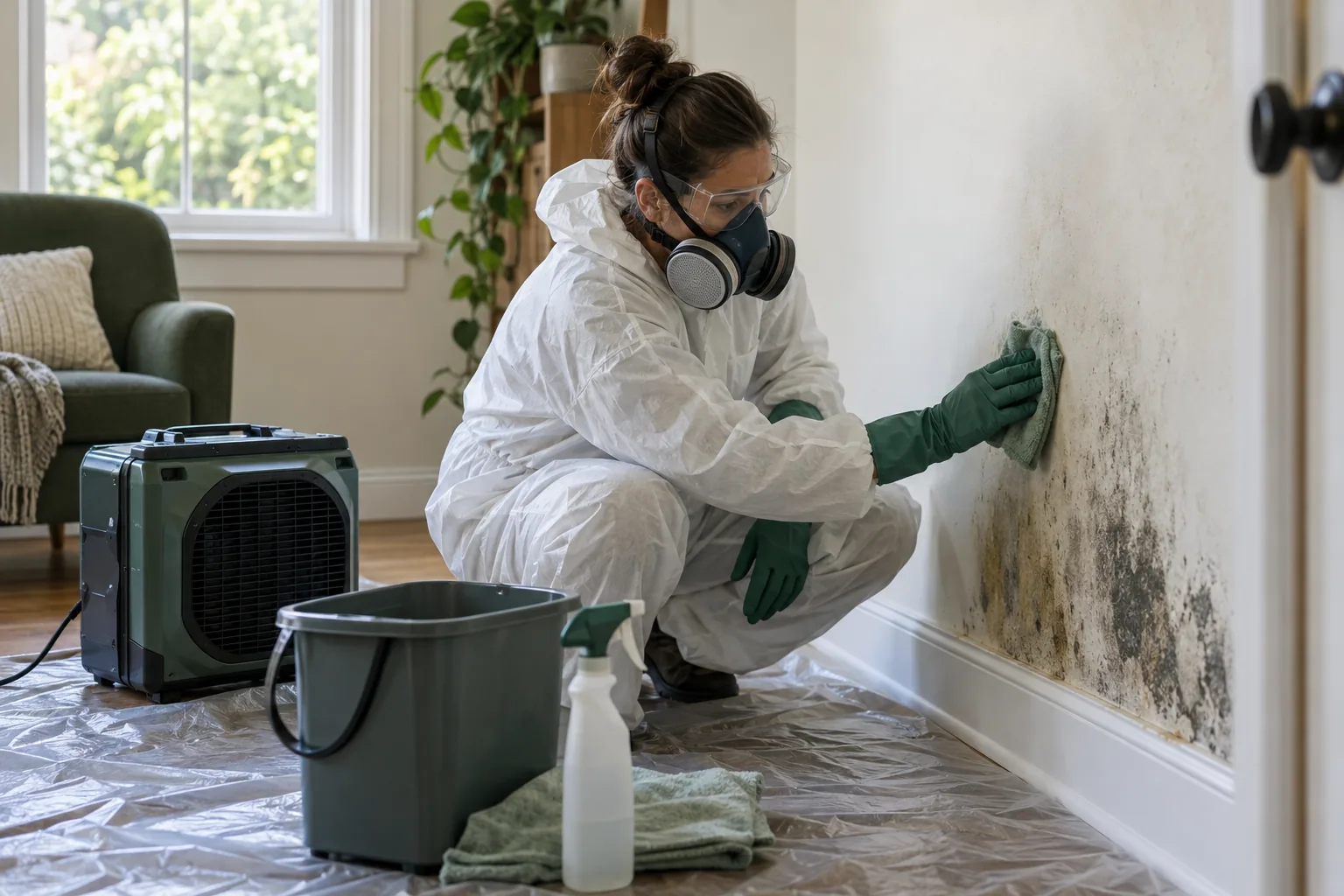
Set up HEPA protection
Begin HEPA scrubber protection before application with safe working access agreed, without disturbing overhead material for a photograph.

3
Choose suitable application
Use suitable HOCl application, including ULV dry fog where appropriate without promising hidden ceiling-layer coverage.
4
Remove visible contamination
Remove visible contamination with H-class filtered equipment from the agreed reachable area, retaining realistic cosmetic expectations.
5
Continue final air cleaning
Maintain HEPA air cleaning during and after the ceiling work; review return advice and separate observations of new changes.
Ceiling surfaces with distinct histories
Walls
Identify wall concerns independently of the newer overhead patch and older ceiling outline.
Ceilings
Describe each ceiling area’s timing and safe reach without disturbing damaged lining.
Bathrooms
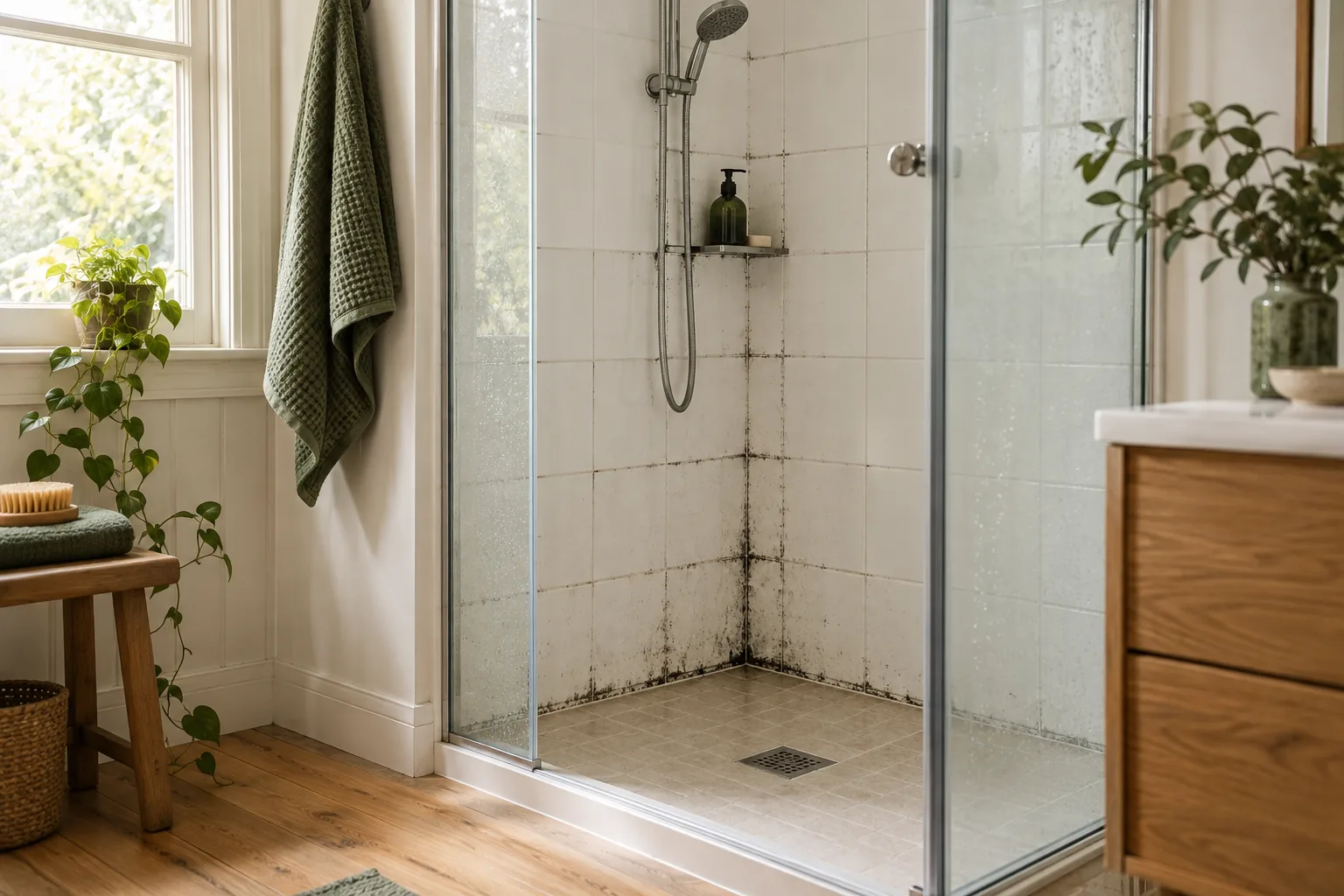
Bathroom ceilings need a specific material boundary rather than an assumption that all marks match.
Kitchens
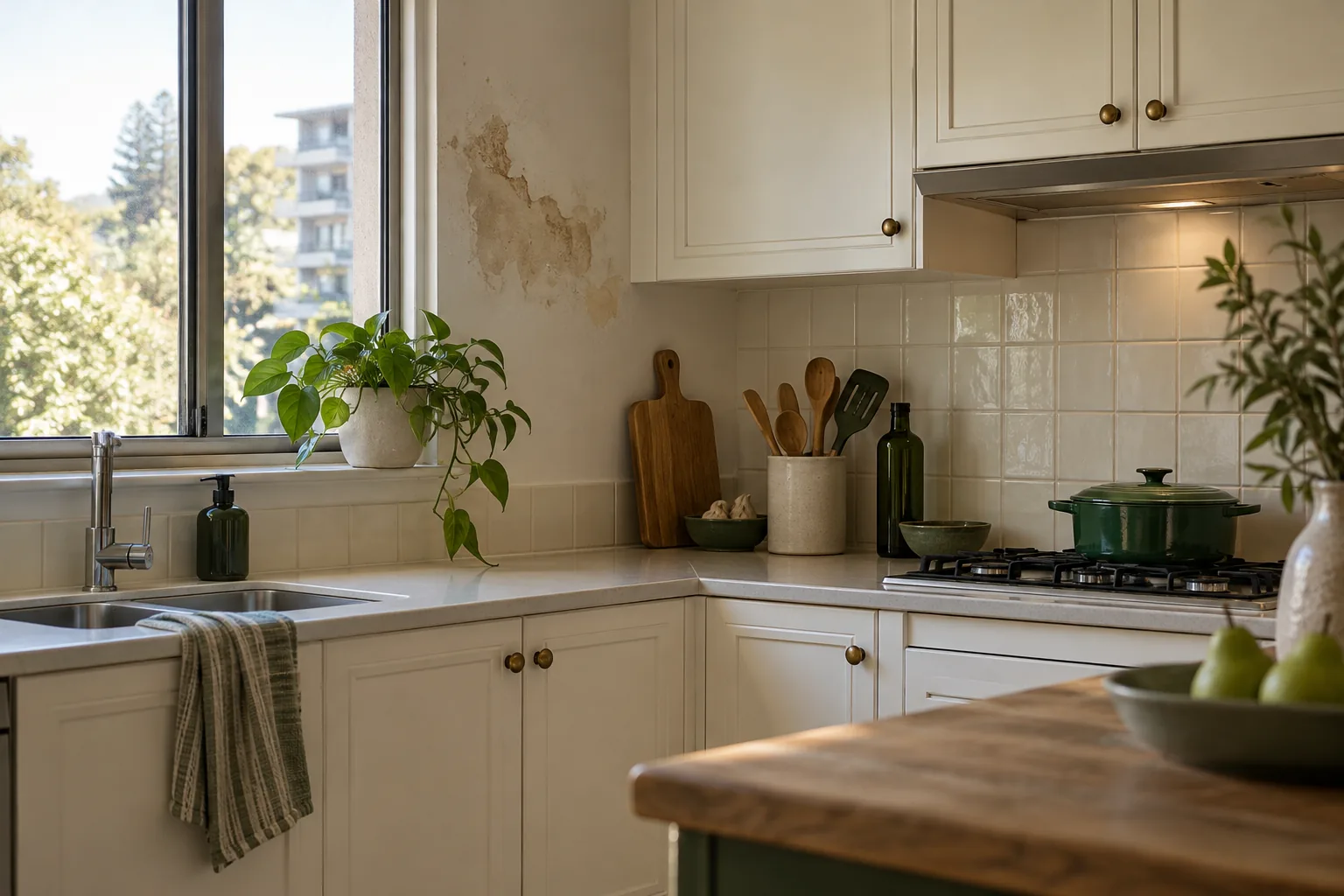
Kitchen overhead growth remains distinct from appliance or stored-item concerns below it.
Accessible affected surfaces
Agree additional reachable hard surfaces explicitly, while textile coverings and hidden ceiling layers remain outside scope.
AFTER TREATMENT
Prepare from a safe overhead view
Explain the old and new ceiling marks from a safe viewing position. Do not disturb overhead material to create a clearer photograph or access. Arrange household departure and receive specific return instructions for the actual treatment. Arrange for both occupants and pets to leave during treatment and obtain the technician’s specific return advice.
The source averages about three hours per room; actual overhead reach and affected extent influence timing, without a fixed cosmetic completion promise. Ceiling duration guidance does not establish an hourly cosmetic-renewal price.
KEEP MOISTURE IN VIEW
Compare fresh changes separately
After return, compare fresh changes on the ceiling safely without disturbing material to look behind it. Keep the new patch’s location and timing separate from an older unchanged outline. Relevant water-source or repair concerns need attention beyond treating visible growth. Residual cosmetic marks may require decoration, while a room-air reading cannot clear insulation or concealed lining. If access changes, explain what can now be reached before assuming inclusion. This maintains a useful treatment boundary and prevents the old stain from being used as evidence for every new overhead observation.
Compare new ceiling changes from a safe viewing point.
Preserve separate records for the old and newer marks.
Discuss hidden-material concerns through an appropriate distinct enquiry.
Cost without a perfect-ceiling promise
Distinguish current growth from old cosmetic outlines when discussing the quote. Confirm price applicability rather than using colour as a tariff decision or expecting every ceiling mark to vanish.
CANTERBURY · EXACT ADDRESS & ACCESS
Address and safe ceiling-access enquiries
For Canterbury, give the actual room and safe ceiling-access description. Nearby pages do not confirm the condition of that overhead finish or the meaning of an older stain.
Balwyn · Wattle Park · Camberwell · Deepdene
Questions about remediation
Does an unchanged old stain clear the new patch?
No. The fresh observation needs its own location, timing and scope discussion.
Will every ceiling mark be removed cosmetically?
No complete appearance result is guaranteed. Residual staining may require separate decoration.
Can old photographs show current access?
Not reliably if the room has changed. Explain current obstructions and the reachable surfaces.
Does matching colour prove identical contamination?
No. Describe the condition rather than diagnosing from colour alone.
Should I disturb the ceiling to check behind it?
Do not do so as improvised preparation. Concealed concerns need separate appropriate investigation.
What should be compared after treatment?
Compare new visible changes and water observations separately from old outlines. Neither appearance nor room humidity clears hidden ceiling material.
Discuss the new overhead area
Contact 03 8652 1296 about the Canterbury new patch and older outline. Agree accessible treatment while keeping appearance and hidden-material concerns distinct.