
SURFACE TREATMENT · MOISTURE FOLLOW-THROUGH
Mould Remediation Kerrimuir
If the booking follows a water incident but some marks lie outside its known footprint at your Kerrimuir address, describe all current surfaces without forcing one assumed cause. Describe the visible patches after the water incident and separate structural surfaces from wet personal belongings.
Current footprint described
Incident uncertainty explained
Covered-material limits retained
TREATMENT & FOLLOW-THROUGH
UNDERSTANDING THE AFFECTED ROOM
An incident does not explain every current patch
A water incident is relevant background, but the current marks may extend beyond its known footprint. Describe each surface and avoid omitting observations that do not fit the first explanation. The treatment agreement and any concealed-material enquiry need separate practical boundaries. Review remediation scope before selecting the structural-surface job.
Incident history should not become a reason to ignore a patch elsewhere or promise all covered material is dry. Agree the current structural surfaces, noting which can be reached and what needs separate attention. Professional filtration and removal do not treat furnishings or provide concealed drying certification. Keeping those expectations clear allows remediation to address visible growth while other incident-related damage follows its appropriate response.
MOISTURE & CONTAMINATION
Describe observations beyond the first footprint
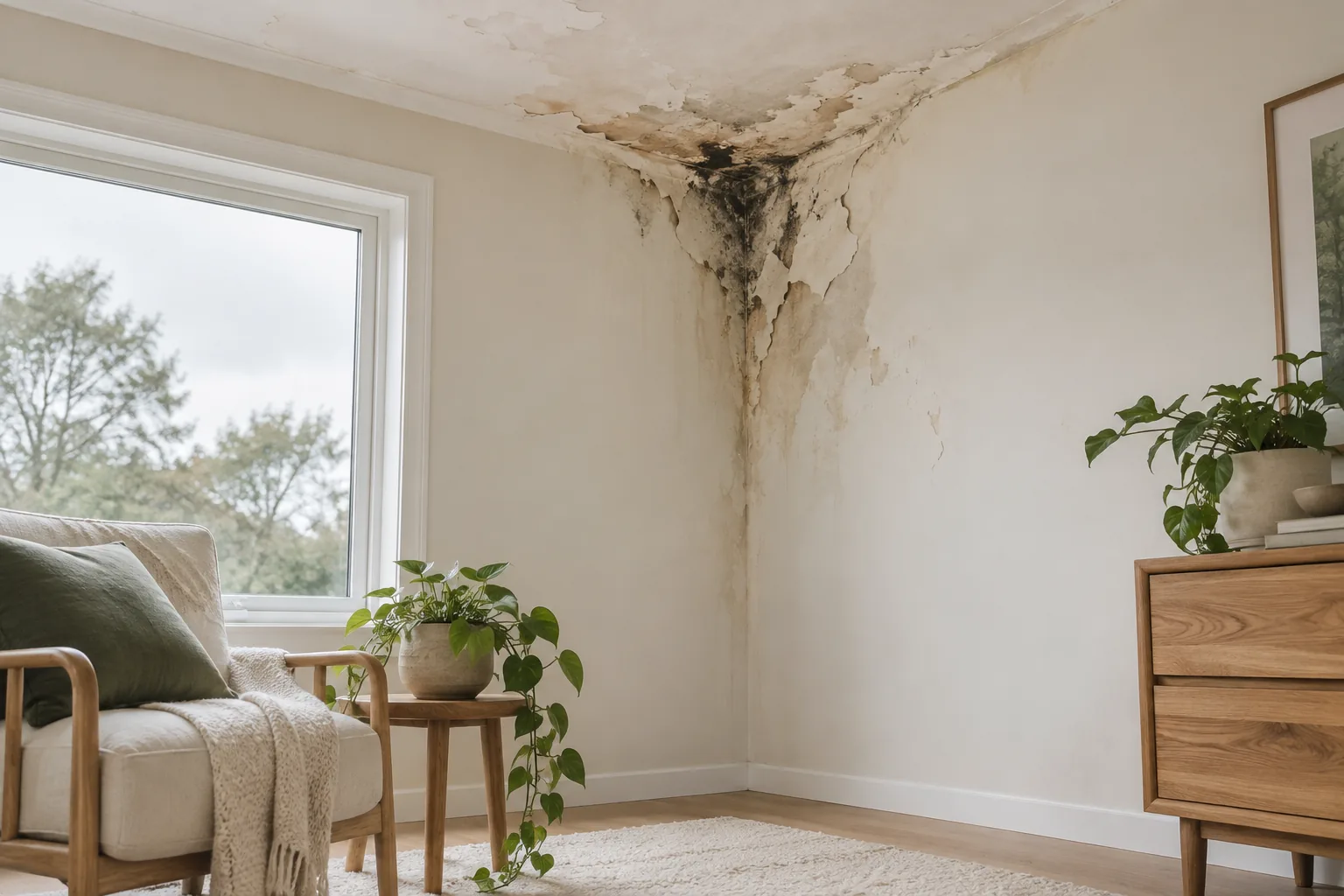
The reported incident may be relevant to some areas and not others. Describe current dampness across the room without forcing every patch into that history. An assessment enquiry can address the visible condition separately from concealed damage.
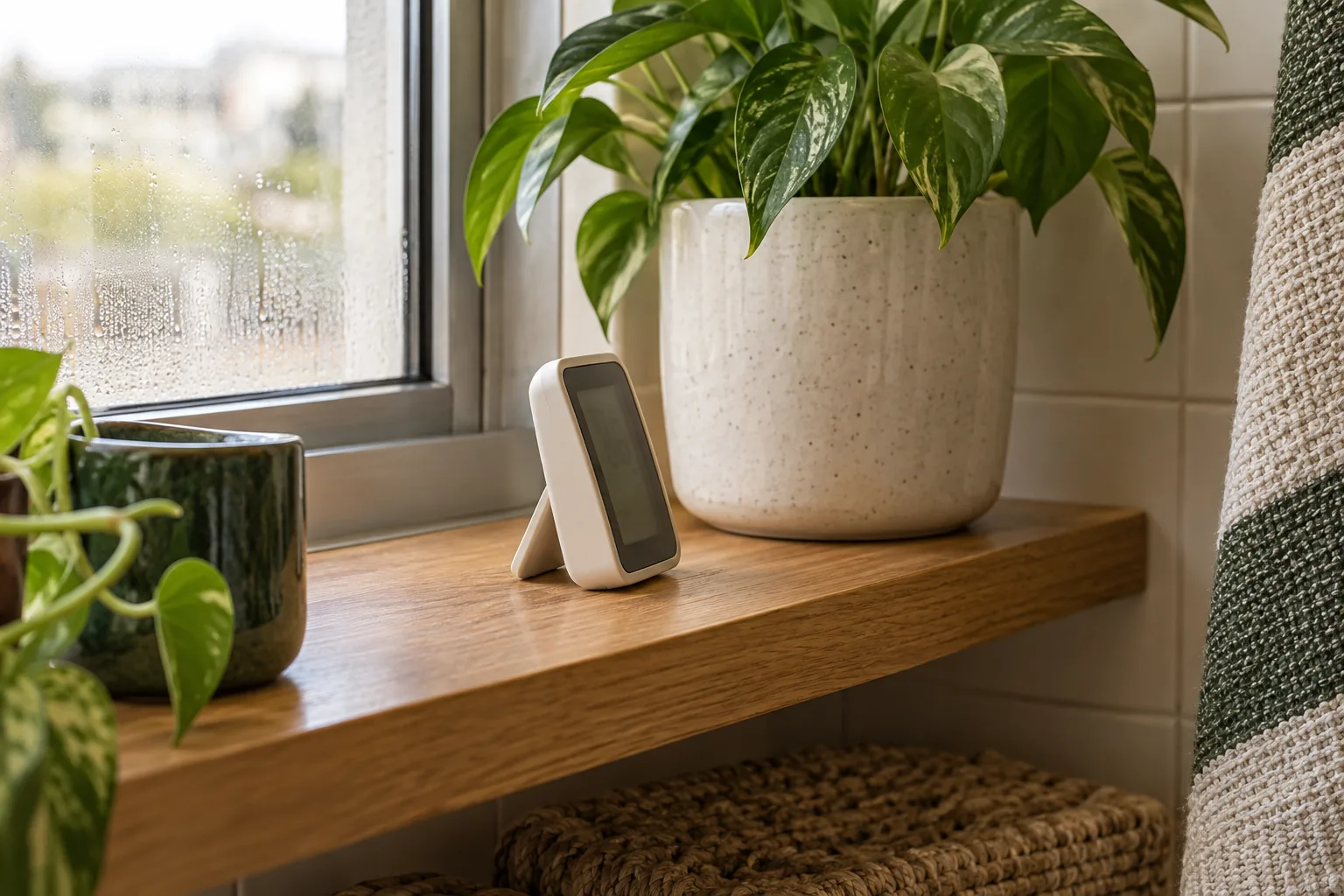
The hygrometer records room-air humidity context, without certifying incident-affected layers beneath a covering or hidden material dryness.
A DEFINED TREATMENT SEQUENCE
Treatment within today’s accessible extent
1
Assess the accessible scope
Assess all requested visible patches, distinguishing the known incident area from other current observations.
2
Set up HEPA protection
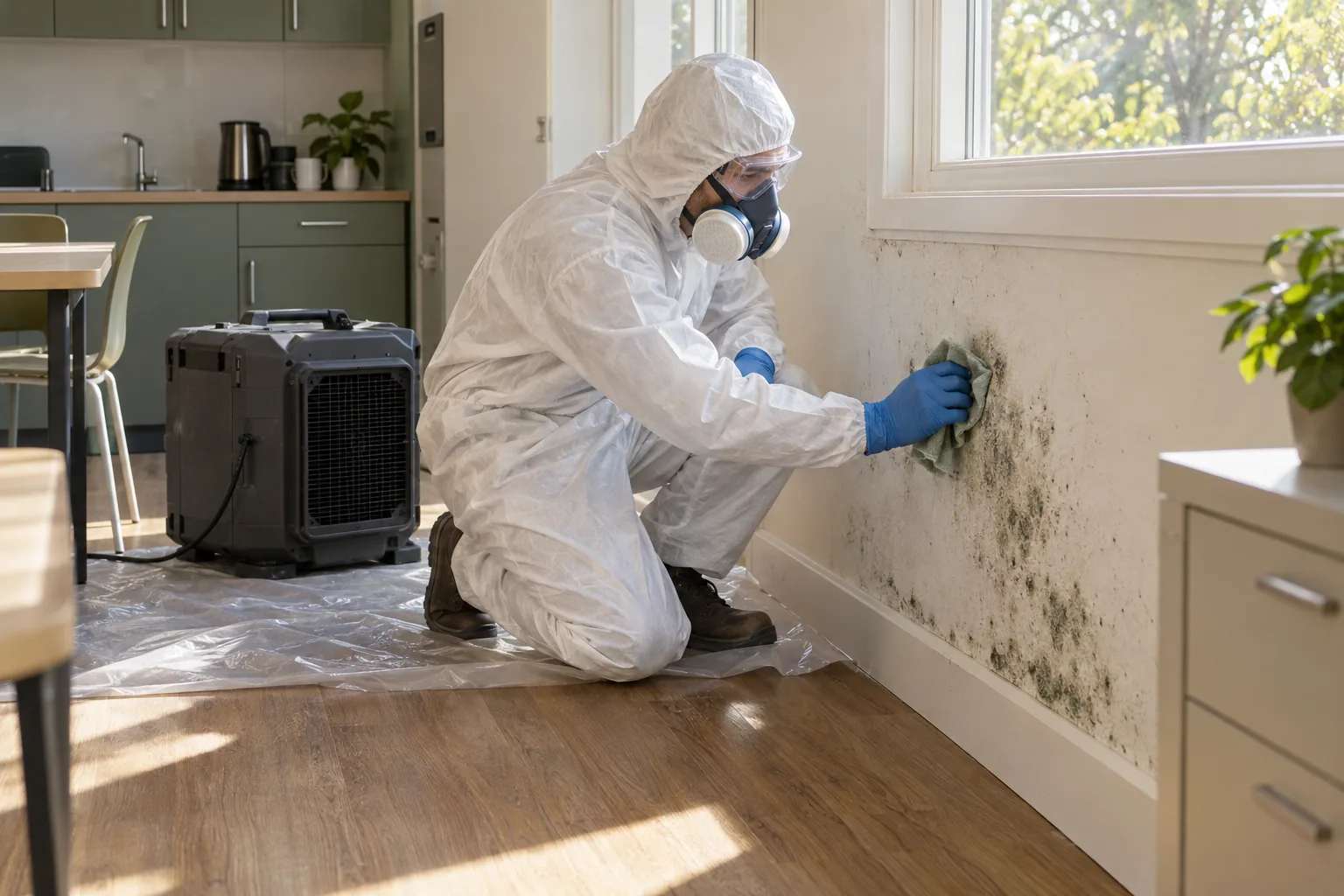
Set up HEPA air protection before application, with access agreed to structural finishes rather than excluded wet belongings.

3
Choose suitable application
Select appropriate HOCl treatment with conditional ULV dry fog, without promising concealed drying or a diagnosis from incident timing.
4
Remove visible contamination
Physically remove visible mould using H-class filtered equipment within the agreed current extent, retaining separate covered-material concerns.
5
Continue final air cleaning
Continue HEPA air cleaning during and after the process; explain return advice and follow-up for new water or growth.
Current finishes and covered incident layers
Walls
Describe wall growth both within and outside the known incident footprint.
Ceilings
Ceiling marks should retain their own history instead of inheriting the floor’s water account.
Bathrooms
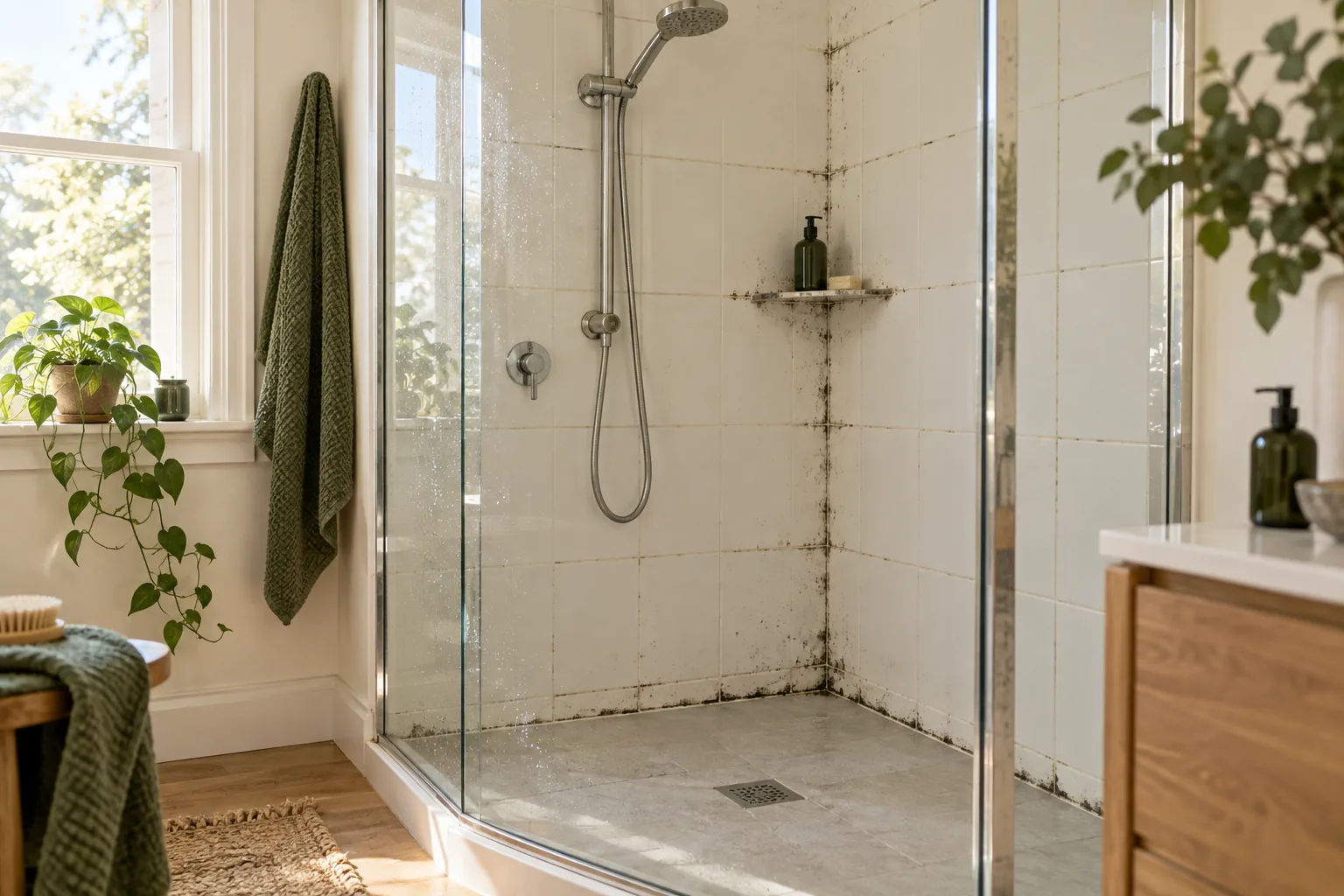
Bathroom finishes are structural requests separate from incident-affected towels or other textiles.
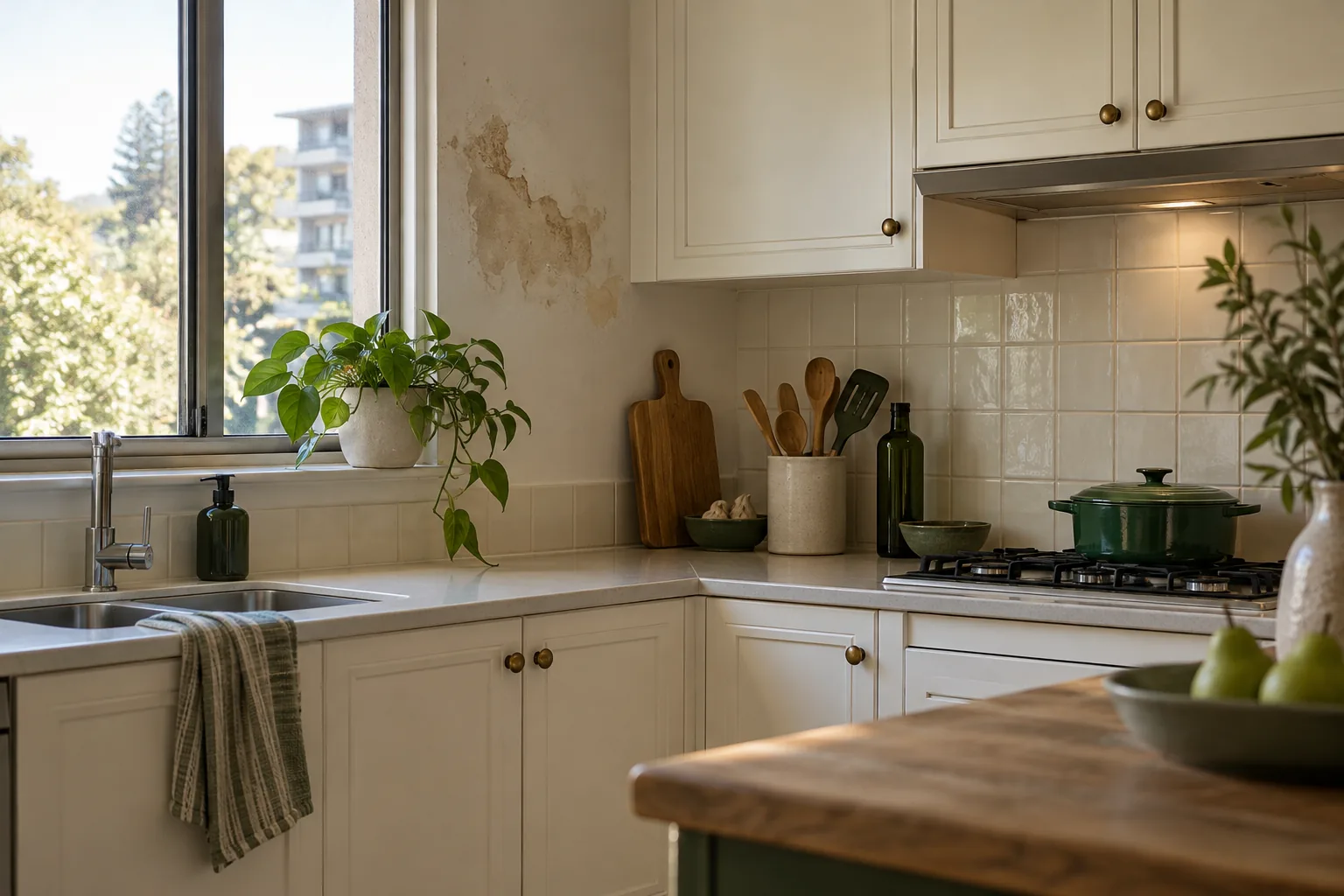
Kitchens
Kitchen surfaces need their actual exposure and condition stated, even where an earlier spill is known.
Accessible affected surfaces
Other reachable hard finishes may be agreed; concealed drying, wet furniture and fabric coverings are not included.
AFTER TREATMENT
Prepare with the present growth identified
Describe the incident and all currently visible patches before the work area is prepared. Keep excluded wet belongings outside the structural treatment expectation. People and pets leave during treatment; the technician confirms advice for return.
The approximate three-hour room average depends on current extent and accessibility rather than the incident’s date or original footprint. Incident background does not establish an hourly concealed-drying package.
KEEP MOISTURE IN VIEW
Track later water without forcing the old account
Retain the incident history while recording later observations that do not fit its known footprint. Fresh water without another spill deserves appropriate source attention rather than automatic attribution to the earlier event. Follow return advice and keep excluded furnishings separate from the structural result. Cosmetic marks may remain, and concealed material concerns need their own enquiry. If another surface changes, label it explicitly. Useful aftercare keeps current visible condition, repair responsibilities and uncertain history distinct instead of treating one reported incident as a permanent explanation for every mark in the room.
Keep incident background separate from current unexplained wetting.
Report patches outside the original footprint honestly.
Arrange source attention if water returns without another spill.
Quote current surfaces, not an assumed event package
Describe all current patches and reachable materials when confirming the quote. Check price applicability without inferring a special incident tariff, concealed drying or furniture treatment from the room examples.
KERRIMUIR · EXACT ADDRESS & ACCESS
Address and present-condition enquiries
For Kerrimuir, identify the premises and current visible areas beyond the incident account. Nearby links do not establish a shared event history or confirm availability for your room.
Questions about remediation
Should the outside patch be omitted from the enquiry?
No. Describe it separately and do not assume the reported incident explains every mark.
Does the incident date establish when growth began?
No complete timeline is promised. Share known history and distinguish it from uncertainty.
Will remediation dry material beneath a covering?
No concealed drying outcome is confirmed. Discuss those material concerns separately.
Can wet furnishings be included with structural work?
No. Furniture and textiles remain outside standard scope.
Does a low room reading clear the incident damage?
No. Air humidity is different from moisture within affected materials or hidden layers.
What if water appears without another incident?
Record its timing and location and arrange appropriate source investigation. Surface treatment does not repair a continuing defect.
Discuss the current incident-related concerns
Call 03 8652 1296 about the Kerrimuir current surfaces and water history. Agree treatment independently of assumptions about the earlier incident’s complete footprint.